






Dragonfly

Image by Rezwan

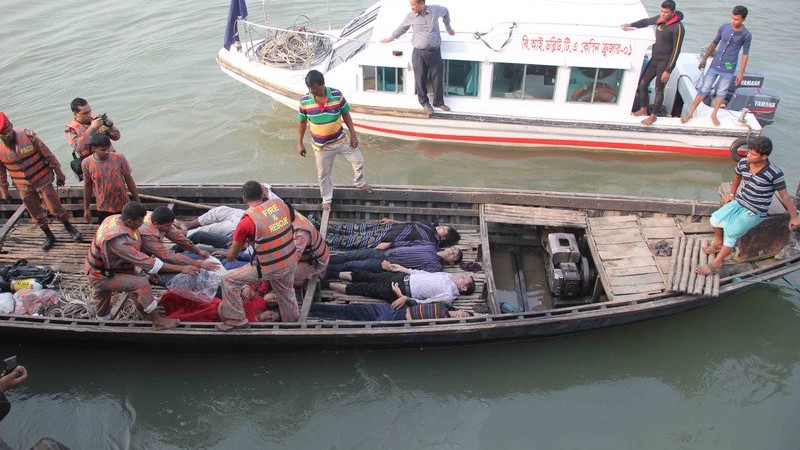
Overcrowded passenger ferry capsized in the Padma River in Munshiganj, Bangladesh

The World Cup Goal-E Project

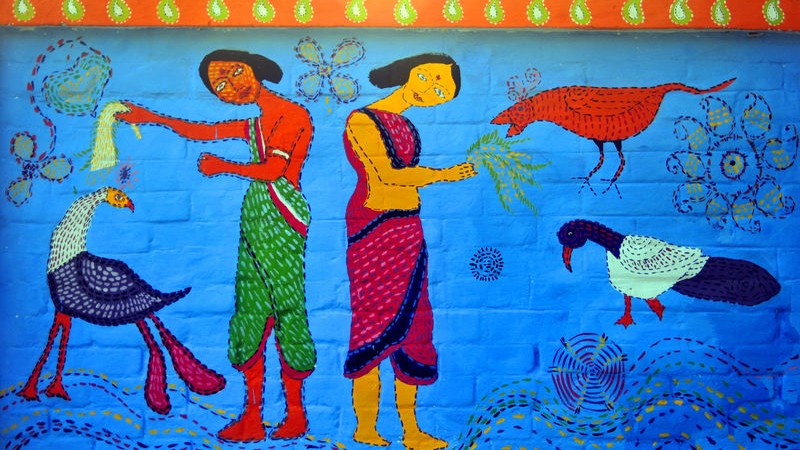
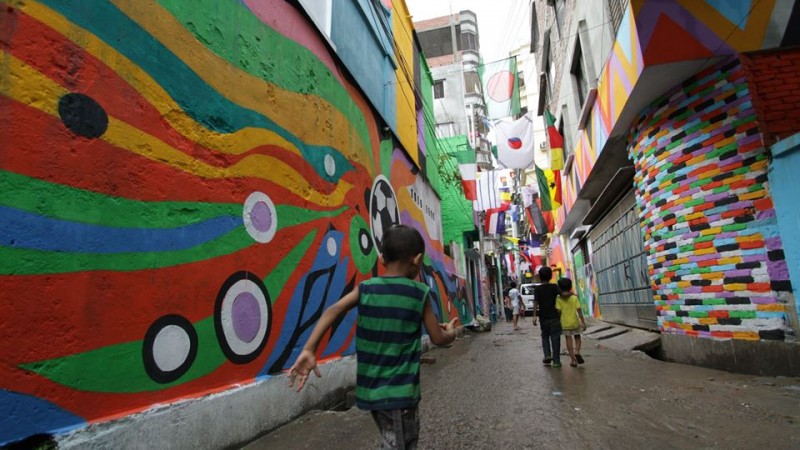
This street in Bangladesh has a colorful world cup celebration

New Chum Hill Ruins

Remnants of Kiandra gold mine at New Chum Hill, #nsw #australia

Showing posts with label Bangladesh. Show all posts

August 13, 2015

Bangladesh Police Chief Tells Bloggers, "Don't Cross the Line"

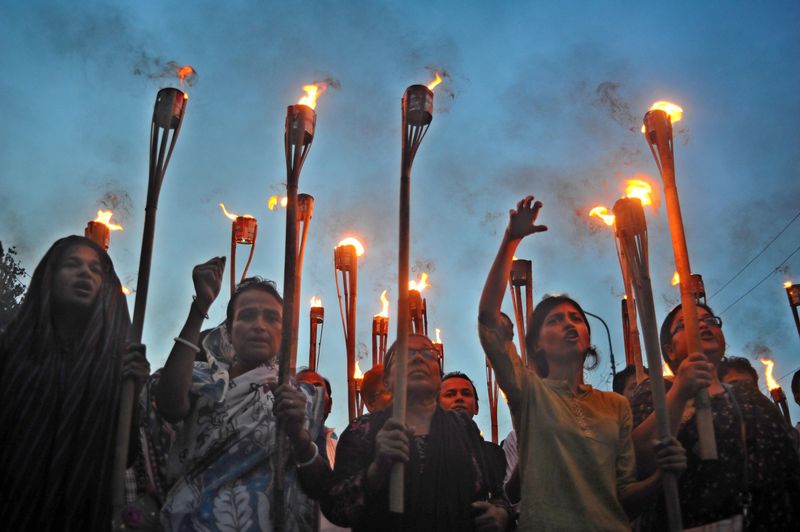
Activists march in a torch-light vigil demanding immediate arrest and exemplary punishment to the killers of secular blogger Niloy Neel.  Dhaka, Bangladesh. Image by Khurshed Alam Rinku. Copyright Demotix (8/8/2015)
Activists march in a torch-light vigil demanding immediate arrest and exemplary punishment to the killers of secular blogger Niloy Neel. Dhaka, Bangladesh. Image by Khurshed Alam Rinku. Copyright Demotix (8/8/2015)
It has been five days since the assassination of secular blogger Niloy Neel but Bangladesh police authorities have made no significant progress investigating his murder. Neel was hacked to death by a band of five men who broke into his apartment in Dhaka, the nation's capital, on August 7, 2015.

Left shell-shocked by Niloy's killing -- which was the fourth assassination of a secular blogger in Bangladesh in 2015 -- many bloggers have stopping writing and some have gone into hiding. Some of the country's most active bloggers now fear they may face jail or will die at the hands of the assailants. Others have left the country.

The names of these bloggers and others under threat appeared on a list of 84 people submitted to a special government committee in 2013 by a group of conservative Muslim clerics who accused the bloggers of “atheism” and writing against Islam. Since then, eleven individuals on the list have been murdered.

Following Niloy's death, threats have extended beyond blogging communities. The proprietor of a publishing house that published multiple books by blogger Avijit Roy, who was slain in public in February of 2015, is now in danger as fundamentalist forces have identified him as a promoter of atheist ideology.

The day after Niloy's murder, Bangladesh Prime Minister Sheikh Hasina called Niloy's killers a "blot on Islam." She said in a meeting on August 8:
Islam is a religion of peace. Those who want to taint it cannot have true faith in it. How dare they call themselves Muslims? [..]

And now they are murdering bloggers for writing against the religion. Who benefits from this gory mayhem? Which religion they claim to have been protecting?
She continued:
We cannot let this happen in Bangladesh. The people of this country are peace-loving.
In response, blogger Haseeb wrote in Sachalayatan wrote that for him, the Prime Minister's words rang hollow:
সরকার ব্লগারদের মতপ্রকাশের স্বাধীনতা বিষয়ে যতোটা না চিন্তিত, তার থেকে চিন্তিত তাদের ধার্মিক ইমেজ যাতে ক্ষতিগ্রস্থ না হয় সেটা নিয়ে। সরকার ধর্মীয় রাজনীতি তো বটেই, সেই ধর্মীয় রাজনীতি যারা করে তাদের আদর আপ‍্যায়নেই আন্তরিকতা দেখিয়েছে। আর ব্লগারদের মুখ বন্ধ করতে চালু করেছে ৫৭ধারার মতো কালো আইন।
The government is more concerned about keeping their pro-religion image, rather than worrying about freedom of expression. The government is endorsing religious politics and are soft on those who use religion for politics. And the bloggers are slapped with Section 57 [of the IT Act]...
Section 57 of Bangladesh's IT Act criminalizes “publishing fake, obscene or defaming information in electronic form.”

Haseeb also cited a recent press release from the Awami Ulema League, a conservative Islamic group claiming to support Bangladesh's ruling coalition:
নাস্তিক হত্যাকারীদের বিরুদ্ধে ব্যবস্থা নেয়া মানে এই নয় যে, মিডিয়া ইসলাম বিদ্বেষী নাস্তিকদের হাইলাইট করবে। সুতরাং এসব নাস্তিক ব্লগার কর্তৃক বিভিন্ন ব্লগ, ওয়েবসাইট, স্যোসাল মিডিয়ায় কুরুচিপূর্ণ নাস্তিক্যবাদী লেখা বন্ধে ধর্ম অবমাননার জন্য মৃত্যুদন্ডের আইন প্রণয়ন করতে হবে। [..]

এদেশকে নাস্তিক্যবাদী দেশ বানাতে ইসলাম বিরোধী শিক্ষনীতি তৈরী করা হয়েছে। কুরআন-সুন্নাহ বিরোধী বক্তব্য যুক্ত ও ষড়যন্ত্রমূলক পাঠ্যপুস্তক অবিলম্বে বাজেয়াপ্ত করতে হবে। সাথে সাথে ইসলাম বিরোধী প্রচলিত শিক্ষানীতি বাতিল করতে হবে। ৯৮ ভাগ মুসলমানের এদেশের শিক্ষানীতি সম্পূর্ণ ইসলামিক করতে হবে।
The media should not highlight atheist writings in the name of speaking for the killers of the atheists. There should be the death penalty for those who write nasty and blasphemous things on blogs, websites and in social media.

The education policy of this country was developed to make this a country of atheists. The curriculum which contain words against the Quran and Sunnah should be confiscated. The anti-Islam education policy should be repealed. The education policy of this Muslim-majority country should be Islamic.
Haseeb writes:
যে মুহুর্তে ক্ষমতাসীন আওয়ামী লীগের সহযোগি একটি দল এই সমস্ত অশ্লীল দাবিনামা ঢাকা শহরের রাস্তায় মাইকে উগরাচ্ছে তখন শেখ হাসিনা শীতাতপ নিয়ন্ত্রিত কনফারেন্স রুমে দাবি করছেন ধর্ম নিয়ে রাজনীতি করতে দেয়া হবে না। দুঃখিত মাননীয় প্রধানমন্ত্রী। এভাবে হবে না। ক্ষমতাসীন আওয়ামী লীগ সরকারের এধরণের অবস্থান সাংঘর্ষিক।
While an Islamic front, claiming to be supporters of the ruling Awami League, are talking about these demands using loud speakers in the streets, our Prime Minister is saying indoors that "we will not let religion be used for politics." Sorry, Madame Prime Minister. This is not right. There is a contradiction in the stance of the ruling Awami League.
The Director of News of Ekattor TV Syed Ishtiak Reza asks:
ধর্মান্ধতা আজ আমাদের দেশের শান্তি বিঘ্নিত করছে। সেখানে ক্ষমতাসীন দলের সাথে সম্পর্কযুক্ত কোনও সংগঠন এমন বক্তব্য দিলেতো বলতে হবে, বিপদ দরজায়।
Fundamentalism has disturbed peace in our country. When we hear these kinds of statements coming from a group this close to the ruling party, we have to say, peril is near.
However, in an interview Awami League joint general secretary Mahbub-ul-Alam Hanif stated:
Awami League does not have any wing or associate group by the name of Ulema League. They have no political link with the party.
Hanif urged citizens not to confuse the Alami Ulema League with the Awami League, Bangladesh's current governing political party. According to reports, the people behind Awami Ulema League claim Prime Minister Sheikh Hasina as their leader, though their ideology and principles are different from Awami League ruling party. Whether the Awami League has any affiliation with the Awami Ulema League is unknown but no ruling party leaders have condemned their speech.

On Sunday, Police Chief AKM Shahidul Hoque added fuel to the fire, saying:
Free-thinkers and bloggers should not cross the limit of tolerance while expressing their views on religion. If any person is hurt by any writing, s/he may take legal action. They can file a case with the police. Everyone should obey the law.
He added that the maximum punishment for the above crime 14 years' jail time.

Mr. Monirul Islam, another high police official, said:
যারা ব্লগারদের হত্যার সঙ্গে জড়িত এবং যারা হযরত মুহাম্মদ (সা.), ধর্ম ও কোরআন নিয়ে যুক্তিহীনভাবে আঘাত করে ব্লগে লেখে তাদের সকলকে আইনের আওতায় আনা হবে। কারণ যারা যুক্তিহীনভাবে ধর্ম নিয়ে ব্লগে লেখে তারাও উগ্রবাদী।
The killers of the bloggers and those who write on blogs attacking the prophet Muhammad, Islam and Quran all will be brought under law. Those who illogically write against religion in blogs are also extremists.
These comments sparked an uproar among citizens who took to social media to express their outrage. Expat activist Rayhan Rashid tweeted:
Renowned journalist Toufique Khalidi tweeted:
An online petition launched by an unknown group is asking for the police chief's resignation.

Muktangon blog published a statement criticising the police response to the murder and saying that police should not be talking about bloggers hurting religious sentiments in an attempt to distract citizens from their failure to ensure public safety. Muktangon also noted that these bloggers were well aware of speech laws in their country:
এ কথা সঠিক নয় যে, মানুষের ধর্মীয় অনুভূতিতে ব্লগাররা ঢালাওভাবে আঘাত করে যাচ্ছেন। কোনো কোনো ব্লগার তাঁদের মুক্তচিন্তা চর্চার অংশ হিসেবে কখনো কখনো হয়তো ধর্মের (সেটা সব ধর্মের ক্ষেত্রেই প্রযোজ্য) কোনো কোনো বিষয় নিয়ে কথা বলে থাকেন, কিন্তু তা তাঁরা নির্দিষ্ট স্থানে এবং সামগ্রিক আলোচনার ধারাবাহিক অংশ হিসেবেই করে থাকেন। প্রকাশ্যে জনসমক্ষে হট্টগোল তুলে তাঁরা কিছুই করেন না, যার ফলে মানুষ উত্ত্যক্ত বোধ করবে কিংবা আহত ও ক্রুদ্ধ হবে।

মতপ্রকাশের স্বাধীনতার মূল কথাই হল অপ্রিয় মতামত অপ্রিয় ভঙ্গিতে প্রকাশেরও পূর্ণ স্বাধীনতা, যতক্ষণ না তা কোনো সুষ্পষ্টভাবে সংজ্ঞায়িত নিরপেক্ষভাবে বিচারযোগ্য প্রচলিত আইনের কোনো বিধানের নিষেধের মধ্যে না পড়ে। তাই, যারা তাদের রাজনৈতিক বা অন্য কোনো হীন উদ্দেশ্যে ব্লগারদের উম্মুক্ত আলোচনা ও বক্তব্যকে খণ্ডিতভাবে যেখানে-সেখানে উপস্থাপনের মাধ্যমে বিভ্রান্তিকর পরিস্থিতির সৃষ্টি করে, উত্তেজনা সৃষ্টির চেষ্টা করে – সরকার ও আইনশৃঙ্খলা রক্ষাকারী বাহিনীর বরং উচিত তাদের বিরুদ্ধে আইনগত ব্যবস্থা নেয়া।
This is incorrect that bloggers are deliberately and across the board hurting other people's religious sentiments. Some bloggers mentioned and discussed some aspects of religion (many religions, not only Islam) in their online writings as a part of their freedom of expression and part of their discussion and context. But they never did it in public or agitated or hurt people directly.

The main thing of freedom of expression is that one should be free to express adverse opinions in a critical way that may not be liked or endorsed by all. People can do it as long as they are not breaking any existing law of the land. [Author's note: Bangladesh does not have Sharia law.] So those who are creating a disturbance and inciting hatred by terming the bloggers atheist and blasphemous by taking their words out of context should be identified and legal actions should be taken against them.

The post was also published in Global Voices Online.
August 07, 2015

"No Country For Secular Bloggers": Niloy Neel is the Fourth Bangladeshi Blogger To Be Killed in 2015

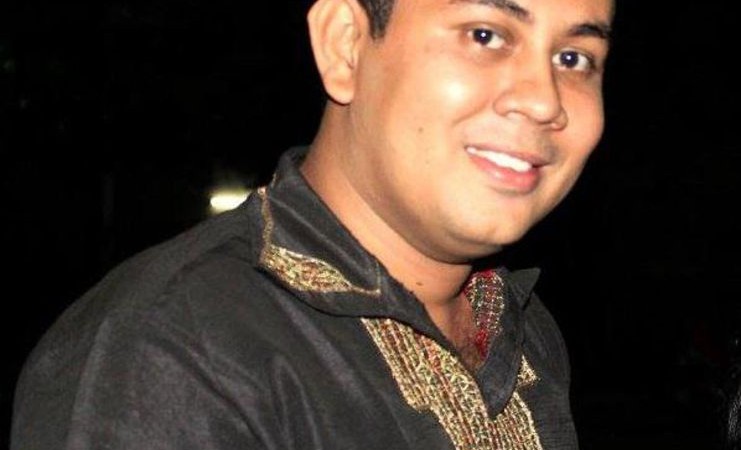
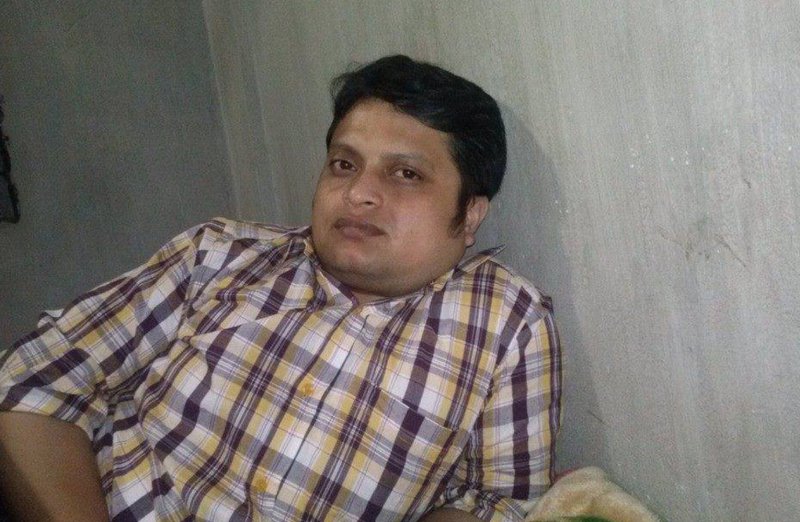
Murdered blogger Niladri Chakrabarty Neel, Image by Reza Sumon. Copyright Demotix (7/8/2015)
Murdered blogger Niloy Neel, Image by Reza Sumon. Copyright Demotix
On Friday, August 7 at approximately 1:45pm, five assailants armed with machetes entered the flat of blogger Niloy Neel and killed him brutally. When his wife and sister attempted to save him, the attackers threatened to kill them too.

Niloy is the fourth blogger to be killed in Bangladesh over the last six months. All those killed were secular and critical of conservative religious political movements in the country. Many more have been attacked, subjected to death threats and ostracized by religious hardliners for their writing.
The blogger had written under the pen name "Niloy Neel" in Istishon (meaning "station" in Bengali) as a member of a Bengali group blog that covered political and social issues. Expat blogger Arif Rahman noted that he completed a Master's degree in philosophy from Dhaka University in 2013.

Neel was vocal about secularism and wrote for the platform "Ganajagaran Mancha," demanding capital punishment for 1971 war criminals. Dr. Imran H Sarkar, a leader of Ganajagaran Mancha, writes on Facebook:
‪#‎NiloyNeel‬ was writing for women rights, indigenous peoples, even for all other minorities. He was critic of religious extremism that provoked bombing in mosque and killing thousands of civilians.

He was one of the voice for Social Justice, secularism, human rights and loud for ‪#‎AvijitRoy‬ justice. He frequently got threatened by islamic militants those are trying to destroy this country by terrorism.
The names of these bloggers and others under threat appeared on a list of 84 people submitted to a special government committee by a group of conservative Muslim clerics who accused the bloggers of “atheism” and writing against Islam. Government officials responded by blocking critical websites and making arrests, of bloggers and leaders from the religious right, at the height of #shahbag protests in 2013. Some media outlets, including prominent right-wing blogs, have even propagated the ideathat all bloggers are atheists who “hurt the feelings” of religious Bangladeshis. Eleven of the bloggers on the list (including Niloy) have been killed over the past two years.

Niloy also was active in Facebook, where he shared his opinions on political issues, but also described the threats he was facing. On May 15, 2015, he wrote:
আমাকে দুজন মানুষ অনুসরণ করেছে গত পরশু। ‘অনন্ত বিজয় দাশ হত্যার’ প্রতিবাদে আয়োজিত প্রতিবাদ সমাবেশে যোগদান শেষে আমার গন্তব্যে আসার পথে এই অনুসরণটা করা হয়।
I was followed by two people two days ago while returning home after attending a protest programme demanding justice for the murder of blogger Ananta Bijoy Das.
He went to the police station to file a complaint (general diary), and wrote his experience:
First, a police officer told me personally that the police do not usually register such GDs since the officer who registers it will be accountable for ensuring security of the justice seeker. And if the person faces any problem, that police officer may even lose job for negligence in duties.
Niloy soon after removed all his photos from his Facebook profile as a precaution.

Golam Mortaza questions the government for inaction:
ব্লগার বা অনলাইন লেখকদের 'নাস্তিক ' হিসেবে চিহ্নিত করে হত্যা করা হচ্ছে। এই হত্যাকারীদের বিরুদ্ধে ব্যবস্থা নেয়া মানে 'নাস্তিক ' হত্যাকারীদের বিরুদ্ধে ব্যবস্থা নেয়া। নাস্তিকদের যারা হত্যা করছে, তাদের বিরুদ্ধে ব্যাবস্থা নেয়া মানে নাস্তিকদের পক্ষ নেয়া। সরকারের দৃষ্টিভঙ্গি এরকমই। সরকার বক্তব্যে কোনো রাখঢাক নেই। স্পষ্ট বক্তব্য 'আমরা নাস্তিক হিসেবে পরিচিত হতে চাই না। '
Bloggers or online writers are being labeled as atheists. Its like taking actions against the killers is the same as taking action against the killer of atheists. To take action against against the killer of atheists is taking sides with the atheists. The government thinks in this way. They are not hiding it. They are saying by their actions "We dont want to be labeled as atheists".
One powerful group targeting secular bloggers is Hefajat-e-Islam Bangladesh, an association-based fundamentalist Islamic group in Bangladesh that has sought to ban the right of women to work outside of home and promoted the execution of so-called atheist bloggers.

Shaugat Ali Sagor writes in Facebook:
৮৪ জন কেন ৮৪০০ ব্লগারের জীবনের চেয়েও সরকার যে নাস্তিকদের সমর্থক নয় সেটার প্রমান দেওয়া জরুরী। ৮৪ জন ব্লগারের জীবনের বিনিময়েও যদি হাটহাজারীর হেফাজতওয়ালারা খুশি থাকে, সরকারকে হেফাজতে রাখে- সেটিই বরং দরকার।

আশ্চর্য! হাসপাতালের মর্গে একেকটা লাশ যেমন একেকটা নাম্বার, মানে সংখ্যা মাত্র।একেকজন ব্লগারও যেন কেবল নাস্তিক মাত্র। তারা রাষ্ট্রের নাগরিকক নন- কাজেই রাষ্ট্রের কোনো প্রটেকশন তারা পান না, তারা মানুষ নন- তাদের কোনো মানবাধিকার নেই। আর হ্যাঁ, খুন হয়ে যাওয়া 'ব্লগারটি' নাস্তিক ছিলেন- এই কথাটি একবার মুখ দিয়ে বের করা গেলে, সেটি প্রচারে হেফাজত আর সরকারের সমর্থকরাও একাকার হয়ে যান।'ব্লগার নামধারী নাস্তিকরা দেশের স্থিতিশীলতা নষ্টের চক্রান্তে লিপ্ত, সরকারকে বিব্রত করতে চায়'- নিকট অতীতে কোনো কোনো এমপিকেওতো এমন কথা বলতে শুনেছি।
Why only 84? Even if the number of the dead bloggers is 8400, it is far more important to prove that the government is not aiding the atheists. Even if the lives of 84 bloggers can make the Hefajat-e-Islam Bangladesh happy, keep the government safe [from political pressure] then that is important.

Amazing! The dead bodies of fallen bloggers in the morgue are just numbers. All the bloggers are only atheists. They are not the citizens of the land - so they do not get any protection. They are not human - they have no human rights. And yes, if you can somehow establish that the murdered blogger was an atheist, everyone including the government keeps preaching it. Some members of parliament have said in the past that "in the name of bloggers, atheists are disturbing the stability of the country, they want to embarrass the government."
Jyotirmoy Barua, a lawyer and activist writes that bloggers need to unite:
রাস্তায় প্রতিবাদ করা ছাড়া আর কোন কাজে ব্লগারদের একাট্টা হওয়ার কোন ঘটনা এপর্যন্ত ঘটেনি। এটাই ব্লগারদের সবচেয়ে বড় দুর্বলতা। একটি সংগঠিত দল বা গোষ্ঠী না হওয়া সত্ত্বেও তারা দল বা গোষ্ঠী হিসেবে টার্গেট।

তাই সংগঠিত হোন- নয়ত বাঁচবেন না। প্ল্যাটফর্ম তৈরি করুন। প্রতিরোধ করতে শিখুন। প্রতিবাদে কাজ হবে না। দেশে আইনের শাসন নেই, তাই চেঁচিয়ে লাভ হবে না।
So far the bloggers have not been able to unite on a platform other than protesting in the streets. This is the weak point of the bloggers [of Bangladesh]. They are not a united or cohesive group. But they are being targeted as a group.

So please unite - or you will not live. Build a platform. Learn to defend. Simply protesting is not going to work. There is no rule of law in the country - so crying aloud won't help.
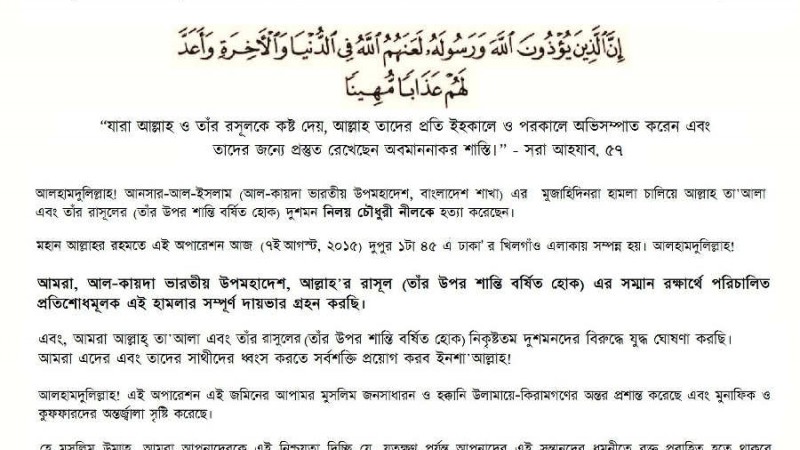
Statement claiming responsibility for Niloy's killing sent to media houses from the email ansar.al.islam.bd @gmail. com

According to news reports Ansar-Al-Islam, the Bangladesh chapter of Al-Qaeda in the Indian Sub-Continent, has claimed responsibility for the killing of blogger Niloy, terming him an enemy of Allah. Witnesses reported that while retreating from Niloy's apartment, his attackers reportedly chanted slogans like “Allahu Akbar”.

An email sent to media houses in Bangladesh reportedly read: “Praise be the God! Soldiers of Ansar-Al-Islam [AQIS, Bangladesh Branch] carried out an operation to slaughter an enemy of God and his messenger (peace & blessings be upon him), whose name is Niloy Chowdhury Neel.”

Meanwhile on Friday the police apprehended Hefajat-e-Islam leader Mufti Izharul Islam Chowdhury over an unrelated incident. Chittagong-based radical group Hefazats Nayeb-e-Amir Izaharul is also the chief of Nezame Islam Party, which opposed Bangladesh’s independence in 1971. One item on Hefazat's agenda is to impose capital punishment on all the atheists in Bangladesh, despite the fact that atheists have the same rights as other citizens in Bangladesh.

In May, Global Voices published a statement issuing a call for safety for all Bangladeshi bloggers and pleading with the Bangladeshi government to bring the killers to justice. Hours after Niloy's killing, the Committee to Protect Journalists published a statement posing a question that many bloggers and human rights advocates today are asking:
How many more bloggers must be murdered before the government of Prime Minister Sheikh Hasina acts decisively to stem the violence and impunity?

The post was also published in Global Voices Online.
May 12, 2015

Ananta Bijoy Das Becomes Third Free-Thinking Blogger Killed This Year in Bangladesh

Ananta Bijoy Das. Image from his Facebook page
Ananta Bijoy Das. Image courtesy his Facebook page
It's a sad day for online activists in Bangladesh. On Tuesday morning, science writer and blogger Ananta Bijoy Das was murdered by a group of three or four masked people wielding machetes in Sylhet, Bangladesh's fifth largest city.

It was the third such killing this year of a writer who advocated secular thought, allegedly at the hands of religious extremists.

Das, 33, was a banker by profession but also edited a quarterly magazine called Jukti (Logic) and headed the Sylhet-based Science and Rationalist Council. He was the author of four books on science and critical thinking, and took an active part in the Ganajagaran Mancha, a forum born out of the Shahbag protests that demands a ban on Islamist parties and the death penalty for convicted war criminals.

Das was also an admin for the Bangla blog Mukto Mona (Free Thinkers), which won Deutsche Welle's prestigious BOBS award for social change in April 2015.

According to the Doha Centre of Internet Freedom:
While most of Das's output for Mukto-Mona focused on science and evolution, he wrote a number of blogs that criticised some aspects of Islam and also of Hinduism.

In comments on Facebook posted early Tuesday, Das slammed the local member of parliament from the ruling Awami League party for criticising one of the country's top secular and science fiction writers.
Bangladesh, a Muslim-majority country, is officially secular. But people who have challenged religion have repeatedly been targeted by Islamic extremists in the past decade.

The nature of the threats have also escalated from local to international. Just a week ago, Al Qaeda in the Indian Subcontinent (AQIS) claimed responsibility for the assassination of Bangladeshi-American blogger Avijit Roy (the founder of Mukto Mona blog) on February 26 in which his wife Rafida Ahmed was badly injured. In a recent interview, she slammed Bangladesh's government for inaction and has termed the attack on her husband as "well planned, choreographed – a global act of terrorism."

On March 30, another blogger who opposed irrational religious belief, Washiqur Rahman, was hacked to death in Dhaka. Two madrassa (Islamic religious school) students were apprehended and a third assailant got away. Both Roy and Rahman's cases are under trial.

Das had been on extremists' hit list for some time and was first named in a list of 84 bloggers deemed atheist or blasphemous by Islamic hardliners submitted to the government in 2013.

AQIS claimed responsibility for Das’s murder, according to tweets by extremist group Ansar Bangla Team. "Another file closed! Stay tuned for next target," the statement read.

Screenshot of the AQIS statement
Outrage over Das' death spread quickly. Prominent blogger Arif Jebtik wrote on Facebook:
লিখতে, বলতে, ভাবতে কোনো কিছুতেই আগ্রহ পাই না। ৮৪ জনের একটি তালিকা স্বরাষ্ট্র মন্ত্রণালয়ে জমা পড়েছিল দুইবছর আগে, তালিকা থেকে নবম হত্যা হয়েছে আজকে সিলেটে। তালিকা নিশ্চয়ই চূড়ান্ত নয়, গত ২ বছরে আরো নাম সেই তালিকায় নির্ঘাত যুক্ত হয়েছে। কিন্তু অন্তত এই ৮৪ জনের ব্যাপারে গত ২ বছরে কোনো খোঁজখবর হয়নি, তাঁরা নিয়মিত বিরতিতে খুন হওয়া শুরু করেছেন।
মাসিক কোটায় হত্যা শুরু হয়েছে হয়তো এটি সপ্তাহান্তের কোটায় উন্নীত হবে। ৮৪ জন যাবে, আরো হাজার চুরাশির নাম তালিকায় আসবে। খানিক আহাজারি হবে, সবখানেই একটা ফিসফিস-চুপচুপ ভাব, কিছু বিকৃত মানুষের উল্লাস-তারপর পরের হত্যার জন্য অপেক্ষা।
এই দেশে আইনবহির্ভূত সব হত্যাই জায়েজ হিসেবে মেনে নিয়েছে বৃহত্তর জনগোষ্ঠি, এখানে সবগুলো খুনই 'বিচ্ছিন্ন ঘটনা'।
I don't have the impetus to write, say or think anything. Two years ago a list of 84 bloggers was submitted to the Ministry of Home, 9th from the list was murdered today in Sylhet. This list is not exhaustive, surely more names have been added in the past two years. But nobody bothered to think about the safety of these 84 individuals. They are ending up dead one by one, in regular intervals. Now they are killing one every month, maybe they will speed up to do the same weekly. This list will be done, thousands more will be added. People will regret the death a bit, hush, silence everywhere, demonic joy from some perverts, then everybody waits for the next kill. In this country all these illegal killings have been taken for granted, every death is an isolated incident.
Blogger and activist Rayhan Rashid remembered the fallen who were attacked or killed for their free thinking in Bangladesh:
Ananta Bijoy Das's last posts were translated from Bengali to English by Arunava Sinha:
The International Humanist and Ethical Union (IHEU) wrote in a blog that Ananta Bijoy Das's application for a visa to travel to Sweden, under invitation from Swedish PEN to speak in a conference, was rejected recently by the Swedish embassy in Dhaka, on the basis that he might seek to remain in Sweden.

Exiled writer and columnist Taslima Nasrin blamed the government:
Bangladesh government is not taking any action against the Islamist-killers for being afraid to be labelled as anti-Islam. Islamists are allowed to do whatever they like in Bangladesh. It seems killing free-thinker atheists who criticize Islam is their main agenda.

Rajib Haider
A.K.M Shafiur Rahman
Avijit Roy
Washikur Rahman Babu
Ananta Bijoy Das.
Who is next?

Tomorrow maybe you. Or maybe me.
Blogger Haseeb Mahmud wrote:
পুলিশের দায়িত্ব কি সেটা এই মুহুর্তে একটা প্রশ্ন। অভিজিৎ হত্যার কোন সুরাহা হয়নি। ব্লগার রাজিব হত্যার মামলায় গ্রেফতার ও সেটার বিচার শুরু হলেও সেই হত্যাকান্ডের নাটের গুরু এখনো ধরা ছোঁয়ার বাইরে। অনন্ত বিজয়ের হত্যাকারিদের গ্রেফতার ও তাদের রাতারাতি বিচার শুরু হবে এটাও আশা করা কঠিন। আমাদের করণীয় চাপাতির মুখে লেখা না থামানো। লেখা থামালে জিতে যাবে আনসারুল্লাহ।
What the responsibility of the police is at this point is a question mark. They could not find the killers of Avijit Roy. They have arrested the killers of blogger Rajib, but the mastermind is on the loose. It is a tough to hope that the killers of Ananta Bijoy will be nabbed anytime soon or a trial will start. Our prerogative is to not to stop writing even if confronted by wielding machetes. If we stop writing they will win.
The post was also published in Global Voices Online.
May 11, 2015

Why Arabic Script on the Walls Might Not Stop Public Urination in Dhaka

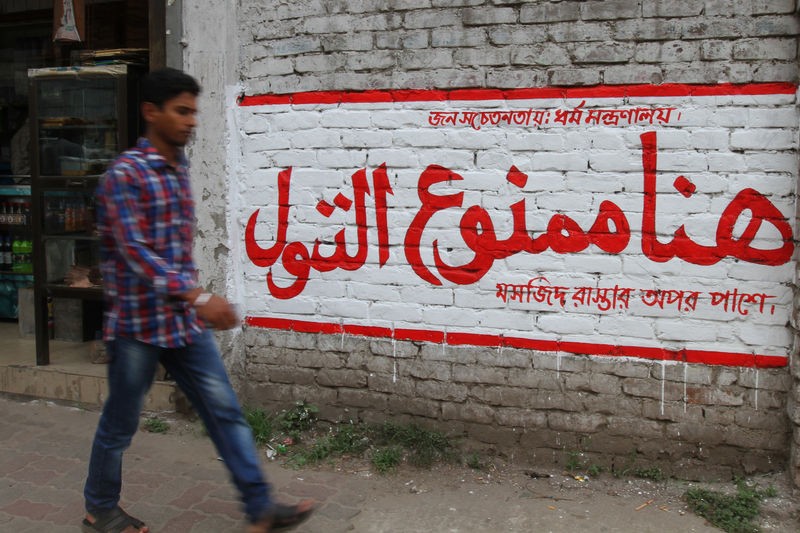
The photo shows  Arabic sign on the sidewall of Panthakunja Park at the Karwan Bazar in Dhaka. Image by Sk. Hasan Ali. Copyright Demotix (7/5/2015)
The photo shows Arabic sign on the sidewall of Panthakunja Park at the Karwan Bazar in Dhaka. Image by Sk. Hasan Ali. Copyright Demotix (7/5/2015)
Public urination is a problem in Bangladesh due largely to a lack of public toilets. Municipal officials in the capital Dhaka have battled in vain to stop men urinating in public, with signs in the local Bengali language and warnings of punishment and fines yielding no notable results.

Now the government is hoping that an innovative idea can put a stop to the habit. Recently the Ministry of Religious Affairs released a video highlighting their campaign "Language Matters" wherein Bengali signs warning against urination are now being replaced by Arabic signs, a holy language for Bangladeshis.

Perhaps they have taken a cue from neighbouring India -- battling with the same problem -- where pictures of Hindu gods and godesses on the walls are intended to have the same effect.


Although some are lauding the state's effort to solve a perennial problem, others are skeptical, claiming the campaign supports blind faith and promotes misconceptions.

Sufi Faruq comments on YouTube:
ধর্ম মন্ত্রণালয়ের দারুণ একটা ক্যাম্পেইন !!! (..)

বাংলাদেশের বেশিরভাগ মুসলিম আরবি ভাষা না বুঝলেও এই ধরনের অক্ষরকে পবিত্র মনে করে। তাই ওই স্ক্রিপ্টে লেখা যে কোনকিছু অপবিত্র করতে ভয় পায়। এই ভয়টার বেশিরভাগ সময় ধর্ম ব্যবসায়ীরা অপব্যবহার করতো। এবার একটা দারুণ কাজে ব্যাবহার হল।
A great campaign by the Ministry of Religious Affairs!!!

Most of the Muslim majority Bangladeshis cannot understand Arabic but they deem it as a holy language. So they fear to desecrate anything written in that language. Most of the time it was used by religious opportunists as it is the language of the Koran and the prayers. Now it has been used for a good cause.
Despite the Ministry of Religious Affairs' claim in the video about toilets being present in most of Dhaka's 10,000 mosques, the general lack of public toilets in the city of approximately 15 million is a genuine challenge. The city's large homeless population is particularly affected by the shortage.

Adnan R. Amin at Alal O Dulal Blog thinks that the video does not get to the root of the problem and instead aims to create false impressions:
The using of a religious misconception (“Arabic is a holy language”), to prevent a social evil, is clever. But it also reinforces and lends credence to that misconception, instead of dispelling it. One would think that for a ministry for religious affairs, dispelling religious misconceptions would outweigh protecting city-walls. If there were funds available to the government, Dhaka’s City Corporations could’ve used them to create better facilities for women. While it is difficult to discern from boardrooms, the 36 public toilets with facilities for women are now being used by men. Judging from the tactic and tone of  this video, a reexamining of both government bodies’ priorities seems to be in order.
Moreover, Fariduddin Masud, an influential cleric criticised the Ministry for Religious Affairs.

While most mosques do have sanitary facilities, mosques themselves are "not public toilets", he said, adding that "nobody has the right to use the language of the Koran for such a campaign."

Blogger Irene Sultana doubted the campaign via a blog post on Women Chapter titled 'Not Arabic, but Public Toilets, Matter":
ঢাকা শহরের প্রতি দেড় লাখ নাগরিকের জন্য শৌচাগার রয়েছে মাত্র একটি। [..] অধিকাংশ পাবলিক টয়লেটই ব্যবহার অনুপযোগী। [..] পাবলিক টয়লেটহীন নগরীতে পথচারীদের অধিকাংশই তাই ফুটপাতকেই বেছে নিচ্ছেন ’হালকা’ হতে।

না বুঝে কেবল আরবি লেখা থাকলে সালাম করা হলো এ দেশের মানুষের ধর্মীয় অন্ধত্ব। ধর্ম মন্ত্রণালয়ের দায়িত্ব ছিল মানুষকে এসব অশিক্ষা থেকে বের করে শিক্ষিত, সচেতন করা, তার বদলে মানুষের সেই অজ্ঞতাকে ব্যবহার করে ’সমাধানের’ নামে মূলত একটি মশকরা করলো!
There is only one toilet in the capital Dhaka for every 150,000 people, out of which many are not usable. So in the absence of enough public toilets the pedestrians use walls to relieve themselves.

Many Bangladeshis respect the Arabic language because they don't know the language. The duty of the Ministry of Religious Affairs was to educate them and make them aware that this is a language only, not everything in its writing is sacred. But instead they used this ignorance to eke out a "solution" which is actually a farce.
Sultana also cites the recent efforts of Indian Prime Minister Narendra Modi, who built toilets in front of temples and achieved 5.2 million lavatories in the first 100 days of his tenure.

Bangladesh lags far behind on this issue.

While state religious officials are already trumpeting its successes, the campaign does not appear to have been well thought-through. If implemented to the fullest extent, Dhaka's walls will be covered by Arabic but people will still have nowhere to urinate.

Moreover, in India, before Modi went on his toilet-building spree, the gods on walls campaign unravelled: people simply began urinating on the faces of the deities. Innovative campaigns incorporating public shaming such as "The Pissing Tanker" also lacked impact.

For this reason Adnan R Amin's comment that the money spent on the campaign -- "a proxy solution that treats the Symptom and not the Cause" -- would be better spent on new public toilets in Dhaka seems to be well-founded.

The post was also published in Global Voices Online.

April 15, 2015

Bengali New Year Takes a Colorful Stand Against Religious Extremism in Bangladesh

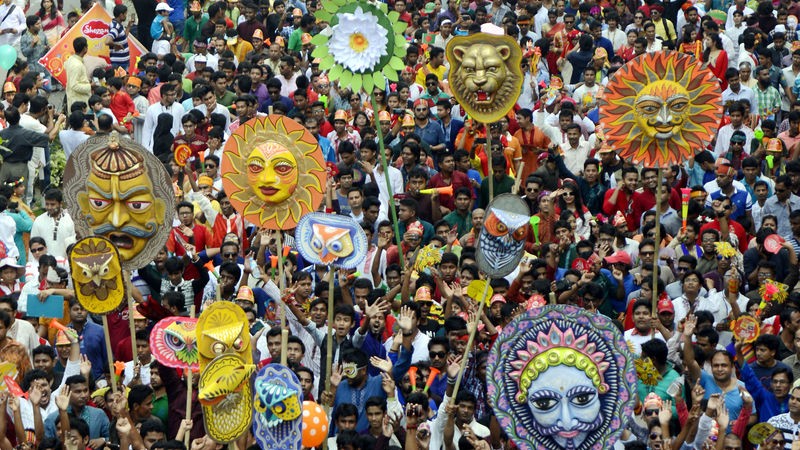
People celebrating Pahela Baishakh at Mangal Shobhajatra (Rally), a procession organised by Dhaka University’s Faculty of Fine Arts to welcome the Bengali new year. Image by  Sourav Lasker. Copyright Demotix (14/4/2015)
People celebrating Pahela Baishakh at Mangal Shobhajatra (Rally), a procession organised by Dhaka University’s Faculty of Fine Arts to welcome the Bengali new year. Image by Sourav Lasker. Copyright Demotix (14/4/2015)
The past few months have been particularly tough for Bangladesh as continuous political turmoil and violence left over 120 people dead. The recent killings of two free-thinking blog activists and the emergence of a new militant wing that seeks to murder atheists have worried many.

Whenever the country has found itself in trouble, Bangladeshis have embraced their roots, taking solace in art and culture to unite against any challenges they face.

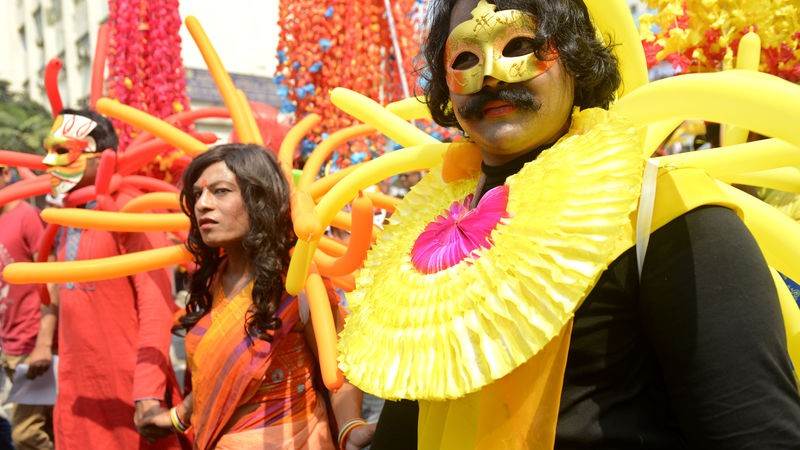
On Tuesday, April 14, 2015, people did just that in Bangladesh, welcoming the Bengali New Year 1422 with the resolve to continue the fight against communalism and religious fanaticism.

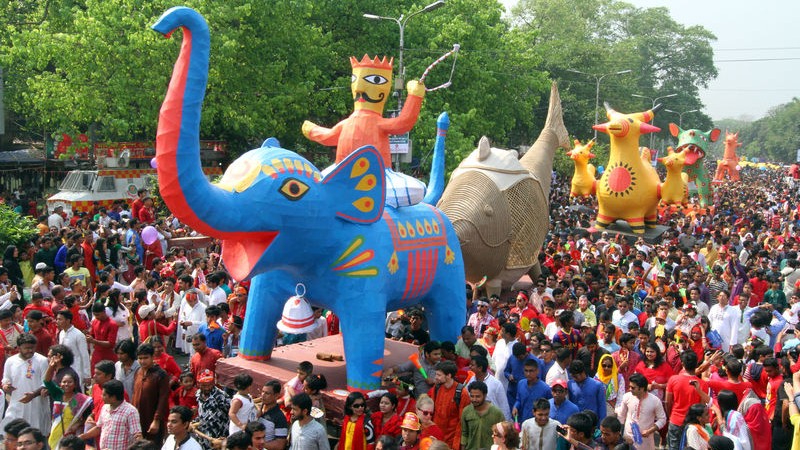
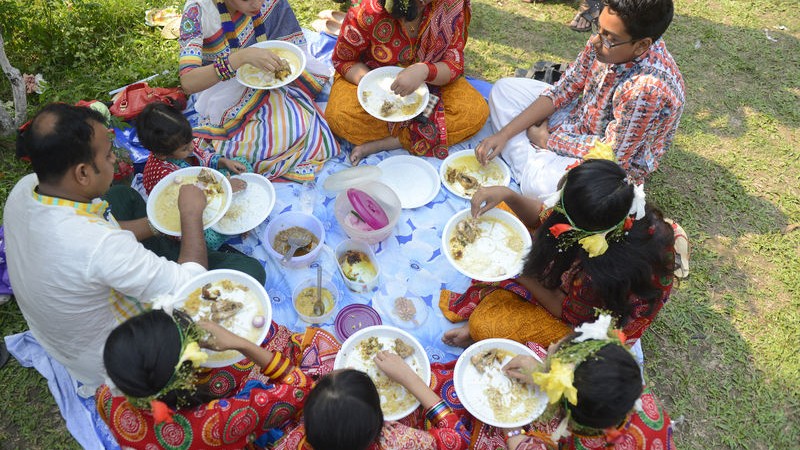
Bengalis, who are overwhelmingly the largest (98%) ethnic group in Bangladesh, customarily celebrate the New Year (Pohela Baishakh) with colourful procession and festivities. This year's festivities had a special theme: "Onek Alo Jaalte Hobe Moner Ondhokare" (Burn many lights in the darkness of hearts). It was chosen to commemorate the recent assassination of blogger and writer Avijit Roy and online activist Oyasiqur Rahman. A 20-foot-tall statue symbolising the rise of communal forces was at the procession, reminding everyone to reject such strife.

People carried colourful costumes in the Mangal Shovajatra.
People carried colourful costumes in the Mangal Shobhajatra (Rally). Image by Sourav Lasker. Copyright Demotix (14/4/2015)
Pohela Boishakh is the first day of the Bengali calendar, celebrated on 14 April in Bangladesh and 15 April in the Indian state of West Bengal by Bengalis. Hundreds of fairs and events welcoming the New Year takes place in many parts of Bangladesh and in West Bengal in India. The largest festivities happens in Dhaka, the capital of Bangladesh, where tens of thousands of people wearing multicoloured masks and traditional dress march in the Mangal Shobhajatra procession marking the New Year.

Tanvir Haider Chaudhury wrote on Facebook:
আপনি যেখানে থাকুন, পারলে ঢাকা চলে আসুন। পৃথিবীর সবচেয়ে আনন্দময়, উৎসবমুখর জায়গা এই মুহূর্তে ঢাকা।
শুভ নববর্ষ।
Wherever you are, please come to Dhaka if you can. Right now Dhaka is the happiest place on earth full of festivities. Shuvo Noboborsho (Happy new year).
While Twitter user Bappy tweeted a photo:
Crowds celebrated Pahela Baishakh at Mangal Shobhajatra, a procession organised by Dhaka University’s Faculty of Fine Arts to welcome the Bengali New Year 1422. Image by Sk. Hasan Ali. Copyright Demotix (14/4/2015)
Anila Haque thanked Google for creating a doodle for the occasion:
Gargie Ahmad hoped that the New Year would bring an opportunity to start anew:
To the Bengalis, hilsa isn't just a fish. It's an integral part of the culture and heritage. Be it fried or cooked with mustard, hilsa is a must in Pahela Baishakh celebrations. Image by Sourav Lasker. Copyright Demotix (14/4/2015)
Indian Prime Minister Narendra Modi tweeted in Bengali:
My good wishes to all the Bengali friends on Pahela Boishakh. Hope the following year will be great for everyone. Shuvo Noboborsho (Happy New Year).
'Nokhsikatha' graffiti by the Students of Fine Arts Institute on the walls of Dhaka University Fine Arts Institute where the rally begins. Image by Firiz Ahmed. Copyright Demotix (14/4/2015)
'Nokhsikatha' graffiti by the Students of Fine Arts Institute on the walls of Dhaka University Fine Arts Institute where the rally begins. Image by Firoz Ahmed. Copyright Demotix (14/4/2015)
And other netizens tweeted out images of the holiday:
'Nokhsikatha' graffiti by the Students of Fine Arts Institute on the walls of Dhaka University Fine Arts Institute where the rally begins. Image by Firiz Ahmed. Copyright Demotix (14/4/2015)
'Nokhsikatha' graffiti by the Students of Fine Arts Institute on the walls of Dhaka University Fine Arts Institute where the rally begins. Image by Firoz Ahmed. Copyright Demotix (14/4/2015)
The post was also published in Global Voices Online.
March 11, 2015

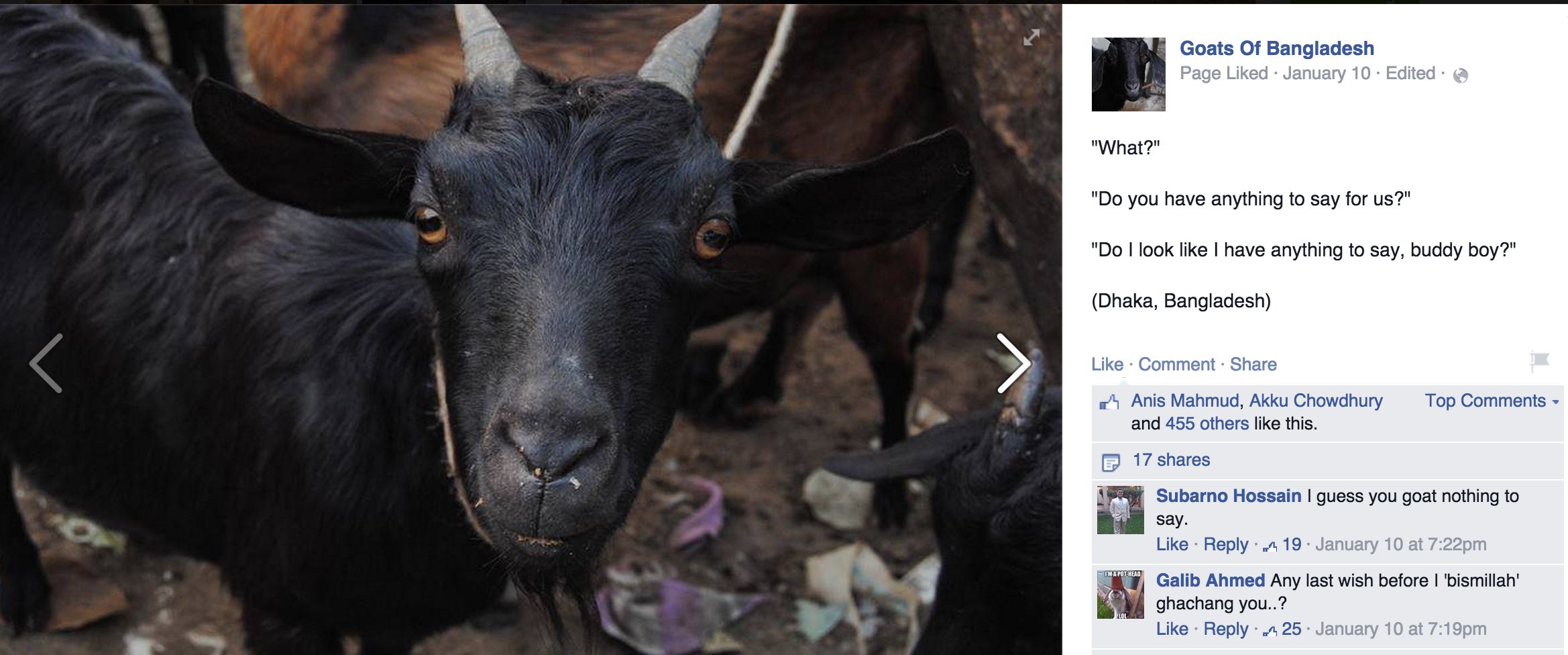
Real Goats. Real Stories. Bangladesh Delivers.

Screenshot from The Goats of Bangladesh Facebook page.
Screenshot from "The Goats of Bangladesh" Facebook page.
Read the full interview here at Scroll.in.

Bangladesh has now a satirical Facebook page much like Pigeons of New York, which is itself a parody site of the famous Humans of New York project. Goats of Bangladesh is only about six months old, but it boasts of almost 10,000 followers. Sahil Bhalla of Scroll.in interviewed one of the page's administrators, who preferred to remain anonymous.
[What is] the idea behind the page?

We were bored one day during Eid and decided to take pictures of goats with a DSLR camera. After seeing the outcome of the pictures, one of us decided we would open a parody page called "Goats of Bangladesh" where we would mimic the style of posts made by Humans of New York in a mocking way.
Screenshot from the Goats of Bangladesh Facebook Page
Screenshot from the "Goats of Bangladesh" Facebook Page
Read the full interview here at Scroll.in.

The post was also published in Global Voices Online.
February 22, 2015

A Passenger Ferry Capsizes in Bangladesh. Again.

Recovered bodies are brought to the shore in a dinghy. Image by Reporter#7619314. Copyright Demotix (22/2/2015)
Recovered bodies are brought to the shore in a dinghy. Image by Reporter#7619314. Copyright Demotix
On Sunday noon a passenger ferry reportedly packed with more than 100 passengers was hit by a cargo vessel 40 kilometres northwest of Dhaka, Bangladesh's capital. It subsequently sank.

A rescue vessel located the capsized vessel and attempted to pull it up. According to reports 37 bodies have been found and many are feared missing.
Collisions with other craft is the top reason for ferry disasters in Bangladesh, which are quite common according to this study. Overcrowding and poor safety measures are the catalyst.

Passenger lists are rarely kept accurately, making it difficult to know how many people are missing when accidents occur. Many people have already been rescued from this particular craft, but it will take days to determine precise numbers. This is the country's second deadly boat accident in less than a fortnight.

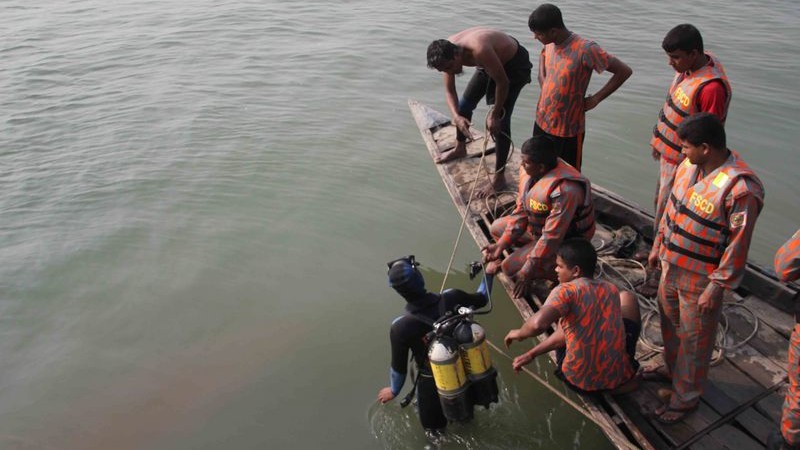
Divers at work to pull the bodies out of the capsized passenger ferry.
Divers at work to pull the bodies out of the capsized passenger ferry. Image by Reporter#7619314. Copyright Demotix (22/2/2015)
The post was also published in Global Voices Online.
February 20, 2015

Afghanistan Makes History in Cricket World Cup, Despite Debut Loss to Bangladesh

Image from the Bangladesh Afghanistan Match from Manuka, Oval. Image By Rezwan
Image from the Bangladesh-Afghanistan match from Manuka, Oval. Image By Rezwan
February 18 was a historic day for Afghanistan, as its national cricket team took on Bangladesh at Manuka Oval Stadium in Canberra, Australia, for the country's first ever game in a Cricket World Cup.

Even though Bangladesh showed off its experience and talent, beating Afghanistan by 105 runs in a quite one-sided game, it was clear the country had come a long way. Afghanistan learned the game from neighbouring Pakistan, where countless Afghans fled following the 1979 Soviet invasion of their homeland, and cricket is now the most popular game there.

Bangladesh is also comparatively new to the World Cup. It played its first World Cup game in 1999.

Ahead of the game Afghanistan was pumped up from its victory over Bangladesh at the last Asia Cup in 2014 in Dhaka, Bangladesh. However, the conditions in Australia were much different. The pitch at Manuka Oval offered more by way of pace and bounce than that Asia Cup surface.

Huge Crowd queueing up for the Bangladesh Afghanistan match on Feb 18, 2015. Image by Rezwan
Huge crowd queueing up for the Bangladesh-Afghanistan match on Feb. 18, 2015. Image by Rezwan
Despite the loss, Afghanistan thrilled its supporters as its bowlers kept up the pressure on Bangladeshi batsmen in the first 25 overs with a low run rate and took four wickets. Shakib Al Hasan and Mushfiqur Rahim combined for a 114-run 5th wicket partnership and Bangladesh posted a total of 267. Afghanistan was not up to par in reply as it was reduced to three wickets with only three runs in the first three overs. The team never quite recovered and was all out for 162 runs in 42.5 overs.

Canberra is home to a small population of Bangladeshis maybe 7,000 to 8,000 strong. However, many Bangladeshis from Sydney and Melbourne came to the Australian capital to watch the game. The official match crowd was 10,972, out of which Bangladeshis were more than 9,000, transforming the stadium into a little Bangladesh.

Here are some pictures from the crowd:

Bangladeshi supporters. Image by Rezwan (18/2/2015)
Afghan Supporters. Image by Rezwan (18/2/2015)
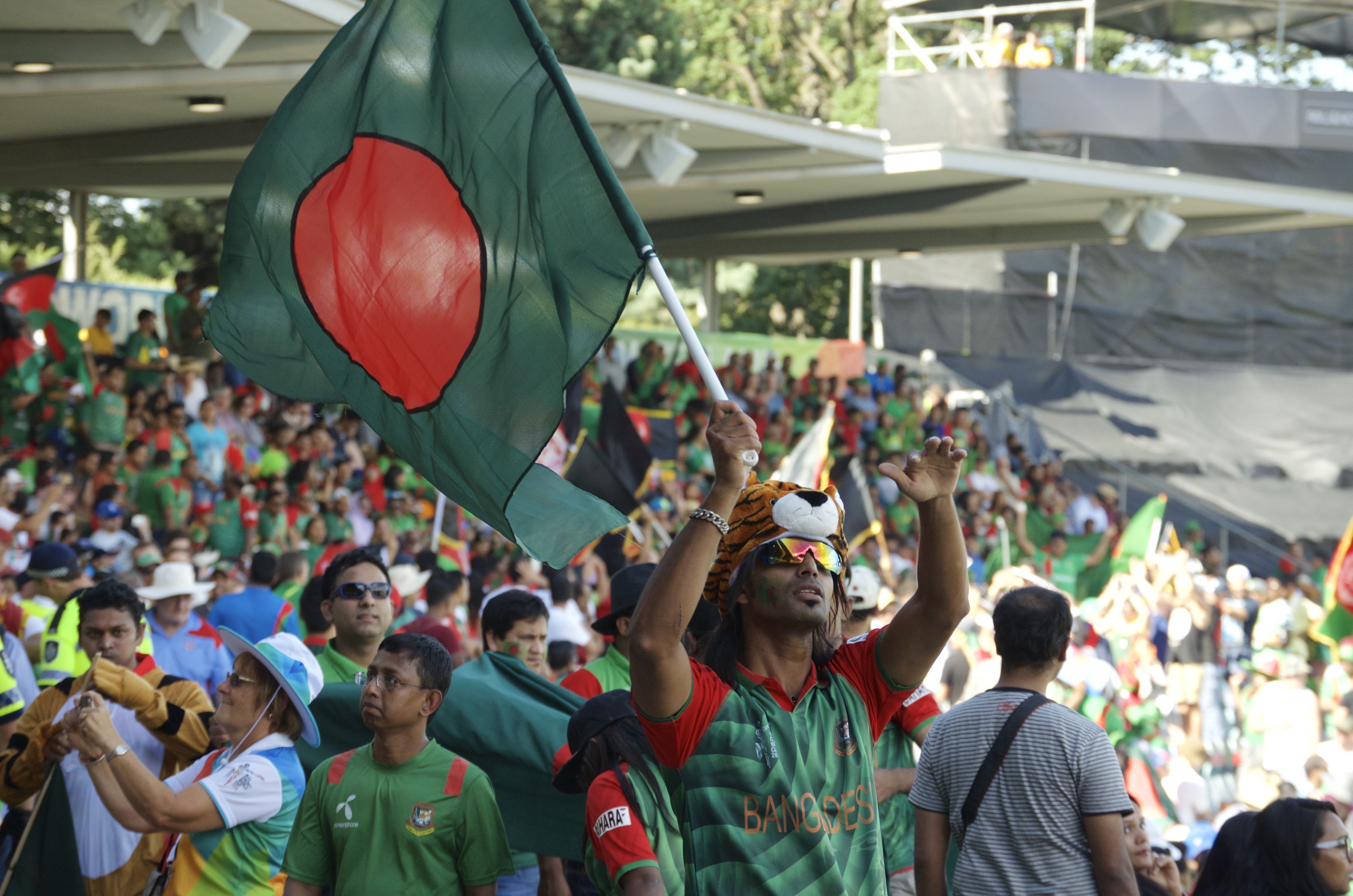
Bangladeshi supporters wore the green and red team jerseys which bore the colors of the Bangladeshi flag. Image by Rezwan
Bangladeshi supporters wore the green-and-red team jerseys, the same colors as the Bangladeshi flag. Image by Rezwan
Afghani supporters were also colourful. Image by Rezwan (18/2/2015)
Twitter hashtags #cwc15 and #BanvsAfg were trending on that day as many were talking about the game.
A tweet by the US Embassy in Kabul declaring victory for Afghanistan before the end of the game generated a lot of buzz. It was retweeted more than 300 times and favourited more than 100 times:
The embassy acknowledged their "premature posting" in another tweet, but maintained their excitement about Afghanistan's participation at the World Cup.

The post was also published in Global Voices Online.
February 17, 2015

Bangladeshi Publisher Faces Death Threats Over Translation of Controversial Iranian Writer's Book

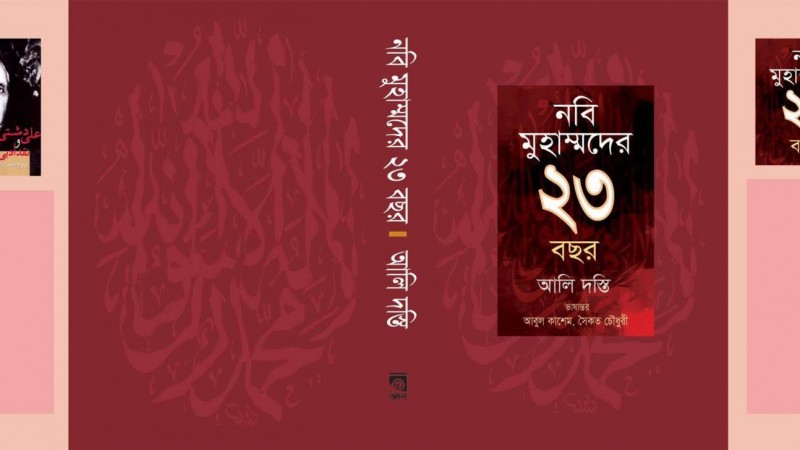
The cover of the Bengali Translation of  Iranian Muslim scholar and politician Ali Dashti's book. Image courtesy Haseeb Mahmud.
The cover of the Bengali translation of Iranian Muslim scholar and politician Ali Dashti's book. Image courtesy Haseeb Mahmud.
The publisher of a Bangla translation of a controversial book by 20th-century Iranian rationalist and politician Ali Dashti about the Prophet Muhammad's life has received death threats after displaying the work at Bangladesh's national book fair.

Hardline religious groups, mainly Hefazat-e-Islam, have called on authorities to prosecute publishing house Rodela Prokashoni over the translation of "23 Years: A Study of the Prophetic Career of Muhammad." Rodela Prokashoni's website appeared to be hacked on February 14, 2015, and their office in Banglabazar was attacked on Sunday, according to a report in the Bangla Tribune. No one was injured.

Following the uproar, the publishing house pulled the book from the shelves at the Ekushey Book Fair and from their website, and publisher Riaz Khan reportedly apologized, saying he wasn't aware that the book was considered offensive.

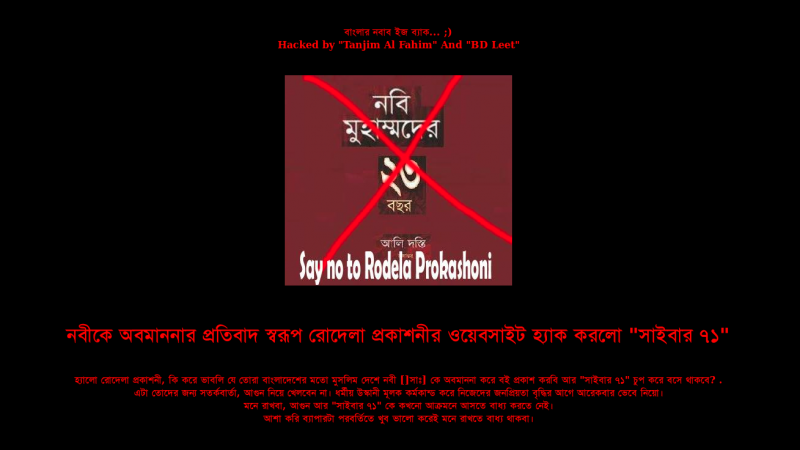
EUpofBg
Screenshot of the defaced Rodela Prokashoni website which says among other things: The website has been hacked in protest of disrespecting the prophet. [..] Say no to Rodela Prokashoni 
Despite that decision, authorities from the Bangla Academy, the country's national language authority, which organizes the book fair, shut down Rodela Prokashoni's stall on February 16, alleging that the publishing house was “selling books that hurt religious sentiments.” The fair committee defended the move, saying that “According to article 13.13 of Fair Regulations 2015, none is allowed to sell books at the fair that can hurt religious sentiments."

Haseeb Mahmud at Sachalayatan community blog summed up the outrage against the book:
এই বই প্রকাশের জের ধরে ধর্মীয় মৌলবাদি গোষ্ঠি বিভিন্ন তৎপরতা চালাচ্ছে। গতকাল গণমাধ্যমগুলো প্রেস বিজ্ঞপ্তি পাঠিয়ে হেফাজতে ইসলামের জুনাইদ বাবুনগরী ও সাংগঠনিক সম্পাদক আজিজুল হক "মানবতার মুক্তির দূত বিশ্বনবী হযরত মুহাম্মদ সাল্লাল্লাহু আলাইহি ওয়াসাল্লামের প্রতি চরম অবমাননাকর ও ঔদ্ধত্যপূর্ণ ‘নবি মুহাম্মদের ২৩ বছর’ শীর্ষক বইটি বাজেয়াপ্ত ও ‘রোদেলা’ প্রকাশনীকে নিষিদ্ধ" করার দাবি জানিয়েছে।" তারা আরোও বলেন, দেশের ক্ষুদ্র একটি ইসলামবিদ্বেষী নাস্তিক্যবাদী গোষ্ঠী কর্তৃক পৃষ্ঠপোষিত [..] এই বইটির পরতে পরতে মহান আল্লাহ তা’আলা, হযরত মুহাম্মদ সাল্লাল্লাহু আলাইহি ওয়াসাল্লাম ও তাঁর পবিত্র জীবন সম্পর্কে অসত্য, বিভ্রান্তিকর ও ধৃষ্টতাপূর্ণ মিথ্যাচার করা হয়েছে। বইটির লেখক কুখ্যাত ইসলামবিদ্বেষী নাস্তিক আলী দস্তি। [..]

এই বই প্রকাশের নেপথ্য ইসলামবিদ্বেষী নাস্তিক্যবাদী দুষ্টচক্রকে তদন্তের মাধ্যমে গ্রেফতার করে আইনের আওতায় এনে দৃষ্টান্তমূলক কঠোর শাস্তির দিতে হবে। অন্যথায় হেফাজতে ইসলাম বাংলাদেশ ইসলামবিদ্বেষী নাস্তিক্যবাদী গোষ্ঠীকে প্রতিহত করতে বাংলার তৌহিদি জনতাকে সঙ্গে নিয়ে রাজপথে কঠোর কর্মসূচী দিয়ে মাঠে নামতে বাধ্য হবে।
A number of religious fundamentalists are trying to create a controversy regarding the publication. Yesterday Hefazat-e-Islam, an Islamist fundamentalist group in Bangladesh, sent a press release to different media organisations demanding that the book "23 Years of the Prophet Muhammad," which is demeaning and disrespectful to the savior of humanity, the Prophet Muhammad (PBUH), should be confiscated and Rodela Prokashoni should be banned.

They also said that [the book is] sponsored by a small minority of atheists in this country [...] this book spreads false, untrue and confusing facts about the Prophet Muhammad (PBUH) and his life. The writer of this book is the notorious anti-Islamic atheist Ali Dashti.

"We demand [to the government] that the anti-Islamic atheists in this country, who are behind publishing this book, should be investigated and arrested and be punished severely. If not, Hefazat-e-Islam will take to the streets with common people to stop these anti-Islamic atheists and be obliged to announce hardline street protests."
Other organisations like Islamist Movement have also made similar statements.

"23 Years: A Study of the Prophetic Career of Muhammad," which was first published in the early 1970s, questions the miracles ascribed to the Prophet Muhammad. The author, the late Ali Dashti, was a former senator and ambassador to Lebanon for Iran. After the Islamic revolution in 1979 when Ruhollah Khomeini came to power, Dashti was jailed, and anyone who was discovered to have the book in his or her possession was taken to court for questioning.

We asked an Iranian blogger who attended high school in Iran during the 1990s about the book. The blogger, who wishes to remain anonymous, said:
I believe I read his book called 23 years when I was a teenager. Most of the Shiism custom he criticized in the book had disappeared by the time I read it. And I think no Shiite Muslim would defend the things he criticized in his book today. So he was not anti-Islam but against weird customs in Shiite Islam....I don't know how I got it. It is unlikely that you can buy it from bookstores.
A group of Bangladeshi publishers have demanded that Rodela Prokahson be evicted from their current office and that publisher Khan be arrested and face the death penalty. They have also vowed to take legal action against the him. Khan says he has been receiving death threats to his mobile phone.

Screenshot of a threatening message posted against the publisher on Facebook. Image courtesy Haseeb Mahmud.
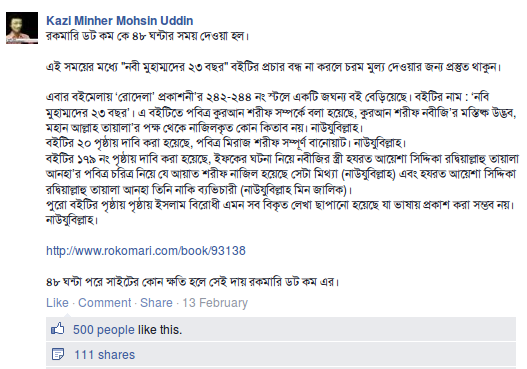
"Rokomari.com will have 48 hours to comply. If they do not stop publicising the book '23 Years of the Prophet Muhammad' they will pay the price. [...] If the site is hacked after 48 hours, Rokomari.com will be responsible."
Screenshot of a threatening message posted on Facebook against an online e-commerce site selling the book. The site took down the book from their listing. Screenshot courtesy Haseeb Mahmud.[/caption]Accusations of blasphemy and atheism have had serious and occasionally deadly consequences in Bangladesh in recent years. Two years ago, blogger Ahmed Rajib Haider was brutally killed outside his home in Dhaka because of his writings against war criminals and Islamic fundamentalists in Bangladesh. Haider, among many other bloggers, was labeled an atheist. Islamist groups like Hefazat have publicly identified writers and bloggers they deem to be atheists or blasphemous and called for them to face the death penalty.

Bangladesh is a non-religious parliamentary democracy, so there is no sharia or blasphemy law. If anybody claims to be an atheist, he or she has the same rights as other citizens. However, under Section 295A of Bangladesh's Penal Code (1860), any person who has a “deliberate” or “malicious” intention of “hurting religious sentiments” is liable to imprisonment.

Writer Swakrito Noman questioned the indignation surrounding the translation of "23 Years: A Study of the Prophetic Career of Muhammad" in a Facebook post:
প্রশ্ন হচ্ছে, আলি দস্তির এই বইটি কি আন্তর্জাতিকভাবে নিষিদ্ধ? যদি নিষিদ্ধ না হয় তাহলে বাংলাদেশে বইটি প্রকাশিত হলে অসুবিধা কী? বইটি বাংলা অনুবাদ হওয়ার আগে অনুভূতিপ্রবণরা কোথায় ছিলেন? এতদিন কেন অনুভূতিতে আঘাত লাগল না? নাকি আপনারা পার্সি বা ইংরেজি জানেন না বলে আপনাদের অনুভূতিতে আঘাত লাগেনি?
The question is, is this book banned internationally [or Bangladesh for that matter]? If not, then why is there a problem in publishing it? Where were you before it was translated in Bangla? Why were your religious sentiments not hurt then? Or were they not hurt because you do not know English or Farsi?
Noman continued:
জানি, এই দেশের মানুষ হয়ত এখন রোদেলা প্রকাশনীর প্রকাশক রিয়াজ খানের পক্ষে কথা বলবে না। অধিকাংশ মানুষ এখন হেফাজতের পক্ষে তালি বাজাবে। সরকারও হয়ত হেফাজতের পক্ষ অবলম্বন করবে। আমি বাংলা ভাষার ক্ষুদ্র এক লেখক, আমি হেফাজতে ইসলামির এই অযৌক্তিক কর্মকাণ্ডের প্রতিবাদ করছি। জানি এই প্রতিবাদের কারণে হয়ত আমিও আক্রান্ত হতে পারি। তবুও প্রতিবাদ করছি। কারণ, এভাবে ইসলাম প্রতিষ্ঠিত হয় না। জ্ঞানের পথকে এভাবে রুদ্ধ করা যায় না। এই বইয়ের বিরুদ্ধে যদি হেফাজত বা ইসলাম ধর্মের কেউ পাল্টা আরেকটি বই লিখত, সেটিই হতো প্রকৃত প্রতিবাদ। জ্ঞানের প্রতিবাদ জ্ঞান দিয়ে করতে হয়। যুক্তির প্রতিবাদ যুক্তি দিয়ে করতে হয়। প্রকাশনা প্রতিষ্ঠানে হামলা, প্রকাশকের ফাঁসি দাবিকে কোনোভাবেই সমর্থন করা যায় না।
I know many people in this country will not support publisher Riaz Khan. Many will join the Hefazat bandwagon. Even the government can support them. I am a petty writer in the Bangla language. I protest this illogical stand of Hefazat-e-Islam. I know I can also be attacked for taking this stance, but I insist. Because, you cannot establish (or spread) Islam like this. You cannot deter knowledge like this. If Hefazat would write another book countering this with all their logic, that would be the perfect protest for them. You need to protest logic with logic, knowledge with knowledge. Attacking a publishing house, attacking the publisher is equal to barbarism.
The post was also published in Global Voices Online.
December 14, 2014

Massive Oil Spill Threatens Bangladesh's Sundarbans

Spotted deers forage at the Kokilmoni forest in the Sundarbans, a UNESCO world heritage site. Bagerhat, Bangladesh. Image by Muhammad Mostafigur Rahman. Copyright Demotix (5/11/2014)
Spotted deers forage at the Kokilmoni forest in the Sundarbans, a UNESCO world heritage site. Bagerhat, Bangladesh. Image by Muhammad Mostafijur Rahman. Copyright Demotix
An oil tanker carrying 358,000 liters (almost 100,000 gallons) of furnace oil sank in the Shela river on December 7, spilling oil over more than 60 kilometers (about 37 miles) of the Sundarbans. Located on in southwest Bangladesh, the Sundarbans is the largest single block of tidal mangrove forest in the world, covering approximately 10,000 square kilometers (3,900 square miles), of which 60 percent is in Bangladesh. The Sundarbans, a UNESCO World Heritage Site, is also one of the largest reserves for the Bengal tiger, and provides sanctuary to many other species.
According to reports, the new oil spill threatens the Mrigmari-Nondabala-Andharmanik dolphin sanctuary. Mangrove trees are also highly susceptible to oil pollution—indeed, they are expected to start dying after the area's aquatic life, which is typically first to perish. Fahim Hassan has put together an infographic on Flickr explaining the details of the devastation.

According to images Mowgliz Elisabeth Rubaiyat posted on Facebook, the disaster is already killing some animals. Local authorities appear to be outside their depth, never before having confronted so large an oil spill, and lacking the necessary infrastructure to respond properly. Al Jazeera reports several local fishermen have resorted to cleaning up the spill using sponges and sacks.

Many on Twitter have questioned the authorities' response:
To help in the relief effort, the government dispatched a ship to the area carrying oil dispersants. If such chemicals are released incorrectly, however, it can harm the local ecology still further. Four days later, the state's efforts seem to have had little effect, exacerbating fears of a lasting ecological disaster.
Bangladesh's Water Transport Minister says locals were able to stop the oil from entering the forrest, using nets, and they're also working to remove the oil from the water, to keep the situation from becoming worse. The national Forest Department is leading the operation with 100 boats and 200 fishermen.

The Forest Department has filed a lawsuit for 1 billion Bangladeshi taka (about $13 million) against the owners of the two cargo ships responsible for the spill.

Just a month ago, before the spill, the Sunderbans mangrove forest looked like this:


Blogger Ahmed Sharif criticizes the government's ill-planned disaster-management strategy, saying it misunderstands the issue:
দুর্যোগ ব্যবস্থাপনা বলতে কি শুধু বন্যা-জলোচ্ছ্বাস বোঝায়? গত দুই দশকে অর্থনৈতিক দিক থেকে দ্রুত অগ্রগতির সাথে সাথে যেসব ঝুঁকির সৃষ্টি হয়েছে, সেগুলির জন্যে আমরা নিজেদের তৈরি করতে পারিনি। নদীতে জাহাজের সংখ্যা আগের চেয়ে বহুগুণ বেড়ে গেছে, কিন্তু তার সাথে পাল্লা দিয়ে তৈরি হয়নি মনিটরিং এজেন্সিগুলি। জাহাজ তৈরি হচ্ছে যথেচ্ছভাবে, যাত্রী নেওয়া হচ্ছে অতিরিক্ত, ফিটনেসবিহীন জাহাজ চলছে, নদীর পানি দূষণ করছে জাহাজের বর্জ্য, নদীর মাঝে পার্ক করে রাখা হচ্ছে জাহাজ, সঠিক যন্ত্রপাতি ছাড়াই চলছে জাহাজ, চলাচলের সময় ঠিক করে দেয়ার পরেও কেউ মানছেনা – কেউ দেখার নেই। কাজেই দুর্ঘটনার সম্ভাবনা প্রতিদিন বেড়েই চলেছে। আর দুর্ঘটনার সম্ভাবনা বাড়লেও সেটার জন্যে প্রস্তুতি নেই আমাদের।
Is disaster-management confined to floods and cyclones? In past decades, the country has seen accelerated economic development and increased risks. But we could not keep pace to prepare ourselves for those added risks. The commercial ships in our waterways have multiplied, but our monitoring agencies couldn't keep up. Many ships are being built outside the proper guidelines, carrying passengers over their capacity. Many ships are unfit to operate, they dispose of waste improperly, they block waterways indiscriminately, they break schedules—nobody is monitors any of this. So there is an increased risk of accidents, and we are not prepared for these accidents and disasters.
YouTube user A. K. M. Wahiduzzaman uploaded a video capturing the devastation of the oil spill:


The body of the first dolphin, a rare Irrawadi dolphin, to die in this incident was discovered last Friday. According to reports, the Padma Oil Company has managed to remove about 10,000 liters (about 2,600 gallons) of oil in its cleanup efforts, so far. The company is offering to pay volunteer cleanup-workers 30 Bangladeshi taka (about 40 cents) for every liter (about 34 ounces) of oil recovered.

Singer and blogger Mac Haque comments on Facebook:
What is perplexing is the rudimentary cleaning operation. With offer of Taka 30/= per litre for furnace oil recovered, thousands have jumped in, not to save the Sundarbans but to eke an existence. Obviously for the poorest of the poor this is a windfall. However, have not heard anyone talk about the risk to human health from dangerous toxins in the furnace oil. Anywhere else in the world the Government would have faced public litigation suit for endangering citizens health. I see thousands of poor and ignorant people dying in the days ahead thanks to Bangladesh Petroleum Corporation's myopic decision. Our focus should not only be for hunt of dead dolphins - but contaminated humans!
There have been protests demanding that the authorities ban merchant ships and cargo vessels from using the rivers and channels of the Sundarbans. Absent effective government measures, Bangladesh will have to keep relying on civil society and volunteers in this environmental crisis.

The post was also published in Global Voices Online.