






Dragonfly

Image by Rezwan

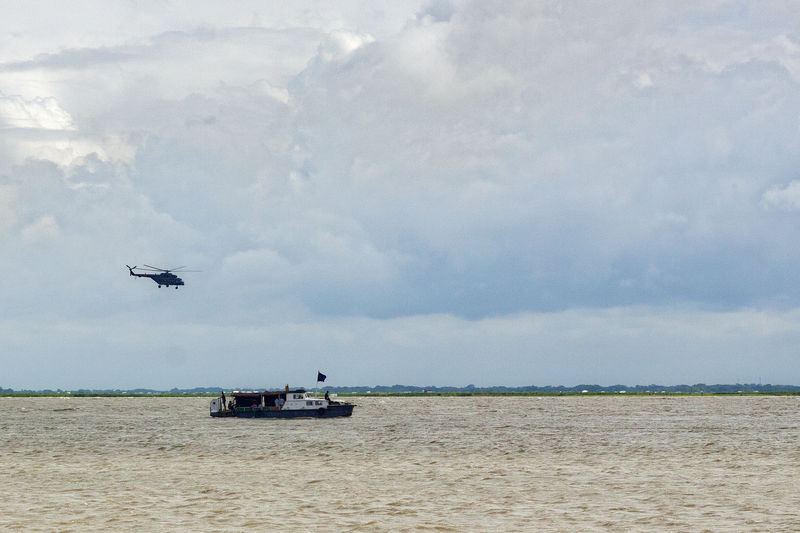
Overcrowded passenger ferry capsized in the Padma River in Munshiganj, Bangladesh

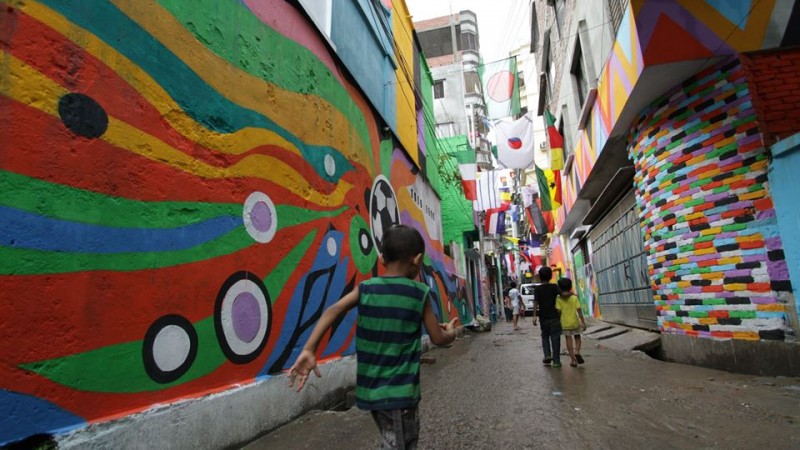
The World Cup Goal-E Project

This street in Bangladesh has a colorful world cup celebration

New Chum Hill Ruins

Remnants of Kiandra gold mine at New Chum Hill, #nsw #australia

Showing posts with label Population. Show all posts

June 21, 2015

Citizen Media Shows Why India Is Unlikely to Reach Its Millennium Goals Target for Maternal Mortality

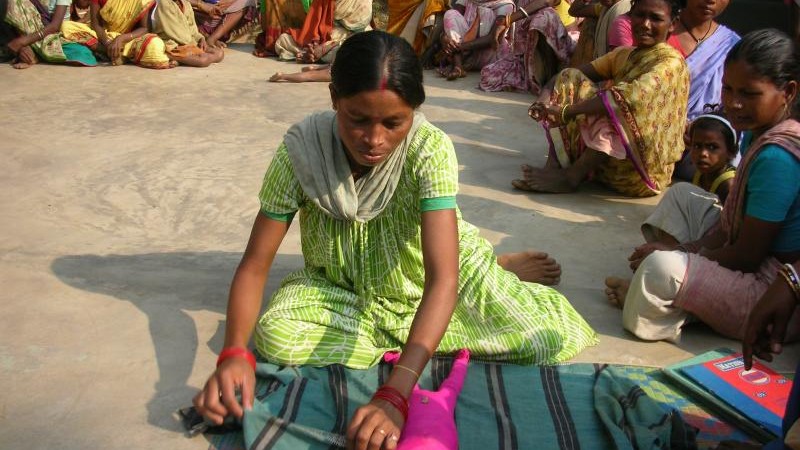
In the hamlet of Indkatha , Jharkhand state in eastern India, women of the Ho tribe take lessons to reduce maternal mortality.  Image by Freny Manecksha. Copyright Demotix (11/11/2008)
In the hamlet of Indkatha, Jharkhand state in eastern India, women of the Ho tribe take lessons to reduce maternal mortality. Image by Freny Manecksha. Copyright Demotix (11/11/2008)
According to the UN Millennium Development Goals, India should bring down its maternal mortality rate (MMR) to 109 per 100,000 live births by 2015. This is a tough ask, as from an MMR of 437 per 100,000 live births in 1990-91 India has only achieved a reduction to 190 by 2013-2014.

Experts therefore believe that India is likely to miss its Millennium Development Goals target for MMR.

Safe birthing depends on how informed pregnant mothers are and whether the delivery is carried out by trained personnel and in institutional health facilities.

In many regions of India, a lack of health infrastructure to support institutional deliveries and pre- and post-natal care as well as a lack of awareness regarding existing schemes promoting institutional deliveries serve as major impediments to achieving the goal. Other factors such as early marriage of girls, poor nutrition among women and gender inequality increase maternal risk.

A report drafted by CommonHealth and Jan Swasthya Abhiyan, a coalition for maternal-neonatal healthcare and safe abortion, says that the public health system has failed women belonging to the Scheduled Castes, Scheduled Tribes and minority religious groups living in geographically remote areas, as well as migrants. The report shows that although the government runs several programmes, there is a great gap in accountability and governance and most of the programmes have been implemented poorly on the ground.

Citizen journalists from Video Volunteers -- an international media and human rights NGO -- have highlighted maternal healthcare problems at grassroots level in a series of videos.

Their stories reveal that while the government is encouraging women to deliver at institutions rather than at home, the public health system is crippled by shortages of health infrastructure, doctors, frontline health workers and medicine.

Corruption plays its part

In 2014, 56,000 women died during childbirth in India. The Indian government’s schemes Janani Suraksha Yojana and Janani Shishu Suraksha Karyakram make provisions to reduce out-of-pocket expenditure for women living below the poverty line, providing free antenatal check ups, IFA tablets, medicines, nutrition in health institutions, provisions for blood transfusion, and transport to and from health centres.


However, according to the above video, which comprises footage taken by the hidden camera of citizen journalist Mary Nisha from the Godda district of Jharkhand:
The 24-year-old woman in labour was kept waiting for the doctor for six hours. The doctor on duty did not turn up and she delivered in the presence of a nurse. She was forced to pay INR 400 for her delivery and even to use the toilet. She received neither free medicine nor nutrition.
Lack of functional institutions

This video follows three women in Khatti village, Gariaband district, Chhattisgarh. One lost her baby six days after it was born due to a lack of medical assistance. Another had a stillborn baby resulting from an unassisted home birth while a third, who is nine months pregnant, has no access to healthcare.


This video by Reena Ramteke from Khatti village in Garyaband District of the state of Chattisgarh shows that the state-run health facility in the locality is constantly shut.

Laleshwari, 21, says no health worker has ever contacted her. Purnima, 20, had a stillbirth despite the fact the health centre was close to her home. She says the sub-health centre is open twice a month and the nurse at the facility is not present most of the time it is open. What options did she have?

Not a single delivery has taken place in the past decade in the sub-health centre in Khatti village. Indrani, 22, lost her child within six days of the birth due to an infection following a home delivery. During the delivery she called the duty nurse of the sub-health centre but was told by the nurse that she was at a meeting.

Bharti Kumari reports from Telmocho village, Dhanbad district, Jharkhand, that the main medical facility is unusable for health workers and patients, lacking functioning toilets and featuring a roof that leaks during the monsoon.


The doctors of this facility also visit rarely. Thus, patients that can afford to have to visit a relatively costly private centre for childbirth.

Lack of manpower

Halima Ezaz from Dhanbad, Jharkhand, reports that one Auxiliary Nurse Midwife (ANM) from Jharkhand looks after 14 sub-health centres. Ahilya Devi, a septuagenarian, has responsibility for looking after pregnant women and women with new born babies, giving them nutrients, vaccinations, performing deliveries and so on. But she is not supplied with proper tools to work in a region where the power supply is unstable:


Ahilya says:
We used to have rechargeable emergency lights, but those are broken. [If the lights go at night], we have to use candles and torches. How can we make stitches in this light?
Each of these videos highlights the obstacles to reducing the maternal mortality rate in India. Despite the government campaigns in place, India is lagging behind neighbours Bangladesh and Nepal in the fight against maternal mortality. There is also a huge disparity in terms of progress between different states in the vast country. Some states like Tamil Nadu, Delhi, Kerala and Andhra Pradesh have achieved their millennium development goals. But there are many -- especially those with Scheduled Castes and Scheduled Tribes as well as minority religious groups -- who are left trailing.

Watch this YouTube playlist on maternal health in India to learn more.

The post was also published in Global Voices Online.
November 01, 2011

South Asia: Celebrating the 7 Billionth Child

On the 31 October, 2011, the earth welcomed a newborn child named Oishi. Her birth in the Bangladesh capital Dhaka carried a special message - she is the 7 billionth child of the world.

The Editor.net reports:
The 7 billionth child of the world is here in Dhaka. The lucky parents of the child are Mohsin Hossain and Tonni Hossain. They had hoped for a boy child as their third child. And this 3rd child is the 7 billionth child (symbolic) of the world.

The beautiful girl child was born on 12:01 AM at the early hours in Azimpur Maternity and Child Care Hospital.
It is difficult to identify exactly which child is the 7 billionth one, so a symbolic celebration is happening around the world. UNFPA selected Oishi to carry the honor in Bangladesh.

The website adds:
This birth was celebrated publicly - with cake and candles. The hospital was crowded with people who gathered to catch a glimpse of the child. Sponsored by the 7 billion action program, this program was a publicity event.
Posha Pakhi at group blog Somewhereinblog.net carried the news with a post titled "The 7 billionth child was born in Dhaka". The post attracted many comments:

Journo opined [bn]:
Welcome the the 7 billionth child from Bangladesh. Hope she will live as an enlightened person.
Mithapur wished the child and questioned the justification of selecting her and mentioned jokingly [bn]:
One question: How did they calculate that she is the 7 billionth

If the line would read -

The world's 7 billion (instead of billionth) children born in Dhaka

It can happen one day, isn't it?
Atiq cannot tell the difference between 7 billion and 7 billion plus one:
I don't understand all the fuss between 7 billion and 7 billion plus one numbers. Why so much discussion on this? Everybody is born with a number everyday.

My prayers for every one of them.
Although the world cheers at Oishi's birth, it did not cheer her parents much. Because Oishi is a girl child. Her parents wanted a boy this time [bn] (the first two are girls).

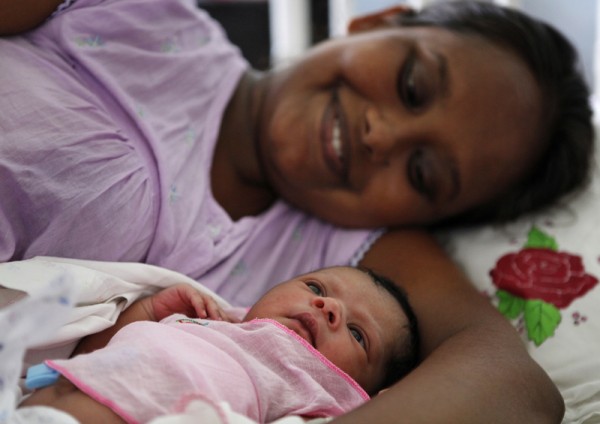
Sri lankan mother Danushika Perera cuddling her newly born baby
Sri lankan mother Danushika Perera cuddling her newly born baby. Image by Rohan Karunarathne. Copyright Demotix (31/10/2011)


Not only in Bangladesh, similar celebrations took place in many countries of the world. In Sri Lanka UNFPA celebrated the birth of Muthumani, the girl child of Ishara Madushanka and Danushika Dilani Perera.

Similarly in India Plan International celebrated the birth of Nargis as the 7 billionth child of the world.

LiveIndia.Com reports [Hi]:
In Lucknow, the capital of Uttarpradesh state in India, a baby girl named Nargis was the symbolic seven billionth child to be born during the early ours of Monday. She was named as Nargis.
Although the growing number of world population has been seen as a wake up call for the world, Muthumani, Oishi and Nargis give us the message that the girl-children should not be neglected in the future.

Translated from Bangla. Original post by Bijoy at Global Voices Bangla.

July 18, 2011

Bangladesh Census 2011 and Mobile Phone Statistics

According to the fifth national census (March 2011) taken by Bangladesh Bureau of Statistics (BBS) the population of Bangladesh stands at 142.319 million. The ratio between males and females are almost equal comprising 71.255 million and 71.064 million males and females respectively.

The population has been growing at the rate of 1.34 percent annually, 14.4 percent growth of population since last census (2001, 124.355 million. The number of households stands at 32.068 million, with average 4.4 people constituting one household. With 8,111 people living every square kilometre, Dhaka is the most densely-populated district; 964 people live in every square kilometer of the country in average.

Now this statistics will also surprise you. The total number of Mobile Phone Active Subscribers has reached 76.434 million at the end of June 201 which accounts to roughly 53.71% of population.

The interesting thing is the the market share of the companies. It clearly shows that GrameenPhone rules.


Here is a detailed analysis what these number means (in Bangla). If the current mobile phone growth rate continues (6 million in past six months) then the number could reach 82.5 millions (57.70% reach) by the end of this year. That isn't bad for a developing country. Just imagine how fast the mobile internet users can grow (currently ca 10 million).

April 16, 2008

Living space

The world population is approximately 6.5 billion (6,500,000,000) now and is likely to surpass 9 billion by 2050.

Traveling in vast barely populated countrysides in Europe seem to amaze me, coming from a populous country like Bangladesh. When I describe Bangladesh to a person who has no idea about the country, I say that the major difference you will find that its buzzing with people. If you go to a countryside you will see farmers at work, women washing stuffs in pond water, people walking in street; anything but you will see people.

And it becomes even harder to compare when it comes to size. The area of Bangladesh is 147,570 km² with a population of estimated 150 millions as of now. It has a population density of 1045/km² (11th most populous country in the world). If I compare it with USA then it has an area of 9,826,630 km² (66 times of Bangladesh) with 303 million people (two times of Bangladesh) with a population density of 31/km². Such a huge contrast!


Size of countries based on population. Graph courtesy GeoHive

Some highlights:

* The populous world is dominated by some Asian countries
* By Population Mexico is several times larger than Canada
* Nigeria is the black sheep of Africa

This leaves you thinking why we are seeing more and more of this kind of disparity in the world. The places with more population density have degradable living conditions. And how can you manage this much people? For an example a public bus which can last in USA at least 10 years will not be in usable condition in Bangladesh after 1 year from deployment. More resources are required to provide infrastructures in these countries and challenges are high because these fall in the developing part of the world.

And what will happen in the next 50 years when population in these countries will be almost double (Bangladesh has a growth rate of 2%)?

One might want to look at the history of migration of people in the world. This is almost a natural phenomenon as migration happened due to the lookout for available land because of population growth, attraction to the wealth of affluent areas. USA is the perfect example of migrants setting up a new place for living.

But in todays world this phenomenon is controlled by Visa system. Some scientists suggest that because of negative growth of population some affluent countries will require skilled workforce from the developing world. But more and more affluent countries are blocking entries of potential economic migrants and are not even allowing working immigrants. If you are a resident of a third world country then you will find that a Visa (other than work visa) to an affluent country can be awarded to you only if you can show sufficient financial ability. So the idea is keep the poor in those unlivable congested places.

Today's world is becoming tougher and tougher for people of many populous countries. It remains to be seen how people or nature reacts to the blockages of migrations of people to create enough living space. Extreme solutions like engaging in war to encroach lands are also a distant possibility. You never know what will happen if you push people to their limits as they are squeezed out of their living spaces because of population growth.