Dragonfly

Image by Rezwan

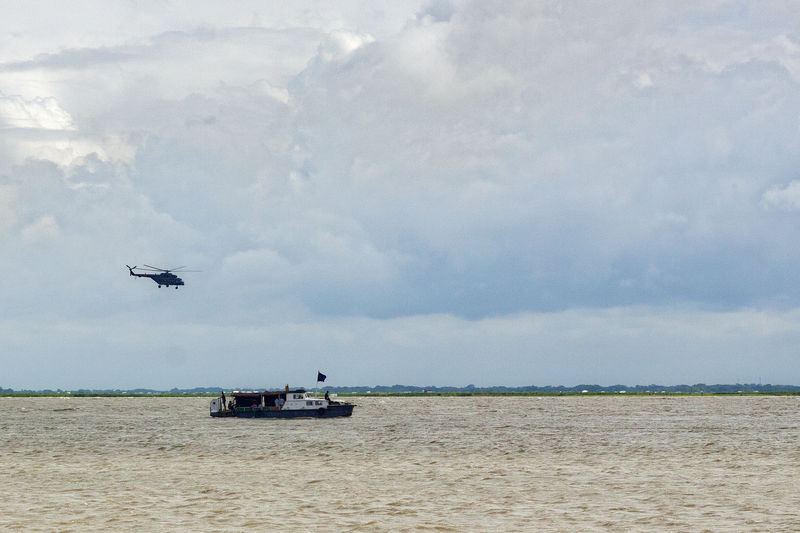
Overcrowded passenger ferry capsized in the Padma River in Munshiganj, Bangladesh

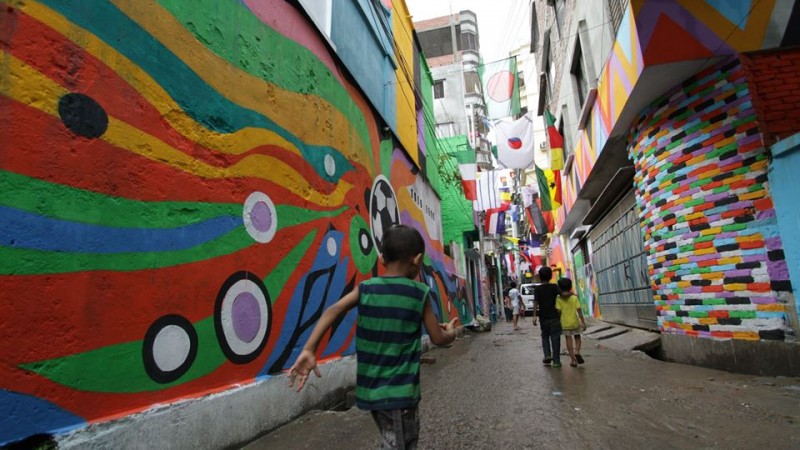
The World Cup Goal-E Project

This street in Bangladesh has a colorful world cup celebration

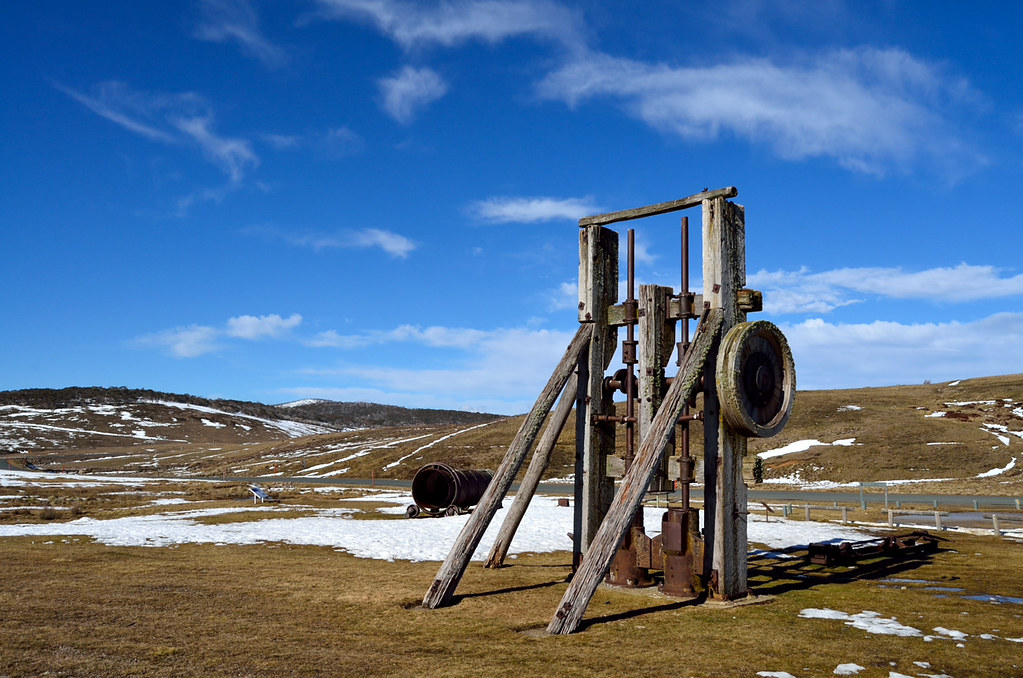
New Chum Hill Ruins

Remnants of Kiandra gold mine at New Chum Hill, #nsw #australia

Showing posts with label energy. Show all posts

May 27, 2014

Creating Biogas from Water Hyacinth

Water hyacinth (water weed) is a menace in Bangladesh which restricts water flow and blocks sunlight in rivers and ponds contributing to contamination and killing of fish. Instead of spending much in removing or eradicating them they can be used for a good cause. Kristin Boekhoff at Panigram blog informs about an innovation in Jessore, Bangladesh which will be the first commercially operating biogas reactor running off of water hyacinth in the world.

The post was first posted in Global Voices.

October 27, 2010

CNG losing its potential as fuel alternative in Bangladesh


Compressed natural gas (CNG)as a vehicle fuels was first introduced to Bangladesh in 1982 through a World Bank pilot project. In 1999, four private companies obtained permission to set up about 5 stations each (source).

This "greener" fuel alternative has sunken the transport cost for many vehicle owners. The high price of conversion of Engine (Tk. 56000 eq. US$800) did not deter many people from using this as fuel cost becomes 5 to 10 times cheap when using CNG. Moreover, it provides clean air by reducing harmful emission.


The government vehicles are gradually being converted to CNG. Many public transports including buses are fueled by CNG and autorickshaws in Dhaka are compulsorily powered by CNG. When Bangladesh government banned the Two-stroke autorickshaw engines in 2003, there was a 30 to 40 percent drop in particulate pollution in Dhaka.

Natural gas is supposed to be Bangladesh’s only significant source of energy. So the CNG sector had a promising future. But suddenly everything seems to be stalled. The CNG sector is running into crisis according to Energy expert Kh.A.Saleque:
* There are allegations that without making proper feasibility study authorities through corrupt practice accelerated permissions for setting up CNG filling stations in already saturated areas.

* The massive growth of CNG re-filling stations in already congested gas distribution networks have created additional burden on the main gas distribution net work.

* The Government served double blow to CNG by al most doubling feed gas price to CNG and increasing CNG price significantly in one step.

In year 2002, there were only five CNG filling stations in Dhaka. By 2005 it grew to 75 and now approximately 500 stations are operating. CNG refueling stations consume only 5 per cent of the gas production. Approximately 300,000 of the 1 million vehicles on the road are now CNG-fueled. A typical CNG station is equipped with a double hose dispenser with two double nozzles and would serve between 300–500 cars in 16 hours station access time. So there is already a demand of 500 more stations to provide smooth CNG refueling service.

The government has recently banned CNG stations from selling CNG from 3PM to 9PM. This has created long queues in the filling stations forcing many vehicle users to opt for gasoline consumption instead.

I share with you one bitter experience of mine which I faced last Saturday. The CNG autorickshaws in Dhaka was a good transport option back in 2004-2005 when it ran on meter and there was a law that they should go everywhere where the passenger wants to go. But now it is completely a mess. They don't run on meters, will not go everywhere and the passengers has to agree to exorbitant price when they have no alternative. I started from Paribagh towards Gulshan 2. The CNG driver requested me to allow him to refuel his CNG tank as 3PM was approaching and there will be no refueling for next 6 hours. But at the end it cost me 40 minutes (equivalent to journey time) as he had to be in a long queue in a CNG station. Who is responsible for the loss of opportunity cost of him and mine?


The Owners of CNG refueling stations is protesting the Petrobangla move to raise the CNG price by sending a proposal to the Bangladesh Energy Regulatory Commission (BERC). The price rise will be from Tk 16.53 (25 cents) to Tk 25 (36 cents).They will go on strike from the 1st of November as the banners and posters say. The common citizen will suffer and more and more people will switch back to gasoline which will be a sad ending to a happy story.

July 26, 2010

And We Missed This Important News

Bangladesh sets a world record – 5 million CFLs distributed in a day
- Ashok Sarkar at World Bank Blog

If you were in Bangladesh in June, you would have found teachers in schools, preachers in mosques, and ads in newspapers, television, loudspeakers and pamphlets, encouraging people to bring in their incandescent bulbs to exchange with new Compact Fluorescent Lamps (CFLs) – and encouraged they were! On Saturday, June 19th 2010, at over 1,400 rural and urban distribution centers spread across 27 districts, manned by teachers, utility workers and other volunteers, Bangladeshis collectively took home about five million high quality CFL bulbs, in the first round of distribution.

CFL bulbThey broke a record set by the British in January of 2008, for the most number of CFL bulbs distributed in a single day―some 4.5 million. In June, the Government and people of Bangladesh were inspired to do even better … and they did!


and an exciting future awaits:
More is yet to be done in Bangladesh. There are five million more CFLs to distribute in September, under the first phase of ELIB. An additional 17.5 million CFLs are expected to be deployed in the next phase. Collectively, ELIB could nearly halve the current supply-demand gap in Bangladesh’s power sector.

Read the rest here.

March 27, 2010

Earth Hour 2010


Earth Hour in Abu Dhabi.


Show your support for earth hour 2010.

Jakarta, Indonesia:

Indonesia has plunged into darkness for Earth Hour with the National Monument, Yogja Monument, Pemuda Statute and Arjuna Wiwaha Waterfall among the major Indonesian icons flicking the switch for climate change. Famous musicians Nugie and Katon Bagaskara, the official Earth Hour Ambassadors for Indonesia, recorded a song for the global initiative titled Jika Bumi Bisa Bicara - literally meaning “If the Earth Could Talk”.

September 03, 2009

Police Crackdown On Protests In Dhaka

Thinks look grim in Dhaka as more than 50 people were injured while protesting peacefully against the offshore gas contracts awarded to three foreign energy companies. Professor Anu Muhammad, member-secretary of the National Committee to Protect Oil, Gas, Mineral Resources, Power and Ports, was among the injured.

Photo credit: The New Age
The rally was intercepted by police at Paltan and in the ensuing melee police mounted a baton charge that left committee member secretary Prof Anu Muhammed and dozens others injured. Prof Muhammed, a teacher of economics at Jahangirnagar University, told bdnews24.com: “We were peacefully observing our programme when the police beat us without any reason. Several people were injured in the incident. We waged this movement to protect the assets of the country. We are not against the government. It is the government’s responsibility to protect the life and property of citizens. I cannot understand why this incident took place,”.

Here in an interview taken by photojournalist and blogger Shahidul Alam prof Anu Muhammad tells that "the government does not change, its an issusion." Although the govt. has changed recently, the same imperialist forces are at work trying to plunder the nation's wealth and they try to repress any force that try to oppose them:


According to the New Age:

Both legs of Anu Muhammad, also a professor of economics at Jahangirnagar University, were badly fractured in the police attack while a number of other left-leaning political leaders and activists, including Saiful Huq, Mushrefa Mishu, Jannatul Marium Tania, Montu Biswas, Srikant Samaddar, Biplab Mandal, Gazi Shafiullah and Sumi Akhtar sustained injuries.

Condemning the police action Anu Muhammad told reporters that their campaigns were aimed at protecting the natural resources of the country. ‘We are not against the government; we are against the move to export our natural resources. It is the government’s responsibility to protect the lives and property of the citizens. I don’t understand why the police pounced on us,’ he said.

The cabinet committee on economic affairs, headed by the finance minister, on August 24 approved offshore oil and gas exploration deals with the two companies in three sea blocks in the resource-rich Bay, on condition that they would not operate in the disputed areas in the blocks.

At the rally, Shaheedullah said they demanded cancellation of the Model Production Sharing Contract 2008, approved by the last interim government, saying pressure from ‘colonialists’ had been behind it.

April 26, 2009

Coping With The Heat And Load Shedding In South Asia

Heatwaves during this time of year is not uncommon for countries in South Asia. But the recent dry weather has kept sufficient rain away from the region keeping the mercury rising. And load shedding (rolling electricity blackouts) due to power crisis in several countries have made the lives of millions of people unbearable.

Last Friday (April 24, 2009) was the hottest day of this summer (with 38.5 Celsius) for Dhaka, the capital of Bangladesh. The Eastern parts of India is choking as mercury rises above 45 degree Celsius. Several deaths have been reported. Zoo officials in Patna took special measures to protect the animals from heat. There have been reports of forest fire in Nepal, and droughts in the typical rain prone areas.

The netizens are reacting strongly to this situation. Sukanya M writes in the post “United We Sweat” about the heat and the constant power cuts:

Phew. It's been unbearable.

Temperatures ranging around 40, 41, 41.8, and if we are lucky (like today), 39 degrees. Plus Humidity - according to Yahoo it is 84% today (felt like 100%). And of course power cuts everywhere and in a bizarre turn of affairs, Kolkata - Dumdum to Behala had 6-10 hours of power cut on Sunday..[..]

Here are some Twitter messages catching up the mood of common people:

calamur: Melting in the heat . #mumbai is seriously hot .

vitrag: afternoon heat, and boarding the Mumbai trains… damn it fells like stepping in the oven.

Amit Varma at The India Uncut jeers:

It’s so hot in Bombay… … that when I heat food in my microwave, it comes out colder.

In Bangladesh people are suffering badly because of heat wave and frequent rolling blackouts. Most people do not have air-condition at home; they use electric fans, which are useless during power cuts. Those who can afford to use power inverters do not get enough electricity to recharge the units. Worse, there is not enough electricity to run the water pumps. The water crisis has grown acute and people are protesting against the water shortage.

From Twitter:

dkhall44: Load shedding now at ridiculous levels in Dhaka. Electricity supply is cut for one hour every other hour. And its *38* degrees.

shahreaz: Working from the evening sounds more realistic in Dhaka. 6 hours of load shedding during the working hours do not make sense.

The power authorities have put up schedules of power outages online. Bernie Allen at Life & work in Dhaka city writes about the cause of the power outages in Dhaka:

Typical demand is 2000MW and one day this week we were allocated 1200W, so the shortfall had to be managed.

In Nepal, the power crisis has become a bit better. From an average of 14-16 hour load shedding a day the duration has come down. From Twitter:

zickme: Country facing an Electricity crisis and to over come this Nepal Electricity Authority (NEA) has imposed a 12 hrs load shedding each day.

Geshan's blog posts the load shedding schedule of Kathmandu showing the plights of the people.

The residents of Karachi city in Pakistan are facing unannounced power outages of 8 to 10 hour everyday. Pakistan Daily Photo posts pictures of how people are tackling the unbearable heat which is increasing day by day.

South Asia has seen much worse heatwaves than this. But the power crisis has really crippled peoples ability to cope with it. Until the rains bring some respite people will continue to suffer.

From Dhaka, battered by the heat, Blogger Kowshik is sarcastic [bn]:

সরকারের এখন বিদ্যুৎ এর বদলে বৃষ্টি উৎপাদনের চেষ্টা করা উচিত

The government should try to produce rains instead of electricity.

Even if it sounds imprudent, in this situation the people of South Asia cannot ignore this idea.


This was first published in Global Voices Online

June 13, 2008

Drill here, drill now

We, therefore, the undersigned citizens of the United States, petition the U.S. Congress to act immediately to lower gasoline prices (and diesel and other fuel prices)* by authorizing the exploration of proven energy reserves to reduce our dependence on foreign energy sources from unstable countries.

Approximately 700,000 people have signed.

I wish they could start a revolution of going green instead. But looks like the technology is still a long way from there. And its now US's turn to start using their resources. Probably they are waiting for the moment when all oil resources will be wiped out, they will rule the world with their reserves.

April 25, 2008

Renewable energy in Bangladesh

The power crisis is acute as frequent power outages hamper the livelihoods. Big power stations are much capital intensive and time consuming to build. So Bangladeshis are not getting bailed out of the situation anytime soon.

From this Newsweek article you can see how grass-roots movement are generating power in local towns and basements and being independent of the energy industries:
In the late 1990s, the town of Freiamt in Germany's Black Forest decided to take the fight against global warming into its own hands. Three hundred of the town's 4,300 residents chipped in to buy the four 80-meter-tall Enercon wind turbines that now top the surrounding hills, generating 1.8 megawatts each. An additional 270 families put solar collectors on their roofs to heat water and power their homes. Three businesses—two sawmills and a bakery—whose land abuts a gurgling stream have installed old-fashioned water wheels, each providing an additional 15 kilowatts.
These wind turbines can be seen in many places in the developed countries.

Have you seen any wind turbine in Bangladesh?