




Dragonfly

Image by Rezwan

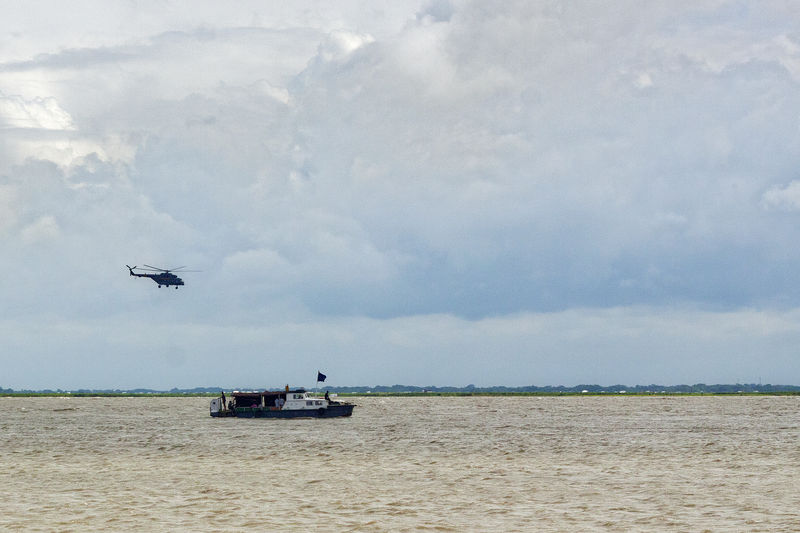
Overcrowded passenger ferry capsized in the Padma River in Munshiganj, Bangladesh

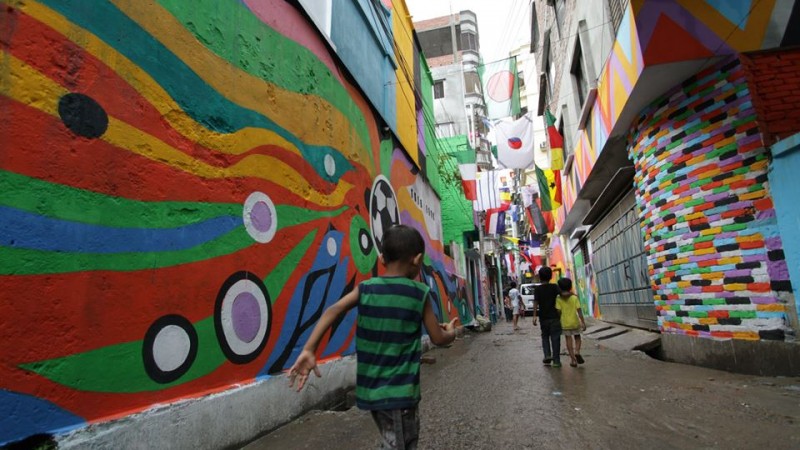
The World Cup Goal-E Project

This street in Bangladesh has a colorful world cup celebration

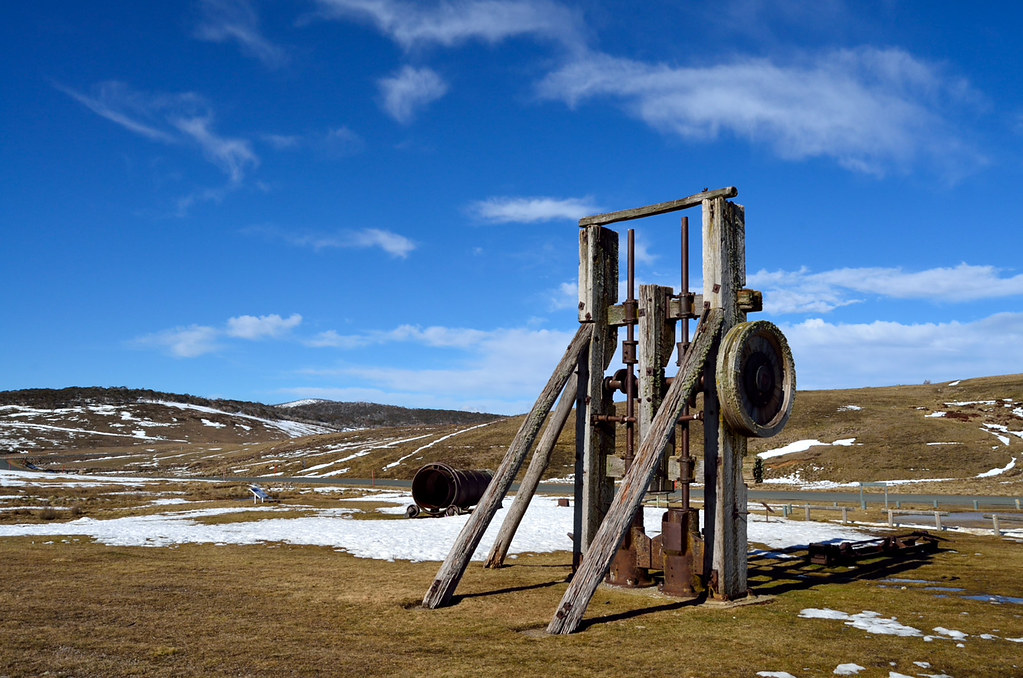
New Chum Hill Ruins

Remnants of Kiandra gold mine at New Chum Hill, #nsw #australia

Showing posts with label Food. Show all posts

September 25, 2014

How Climate-Smart Villages in Bangladesh, India and Nepal Are Preparing Farmers for the Future

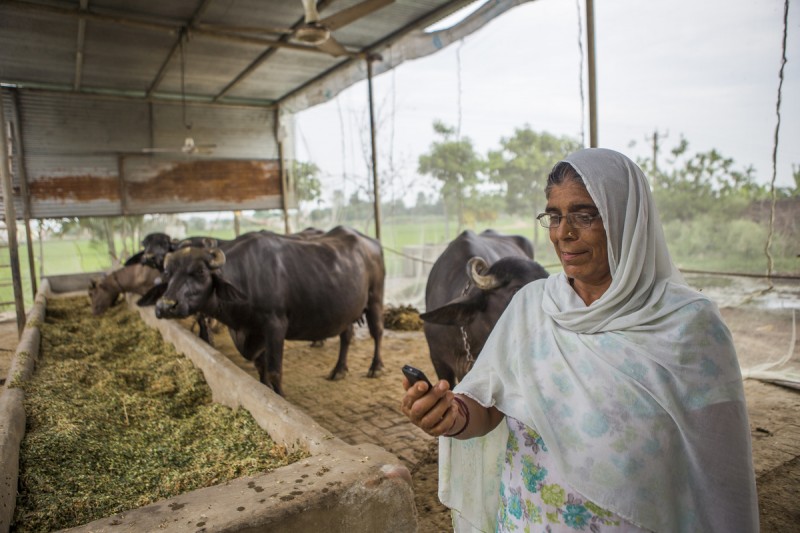
56 years old Kamla Devi listens to messages of weather and best climate friendly crop practices on her mobile phone while working in the cowshed at her home in Anjanthalli. Image by Prashanth Vishwanathan. Used with permission.
56-year-old Kamla Devi listens to messages about the weather and best climate-friendly crop practices on her mobile phone while working in the cowshed at her home in Anjanthalli village. Image by Prashanth Vishwanathan. Used with permission.
One of the initiatives to come out of the United Nations' summit on climate change on September 23 was the Global Alliance for Climate-Smart Agriculture, a group of 16 countries and 37 organizations that aim to enable 500 million farmers around the world to practice climate-smart agriculture by 2030.

What is climate-smart agriculture? It's the idea of helping farmers adapt to changing climates while weaning them off techniques and technologies that produce greenhouse gases. In a number of countries in Africa and Asia, Climate Change Agriculture and Food Security (CCAFS), a research program of CGIAR (a global partnership dedicated to agriculture research), has already set up "climate-smart villages" to put the idea into practice.

Farmers in northern India have grown used to a wide range of weather, and work their fields around monsoon seasons that regularly bring them torrential rains. But as climate change begins to change the weather, scientists predict that growing conditions in the country are likely to become even more challenging and could alternate abruptly between periods of severe rainstorms and drought, according to the group.

In response to the farming challenges brought on by climate change, Climate Change Agriculture and Food Security (CCAFS), together with the International Maize and Wheat Improvement Centre and partner organizations are introducing a portfolio of climate-smart agriculture practices and technologies in their climate-smart villages.
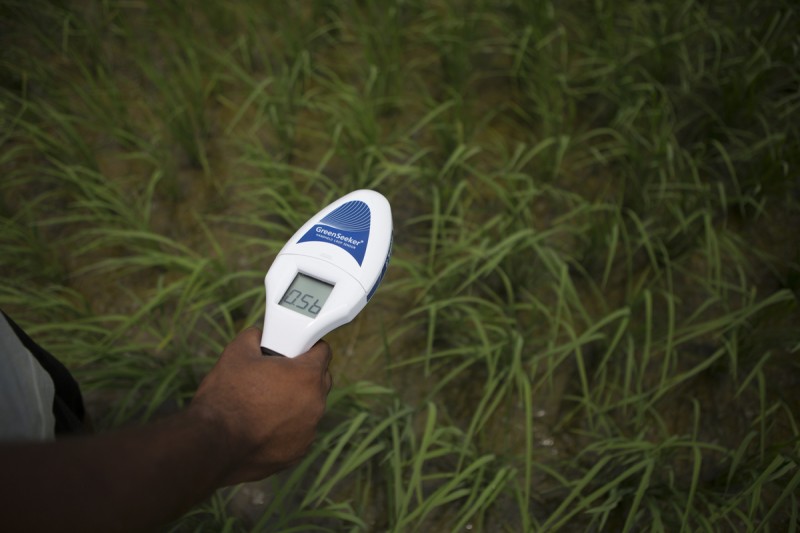
Paramjeet Singh uses the “Green Seeker” to check the nutrient levels of his paddy fields in Uncha Samana. The device helps him decide the most appropriate dosage of nitrogen fertilizers (Urea) for his crops.
Paramjeet Singh uses the “Green Seeker” to check the nutrient levels of his paddy fields in Uncha Samana. The device helps him decide the most appropriate dosage of nitrogen fertilizers (Urea) for his crops. Image by Prashanth Vishwanathan. Used with permission.
Researchers, farmers’ cooperatives, government bodies and private sector partners are working together at these villages to identify which agriculture practices and technologies can improve productivity and incomes and build resilience to climate risks. “Climate-smart” agriculture is highly localized; interventions that work in one place will not necessarily be suitable for another.

In India the project is undertaken currently in Haryana, Bihar and Punjab. The same model also operates in Khulna, Bangladesh and Rupandehi in Nepal. This video explains the idea behind the villages:


In the climate smart villages in India, farmers have begun to alter their use of mobile phones, the Internet, and basic measurement devices to adapt to the changes initiated by climate change, according to CGIAR. An interesting aspect is that farmers are actually not talking much about climate change, but rather are engaging themselves in alternative and innovative practices. The money that they are saving by doing things like using new planting methods for rice that reduces the amount of labor and water needed are resulting in a significant cost savings, CGIAR says.
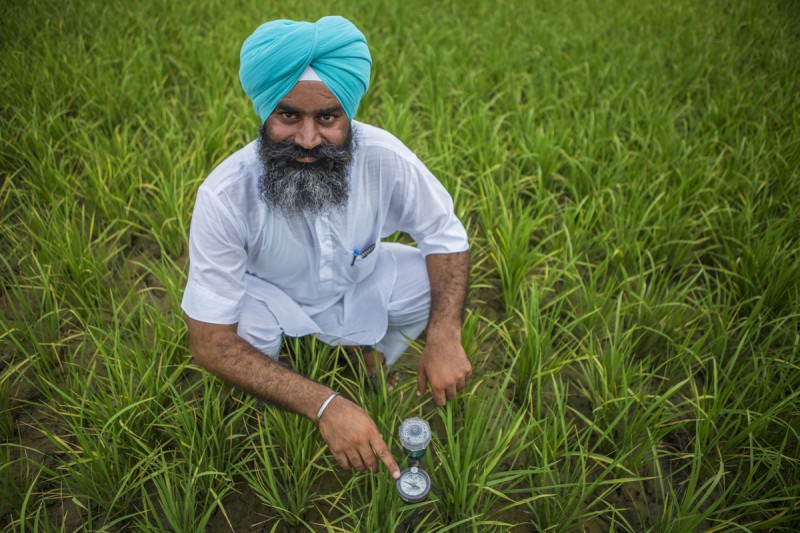
Harpreet Singh checks the water level through a Tensiometer in his paddy fields in Birnaryna as a part of the Climate Smart Village (CSV) programme.  Image by Prasanth Viswanathan. Used with permission
Harpreet Singh checks the water level through a Tensiometer in his paddy fields in Birnaryna as a part of the Climate Smart Village (CSV) programme. Image by Prasanth Viswanathan. Used with permission
Under the project, voice and text messages are sent to farmers twice a week in Hindi or in other local language. The text messages include information on weather forecasts and suggestions for farmers, information on pests and remedies, etc. Last year messages were sent to 1,400 farmers in 50 villages in Karnal and Bihar and 10 villages in Punjab, according to the group.
Farmers are being encouraged to improve their nutrient management, for example through the use of a leaf color chart:
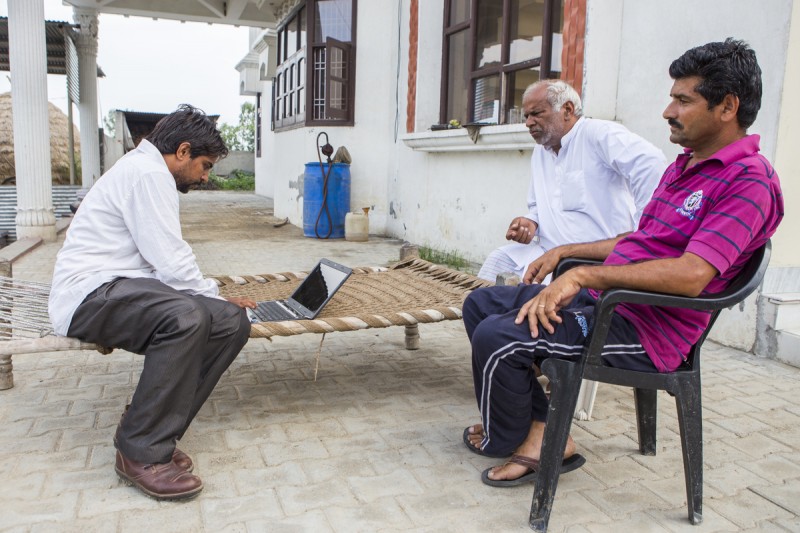


27 year old Vinod Kumar (L) uses the Nutrient Expert computer programme to ascertain his farms nutrient needs being part of the Climate Smart Village programme in Anjanthalli. Image by Prashanth Vishwanathan. Used with permission.
27-year-old Vinod Kumar (L) uses the Nutrient Expert computer programme to ascertain his farms nutrient needs being part of the Climate-Smart Village programme in Anjanthalli. Image by Prashanth Vishwanathan. Used with permission.
The CCAFS South Asia Program has also successfully implemented a climate insurance program as part of their climate-smart village model to save farmers from losses due to failed crops as a result of natural calamities.

The success of the models in India has prompted replication of the initiative under climate smart village in various South Asian and African countries. The CGIAR's blog narrates a lot of initiatives and challenges that the climate-smart villages face.

The post was also published in Global Voices Online.
July 18, 2014

Bangladesh Has Formaldehyde to Thank for Its Short Supply of Mangoes This Season

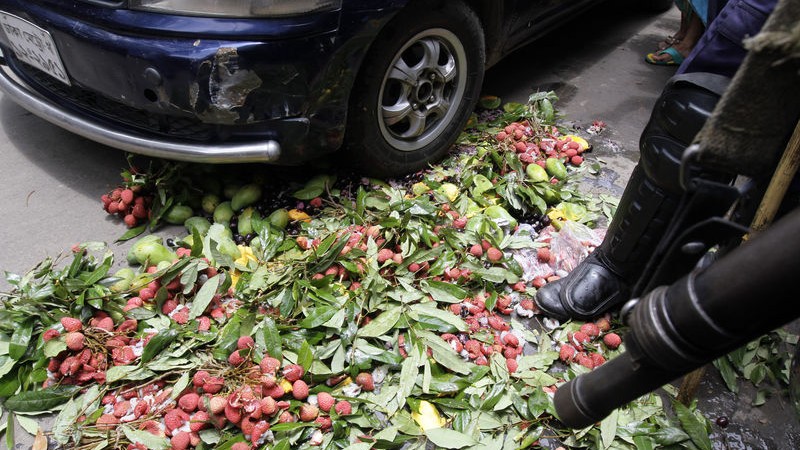
Dhaka Metropolitan Police jointly conducted a drive at Hatirpul Bazar against the health hazardous chemical, formalin.
Dhaka Metropolitan Police jointly conducted a drive at Hatirpul Bazar against
 the chemical formalin. Image by Reaz Sumon. Copyright Demotix (3/6/2014)
Monsoon season in Bangladesh is a delicious time when markets overflow with an abundance of seasonal fruits. Red lychees, green jackfruits and yellow melons are on colorful display, piled high in baskets and on tables.

The sweet, fleshy mango is especially sought after, but this year the fruit is harder to find due to a police drive to control the misuse of formalin, a strong solution of formaldehyde used to preserve produce (traditionally used to preserve dead bodies). Last month, police set up mobile formalin-detection units, confiscating and destroying truck loads of locally produced and imported fruits.

Fruits can naturally contain 0.03-0.15 part per million (ppm) of formalin, but the police drive against formalin, which primarily targeted the seasonal fruits, found the level between 3.5 ppm to 46 ppm in fruit found at markets in the country's capital Dhaka. There, police set up checkposts at entry points into the city to check for contaminated fruit.

Formaldehyde is highly toxic. Ingesting only 30 mL of a solution containing 37 percent formaldehyde can kill a human. In the past few years in Bangladesh, formalin has been used without limits on vegetables, fruits, meats and other putrescent foods to prevent them from rotting. On 30 June, 2014, the country's cabinet approved a draft law that calls for a maximum punishment of life in prison and a hefty fine for formalin abuse and unauthorized trading.

Journalist and blogger Anis Raihan at Istishon blog described how mangoes are treated with formalin:
When the mangoes are plucked they are sprayed with the first dose of formalin. Then they are packed and transported to the cities. The first dose is to cover the delays in the transport to prevent them from rotting. After arrival the traders check whether the mangoes are intact or show signs of rotting and spray another dose if necessary to keep them fresh till they are distributed to retailers, who start to sell the mangoes as they receive them. However, if the mangoes show signs of rotting when they are received, the retailers spray another dose of formalin.
Fruit sellers haven't been happy about their loss of produce. In the port city Chittagong, the fruit sellers association went on strike for several hours, claiming that police have been harassing them by testing the fruits with inadequate machines.

Contaminated food is an issue in Bangladesh. In 2012, the deaths of 14 children in Dinajpur after eating lychees tainted with pesticides sparked uproar in the country.

A recent study conducted by the Bangladesh government and Food and Agriculture Organization (FAO) of the United Nations showed that in Bangladesh more than 40 percent of foods contains banned pesticides. Toxic substances in the food samples were three to 20 times the limits set by the European Union. In the same report, 50 percent of vegetables and 35 percent of fruits have been declared unsafe. The mango and fresh shrimp samples contained the highest level of formalin.

Police destroying the formalin affected fruits. Image by Reaz Sumon. Copyright Demotix (3/6/2014)
Police destroying fruit contaminated with formalin.
Image by Reaz Sumon. Copyright Demotix (3/6/2014)
A group of activists arranged a protest called "Stop poisoning us" last May and urged to the government to take proper measures. One doctor, Dr. Shafiq, opined in Facebook that there should be stricter law against the use of formalin.

Blogger Kobid shared a shocking statistic related to contaminated food in Bangladesh:

Each year almost 5.7 million people face health hazards due to adulterated food. According to statistics from the Bangladesh Bureau of Statistics, almost 40 percent of deaths in 2010 were due to illness caused directly or indirectly by adulterated food.

Shahadat, a blogger, didn't mince words in describing the people who sell food contaminated with unsafe chemicals:
Not only in human food, adulterating food for any living being is cruel. The people who resort to this slow poisoning are not humans, but human-like animals.
But the issue is a little more complicated than that. As writer and columnist Tahmina Anam pointed out in The New York Times, the rural poor are the ones growing the fruit, which are then sold in urban areas. Transport is costly for small growers and risky because of non-air-conditioned trucks and road delays caused by traffic jams, strikes or road conditions. Formalin ensures they won't lose their produce, but at the cost of people's health.

Tighter regulations on the chemical’s use will solve the adulteration problem today, but not the transport issues — and growers’ desire for a workaround, chemical or otherwise.

The post was first published in Global Voices

January 31, 2012

RIP Siddiqua Kabir


Siddiqua Kabir is known to most Bangladeshis who are connoisseurs of good and healthy food. There's hardly anyone who enjoys Cooking and does not own her books on Cookery.

After obtaining Honors and Masters degree in Mathematics, Siddiqua Kabir joined the Education Cadre of the Government as Lecturer on the subject in the Eden Girls' College, Dhaka.

1961 saw a major change in her career. She went to the United States of America for a course on Food, Nutrition and Institutional Administration at Oklahoma State University and obtained a Masters degree in the same subject in 1963.

On her return home, she joined the College of Home Economics, Dhaka from where she retired as Principal in 1993.

Siddiqua Kabir's combined knowledge of Mathematics and Food & Nutrition made it possible for her to write a popular Cook Book in Bangla "Ranna Khaddya Pushti" which is a 'must have' for all Bangladeshi families. During the past 40 years she wrote many articles on Cooking and Food & Nutrition which have appeared regularly in different Dailies and Periodicals. (Source)

She died today from old age complications. RIP.

August 01, 2010

Coffee: Stimulating Your Sense Of Well-Being

"A cup of coffee commits one to forty years of friendship." - Turkish proverb
Ever got confused with the variety of the coffees? I was when I saw Blue Mountain on the menu. I really had no idea what it was and I couldn't tell the difference till I read about the varieties.

Coffee beans by Flickr user datenhamster.org. Used under a CC license BY-NC-ND

Coffee comes from blending roasted coffee beans with water and/or milk. These beans are seeds of coffee cherries that grow on trees in over 70 countries. The first cultivation of coffee can be traced in Yemen in 575 A.D. From the Muslim world, coffee spread to Italy (Sixteenth Century), then to the rest of Europe, to Indonesia, and to the Americas. The Dutch contributed to mass planting of coffee beans in its former colonies - in Ceylon and in Indonesia since the Seventeenth century.

Coffee was once a luxury, but now it has found a place in the rational dietary of all the civilized peoples of earth. It has become something more than a beverage. People drink coffee because it adds to their sense of well-being. Coffee is also a stimulator because of its caffein and caffeol contents. The caffein increases the capacity for muscular and mental work without any harmful reaction. The caffeol supplies the flavor and the aroma and the fragrance that induces an addictive sense.

A good coffee can be produced when the coffee beans are carefully roasted and properly brewed, producing a natural beverage, which is often aided by a good coffee machine.

Varieties of Coffee:

The two most commonly grown varieties of coffee are the Coffea arabica, highly regarded with less caffeine; and the 'robusta' form of the Coffea canephora, stronger than arabica. Ripe coffee berries are picked, processed, and dried for sale. The seeds are then roasted to varying degrees to obtain the desired flavor.

Coffee arabica has different varieties, each with unique characteristics and probably you have heard of these:
  • Blue Mountain - From Jamaica's blue mountain region
  • Bourbon - Produced in Réunion and Latin America.
  • Colombian Coffee - 12% of Coffee market, freshly roasted, bright acidity, intensely aromatic
    Ethiopian Harar
    - Complex, fruity flavor resembling red wine
  • Mocha - From Yemen, Not to be confused with the preparation style (coffee with cocoa).
  • Panama - From Panama, Costa Rica, highly regarded
  • Santos - Arabica from Brazil
  • Sulawesi Toraja, Kalossi - From Indonesia, Sulawesi exhibits a rich, full body, well-balanced acidity (slightly more than Sumatra) and is multi-dimensional in character. It has dark chocolate and ripe fruit undertones. It is an excellent coffee for darker roasting
  • Timor, Arabusta - From Timor, Indonesia, a hybrid of two species of coffee; coffea arabica and coffea canephora (also called Robusta).
  • Typica - worldwide known in different names - Criollo, Arabigo (Americas) Kona (Hawaii) Pluma Hidalgo, Garundang (Sumatra) San Bernado, San Ramon (Brazil) Kents, Chickumalgu (India)
Preparation styles:

Coffee may be brewed by several methods: boiled, steeped, or pressured. Brewing coffee by boiling was the earliest method, and Turkish coffee is an example of this method.

Automatic coffee machines brew coffee using gravity. hot water drips onto coffee grounds held in a coffee filter, allowing the water to seep through the ground coffee while extracting its oils and essences. The liquid is collected in a pot, and the spent grounds are retained in the filter.

Coffee may also be brewed by steeping in a device such as a coffee press. Caffè espresso, or just espresso is a concentrated coffee beverage brewed by forcing hot water under pressure through finely ground coffee.

From the different coffee beverages, some common ones are listed below:

Espresso-based, without milk
  • Caffè Americano - is a style of coffee prepared by adding hot water to espresso, giving a similar strength to but different flavor from regular drip coffee.
  • Long black - is similar to Americano, but prepared in different order; most common in Australia and New Zealand.
  • Ristretto is an espresso drink where the weight of the ground coffee is equal to the weight of the brewed shots. The result is a "shorter" shot that is sweeter and more flavorful.
Other varities - Bica, Lungo

Espresso-based, with milk
  • Caffè latte is often called simply latte, which is Italian for "milk", A latte comprises one-third espresso and nearly two-thirds steamed milk. ("café au lait" in France, "café con leche" in Spain, "kawa biaÅ‚a" ("white coffee") in Poland, "Milchkaffee" in Germany, "Grosser Brauner" in Austria, "koffie verkeerd" in Netherlands, and "café com leite" in Portugal)
  • Caffè macchiato, is an espresso with a little steamed milk added to the top, usually 30-60 ml (1–2 oz), sometimes sweetened with sugar or flavored syrup. This differs from latte macchiato below which is milk "marked" with espresso.
  • Cappuccino comprises equal parts of espresso coffee and milk and froth, sometimes sprinkled with cinnamon or powdered cocoa.
  • Galão is a Bica (Portuguese espresso) to which is added hot milk, tapped from a canister and sprayed into the glass in which it is served.
  • Mocha is a latte with chocolate added.

Brewed or boiled, non espresso-based
  • Black coffee is drip-brewed, percolated, vacuum brewed, or French-press-style coffee served without cream. Some add sugar.
  • White coffee is black coffee with unheated milk added. Some add sugar.
  • Kopi tubruk is an Indonesian-style coffee similar in presentation to Turkish coffee
  • Indian filter coffee, particularly common in southern India, is prepared with rough-ground dark roasted coffee beans (e.g., Arabica, PeaBerry), and chicory. The coffee is drip-brewed for a few hours in a traditional metal coffee filter before being served with milk and sugar. The ratio is usually 1/4 decoction, 3/4 milk.
Alcoholic coffee drinks
  • Black coffee with brandy, or marc, or grappa, or other strong spirit.
  • Irish coffee - with Irish whiskey, sugar, and cream.
  • Café royal, with a flambéd and slightly caramelized teaspoonful of sugar and cognac.

Frappe by Flickr user Klearchos Kapoutsis. Used under a CC license CC-BY

Cold coffee drinks:
  • Iced coffee is a cold version of hot coffee, typically drip or espresso diluted with ice water
  • Frappé is a strong cold coffee drink made from instant coffee. Preparation: one spoonful of instant coffee (and sugar if one wishes) in a shaker with some water (and milk). It is shaken hard enough for one minute, then icecubes are added and it is served with a drinking straw because of the "foam" that is produced.
  • Ice-blended coffee (trade names: Frappuccino, Ice Storm) is a variation of iced coffee.
  • Affogato is a cold drink, often served as dessert, consisting of a scoop of ice cream or gelato topped with an espresso shot.
Further reading: All About Coffee, by William H. Ukers

Disclaimer: This entry was produced under the influence of drinking a cup of Toraja Arabica coffee made in Turkish style.

October 27, 2009

2009 Global Hunger Index And Bangladesh


Global Hunger Index - BANGLADESH | RANK: 67, GHI: 24.70 (Alarming)

The Global Hunger Index (GHI) shows that worldwide progress in reducing hunger remains slow. According to the report, Bangladesh’s Global Hunger Index (GHI) score is 24.7, which gives it a rank of 67th out of 84 countries. The index ranks countries on a 100-point scale, with 0 being the best score (no hunger) and 100 being the worst.

This report compares the 2009 GHI with the 2008 Global Gender Gap Index, which is made up of four subindices: economic participation, educational attainment, political empowerment, and health and survival. The evidence shows that higher levels of hunger are associated with lower literacy rates and access to education for women. High rates of hunger are also linked to health and survival inequalities between men and women. Reducing gender disparities in key areas, particularly in education and health, is thus essential to reduce levels of hunger.

October 16, 2009

Better Than That One!

Via Jakarta Daily Photo:

The owner of the biggest McDonalds franchise in Indonesia has converted all his McDonald’s counters into the new restaurant: Tony Jack’s. Apparently he’s pissed by McDonald’s decision to sell its majority franchise ownership of McDonalds Indonesia to the Rekso group.

Detik Finance reports that 13 McDonalds branches were converted to Tony Jack’s on the 1st of October. The new entity vows to offer different food items from the previous venture although still dominated by burgers and fried chicken.

Since the first day of opening, the packaging of food and beverages were prepared plain, without logo and name of the store.

Their tagline is "Better than that One", hope they can live up to the expectation.

Reblog this post [with Zemanta]

August 23, 2009

Iftar In Chowkbazar

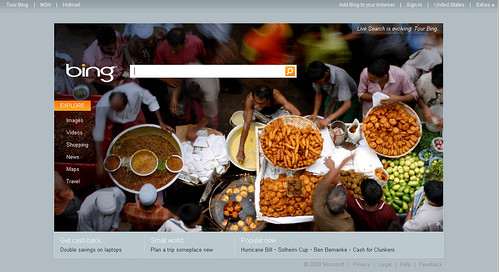
Microsoft Bing is trying to get in the forefront of the search engine market. Each Day it posts one interesting picture. Yesterday this photo by Abir Abdullah was highlighted:


And how it looks on Bing:

(Photo courtesy Ishtiaq Rouf)

It is the Iftar market in Chawkbazar in old Dhaka.

Here are the details from Bing:

1) Today is the second day of Ramadan, during which, Muslims do not eat from dawn until dusk for a lunar month.

2) Open air food markets are only one of the many things to see when you visit Bangladesh.

3) Though its independence is relatively young, the culture of this nation is ancient.

4) During Ramadan, Bangladeshi flock to this food market as soon as the sun goes down.

Via Ishtiaq Rouf's Bangla blog

September 17, 2008

Poisoned powder milk in China – why Bangladesh needs to worry

[First published in E-Bangladesh]

The world came to know about the horror only a couple of days ago that the powdered milk products produced by the Sanlu Group in China were contaminated by melamine after hundreds of Chinese babies were hospitalized for having kidney stones and some had kidney failures.

On 11th of September Sanlu first defended that “their milk powder has no problem” then announced a recall of its products. Global Voices reports:
“By estimation, the tainted formula amount to 700 tons. Not until this moment were millions of babies protected from the deadly dairy products. There are over 30 thousand potential victims (in china) predicted from Sanlu’s influence in domestic market.”

Three children already died till yesterday and the number of sick children has risen to 6200. Chinese state-run media announced that 21 more companies were found producing milk powder tainted with melamine.

A New Zealand media reveals that:
“SanLu knew six months ago that babies were becoming sick as a result of drinking infant formula containing melamine - a chemical banned from food.

A New Zealand dairy Giant Fonterra, which owns 43 per cent of SanLu and has three directors on its board, also knew of the contamination for six weeks before a public recall, which began only after the New Zealand Government blew the whistle.”

Global Voices quoted a Taiwanese blogger:
“Before the Olympic Games, China government gave orders to cover all the reports that might destroy the image of China. The Sanlu Group discovered the contamination just before the Olympic Games, and we can see the China government chose to let their people die so that they can keep the positive image of China.”

“The Sanlu Group claimed that the melamine found in their powdered milk was added by the dairy farmers and milk dealers to meet the nitrogen standard after they added water to dilute the milk. However, not everyone believes their claim.“

25 tons of powered milk products manufactured by the Sanlu Group were exported to Taiwan this August and it created a lot of panic in the country.

And Bangladesh should also worry because AP reveals that:
State broadcaster CCTV reported on its Tuesday evening newscast that One company, based in the southern province of Guangdong, exported its products abroad — to Bangladesh, Yemen, and Burma.

The Bangkok post informs:
"Two Chinese firms where tests found tainted milk products had exported baby formula milk powder to five countries including Bangladesh and Burma

The Suokang and Yashili companies had started to recall their exported milk powder products, which were also sent to Yemen, Burundi and Gabon, said Li Changjiang, the head of the State Administration of Quality Supervision, Inspection and Quarantine (AQSIQ)."

We are yet to see any Bangladeshi media asking questions about this import. The Chinese milk powder imports may be hard to locate if they were imported loose and later packed in another label. Some months ago a milk powder consignment of Abul Khair group was detained because their expiry date overrun. We have seen in TV reports that the consignment was packed in large sacks to be repacked in local brands.

Arup reveals that the popular brands of Fronterra, the major shareholders of Sanlu are:
AnchorAnleneAnmumMainland

Anchor and Anlene are famous brands in Bangladesh. So there should be a nationwide awareness campaign to demand from the sellers the origin of the milk and to stop consuming non-trusted baby milk.

I hope the Bangladesh Government will take immediate action to withdraw the milks imported from China from the market and ban future imports until everything is sorted out.

September 05, 2008

Flashmob Iftar

If you don't know what a flashmob is, its a large group of people who assemble suddenly in a public place, perform an unusual action for a brief time, then quickly disperse. The word is spread via social networking sites, including Facebook, Myspace, Wikipedia, private blogs, public forums, and personal websites. (Wikipedia)

All around the world this trend has grown in recent years and even in Pakistan it was used to protest during the state of emergency and the protesters disappeared before the police could reach to them.

Fugstar is reporting that a recent flashmob in Lincolns Inn Fields (Chancery Lane/Holborn) in London was arranged to have Iftar (evening meal breaking the fast during Ramadan) with the homeless. The instruction was to spread love, "just bring food, friends and share them around." Isn't that exemplary and if you are religious isn't that your religion tells you to do?

Now are you ready to flashmob your social cause in your locality?

May 15, 2008

Who eats more?

US president George Bush's recent remark that India's large middle class is contributing to rising food prices around the world met with resistance from the Indians.

(Graph: Courtesy IHT - click for a larger view)

Now they are blaming that the food problem has "clearly" been created by Americans, who are eating 50 percent more calories than the average person in India. More in IHT:
If Americans were to slim down to even the middle-class weight in India, "many hungry people in sub-Saharan Africa would find food on their plates." The money Americans spend on liposuction to get rid of their excess fat could be funneled to famine victims instead.

Americans eat an average of 3,770 calories per capita a day, the highest amount in the world, according to data from the UN Food and Agricultural Organization, compared to 2,440 calories in India. They are also the largest per capita consumers in any major economy of beef, the most energy-intensive common food source, according to the U.S. Department of Agriculture. The United States and Canada top the world in oil consumption per person, according to the U.S. Energy Information Administration.

May 05, 2008

The blame game

US President George Bush has joined his top diplomat Condoleezza Rice in suggesting that the growing prosperity of India's large middle class is contributing to rising food prices around the world (More in Economic Times).

While RediffNews quotes FAO's data to blame US for the global food crisis.

Indian blogger Aparna Ray coins her protest in a limerick:

"Prez George Bush, it has come to pass,
Has laid blame on our Middle Class.
It seems we have hurled,
The rest of the world,
Into crisis by not chewing grass!
"