




Dragonfly

Image by Rezwan

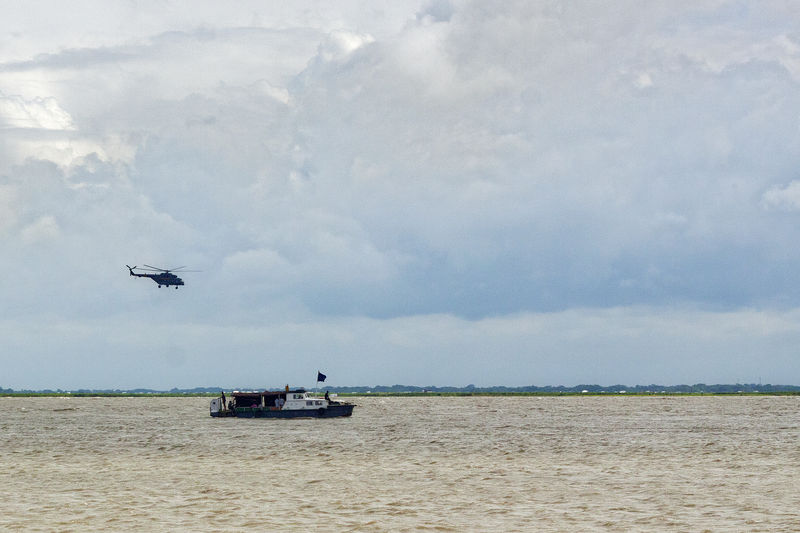
Overcrowded passenger ferry capsized in the Padma River in Munshiganj, Bangladesh

The World Cup Goal-E Project

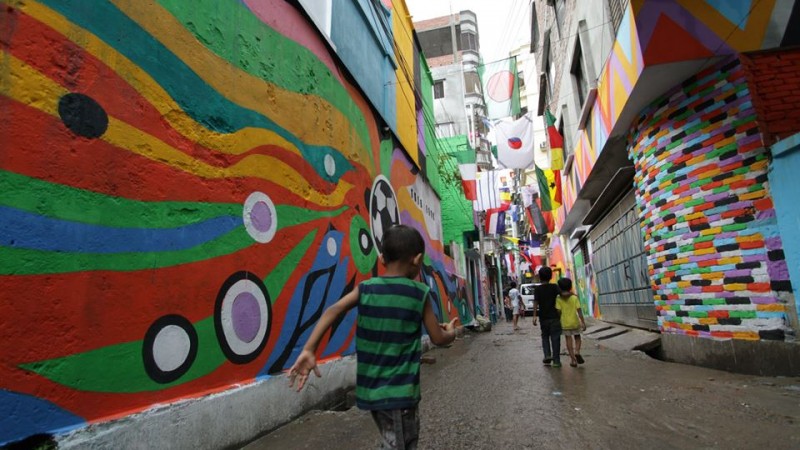
This street in Bangladesh has a colorful world cup celebration

New Chum Hill Ruins

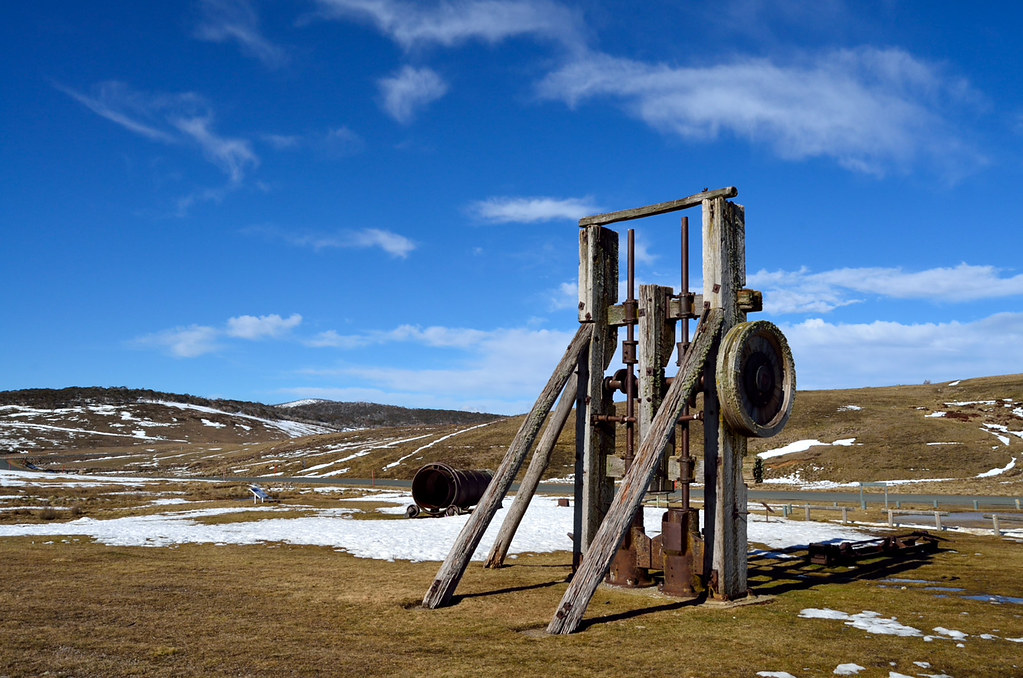
Remnants of Kiandra gold mine at New Chum Hill, #nsw #australia

Showing posts with label New Media. Show all posts

February 04, 2015

Mumbai Newspaper Editor Fired, Arrested for Republishing Charlie Hebdo Cartoon

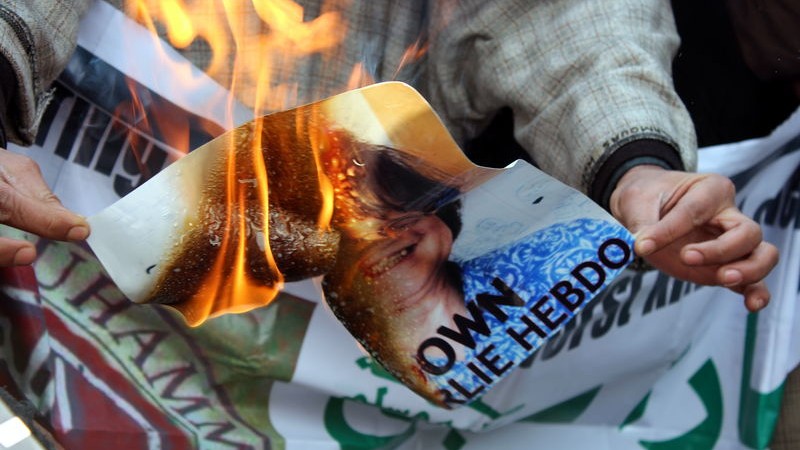
A protest rally against French satirical magazine Charlie-Hebdo was held in Kashmir's Old City. Protestors effigy and Charlie Hebdo posters were set on fire by angry protesters . Image by Adil Hussain. Copyright Demotix (23/1/2015)
A protest rally against French satirical magazine Charlie-Hebdo was held in Kashmir's Old City. Protestors effigy and Charlie Hebdo posters were set on fire by angry protesters. Image by Adil Hussain. Copyright Demotix (23/1/2015)
A newspaper in India was shut down and its editor arrested after republishing one of French satirical magazine Charlie Hebdo's cartoons featuring the Prophet Muhammad on its front page.

Shirin Dalvi, who was later released on bail, is accused of violating section 295A of the Indian Penal Code, which bans malicious and deliberate acts intended to outrage religious feelings. She faces as many as six lawsuits filed against her across the state, and has taken to hiding her face behind a burqa while in public.

Her troubles began on January 17, 2015, when she printed the February 9, 2006 cover of Charlie Hebdo titled "Mahomet débordé par les intégristes" ("Muhammad overwhelmed by fundamentalists"), with a bearded man in tears saying "C'est dur d'être aimé par des cons" ("It's hard being loved by jerks"), on the front page of the Mumbai edition of Urdu daily Avadhnama. The editorial accompanying the republished cartoon argued that since no image exists of the Prophet Muhammad, the Charlie Hebdo caricatures should not be taken as a representation of him:
There exists no image of him, so how can we infer that this picture is a caricature of him?
Ten days earlier, two gunmen had attacked the Charlie Hebdo's office in Paris, killing 12 people, including eight journalists and injuring 11 others. The dead included the magazine's editor and a policeman. The magazine outraged many Muslims across the world as it published a number of controversial Muhammad cartoons over the years.

Facing backlash, Dalvi apologised, writing a detailed editorial explaining her position on the next morning. But the outrage continued. She began receiving threats on her phone. Lawsuits have been filed against her in different police stations in Mumbai, Thane and Malegaon.

On January 19, Avadhnama’s Mumbai edition was shut down and all its 15 employees sacked. Taqdees Fatima, owner of the Avadhnama title, defended herself, saying she had no links with the Mumbai edition, which was run by a separate entity.
The editor, publisher and printers are totally different and… (are) responsible for the contents.
Avadhnama's other city editions did not publish the cartoon and were not affected. For Dalvi, more misery was waiting. Members of the Rashtriya Ulema Council (State Cleric Council) threatened to protest outside the police station if Dalvi was not arrested.

On January 28, she was arrested and got bail on the next day. But she has not gone back to her home in Mumbra since the protests began; her house remains locked and her children are staying with the relatives. Dalvi, along with the newspaper’s publisher Yunus Siddiqui, proprietor Taquadees Fatema and managing director Deepak Mhatre obtained anticipatory bail in another case filed against them on the same charge.

Dalvi told the Mumbai Mirror in an interview that she meant to reproduce Charlie Hebdo's latest cover purely as an illustration to go along with a report, but printed the 2006 cover by mistake. She admitted that she didn't know what the cartoon said since she doesn't speak French, and had only intended for the cartoon to illustrate a report about the controversial magazine's increased circulation following the attacks.

In a different interview with media watchdog website The Hoot, Dalvi, who has been working in Urdu media for the last 25 years, accused some papers of running false reports about her, such as one saying she had shot down a junior colleague's objection to the cartoon's publication by saying it would boost the newspaper's circulation. The website reported that sources in the Urdu media industry suggested business rivalries may have something to do with the case against Dalvi.

Online, some users criticised the lack of support for Dalvi following the Charlie Hebdo attacks. Satire Twitter account ChopdaSaab tweeted:
Blogger Suvie Kaul wrote:
Nikhil Mehra, a lawyer from New Delhi, tweeted:
The hashtag #IStandWithShireenDalvi has taken off:
Sadanand Bhat, a commenter on an article in Indian Express, questioned the state of freedom of expression in India:
This is Outrageous. Here in western Countries they published the picture of the cartoon. Where is the freedom of Expression in India? WHy should she apologise? Where are all the Seculare [sic] peaceniks? This silence is deafening even in the news reviews. Feel sorry for her and wonder how I can help her.
Raghvendra Upadhyay commented on an article in the India Times to say:
There is a thin line between "freedom of press" and "outraging religious feeling". Important thing is, what is the duty of a press. To put in news what people what to hear ? or what press want people to know ?

Choice is yours !!

Based on your choice, you will build yours and your societies future.
The post was also published in Global Voices Online.

December 23, 2008

Bangladesh Election 2008 And Cyber Activism

Bangladesh goes into poll on December 29, 2008 for a much awaited parliamentary election. The scenario is lot different than the recent US presidential election where citizen media and Internet campaigning and fund raising were extensively used. With a penetration of 1% of the total population of 145 million, Internet is still not a media that reaches mass people. The new generation of bloggers and facebook users are trying to harness the power of the new media. Bangla Blogging platforms like Somewhere In, Sachalayatan, Amar Blog, Muktangan are buzzing with election related posts - from constructive debates to mundane bickering of acrimony between political ideologies. But how can they affect the politics as the decision makers such as the bureaucrats and the politicians mostly keep themselves away from the digital media and Internet and are not connected to the conversation. The traditional media still dictate in Bangladesh and many are losing the trust of common people for biased reporting. The websites of the political parties are not interactive. Only a few out of thousands of candidates were seen using Internet in their campaign.

Bangladesh politics is traditional, rhetoric and propaganda based and there is little scope for interaction with the leaders asking for accountability. The grass root activists and the general people have little to say in the decision making processes. However Jagoree, a non-partisan platform for Bangladeshi youth, is using facebook and blog to to engage in the political and policy making processes by developing themselves as informed and responsible citizens.

What are we?

What are we? Image courtesy: Jagoree.

Jagoree is currently running a campaign called 'Amader Vote, Amader Kotha' (Our Vote, Our Voices). Learn more about the campaign from their facebook page.

Planning and mobilizing processes of Jagoree. Image courtesy Jagoree

The notable success of Jagoree in recent days was the making of a documentary and publishing it in YouTube for wider audience [bn]:


The aim of this 5 minutes 44 second documentary is to inspire Bangladeshis to cast an informed vote in the coming election. It shows the frustration with the current politics and at the same time frames the hope of the young Bangladeshis that a change will come.

This time around much information on the candidates and the election are available on the Internet. What the Bangladeshis need is to look for the facts and be informed for making the right decision regarding whom to vote.

SHUJAN, a non-profit organization in Bangladesh dedicated to good governance, has an award winning site [bn] which provides much background information on the candidates. The site has different sections like general information on election, constituency wise copmarative information of the candidates and much more. SHUJAN has also something unique to offer. They have an archive of over 4000 entries of news of Corruption of politicians (browseable by name) of whom many are contesting in the 2008 election.

Bangladesh Election commission has also detailed information including voter list and the candidate profiles in pdf format (to be downloaded and distributed) and guidelines for observers.

E-Bangladesh is providing links to all the important news regarding Bangladesh election and posting analysis and breaking news from citizen journalists in their constant coverage of Election 2008 (in English). The site also posts links to resources for the election including candidate lists and election manifestos of the parties. Its sister initiative, the Bangla Blogging platform Amar Blog has started its election coverage in Bangla language which is providing news and citizen journalists' views on the election.

The popular English language group blog Unheard Voice is also providing analysis and commentaries on the recent election.

Bangladesh Votes The largest Bangla blogging platform somwhereinblog.net has started a group blog on Bangladesh election in collaboration with the English language news paper The New Age. The news daily has recently started an election portal which will feature selected blog posts from the group blog and news/analysis from its daily newspaper publications. This is the first instance in the country where a major print media is collaborating with a blog platform outside its management. The portal will provide live results of the election. It has an user-friendly interactive map plotting the previous results.

Quite against the tide of the digital divide among the candidates, blogger and journalist Maskwaith Ahsan, who is running as a MP candidate in the Rajshahi -6 constituency, has started using facebook to run his campaign.

It remains to be seen how Bangladeshis use citizen media like blog, videos (e.g. YouTube), photographs (e.g. Flickr), twitter etc. during the election.

(First published in Global Voices Online)

December 19, 2008

Facebook and Terrorism

From the AllFaceBook blog:
We’ve covered extensively how Facebook has been impacting the global political landscape and much of what we’ve discussed has been about the spreading of democracy. Now for the first time, it appears that Islamic terrorists are preparing to spread Jihad through the largest global social network. In a post entitled “Invading Facebook: Theory and Practice”, Umar Abd al-Hakim of Syria covers how Facebook can be used to spread Jihadi media to the masses.
Major General Muniruzzaman, a former military advisor and Chief of Staff to the President of Bangladesh, mentioned that the young people from Asian communities in Britain are often more radicalized that their counterparts in South Asia.
"We are interested in studying the Facebook generation, to see how the Facebook generation is shifting radical thoughts from one country to another, " he said.

November 03, 2008

Voices Without Votes

From the Washington Post:

Voices Without Votes is an aggregator of the international blogosphere. An offshoot of the nonprofit site Global Voices, which aims to summarize the goings-on in every blogging corner of the World Wide Web, the site focuses solely on the U.S. presidential race. Voices Without Votes was born in early February -- yep, in time for Super Tuesday -- and it's edited by Amira Al Hussaini, a 35-year-old journalist from Bahrain who currently lives in Canada. The site's motto reads: "America votes. The world speaks.


Amira Al Hussaini of Global Voices. Photo by caribbeanfreephoto

"The Internet makes the world smaller, just a few clicks away, right?" says Al Hussaini, who was the former news editor at the Gulf Daily News, the largest English newspaper in Bahrain. With Voices, she says, "Americans can see, if they don't realize it already, that their votes affect the rest of us when it comes to foreign policy, the environment, the global market, you name it."

Scattered throughout the world, they scour the Internet, reading blogs and searching for mentions of the upcoming election. From February to August, 300 to 400 blog entries were featured on the site. It grew to 800 in September and about 1,100 this month.

There's no single directory of international blogs, Al Hussaini says, and she and her staff specialize in specific regions. They make sure that no one region is overrepresented on the site. It's a labor-intensive process. Though many sign their names in their blogs, just as many do not. Each volunteer has to read the blog, contact the blogger and locate where he or she is. "A lot of people write blogs without telling you where they're from," explains Al Hussaini, who speaks Arabic and monitors a list of about 1,000 blogs in the Middle East. Most bloggers write in English. Some, however, need translating.

June 24, 2008

From text to graphic

Wordle is a new Web-based tool which turns any text into a word cloud. Here is a Wordle version of the Bangladesh Genocide Archive first page (click image to enlarge):

October 19, 2007

S M Sultan, Brick Lane, Female Bloggers and Bangla E-Books

(First published in Global Voices Online)

Sid of Serious Golmal writes a well informative article on the life of S M Sultan, the master painter of Bangladesh commemorating his 13th death anniversary. Sultan was born in Norail (in Kushtia in the southwest of Bangladesh) in 1923. Born to a mason, he was a natural talent and did not complete his study in the Calcutta College of Arts and Crafts. Later on he created a wave in the West when he visited USA and UK under a cultural exchange program and displayed his paintings. From 1953 to 1976 Sultan lived in virtual obscurity, living the life of a Vaishnava Sanyasi.

Sultan's Adam
(The First Tree Planting: Sultan 1976: courtesy Serious Golmal)
"Sultan’s paintings may be sold at Sotheby’s in London today but for the people of rural Norail, the guru entered folk legend more than half a century ago. They tell us that animals were drawn to him, that he could converse with them, that hundreds of his works are scattered all over the world in all manner of places, given away as gifts, that he cared not for fame or material wealth, choosing to travel from village to village, country to country, returning at last to his source.

He lived in three continents but never had a fixed abode, never attached prices to his work, never married. He wore his hair long, chose to live out his days in rural Bengal with his dogs, cats, rabbits, birds and snakes rather than the big international cities that beckoned when recognition of his genius came early in his life."
Kotha Chilo (Stories to tell) blog reviews the movie based on Monica Ali's award winning novel Brick Lane. The filming of Brick Lane caught much media attention because of protests of some members of Bangladeshi communities in UK and the unit had to change location of filming to avoid threats. But Monica Ali maintains that "the 'controversy' was whipped up in the media".
"Monica Ali's 2003 novel Brick Lane was feted for its ability to blend the personal and the political as it recounted the experiences of a young Bangladeshi woman's journey of self-discovery. It was illuminating about the hidden lives of Britain's Bangladeshi community and the growing racism abroad in the wake of the 9/11 attacks. The respectable film version heavily compresses the novel into a less complex but still touching, small-scale tale of female empowerment that almost feels like a variation of Shirley Valentine."
Bangla Blogging platform Sachalayatan [bn] boasts of being more of an online writers community rather than collection of some conventional blogs. It has been promoting budding as well as established writers to post their literary works there. And adding more to the task it has already published a few literary E-books in PDF versions and more collaborative projects [bn] at hand. Now users can download their copy of the literature free, print it and read it at ease.

The first publications is a collection of poems of Sunil Saifullah, a notable young poet who prematurely ended his life in 1981. Some of his poems were only once published by the students union of his University (Jahangirnagar University) in 1982. But these few books went into oblivion in course of time and now he is barely known to people of Bangladesh. Bloggers of Sachalayatan first discussed about his works went to the University library to collect a copy of the book and recreate the Book. You can download the book from here [bn].

Some comments on the feat:
সৌরভ: জয় হোক এ উদ্যোগের। এ চেষ্টার মাধ্যমেই জন্ম জন্মান্তরে সজীব থাকুন আমাদের মাঝে কবি সুনীল সাইফুল্লাহ।
Sourav: Bravo to this initiative. With this work let poet Sunil Saifullah live among us for eternity.

সুমন রহমান: বাংলা সাহিত্যে এরকম সারপ্রাইজ আরো কিছু আছে। আমার মনে সচলায়তনের ই-বুক প্রকল্প দিয়ে সেসবের সুরাহা আমরা করতে পারবো।
Suman Rahman: There are more such surprises in the Bangla literature. I think we will able to sort them out with the Sachalayatan E-Book project.

Fele Asha Chelebela
Another recent Bangla E-Book publication “Fele Asha Chelebela” is a 109 page collection of childhood memoirs of twenty one bloggers which portrays the true picture of the lives of Bangladeshi youths, society, their upbringings etc. Its popularity prompted the bloggers to decide to publish it in future as a printed book with more collections of writings. You can download it from here [bn].

You never know some day these collaborative Bangla E-books with the help of New Media will be able to really change the scenario of literature of the country.

And last but not the least please do read the recent writings of the female bloggers of the Nari Joibon project to know about Bangladesh from their view. Nari Jibon is a not-for-profit organization in Bangladesh who is providing education to poor and under-privileged women making them self reliant through different short term education and skill development programs. It has brought these female voices to Blogging with the help of a Rising Voices micro-grant.

September 02, 2007

Unnayan TV

Unnayan TV (development TV) claims to be the first online video channel of Bangladesh which publishes regularly video contents on development, human rights and educational issues of Bangladesh.

Explore it.

(Via Global Experiences)

August 16, 2007

Blogs, Anonymity, Freedom of Expression

I am pleased to announce the formal launch of E-Bangladesh, Bangladesh's answer to The Huffington Post. Focusing on Bangladesh this aggregated weblog offers latest news and best analysis to its readers, uncensored.

I am honored to get one of my articles published there along with notable bloggers and journalists like Tasneem Khalil, Mashuqur Rahman and Saleem Samad. Here is the piece:

All over the world, there are regimes that discourage free speech and try to suppress dissidents. They keep an eye on its netizens and in recent years many bloggers across the world have been interrogated, arrested, tortured and sent to prison for the “crime” of speaking critically about their governments.

Bangladesh is under a state of emergency now. Although the situation of press freedom is much better than many countries quoted above, a few bloggers have already been detained and abused for their writing. Certain journalists were questioned or cautioned by the security forces. This fear has contributed to an alarming trend of self censorship in the Bangladeshi media. One can wonder; how do you express yourself freely and without fear? There is always someone to edit what you write in traditional media. So asking for total press freedom is really pointless in this situation.

One tip for those who want to speak their hearts out is to write in blogs. You can write on controversial issues and taboo topics, be a citizen journalist, exercise your literary talents or just write mere daily journals what the public media won’t publish. And to protect yourself from danger, you have the advantage of blogging anonymously. Anonymous blogging can also help in those situations when you are writing about your work place or about a big corruption without divulging your identity.

You need to take some precautions to write anonymously. There are many ways you can get caught. If you do not scrutinize your texts before publishing you can inadvertently reveal your identity or workplace through your writing. If some acquaintance recognizes you they can reveal your identity. And also be alert while using Web browsers or email programs. If one can get hold of your IP information they can trace it back to you. For an example if you comment on a government website or send an email to someone, your IP address gets logged. So being anonymous is a tricky job.

There are a number of ways you can hide your identity when using the Internet. Always use a free Webmail account and a free blog host outside your country of residence. Use pseudonyms for these accounts. It is advisable to sign up for the account and post sensitive materials to the blog from computers that are used by lots of other people. You can also use an anonymous proxy to be more secure.

You can read “A Technical Guide to Anonymous Blogging” for details.

You have started a blog and you want more people to read what you write. You need to ask this question. Why are you blogging? Is it for lust or for fame or you just wanted to express yourself freely? What does it take to make your blog make others interested?

I think quality of content rather than quantity and quest for fame can work wonders. Just like another media you ought to earn others’ trust. People should understand that you are authentic and writing for a purpose and whether the blog really represents you. Whether you write anonymously or divulging your identity your writings should reflect your personality.

“Blogs, blogs everywhere, but not a good one to read” quoted one leading journalist cum blogger. But in the ocean of blogs there are a lot of good blogs to read if you can find. The question is how to do it. You can use blog search engines and use tag words to find what you are looking for. You can also check sites like Global Voices Online where country/topic wise blog round-ups are posted frequently. E-Bangladesh will soon have regular blog round-ups from where you will be able to bookmark blogs of your choice.

You need to manage your blog lists to save time. Say if you have bookmarked about three hundred blog sources, imagine how much time would be wasted if you had to manually check each site for updates daily? So it is now practical to use Rss feed readers to bookmark blogs and read updated posts without ever going to individual blogs. This is the most effective way to read blogs.


Update: Global Voices Advocacy project has published a new guide to anonymous blogging "Anonymous Blogging with Wordpress and Tor"

August 04, 2007

Try a different view point

The most of the Bangladeshi bloggers come from the middle class-upper middle class family. The diaspora community has the upper-hand with faster internet connections more sense of freedom of expressions. For the local ones internet is still a costly affair. They try to keep in mind that there is a state of emergency in place and they should not try to say anything critical against Government.

Many of the approx. 140 million Bangladeshis are poor. Those who live in rural areas do not have the luxury to enjoy basic infrastructures like library, Television let alone Computers and Internet. But don't they have stories to tell for the wider global audience?

Rising Voices is one such revolutionary initiative from Global Voices which can let this happen. Their first five micro grantees include Nari Jibon of Bangladesh which is an NGO involved with providing training to disadvantaged women of Dhaka. With the help of the Rising Voices microgrant, they have introduces Bangladeshi girls and women to blogging, photography and video-blogging by incorporating blogging assignments into existing English, computer, and Bangla classes.

Nari Jibon organized its first blogging workshop with professional Bangladeshi blogger Razib Ahmed who heads both SouthAsiaBiz.com and IndiaRaj.com.

The result can be seen in their blog Bangladesh from our view which posts stories and interviews of these girls with the help of workers of Nari Jibon. While I communicated with Kathy Ward, ED of Nari Jibon earlier she said that soon all the girls will be typing their stories themselves. It also has a Bangla blog. Highly recommended are these posts to see Bangladesh from a different angle:

* A Tale of a Migrant Women in Bangladesh

* A tale of struggled women of Bangladesh - Part 1, 2, 3, 4, 5

* Begger problem in Bangladesh

* A Village, Besides the River Meghna


Related articles:
* Bangladesh, through different eyes - Ethan Zuckerman
* Rising Voices Outreach Projects get straight to work -David Sasaki

* Podcast: Intro to the Nari Jibon Project

July 24, 2007

A podcast about Bangladesh

David Sasaki, the director of the Global Voices Outreach project has produced a podcast on Bangladesh and the Nari Jibon project, which received a micro-grant.

David worked a lot to learn about Bangladesh and incorporated many aspects in his podcast (the link is given below).

icon for podpress Intro to Nari Jibon Project

July 06, 2007

Wikipedia rules

I rely heavily on Wikipedia. During one internship in Berlin I could amaze my boss with up-to-date in-depth information on a current affairs topic thanks to Wikipedia. And its so huge and comprehensive. It even has a Bangla language version for my need.

Here is a New York Times magazine article describing how Wikipedia turned into a leading source for daily news. Some excerpts:
Increasingly, it has become a go-to source not just for reference material but for real-time breaking news — to the point where, following the mass murder at Virginia Tech, one newspaper in Virginia praised Wikipedia as a crucial source of detailed information....
(via Cyberjournalist.net)

Citizen Media and New Media projects in Bangladesh

I knew little about the citizen media and new media projects in Bangladesh when I amplified about the Rising Voices outreach project micro loan grants in the Bangladeshi Blogosphere.

A total of 142 project proposals from over 40 different countries were submitted with more than five from Bangladesh alone. I am pleased to inform you that out of the five successful projects with a grant upto $5000 two are Bangla speaking and one is from Bangladesh. From Global Voices:
Kazi Rafiq Islam and Kathryn Ward - Dhaka, Bangladesh:

Kazi Rafiq Islam and Kathy Ward are the Coordinator and Executive Director of the Nari Jibon Project in Dhaka, Bangladesh. As you can see from the website, the organization is already involved in outstanding work with young women in Dhaka. With the help of the Rising Voices microgrant, they will introduce Bangladeshi girls and women to blogging, photography and video-blogging by incorporating blogging assignments into existing English, computer, and Bangla classes. You can see some examples of what is to come at Bangladesh from our View.
The other Bangla speaking project is Kalam: Margins Write, a creative writing program for marginalized youth in India based in Kolkata.

You'll be amazed with these projects and the wonderful initiative 'Rising Voices' has taken for promoting the underprivileged people:
...to enable their communities to tell their own stories, to write their own first draft of history, to document their traditions and culture before they are washed away by the tides of globalization.
Great Job David and congratulations to all the grantees.

And we have more surprises. Narijibon is not the only NGO who ventured into the new media initiative in Bangladesh. Md. Arafatul Islam informs:
Shidhulai Swanirvar Sangshtha (SSS), an innovative organisation, is imparting education on information technology to the deprived and poor people in North Bengal over 12 boats equipped with computers with Internet service, mobile phones and libraries. The organisation has been carrying out such activities in North Bengal for the last two years.

SSS recently won the Access to Learning Award-2005 of Gates Foundation as recognition of their innovative work. They got prize money worth about US$ 1 million from the Gates Foundation.
Voice of South reports:
A school based internet enabled telecenter in a Bangladeshi village has recently turned to a digital photo studio. As per its sustainability plan, Relief International -School Online helped the school to plan for income generation through providing basic ICT services.
There are really lots of possibilities how the rural people of Bangladesh can benefit from blogging and other new media tools. Kowshik has some relevant suggestions(in Bengali) stating the benefits of using community internet. The community can get mileage on fields such as education, health, economics, disaster management, culture and politics.

Update: Mikey Leung did ICT development work with some Bangladesh NGOs and thinks that the blogging tool Wordpress can be used as a content-management system (CMS) for these organizations.

His latest work on Wordpress (the local staff can add the contents) are better navigable than some of the sites of the big organizations:

* Ashar Alo Society, Dhaka
* Gram Bikash Kendra, Dinajpur

June 01, 2007

Towards a meaningful and representative global conversation

Global Voices recently announced its new outreach project 'Rising Voices'.

This project will try to fix the imbalance in the so called global conversation:
"..certain regions of the world and certain demographics within those regions have benefited from the boom in citizen media more than others. Most bloggers and podcasters still tend to be middle or upper-middle class. Most have a college-level education. Most live in large cities. And of the 70 million weblogs now tracked by Technorati, 95% of them are written in just 10 languages. The truth is, what we often call the ‘global conversation,’ is a privileged discussion among global elites."
'Rising Voices' is currently developing a curriculum of multilingual, how-to learning modules which will assist workshop leaders and citizen media evangelists who want to explain to friends and peers how to start blogging, podcasting, and video-blogging.

And it has just called for applications for its first micro-grant ($1000-$5000) for outreach projects across the world.

The digital divide is narrowing but the participation gap is expanding. We need representations of more voices in more languages to stop the gap in the global conversations.