





Dragonfly

Image by Rezwan

Overcrowded passenger ferry capsized in the Padma River in Munshiganj, Bangladesh

The World Cup Goal-E Project

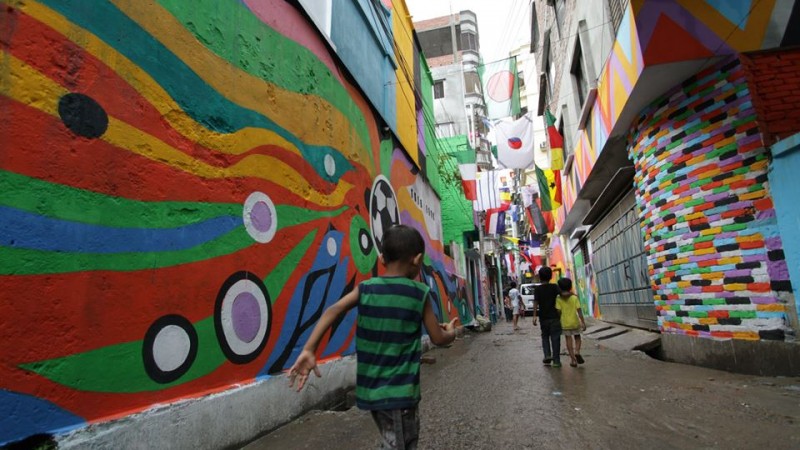
This street in Bangladesh has a colorful world cup celebration

New Chum Hill Ruins

Remnants of Kiandra gold mine at New Chum Hill, #nsw #australia

Showing posts with label Law. Show all posts

August 09, 2015

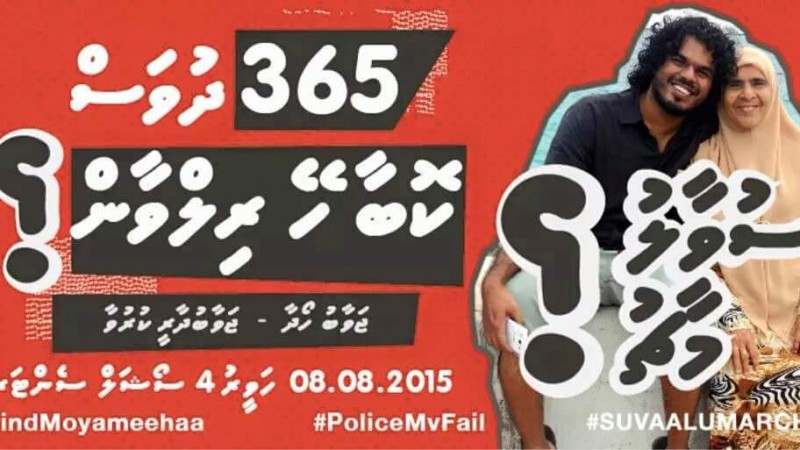
Maldivians March to Mark Anniversary of Local Journalist's Disappearance

Image via the Facebook page of Secular Democratic Maldives Movement


It has been 365 days since Maldivian journalist, blogger and human rights advocate Ahmed Rizwan Abdulla went missing. The 28-year-old, who works for online news site Minivan News, is an advocate of democracy and free speech and a prolific social media user.

There has been no real progress in the investigation and the people behind his abduction have not been identified. The Maldivian Police and the government have remained silent.

Rilwan's friend Yameen Rasheed describes what has happened in the space of a year:
To demand action and accountability from the state, Rilwan’s well-wishers started the #FindMoyameehaa campaign – the first of its kind in the Maldives. The campaign has organized rallies, petitions, public events, awareness programs on the streets, and also engages the public on social media. The #FindMoyameehaa campaign has drawn widespread attention and international press coverage, and also generated responses – including statements from IFJ, SAMSN, Amnesty International, Reporters Without Borders, the Human Rights Commission of the Maldives, and various national and international bodies.
On July 8, 2015 Rilwan’s family called for an independent public inquiry into the disappearance and the lapses in the investigation.

On August 6, Committee to Protect Journalists (CPJ) urged Maldives to launch an independent investigation into Rilwan's case.
To mark one year of his disappearance, the family has requested a public rally on August 8 to remind the state of its duty to protect journalists and enforce the law. The opposition Maldives Democratic party has endorsed the rally.

Maldivians are using hashtags #suvaalumarch and #findmoyameeha to spread word about the rally:
And people still have hope:

The post was also published in Global Voices Online.
May 12, 2015

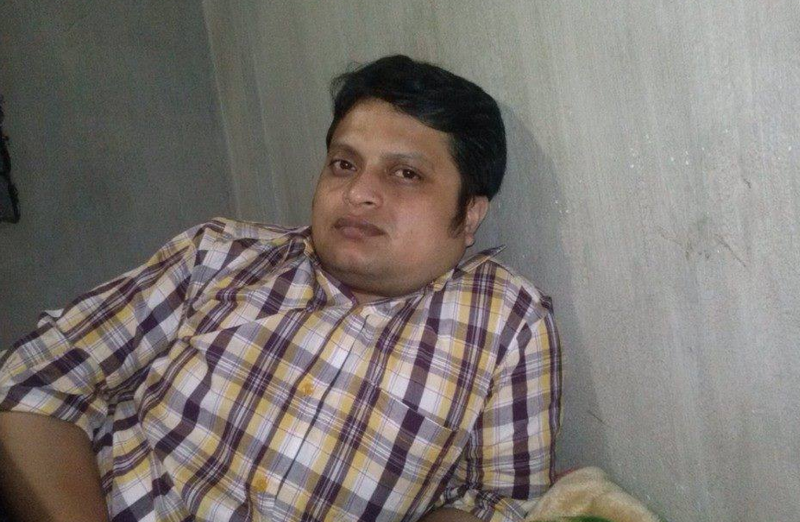
Ananta Bijoy Das Becomes Third Free-Thinking Blogger Killed This Year in Bangladesh

Ananta Bijoy Das. Image from his Facebook page
Ananta Bijoy Das. Image courtesy his Facebook page
It's a sad day for online activists in Bangladesh. On Tuesday morning, science writer and blogger Ananta Bijoy Das was murdered by a group of three or four masked people wielding machetes in Sylhet, Bangladesh's fifth largest city.

It was the third such killing this year of a writer who advocated secular thought, allegedly at the hands of religious extremists.

Das, 33, was a banker by profession but also edited a quarterly magazine called Jukti (Logic) and headed the Sylhet-based Science and Rationalist Council. He was the author of four books on science and critical thinking, and took an active part in the Ganajagaran Mancha, a forum born out of the Shahbag protests that demands a ban on Islamist parties and the death penalty for convicted war criminals.

Das was also an admin for the Bangla blog Mukto Mona (Free Thinkers), which won Deutsche Welle's prestigious BOBS award for social change in April 2015.

According to the Doha Centre of Internet Freedom:
While most of Das's output for Mukto-Mona focused on science and evolution, he wrote a number of blogs that criticised some aspects of Islam and also of Hinduism.

In comments on Facebook posted early Tuesday, Das slammed the local member of parliament from the ruling Awami League party for criticising one of the country's top secular and science fiction writers.
Bangladesh, a Muslim-majority country, is officially secular. But people who have challenged religion have repeatedly been targeted by Islamic extremists in the past decade.

The nature of the threats have also escalated from local to international. Just a week ago, Al Qaeda in the Indian Subcontinent (AQIS) claimed responsibility for the assassination of Bangladeshi-American blogger Avijit Roy (the founder of Mukto Mona blog) on February 26 in which his wife Rafida Ahmed was badly injured. In a recent interview, she slammed Bangladesh's government for inaction and has termed the attack on her husband as "well planned, choreographed – a global act of terrorism."

On March 30, another blogger who opposed irrational religious belief, Washiqur Rahman, was hacked to death in Dhaka. Two madrassa (Islamic religious school) students were apprehended and a third assailant got away. Both Roy and Rahman's cases are under trial.

Das had been on extremists' hit list for some time and was first named in a list of 84 bloggers deemed atheist or blasphemous by Islamic hardliners submitted to the government in 2013.

AQIS claimed responsibility for Das’s murder, according to tweets by extremist group Ansar Bangla Team. "Another file closed! Stay tuned for next target," the statement read.

Screenshot of the AQIS statement
Outrage over Das' death spread quickly. Prominent blogger Arif Jebtik wrote on Facebook:
লিখতে, বলতে, ভাবতে কোনো কিছুতেই আগ্রহ পাই না। ৮৪ জনের একটি তালিকা স্বরাষ্ট্র মন্ত্রণালয়ে জমা পড়েছিল দুইবছর আগে, তালিকা থেকে নবম হত্যা হয়েছে আজকে সিলেটে। তালিকা নিশ্চয়ই চূড়ান্ত নয়, গত ২ বছরে আরো নাম সেই তালিকায় নির্ঘাত যুক্ত হয়েছে। কিন্তু অন্তত এই ৮৪ জনের ব্যাপারে গত ২ বছরে কোনো খোঁজখবর হয়নি, তাঁরা নিয়মিত বিরতিতে খুন হওয়া শুরু করেছেন।
মাসিক কোটায় হত্যা শুরু হয়েছে হয়তো এটি সপ্তাহান্তের কোটায় উন্নীত হবে। ৮৪ জন যাবে, আরো হাজার চুরাশির নাম তালিকায় আসবে। খানিক আহাজারি হবে, সবখানেই একটা ফিসফিস-চুপচুপ ভাব, কিছু বিকৃত মানুষের উল্লাস-তারপর পরের হত্যার জন্য অপেক্ষা।
এই দেশে আইনবহির্ভূত সব হত্যাই জায়েজ হিসেবে মেনে নিয়েছে বৃহত্তর জনগোষ্ঠি, এখানে সবগুলো খুনই 'বিচ্ছিন্ন ঘটনা'।
I don't have the impetus to write, say or think anything. Two years ago a list of 84 bloggers was submitted to the Ministry of Home, 9th from the list was murdered today in Sylhet. This list is not exhaustive, surely more names have been added in the past two years. But nobody bothered to think about the safety of these 84 individuals. They are ending up dead one by one, in regular intervals. Now they are killing one every month, maybe they will speed up to do the same weekly. This list will be done, thousands more will be added. People will regret the death a bit, hush, silence everywhere, demonic joy from some perverts, then everybody waits for the next kill. In this country all these illegal killings have been taken for granted, every death is an isolated incident.
Blogger and activist Rayhan Rashid remembered the fallen who were attacked or killed for their free thinking in Bangladesh:
Ananta Bijoy Das's last posts were translated from Bengali to English by Arunava Sinha:
The International Humanist and Ethical Union (IHEU) wrote in a blog that Ananta Bijoy Das's application for a visa to travel to Sweden, under invitation from Swedish PEN to speak in a conference, was rejected recently by the Swedish embassy in Dhaka, on the basis that he might seek to remain in Sweden.

Exiled writer and columnist Taslima Nasrin blamed the government:
Bangladesh government is not taking any action against the Islamist-killers for being afraid to be labelled as anti-Islam. Islamists are allowed to do whatever they like in Bangladesh. It seems killing free-thinker atheists who criticize Islam is their main agenda.

Rajib Haider
A.K.M Shafiur Rahman
Avijit Roy
Washikur Rahman Babu
Ananta Bijoy Das.
Who is next?

Tomorrow maybe you. Or maybe me.
Blogger Haseeb Mahmud wrote:
পুলিশের দায়িত্ব কি সেটা এই মুহুর্তে একটা প্রশ্ন। অভিজিৎ হত্যার কোন সুরাহা হয়নি। ব্লগার রাজিব হত্যার মামলায় গ্রেফতার ও সেটার বিচার শুরু হলেও সেই হত্যাকান্ডের নাটের গুরু এখনো ধরা ছোঁয়ার বাইরে। অনন্ত বিজয়ের হত্যাকারিদের গ্রেফতার ও তাদের রাতারাতি বিচার শুরু হবে এটাও আশা করা কঠিন। আমাদের করণীয় চাপাতির মুখে লেখা না থামানো। লেখা থামালে জিতে যাবে আনসারুল্লাহ।
What the responsibility of the police is at this point is a question mark. They could not find the killers of Avijit Roy. They have arrested the killers of blogger Rajib, but the mastermind is on the loose. It is a tough to hope that the killers of Ananta Bijoy will be nabbed anytime soon or a trial will start. Our prerogative is to not to stop writing even if confronted by wielding machetes. If we stop writing they will win.
The post was also published in Global Voices Online.

February 04, 2015

Mumbai Newspaper Editor Fired, Arrested for Republishing Charlie Hebdo Cartoon

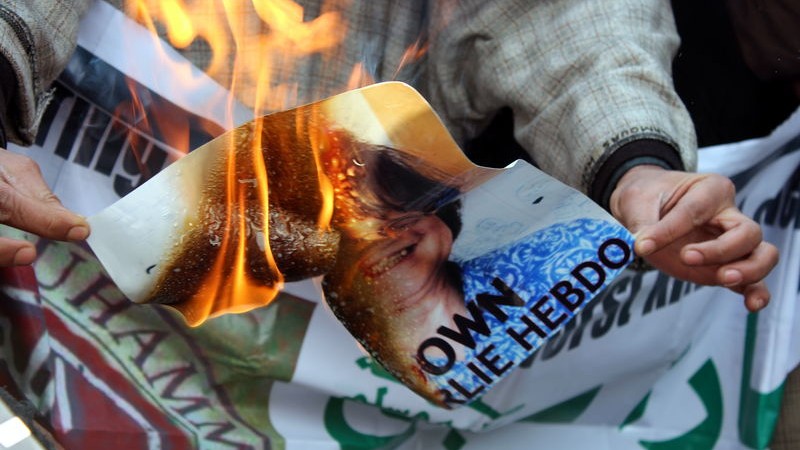
A protest rally against French satirical magazine Charlie-Hebdo was held in Kashmir's Old City. Protestors effigy and Charlie Hebdo posters were set on fire by angry protesters . Image by Adil Hussain. Copyright Demotix (23/1/2015)
A protest rally against French satirical magazine Charlie-Hebdo was held in Kashmir's Old City. Protestors effigy and Charlie Hebdo posters were set on fire by angry protesters. Image by Adil Hussain. Copyright Demotix (23/1/2015)
A newspaper in India was shut down and its editor arrested after republishing one of French satirical magazine Charlie Hebdo's cartoons featuring the Prophet Muhammad on its front page.

Shirin Dalvi, who was later released on bail, is accused of violating section 295A of the Indian Penal Code, which bans malicious and deliberate acts intended to outrage religious feelings. She faces as many as six lawsuits filed against her across the state, and has taken to hiding her face behind a burqa while in public.

Her troubles began on January 17, 2015, when she printed the February 9, 2006 cover of Charlie Hebdo titled "Mahomet débordé par les intégristes" ("Muhammad overwhelmed by fundamentalists"), with a bearded man in tears saying "C'est dur d'être aimé par des cons" ("It's hard being loved by jerks"), on the front page of the Mumbai edition of Urdu daily Avadhnama. The editorial accompanying the republished cartoon argued that since no image exists of the Prophet Muhammad, the Charlie Hebdo caricatures should not be taken as a representation of him:
There exists no image of him, so how can we infer that this picture is a caricature of him?
Ten days earlier, two gunmen had attacked the Charlie Hebdo's office in Paris, killing 12 people, including eight journalists and injuring 11 others. The dead included the magazine's editor and a policeman. The magazine outraged many Muslims across the world as it published a number of controversial Muhammad cartoons over the years.

Facing backlash, Dalvi apologised, writing a detailed editorial explaining her position on the next morning. But the outrage continued. She began receiving threats on her phone. Lawsuits have been filed against her in different police stations in Mumbai, Thane and Malegaon.

On January 19, Avadhnama’s Mumbai edition was shut down and all its 15 employees sacked. Taqdees Fatima, owner of the Avadhnama title, defended herself, saying she had no links with the Mumbai edition, which was run by a separate entity.
The editor, publisher and printers are totally different and… (are) responsible for the contents.
Avadhnama's other city editions did not publish the cartoon and were not affected. For Dalvi, more misery was waiting. Members of the Rashtriya Ulema Council (State Cleric Council) threatened to protest outside the police station if Dalvi was not arrested.

On January 28, she was arrested and got bail on the next day. But she has not gone back to her home in Mumbra since the protests began; her house remains locked and her children are staying with the relatives. Dalvi, along with the newspaper’s publisher Yunus Siddiqui, proprietor Taquadees Fatema and managing director Deepak Mhatre obtained anticipatory bail in another case filed against them on the same charge.

Dalvi told the Mumbai Mirror in an interview that she meant to reproduce Charlie Hebdo's latest cover purely as an illustration to go along with a report, but printed the 2006 cover by mistake. She admitted that she didn't know what the cartoon said since she doesn't speak French, and had only intended for the cartoon to illustrate a report about the controversial magazine's increased circulation following the attacks.

In a different interview with media watchdog website The Hoot, Dalvi, who has been working in Urdu media for the last 25 years, accused some papers of running false reports about her, such as one saying she had shot down a junior colleague's objection to the cartoon's publication by saying it would boost the newspaper's circulation. The website reported that sources in the Urdu media industry suggested business rivalries may have something to do with the case against Dalvi.

Online, some users criticised the lack of support for Dalvi following the Charlie Hebdo attacks. Satire Twitter account ChopdaSaab tweeted:
Blogger Suvie Kaul wrote:
Nikhil Mehra, a lawyer from New Delhi, tweeted:
The hashtag #IStandWithShireenDalvi has taken off:
Sadanand Bhat, a commenter on an article in Indian Express, questioned the state of freedom of expression in India:
This is Outrageous. Here in western Countries they published the picture of the cartoon. Where is the freedom of Expression in India? WHy should she apologise? Where are all the Seculare [sic] peaceniks? This silence is deafening even in the news reviews. Feel sorry for her and wonder how I can help her.
Raghvendra Upadhyay commented on an article in the India Times to say:
There is a thin line between "freedom of press" and "outraging religious feeling". Important thing is, what is the duty of a press. To put in news what people what to hear ? or what press want people to know ?

Choice is yours !!

Based on your choice, you will build yours and your societies future.
The post was also published in Global Voices Online.
October 16, 2014

An Indian Photoblogger's Lone Fight Against Plagiarism

Term of copyright in photographs:- Length of copyright -50 years. Graphics by Anirban Saha. Used with Permission.
Indian photoblogger Anirban Saha points to a growing problem in India -- plagiarism of intellectual property online. A number of his photos were used in a poster for a theatre festival, on a cover of a book, in an advertisement by the state government, in political banners, in magazines in Sri Lanka and Bangladesh, and a school publication without his consent.

He writes that Indian copyright laws protect intellectual property, but there is not much awareness:
We can spread the awareness of intellectual property rights, share contact details of lawyers who have already fought similar cases. We should be more aware of safeguarding our creations and spreading the awareness to create a better world. Read about Indian Copyright Act 1957. More than the artists who still now are a minority, it is you readers who can make a difference. You need to be aware and spread the awareness.
Anirban Saha also publishes a number of graphics to make the Indian copyright laws easier to understand.

The post was also published in Global Voices Online.

July 21, 2014

Bangladesh's Elite Paramiltary Unit Is Under Fire for Human Rights Violations. This Blogger Asks: What About Israel's IDF?

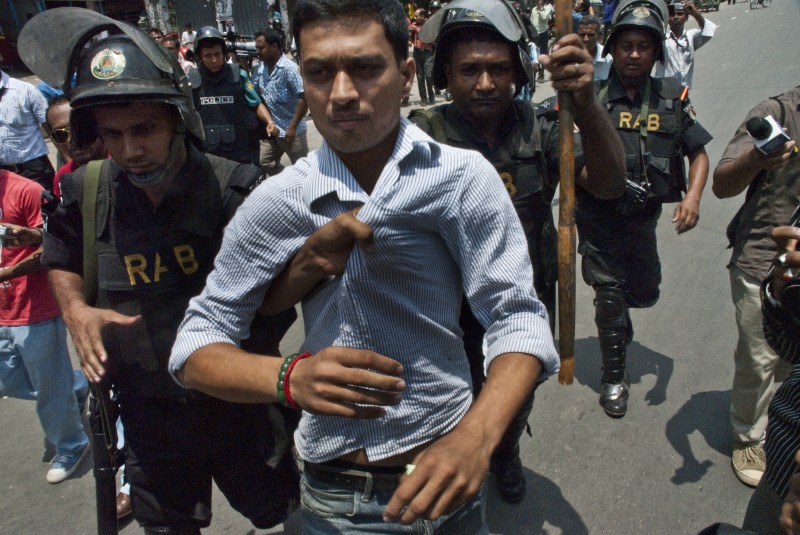
An activist is picked up by an RAB agent in Dhaka, Bangladesh, during a nationwide strike called by the main opposition party in June 2011. Photo by   Rahat Khan. Copyright Demotix.
An activist is picked up by an RAB agent in Dhaka, Bangladesh,
during a strike in June 2011. Photo by Rahat Khan. Copyright Demotix.
Brad Adams, the executive director of Human Rights Watch's Asia division, has recently written a letter to Bangladesh's prime minister suggesting that the Bangladesh government should disband the paramilitary Rapid Action Battalion (RAB). Quoting news sources, he accused the RAB of being responsible for more than 800 extrajudicial killings in the past 10 years.

Human rights organizations have long accused the elite anti-crime and anti-terrorism unit, which was created in 2004, of human rights violations. A number of its members are under investigation in Bangladesh in connection to the abduction and killing of seven men (see Global Voices report).

Some netizens were Irked by the tone of Adam's letter to a sovereign country. Blogger Himu wrote for Bangla blog Sachalayatan a response to Adams, suggesting he be consistent and write to Israel's Prime Minister Benjamin Netanyahu:
Brad Adams wrote, "We do not believe that RAB can be reformed. It has developed a culture of operating above the law without civilian accountability. It must be disbanded so that the killings come to an end."

With respect to human rights activist Mr. Brad Adams, I would request him to tear another page from his pad, take a pen and to write a similar letter to the Israeli prime minister urging him to disband the Israeli Defense Forces (IDF). You will have the accounts of killings by IDF available here. A lot of these victims are innocent civilians and a large portion of them are children, and the number is a lot more than 800.

I am sure you will agree with me that the IDF cannot be reformed. So can we hope that you will also suggest the Israeli prime minister that IDF should be disbanded?

We are eagerly waiting to see when you will write this letter.
One commenter wondered cynically:
Perhaps human rights is defined differently in regions of the world.

The post was first published in Global Voices Online.
July 18, 2014

Bangladesh Has Formaldehyde to Thank for Its Short Supply of Mangoes This Season

Dhaka Metropolitan Police jointly conducted a drive at Hatirpul Bazar against the health hazardous chemical, formalin.
Dhaka Metropolitan Police jointly conducted a drive at Hatirpul Bazar against
 the chemical formalin. Image by Reaz Sumon. Copyright Demotix (3/6/2014)
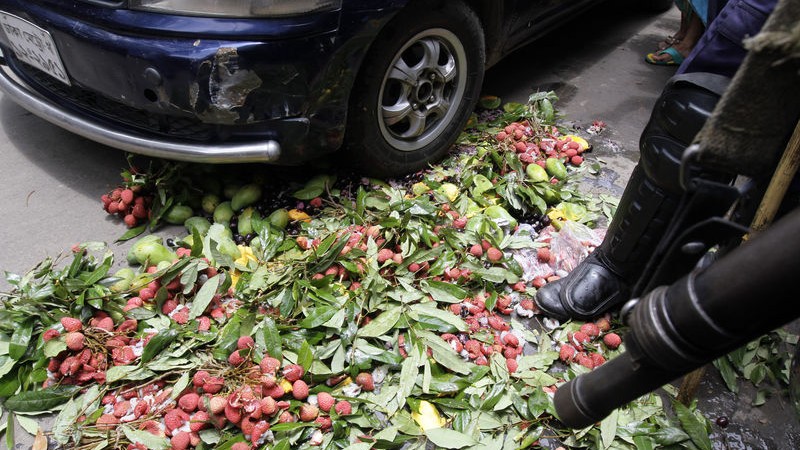
Monsoon season in Bangladesh is a delicious time when markets overflow with an abundance of seasonal fruits. Red lychees, green jackfruits and yellow melons are on colorful display, piled high in baskets and on tables.

The sweet, fleshy mango is especially sought after, but this year the fruit is harder to find due to a police drive to control the misuse of formalin, a strong solution of formaldehyde used to preserve produce (traditionally used to preserve dead bodies). Last month, police set up mobile formalin-detection units, confiscating and destroying truck loads of locally produced and imported fruits.

Fruits can naturally contain 0.03-0.15 part per million (ppm) of formalin, but the police drive against formalin, which primarily targeted the seasonal fruits, found the level between 3.5 ppm to 46 ppm in fruit found at markets in the country's capital Dhaka. There, police set up checkposts at entry points into the city to check for contaminated fruit.

Formaldehyde is highly toxic. Ingesting only 30 mL of a solution containing 37 percent formaldehyde can kill a human. In the past few years in Bangladesh, formalin has been used without limits on vegetables, fruits, meats and other putrescent foods to prevent them from rotting. On 30 June, 2014, the country's cabinet approved a draft law that calls for a maximum punishment of life in prison and a hefty fine for formalin abuse and unauthorized trading.

Journalist and blogger Anis Raihan at Istishon blog described how mangoes are treated with formalin:
When the mangoes are plucked they are sprayed with the first dose of formalin. Then they are packed and transported to the cities. The first dose is to cover the delays in the transport to prevent them from rotting. After arrival the traders check whether the mangoes are intact or show signs of rotting and spray another dose if necessary to keep them fresh till they are distributed to retailers, who start to sell the mangoes as they receive them. However, if the mangoes show signs of rotting when they are received, the retailers spray another dose of formalin.
Fruit sellers haven't been happy about their loss of produce. In the port city Chittagong, the fruit sellers association went on strike for several hours, claiming that police have been harassing them by testing the fruits with inadequate machines.

Contaminated food is an issue in Bangladesh. In 2012, the deaths of 14 children in Dinajpur after eating lychees tainted with pesticides sparked uproar in the country.

A recent study conducted by the Bangladesh government and Food and Agriculture Organization (FAO) of the United Nations showed that in Bangladesh more than 40 percent of foods contains banned pesticides. Toxic substances in the food samples were three to 20 times the limits set by the European Union. In the same report, 50 percent of vegetables and 35 percent of fruits have been declared unsafe. The mango and fresh shrimp samples contained the highest level of formalin.

Police destroying the formalin affected fruits. Image by Reaz Sumon. Copyright Demotix (3/6/2014)
Police destroying fruit contaminated with formalin.
Image by Reaz Sumon. Copyright Demotix (3/6/2014)
A group of activists arranged a protest called "Stop poisoning us" last May and urged to the government to take proper measures. One doctor, Dr. Shafiq, opined in Facebook that there should be stricter law against the use of formalin.

Blogger Kobid shared a shocking statistic related to contaminated food in Bangladesh:

Each year almost 5.7 million people face health hazards due to adulterated food. According to statistics from the Bangladesh Bureau of Statistics, almost 40 percent of deaths in 2010 were due to illness caused directly or indirectly by adulterated food.

Shahadat, a blogger, didn't mince words in describing the people who sell food contaminated with unsafe chemicals:
Not only in human food, adulterating food for any living being is cruel. The people who resort to this slow poisoning are not humans, but human-like animals.
But the issue is a little more complicated than that. As writer and columnist Tahmina Anam pointed out in The New York Times, the rural poor are the ones growing the fruit, which are then sold in urban areas. Transport is costly for small growers and risky because of non-air-conditioned trucks and road delays caused by traffic jams, strikes or road conditions. Formalin ensures they won't lose their produce, but at the cost of people's health.

Tighter regulations on the chemical’s use will solve the adulteration problem today, but not the transport issues — and growers’ desire for a workaround, chemical or otherwise.

The post was first published in Global Voices

October 25, 2010

Land Grab And Protests In Bangladesh


The population of Bangladesh is increasing and there is a growing demand of land mass for housing. As it is already considered a densely populated country, finding empty lands for development of housing complexes can be a tough ask. Political and business powerhouses grab government and private lands and the security forces or the law can barely do anything to protect the rights of general people.

Shahjahan Siraj describes in a podcast report at Panos London how land owners are turning beggers because of land disputes:

Disputes over land are the biggest single cause of court cases in Bangladesh. It’s usually the rich and powerful who win.

Recently in the Rupganj Upazilla near capital Dhaka Bangladeshis saw another kind of land grab. Protests of land-owners turned deadly as more than 50 people were injured and one person died (three more reported missing) from the clashes with the security forces. At least 10000 people were demanding cancellation of the government decision to acquire about 5,000 bighas (appx. 1653 acres) of land in Rupganj for an army housing project. The police has brought charges of vandalism against approx. 4000 people as they torched an army camp.

According to media reports [bn] the army had established 4 camps in Rupganj Upazilla 6 months ago and were carrying out the land acquiring tasks from there. Locals said that the personnel from these camps were forcing them to sell off their land very cheaply.

The Inter Services Public Relations (ISPR) in a press release alleged that a vested group has instigated landowners and local people through spreading 'hostile' and 'fearful' rumors against army and the army housing project in the area. They denied about the existence of army camp naming them temporary offices manned by army officials to facilitate the project.


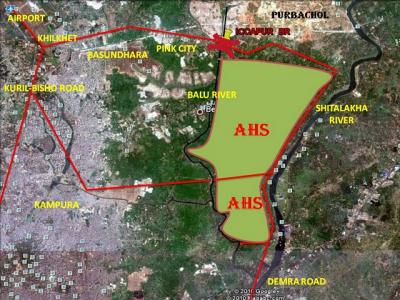
Some bloggers are reacting with anger over this incident. Blogger Dinmojur at Somewherein Blog writes in details about the army housing project (AHS) and how the army approached with the difficult task of acquiring so much land (1653 acres) for the project:

জমি কেনা বেচার সামান্য অভিজ্ঞতা যার আছে, তারা সহজেই বুঝবেন, একসাথে এত জমি কখনই সেচ্ছায় মানুষের কাছ থেইকা কিনা যায়না। ভিটাবাড়ি, পারিবারিক কবরস্থান এবং টিকে থাকার একমাত্র অবলম্বন কৃষিজমিটুকু কে-ই বা স্বেচ্ছায় বেচতে চায়! [..]

ফলে আর্মি তেরছা রাস্তা ধরলো। [..] ইউনিফর্ম এর জোর দেখায়া তারা ২৪ টি মৌজায় সব ধরণের জমি কেনা বেচা বন্ধ কইরা দিল। তাগো সাফ কথা, জমি যদি কেউ বেচতে চায় তাইলে সেনাবাহিনীর কাছে বেচতে হইব। আর জোর জবরদস্তিই যখন করতেই হইল তখন আবার ন্যায্য দাম কিসের?

Those who have the faintest idea of buying and selling land knows one can never purchase all that land together without force. Not everyone will want to sell their ancestral house, family graveyard, and their means of livelihood. [..]

So the army took the hard path. [..] Showing their power of uniform they stopped all buying-selling of land in 24 Moujas. They had only one demand - if anybody wants to sell land then they will have to hand it over to the army. And as they had to assert power why buy at a fair price?

The blogger posts evidence that the formal approval for the project from the land authorities is still pending. But the AHS project has already received payment of installments from potential buyers - many army officers for this project. The blogger also points to the advancing business interests of Bangladesh army. A recent BBC documentary showed how Bangladesh army has become a big conglomerate.

However, blogger Osthir Prithibi has questioned the hyped criticism and negativity against the army and requested not to jump into conclusion without much information.

Blogger & journalist Maskwaith Ahsan at Somewherein Blog vents his frustration on the politics behind the incident and the blame game:

এখনো আমরা চালাক মানুষরা ভাবছি,আগুন লেগেছে রুপগঞ্জে। আমাদের কী। আগুন কতো দ্রুত আপনার চৌকাঠে আসতে পারে তাতো জানিনা আমরা। আমাদের বালিতে মুখ গুজে দেশপ্রেম বিলাসের নিষ্কর্মতায় আমরা নূরহোসেন, রিসিল, জামালদের লাশের অংক কষে যখন ব্রেকিং নিউজ দেখছি,

তখন যুদ্ধাপরাধীরা রুপগঞ্জের ঘটনাকে কীভাবে ঘোলা করে যুদ্ধাপরাধীদের বিচার পন্ড করা যায় তার রেসিপি তৈরী করছে।বিএনপি এখন ত্যানা পেচিয়ে আওয়ামী লীগকে অজনপ্রিয় করে তুলবে। কারণ বিএনপির শয়নে সপনে জাগরণে শুধু ক্ষমতায় যাওয়া। দেশের চেয়ে দল বড়। মানুষের চেয়ে জমি বড়।

We clever people still are contemplating - there is fire in Rupganj, so what! We don't know when this fire will spread in our houses. We stick our head in the sand in leisure and inaction and watch the breaking news counting..Nur Hussain, Richil, Jamal.. all these dead bodies...

Then the war criminals will try to exploit this incident to stop the trial against war criminals, BNP (opposition party) will try to shed some popularity of Awami League (ruling party). Because the only goal of BNP is to come to power again. The party is greater than the country. And of course the land is greater than the people.

Mustak Khasru at Somewhere In Blog writes [bn]:

ষোল কোটি চৌচল্লিশ লক্ষ মানুষ যে দেশে বসবাস করে সেই দেশে ভুমি অধিগ্রহনের জুজুটি আইন করে বন্ধ করে দিতে হবে। [..] কৃষি নির্ভর দেশের আবাদী জমির পরিমান জ্যামিতিক হারে কমছে তা এখনি বন্ধ করতে না পারলে সামনে মানুষ মানুষের মাংশ খেতেও দ্বিধা করবে না।

The law of acquiring land in the country of 166.4 million people should be repealed. The cultivable land in this agriculture based country is decreasing exponentially. If we can't stop it people will be hungry and turn carnivorous.

The protests of Rupganj perhaps has made Bangladeshis realize that the lower middle class has overcome the fear of army in this democratic country but the weary middle-class has to wake up.

First published in Global Voices Online.
March 16, 2010

Cross Fire

Cross Fire or encounter killing is a well known term in the Indian subcontinent. Its the killing of people under custody of police/RAB and making a story like they wanted to escape and was shot in the back while fleeing. However its ironic that no member of police/RAB was killed in the cross fire.

Sultana Razia, a researcher with Odhikar sheds a light on the history of encounter killing in Bangladesh:

In 1972, the paramilitary group Jatiya Rakkhi Bahini came into force and had become infamous for its extrajudicial executions until it was absorbed into the army in 1975. Now, since the formation of the elite Rapid Action Battalion (RAB) in March 2004, such killings are again on the rise and are being categorised under a new vocabulary of "crossfire," "extrajudicial killings," "encounters," etc.

"Crossfire" is an extrajudicial execution that is in flagrant violation of Bangladesh's constitution and the international human rights conventions of which the country is a party.

Although some people believe that extrajudicial killing of hardened criminals helps ease the problem of "terrorism," in reality, it encourages lawlessness and aggravates "state terrorism." In different countries across the world, people in power have created an impression that killing "terrorists" without bringing them to justice can help curb "terrorism," but such extrajudicial killings, in fact, can neither bring peace nor eradicate "terrorism."

Since the formation of the RAB, there has been a rising trend of "deaths in crossfire." The number of deaths in RAB custody is also alarming.


Renowned photo journalist and blogger Shahidul Alam of Drik is organizing a photo exhibition on Cross Fire which will take place from 22-31 March in Drik Gallery, Dhaka. In an article in BDNNEWS24.com Mr. Alam accuses the BNP law minister Moudud Ahmed of defending extra judicial killing:
রেবের উদ্যোক্তা মওদুদ আহমদকে অস্ট্রেলীয় সাংবাদিক জন পিলজার ‘ভদ্র ও সাহসী’ মানুষ বলছিলেন বলে আমি খুব বিরক্ত হয়েছিলাম।

মওদুদের কথার পরতে পরতে ছিলো ন্যায় বিচার অগ্রাহ্য করার সুর।

“যদিও আপনারা টেকনিক্যালি একে বিচারবহির্ভূত বলতে পারেন। আমি কিন্তু বলবো না হত্যাকাণ্ড, বলবো বিচারবহির্ভূত মৃত্যু। মৃত্যু আর হত্যা কিন্তু এক জিনিস নয়… যাই -ই বলুন মানুষ কিন্তু খুশি।”

দুর্নীতিগ্রস্ত একটি পুলিশবাহিনী ও দুর্বল বিচার ব্যবস্থার অজুহাত দেখিয়ে আইনমন্ত্রী এরকম একটি বাহিনীকে ন্যায্যতা দেওয়ার চেষ্টা করেছেন।

He criticizes the current government of ignoring their electoral pledge that they will stop the cross fire. Howver the current home minister has denied that such cross fire exists in Bangladesh. Perhaps she needs to look at these incidents mapped in Google map.


February 22, 2009

Torture And Custodian Death Prohibition Bill 2009

It is about time Bangladesh should do something about the extra judicial killings it has witnessed for many years. Ever since Rapid Action Battalion (RAB) started operating in 2004 to stop spiraling crime, they have made a practice of killing criminal suspects in detention. Torture methods used by the force include beatings, boring holes in suspects with electric drills, and the application of electric shock.

Human Rights Watch reported about it several times and they have published a 79 page report on this.

The Awami League MP Saber Hossain Chowdhury has proposed a bill in parliament titled "Torture And Custodian Death Prohibition Bill 2009". You can read the contents of the bill from here (pdf file).

It deals with provisions implying that the the authorities should record complaints from the victims, give protection to the victim, a special prosecutor should lead the trial proceedings, punishment of the law enforcement agency officials who commit such act.

I think every political party should back this bill and help implement this as soon as possible.

August 11, 2008

Locked up in Bangladesh

In early 1992, 18-year-old Lia McCord got an offer she couldn't refuse.: Go to Bangladesh, pick up some packages and return home to Texas with $20,000. Simple.

However, the packages were in fact heroin and her contact was violent and controlling. Following a botched escape from her hotel McCord was arrested at Zia International Airport in Dhaka with 7 lbs. of heroin strapped to her body. It was then that her descent into hell really began. She narrowly escaped the death penalty, but was sentenced to 30 years.

As a model prisoner, she came to the attention of Congressman Bill Richardson, who appealed to the President of Bangladesh. It was successful, and she was released in July 1996. She now lives and works near Washington DC.


The full report is in the National Geographic.

(Via Voice of Bangladeshi Bloggers)

June 15, 2008

An appeal

During the Bonian war in July 1995 an estimated 8,000 Bosniak Muslim men and boys were killed in the region of Srebrenica in Bosnia and Herzegovina by units of the Army of Republika Srpska (VRS) under the command of General Ratko Mladić during the Bosnian War. The Srebrenica massacre is the largest mass murder in Europe since World War II. (Wikipedia).

Prior to the genocide, the United Nations had declared Srebrenica a UN protected "safe area", but that did not prevent the massacre, even though 400 armed Dutch peacekeepers were present at the time.

The father, mother and brother of Hasan Nuhanovic and the husband/father of the Mustafic family were among the people who were actually forced to leave the Dutch UN contingent's compound at Potocari and were effectively hande dover to be killed by the Bosnian Serbs under Ratko Mladic. Hasan and the Mustafic's are bringing a civil action in the Dutch courts on 16 June to hold the Dutch government to account for their failure to protect their relatives. Here is the press release. Please circulate it.
PRESS RELEASE

Amsterdam, 1 June 2008:

THE DUTCH STATE FAILED IN ITS DUTY TO PROTECT CIVILIAN VICTIMS OF GENOCIDE AT SREBRENICA

Civil action due to be heard at 10 a.m. on 16 June 2008 in the District Court at The Hague (Prins Clauslaan 60, The Hague, Netherlands).

On 16 June 2008 the District Court at The Hague will hear the first civil action brought against the Dutch State by relatives of the victims of genocide at Srebrenica. Hasan Nuhanovic and the family of Rizo Mustafic are seeking to establish that the Dutch state is responsible for the failure of Dutch troops acting under a United Nations mandate to protect their family members massacred at Srebrenica in July 1995.

Hasan Nuhanovic, a U.N. interpreter who lost his father, mother and younger brother, and the family of Rizo Mustafic, an electrician employed by the Dutch battalion of the United Nations Protection Force (UNPROFOR), claim that the Dutch government failed to protect the lives of their relatives after the safe area established by U.N. Security Council Resolution around the town of Srebrenica in Eastern Bosnia was allowed to fall into the hands of the Bosnian Serb Army.

The Nuhanovic and Mustafic families were among thousands of refugees who sought protection inside the compound of the U.N. base at Potocari but were then delivered by the Dutch UNPROFOR forces into the hands of Serb General Ratko Mladic. Dutch soldiers in U.N. blue helmets are alleged to have watched on as women and young girls were taken away and raped and men and boys separated before being taken away for summary execution.

In a tort action against the Dutch state in which much of the legal debate revolves around the division of responsibility between the United Nations and national states, the plaintiffs' lawyer Liesbeth Zegveld will argue that the Dutch government and the Dutch command within UNPROFOR were responsible for the gross negligence shown by Dutch troops, were primarily concerned for the safety of their national contingent and showed scant regard for the safety of the civilian population entrusted to their care.
Please see the full press release here.

Update: Srebrenica Families’ Anger at Removal of Judge:
It is unclear why Judge Bart Punt has left the case, which is to be heard at the Hague District Court on June 16. However, victims’ families are outraged that he is going after working on it for three years, and fear it could affect the final verdict.

In January 2007, families welcomed an interim decision by Judge Punt which supported the view that Dutch soldiers at Srebrenica should have evacuated Mustafic along with them because he was employed by the UN. Instead, according to the claimants, a Dutch personnel officer sent him away and he was captured by Bosnian Serbs.

In 2002, Dutch prime minister Wim Kok and his government resigned after a report found the state partly responsible for the fall of the UN-protected area.

June 13, 2008

Laws and implications

Bangladesh government has introduced a tougher law to combat religious terrorism in the country. The Anti-Terrorism Ordinance 2008 passed this week empowers:
* The Central Bank to freeze the accounts of a suspected terror financier.
* judges to impose death penalty for terror financing and staging murder to create panic and jeopardize the country's sovereignty. Special tribunals will be constituted to deal with such offenses.
* Anyone resorting to murder, kidnapping or damaging property to create panic among the people and jeopardize the country's security by using explosives, arms and chemicals, will be charged with committing terrorist offense.
These will provide a deterrent to the terrorist outfits who are funded from terrorist cocoons like the Middle East and not surprisingly UK.

Although considering the population Bangladesh is a Muslim majority country it enjoys much liberal legal and cultural environment since its inception. The common perception of many who knows Bangladesh less is that it is one of these monarchy or religious party controlled state with Sharia in place. Quite contrast to that most of the Bangladesh's legal system are based on the British laws (imposed during the colonial era) and some renovations. India and Bangladesh recognizes some religion specific rules regarding marriage and inheritance. But Pakistan adopted full Sharia law in their legal systems in 1979.

Bangladesh broke away from Pakistan after a bloody liberation war in 1971. The Pakistani army carried out a genocide of many Hindus and Bengali Muslims who were deemed not proper Muslims and secessionists.

The fundamental principles of Bangladesh constitution of 1972 were:
- Democracy
- Nationalism
- Secularism
- Socialism (this principle was generally considered for social justice particularly for the disadvantaged.)

According to the section on fundamental rights, all men and women are equal before the law, without discrimination based on religion, race, caste, sex, or place of birth. The Constitution also guarantees the right to assemble, hold public meetings, and form unions. Freedom of speech and of the press are ensured. Persons who have been arrested must be informed of the charges made against them, and they must be brought before a magistrate within twenty-four hours.

Bangladesh was fundamentally a secular country when it was born. The Islamic parties supported Pakistan during the war and was a party to the crime the Pakistan Army committed in 1971 in the name of curling insurgency. So after the war many of their leaders went on to hiding and returned to normal life after a mass pardon.

Then the father of nation Sheikh Mujibur Rahman inclined towards Socialism and was assassinated in 1975 by a military coup. Military dictatorship (and autocratic puppet democracy by military rulers) ruled Bangladesh till 1990 when democracy was truly restored. The leaders of the Jamaat returned to Bangladesh during the rule of the military rulers Zia and Ershad and some were even helped to restore in politics. For an example is the case of Abdul Kader Molla, who became known as "the Butcher of Mirpur," a Dhaka suburb which in 1971 was populated mainly by non-Bengali Muslim immigrants. Today, he is the publicity secretary of Jamaat e Islami Bangladesh. In 1996 the more progressive political party Awami League joined hand in hand with Jamaat e Islami to make a electoral pact to contest the election against then ruling Bangladesh Nationalist Party.
"The Constitution as originally framed in 1972 explicitly described the government of Bangladesh as "secular," but in 1977 an executive proclamation made three changes in wording that did away with this legacy. The proclamation deleted "secular" and inserted a phrase stating that a fundamental state principle is "absolute trust and faith in the Almighty Allah." The phrase bismillah ar rahman ar rahim (in the name of Allah, the beneficent, the merciful) was inserted before the preamble of the Constitution. Another clause states that the government should "preserve and strengthen fraternal relations among Muslim countries based on Islamic solidarity."

State support for Islam, including recognition of Islam as the state religion in the Eighth Amendment to the Constitution in June 1988, has not led to official persecution of other religions. Despite agitation by Jamaat e Islami (Congregation of Islam) and other conservative parties, there was no official implementation of sharia (Islamic law) as of mid-1988".(source)
In fact in 2001 a Bangladesh court banned Fatwa which was a blow to the Islamists.

So there are many Bangladeshi laws to safeguard the society from religious fanatics and restrictions on freedom of expressions. But in effect many people do not know of their rights. In rural areas mosque based religious leaders are respected and people are afraid to counter their unlawful acts.

A couple of months ago Mufti Fazlul Huq Amini, chairman of Islami Oikkojote (Islamic confederation) had the audacity to proclaim a Fatwa in a press release that by announcing the new National Women Development policy (promoting equal right of women), the caretaker government has spoken against the Koran, and are thus considered apostates.

His Fatwa was unchallenged and in fact the Government took no steps other than a meek protest.

So it remains to be seen whether the new laws are not politically manipulated and thus become truly effective. People has to be aware of these regulations to fight the bigotry and Jihadi ideologies.

March 20, 2008

RAB loses it again

From Canada Free Press:
Kidnapped from his own office, which had been stormed by members of Bangladesh’s Rapid Action Battalion (RAB) at 7 p.m. Dhaka time last night, anti-Jihadist Muslim journalist Salah Uddin Shoaib Choudhury was questioned for hours.

When RAB stormed the offices of Choudhury’s newspaper, Weekly Blitz, they ordered his employees out and interrogated Choudhury, seizing his telephones and not allowing him any communication, friends or legal counsel.

“After more than an hour and a half on the scene, RAB claimed to find a controlled substance in Shoaib’s desk—an allegation that Shoaib’s friends and associates claim is impossible,” his American friend Dr. Richard Benkin told Canada Free Press (CFP) last night. “His brother, Sohail claims that any evidence had to be planted.”

“Shoaib was blindfolded and taken to an RAB interrogation center in Dhaka, where, according to Shoaib, his captors verbally abused him for hours, repeatedly calling him a “Zionist spy and agent of the Jews”. They used expletives to refer to journalists against whom RAB has a record of harassing, and the United States Congress, which passed a resolution in Shoaib’s support. The verbal assault, which included numerous threats, continued for another three hours until someone RAB described as a “high government official” telephoned and ordered them to release him. When Shoaib asked about the contrived drug charge, he was told they would not pursue it.”
Apparently all these drama had only tarnished the country's image. What were they trying to achieve?

January 03, 2008

The Musée Guimet affair -part deux

Last week I reported about the bloggers reactions on the controversies surrounding the exhibition of the masterpieces of Ganges in Musée Guimet of France from the collections of the Bangladesh museums.

The apprehensions of the art lovers who were protesting the unclear processes of sending the artifacts including their fear of loss, theft, replication, even accident (on the way) came true as on Dec 22, one of the 13 crates in the 2nd shipment of artifacts to Musée Guimet in Paris vanished from the tarmac of ZIA International Airport, Dhaka.

Shafiur of Imperfect | world | 2008 reports:
Ah yes the bumbling and incompetent Inspector Clouseau must have been in charge of the precious bits and pieces at Zia Airport the other day when the nation’s heritage was under the care of Air France. Two priceless pieces have gone walkies. And the rest have been returned to the national museum as the powers that be finally resolved to not send the stuff to the Guimet in Paris. As I said in an earlier post, this whole thing at the Guimet lacked process even apparently the final decision to send them according to the New Nation.

And amazingly, Ayub Quadri, the education and cultural adviser to the inappropriately named “caretaker” government, is mulling resignation. I guess he is hoping Monsieur Clouseau will find the priceless Vishnu artefacts and save his skin.

Meanwhile I reckon Inspector Clouseau’s spokesman has started the damage limitation exercise at the French embassy in Dhaka. They reckon the whole thing was “highly suspicious.” Mon dieu! Yes it gets better. And they are effectively blaming those people who objected to the exhibition for the theft! This is a quote from their press release:

‘’… could also be the result of a conspiracy by a very small nexus of people to embarass France and Bangladesh.'’
Although according to the agreement the transport of the artifacts were responsibility of borrower (i.e. the French authorities), there were lapses in securities as the masterpieces were left in tarmac for three hours unattended. A local news source reports:
Homebound, the shipping agent hired by France, had declared the 145 artefacts awaiting shipment to Paris as ‘general cargo’, leading to the crates being left unattended for three hours on the tarmac and the theft of two Vishnu statues.
Meanwhile grapevines (as not supported by a second source) kept appearing in the media:
A confirmed source told Weekly Blitz that the authorities of Guimet Museum is now looking into legal aspects of holding the whole batch of first consignment of artifacts sent from Bangladesh for, what Guimet says, non performance of the contractual obligation of the authorities in Dhaka in sending the second consignment of artifacts.
Further report in a Bangla blog (chemical Ali) quoting a museum official suggests [bn]:
"the French officials requested Bangladesh national museum officials to quote the value of the artifacts so that insurance value becomes lower and promised that they will carefully handle them. The Bangladeshi museum officials were also lured with the chance to visit France alon gwith the artifacts which made them co-operate."
Arup at Sachalayatan posts an interview which tells that the French authorities have opened the first lot of the artifacts without the presence of the accompanying Bangladeshi officials, which is the due process.


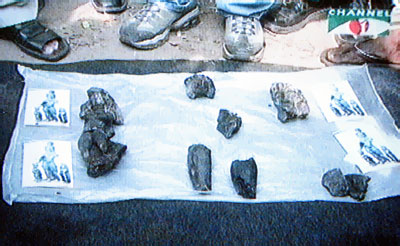
And finally everybody loses as broken pieces of the two 1500 year old relics were found in a dump yard in the outskirts of Dhaka city. Apparently the petty thieves were trying to cover up their crime and could not handle the hunt on them.

Arup writes an emotional piece addressing the French ambassador in Bangladesh in Sachalayatan titled "Désolé Monsieur Romnicianu" [bn]:
সেদিন মিডিয়া আর বাংলাদেশের প্রতিবাদী কিছু মানুষের উপরে আপনি ক্ষেপে উঠেছিলেন। কূটনৈতিক শিষ্টাচার (যা আমাকে নিকটজনেরা শত চেষ্টায় শেখাতে পারেনি) ভুলে আপনি কতোকটা ফুঁসেই উঠেছিলেন। কেন? গরীব দেশ দেখে যাচ্ছেতাই করবেন আর বলবেন, আর আমরা হজম করবো?
...
কিন্তু আজকে আমি সেই বোঝাপড়ায় আসিনি। বড় লজ্জা নিয়ে আপনার মতো ঘৃনার্হ একটা মানুষের কাছে হাটু গেড়ে বসে কিছু কথা বলতে চাই। ...বাংলাদেশের সমস্ত পুরাকীর্তি আপনারা নিয়ে যান, যতো তাড়াতাড়ি পারুন, নিয়ে যান সব। আর যেগুলো প্রথম চালানেই চলে গিয়েছিল, প্লীজ ফেরত দেবেন না আর। চুরির শংকায় আমরা আপনাদের বিরুদ্ধে কতোই না আন্দোলন করেছিলাম। কি লাভ হল তাতে। মোবাইল ফোনের চালান ভেবে যেদেশের মানুষ ৩য় খ্রীস্টপূর্বাব্দের অমূল্য বজ্রসত্ত্ব মূর্তি চুরি করে আর পরক্ষনেই ভেঙ্গে টুকরো টুকরো করে বর্জ্যক্ষেত্রে ছিটিয়ে দেয়, তাদের কি অধিকার আছে নিজের অমূল্য সব সম্পদ নিজের বুকে আগলে রাখার? আমরা মায়ের কুলাঙ্গার সন্তান। দেশের সম্পদ তাই বরং চলে যাক আপনাদের মতো বেনিয়াদের হাতে। আপনারা বেনিয়া হতে পারেন, কিন্তু ইতিহাস আর ঐতিহ্যের মূল্য দিতে জানেন। নিয়ে যান, তবু শান্তি, জানি আগলে রাখবেন পরম মমতায়।

"That day you showed your outburst of anger to the media and some protesters ignoring diplomatic etiquettes. Because we are a poor country, does that give you the right to say anything at your will and we should digest that?

No I have not come to talk about that. Keeling down before a hated man like you, I want to say something... Please take away all the archaeological artifacts from Bangladesh as soon as possible. Please keep those which were already sent to you. We have protested a lot on the apprehension of theft. But what good it did to us? Some people of this country had stolen a 300 Year BC artifact on the notion that its a consignment of mobile phones and later broke them into pieces and dumped them. The people of this country do not deserve to protect their priceless assets. We are condemned sons and daughters of this country. So let these objects go to you, the colonialists. You can be colonialist, but can value and respect the history and tradition. Please take them away, still we will be happy to know that they are safe."
A French Blog Rue89 reports the incident in their post titled "Vishnu disparu au Bangladesh, le musée Guimet ébranlé" (Vishnu disappeared in Bangladesh, the Musée Guimet shaken ). A commenter -"Illusion (archaeologist)" aptly points out [fr]:

Si la situation a escaladé ces derniers mois, c’est aussi parce que les organisateurs n’ont pas réagi avec doigté aux remarques qui leur étaient faites, forts qu’ils étaient d’avoir le support du gouvernement bangladais (et probablement surpris qu’on puisse contester l’organisation d’une telle exposition), mais il serait faux, comme on a tenté de le faire croire, que ce mouvement est uniquement une critique exercée par des opposants au gouvernement en place à Dhaka. Parmi les opposants, il y a des archéologues, des historiens de l’art, des professeurs d’Université et c’est leur faire insulte que d’éliminer d’un revers de main les critiques qu’ils ont émises. C’est vrai que le gouvernement bangladais a fait des fautes, mais la France en a profité. L’opposition n’est pas une opposition au principe de l’organisation de l’exposition mais se base fondamentalement sur le choix des objets.
...
Le Bangladesh est un pays à majorité musulmane, il est vrai, mais néanmoins, c’est avant tout le « pays des Bengalis » (Bangla-desh), et ceux-ci sont extrêmement conscients de leur passé et de leur culture. Ils sont respectueux de leurs ancêtres et de leurs réalisations et n’attendent pas les Occidentaux pour les éclairer à ce sujet, mais on pourrait de fait les aider en finançant des projets éducatifs, ou de formation (ce que Guimet a tenté de faire en offrant des formations de muséologie), ou en partageant notre savoir sur la restauration, la conservation, etc. – mais encore seulement s’ils en font la demande : rien n’est pire que de se croire autorisé à « aider » quand en fait, on ne fait qu’imposer sa propre vision du monde. Et enfin, en sachant aussi se retirer au moment opportun : nous ne sommes plus au « temps béni des colonies », mais les mauvaises habitudes ont malheureusement la vie dure. De telles expositions nous font plaisir, mais n’oublions pas que nous consommons à ce moment de la culture qui n’est pas la nôtre et pour laquelle nous n’éprouvons souvent que de la condescendance. Allons voir l’autre sur place et acceptons que sa vision du monde peut être radicalement différente de la nôtre.

Machine Translation:

If the situation has escalated in recent months, it is also because the organizers did not react sensitively to the comments that were made, they were strong to have the support of the government of Bangladesh (and probably surprised that we can challenge the organization of such an exhibition), but it would be wrong, as it tried to have us believe that this movement is only a review carried out by government opponents in place in Dhaka. Among the opponents, there are archaeologists, art historians, university professors and it is insulting them than to eliminate out of hand the criticism they have made. It's true that the government of Bangladesh has made mistakes, but France took advantage. The opposition is not an opposition to the principle of the exhibition but is based fundamentally on the choice of objects.
.....
Bangladesh is a Muslim-majority country, it is true, but nevertheless, it is the Bengalis' countries (Bangladesh), and they are extremely aware of their past and their culture. They are respectful of their ancestors and their achievements and do not expect the West to shed light on this matter, but it might actually help by supporting educational projects, or training (what Guimet tried to offering training museology), or by sharing our knowledge on the restoration, conservation, and so on. -- But only if they apply: nothing is worse than being allowed to believe "help" when in fact, it does impose its own vision of the world.

And finally, knowing also retire at the right time: we are no longer the "blessed time of the settlements", but unfortunately have bad habits die hard. Exhibitions of this kind we are happy, but we must not forget that we eat at this time of the culture that is not ours, and for which we do often than condescension. Let's hear another on the spot and accept that his vision of the world can be radically different from ours.
Since the beginning of the process French diplomatic pressure was acute on Bangladesh. The adviser (minister equivalent) of the cultural ministry had taken responsibility and resigned. Times Online reports that it had created a diplomatic rift between Bangladesh and France. The president of the Musée Guimet had expressed his opinion in "Le Monde" as "écœuré" (nauseating) and of course blamed the Bangladeshi authorities keeping mum about their lack of processes.

Today's latest news is that the Bangladesh ambassador to France has died of Brain hemorrhage. Close acquaintances say he was under a tremendous pressure for this affair. France may have had lost some amount of money in this debacle but Bangladesh had to pay dearly, all in priceless objects.

January 02, 2008

Who is watching you?


Click on the image for enlarged view.

Source: Privacy International

January 01, 2008

Law without common sense

Eamon points to a weird customs law in Bangladesh. If anyone sends a gift to a receiver in Bangladesh then the customs will charge 100% upon the value of the package.

In comparison:
"most of the countries gift packages are free from government tax within $100 i.e. if the value of the gift exceeds $100 only then you have to pay some tax to the government and the tax is around 5-10% upon the value."
No wonder why people resort to corruption and bribery. These weird laws are impediments to abolish corruption in the country. Why a person has to pay 100% tax for a gift item? Is the govt trying to tell the people of the world to not to send gifts to Bangladeshis?

Tips for the gift senders: please declare it "of no commercial value" or a nominal value like "1$" - thats still about Taka 70 for a person in Bangladesh.

December 19, 2007

Towards a border free world

On December 21, nine new EU countries (Estonia, Latvia, Lithuania, Poland, Czech Republic, Slovakia, Hungary, Slovenia and Malta) will join the border control-free group known as Schengen.

As of this weekend, travelers can go from the easternmost tip of Estonia all the way to the Atlantic coast in Portugal without encountering a single border official.

More in Spiegel Online International.

November 12, 2007

Flash mob protesting Pakistan's emergency

Pakistani blogger Dr. Awab Alvi successfully used Flash mob strategy in protesting emergency of Pakistan.

Andy Carvin reports:
"If you announce a date a day in advance, the army and police show up" and they "beat the hell out of you," according to Dr. Alvi.

So he concluded it made more sense to organize very brief protests through telephone calls and other communication channels. At an appointed time, the protesters show up, pull out signs and shout slogans demanding an end to the state of emergency. After 10 minutes, they put away their signs and leave before the authorities can interfere with them.
I need to read the book Smart Mobs: The Next Social Revolution by Howard Rheingold.

A killer speaks

Controversies surround a telephone interview with Col. (rtd) Abdur Rashid broadcasted in Channel-I. Col. Rashid is absconding in exile because he has been found guilty of murdering Sheikh Mujibur Rahman, the father of the nation. Shada Kalo and An Ordinary citizen have more on this.

September 26, 2007

Free Cartoonist Arifur Rahman


Calling for an international campaign to free the Bangladeshi cartoonist Arifur Rahman who was detained for his harmless statirical cartoon published in Alpin, the satirical supplement of the Bangla Daily Prothom Alo. He is only twenty years old.

Backgrounds on this:

- Bangladesh: yet another Muhammad cartoon controversy

- Attack against freedom of speech: Bangladesh cartoon controversy update

The Bangladeshi Bloggers have pressed for Arifur Rahman's release whereas the Bangladeshi media people are silent about their colleague. I wonder what is keeping them.

* Shourav did the splendid banner above and called for support. (Anybody can use it under creative commons)

Other bloggers chimed in:

* Some more bloggers in Bangla blogging platform "Bandh Bhanger Awaaj"

* Mash at "Or how I learned to stop worrying"

* Addafication

* Dhaka Shohor

* Voice of Bangladeshi Bloggers

- In the Middle of Nowhere who also ask to free Nurul Islam, the Bangladeshi aid worker (BRAC) kidnapped in Afghanistan by the Talibans.

- Serious Golmal

- Unheard Voices

- Tacit

Many international organizations demanded the release of Arifur Rahman:

- Reporters without border (RSF) - Cartoonist arrested over harmless play on name Mohammed. Excerpts:
"The play on words had no intention of attacking the Prophet," Reporters Without Borders said "It was a joke about a cultural custom. The government should not yield to pressure from extremist leaders who are trying to politicize the case. Rahman should not be made a scapegoat. He must be freed."
- International Press Institute (IPI) protests jailing of Cartoonist in Bangladesh and suspension of publication of satirical weekly. Excerpts:
IPI would like to remind Your Excellency that the state of emergency imposed in January after the cancellation of the general election is not an excuse to restrict press freedom. With a general election planned for the end of 2008, it is vital that the country’s citizens have access to information and that the media is free to report facts and express opinions.
- Mukto-Mona condemns the arrest of cartoonist Arifur Rahman. Excerpts:
Thanks to the army & fundamentalists' combined efforts, Mr Rahman's life is now threatened inside or outside prison. What should have been a funny cartoon for people to laugh at has suddenly turned into a matter of life and death for a man whose only attempt was to provide readers amusements. Mukto-Mona demands the immediate release of Mr Arifur Rahman and for protection to be provided to him.
Please show your support for Arifur Rahman by putting the badge on your blog.

Join the facebook group to get the updates.