





Dragonfly

Image by Rezwan

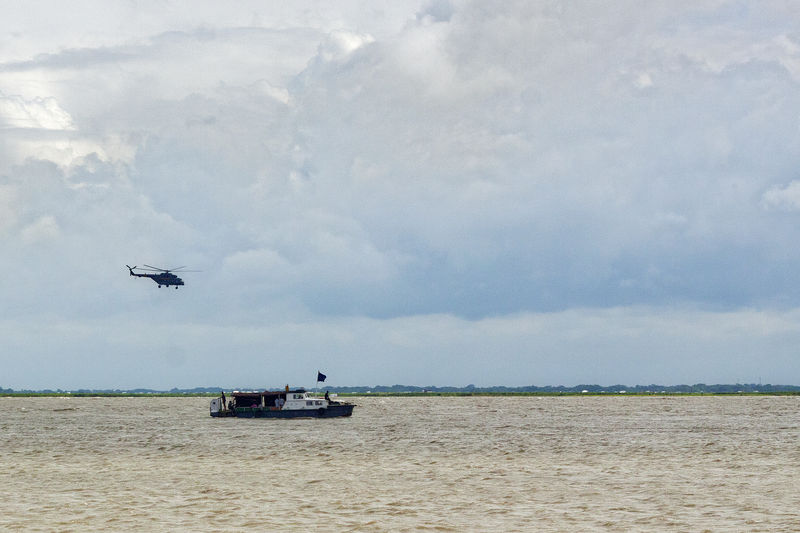
Overcrowded passenger ferry capsized in the Padma River in Munshiganj, Bangladesh

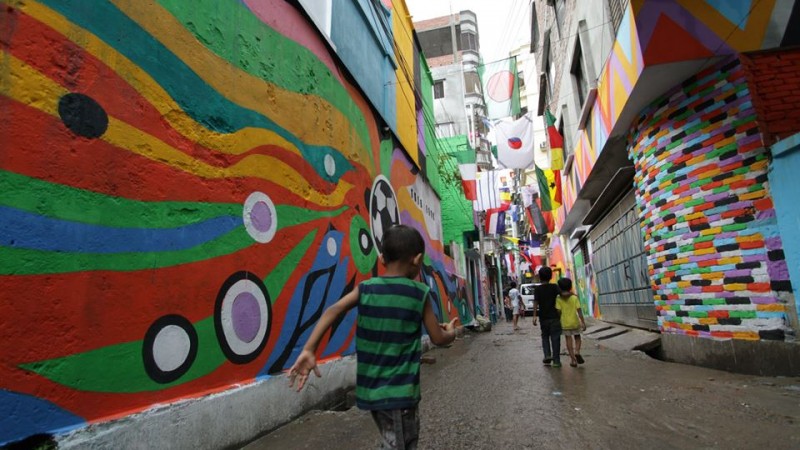
The World Cup Goal-E Project

This street in Bangladesh has a colorful world cup celebration

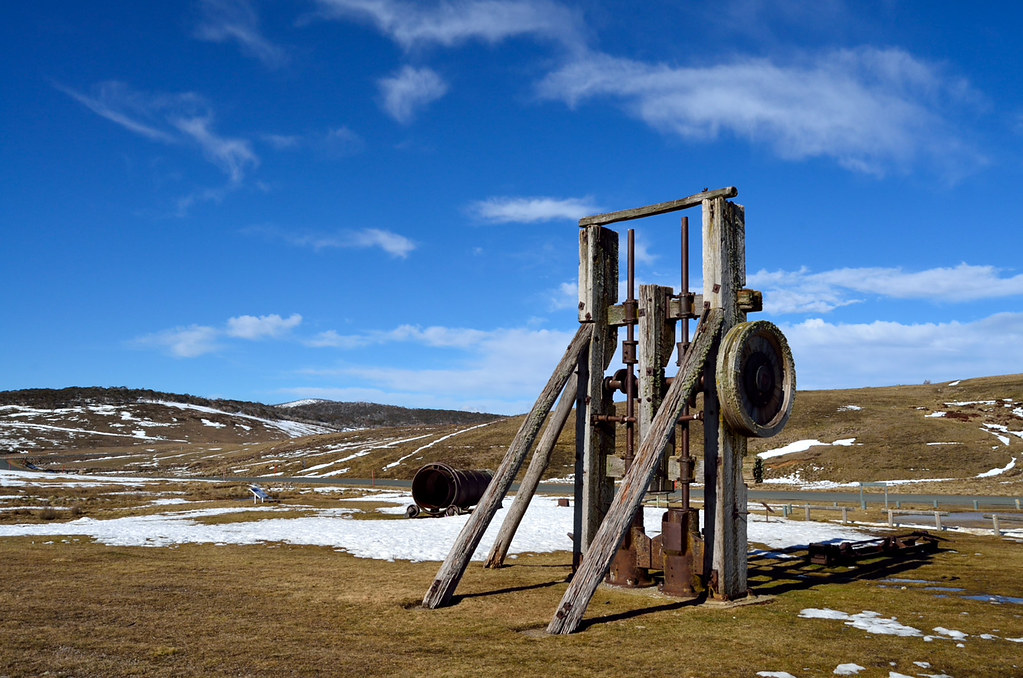
New Chum Hill Ruins

Remnants of Kiandra gold mine at New Chum Hill, #nsw #australia

February 19, 2008

Cricket: A team looses in four balls only

This has to be a record in any form of cricket. Bermuda's women cricket team lost to the South African women team in a world cup qualifier match the result of which will be hard to be matched in centuries to come.

Bermuda could make only 13 runs in 18 overs with three of its batswomen scored 1 each (10 extras). Their captain Linda Mienzer held on to one end making 1 run off 48 balls.

Form Line and length blog:
In reply, the Bermuda opening bowler, Terry-Lynn Paynter, sent down nine wides and a no-ball before eventually getting one ball to land on the strip, which was hit for four. There was a grand sum of five scoring strokes in the match. Brilliant.
Here is the scorecard and the Cricinfo bulletin.

If you are looking for some good cricket don't forget to follow the Under-19 world cup being held in Malaysia.


February 16, 2008

Plus two formula and other links

Himal South Asian is a great regional magazine in South Asia based and its published from Nepal. I don't know about its readership in the region but its available online. Its February issue has two articles about Bangladesh.

Bangladesh: The plus two formula
"One year on, as Bangladesh teeters on the precipice of economic and political breakdown, there are rumours of a martial law in the offing. These suggestions seem to gain strength even as the government and the army chief, Moeen U Ahmed, publicly deny them. Meanwhile, the only visible electoral and bureaucratic reforms thus far have been regime changes at key government and quasi-government institutions. Actual political reform has been stalled by internecine battles for leadership within the country’s two major political parties, the Awami League and the Bangladesh Nationalist Party (BNP). This gridlock, suggest many political analysts, has been largely engineered by the government.

This sluggishness in the political arena looks set to continue in 2008. While the Election Commission has embarked on an ambitious identification-card project, at this point it appears likely to miss every key deadline that could actually lead to the promised elections by the end of the year. The fact that the Commission is still answerable to the office of the chief executive (previously the prime minister’s office), which controls its funding, means that the most significant reform for which many have been clamouring until now remains incomplete.

The interim government’s repeated attempts to exile the ‘two begums’ – Sheikh Hasina Wajed and Khaleda Zia, who respectively head the Awami League and the BNP – have failed in the face of popular resistance and the refusal on the part of the two ladies to be intimidated. Likewise, the once-celebrated anti-corruption crusade has quickly lost credibility, as rumoured backdoor deals see a trickle of corrupt businessmen emerging from the prison gates. To its chagrin, the government, too, has realised that its overzealousness in arbitrarily arresting key business leaders during the early months of 2007 succeeded in little more than destroying business confidence. To make up for all of this instability (which it helped to create), the Dhaka regime has been compelled to form a ‘truth commission’, where corrupt businessmen can confess past sins and atone with a fine to avoid jail sentences."
Scattered memories of 1971
"In Bangladesh, as elsewhere, the writing of history can often be a political project, with a choice made between competing narratives jostling for space. In the post-1971 period, there were several attempts made under the Awami League government to document the war. These resulted in an impressive collection of primary documents published by the Ministry of Information, a 16-volume series that includes not only official documents, but also oral histories, FIRs and police reports, as well as a collection of press clippings from around the world.

With the assassination of Sheikh Mujibur Rahman in August 1975 and the coming to power of General Ziaur Rahman, the writing of history in Bangladesh took a decidedly political turn. Since then, each successive government has sought to impose its own stamp on the country’s history. In so doing, every minute detail of the 1971 war has been hotly debated, including who purportedly issued the first cry of independence, the true part played by India, and the highly contentious role of the Razakars, the militia recruited by the Pakistan Army consisting of non-Bengali Muslims and some pro-Pakistani Bengalis. Textbooks prepared under the military regimes and the governments of the Bangladesh Nationalist Party (BNP) tried to drop all references to India, and refer to Pakistan not by name but as hanadar bahini, the ‘enemy army’. This skewed presentation in the textbooks has led legions of Bangladeshi schoolchildren to believe that the mukti bahini, the Liberation Army, actually fought against India in 1971.

Similar tinkering with nationalist narratives has gone on in the former West Pakistan, as well. Students in modern-day ‘Pakistani Studies’ classes use textbooks that argue: “Since independence, the leadership of East Pakistan has been in the hands of [separatists who,] in collaboration with Hindu teachers, polluted the political air and spread poisonous propaganda among the young students of East Pakistan.” Bangladesh is subsequently seen as the result of that ‘poisonous propaganda’, in which separatist elements and pro-Hindu teachers are conflated."
Click on the titles to read the complete articles.

February 15, 2008

Bangladesh press being silenced about specific news

I am shocked to see that all the newspaper or TV/Radio in Bangladesh was silent about the latest report by the Human Rights Watch on incidents of torture in Bangladesh and the ordeals against Tasneem Khalil. This was widely reported in many major international media.

A journalist working in the Daily Star commented:
"The press is still gagged tightly. We still cannot write about anything negative regarding the military in our articles. This has been going on for more than a year. Tasneem Khalil and Arifur Rahman incident have happened for a reason. Irene Khan’s trip to Bangladesh gave us some hope. But little seems to have changed since then. This country is bursting at the seams."
However the Daily Star put up an editorial today titled "17 years of 'journalism without fear or favour". What a hypocrisy considering Tasneem Khalil was working with them and they conveniently was also silent about the report.

Listen to the BBC Bangla interview of Tasneem Khalil on this HRW report and the Bangladesh Government's reactions.

Update: The Daily Naya Diganta, a leading Bangla daily published the news.

Update II: The New Age publishes a brilliant editorial titled "Tortured truths" by Rehnuma Ahmed:
"According to Human Rights Watch, Tasneem’s account is ‘the most detailed public account of a case of torture in Bangladesh.’ There are other testimonies too. The truth has been told.

We can no longer keep our eyes shut."
Via Shahidul News.

February 14, 2008

Torture and intimidation: where is accountability?

Bangladesh can ill afford to have these kind of publicity but yet again accusations of torture and intimidation flood the international media.

The reason behind is a latest report by Human Rights Watch, the international Human rights watchdog that conducts research and advocacy on human rights published today an exclusive report on tortures in Bangladesh. This report presents the first hand accounts of torture on Tasneem Khalil (a Bangladeshi journalist and the representative of CNN and Human Rights Watch in Bangladesh) during his detention with the military intelligence.


(Click on the report cover to read the report or get the download information)

According to HRW "this is the most detailed public account of a case of torture in Bangladesh available anywhere". It is understandable that few had the privilege to escape to exile and describe the unpleasant ordeals without fear. In this case Tasneem was specifically told not to disclose about the tortures, not even to his wife.

Human rights organization Drishtipat notes:
"If someone reads it as a damning indictment against army in general, it will be wrong. As evident from Tasneem’s testimony, there were quite a number of people in army who were sympathetic to him. But the reality is that there is unchecked and unaccountable power to a very few. When that happens, there is bound to be misuse ot it. As a result, the image of the whole institution suffers. That is what we are seeing in Bangladesh today."
And even the people from the intelligence tried to do damage control:
"In the original thread posted after Tasneem got released, someone from the inside named “ABC” joined in the blog. It was a very encouraging start to a meaningful civil-military dialogue. Unfortunately, it stopped as ABC decided to give veiled threats to bloggers."
So it seems whenever these people try to fix some wrong doing they mess it up badly. People forget that torture and intimidation can work in short time but those will come back to hit back in long term. Soon more and more people will talk about their injustice and the perpetrators will have no where to hide.

The HRW has some recommendations to end these tortures.

Update: Shada Kalo Blog says:
Will the government do anything against them?

Highly unlikely. We know what will happen next. The wire services are carrying this story, and there will be some spoiled dinners in Bangladesh tonight. The powers-that-be that allowed Tasneem to leave the country will be questioned. A few careers will probably be trashed. And Tasneem's so-called confessions will be brought out to "prove" that he was a spy working against Bangladesh's interest.

But you know the truth. Speak up for human rights, speak up against torture, and speak up for democracy.

Today's Links

* A Dhaka diary.

* Cloud over Bangladesh caretaker Govt.

* Taslima Nasreen and the Spirit of Islam.

* Searching for the truth online.

* Celebrate your languages.

Heartless regime

Red roses are banned in Saudi Arabia ahead of Valentine's day. How could anyone be so heartless? Can they stop love?

Oh and Happy Valentines day to all.