Dragonfly

Image by Rezwan

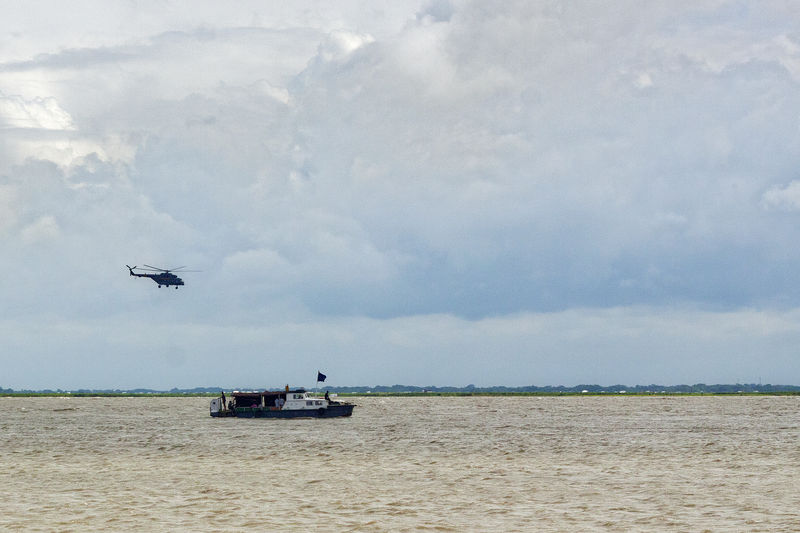
Overcrowded passenger ferry capsized in the Padma River in Munshiganj, Bangladesh

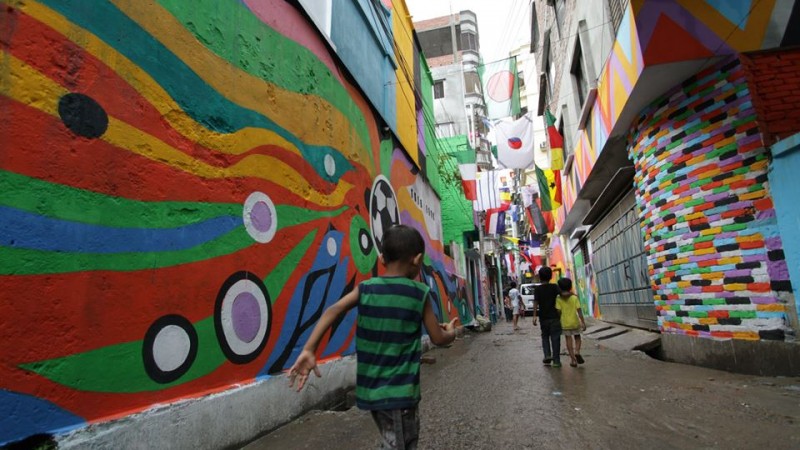
The World Cup Goal-E Project

This street in Bangladesh has a colorful world cup celebration

New Chum Hill Ruins

Remnants of Kiandra gold mine at New Chum Hill, #nsw #australia

May 17, 2009

Blogging For A Cause: Support Global Voices Advocacy


Global Voices Advocacy is a project of Global Voices Online which seeks to build a global anti-censorship network of bloggers and online activists throughout the developing world that is dedicated to protecting freedom of expression and free access to information online.

There are so many blogs and causes online, but at Global Voices we feel it's important for bloggers to stick together and support each other when bloggers in many countries still risk harassment, prison or even torture for the work they do - not to mention having their blogs filtered or censored by authorities who object to their opinions. Freedom of speech on the web affects everyone, not just bloggers. It is a human right to both say and read what we wish.

Global Voices Advocacy keeps track of online censorship worldwide in daily posts, and maintains a map of web 2.0 censorship. There are also guides like Anoymous Blogging with Wordpress & Tor or Blogging for a Cause that many bloggers appreciate.

It's a blog run by Sami ben Gharbia, who is himself a blogger in exile, together with a great community of authors.

Click here to learn how you can support Global Voices Advocacy.

This blog post is part of Zemanta's “Blogging For a Cause” (http://www.zemanta.com/bloggingforacause/) campaign to raise awareness and funds for worthy causes that bloggers care about.

May 15, 2009

Guest Post: Globalization in the Third World

By Ashley Brooks

Globalization has caused the international world to become much closer together, negating the many oceans that separate countries from each other. International institutions such as the UN or World Bank have extended out to almost every country, slowly tightening the mold for a global world order, so that even third-world countries now have a chance to be heard and a forum upon which to speak out. Previously, many countries have been mildly overlooked as the western nations have risen up and dominated the global sphere over the past decades; however, these so-called “third-world” nations have now become major players in the global spectrum. However, political scientists such as Samuel Huntington have presented a theory debating the realization of globalization because of the overarching culture clashes.

Samuel Huntington’s “Clash of Civilizations” has helped to establish the fact that nations are no longer dependent on separate states, but rather the different cultures that make up these states. This has become more relevant in the wake of the events of September 11, which helped to establish a new type of world order. No longer are different civilizations solely reliant on ideological or economic rubrics, but are instead dependent on the actual culture, which has had a vast impact on regions such as the Middle East in which there are a plethora of different cultures living together as one overarching state. Additionally, the culture clash between different groups such as radical Muslims and Americans are further solidifying Huntington’s proposal that all wars in modern day will be fought as a result of cultural issues: “The clash of civilizations will dominate global politics.” However, Huntington’s model provides a theory that absolute globalization will be a far-fetched goal due to the rising civilizations and the clash of cultures.

It is difficult to determine the amount that cultural debates will have on a growing world order, but suffice it to say that while countries like China are accepting of corporate America (Starbucks, McDonalds, etc.), it becomes a stretch to imagine countries like Iraq participating in this type of world order. Additionally, many conservative Islamic countries are not accepting of a Western model of life, which is what globalization is on its way to becoming. The Western world has dominated international affairs over the past century, and with one lone superpower, it becomes obvious that a global order will remain under the Western rubric until multiple superpowers are made; China has taken great strides toward overtaking the U.S. in terms of their economy and massive population, which puts it in the running as developing into a future superpower from a third-world perspective. It becomes relevant to ask whether countries in the Middle East or Southeast Asia for that matter, will be able to easily mesh into this new global order. While third world countries are slowly falling back into international affairs, there are still many in dire need of financial aid, which prevents many from becoming full participants.

There is still much conflict within third-world nations as genocides are still occurring, different cultures become intermeshed, and most nations do not have adequate funds to combat increasing health issues. This new world order we have come into has left many countries struggling to find footing in it and it will only be secured through many years of help from the international community. While the third world countries may lag behind, one day we might find ourselves tied together in a new global order. However, ever present will be Huntington’s warning of the inevitable “clash of civilizations” and the repercussions this will have on any new global strategy.

This post was contributed by Ashley Brooks, who writes about the online degrees. She welcomes your feedback at AshleyBrooks234 at gmail.com

May 12, 2009

Its About Time

The Bangladesh Foreign minister has asked Pakistan to apologize for the genocide during the the Bangladesh's war of independence in 1971 by Pakistan Army. She stressed that Islamabad should take millions of stranded Pakistanis back and settle disputed resources claims.

Some people say that Pakistan has already done so. But this is not true. In a visit to Bangladesh in 2002, then Pakistan President Pervez Musharraf expressed regrets for the '1971 events' during the War of Liberation, shifted the blame for genocide from Pakistan's armed forces:
"Your brothers and sisters in Pakistan share the pain of the events of 1971. The excesses during that unfortunate period are regrettable. Let us bury the past in a spirit of magnanimity. Let not the light of the future be dimmed. Let us move forward together."

Killing millions of people, raping hundreds of thousands of women and burning villages certainly define something else other than excess; that is genocide. Burying that past will only trigger such atrocities once again.

It is time those Pakistani generals should be brought to justice and Pakistan should unconditionally apologize to Bangladesh. Pakistan has nothing to lose as why all Pakistani carry the burden for the crime they did not know of (The atrocities were kept in dark from the ordinary Pakistanis).

May 10, 2009

Crying Wolf?

Terror and militancy is a burning threat in all of the South Asian countries. Many terrorist outfits operate in this region and sometime their operations are cross border.

The four month old new Bangladesh government has been tough with the militants, but the efforts are not enough considering the lack of infrastructure and training of the security agencies. However a section of people are propagating otherwise that the government is over stressing the case of Islamic terrorism.
The main opposition Bangladesh Nationalist Party (BNP) chief on Saturday at a rally said that there was no militant in the country as they had controlled of the militants by arresting and executing all the militants. Khaleda accused the four-month-old government of the Awami League of plotting to bring foreign troops in the country in the name of anti-militancy fight. (The Asian Tribune)

Interestingly BNP's allies Jamaat-e-Islami also claimed with reference to the government's resolution for a South Asian task force to counter terrorism:
“A certain quarter” is inviting “foreign forces to Bangladesh in search of militants mentioning the country’s inability to fight against militancy”.

The current threats prove otherwise. Recently typed letters were sent to offices of the UN’s children’s fund (UNICEF) and its World Food Programme (WFP), as well as the Red Crescent and Red Cross in the city of Barisal:
“The offices received identical letters signed by the group Jamayetul Mujahideen Bangladesh (JMB) ordering them to shut down and pull out their staff within 24 hours, otherwise they would be killed."

The security around diplomatic zones in capital Dhaka was beeefed after an Islamist militant group threatened three missions including the U.S. embassy:

An unknown terror group, Jameaah Islamiyah al Qaeda, had threatened the U.S. embassy and the British, Canadian and Australian high commissions in Dhaka.

The threats were contained in letters faxed from a number in Malaysia.

The message demanded $100,000 from the missions through Western Union Money Transfer to fund the release of a forensic expert of the group, who is now in a Malaysian prison.

So is the government crying wolf? Can these threat be tackled without cooperation from other countries?

May 09, 2009

Picture of The Day

May 04, 2009

Gadgets & Gizmos

Germans love technology. You will find the use of technology everywhere and there is a tendency to introduce more and more technologies without keeping in mind that too much of it can complicate things. One of our guests came out of a city toilet (which runs a cleaning program after each visit) in panic that there was a sign that the door can open automatically after a certain time. The time (20 minute) was enough but there was something in the thought that the door is mechanically controlled and can be opened without the visitor's consent.

I was watching a TV program which was showing that sophisticated gadgets like coffee machine, car navigation units and ticket dispensers at Rail stations have become so complicated that almost everybody struggles to use them properly. The fully automatic coffee machine had a function called milk island, which the user could not find from the manual. The touch screen ticket dispensers had complicated code input systems and one user mentioned why don't you make it like the dispensers in Singapore. Every station has a button. You press it, insert money and voila! Your ticket is printed. But in Germany you have to go through many complicated menus.

The navigator had a voice recognition system which was not responding to certain words.

The bottom line is that these technologies have been incorporated without keeping in mind that most of the users are not geeks and are not comfortable with complicated menus.
The machine does not isolate man from the great problems of nature but plunges him more deeply into them. - Antoine de Saint-Exupery