









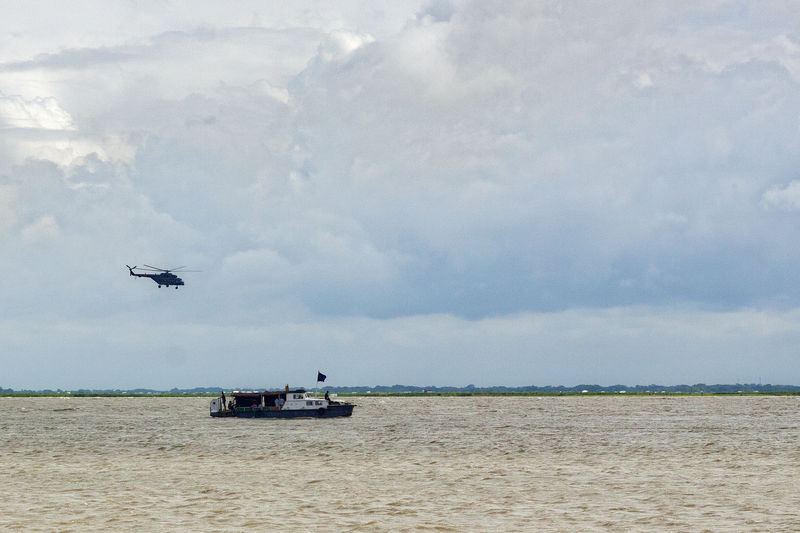



Dragonfly
Image by Rezwan
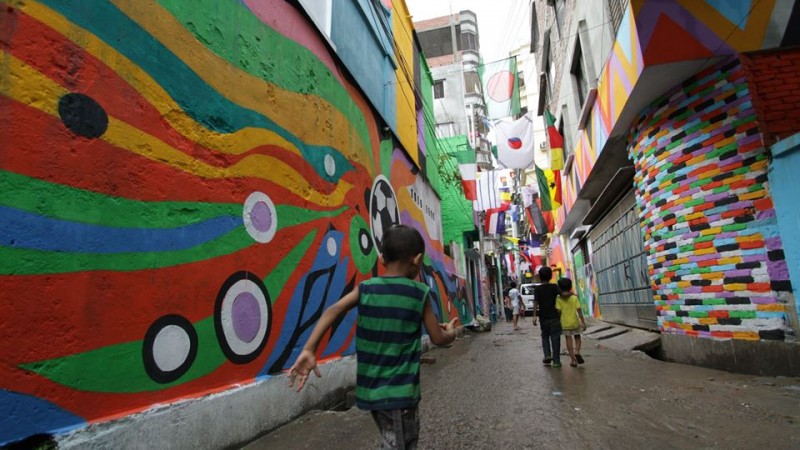
The World Cup Goal-E Project
This street in Bangladesh has a colorful world cup celebration
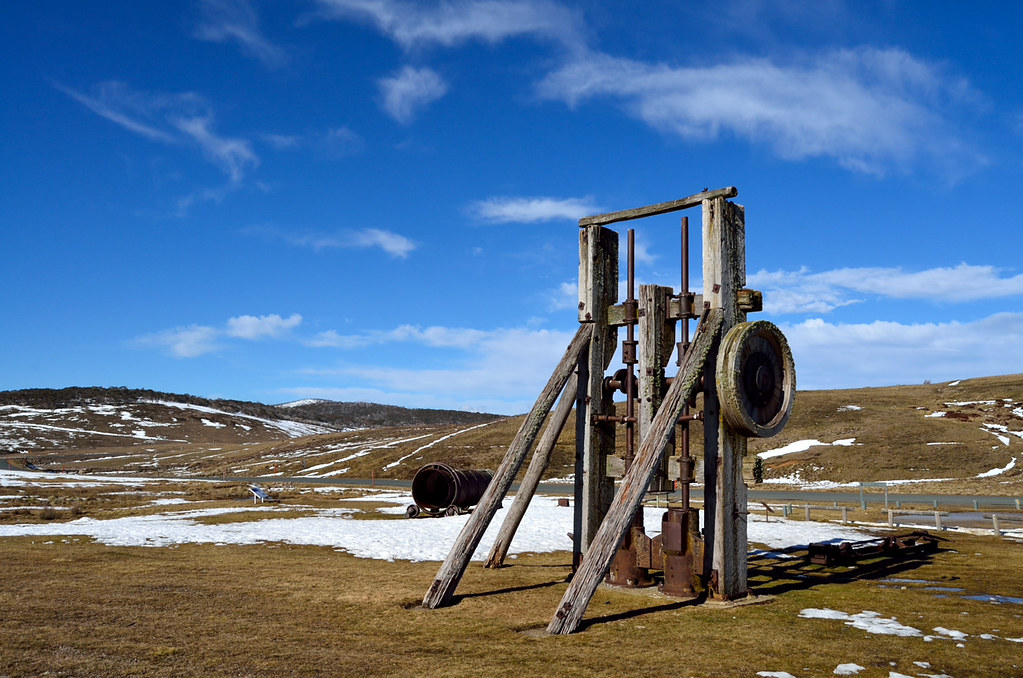
New Chum Hill Ruins
Remnants of Kiandra gold mine at New Chum Hill, #nsw #australia
April 17, 2012

April 14, 2012

April 13, 2012
Bangladesh: Welcoming Pahela Baisakh
This post was written in Bangla by Pantha Rahman Reza and was translated by Rezwan for Global Voices Online.
Tomorrow is Pahela Baisakh
(first day of summer, Bengali news year), the favorite festival of the
Bengalis. Every year Bengalis celebrate their new year with galore. The
first day of the new year is filled with festivities. Wherever there are
Bengalis in the world, they celebrate this day with different events.
On this day everybody wears traditional clothes. The girls are draped in Saris and the boys wear Panjabi/Fatua (longer or shorter version of Kurtas). The shopping malls are engaged in brisk business. Especially worth mentioning are the summer collections by fashion houses targeting this day.
AlAmin90 shares what he presented his loved one:
One of the main attractions of Pahela Baisakh celebrations is the
Panta-Ilish meal. Many houses prepare special cuisine including Panta Bhat (lightly fermented rice) and Ilish (Hilsha) fish cooked with mustard and green chili. As the demand of Ilish fish soars during Pahela Baisakh the price goes up steeply [bn].
Every year after the sunrise a colorful rally called Mangal Shovajatra
[bn] starts in front of the graphics arts institute of Dhaka
University. This rally rolls across many streets of the city and comes
back to the institute. The masks and placards of the rally portraits the
rural life and the daily affairs of Bengal. Blogger Tung Tang was in one such rally [bn] and tells about it:
In Bangladesh, the main celebrations of Pahela Baisakh take place in Dhaka, the capital. Cultural organization Chayanat
[bn] arranges new year's concert at the Batamul of Ramna and one of the
main feature is the rally of the graphics arts institute. Many people
come to this area to celebrate.
Every Bengali has something to share about this day, especially the childhood memories of joining the festivities of Pahela Baisakh. Sheikh Jalil at Sachalayatan reminisces about his childhood memroies of this day:
Pahela Baisakh is now celebrated across the classes, although it was only a funfair of the middle income Bengalis. Blogger Ektutells [bn] more about that:
Bangladesh is a developing country. Its per capita income is 828 USD [bn]. There are many problems in the country like political disturbances and unemployment. But during Pahela Baisakh everybody forgets that and joins in funfair. Everybody shares the enjoyment and celebrations. S. M. Rahat Khan shares (with picture) the same [bn] at Somewhereinblog.
On this day everybody wears traditional clothes. The girls are draped in Saris and the boys wear Panjabi/Fatua (longer or shorter version of Kurtas). The shopping malls are engaged in brisk business. Especially worth mentioning are the summer collections by fashion houses targeting this day.
AlAmin90 shares what he presented his loved one:
পহেলা বৈশাখের জন্য দিনাকে আমি সাদা-লাল রংয়ের জামদানি কাপড় গিফট করলাম। আর হাতের লাল চুড়ি, মাটির গহনা আর লাল টিপ।
For Pahele Baisakh I gifted Dina a red-white Jamdani Sari. Along with that red churis (glass bangles), ornaments made of clay and red teep (Bindi).
 |
| The colorful rally organized by the graphic arts institute. Image courtesy Wikipedia |
চারুকলার ঢুকে প্রথমে চোখে পরবে মাটির সরা তারপর এ আছে মুখোশ বানানোর কাজ। মাটির সরায় কাজ করছে চারুকলার শিক্ষার্থীরা বিভিন্ন রং বিভিন্ন থিম এর। নির্দ্দিষ্ট কোন থিম নেই, তবে বেশির ভাগ সরার ডিজাইন লোকজ সংস্কৃতির গ্রামীণ জীবন এবং আবহমান বাংলা ঐতিহ্যর উপরে। পহেলা বৈশাখের মঙ্গল শোভাযাত্রা যে কয়টি প্রচলিত আইটেম এর মধ্য রয়েছে মুখোশ, সরা আর কিছু প্রাণীর প্রতিলিপি ।
The Bengali new year celebrations started during the Mughal era (15th century). In those days the region had Zamindar system. The peasants used to pay tax to the Zamindars till the last day of spring. On the first day of summer (Pahela Baisakh) the Zamindars used to distribute sweets to the farmers. To celebrate this many festivities used to be arranged, fairs took place. Pahela Baisakh become a part of peoples' lives ever since. Gradually it became more festive and full of enjoyment.If you go to the graphics arts institute, the first thing you will notice are the clay pots and then you will see people crafting and painting masks. The students of graphics arts institute are painting the clay pots in different themes of colors. There is no fixed theme, but many pots are painted with the rural life and the daily affairs of Bengal. The typical items of the Pahela Baisakh rally are Masks, clay pots and modelling of some animals.
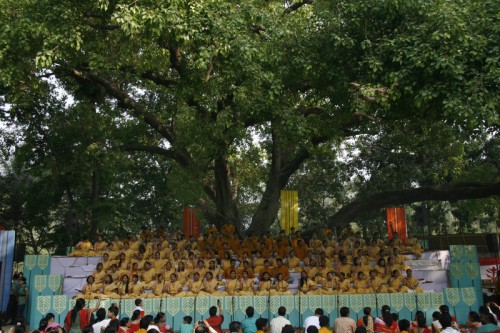 |
| Chayanat's concert at the Ramna Batamul. They are welcoming the new year with songs. Image by Abu Ala. Copyright Demotix. |
Every Bengali has something to share about this day, especially the childhood memories of joining the festivities of Pahela Baisakh. Sheikh Jalil at Sachalayatan reminisces about his childhood memroies of this day:
বৈশাখ এলেই মনে পড়ে বৈশাখী মেলার কথা। গ্রামের হাট-বাজারে বসতো এ মেলা। নাগরদোলায় চলা, লাঠিখেলা দেখা, বায়স্কোপ দেখা, মেলা থেকে মুড়ি-মুড়কি-বাতাসা-সন্দেশ-মিষ্টি কিনে খাওয়া আমার শৈশব বেলার স্মৃতি। বাবা-মা, বড় ভাই-বোনের হাত ধরে মেলায় যেতাম। তারা কিনে দিতেন বাঁশি চরকী, বেলুনসহ আরো কত কী? সাপুড়েদের সাপ খেলা, বানরের খেলা আর ষাঁড়ের লড়াই দেখতাম এ সময়। সত্যিকারে আশেপাশের কয়েকটি গ্রামের মিলনকেন্দ্র ছিল আমাদের বৈশাখী মেলা। হিন্দু-মুসলমান সবাই মিলে আনন্দ-উল্লাস করে বৈশাখের প্রথম কয়েকটা দিন কেটে যেত।
Those who are abroad and cannot join the Bengali new year festivities regret that. A diaspora blogger writes [bn]:I remember about the Baisakhi fair every summer. It usually took place in the rural bazaars. The Nagordola (ferris wheel), Lathikhela (play with sticks), Bioscope shows, and going home with sweet treats like Muri-Murki-batasha-Sandesh-Sweets are parts of my childhood memories. I used to go to the fairs with my parents and siblings. They used to buy me flutes, Chorki, balloons and what not. The other attractions were snake charming plays, monkey games and bull fights. Our Baisakhi fair was a huge funfair of several villages. Hindu-Muslim alike spent the first days of the summer with merriment.
বৈশাখ মানেই গ্রামহারা শহরহারা দেশ ছাড়া হয়ে বিশ্বের কোন এক ব্যাস্ত নগরীতে বসে শুধুই স্মৃতির জাবর কাটা, টেলিভিশনের পর্দায় রমনার বটমূল আর তরুন তরুনীদের গালে রঙের ছটা দেখা। হায়রে বৈশাখ তুই কি কখনোই শহরে আসবিনা? শহরের সাথে কি তোর চিরকালই আড়ি?
Baisakh means far from the villages, reminiscing in a busy city somewhere in the world, watching ramna Batamul and the paintings on the cheeks of boys and girls on the television screen. Oh Baisakh, won't you ever come to the city?
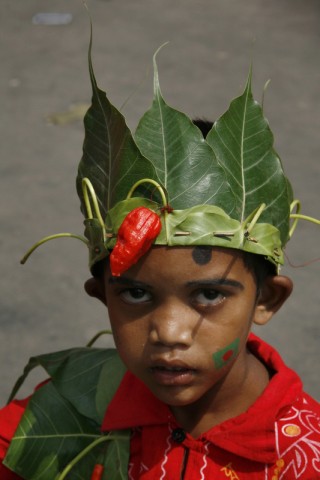 |
| New years decoration - a little boy with a crown of leaves. Image by Abu Ala. Copyright Demotix |
বৈশাখের এ উত্সব, মানুষের সর্বজনীন এ অংশগ্রহণ দুই দশক আগেও এরকম ছিল না। বৈশাখের উৎসব আমেজ, ভালো রান্না আর অনুষ্ঠানমালা সীমাবদ্ধ ছিল মধ্যবিত্ত সংস্কৃতিমনা কিছু মানুষের মধ্যে। ছায়ানটের অনুষ্ঠান হতো বটতলায়। সেখানেও অংশগ্রহণ ছিল সংস্কৃতিকর্মী ও মধ্যবিত্ত একটি শ্রেণীর। গত দুই দশক ধরে বৈশাখ বরণে ব্যাপক পরিবর্তন এসেছে। বৈশাখ বরণের রং মধ্যবিত্তের গণ্ডি পেরিয়ে উচ্চবিত্ত ও নিম্নবিত্তের মানুষের মধ্যেও ছড়িয়ে পড়েছে। বৈশাখের অনুষ্ঠানে বেড়ে চলেছে সর্বশ্রেণীর মানুষের অংশগ্রহণ। […] নিম্নবিত্ত সাধারণ শ্রমজীবী মানুষও বৈশাখের জন্য আলাদা করে রাখছে তার ঘামে উপার্জিত অর্থের একটি অংশ। সাধ্যমত গায়ে তুলছে বৈশাখের পোশাক। ঘুরতে বের হচ্ছে প্রিয়জনের সঙ্গে। মেলা থেকে কিনে আনছে শৌখিন কিছু।
There are many programs arranged by different socio-cultural organizations during the whole day. On this day Bangladesh Open Source Network (BDOSN) is campaigning [bn] to portray the culture and tradition of the country in Wikipedia.Only two decades ago the Baisakh festivities and the universal celebration were not like this. The programs, festivities and the food culture were confined within some middle class cultural minded people. Chayanat used to arrange their program at Batamul on this day. Only cultural activists and people of middle class were seen there. But a lot has changed in the past two decades. The colors of welcoming summer has spread to the higher and lowers classes of people. Now it has truly become a festival for masses. [..] Even the working class people are saving a budget from their meager income for the Pahela Baisakh festivities. They are buying special clothes for this day, going out with loved ones. They are buying something from the fairs.
Bangladesh is a developing country. Its per capita income is 828 USD [bn]. There are many problems in the country like political disturbances and unemployment. But during Pahela Baisakh everybody forgets that and joins in funfair. Everybody shares the enjoyment and celebrations. S. M. Rahat Khan shares (with picture) the same [bn] at Somewhereinblog.
লাল-সাদা শাড়িতে……পাঞ্জাবিতে…চারদিক এত বর্ণিল…কে বলবে পৃথিবীর একটি গরিব দেশ বাংলাদেশ? কে বলবে নানা কষ্ট আর না পাওয়ার দেশ বাংলাদেশ? সবাই যেন সব ভুলে একটি দিনের জন্য হলেও সুখের স্বর্গে পরিণত করে বাংলাকে…
In red-white Saris.. Panjabis… every place is
so colorful.. who will say that Bangladesh is a poor country in the
world. Who will say that Bangladesh is a country full of deprivation and
pain. Everybody forgets those to make this day a heaven of happiness…
April 07, 2012
Bangladesh: Eviction of Slum in Dhaka Creates Humanitarian Catastrophe
This post was first published in Global Voices Online
On Wednesday (4th of April, 2012) the dwellers of Karail
slum, one of the biggest in the Bangladesh capital, were evicted by the
authorities to free Gulshan Lake from land grabbers. The inhabitants
were given short notice via miking in the previous day, which many might
have missed. Thousands of structures including houses and shops were
demolished on less than a day's notice at 80-acre land of BTCL in Karail
and other slums in Dhaka. A slum dweller claimed that her 4 year old girl has been missing as soon as bulldozers had hit the shanties.
The Incremental House posted a case study on this expansive slum:
In my Bangla blog I wrote [bn] about the background of the eviction:
Julkarnain questions [bn] the eviction without any plans to rehabilitate these people:
Twitter users also expressed their opinions.
The Incremental House posted a case study on this expansive slum:
The entire settlement is resistance. It is on someone else’s land. Morphologically, it couldn’t be any more different than the surrounding wealthy estates of Gulshan and Banani. The water bounds is. The inhabitants have set up full formal transportation networks of boats to ferry people to and from their jobs.
[..] It is pretty clearly planned, does that make it a space of resistance? Where does it gets it water and electricity from? The boats scrape the water pipes floating in the water. The pipes tap into the main lines in Banani. Someone is controlling it. Electricity is strung over the water, again tapped into the main line.Here is a short video (uploaded by lizscarff) showing glimpses of coexistence of rich and poor in the surroundings of Karail slum.
In my Bangla blog I wrote [bn] about the background of the eviction:
গত বছর ২০শে সেপ্টেম্বর রাজউক এরকম স্বল্প নোটিসে আরেকটি উচ্ছেদ অভিযান চালায় সেখানে। পুলিশ আর পাড়ার মাস্তানদের দ্বারা ১২০টিরও বেশী পরিবার উচ্ছেদ করা হলেও পরে তারা আবার এসে বাসা করে। গত ২০০৮ সালে প্রথম পিডাব্লিউডি উচ্ছেদের নোটিশ পাঠালে আইন ও শালিস কেন্দ্র পুনর্বাসন ছাড়া উচ্ছেদ মানবাধিকার লঙ্ঘন এই বলে হাইকোর্টে একটি স্টে অর্ডার নেয়। সেই মামলার বিভিন্ন শুনানীতে পুনর্বাসনের কথা বলা হয় তবে গত জানুয়ারীতে হাইকোর্ট সরকারকে আদেশ দেয় দুই মাসের মধ্যে এই বেদখলকৃত জমি উদ্ধার করতে - তবে সেখানে পুনর্বাসনের কোন কথা বলা হয় নি।
Last year on 20th September RAJUK (housing authority) went for another eviction drive giving short notice. Police and local goons forced 120 families out and destroyed their homes but later they came back. In 2008 PWD (Public Works Department) first sent the eviction letter to the slum dwellers. Ain O Shalish Kendro, an NGO advocated for them and obtained a stay order from the court claiming that without rehabilitation such eviction is a violation of human rights. In different stages of that trial the issue of rehabilitation was discussed at various lengths. But last January the court ordered to free those lands from land-grabbers and award the owners (govt agencies) - but there was no mention of any rehabilitation of the existing dwellers.
করাইল এলাকার এইসব ভূমিহীন বস্তিবাসীর ৩০ ভাগ দিনমুজুর, ২০% রিক্সা-ভ্যান চালায়, ১৮% গার্মেন্টস কর্মী ও ১২% ছোট ব্যবসা করে। তাদের মাসিক আয় ২৫০০-৪৫০০ টাকা এবং স্থানীয় মান্তানদের ৮০ স্কয়ার ফিটের ঘর ভাড়া দিতে হয় ৮০০-১২০০ টাকা।
More than 30 percent of the dwellers of Karail Slum are day labourers, 20 percent rickshaw and van-pullers, 18 percent garments workers and 12 percent small traders. An average family earn only BD Taka 2,500-Tk 4,500 ($30-$52) a month and they have to pay local influentials BS Taka 800 - 1200 ($10-$14) for rent of a 80 square foot illegal shanty house.
 |
| Residents of ‘Karail Slum’ take part at a human chain to express their demands. Image by Firoz Ahmed. Copyright Demotix (18/2/2012) |
আমাদের মানবিক বিবেচনা কী দিন দিন হারিয়ে যাচ্ছে? নাকি বিবেচনার গলা টিপে রোবোটিক হয়ে উঠছি প্রতিনিয়ত আমরা? এমনিতেই শহরে প্রচুর ভাসমান লোক এখানে সেখানে বসবাস করে। তার সাথে যদি এরা যুক্ত হয় তাহলে শহরের না কোনও সৌন্দর্য বর্ধন হবে না আইন-শৃংখলা পরিস্থিতির কোনও উন্নয়ন সাধন হবে।
Are we losing our humanity? Or whether we are
strangling our power to considerate and are being robotic? The city is
filled with landless destitutes. If these people join in the gang of
homeless people then the city won't be beautified and the law order
situation will deteriorate.
The slum dwellers protested forming a human chain and blocking important roads of the capital creating a chaos in the roads. The traffic was suspended in the Gulshan Mohakhali link road on Wednesday for three hours creating long tails in many roads of the capital.Twitter users also expressed their opinions.
@nhasan89: I think today is a dark day that will go down in history. The people are being pushed to their absolute limit. #karail #freebangladesh
@EEP_shiree: A devastating eviction in Karail slum on April 4 broke nearly 45,000 houses … what can we do for these urban extreme poor people?
@KorviRakshand: At this moment, thousands of people are homeless and without shelter at the Karail Slum near Banani Lake. http://t.co/LpeAmBnk
 |
| Shanty dwellers of Karail Slum take shelter at T&T Colony ground in Gulshan after eviction. Image by Firoz Ahmed (Copyright Demotix 5/4/2012) |
@shahanasiddiqui: It's unbelievably dark out - #kaalboishakhi - summer storm. Really worried about the ppl of #karail who are out under the open sky
@mehrabsaurav: Lying in my bed but thinking about the homeless people who were evicted from Karail Slum. I feel helpless, I couldn't be of any help! #Dhaka
@shahanasiddiqui: Hey everyone, @JAAGOFoundation is preparing food for the #karail evictees. help needed with distribution. Pls be there by 12 noon TNT field
@JAAGOFoundation: For the last 36 hours, we have been distributing food to the victims of the Karail Slum Demolition from a small… http://t.co/NarANbkCHeavy downpour on Friday made the situation worse for the evicted slum dwellers.
March 31, 2012

South Asia: Every Day Is Earth Hour for Us
This post was first published in Global Voices Online
Earth Hour
is a worldwide awareness event organized by the World Wide Fund for
Nature (WWF) and it is held on the last Saturday of March annually. On
this day households and businesses are requested to turn off their
non-essential lights for one hour to raise awareness about climate
change. More than 5,200 cities and towns in 135 countries worldwide
switched off their lights for Earth Hour 2011 and this year many more
cities like Dhaka, Bangladesh, will be joining.
South Asia is a region with many developing countries hungry for power. Millions of people in the Indian sub-continent have no access to electricity, and the power sector is plagued by corruption and inefficiency. The demand is much bigger than supply so many countries use load shedding (planned rolling blackouts) to manage the electricity distribution.
In countries like Nepal, Pakistan and Bangladesh daily there are 4-12 hours of load shedding varying on the situation everyday. Netizens are vocal on the issue of observing earth hour in the social media. While some are requesting others to observe Earth Hour, some are thinking that this is not more than a joke. The following tweets from the region reflect what they have in mind.
Bangladesh

India
Pakistan
South Asia is a region with many developing countries hungry for power. Millions of people in the Indian sub-continent have no access to electricity, and the power sector is plagued by corruption and inefficiency. The demand is much bigger than supply so many countries use load shedding (planned rolling blackouts) to manage the electricity distribution.
In countries like Nepal, Pakistan and Bangladesh daily there are 4-12 hours of load shedding varying on the situation everyday. Netizens are vocal on the issue of observing earth hour in the social media. While some are requesting others to observe Earth Hour, some are thinking that this is not more than a joke. The following tweets from the region reflect what they have in mind.
Bangladesh
@KaziAhadKader (Kazi A. Kader): “@dailystarnews Bangladesh for the first time tonight will observe Earth Hour…” We were doing that long before it had such a fancy name.
@shuvo666 (Shuvo Rashid): No wonder #Bangladesh is one of the most environment conscious countries in the world. We celebrate Earth Hour every day, 12 times! #Blackout
@irteja (Irteja Ali) Today Power Development Board (PDB) is going to celebrate Earth Hour 2012 by giving 12 hours of load shedding of electricity in Bangladesh.Bhutan
@AumChang (Aum Chang): i had an Earth Hour today. and also yesterday. and day before yesterday. thanks to BPC power cuts, i enjoy an #EarthHour every day! #Bhutan
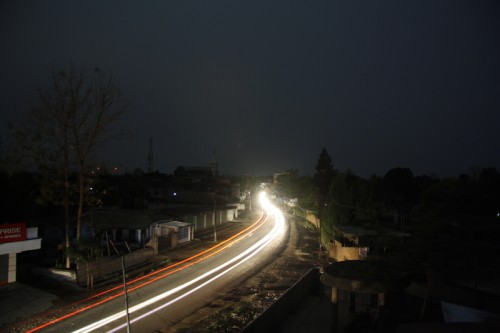 |
| A view of an Earth Hour in Dimapur, Northeastern State of India. Power Department of Nagaland, shut down power supplies to celebrate Earth Hour. Image by Sorei Mahong. Copyright Demotix (27/3/2010) |
@suyogg (Suyog Gaidhani): Earth Hour in India is a cruel joke.
@MalluJat (Ramesh Menon) 72% of India with no power connection celebrate earth hour. 1% from the rest switch off their lights, and issue PR and congratulatory msgs
@RealBharatkumar (Bharat Kumar): In india especially where I am we have earth hour everyday. So all you people who are switching their light off an hour we do it everyday.
@virenb (Viren Bhandari): People of the world should not worry about the earth hour, India has got it all covered!! #nobizlii here.Nepal
@ayushbista (Aron): Please Switch off your lights for the Earth Hour !! Oh wait !! Don't bother ! We've got Loadshedding anyway. Nepal, (Earth Hour Forever) !!
@hardfire (Avinash Kundaliya): every day, we celebrate earth hour in Nepal .. :-P
@cinderellaman23 (SumanK Rajbhandari ): #Nepal may be the greatest Earth Hour Supporter because of loadshedding :)
@nazushrestha (Sujan Shrestha): In case you don't have loadshedding 2nite, switch off your lights for one hour from 8:30pm-9:30pm to support Earth Hr. #Nepal @tfcNepal #fb
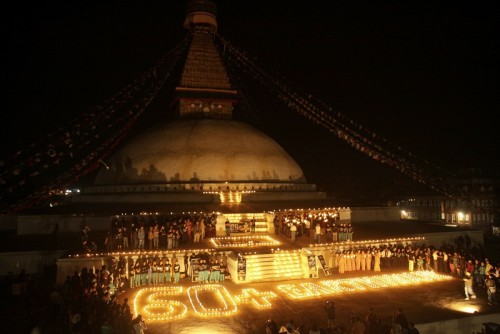 |
| People participate in a programme on 60+Earth Hour in Kathmandu, Nepal. Image by Sunil Sharma. Demotix (26/3/2011) |
@adnanrasool (Adnan Rasool): I have to say this… Y r certain corporations spending tons of money to celebrate earth hour.. we have it every other hour.. #Pakistan
@AzeemUhassan (Azeemullah Hassan ): So the Earth Hour would be celebrated from 8:30pm to 9:30pm in #Pakistan Thankfully there's no light in my area in #Karachi at that time :P
@Mahamali05 (Maham Ali) Is Pakistan also supposed to observe Earth Hour? We already observe Earth Hour at least 6-8 hours a day everyday.Speak For Change writes in a blog post:
Earth Hour is a serious issue and one must not write against it. Is it a bigger issue than load-shedding that we experience daily in all parts of the country? Is it a bigger problem than the losses in millions we attain due to the absence of electricity to the industries? Is it more serious an issue than the non-availability of electricity in a local hospital where patients are operated upon under standby generators because the electricity doesn’t show up? I don’t think it is more serious than countless scenarios like these, because it is not for us, people living in third world countries.
Subscribe to:
Posts (Atom)