



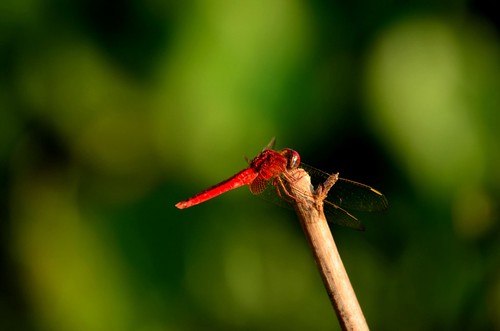
Dragonfly

Image by Rezwan

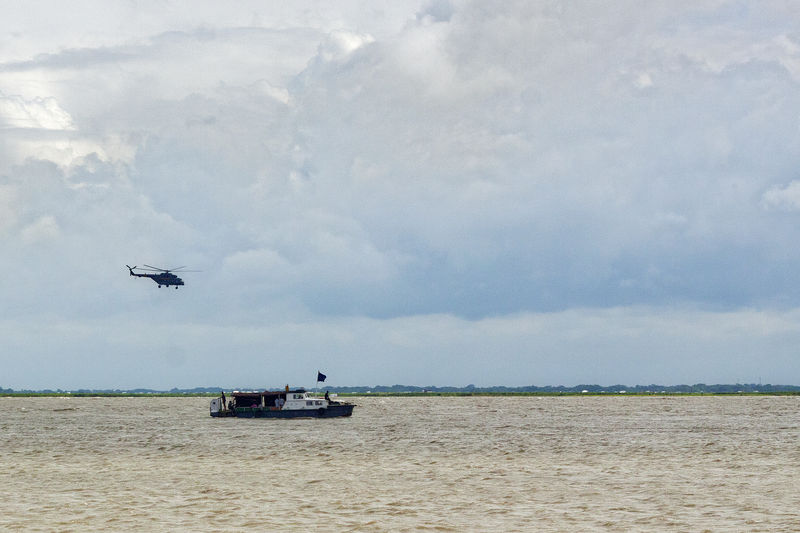
Overcrowded passenger ferry capsized in the Padma River in Munshiganj, Bangladesh

The World Cup Goal-E Project

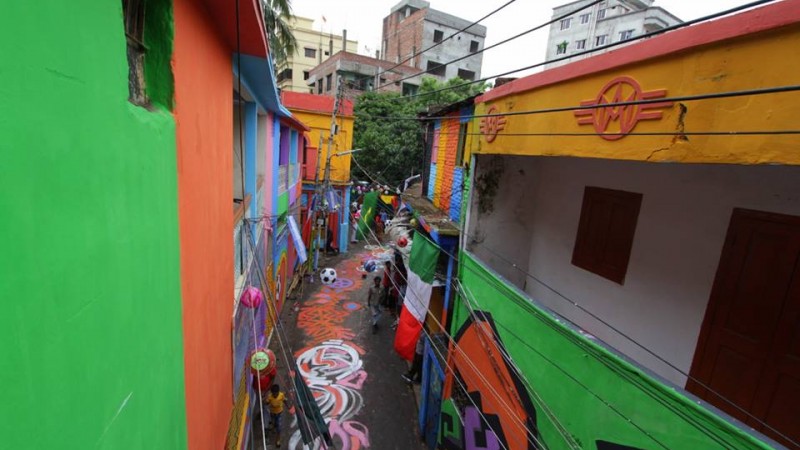
This street in Bangladesh has a colorful world cup celebration

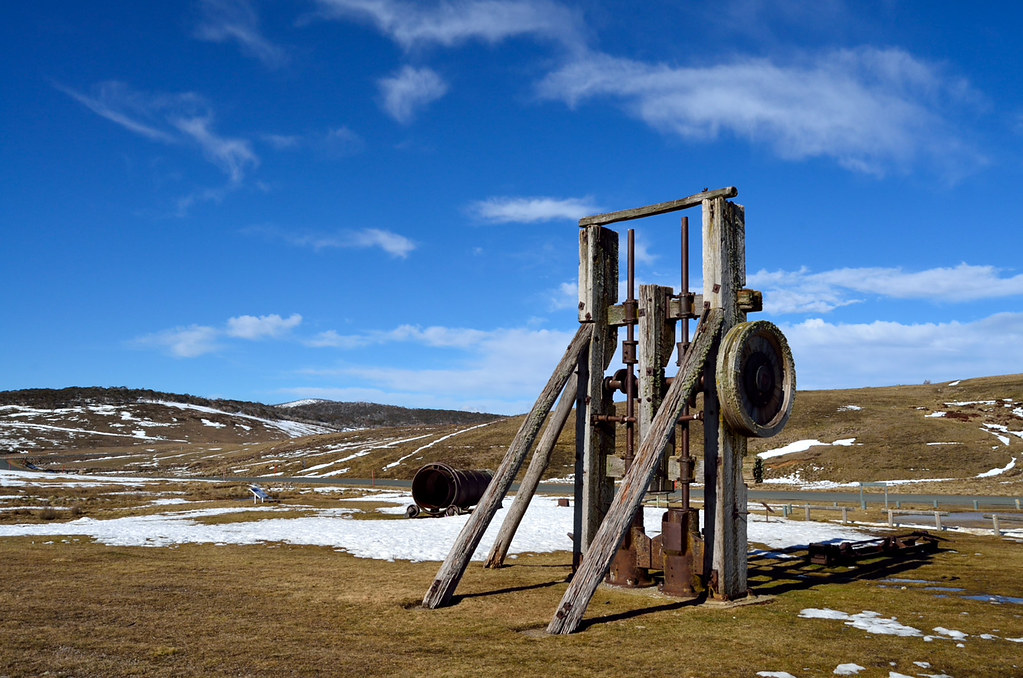
New Chum Hill Ruins

Remnants of Kiandra gold mine at New Chum Hill, #nsw #australia

June 25, 2014

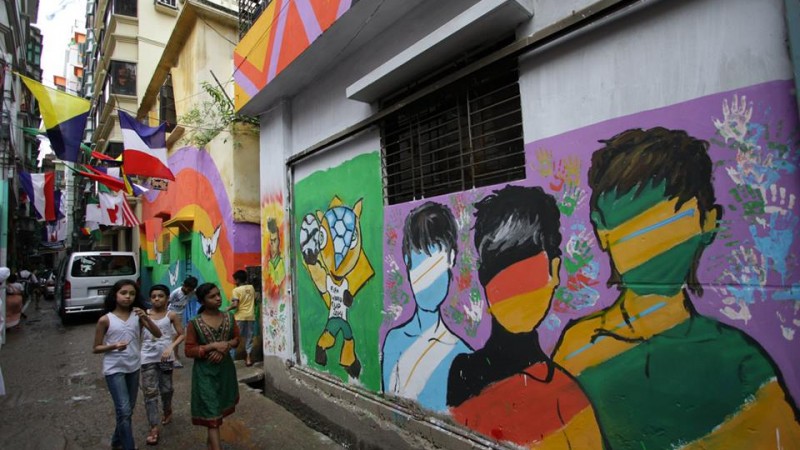
This Street in Bangladesh Has a Colorful World Cup Celebration to Rival Brazil

Image by S. M. Mobasser Hussain
Image by S. M. Mobasser Hussain. Used with permission.
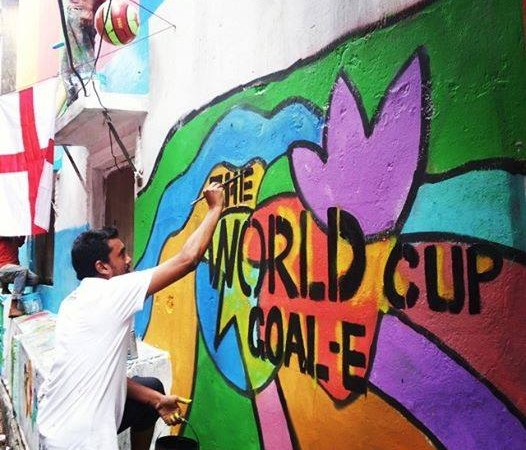
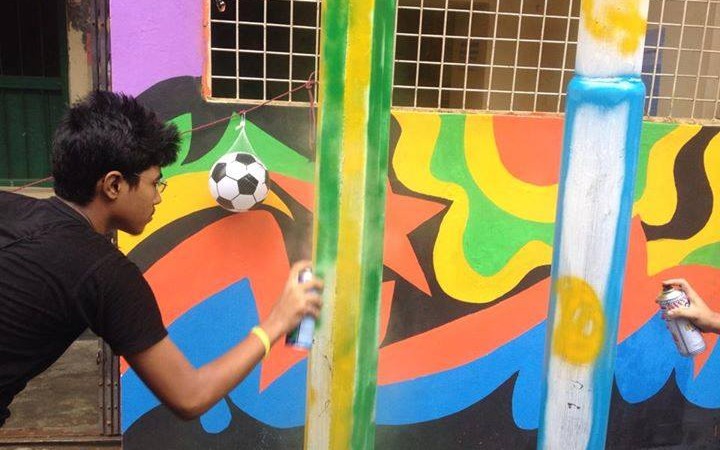
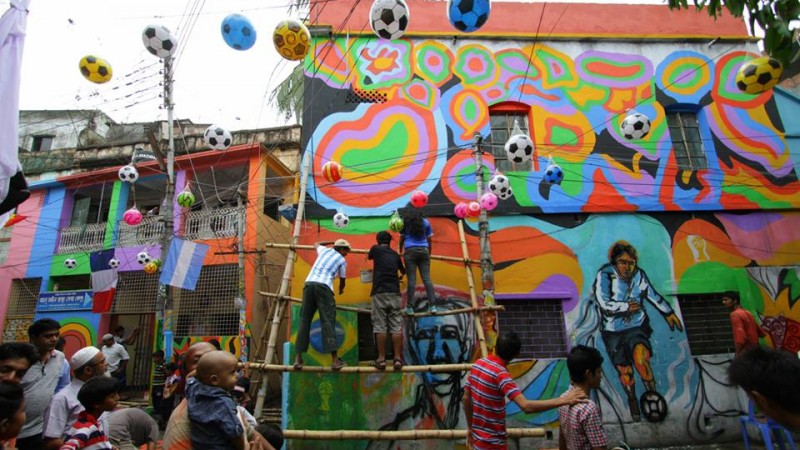
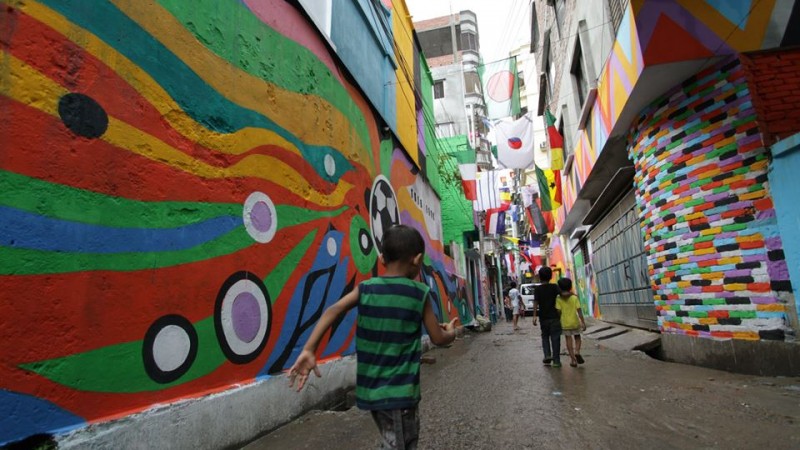
What was before an ordinary lane in the Bangladeshi capital's historic neighborhood Old Dhaka is now a vibrant strip of street art celebrating the 2014 FIFA World Cup.

A group of about 200 volunteers transformed the street in less than 24 hours as part of The World Cup Goal-E, a collaboration by youth organization One Degree Initiative and advertising agency Zanala Bangladesh, to spread enthusiasm for the World Cup. Goal-E sounds like goli (lane), which is a common feature in Old Dhaka.

Bangladesh didn't qualify to play in the 2014 tournament, but the country's football fans have caught World Cup fever nonetheless. Many are cheering for either Argentina or Brazil.

World Cup Goal-E documented the effort, which included a flashmob dance, in a YouTube video:


The project's Facebook page has several photos of the transformation as well:
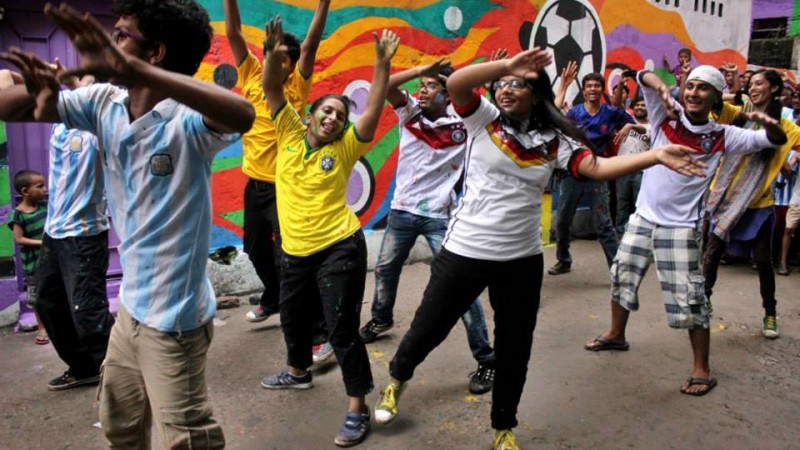
Image by Dipu Malakar.
Flashmob at KoltaBazar. Image by Dipu Malakar.
The World Cup Goal-E. Used with permission.
Image by Sabhanaz Rashid Diya.
Image by Sabhanaz Rashid Diya. Used with permission.
Painting the walls. Image by Simu Naser
Painting the walls. Image by Simu Naser. Used with permission
The painting of walls drew much crowd. Image by S. M. Mobasser Hossain
The painting drew a crowd. Image by S. M. Mobasser Hussain.
The World Cup Goal-E. Used with permission

Image by S. M. Mobasser Hussain.
Image by S. M. Mobasser Hussain. Used with permission.

Image by S. M. Mobasser Hussain
Image by S. M. Mobasser Hussain. Used with permission.
Global Voices spoke with Sabhanaz Rashid Diya, one of the organizers and a blogger, writer, photographer and youth activist:

Global Voices (GV): What inspired World Cup Goal-E?
Sabhanaz Rashid Diya (SRD): The whole world is celebrating football World Cup in many ways. We've grown up seeing flags of Brazil and Argentina at rooftops during the World Cups, we've heard of brawls and fights over who's a more deserving champion. But why not do something different? The beautiful graffiti in many parts of the world inspired us to paint a lane in old Dhaka.

We also wanted this street to be a tourist destination, a new way of identifying with Dhaka. As one of the fastest growing metropolitan cities in the world, it had enough potential to become a tourist spot as well. We are lauded as some of the happiest, most hospitable people in the world, so why not make our streets as welcoming, as exotic as well?

We want to recreate the concept of tourism and make people realise it isn't limited to natural havens, but can also be discovered and created by the common people. World Cup Goal-E stands proudly as an example of that.
GV: Why was this particular Old Dhaka goli chosen?
SRD: We chose the goli in Old Dhaka because it resonates the social culture common to South Asian countries. Everyone knows everyone, the younger populations, in spite of having their own independent families, still greet the elders with lowered heads, and children grow up as everyone's kids in the community.

When we were pitching the idea, the community at Kolta Bazar embraced it the most and participated very enthusiastically.

The streets of Old Dhaka also have architectural value, so it only made more sense to do it there, given the World Cup Goal-E is also somewhat an art and design initiative as well.
GV: How can this celebration of football be replicated on other lesser known golis in Bangladesh?
SRD: Anyone, anywhere can recreate this. There are neighbourhoods and local markets (bazaar) in rural Bangladesh that proudly repaint their stores and houses to represent the football team they support.

So, if you were to ask me of a particular street, I'd say every street in Bangladesh is somewhat a smaller, yet equally integral and inspiring part of what happened at World Cup Goal-E. In fact, this particular Goal-E is inspired by the millions of football lovers in Bangladesh who go to great extents to show their passion.

Please do share the video so even if WE can't paint everything, someone else is inspired enough to do it themselves.
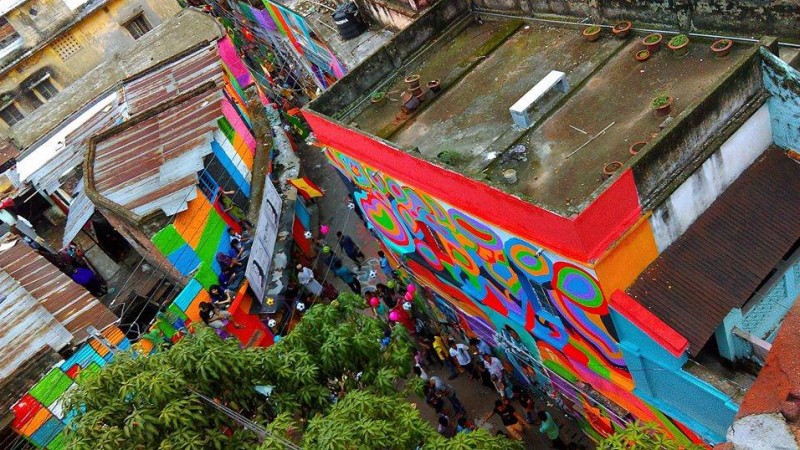
Image by Md. Mostafizur Rahman
Image by Md. Mostafizur Rahman. Used with permission.

The post was first published in Global Voices.

June 04, 2014

University Student Posts Suicide Note In Facebook, Friends Fail To Save Him

Suicide is a long term social issue of Bangladesh and of all the people reported dead due to suicide worldwide every year, 2.06% are Bangladeshis.

Mahbub Shaheen, a student of Dhaka University, posted a Suicide note in Facebook at 7:08PM on 2nd of June, 2014. He wrote:

I am lying on Rail Line. The Train is coming. And I am going to kick out bloody myself, the useless eater.


Once I've posted a comment "I should leave" then after I posted "I have to leave". Some of you asked me- "From where & where will you go?"

I don't know where I am going. But I am leaving. Leaving useless myself forever.

Good bye, good bye forever.

In the comments section of the above post it is revealed that his friends tried to locate Shaheen who was supposed to reach Dhaka, the capital by a train by the evening. His mobile was unreachable so they tried to inform police and his family but did not know how. A few hours later someone confirmed that his body was found near Kamalapur Railway Station.

This shows that Bangladesh desperately needs an effective suicide prevention hotline to act quickly and save people like Shaheen.

The number one cause for suicide is untreated depression. Depression is treatable and suicide is preventable. You can get help from confidential support lines for the suicidal and those in emotional crisis. Visit Befrienders.org to find a suicide prevention helpline in your country.

May 27, 2014

Creating Biogas from Water Hyacinth

Water hyacinth (water weed) is a menace in Bangladesh which restricts water flow and blocks sunlight in rivers and ponds contributing to contamination and killing of fish. Instead of spending much in removing or eradicating them they can be used for a good cause. Kristin Boekhoff at Panigram blog informs about an innovation in Jessore, Bangladesh which will be the first commercially operating biogas reactor running off of water hyacinth in the world.

The post was first posted in Global Voices.

May 20, 2014

Bangladesh's Economy Remains Stable, Analysis Finds

Equity analyst and blogger Asif Khan posts a brief economic update of Bangladesh in his blog. According to the analysis, despite political uncertainties the economy looks stable and inflation remains under control:
The chances of an interim election in the next 12 months look slim. Current account surpluses continue, currency looks stable and inflation remains under control, largely due to weak demand. On the negatives, tax revenue fell short of the target as per expectation. In our opinion, the major negative was the slower pace of recovery of business activity post election.

May 17, 2014

Meet Khadija, a Motorcycle Repairwoman Breaking Boundaries in Bangladesh

BRAC blog profiles how girls in Bangladesh are learning lucrative yet unconventional trades for women. Khadija, for example, was forced to drop out of school before finishing fifth grade to help support her family. Not so strange, given that only 55 percent of children in Bangladesh complete their primary education. 

But now, Khadija, who has never driven a motorcycle, can fix one as well as any man.

May 05, 2014

Alternative Voices Speaking For A Secular Bangladesh

Bangladeshi liberal humanist, free-thinker and award winning blogger Asif Mohiuddin has been invited to speak at the World Humanist Congress 2014 in Oxford, UK. He was arrested multiple times for his alleged ‘anti-state’ and ‘anti-religious’ writings, attacked by fundamentalists, and is living with death threats. Here is an excerpt from the translation of his Facebook status in Bengali on 3 March 2014 about being invited to speak at the Congress and how Bangladesh should be perceived on the global stage:

Bangladeshi doesn’t mean South Asia’s Islamic fundamentalist – Pakistan’s little brother. There is religious fundamentalism in Bangladesh, but there are also voices raised in protest against it, much like in the United States and Europe.

We just need to get our voice to the international stage. We need to make our position clear. If we don’t, the outside world will always see us as illiterate, religious fundamentalist, far right nationalist, misogynist, anti-gay, backwards-thinking and we will keep being seen as a mini-Pakistan, mini-Afghanistan, mini-Saudi Arabia. It’s time to change these perceptions.

We want to change from a moderate Muslim country to be secular Bangladesh, where there is free speech and equal rights for all. We are marching towards that future and hopefully the outside world will see us.

The Rise and Fall of Bengal’s Textile Empire

Bengal was once known as the richest province of the Indian subcontinent mainly due to its famous and varied agricultural and textiles products including the Muslin, world renowned finely-woven breathable fabric. M Ahmedullah posts in Alochonaa.com a two part series (Part 1, Part 2) discussing the history of the Bengal's textile empire.