



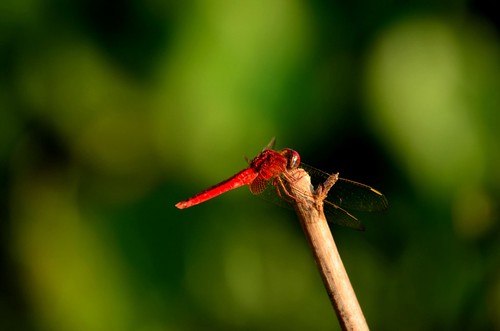
Dragonfly

Image by Rezwan

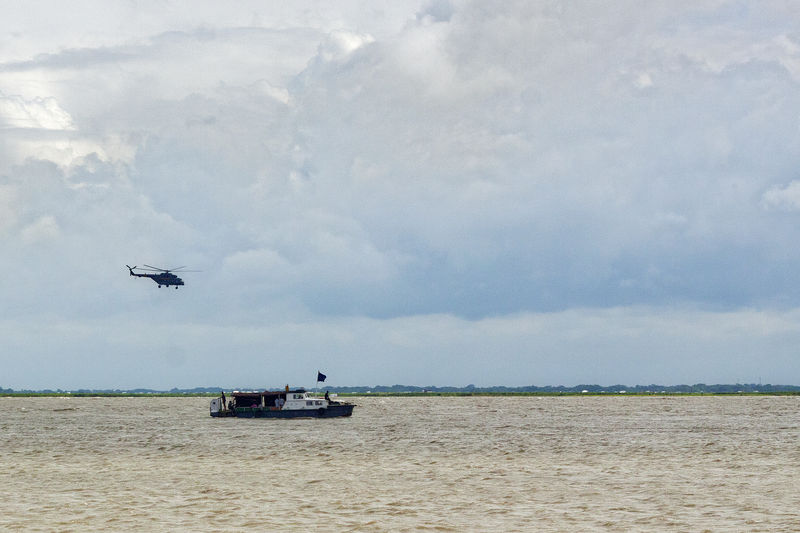
Overcrowded passenger ferry capsized in the Padma River in Munshiganj, Bangladesh

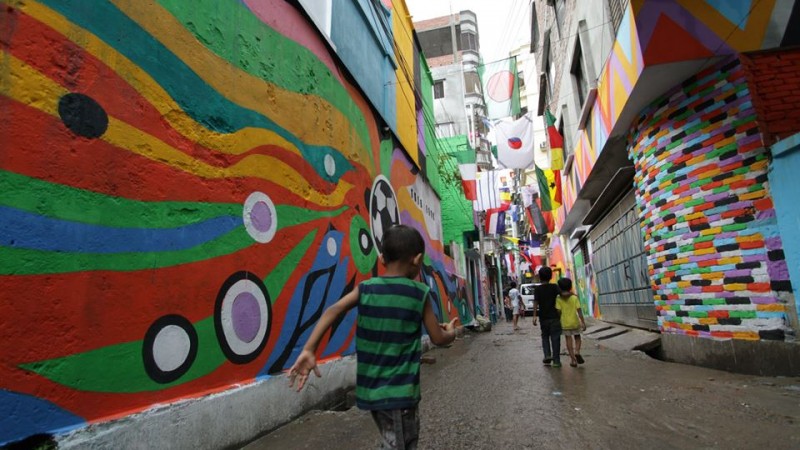
The World Cup Goal-E Project

This street in Bangladesh has a colorful world cup celebration

New Chum Hill Ruins

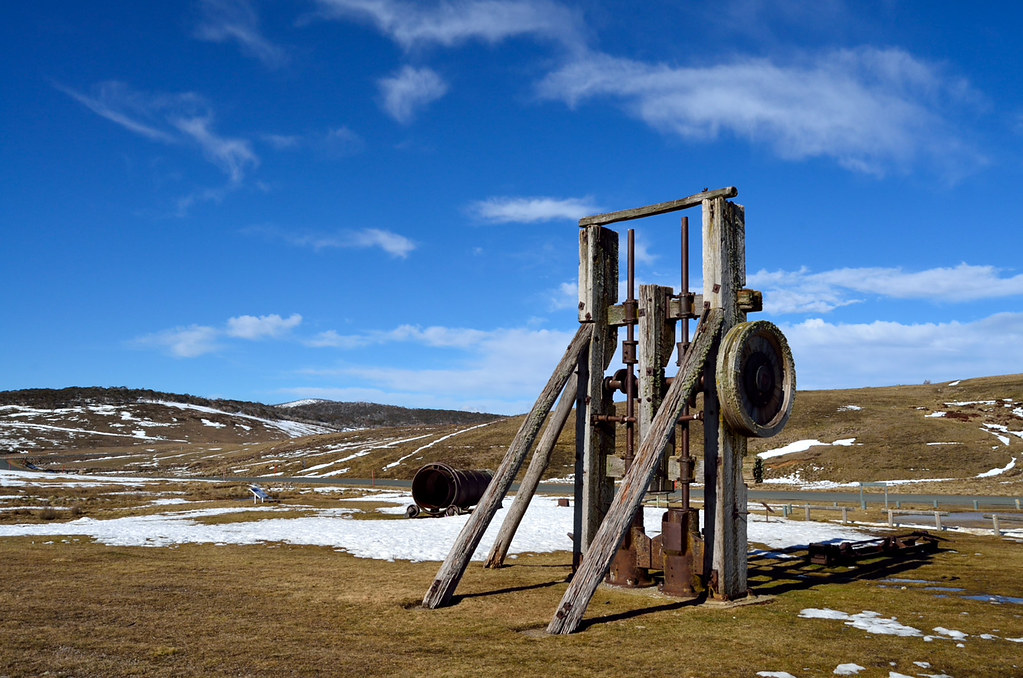
Remnants of Kiandra gold mine at New Chum Hill, #nsw #australia

January 09, 2015

A New Era Begins for Sri Lanka After President Mahinda Rajapaksa Concedes Defeat

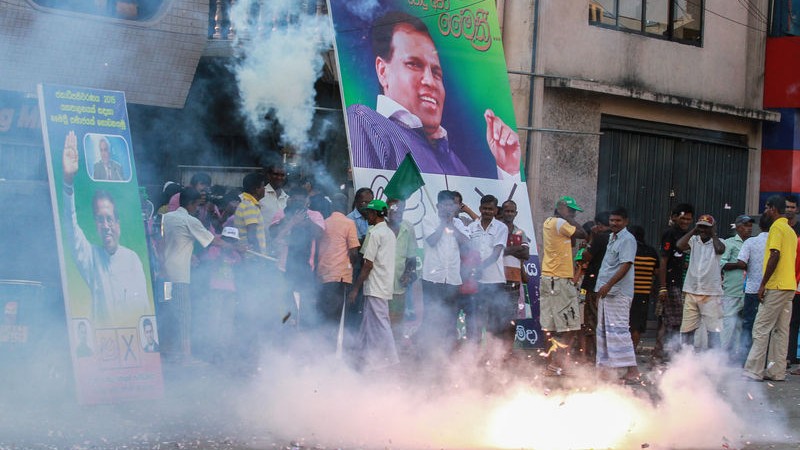
Supporters of Sri Lanka's main opposition presidential candidate Maithripala Sirisena burst firecrackers at the end of voting in the presidential election in Colombo. Image by Chamila Karunarathne. Copyright Demotix (8/1/2015)
On Friday morning, Sri Lankans woke up to news that was unthinkable only a few weeks ago -- President Mahinda Rajapaksa, who took office on 19 November 2005, conceded defeat to 63-year-old former Health Minister Maithripala Sirisena, the presidential candidate of the main opposition United National Party.

The day before, Sri Lankan voters had cast their ballot in the 7th presidential election in a closely contested presidential election, with incumbent Mahinda Rajapaksa seeking a record third term in office. The election was largely peaceful and turnout was more than 70 per cent in most districts.

Rajapaksa tweeted on 9 January, after it was clear he had lost the vote:
The early results showed that Rajapaksa remained popular among the country's Sinhala Buddhist population, who account for around 70 per cent of the island country's 21 million people. Sirisena was favoured by the ethnic Tamil-dominated former war zone in the north of the country and in Muslim-dominated areas, who went out in large numbers to vote for him.

A screenshot from news portal Adaderana.lk shows the numbers (final results):
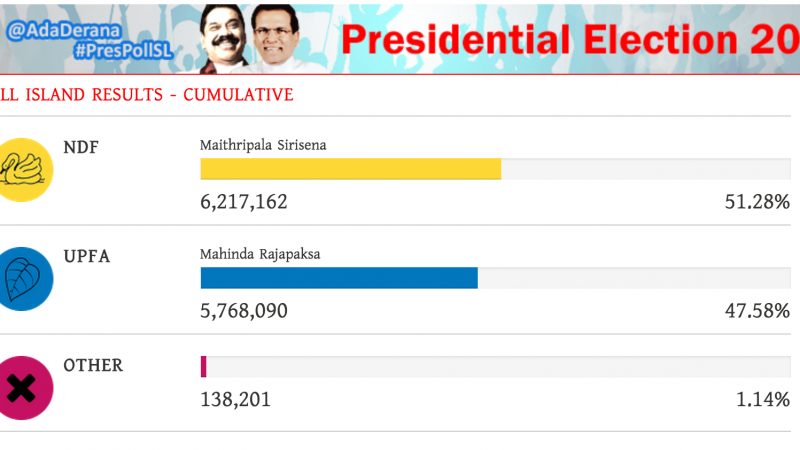
Screenshot from Adaderana.lk
Rajapaksa oversaw the end of a bloody civil war in 2009 that had raged for 26 years between government forces and a militant organisation seeking an independent Tamil state. He was reelected in 2010 by a landslide, and afterward successfully amended the constitution to concentrate political power in the presidency and remove term limits on the office. While in power, he has faced accusations of abuse of power, nepotism and human rights violations committed during the final stages of the civil war.

Blogger Indrajit Samarajiva, often a critic of the Rajapaksa government, paid tribute to his legacy:
Mahinda Rajapaksa has shown me things I never thought possible. He ended a war that I thought would never end. He rebuilt Colombo and showed us physical development I never dreamed of. For all of his faults, he has won me over as a citizen. I think he has been a good President, in my opinion Sri Lanka’s best, especially because he is the first President to lose an election and gracefully leave.

I have always been reluctant to call Mahinda a dictator because I never thought he was. As much as he messed with Parliament, with the Judiciary, he was always close with the people and he rose and fell by the vote. He was elected to power, he marshalled popular support to win the war and, in the end, he was brave enough to face election for a third time. Most importantly, and something we’ve never seen from an incumbent, he was brave enough to gracefully lose.

He has truly been a great leader and, though I voted for his opponent, I think he deserves something Sri Lanka hasn’t really afforded its leaders. A comfortable, honored and secure position as the respected and beloved ex-President of Sri Lanka.
Some commenters disagreed with Samarajiva's view on Rajapaksa time as president, such as Reshan Auston:
While we carry the respect for Mahinda for winning the war, I have no respect for him for looting the country. As a leader he failed the country. He had all the opportunity to be the Nelson Mandela of Sri Lanka but instead he decided to be Sadam Hussain. He looted the country with his brothers while his sons enjoyed the life using poor tax payers money. We couldn’t get our day to day activities done at government offices without political influences. Is this the leader we care about?

As a president he failed after finishing the war. I don’t harbour any remorse for his loss. He deserved what he got. I don’t wanna shed crocodile tear.
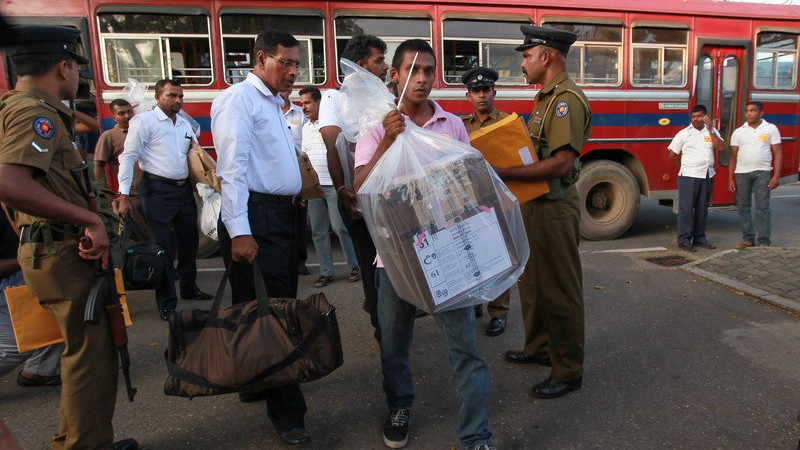
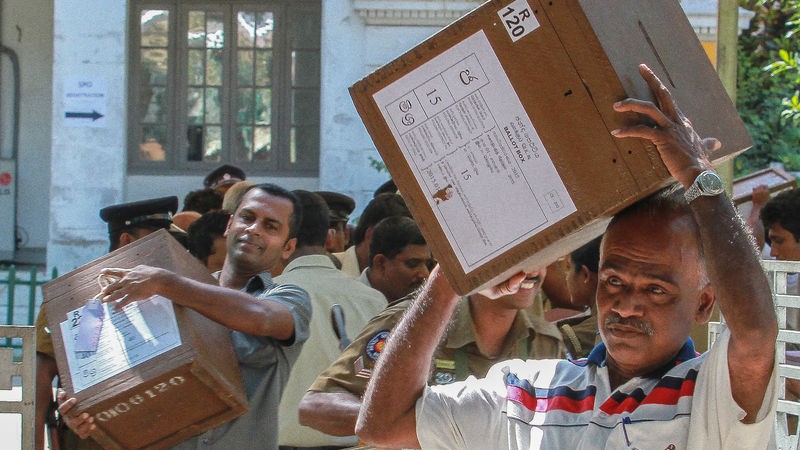
Sri Lankan polling officers carrie ballot boxes into a counting center after close of polling for the presidential election in Colombo. Image by Chamila Karunarathne. Copyright Demotix (8/1/2015)
Sri Lankan polling officers carry ballot boxes into a counting center after the close of polling for the presidential election in Colombo. Image by Chamila Karunarathne. Copyright Demotix (8/1/2015)
Dilrukshi Handunnetti wrote on citizen journalism website Groundviews on why Sri Lankans sought a change:
It is not as if Maithripala Sirisena, a simple villager who has risen within the SLFP ranks to reach top positions, holds the island enthralled. Instead, what he represents in terms of ideas and promises, matter to a large majority of the people who have silently observed an elected president turn increasingly authoritarian and triumphalist. [..]

There may be others who feel that while road and rail connectivity was being achieved, the incumbency has severed connectivity among the island’s communities that lived in harmony for decades, causing serious divisions on ethno-religious lines.

It is that negative difference that has fuelled an electorate’s call for a political change, perhaps at great risk, still with the hope that a new administration may have the political maturity to tolerate dissent and celebrate a plural Sri Lankan identity.
The social media scene was full of buzz:
Sri Lanka's free and fair elections were congratulated by many:
And here is what Sri Lankans are hoping for the future:
The post was also published in Global Voices Online.
January 08, 2015

Your Guide to Sri Lanka's 2015 Presidential Election

Sri Lankan election commission workers carry ballot boxes while escorted by police on the eve of presidential elections in Colombo. Image by Chamila KarunaRathne. Copyright Demotix (7/1/2015)
Sri Lankans are going to the polls on Thursday, January 8, in one of the most closely contested, significant presidential elections in the nation's history.

Every six years, Sri Lanka elects a new president and legislature. The parliament has 225 members, elected to six-year terms. It is a multi-party system, dominated by two political groups. There are 15 million eligible voters in Sri Lanka and over 12,000 polling stations have been set for elections. Voter turnout in the previous election was around 75 percent.

In the 2010 presidential election, Mahinda Rajapaksa of United Peoples Freedom Alliance (UPFA) won with 58 percent of the vote. Shortly after being elected, Rajapaksa successfully amended the constitution to concentrate political power in the presidency, and remove term limits on the office. This time, Rajapaksa has preponed the elections, holding them two years ahead of schedule. Rajapaksa, the region's longest-serving leader, will try for a third term, amidst criticisms that he abuses his authority and seeks a dynasty.
The actors

Rajapaksa has the backing of a number of small constituent parties of the UPFA, including the Ceylon Workers' Congress, and Communist Party. He has the support of the Buddhist extremist group Bodu Bala Sena. Rajapaksa's platform, titled "Mahinda's Vision—The World Winning Path", pledges to introduce an entirely new constitution within a year.

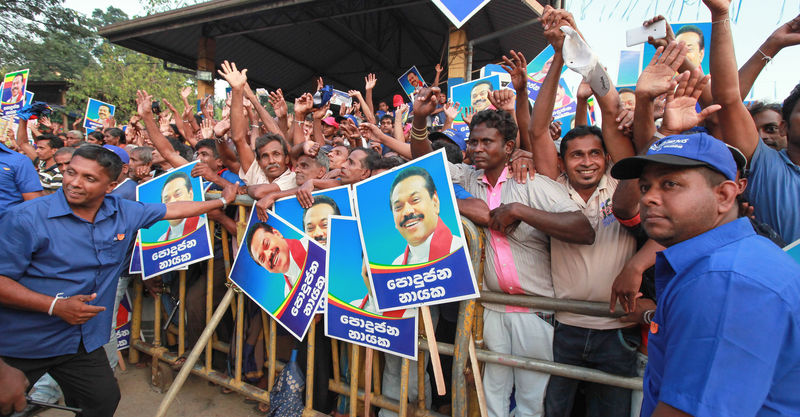
Supporters of Sri Lankan President Mahinda Rajapaksa cheer during an election campaign rally in Palmadulla, Sri Lanka. Image by Chamila Karunarathne. Copyright Demotix (3/1/2015)
Rajapakse has actively campaigned alongside celebrities like sporting Bollywood megastar Salman Khan, creating no small amount of buzz. Touring the former war zone in the country's North, Khan urged minority Tamils to back Rajapakse in the election, calling him the "known devil".

Rajapakse's chief opponent and former health minister, Maithripala Sirisena, is a surprise pick by the United National Party, the main opposition party, which is backed by twelve smaller parties. The remaining seventeen candidates are independents or belong to minor political parties.  UNP only revealed Sirisena's nomination on November 21, 2014, after the election was announced.

Sirisena released his platform, titled "A Compassionate Maithri Governance—A Stable Country", which pledged to abolish the country's presidential government within 100 days of being elected. Under a new parliamentary system, Sirisena says he would appoint UNP leader Ranil Wickremasinghe as prime minister.
Sirisena has launched a campaign attacking Rajapaksa where he is weakest: the President's apparent nepotism. During Rajapaksa's presidency, his three brothers and his son have all risen to positions of considerable influence in the national government.

Maithripala Sirisena, it's worth noting, took a great risk when he left the Rajapaksa Administratiojn. Indeed, the Asian Human Rights Commission recently expressed concern about his personal safety, noting that he's suffered several attempted attacks over the past several days.

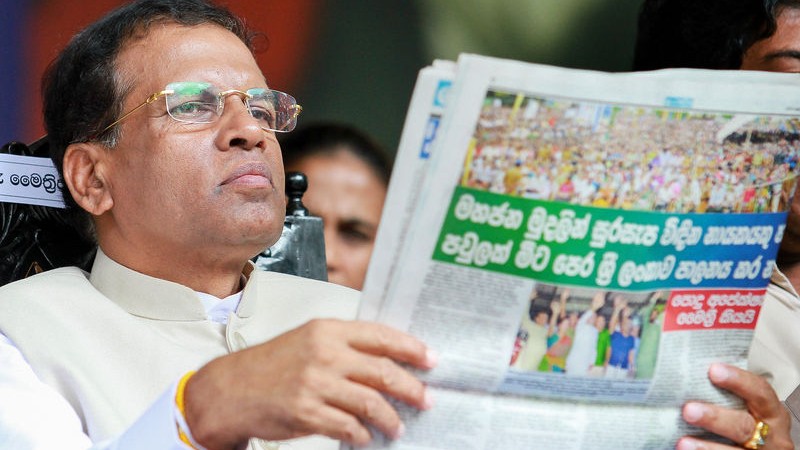
Sri Lanka's main opposition presidential candidate Maithripala Sirisena reads a newspaper during a campaign rally for the upcoming presidential elections in Colombo. Image by Chamila Karunarathne. Copyright Demotix (31/12/2014)
Use of social media

#IVotedSL is a trilingual campaign launched by Centre for Monitoring Election Violence (CMEV) to encourage citizens to exercise their voting rights.

Image courtesy CMEV. Copyright Free.
The campaign calls on voters to take a public pledge that they will exercise their right to vote on January 8th. An individual can signify this pledge by changing their profile/account picture and cover/banner page on Facebook, Twitter, Google+ or any other social media platform. On election day those who take the pledge can share through social media a picture of the fifth digit (little finger) of their left hand which is marked with indelible ink using the hashtag #IVotedSL.
President Rajapaksa's quite active Twitter account has 92,600 followers. According to an analysis by Groundviews, however, large numbers of these subscribers and admirers might be less than organic.

According to blogger Indi Samarajiwa:
The dominant hashtag for this election is, by far, #PresPollSL (best source for news, in my opinion). CMEV recommends #IVotedSL for voting related stuff.
Samarajiwa also analyses the Facebook engagement of both the campaigns. He concludes that Sirisena's readers seem to engage far more with the campaign's content, despite the fact that Rajapakse has almost twice as many followers.
Irregularities and violence

Supporters of Sri Lanka's ruling party have faced accusations of violating election laws during campaign. The Centre for Monitoring Election Violence (CMEV) identifies an "unparalleled misuse [by the ruling party] of state resources and media". According to Human Rights Watch, local monitoring groups have reported numerous acts of election-related violence and intimidation during the month-long campaign.
Resources
According to the latest opinion survey by the Centre of Policy Analysis (CPA), 86.9 percent of Sri Lankans think their vote can make a difference in the outcome of the presidential election. Let's hope everyone can exercise their voting rights peacefully!

The post was also published in Global Voices Online.
December 26, 2014

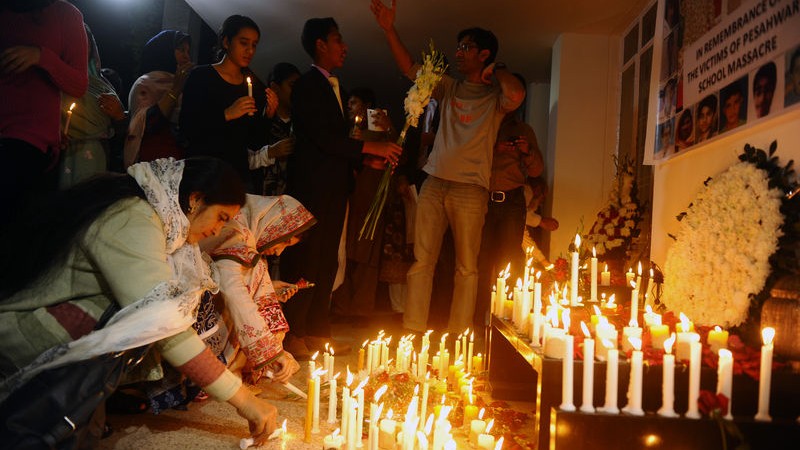
Somber Scenes as World Mourns Pakistani Children Slain in Peshawar Attack

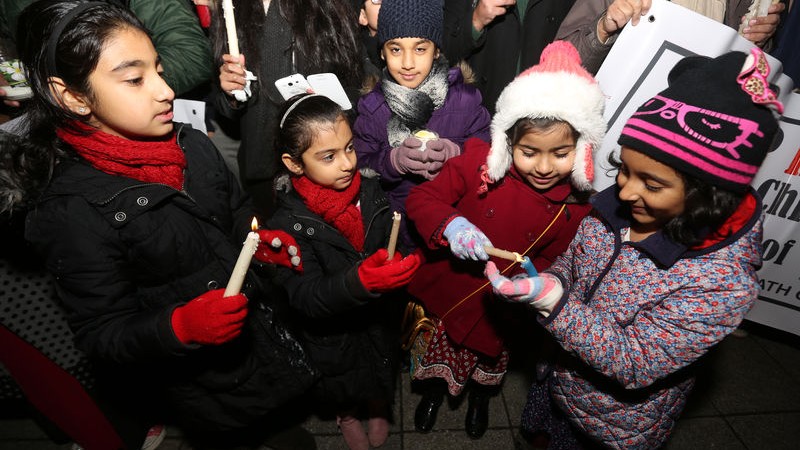
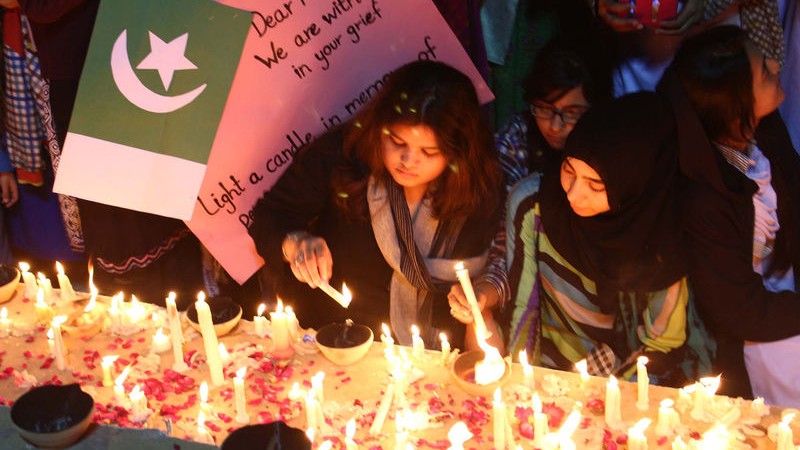
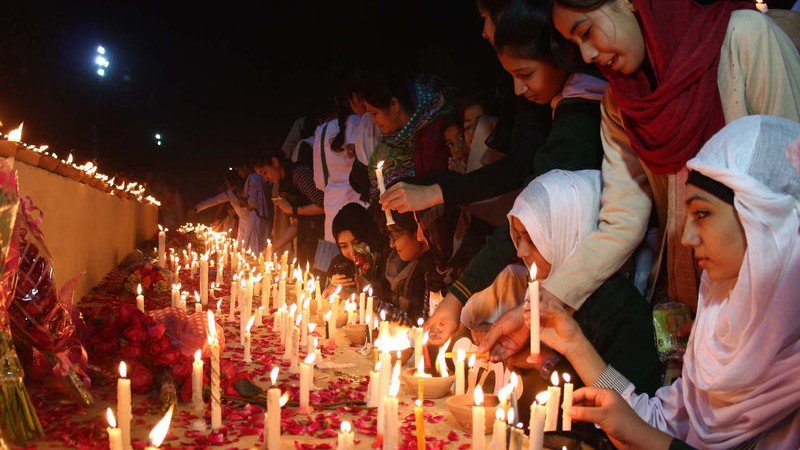
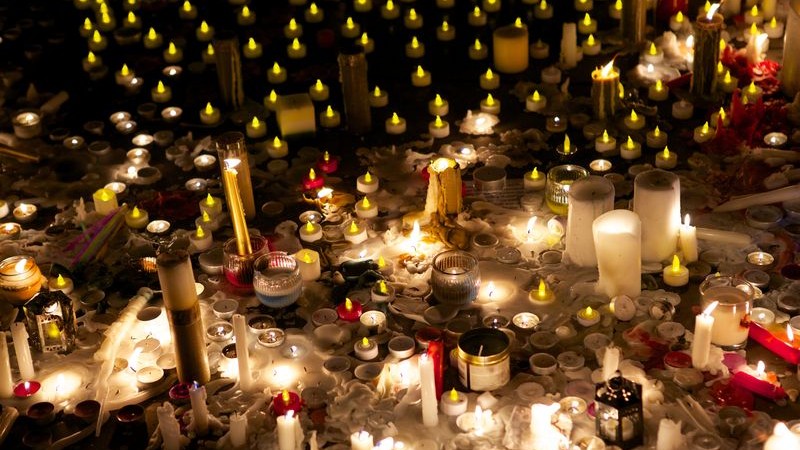
Students of Army Public School, members of Civil Society, Pak Army staffs and large numbers of citizens held a candle light vigil to mourn the innocent victims. Image by ppiimages. Copyright Demotix (19/12/2014)
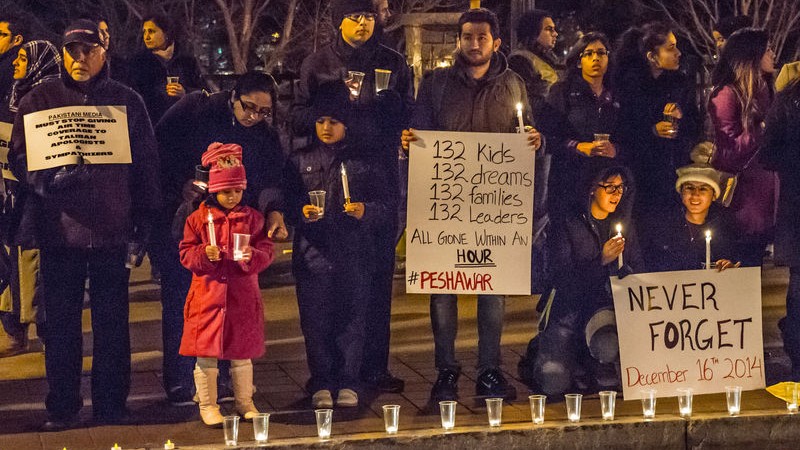
A group of Taliban gunmen dressed in military uniforms entered an Army Public School in Peshawar, Pakistan, on December 16 and shot students and teachers walking from classroom to classroom. At least 148 people, 132 of them children, lost their lives in the attack and scores of the students were injured.

The following day, vigils were held in Karachi, Islamabad and other major cities throughout the country, which can be seen in these pictures.

There have also been numerous vigils across the world:
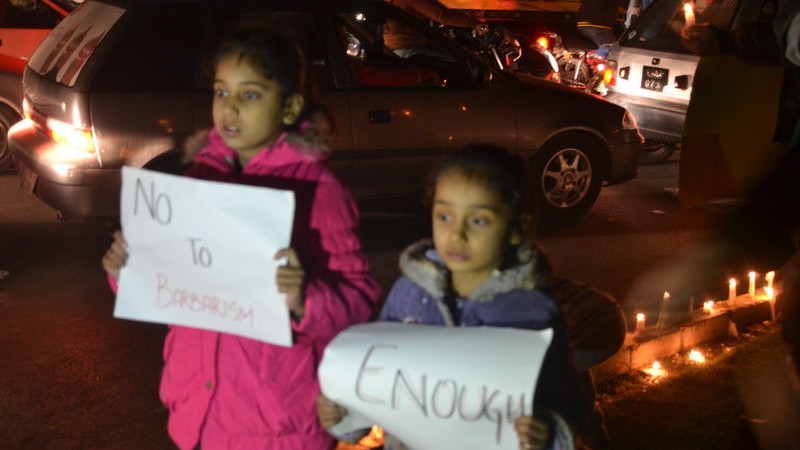
People at those vigils remembered the victims, protested against the barbarism, voiced their anger at the Taliban and echoed that children should be spared from such atrocities.

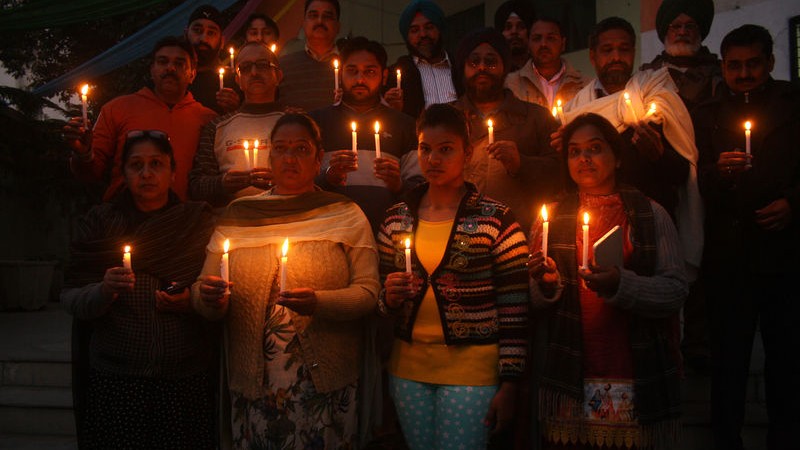
Here are images of some of those vigils:

A collection of candles and votives lit as part of a vigil in Trafalgar Square, London, to remember the dead school children and teachers killed by the Pakistani Taliban in Pakistan. Image by Emma Durnford. Copyright Demotix (17/12/2014)
A Candlelight vigil for the children of Peshawar is held in Longsight, Manchester outside the Pakistani Community Centre. Image by Barbara Cook. Copyright Demotix (20/12/2014)
Two hundred people gathered in front of the CNN Center in Atlanta for a candlelight vigil to honor victims killed during a Taliban attack on a school in Peshawar, Pakistan. Image by Steve Eberherdt Copyright Demotix (17/12/2014)
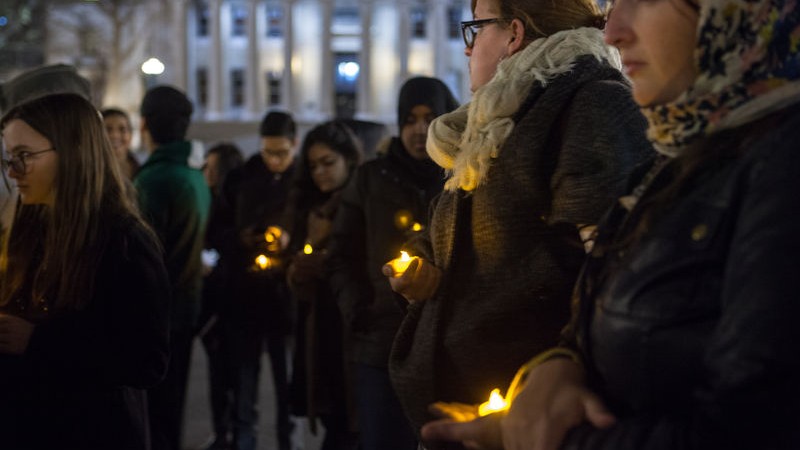
Columbia students and other members of the community joined a campus candlelight vigil to support the victims of the Peshawar attacks. Image by Mansura Khanam. Copyright Demotix (17/12/2014)
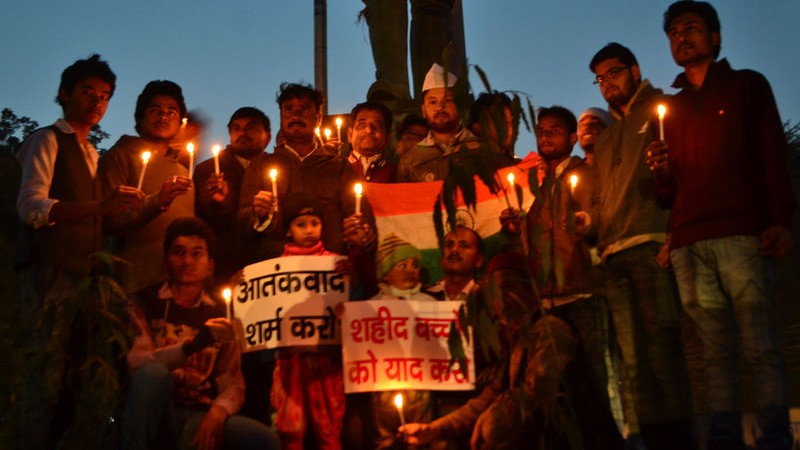
Indian congress workers and children pay tribute to those killed in the Taliban attack in Peshawar, Pakistan at a candle vigil in Allahabad, India. Image by Ritesh Shukla. Copyright Demotix (17/12/2014)
A candle light vigil and were held at the Pakistan High Commission in Bangladesh, this evening in remembrance of the innocent victims of the massacre at the Army public School peshawar.
Indian people lit candles as they took part in a candle-light vigil in memory of victims killed in a Taliban attack on a military-run school in Peshawar, in Amritsar. Image by Sanjeev Syal. Copyright Demotix (17/12/2014)
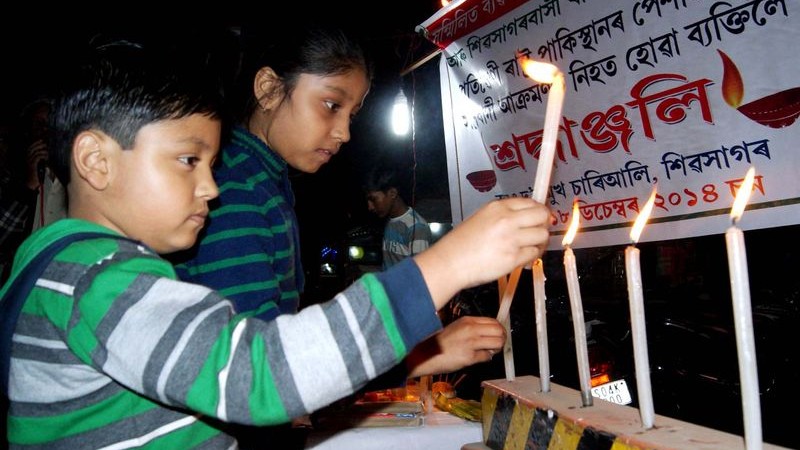
Childrens in Sivasagar, Assam lighting candles protesting the attack of Talibans in a school of Pakistan,  image by Neelam Kakoty Majumdar. Copyright Demotix (18/12/2014)
Childrens in Sivasagar, Assam lighting candles protesting the attack of Talibans in a school of Pakistan, image by Neelam Kakoty Majumdar. Copyright Demotix (18/12/2014)
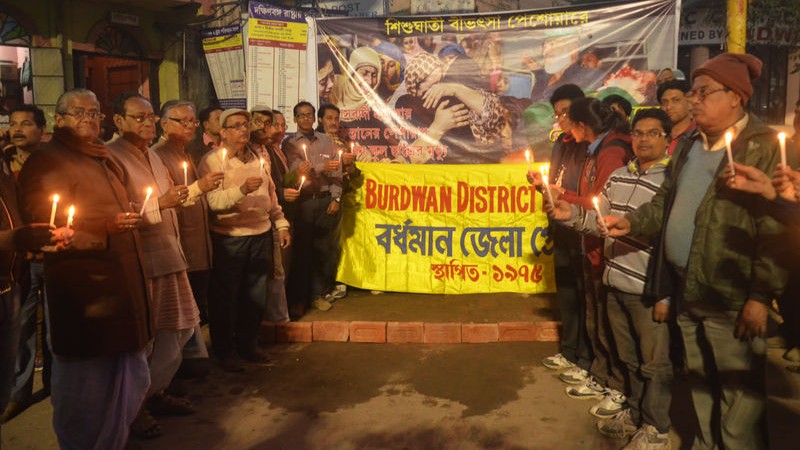
Burdwan District Press Club organised a Candlelight Rally in At Burdwan, West Bengal, India, protesting against Taliban terror attack on Army Public School in Peshawar.  Image by Sanjoy Karmaker (18/12/2014)
Burdwan District Press Club organised a Candlelight Rally in At Burdwan, West Bengal, India, protesting against Taliban terror attack on Army Public School in Peshawar. Image by Sanjoy Karmaker (18/12/2014)
Children holding solidarity messages at the candle light vigil in Lahore, Pakistan. Image by Fatima Arif. Copyright Demotix  (18/12/2014)
Children holding solidarity messages at the candle light vigil in Lahore, Pakistan. Image by Fatima Arif. Copyright Demotix (18/12/2014)
The post was also published in Global Voices Online.
December 21, 2014

Pakistanis Say #ReclaimYourMosques From Radicalism in Rare, Bold Protests

Students of Army Public School, members of Civil Society, Pak Army staffs and large numbers of citizens held a candle light vigil to mourn the innocent victims. Image by PPIImages. Copyright Demotix (19/12/2014)
Two days after the horrific Taliban attack on a military-run school in Peshawar, killed more than hundred and thirty students, controversial Islamabad-based cleric Abdul Aziz refused to condemn the massacre, sparking rare protests against radicalism in the country.

Abdul Aziz also said that use of force against the Taliban is not a “wise option”. Aziz is the chief cleric at Lal Mosque, one of the biggest in the capital. The mosque and its attached seminary have a reputation for radicalism and was the scene of a massive 10-day military crackdown in 2007, which left more than a hundred dead, many of whom were radical seminary students. Aziz's brother was the chief back then, and was killed in the operation. Abdul Aziz tried to flee the mosque in a burka, but was caught. He was released on bail two years later. And has since reopened the mosque and become the chief cleric.

On December 18, a large number of activists, politicians and students arrived at the Lal Masjid chanting slogans against Abdul Aziz. They wrote names of the students killed in Peshawar on a board and started an impromptu vigil.
The protest was organised by Jibran Nasir, an independent politician, lawyer and human rights activist from Karachi. He said:
I came to Islamabad for a conference, but then the Peshawar tragedy struck and everything changed. The next day, Lal Masjid cleric issued a statement that I couldn’t stomach and I decided that rather than going back to Karachi, we should protest. We want to reclaim our mosques, our communities, our cities, indeed our entire country from the extremists. We can no longer allow anyone to stand on at a pulpit and preach hatred. We will no longer stand by and watch people like Abdul Aziz use the name of our Holy Prophet (peace be upon him) and our religion to perpetuate violence. I call upon the people of Islamabad to come out of their homes and reclaim their city.
The administration of Lal mosque filed a First Information report (FIR) against the participants of the protest. Police in riot gear arrived on the scene and asked protesters to disperse.

Faisal Sabzwari from the political party MQM tweeted:
Nasir and the protesters held their ground and said they will hold the vigil for the next week in front of the Lal Mosque, and there after every Tuesday night.

Suddenly, the spontaneous protests that began on Thursday quickly spread across the country as a wider movement against Taliban apologists and extremists everywhere. There were protests after Friday prayers in several cities to condemn Lal Mosque's cleric Maulana Abdul Aziz's statement. A petition in Change.org to put Abdul Aziz on trial for treason and terrorism has more than 4000 supporters.

On December 19, an FIR (First Information Report) was lodged against Abdul Aziz at a police station and this Facebook video caught the moment.
A protester on the Facebook page #ReclaimYourMosques - We Demand Action on FIR #LalMasjid wrote:
The foundation is laid. Think over, either are u going to be a silent spectator or would do ur part. If 141 children didn't shook u off ur slumber then be sure u are an apologist of the likes of ‪#‎AbdulAziz‬.
Under pressure Maulana Aziz apologised on Sunday for not condemning the killing of children. A reader replied to the article at the Tribune.com:
Sorry too little too late, shame on him that he actually had to think so hard to apologize and only after all the pressure …… He lacks total decency and morals …..innocent kids died and he had to think about it. Shame on him and shame on us for listening to him, he needs to be behind bars permanently along with all his buddies.
Qurratulain Zaman (Annie) contributed to this post.

The post was also published in Global Voices Online.

December 16, 2014

#IndiaWithPakistan: Indians Show Solidarity With Their Grieving Neighbors After Peshawar Attack

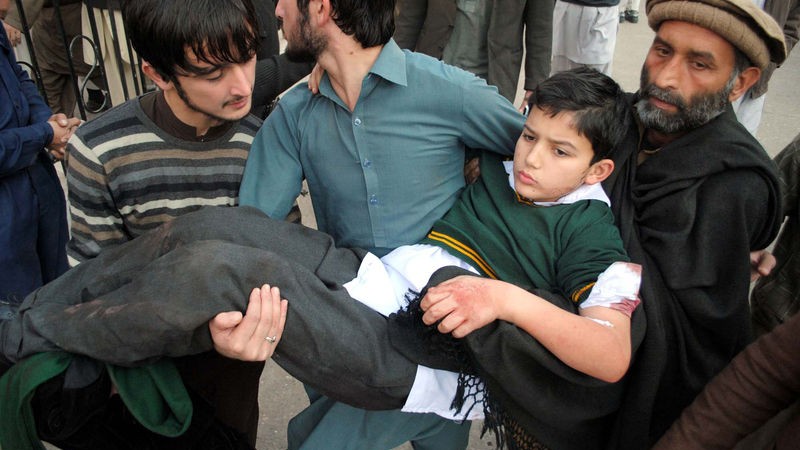
Victims of militants attacked an army public school situated on Warsak Road, being shifted for treatment at local hospital in Peshawar. Image by ppiimages. Copyright Demotix (16/12/2014)
Victims of militants, who attacked an army public school situated on Warsak Road, are moved for treatment at a local hospital in Peshawar. Image by ppiimages. Copyright Demotix (16/12/2014)
People from all over the world have offered their support and sympathy on social media for Pakistan as the country reels from a horrific attack on a school in Peshawar that has left 141 people dead, most of whom were children.

But one particular hashtag is worth noting -- Indians are putting aside their ardent rivalry with Pakistan and expressing solidarity with their neighbors at this difficult time under #IndiawithPakistan on Twitter.
At around 11 a.m. Pakistan time on December 16, six Taliban militants entered the Army-run school in the capital of Khyber Pakhtunkhwa and took around 500 students and teachers hostage. The attackers were dressed as soldiers and opened fire at random, also detonating an unknown number of suicide bombs. A teacher was reportedly burned alive in front of pupils and children were shot in the head. One hundred and forty-one people were killed, most of whom were children, and hundreds injured in the siege. According to police, all the militants were killed.

The Taliban, in a statement to Reuters, said that they targeted the school because the army targets their families in an ongoing military offensive against Taliban strongholds near Peshawar. “We want them to feel our pain,” the statement said.

Dr. Asif Sohrab described on Facebook the horror in Peshawar:
2,3 funerals in every Street of Peshawar. In my street there are 3! Peshawar bleeds, Pakistan cries.
On such a sad day, #IndiawithPakistan generated a lot of good vibes:
In response to the attack, Pakistani Prime Minister Nawaz Sharif announced three days of mourning and has called an all party parliamentary meeting at the Governor House in Peshawar on Wednesday.

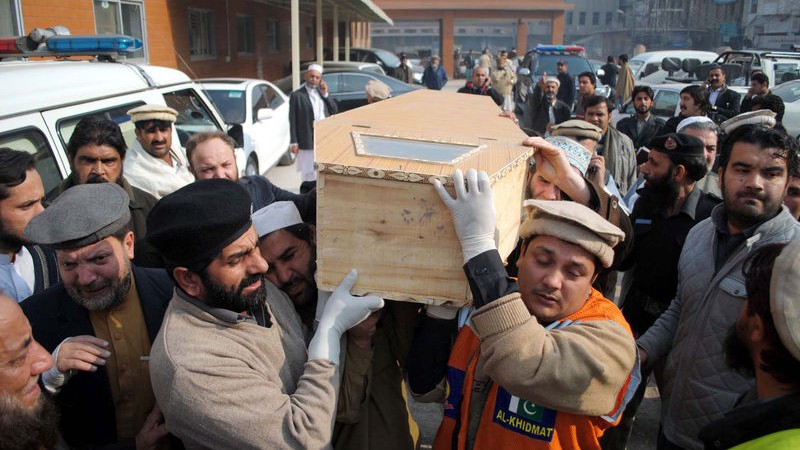
Men carry the casket of a victim of the Taliban shoot-out in a military-run school in Peshawar, Pakistan. Image by ppiimages. Copyright Demotix (16/12/2014)
Pakistani Twitter users have also taken to Twitter to express their anger and grief:
Mehr Tarar, a former op-ed editor for Pakistan's Daily Times, captured the heartbreak of many Pakistanis in a column for Indian news portal NDTV:
Today, I feel as if I have been punched in my stomach. In my heart. And in my soul. With an iron rod. As I hear of children who were killed in an Army school in Peshawar, I feel my heart stopping.

Children were shot in the face. Children were shot in the head. Children were dragged out from under the chairs, under the tables, and shot. At point blank. Methodically. Coldly. Clinically. They - who go by the name of the Tehreek-e-Taliban Pakistan - say it is to avenge the Army operation against them in the FATA. To avenge the deaths of militants who were wreaking havoc on innocent Pakistanis in myriad acts of terror. It's retribution, they say.

I have nothing to say here. You call yourself a Muslim, you call your fight a jihad, you call your way that of Allah. And yet you do what Allah forbids you to do: to perpetrate a war in His name where you kill children. Where you kill people who have never harmed you. You are not just Pakistan's enemy but you are also your own worst enemy.
Writing in independent Canadian news website Ricochet, journalist Jahanjeb Hussain offered his view on what good, if any, could come of the attack:
The best hope is that this attack would finally convince the country’s leadership that meaningful, concentrated, and long-term action needs to be taken across the board.
Anushe Noor Faheem contributed to this post. 

The post was also published in Global Voices Online.
December 14, 2014

Massive Oil Spill Threatens Bangladesh's Sundarbans

Spotted deers forage at the Kokilmoni forest in the Sundarbans, a UNESCO world heritage site. Bagerhat, Bangladesh. Image by Muhammad Mostafigur Rahman. Copyright Demotix (5/11/2014)
Spotted deers forage at the Kokilmoni forest in the Sundarbans, a UNESCO world heritage site. Bagerhat, Bangladesh. Image by Muhammad Mostafijur Rahman. Copyright Demotix
An oil tanker carrying 358,000 liters (almost 100,000 gallons) of furnace oil sank in the Shela river on December 7, spilling oil over more than 60 kilometers (about 37 miles) of the Sundarbans. Located on in southwest Bangladesh, the Sundarbans is the largest single block of tidal mangrove forest in the world, covering approximately 10,000 square kilometers (3,900 square miles), of which 60 percent is in Bangladesh. The Sundarbans, a UNESCO World Heritage Site, is also one of the largest reserves for the Bengal tiger, and provides sanctuary to many other species.
According to reports, the new oil spill threatens the Mrigmari-Nondabala-Andharmanik dolphin sanctuary. Mangrove trees are also highly susceptible to oil pollution—indeed, they are expected to start dying after the area's aquatic life, which is typically first to perish. Fahim Hassan has put together an infographic on Flickr explaining the details of the devastation.

According to images Mowgliz Elisabeth Rubaiyat posted on Facebook, the disaster is already killing some animals. Local authorities appear to be outside their depth, never before having confronted so large an oil spill, and lacking the necessary infrastructure to respond properly. Al Jazeera reports several local fishermen have resorted to cleaning up the spill using sponges and sacks.

Many on Twitter have questioned the authorities' response:
To help in the relief effort, the government dispatched a ship to the area carrying oil dispersants. If such chemicals are released incorrectly, however, it can harm the local ecology still further. Four days later, the state's efforts seem to have had little effect, exacerbating fears of a lasting ecological disaster.
Bangladesh's Water Transport Minister says locals were able to stop the oil from entering the forrest, using nets, and they're also working to remove the oil from the water, to keep the situation from becoming worse. The national Forest Department is leading the operation with 100 boats and 200 fishermen.

The Forest Department has filed a lawsuit for 1 billion Bangladeshi taka (about $13 million) against the owners of the two cargo ships responsible for the spill.

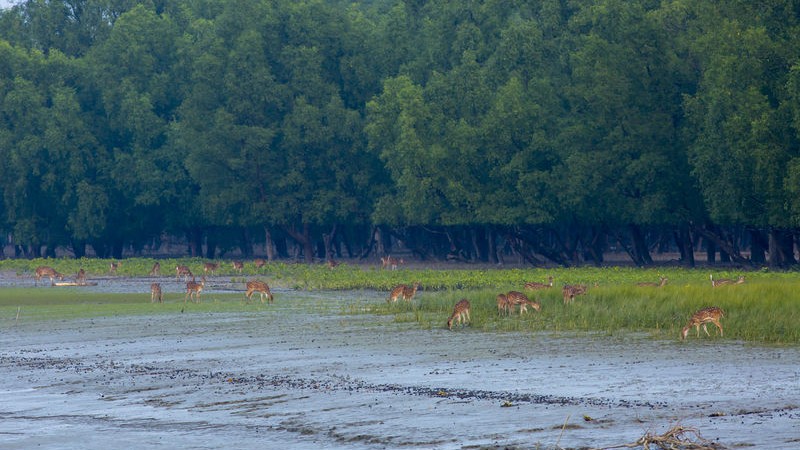
Just a month ago, before the spill, the Sunderbans mangrove forest looked like this:


Blogger Ahmed Sharif criticizes the government's ill-planned disaster-management strategy, saying it misunderstands the issue:
দুর্যোগ ব্যবস্থাপনা বলতে কি শুধু বন্যা-জলোচ্ছ্বাস বোঝায়? গত দুই দশকে অর্থনৈতিক দিক থেকে দ্রুত অগ্রগতির সাথে সাথে যেসব ঝুঁকির সৃষ্টি হয়েছে, সেগুলির জন্যে আমরা নিজেদের তৈরি করতে পারিনি। নদীতে জাহাজের সংখ্যা আগের চেয়ে বহুগুণ বেড়ে গেছে, কিন্তু তার সাথে পাল্লা দিয়ে তৈরি হয়নি মনিটরিং এজেন্সিগুলি। জাহাজ তৈরি হচ্ছে যথেচ্ছভাবে, যাত্রী নেওয়া হচ্ছে অতিরিক্ত, ফিটনেসবিহীন জাহাজ চলছে, নদীর পানি দূষণ করছে জাহাজের বর্জ্য, নদীর মাঝে পার্ক করে রাখা হচ্ছে জাহাজ, সঠিক যন্ত্রপাতি ছাড়াই চলছে জাহাজ, চলাচলের সময় ঠিক করে দেয়ার পরেও কেউ মানছেনা – কেউ দেখার নেই। কাজেই দুর্ঘটনার সম্ভাবনা প্রতিদিন বেড়েই চলেছে। আর দুর্ঘটনার সম্ভাবনা বাড়লেও সেটার জন্যে প্রস্তুতি নেই আমাদের।
Is disaster-management confined to floods and cyclones? In past decades, the country has seen accelerated economic development and increased risks. But we could not keep pace to prepare ourselves for those added risks. The commercial ships in our waterways have multiplied, but our monitoring agencies couldn't keep up. Many ships are being built outside the proper guidelines, carrying passengers over their capacity. Many ships are unfit to operate, they dispose of waste improperly, they block waterways indiscriminately, they break schedules—nobody is monitors any of this. So there is an increased risk of accidents, and we are not prepared for these accidents and disasters.
YouTube user A. K. M. Wahiduzzaman uploaded a video capturing the devastation of the oil spill:


The body of the first dolphin, a rare Irrawadi dolphin, to die in this incident was discovered last Friday. According to reports, the Padma Oil Company has managed to remove about 10,000 liters (about 2,600 gallons) of oil in its cleanup efforts, so far. The company is offering to pay volunteer cleanup-workers 30 Bangladeshi taka (about 40 cents) for every liter (about 34 ounces) of oil recovered.

Singer and blogger Mac Haque comments on Facebook:
What is perplexing is the rudimentary cleaning operation. With offer of Taka 30/= per litre for furnace oil recovered, thousands have jumped in, not to save the Sundarbans but to eke an existence. Obviously for the poorest of the poor this is a windfall. However, have not heard anyone talk about the risk to human health from dangerous toxins in the furnace oil. Anywhere else in the world the Government would have faced public litigation suit for endangering citizens health. I see thousands of poor and ignorant people dying in the days ahead thanks to Bangladesh Petroleum Corporation's myopic decision. Our focus should not only be for hunt of dead dolphins - but contaminated humans!
There have been protests demanding that the authorities ban merchant ships and cargo vessels from using the rivers and channels of the Sundarbans. Absent effective government measures, Bangladesh will have to keep relying on civil society and volunteers in this environmental crisis.

The post was also published in Global Voices Online.
November 28, 2014

Mourning Cricket Fans Honor Australia's Phillip Hughes With #PutOutYourBats

Players and officials of Bangladesh-Zimbabwe and the spectators stand up to pay one minute silent for Australian batsman Phillip Huges before the 4th ODI at Sher-e-Bangla Natioanl Cricket Stadium in Mirpur. Dhaka. Image by Reaz Sumon. Copyright Demotix. (28/11/2014)
Players and officials of Bangladesh-Zimbabwe and the spectators stand up for one minute silence for Australian batsman Phillip Huges before the fourth One Day International match at Sher-e-Bangla Natioanl Cricket Stadium in Mirpur. Dhaka. Image by Reaz Sumon. Copyright Demotix. (28/11/2014)
A simple tribute from a cricket fan to Australian cricketer Phillip Hughes, who died November 27, has gone viral in Australian and around the world.

Australian star cricketer Phillip Hughes died as a result of injuries he sustained when he was struck by a bouncer on Tuesday during a domestic league game at the Sydney Cricket Ground. Hughes was wearing a helmet, but the ball made contact with an unprotected area, damaging his vertebral artery which caused bleeding in the brain. He died two days later at a Sydney hospital from his injuries, three days shy of his 26th birthday.

In a gesture of respect, IT worker Paul Taylor put his old cricket bat outside the front door of his home in Sydney with a cricket cap slung on the handle and tweeted the picture to his followers with the hashtag #putoutyourbats. The idea soon caught on among mourning fans in Australia and beyond.
Hughes was born in Macksville, a small town on the north coast of New South Wales, and was so talented that he had his grade A debut at the age of 12. To mark his passing, matches were cancelled in Australia and in other countries. Cricketers across the world have tweeted to commemorate him:
Check out ESPN for more tributes to the cricket star.

The post was also published in Global Voices Online.