









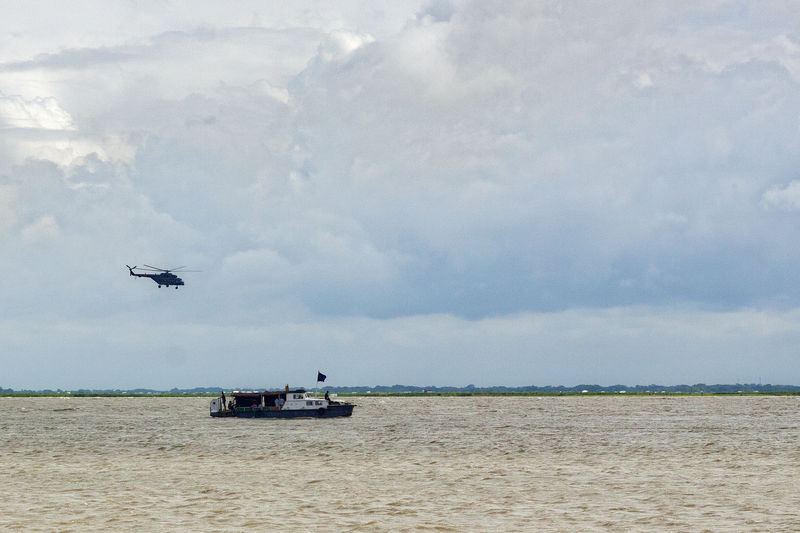



Dragonfly
Image by Rezwan
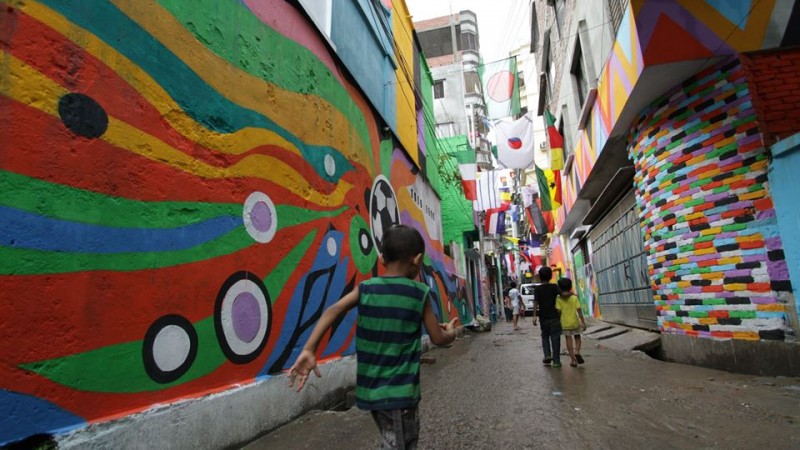
The World Cup Goal-E Project
This street in Bangladesh has a colorful world cup celebration
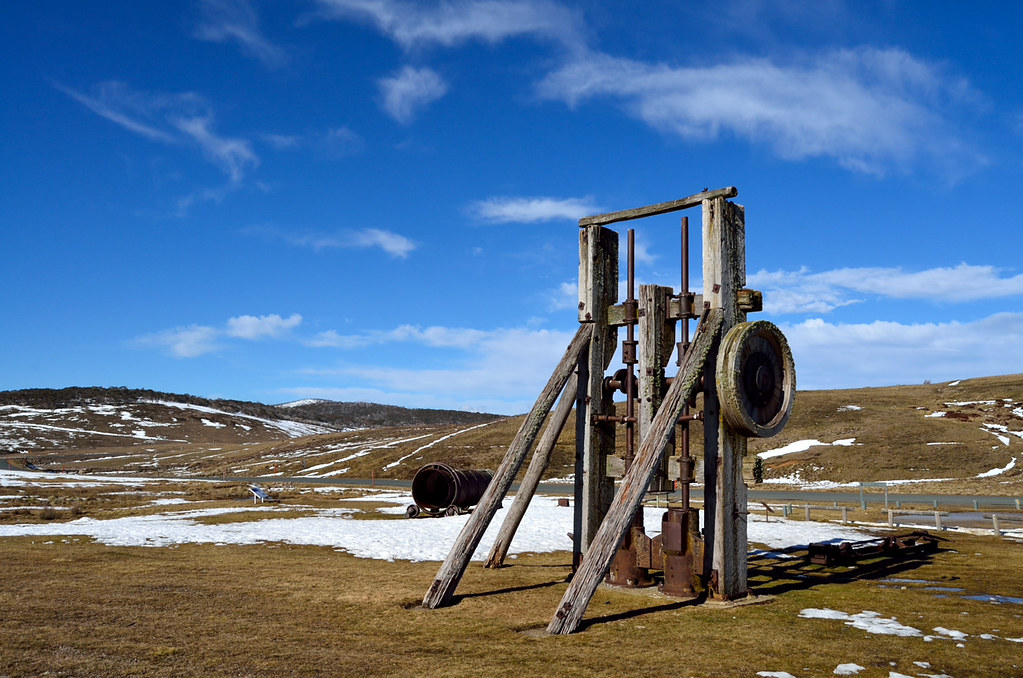
New Chum Hill Ruins
Remnants of Kiandra gold mine at New Chum Hill, #nsw #australia
June 27, 2011
Survey going on for overpass construction
May 15, 2011
What else can you do with your mobile phone:
* Short Message Service (SMS)
* Bluetooth/Wifi/infrared
* Camera
* Multimedia Messaging Service (MMS)
* Email
* Games
* Radio (FM/Internet)
* MP3 player
* Video
* Banking
* Print pictures
* Get directions via GPS
* Have your text messages/emails read back to you
* Scan in a business card
* Calender /To Do /Notes
* Alarm clock
* Get general information
* VoIP
* Purchase goods
* Work with office documents/spreadsheet/presentation
* Work as a torchlight
Via Netsquared
* Bluetooth/Wifi/infrared
* Camera
* Multimedia Messaging Service (MMS)
* Games
* Radio (FM/Internet)
* MP3 player
* Video
* Banking
* Print pictures
* Get directions via GPS
* Have your text messages/emails read back to you
* Scan in a business card
* Calender /To Do /Notes
* Alarm clock
* Get general information
* VoIP
* Purchase goods
* Work with office documents/spreadsheet/presentation
* Work as a torchlight
Via Netsquared
May 10, 2011

April 29, 2011
The Indigenous Online Activists Get Noticed
Not long ago I wrote about the Adibashis struggle to make their voices heard to depict how they are repressed by the Bengali settlers. Al Jazeera took notice of their efforts and has posted a roundup in their program website "The stream" which also quoted from my blog.
Here is a video clip of the program including interviews of bloggers.
Don't forget to watch the program.
More international news:
* IRIN
* Amnesty International
Here is a video clip of the program including interviews of bloggers.
Don't forget to watch the program.
More international news:
* IRIN
* Amnesty International
April 22, 2011
Bangladesh: Netizens Protest Human Rights Abuse in the Hills
Although outnumbered by the Bengali population, the close to one million indigenous and aboriginal population of Bangladesh live mainly in the Chittagong Hill Tracts. Over the years they have become vulnerable minorities.
During the 1970s and 80s, the government took steps to resettle Bengali homeless people in the three hilly districts of Bangladesh. There were resistances and insurgency by the local indigenous people and these previously tourist places became a protected militarized zone.
For decades Bengali settlers and soldiers have been accused of human rights violations against the tribal minorities while members of the Shanti Bahini and other rebel indigenous groups have committed similar violations, including the massacre of unarmed Bengali settlers. The 1997 Peace Treaty with Shanti Bahini granted a limited level of autonomy and stemmed the violence but the problem was not solved.
Recently ethnic violences sparked again and news media reported that four Bengali settlers were killed and 50 others were injured in Ramgarh on Sunday April 17, 2011. According to a statement by Amnesty International:
Another blog CHTBD.Net is reporting that the number of houses of locals burnt are 95, and 4 indigenous persons are confirmed missing. In an interview Polen Chakma describes how he escaped death on April 17.
Anandi Kalyan quotes one of her friend's Facebook messages to describe [bn] how these incidents are accumulating hatred against Bengalis amongst the indigenous people:

Blogger and Journalist Arif Jebtik writes [bn]:
First posted in Global Voices online
During the 1970s and 80s, the government took steps to resettle Bengali homeless people in the three hilly districts of Bangladesh. There were resistances and insurgency by the local indigenous people and these previously tourist places became a protected militarized zone.
For decades Bengali settlers and soldiers have been accused of human rights violations against the tribal minorities while members of the Shanti Bahini and other rebel indigenous groups have committed similar violations, including the massacre of unarmed Bengali settlers. The 1997 Peace Treaty with Shanti Bahini granted a limited level of autonomy and stemmed the violence but the problem was not solved.

Recently ethnic violences sparked again and news media reported that four Bengali settlers were killed and 50 others were injured in Ramgarh on Sunday April 17, 2011. According to a statement by Amnesty International:
The latest round of tensions began on 14 April when a group of Bengali settlers occupied and tried to plant crops on areas within the Jumma’s ancestral lands, in Khagrachari District in south-eastern Bangladesh. After three Bengali settlers were killed on 17 April, allegedly by Jumma people, settlers looted surrounding indigenous villages and injured people, burning at least 60 homes.The voices of the indigenous people are rarely heard in the mainstream media but through the Internet - blogs and Facebook - they have found a platform from which to be heard. In the Facebook group CHT Voice people have been wondering why only the casualties of Bengali settlers are being reported. Radhamon wrote:
Indigenous sources say they informed the local authorities – including the army, which has a heavy presence in the area – of the settlers’ movements, but they failed to act on the information.
News are being filtered, and media is BIASED. They DONT LIE, but they DONT TELL THE TRUTH.A new blog called CHT News Update has this question:
Bangladeshi mainstream media has been overflown with biased news about Ramgarh incident. The journalists try to retain objectivity in their news. However, all news articles are being filtered by the security forces before they get published and thus the public is not made aware of the real story. If you look at the the Bangladeshi dailies, you will see news and pictures of injured and dead Bengali settlers. How come they never dare to publish the pictures of these injured Indigenous people?Blogger and journalist Biplob Rahman writes at the Indigenous Bangla Blog [bn]:
Those who have tried to gather news on their own initiative, have learnt that although the majority of casualties are Bengalis but they were the first attackers. The indigenous people have tried to resist with their scanty resources. Not only that, the cause of the violence, the land dispute, was generated as the Bengali settlers tried to grab the lands of the indigenous Marmas living there.Unheard Voice blog posts a round up of mainstream media news and also some news, images and video obtained via email.
Another blog CHTBD.Net is reporting that the number of houses of locals burnt are 95, and 4 indigenous persons are confirmed missing. In an interview Polen Chakma describes how he escaped death on April 17.
Anandi Kalyan quotes one of her friend's Facebook messages to describe [bn] how these incidents are accumulating hatred against Bengalis amongst the indigenous people:
There are unrests in the hills for decades. Let alone the statistics quoted in the media, I know from personal connections that my indigenous friends are victims one way or another. When I went to visit places like Bandarban, Rangamati, Teknaf and Cox's Bazar I saw that many businesses and settlements are owned by Bengalis. Those who are aboriginal there are cornered now. The hills have become agitated yet again and we are reading reports on attacks against Bengali settlers. The repressions against the indigenous people are being blacked out.
When I speak with my aboriginal friends hatred are forming inside them because of our land grabbing mentality. My friend, who remained apolitical over the years now also think of armed resistance.
We should not only think about the Chittagong Hill Tracts as an 'awesome' touristic place. To what extent we think about the well beings of the indigenous people living there?
An indigenous family in the Chittagong Hill Tracts. Image by Flickr user Jonas in China (CC BY-NC-SA 2.0).
Blogger and Journalist Arif Jebtik writes [bn]:
There comes a time when civil societies have to stand on their feet and boldly say the truth. The situation on the hills is demanding the same from us. The hills are for the people of the hills, you cannot hide the truth trying to impose logics of political science. The politicians have resettled homeless Bengalis in those hills. They had to build settlements for them and had to deploy army for their security. The problem starts here. We at the same time have endangered homeless Bengalis, our security forces and of course the indigenous people.
The only way to solve all problems persisting in the hills is to remove all the Bengali settlers.
First posted in Global Voices online
April 19, 2011
BBC is cutting back its foreign language services
For millions of people around the world, especially in South Asia BBC broadcasts in their own language meant an alternative voice than the monotony or propaganda of their state broadcasts. In Bangladesh a place has been named BBC Bazaar to mark the trend - rural people typically gather around radios in public places (eg a market) to listen to BBC broadcasts.
BBC cutting back on broadcast services in Hindi, Mandarin, Russian, Turkish, Albanian, Vietnamese and many other languages due to budget constrains. For many of the languages their radio broadcasts will become internet webcasts.
Fareed Zakaria at CNN writes:
But to take two examples: China has only 20 percent Internet penetration and India, just 5 percent.
Maybe there is a billionaire out there who could fill this budgetary gap.
March 08, 2011
Fans say sorry to Shakib's Mother
In Bangladesh Facebook users are growing rapidly (1,452,760 users according to Facebook stats). And with this huge user base it is natural that social activism are being organized in Bangladesh through Facebook. I have seen many such efforts in the past - like collecting winter cloths, collecting signatures for petition etc.
After the Mirpur debacle of Bangladesh cricket the Lets Say Sorry To Our Guests Facebook group has accomplished a commendable task in sending apologies and flowers to the West Indies cricket team.
The same Facebook group has accomplished another notable task. They have gone to Magura, the hometown of Shakib, the Bangladesh captain. Stones were thrown at his house too. They presented flowers to sakib's mom and gave some letters of few fans of cricket and a formal letter.


According to a Facebook note of Foisal Masum, member of the group (translated):
We are very emotional as a nation. So sometime our outburst of emotion becomes excess. But time has changed..this is not the middle ages...this is not the era of the Mughals..when showing muscle power and supremacy were the sign of the strength of the nation.
Our education, our achievements are announcing that time has changed, this is the time to change.
At this moment, during world cup, the media of the whole world are looking at us..now if we engage ourselves in fighting, bickering etc. for the sake of letting out emotion.. (this will be public)..
Let us keep the bad incidents within the country, try to fix them, let us refine the way we express emotion..let us stay away from yellow journalism.
Image Credit: Sunny and Lalon Jamil
Subscribe to:
Posts (Atom)