





Dragonfly

Image by Rezwan

Overcrowded passenger ferry capsized in the Padma River in Munshiganj, Bangladesh

The World Cup Goal-E Project

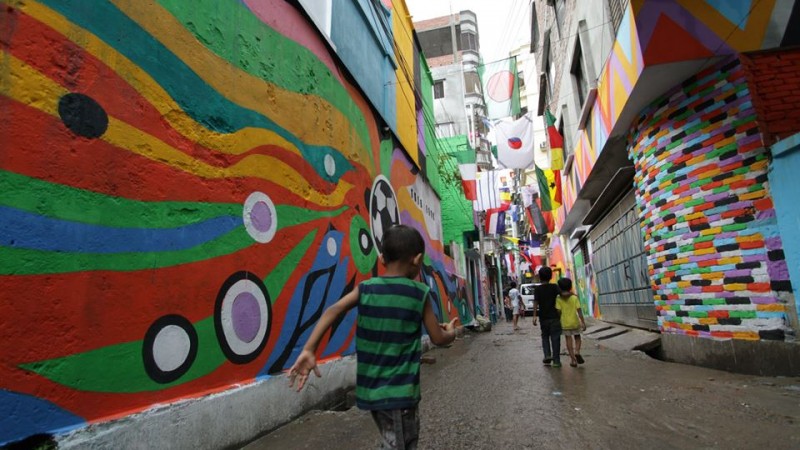
This street in Bangladesh has a colorful world cup celebration

New Chum Hill Ruins

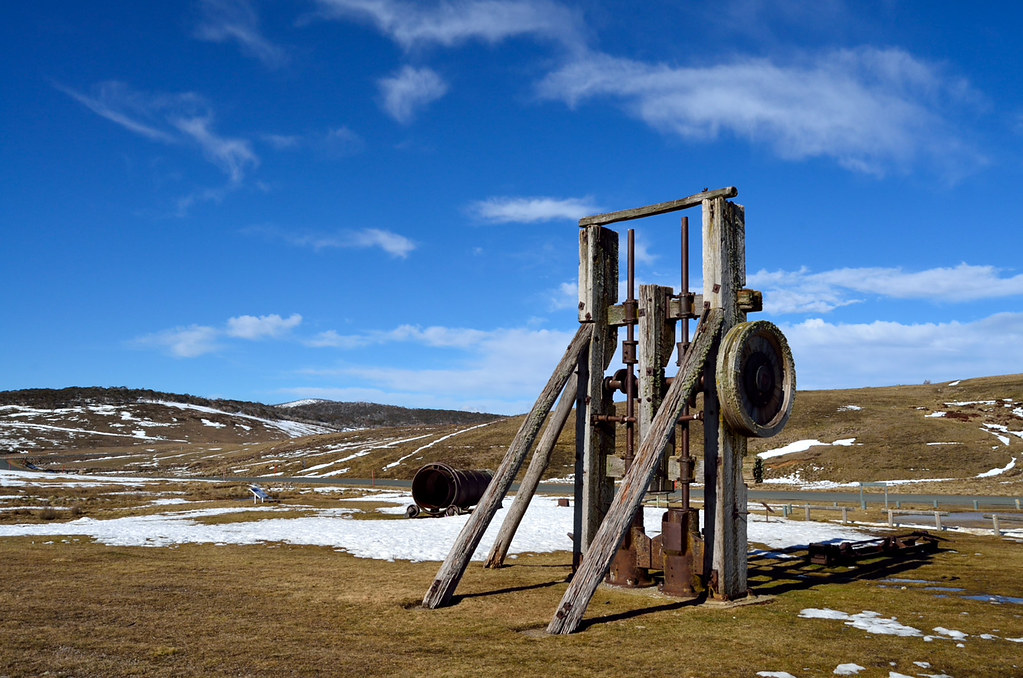
Remnants of Kiandra gold mine at New Chum Hill, #nsw #australia

Showing posts with label Freedom of speech. Show all posts

February 17, 2015

Bangladeshi Publisher Faces Death Threats Over Translation of Controversial Iranian Writer's Book

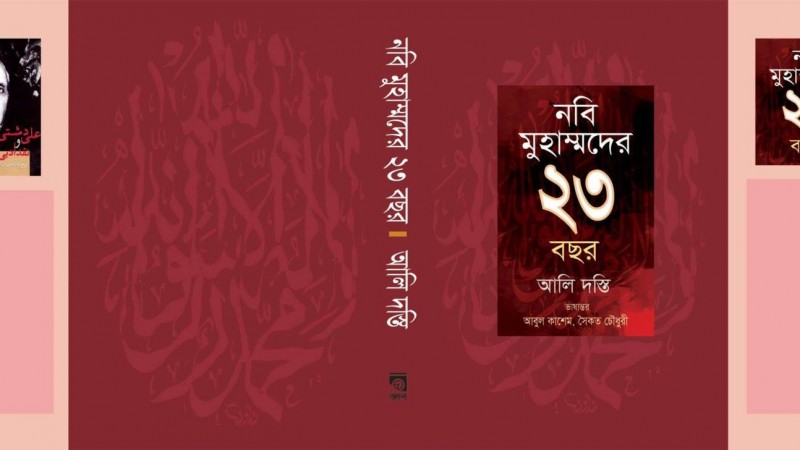
The cover of the Bengali Translation of  Iranian Muslim scholar and politician Ali Dashti's book. Image courtesy Haseeb Mahmud.
The cover of the Bengali translation of Iranian Muslim scholar and politician Ali Dashti's book. Image courtesy Haseeb Mahmud.
The publisher of a Bangla translation of a controversial book by 20th-century Iranian rationalist and politician Ali Dashti about the Prophet Muhammad's life has received death threats after displaying the work at Bangladesh's national book fair.

Hardline religious groups, mainly Hefazat-e-Islam, have called on authorities to prosecute publishing house Rodela Prokashoni over the translation of "23 Years: A Study of the Prophetic Career of Muhammad." Rodela Prokashoni's website appeared to be hacked on February 14, 2015, and their office in Banglabazar was attacked on Sunday, according to a report in the Bangla Tribune. No one was injured.

Following the uproar, the publishing house pulled the book from the shelves at the Ekushey Book Fair and from their website, and publisher Riaz Khan reportedly apologized, saying he wasn't aware that the book was considered offensive.
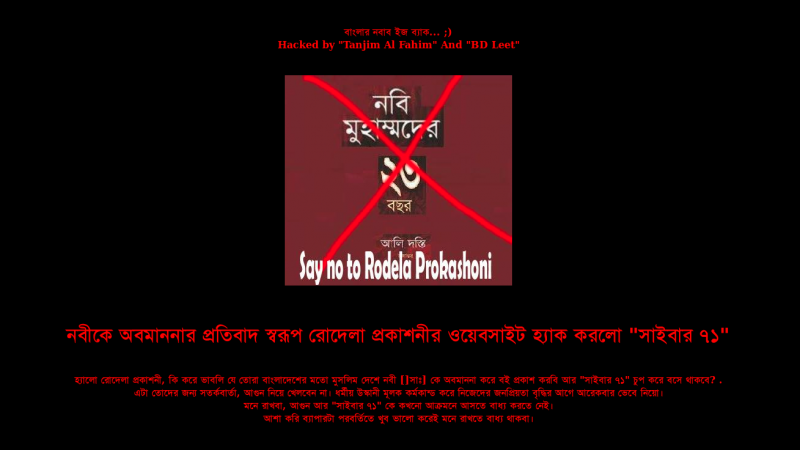
EUpofBg
Screenshot of the defaced Rodela Prokashoni website which says among other things: The website has been hacked in protest of disrespecting the prophet. [..] Say no to Rodela Prokashoni 
Despite that decision, authorities from the Bangla Academy, the country's national language authority, which organizes the book fair, shut down Rodela Prokashoni's stall on February 16, alleging that the publishing house was “selling books that hurt religious sentiments.” The fair committee defended the move, saying that “According to article 13.13 of Fair Regulations 2015, none is allowed to sell books at the fair that can hurt religious sentiments."

Haseeb Mahmud at Sachalayatan community blog summed up the outrage against the book:
এই বই প্রকাশের জের ধরে ধর্মীয় মৌলবাদি গোষ্ঠি বিভিন্ন তৎপরতা চালাচ্ছে। গতকাল গণমাধ্যমগুলো প্রেস বিজ্ঞপ্তি পাঠিয়ে হেফাজতে ইসলামের জুনাইদ বাবুনগরী ও সাংগঠনিক সম্পাদক আজিজুল হক "মানবতার মুক্তির দূত বিশ্বনবী হযরত মুহাম্মদ সাল্লাল্লাহু আলাইহি ওয়াসাল্লামের প্রতি চরম অবমাননাকর ও ঔদ্ধত্যপূর্ণ ‘নবি মুহাম্মদের ২৩ বছর’ শীর্ষক বইটি বাজেয়াপ্ত ও ‘রোদেলা’ প্রকাশনীকে নিষিদ্ধ" করার দাবি জানিয়েছে।" তারা আরোও বলেন, দেশের ক্ষুদ্র একটি ইসলামবিদ্বেষী নাস্তিক্যবাদী গোষ্ঠী কর্তৃক পৃষ্ঠপোষিত [..] এই বইটির পরতে পরতে মহান আল্লাহ তা’আলা, হযরত মুহাম্মদ সাল্লাল্লাহু আলাইহি ওয়াসাল্লাম ও তাঁর পবিত্র জীবন সম্পর্কে অসত্য, বিভ্রান্তিকর ও ধৃষ্টতাপূর্ণ মিথ্যাচার করা হয়েছে। বইটির লেখক কুখ্যাত ইসলামবিদ্বেষী নাস্তিক আলী দস্তি। [..]

এই বই প্রকাশের নেপথ্য ইসলামবিদ্বেষী নাস্তিক্যবাদী দুষ্টচক্রকে তদন্তের মাধ্যমে গ্রেফতার করে আইনের আওতায় এনে দৃষ্টান্তমূলক কঠোর শাস্তির দিতে হবে। অন্যথায় হেফাজতে ইসলাম বাংলাদেশ ইসলামবিদ্বেষী নাস্তিক্যবাদী গোষ্ঠীকে প্রতিহত করতে বাংলার তৌহিদি জনতাকে সঙ্গে নিয়ে রাজপথে কঠোর কর্মসূচী দিয়ে মাঠে নামতে বাধ্য হবে।
A number of religious fundamentalists are trying to create a controversy regarding the publication. Yesterday Hefazat-e-Islam, an Islamist fundamentalist group in Bangladesh, sent a press release to different media organisations demanding that the book "23 Years of the Prophet Muhammad," which is demeaning and disrespectful to the savior of humanity, the Prophet Muhammad (PBUH), should be confiscated and Rodela Prokashoni should be banned.

They also said that [the book is] sponsored by a small minority of atheists in this country [...] this book spreads false, untrue and confusing facts about the Prophet Muhammad (PBUH) and his life. The writer of this book is the notorious anti-Islamic atheist Ali Dashti.

"We demand [to the government] that the anti-Islamic atheists in this country, who are behind publishing this book, should be investigated and arrested and be punished severely. If not, Hefazat-e-Islam will take to the streets with common people to stop these anti-Islamic atheists and be obliged to announce hardline street protests."
Other organisations like Islamist Movement have also made similar statements.

"23 Years: A Study of the Prophetic Career of Muhammad," which was first published in the early 1970s, questions the miracles ascribed to the Prophet Muhammad. The author, the late Ali Dashti, was a former senator and ambassador to Lebanon for Iran. After the Islamic revolution in 1979 when Ruhollah Khomeini came to power, Dashti was jailed, and anyone who was discovered to have the book in his or her possession was taken to court for questioning.

We asked an Iranian blogger who attended high school in Iran during the 1990s about the book. The blogger, who wishes to remain anonymous, said:
I believe I read his book called 23 years when I was a teenager. Most of the Shiism custom he criticized in the book had disappeared by the time I read it. And I think no Shiite Muslim would defend the things he criticized in his book today. So he was not anti-Islam but against weird customs in Shiite Islam....I don't know how I got it. It is unlikely that you can buy it from bookstores.
A group of Bangladeshi publishers have demanded that Rodela Prokahson be evicted from their current office and that publisher Khan be arrested and face the death penalty. They have also vowed to take legal action against the him. Khan says he has been receiving death threats to his mobile phone.
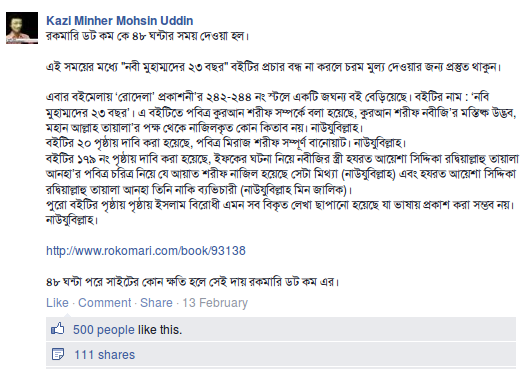
Screenshot of a threatening message posted against the publisher on Facebook. Image courtesy Haseeb Mahmud.
"Rokomari.com will have 48 hours to comply. If they do not stop publicising the book '23 Years of the Prophet Muhammad' they will pay the price. [...] If the site is hacked after 48 hours, Rokomari.com will be responsible."
Screenshot of a threatening message posted on Facebook against an online e-commerce site selling the book. The site took down the book from their listing. Screenshot courtesy Haseeb Mahmud.[/caption]Accusations of blasphemy and atheism have had serious and occasionally deadly consequences in Bangladesh in recent years. Two years ago, blogger Ahmed Rajib Haider was brutally killed outside his home in Dhaka because of his writings against war criminals and Islamic fundamentalists in Bangladesh. Haider, among many other bloggers, was labeled an atheist. Islamist groups like Hefazat have publicly identified writers and bloggers they deem to be atheists or blasphemous and called for them to face the death penalty.

Bangladesh is a non-religious parliamentary democracy, so there is no sharia or blasphemy law. If anybody claims to be an atheist, he or she has the same rights as other citizens. However, under Section 295A of Bangladesh's Penal Code (1860), any person who has a “deliberate” or “malicious” intention of “hurting religious sentiments” is liable to imprisonment.

Writer Swakrito Noman questioned the indignation surrounding the translation of "23 Years: A Study of the Prophetic Career of Muhammad" in a Facebook post:
প্রশ্ন হচ্ছে, আলি দস্তির এই বইটি কি আন্তর্জাতিকভাবে নিষিদ্ধ? যদি নিষিদ্ধ না হয় তাহলে বাংলাদেশে বইটি প্রকাশিত হলে অসুবিধা কী? বইটি বাংলা অনুবাদ হওয়ার আগে অনুভূতিপ্রবণরা কোথায় ছিলেন? এতদিন কেন অনুভূতিতে আঘাত লাগল না? নাকি আপনারা পার্সি বা ইংরেজি জানেন না বলে আপনাদের অনুভূতিতে আঘাত লাগেনি?
The question is, is this book banned internationally [or Bangladesh for that matter]? If not, then why is there a problem in publishing it? Where were you before it was translated in Bangla? Why were your religious sentiments not hurt then? Or were they not hurt because you do not know English or Farsi?
Noman continued:
জানি, এই দেশের মানুষ হয়ত এখন রোদেলা প্রকাশনীর প্রকাশক রিয়াজ খানের পক্ষে কথা বলবে না। অধিকাংশ মানুষ এখন হেফাজতের পক্ষে তালি বাজাবে। সরকারও হয়ত হেফাজতের পক্ষ অবলম্বন করবে। আমি বাংলা ভাষার ক্ষুদ্র এক লেখক, আমি হেফাজতে ইসলামির এই অযৌক্তিক কর্মকাণ্ডের প্রতিবাদ করছি। জানি এই প্রতিবাদের কারণে হয়ত আমিও আক্রান্ত হতে পারি। তবুও প্রতিবাদ করছি। কারণ, এভাবে ইসলাম প্রতিষ্ঠিত হয় না। জ্ঞানের পথকে এভাবে রুদ্ধ করা যায় না। এই বইয়ের বিরুদ্ধে যদি হেফাজত বা ইসলাম ধর্মের কেউ পাল্টা আরেকটি বই লিখত, সেটিই হতো প্রকৃত প্রতিবাদ। জ্ঞানের প্রতিবাদ জ্ঞান দিয়ে করতে হয়। যুক্তির প্রতিবাদ যুক্তি দিয়ে করতে হয়। প্রকাশনা প্রতিষ্ঠানে হামলা, প্রকাশকের ফাঁসি দাবিকে কোনোভাবেই সমর্থন করা যায় না।
I know many people in this country will not support publisher Riaz Khan. Many will join the Hefazat bandwagon. Even the government can support them. I am a petty writer in the Bangla language. I protest this illogical stand of Hefazat-e-Islam. I know I can also be attacked for taking this stance, but I insist. Because, you cannot establish (or spread) Islam like this. You cannot deter knowledge like this. If Hefazat would write another book countering this with all their logic, that would be the perfect protest for them. You need to protest logic with logic, knowledge with knowledge. Attacking a publishing house, attacking the publisher is equal to barbarism.
The post was also published in Global Voices Online.
February 04, 2015

Mumbai Newspaper Editor Fired, Arrested for Republishing Charlie Hebdo Cartoon

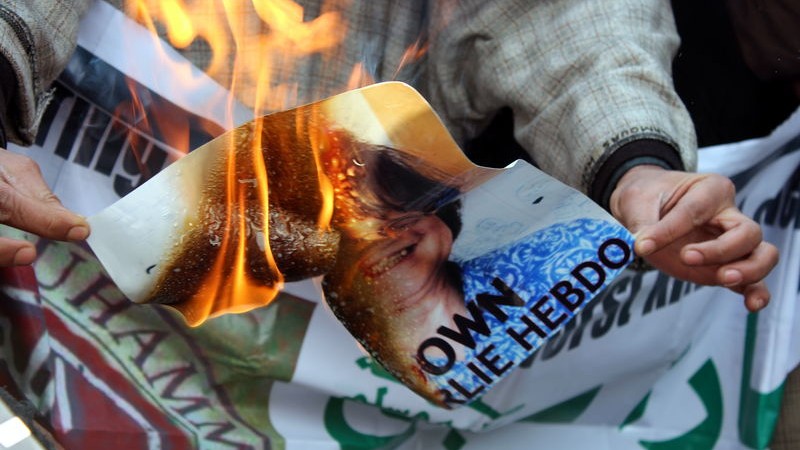
A protest rally against French satirical magazine Charlie-Hebdo was held in Kashmir's Old City. Protestors effigy and Charlie Hebdo posters were set on fire by angry protesters . Image by Adil Hussain. Copyright Demotix (23/1/2015)
A protest rally against French satirical magazine Charlie-Hebdo was held in Kashmir's Old City. Protestors effigy and Charlie Hebdo posters were set on fire by angry protesters. Image by Adil Hussain. Copyright Demotix (23/1/2015)
A newspaper in India was shut down and its editor arrested after republishing one of French satirical magazine Charlie Hebdo's cartoons featuring the Prophet Muhammad on its front page.

Shirin Dalvi, who was later released on bail, is accused of violating section 295A of the Indian Penal Code, which bans malicious and deliberate acts intended to outrage religious feelings. She faces as many as six lawsuits filed against her across the state, and has taken to hiding her face behind a burqa while in public.

Her troubles began on January 17, 2015, when she printed the February 9, 2006 cover of Charlie Hebdo titled "Mahomet débordé par les intégristes" ("Muhammad overwhelmed by fundamentalists"), with a bearded man in tears saying "C'est dur d'être aimé par des cons" ("It's hard being loved by jerks"), on the front page of the Mumbai edition of Urdu daily Avadhnama. The editorial accompanying the republished cartoon argued that since no image exists of the Prophet Muhammad, the Charlie Hebdo caricatures should not be taken as a representation of him:
There exists no image of him, so how can we infer that this picture is a caricature of him?
Ten days earlier, two gunmen had attacked the Charlie Hebdo's office in Paris, killing 12 people, including eight journalists and injuring 11 others. The dead included the magazine's editor and a policeman. The magazine outraged many Muslims across the world as it published a number of controversial Muhammad cartoons over the years.

Facing backlash, Dalvi apologised, writing a detailed editorial explaining her position on the next morning. But the outrage continued. She began receiving threats on her phone. Lawsuits have been filed against her in different police stations in Mumbai, Thane and Malegaon.

On January 19, Avadhnama’s Mumbai edition was shut down and all its 15 employees sacked. Taqdees Fatima, owner of the Avadhnama title, defended herself, saying she had no links with the Mumbai edition, which was run by a separate entity.
The editor, publisher and printers are totally different and… (are) responsible for the contents.
Avadhnama's other city editions did not publish the cartoon and were not affected. For Dalvi, more misery was waiting. Members of the Rashtriya Ulema Council (State Cleric Council) threatened to protest outside the police station if Dalvi was not arrested.

On January 28, she was arrested and got bail on the next day. But she has not gone back to her home in Mumbra since the protests began; her house remains locked and her children are staying with the relatives. Dalvi, along with the newspaper’s publisher Yunus Siddiqui, proprietor Taquadees Fatema and managing director Deepak Mhatre obtained anticipatory bail in another case filed against them on the same charge.

Dalvi told the Mumbai Mirror in an interview that she meant to reproduce Charlie Hebdo's latest cover purely as an illustration to go along with a report, but printed the 2006 cover by mistake. She admitted that she didn't know what the cartoon said since she doesn't speak French, and had only intended for the cartoon to illustrate a report about the controversial magazine's increased circulation following the attacks.

In a different interview with media watchdog website The Hoot, Dalvi, who has been working in Urdu media for the last 25 years, accused some papers of running false reports about her, such as one saying she had shot down a junior colleague's objection to the cartoon's publication by saying it would boost the newspaper's circulation. The website reported that sources in the Urdu media industry suggested business rivalries may have something to do with the case against Dalvi.

Online, some users criticised the lack of support for Dalvi following the Charlie Hebdo attacks. Satire Twitter account ChopdaSaab tweeted:
Blogger Suvie Kaul wrote:
Nikhil Mehra, a lawyer from New Delhi, tweeted:
The hashtag #IStandWithShireenDalvi has taken off:
Sadanand Bhat, a commenter on an article in Indian Express, questioned the state of freedom of expression in India:
This is Outrageous. Here in western Countries they published the picture of the cartoon. Where is the freedom of Expression in India? WHy should she apologise? Where are all the Seculare [sic] peaceniks? This silence is deafening even in the news reviews. Feel sorry for her and wonder how I can help her.
Raghvendra Upadhyay commented on an article in the India Times to say:
There is a thin line between "freedom of press" and "outraging religious feeling". Important thing is, what is the duty of a press. To put in news what people what to hear ? or what press want people to know ?

Choice is yours !!

Based on your choice, you will build yours and your societies future.
The post was also published in Global Voices Online.
November 21, 2014

University Teacher Unpopular with Islamist Hardliners is Killed in Bangladesh

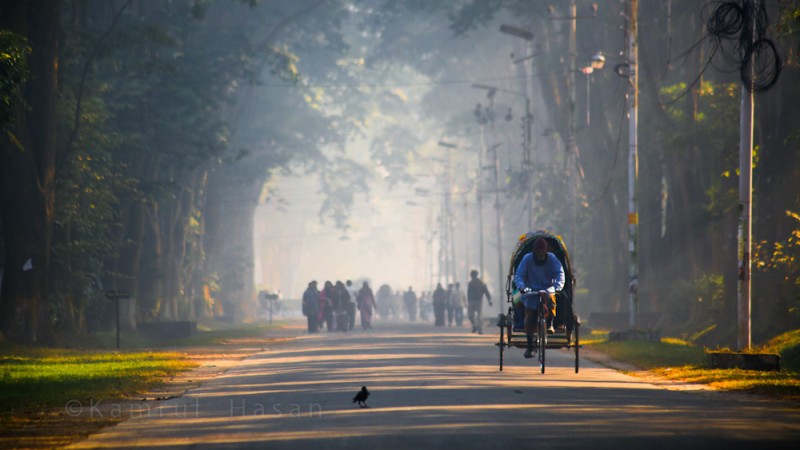
Picture of Rajshahi University Campus in a misty winter morning. Image from Flickr by  Kamrul Hasan. December 16, 2013 (CC BY-NC-SA 2.0)
Picture of Rajshahi University Campus in a misty winter morning. Image from Flickr by Kamrul Hasan. December 16, 2013 (CC BY-NC-SA 2.0)
Professor Shafiul Islam, a professor of sociology in Rajshahi University was attacked with a machete by unknown assailants outside his home in Rajshahi city on November 15. He died from his injuries in a nearby hospital some hours later. According to news reports, the professor led a push to ban students wearing full-face veils at his university in 2012, stoking the wrath of Islamist hardliners. The professor argued that full-face veils made it difficult to identify individual students and that they could even be used to cheat on university examinations.

Rajshahi is a major urban and industrial centre of North Bengal and is located on the river Padma near Bangladesh-India border. Rajshahi University is a stronghold of the religious political party Jamaat and its student wing Islami Chatra Shibir. Pro-Jamaat newspapers in 2010 reported that Shafiul Islam had banned the burqa as the then-chair of the university’s sociology department, a policy that offended religious sentiments among many in the majority-Muslim country. At that time, Shafiul had sent rejoinders to some of those newspapers claiming that he had only expelled one female student from his class because she was cheating using her burqa.

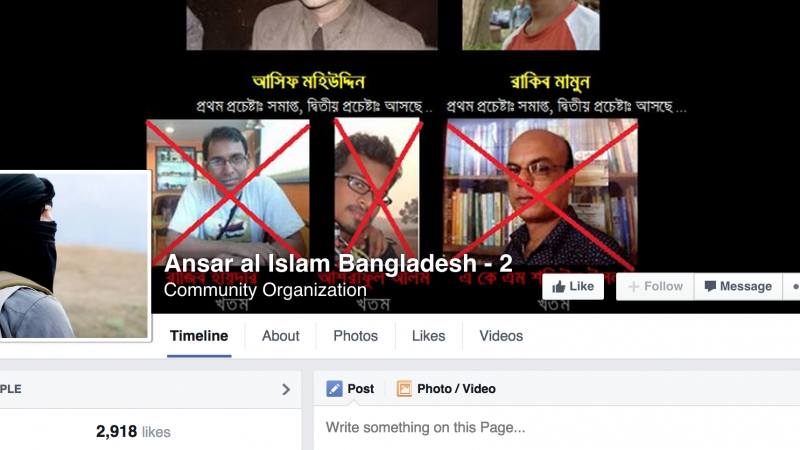
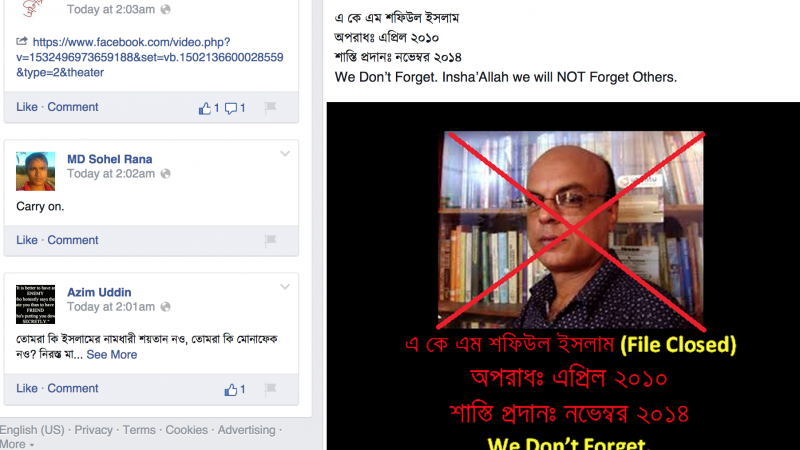
A previously unknown Islamist group claimed responsibility for Shafiul's killing, after opening a Facebook page late on Saturday:

Screenshot of the Facebook page
Their status reads:
Our Mujahideens have killed an ‘atheist’ of Rajshahi University who had banned wearing burqa in his department.
Threat
Threat
Public outrage over the assassination has since become palpable both online and off:
According to reports, the Facebook page generated more than 2,000 likes from people who appeared to support the killing. In a long status update on November 17, posts on the page hinted at who might be the next targets of the group. One status update gave an exhaustive list of potential targets including university and secondary school faculty, public representatives and local opinion leaders, heads of organisations, judges, lawyers, doctors, intellectuals, journalists, and even actors.

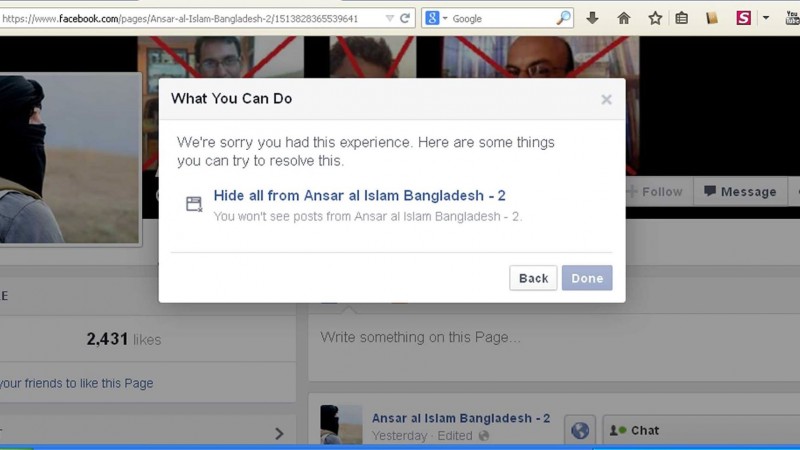
After the Facebook page link was published by various media outlets, netizens flagged the page using Facebook's abuse reporting system, arguing that it violates the platform's Community Standards. The first section of Facebook’s Community Standards reads:
Safety is Facebook's top priority. We remove content and may escalate to law enforcement when we perceive a genuine risk of physical harm, or a direct threat to public safety. You may not credibly threaten others, or organize acts of real-world violence.
The Community Standards also address harassment:
Facebook does not tolerate bullying or harassment. We allow users to speak freely on matters and people of public interest, but take action on all reports of abusive behavior directed at private individuals. Repeatedly targeting other users with unwanted friend requests or messages is a form of harassment.
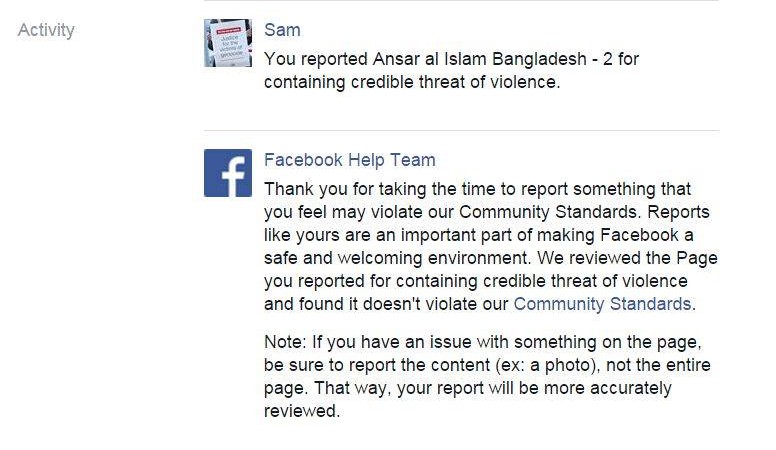
Nevertheless, in the days following the page's publication, Facebook responded to abuse reports with generic messages such as these:

Screenshot of Facebook's reply
Screenshot of Facebook's reply.
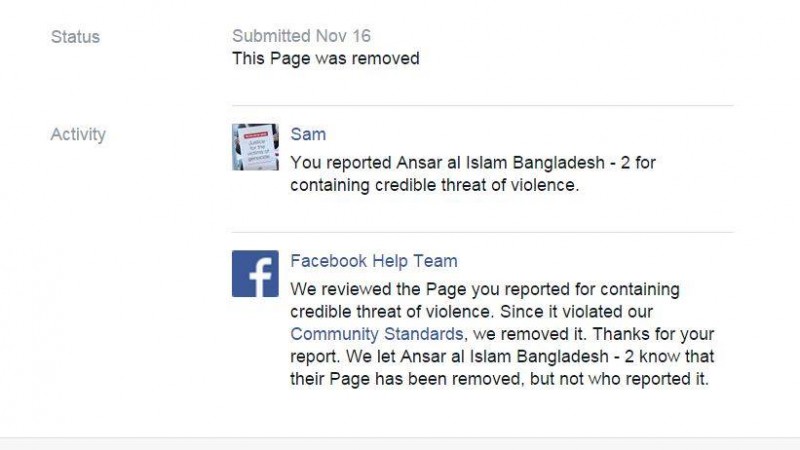
Netizens persisted in reporting the page as an abuse of Facebook's Community Standards. On Nov. 18, 2014 Facebook removed the page.

Screenshot of Facebook reply
Screenshot of Facebook reply.
Police say that they believe the killing may have been perpetrated by militants backed by the conservative religious Jamaat-e-Islami group.

Rajshahi University has seen killings of its teachers Professor Mohammad Yunus in 2004 and Professor Taher Ahmed in 2006. Pranab Kumar Panday writes in an op-ed in the Daily Star:
It is really unfortunate to see that public university teachers are being harassed and killed very often. [..] These incidents are creating a sense of insecurity among the teachers of public universities. They are also indicative of the deterioration of law and order in the country.
Meanwhile, the threats continue. The Facebook page that claimed responsibility for killing Shafiul Islam recently announced their next target. The post reads:
Next Target . . . teacher of Bogra Govt. Women`s College. Offense: Banning burka. Offense date: September 2014. Punishment: Death. Chance: Yes. All atheists who oppose Islam be careful.
The post was also published in Global Voices Online.