Dragonfly

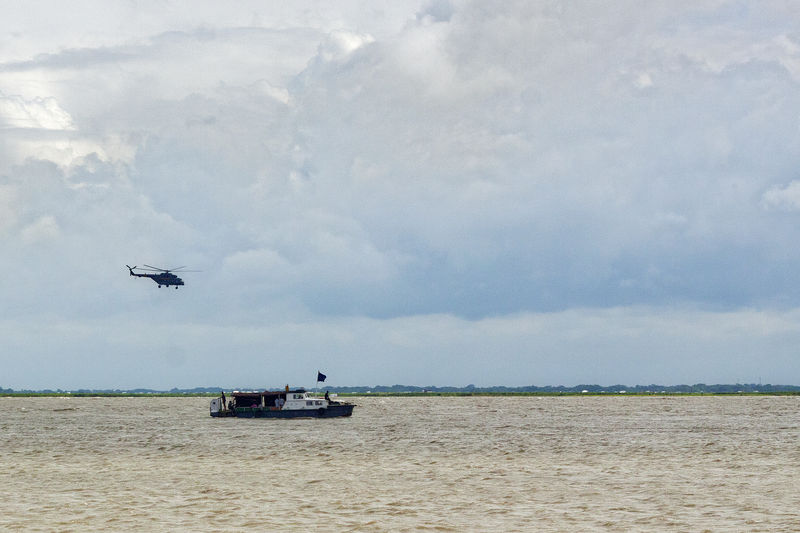
Image by Rezwan

Overcrowded passenger ferry capsized in the Padma River in Munshiganj, Bangladesh

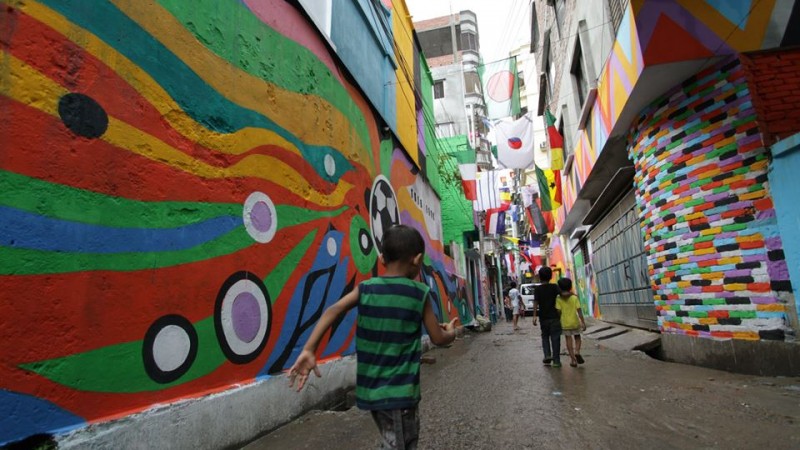
The World Cup Goal-E Project

This street in Bangladesh has a colorful world cup celebration

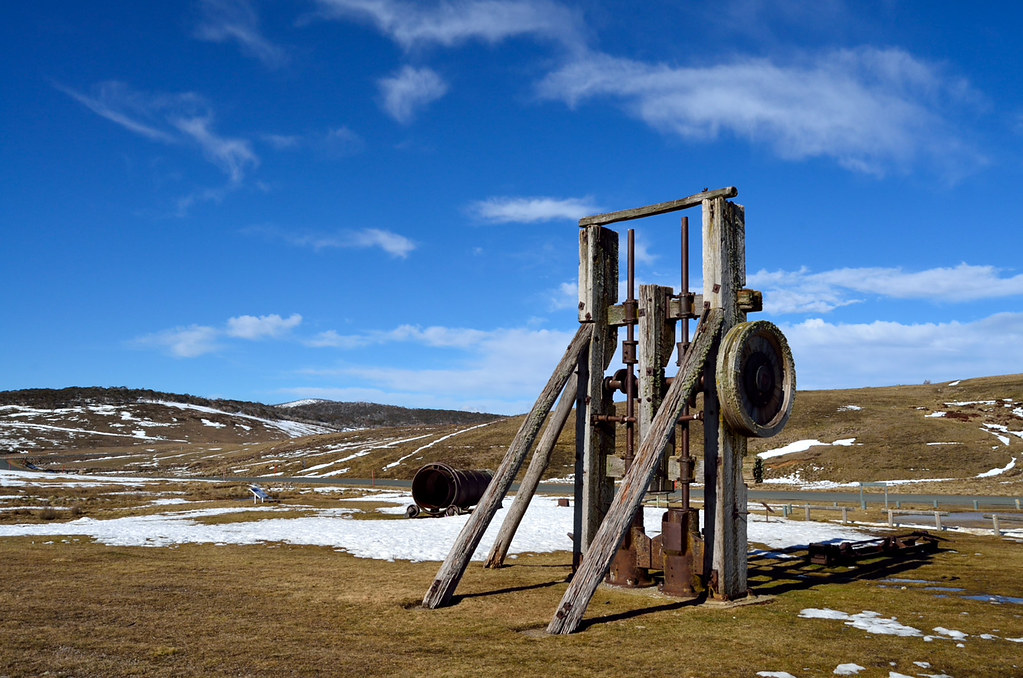
New Chum Hill Ruins

Remnants of Kiandra gold mine at New Chum Hill, #nsw #australia

January 05, 2005

OUTSOURCE FROM BANGLADESH

The Bangladesh IT sector is not moving forward upto its potential. No major software company emerged, except for a few medical transcription or call center ventures. However the hardware sector and the cybercafes have seen exponential growth this year. Recently a web portal OutsourceBangladesh.com has been launched with a view to promote and increase outsourcing from Bangladesh. This portal will aid specially the small ventures which does not have the ability to spend much in advertising to acquire international contacts. The websites has lots of information about the IT sector of Bangladesh. This type of portal was much needed for the development of the country's IT sector.
TEN TIPS FOR EARTHQUAKE SAFETY

1) Most everyone who simply "ducks and covers" WHEN BUILDINGS COLLAPSE are crushed to death. People who get under objects, like desks or cars, are crushed.

2) Cats, dogs and babies often naturally curl up in the fetal position. You should too in an earthquake. It is a natural safety/survival instinct. You can survive in a smaller void. Get next to an object, next to a sofa, next to a large bulky object that will compress slightly but leave a void next to it.

3) Wooden buildings are the safest type of construction to be in during an earthquake. Wood is flexible and moves with the force of the earthquake. If the wooden building does collapse, large survival voids are created. Also, the wooden building has less concentrated, crushing weight. Brick buildings will break into individual bricks. Bricks will cause many injuries but less squashed bodies than concrete slabs.

4) If you are in bed during the night and an earthquake occurs, simply roll off the bed. A safe void will exist around the bed. Hotels can achieve a much greater survival rate in earthquakes, simply by posting a sign on the back of the door of every room telling occupants to lie down on the floor, next to the bottom of the bed during an earthquake.

5) If an earthquake happens and you cannot easily escape by getting out the door or window, then lie down and curl up in the fetal position next to a sofa, or large chair.

6) Most everyone who gets under a doorway when buildings collapse is killed. How? If you stand under a doorway and the doorjamb falls forward or backward you will be crushed by the ceiling above. If the door jam falls sideways you will be cut in half by the doorway. In either case, you will be killed!

7) Never go to the stairs. The stairs have a different "moment of frequency" (they swing separately from the main part of the building). The stairs and remainder of the building continuously bump into each other until structural failure of the stairs takes place. The people who get on stairs before they fail are chopped up by the stair treads - horribly mutilated. Even if the building doesn't collapse, stay away from the stairs. The stairs are a likely part of the building to be damaged. Even if the stairs are not collapsed by the earthquake, they may collapse later when overloaded by fleeing people. They should always be checked for safety, even when the rest of the building is not damaged.

8) Get Near the Outer Walls Of Buildings Or Outside Of Them If Possible - It is much better to be near the outside of the building rather than the interior. The farther inside you are from the outside perimeter of the building the greater the probability that your escape route will be blocked.

9) People inside of their vehicles are crushed when the road above falls in an earthquake and crushes their vehicles; which is exactly what happened with the slabs between the decks of the Nimitz Freeway. The victims of the San Francisco earthquake all stayed inside of their vehicles. They were all killed. They could have easily survived by getting out and sitting or lying next to their vehicles. Everyone killed would have survived if they had been able to get out of their cars and sit or lie next to them. All the crushed cars had voids 3 feet high next to them, except for the cars that had columns fall directly across them.

10) I discovered, while crawling inside of collapsed newspaper offices and other offices with a lot of paper, that paper does not compact. Large voids are found surrounding stacks of paper.

When buildings collapse, the weight of the ceilings falling upon the objects or furniture inside crushes these objects, leaving a space or void next to them. This space is what I call the "triangle of life". The larger the object, the stronger, the less it will compact. The less the object compacts, the larger the void, the greater the probability that the person who is using this void for safety will not be injured. In a collapsed building these triangles are everywhere. So just look for them and duck in fetal position. Your chance of survivality will be greater.

- Doug Copp, Rescue Chief and Disaster Manager of the American Rescue Team International (ARTI)

January 03, 2005

STINGY OR NOT - GESTURES OF GOODWILL IN QUESTION

The Washington Times reports:

"A United Nations official yesterday backpedaled from his claim that the United States is being 'stingy' in its response to the Asian earthquake disaster after Secretary of State Colin L. Powell disputed the remark. "

Yeah what could he say when the stingy US pledged $350 million (ten folds from initial pledge). The British citizens have personally contributed in excess of $100 million (three times more than what there government pledged). Japan pledged $500 million. The global response in aid of the victims has been overwhelming and the overall generosity has never been seen before.

Some have criticized heavily about the Arab world's response in aid of the tsunami victims:

--Qatar, $25 million
--Saudi Arabia, $10 million
--Kuwait, $2.1 million
--Algeria, $2 million
--Libya, $2 million
--UAE, $2 million
--Turkey, $1.25 million
(figures as of 1/1/2005)

Mahmood of Bahrain criticizes his own government:

In a country where parliament has squandered $31,830,238 in salaries and other benefits over two years without showing anything for it; in a country where the daily income from oil revenue exceeds $6,000,000; in a country where the majority of the workforce are South Asians we give a paltry $2,000,000 to the victims of the Asian tsunami. Shame on you Bahrain.

Meanwhile Professor Juan Cole argues:

If we take their populations and actual per capita income into account, the offers made by these governments are generally more generous than that of the United States. A lot of Middle Eastern countries have small populations, so even if they gave a lot per capita, it would look small in absolute numbers. The Saudi per capita income of about $8,500 per person per year (Atlas method) compares poorly to the US average of $38,000 per year per person.

Just in the context Bangladesh's per capita income hovers around $300 per person per year. Bangladesh has already sent two medical & rescue teams and helicopters manned by more than 100 army personals to Sri Lanka & Maldives (consider the cost of operation).

But I feel that generosity should not be counted only in figures or in context of what others are doing. People should ask themselves what they can do. I hope the people of Arab world & smaller nations would come up with their helping hand as there is still time to help those affected in rehabilitation and set-up of precautions (shelters, warning systems). For a personal view, I would like to quote this fellow:

Why keep score? I'm doing my own giving via private charities, not via the UN nor anything associated with it. For obvious reasons.

This probably echoes the millions of individual voices who have made a difference by extending their helping hand. Charity begins at home.

January 02, 2005

QUOTE OF THE DAY

"Our generation wants to be remembered for something more than the war against terror or even the internet. Just as they pulled down the Berlin Wall and drew back the Iron Curtain and ended apartheid, these seemingly impossible hills can be climbed. It might take 20 years or 40 years but I really believe we can be the generation that turns this shift of indifference around."

- Bono, Rock star (U2) & global peace activist

January 01, 2005

THE GREATEST TROPICAL SYSTEM DISASTER

Many do not know about the two major disasters Bangladesh faced:

Bangladesh Cyclone, November 1970:

The greatest tropical system disaster this century occurred in Bangladesh (then East Pakistan) in November 1970. Winds coupled with a storm surge killed between 300,000- 500,000 people. Actually there was no proper census or death count at that time. These cyclones usually cause the most misery, loss of life, and suffering in low lying areas in Bangladesh (East Pakistan) and coastal India. The West Pakistan, the central government did not do much in aid and rescue operations so the death toll was high.

Bangladesh Cyclone 02B, April 1991:

Another cyclone struck the Chittagong region in Bangladesh in 1991 killing over 138,000 people and causing damage in excess of 1.5 billion dollars. The tropical cyclone devastated the coastal area southeast of Dacca with winds in excess of 130kts and a 20 foot storm surge.

In TIME Magazine coverage of that tragedy "Cyclone of Death" - James Walsh wrote:

In the twinkling of an eye it ended! None could see

When life was, and when life finished!

Twenty- foot walls of water. Demonic winds of crushing force. The horror left behind: 125,000 lives lost, and still counting. A world used to human-scale catastrophes -- plane crashes, say, that kill a few hundred at most -- cannot absorb the biblical dooms that visit Bangladesh. Straddling the conjoined mouths of the Ganges and Brahmaputra, two of the Indian subcontinent's mightiest rivers, the country is regularly drowned by flood crests surging downstream or scourged by whirlwinds from the sea. Of the 20th century's 10 deadliest storms, seven have devoured their victims at the head of the Bay of Bengal.

There were not much media attention, the people of the world just couldn't respond to the appeals of donations like they are doing now for the tsunami victims aided by technology (online banking, paypal etc.). James & Anita wrote that there must be a better way for the relief efforts. The world is now becoming closer because of technology; just look at the tsunami donation response.

Bangladesh despite of all these blows carried on with little help from others. Its economy is developing. Bangladesh was miraculously saved from the sunday's tsunami waves. Experts said that "the shallow water on the continental shelf of Bangladesh slowed down the onrushing sea surges before they could ravage the country's coastline."

From the updated figures in wikipedia, it is becoming evident the Asian Tsunami disaster will surpass Bangladesh's disasters in becoming the biggest disaster in recent times. And the effected nations can learn from the Bangladeshi people about the tremendous courage they showed to stand up from devastation and start all over again. The world is with them this time and life must go on.
TSUNAMI UPDATE

* Death by bureaucracy: Daniel Brett slates Indian red tapism, which delayed a rescue and aid effort by Medecins Sans Frontieres in Andaman & Nicobar Islands, which have strict regulation on travel of foreigners.

* Myanmar shrouds its tsunami deaths in secrecy: Nitin predicts that the military junta is not taking any chances to expose its human rights abuses to the foreign aid workers, which might intervene is the true scale of tragedy would come out.

* Bangladesh postpones regional SAARC summit: because of massive destruction in three member countries (India, Sri Lanka & Maldives) caused by sunday's tsunami.

* Astounding satellite views (before & after the tragedy): The scale of devastation is lot more worse than you imagined.

* What the world pledges as on December 31, 2004 and where the money is needed: via Jeff Ooi. Bangladesh has sent two medical and rescue teams and helicopters to Sri Lanka and the Maldives. The Bangladesh Cricket Board has donated $10,000 for the Sri Lanka victims in response to the Sri Lankan boards effort to collect donations.

* Tsunami survivors turn to internet to find for lost loved ones: via Rajan.

* The death toll is becoming staggering as the time progresses: Deaths - Confirmed 153,669, Estimated 4,70,000 + out of which 4,00,000 + in Indonesia alone (via Wikipedia). In Bangladesh, about 40 fishing boats are still missing. Hope that there won't be more deaths.
Happy New Year 2005