




Dragonfly

Image by Rezwan

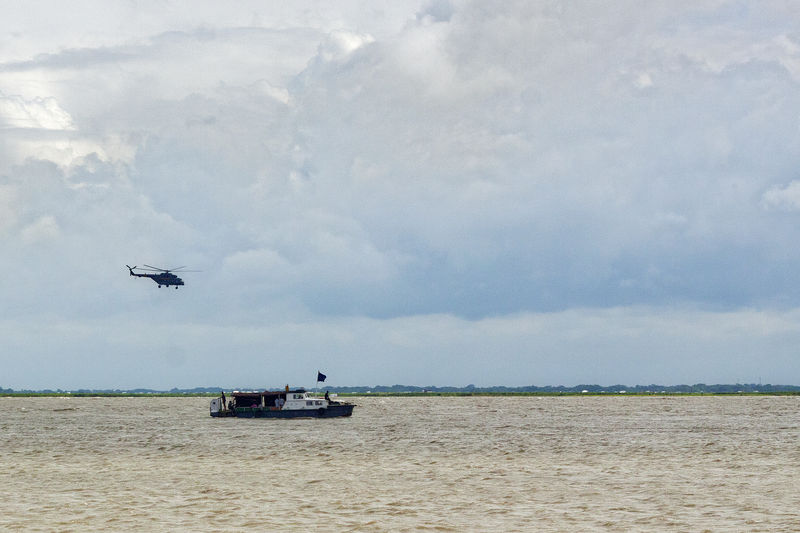
Overcrowded passenger ferry capsized in the Padma River in Munshiganj, Bangladesh

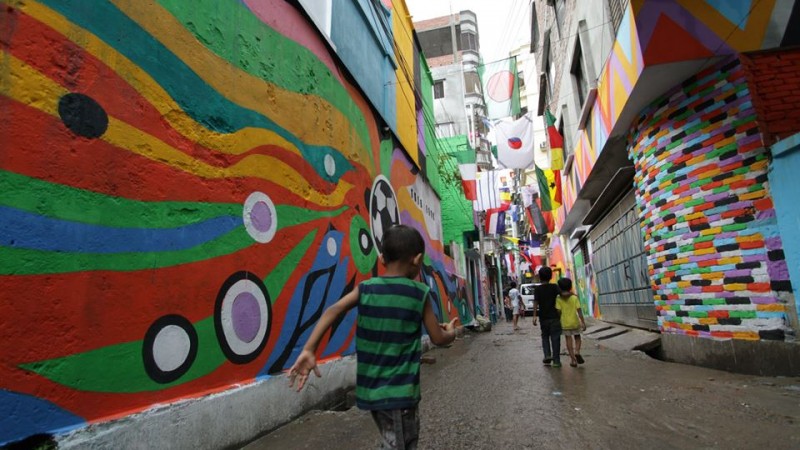
The World Cup Goal-E Project

This street in Bangladesh has a colorful world cup celebration

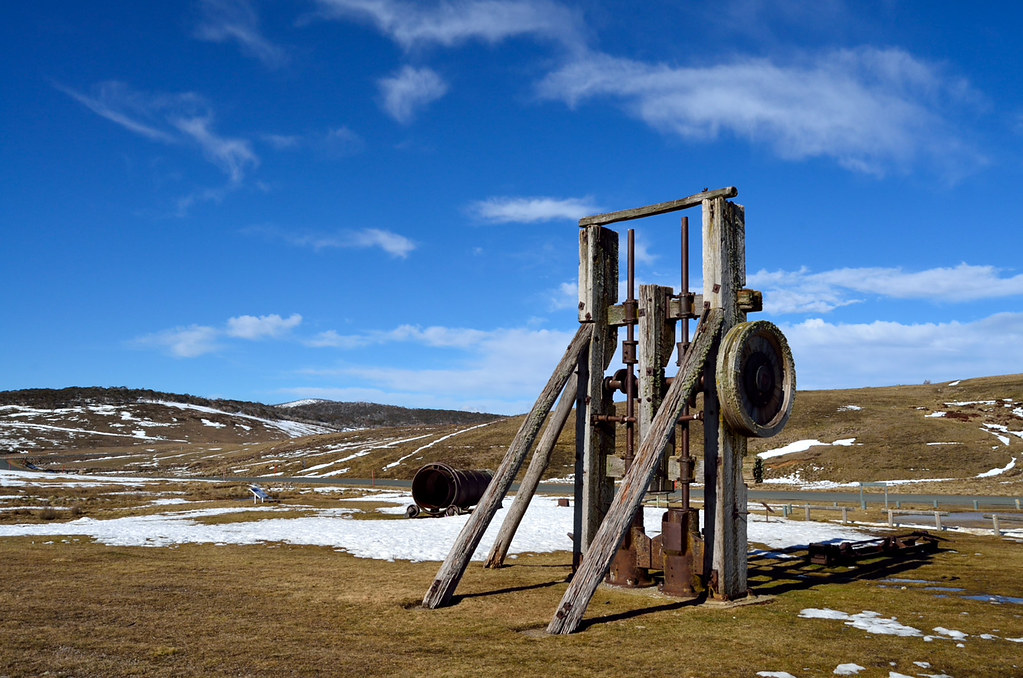
New Chum Hill Ruins

Remnants of Kiandra gold mine at New Chum Hill, #nsw #australia

October 15, 2009

Blog Action Day 2009: Climate Change


Today is the Blog Action Day and this annual event aims to unite the world's bloggers where they write about a single topic in a single day to raise awareness and trigger a global discussion on the subject.

I have posted a round-up of some of the Rising Voices projects discussing climate change in their blogs.

This is my third year of participating in the Blog Action Day. You can read my posts from 2007 & 2008.

Now the question is why Blog Action Day is important. We all take part in our share of activism in our everyday lives. But they hardly make any impact on the society. Sometimes we also miss out on important issues. Blog Action Day is the opportunity to unite our voices to a common cause so that we can shake the inertia and tilt towards a change.

Every day you will find many govt. sponsored events or international conferences discussing on critical issues. But do they have the capacity to engage every common people? The advantage of citizen media is that it is free and accessible to many who wants to raise their voice. And what bloggers write do not obliterate, they remain in webspace searchable by search engines. So Blog Action Day gives people the opportunity to speak out their opinions and it is an wonderful initiative to have more local perspectives on important issues.

One may wonder whether the Blog action day will make any impact on the policy makers. Slowly people are becoming more aware of citizen media. What bloggers can do is to discuss about the ground realities of the different policies taken by governments or authorities. They should share their personal experiences, observations etc which can provide important feedbacks to the policy makers.

The bloggers are part of the local communities. With the promulgation of initiatives like Blog Action Day, non-bloggers from their communities will be interested to read what the bloggers are talking about and take part in the discussion via comments or in real life actions. Writing about issues like environment in blogs is only a catalyst to some offline actions that need too be taken.

Now coming to the point - this year's theme - climate change. Bangladesh is in the forefront of the impacts of climate change. If sea level rises, parts of Bangladesh will submerge and millions of people will be refugees.

In my opinion we cannot avoid the consequences of climate change. What we can do is to reduce the damages through careful planning, save lives via strategic migration. Less resourceful nations like Bangladesh cannot do all this alone. The world needs to act, lend a hand and plan the right course of actions.

Bangladesh has already sought 5 billion US dollars from the developed countries in compensation for damaging effects due to climate change caused by global warming. But only money won't suffice. I would like to quote Shehzaad Shams of Bangladesh Corporate Blog in explaining strategic migration here:

We do want free money...as compensation..or fresh funds..whatever you call it. However, I am sick and tired of getting free alms which almost always go down the drain (or personal pockets and fortunes). Let the deal be fair.....we will train our manpower to serve your foreign labor markets, we will take care of all legal and social coverage issues...in return we demand preference in overseas recruitment selection and eventual settlement in foreign territories, provided the incumbent meets criteria set and agreed by host and source countries. The idea is to convert potential climate refugees from burden to skilled workforce and help them get (either local) job assignments in countries which are held culprit for the climate change fiasco. In other words, if a time arises that 5,000 people are displaced due to rising tidal waves in Satkhira district, they need to be labelled formally as 'climate refugees' first. These people are free to move to higher lands or even to capital to seek for security of life and food. They need to be trained and made export ready to countries which are primarily responsible for global warming.

We can also learn from the experience from the millions of environmental refugees from Bangladesh who lose all their belongings in the recurring natural disasters and have the courage to start all over again. This courage will be the key to survive in all the future natural calamities that are going to happen because of climate change.

Reblog this post [with Zemanta]

Featured in Asia Media Forum, Thailand

I am featured in an article published in Asia Media Forum, Thailand. This is republished here purely for archiving purpose:
Screenshot of the article
Battle for Climate Change Waged in Cyberpace Too
By Lynette Lee Corporal

BANGKOK (Asia Media Forum) — Like veritable Davids to the status quo's Goliaths, who contribute one way or another to environmental apathy, bloggers have been busy using a very powerful weapon to smote climate change in the eye.

On Oct. 15, bloggers created a loud buzz in cyberspace via the Blog Action Day (BAD) '09 (www.blogactionday.org). BAD '09 has a yearly event since 2007, which aims to get together bloggers worldwide and have them write about a common cause on the same day — and hopefully onwards.

This year’s blog action day is being held against the backdrop of just-finished negotiations in Thailand, which are expected to lead to a new climate change deal in December 2009.

"Our primary plan is to connect as many bloggers as possible with the great organisations that are working hard every day around the world to confront the climate crisis," said Robin Beck, organising director of leading social action blog network Change.org, and the group behind BAD '09.

"On Oct. 15, we will have thousands of blogs that usually write about gadgets, or travel, or cars, or sports, or food, or any of hundreds of other topics all posting about one thing: climate change," Beck told the Asia Media Forum.

Bloggers are also expected to be creative by uploading videos, music or anything that would convey the message in a catchy manner.

As of Oct. 14, there are more than 6,300 registered blogs from 131 countries on the BAD site. Language translation, including into Chinese, are being done by volunteers and organisers expect to have about a dozen of languages up on the site come D-day. 

According to Beck, as of Oct. 13, about a thousand blogs from 19 countries in the Asia-Pacific region alone have registered. Topping the list of countries with the most number of registered blogs are the Philippines with 167 blogs, Australia (165), Japan (128), India (123) and Indonesia (113).

Bloggers and environment advocates know only too well the need to have an inclusive global interaction and dialogue about the issue, and blogging is one of the easiest ways to do this.

"There are many government sponsored events or international conferences on critical issues. But do they have the capacity to engage every common people?" asked Rezwan, an avid Bangladeshi blogger (The 3rd World View - http://rezwanul.blogspot.com/) and Global Voices Online (http://globalvoicesonline.org/) regional editor for South Asia. 

Having taken part in BAD activities since 2007, Rezwan recognises the gap between policymakers and ordinary citizens, especially when the former starts talking in rhetoric while the latter thirst for action.

"What bloggers can do is to discuss about the ground realities of the policies taken, personal experiences, observations, etc, which can provide important feedbacks to the policy makers," said Rezwan, also a translator coordinator for the Global Voices Bangla Lingua (http://bn.globalvoicesonline.org/).

Greenpeace South-east Asia media campaigner Chuck Baclagon agrees, saying that blogs "provide traction for any issue" and help people engage in conversation whether online or offline.

According to Baclagon, Greenpeace South-east Asia (http://www.greenpeace.org/seasia/en/) has its own community of about 300 bloggers who support and campaign for Greenpeace activities. Their Greenpeace Philippines Facebook site has over 8,300 fans and growing.

He said that Greenpeace blogs are written in a very personal manner. "There is power in presenting the issue from a personal context because it gives a very complex issue a human face," said Baclagon, who manages the environment watchdog's blogsite, www.blog.greenpeace.org.ph.

Moreover, said Rezwan, bloggers are part of the local communities, and that means attracting even non-bloggers to join in the discussion "via comments or in real life actions".

"Writing about issues like the environment in blogs is only a catalyst to some offline actions that need to be taken," he added.

Gilbert Sape, a presenter for 'The Climate Project' (http://www.theclimateproject.org/) under environment activist and 2007 Nobel Peace Prize laureate Al Gore, has seen for himself the power of blogs.

"A lot of people don't read news anymore. However, they read blogs. Thus, blogs are indeed a new source of information for many. Even decision-makers, particularly the populist ones, read blogs to weigh their position on issues," said Sape, who facilitates the international collaboration work of the Pesticide Action Network (PAN) International's regional centres. He is also former coordinator of Food Sovereignty and Ecological Agricultural Programme of PAN Asia-Pacific.

For an online cause to be successful, Girard Philip Bonotan, who works for a Bangkok-based international NGO on Southeast Asian heritage and culture, said that bloggers need to be united by a common cause and stick by it.

"By joining with larger groups that are not bloggers, the message that these groups want to spread can be easily conveyed," said Bonotan, a BAD member who maintains a blog at www.kawadjan.blogspot.com.

He, however, sees that there is still a dearth of blog posts on the environment. "My blogger network and the blogs I read are limited around certain interests, and sadly, that does not include the environment," he admitted.

One reason, said Baclagon, could be that while everybody is talking about climate change, they "still know so little about the issue".

"Climate change is a very complex issue and we need to put it in a language that is easy to understand," he said, adding that even bloggers are guilty of writing very technical stuff about it.

But more and more bloggers are learning from their oversights. Said Bonotan, "Bloggers have made their mark in how public opinion is shared, perhaps largely because of the nature of blog entries, which more often use colloquial language, hence, rather inclusive and accessible."

Rezwan also lauded the advantage of the technology in that "what bloggers write do not (get) obliterated... they remain in the webspace searchable by search engines".

For Baclagon, a good blog should always speak about how an issue directly affects a person. "A good blog, too, does not merely present a problem, but also gives an empowering message and a call to action," he said.

Sustaining the interest of bloggers and readers about climate change, said Sape, can be achieved by "providing concrete and tangible actions that readers can do".

"It could be from the simplest thing (like recycling or turning off the air-conditioning when not needed) to bigger actions (like donating money to NGOs or taking part in protest actions)," added Sape.

Knowing how vulnerable Bangladesh is to the effects of climate change, Rezwan can only hope that world leaders and individuals start to take the future seriously.

 "The world needs to act, lend a hand and plan the right course of actions," he said.

(END/IPS/AP/AMF/LLC/JS/141009)

War Criminals In Great Britain Are Protected By Law

Delwar Hussain published an eye opener in Guradian Unlimited (Comment Is Free) depicting that British Bangladeshis like Chowdhury Mueen-Uddin are among those accused of war crimes in the 1971 war of liberation. In this report he wrote on Chowdhury Mueen-Uddin:

A Channel Four documentary from 1995 made allegations of involvement by British Bangladeshis in the genocide. Chowdhury Mueen-Uddin, director of Muslim Spiritual Care Provision in the NHS, who was until recently vice-chairman of the East London Mosque and London Muslim Centre and was involved in setting up the Muslim Council of Britain, is one of the most prominent people to be accused of having carried out war crimes.

Mueen-Uddin is alleged to have been part of a group that abducted and “disappeared” people. Witnesses at the time describe seeing him kidnapping a university professor and a journalist in Dhaka during the war. Mueen-Uddin told the documentary makers “all the accusations being made against me are … utterly false and malicious, and either politically motivated or instigated otherwise”.

Having left the newly created country of Bangladesh for London, Mueen-Uddin, along with other members of JI set up Islamic Forum Europe, an avowedly Islamist organisation connected to the East London Mosque.

As Lucy Lips at Harry's place predicted the Guardian has apparently received a libel threat from solicitors representing Mr Mueen-Uddin and they have deleted the phrases above from that article. They have added this disclaimer:
• On 13 October this article was changed following a legal complaint.

Lucy notes:

Fortunately, I live in New York. This blog is also hosted in the United States. I am therefore protected by the Libel Terrorism Protection Act.

The Guardian, by contrast, struggles to report factual information while handicapped by a law which is a serious and disturbing threat, to freedom of expression, the fight against extremism, and the struggle for justice by the people of Bangladesh.

Lucy also informs how these people use law to muffle voices raised against them:

Prominent members and supporters of Jamaat-e-Islami are now well embedded within the United Kingdom. They more or less run the Muslim Council of Britain and the East London Mosque/London Muslim Centre. The Imam of the East London Mosque distinguished himself recently by signing the notorious Istanbul Declaration, which the Government regards as a threat of terrorism against the Royal Navy and ‘everyone standing with the Zionist Entity’. The London Muslim Centre, similarly, regularly hosts meeting by extremists, including the Al Qaeda cleric, Awlaki.

Thanks to the efforts of judges like Mr Justice Eady, and England’s claimant-friendly law of Defamation, activists connected to Jamaat-e-Islami and the Muslim Brotherhood routinely instruct their solicitors to fire off letters before action, claiming that their poor client’s reputations have been sullied, whenever blogs or newspapers report on their words, deeds, or the politics of the organisations to which they belong. Harry’s Place receives these sorts of letters all the time.

The Spittoon also carries the news and check out their comments section for some interesting trolls. The Blog urges:

Those who are in favour of freedom of expression and justice in Britain must counter this despicable underhand move by Chowdhury Mueen-Uddin.

October 14, 2009

Bangladesh approves 10 new TV channels

Bangladesh’s information ministry has distributed no-objection letters allowing these TV stations to go on air:

1) Ekattur Television (backed by journalist Mozammel Huq Babu)
2) Channel-9 (backed by Syeda Mahbuba Akhter, the wife of retired Brig-Gen Syed Shafayetul Islam, who is younger brother of LGRD Minister and ruling Awami League General-Secretary Syed Ashraful Islam)
3) Independent Television (Salman F. Rahman, Vice-Chairman of Beximco Group and adviser of Awami League chief)
4) ATN News (Mahfuzur Rahman, owner of ATN Bangla TV)
5) Somoy Television (Ahmed Zubair)
6) My TV (Nasir Uddin)
7) Machhranga Television (owned by Anjan Chowdhury, Director of Square Grp)
8) Mohona TV (Kamal Ahmed Majumder, a ruling party MP)
9) GTV (owned by Gazi Golam Ashriar)and
10)Bijoy TV (Chittagong mayor A.B.M. Mohiuddin Chowdhury)

Bangladesh has 11 privately-backed channels already on air, plus two state-backed stations (BTV and BTV World). (Via Rapid TV News)

October 11, 2009

Who is gassing whom?


The writing on the wall tells that the very people who were gassed during the world war II by the Nazi monsters have become monsters themselves and trying to annihilate a race in the very same manner. Soul searching is needed for the people who are advocating hatred.

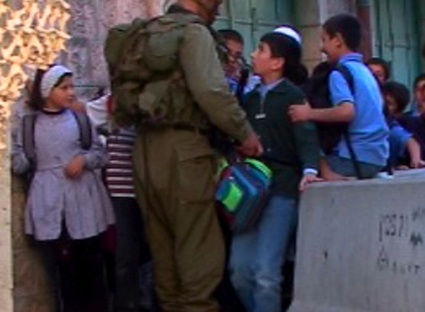
The documentary Welcome to Hebron was filmed for more than three years on location in Hebron, West Bank. Directed by Terje Carlsson this documentary shows how the occupation affects everyday life in Palestine and tries to shed a light on the situation there. It recently won a prize at the Cinefest Daazo Competition in Hungary.


At the center of the story, there's 17-year old Leila Sarsour, a student at the Al-Qurtuba-school, a Palestinian girl school surrounded by Israeli military installations and Israeli settlements (which are considered illegal under international law.) This peculiar location means that the school girls and their teachers are the ideal target for stone, garbage and egg-throwing. As a former commander of the Israel army, who has served 14 months in Hebron explains "When you see a Palestinian, you throw a rock." He adds that it's part of the education as children under twelve cannot be prosecuted.

The trailer of the movie:


Via We Make Money Not Art

Reblog this post [with Zemanta]

October 09, 2009

International Cost of Living Trends 2009

This salary purchasing power parity rank comprises cost of living indexes for each of 276 global locations. The indexes are calculated using the prices for specific quantities of the same goods and services in each location, based on expatriate spending patterns across 13 broad categories (Basket Groups). The latest salary purchasing power parity ranking, together with the overall cost of living index, sourced from www.xpatulator.com as at January 2009 is as follows: Rank Location (Overall Cost of Living Index New York=100)

1. Japan, Tokyo (126. 03)
4. Switzerland, Geneva (119. 59)
6. United Kingdom, London (118. 23)
10. Russia, Moscow (113. 41)
11. Nigeria, Lagos (112. 69)
14. France, Paris (112. 38)
16. Italy, Milan (111. 19)
27. Italy, Rome (107. 29)
29. Australia, Sydney (106. 52)
30. USA, San Francisco Calif (104. 53)
34. United Arab Emirates, Dubai (103. 36)
41. Korea Republic of, Seoul (101. 94)
47. Spain, Madrid (100. 26)
50. USA, New York NY (100)
56. Germany, Berlin (98. 18)
59. Canada, Toronto (97. 39)
66. Singapore, Singapore (94. 6)
86. Taiwan, Taipei (90. 07)
97. Vietnam, Hanoi (88. 03)
100. United Arab Emirates, Abu Dhabi (87. 16)
116. United Kingdom, Birmingham (84. 76)
126. Philippines, Manila (82. 07)
130. Indonesia, Jakarta (81. 76)
137. New Zealand, Auckland (80. 71
144. Thailand, Bangkok (79. 86)
147. China, Beijing (79. 73)
154. Kenya, Nairobi (78. 4)
171. India, Mumbai (76. 04)
183. Saudi Arabia, Riyadh (75. 08)
199. Afghanistan, Kabul (72. 13)
202. Malaysia, Kuala Lumpur (71. 82)
206. India, New Delhi (71. 4)
227. Syria, Damascus (67. 99)
234. Nepal, Kathmandu (65. 67)
239. South Africa, Johannesburg (64. 51)
241. Egypt, Cairo (64. 18)
248. Pakistan, Lahore (59. 48)
252. Sri Lanka, Colombo (58. 51)
258. Bangladesh, Dhaka (57. 03)
259. Bhutan, Thimphu (56. 78)
266. Libya, Tripoli (52. 74)
272. Cambodia, Phnom Penh (45. 65)
273. Yemen, Sanaa (45. 6)
276. Zimbabwe, Harare (17. 12)

The total list is here.

The above list consider the expatriate employee spending power and the standard of living maintained irrespective of global location. Bangladesh fares well as one of the cheapest locations in the world to maintain your living standard.

October 08, 2009

Now The Chinese Comes Up With Artificial Virginity Hymen kit

Why would people care about women's hymen? "Bleeding on the wedding night is still the proof of the bride's honor in Egypt and Middle Eastern countries" - explains Egyptian journalist Marwa Rakha in Global Voices. An ad for the product runs like this:
Restore your virginity in five minutes with the new technologically advanced product. Kiss your deep dark secret goodbye for only 15$ … no surgery … no needles … no medication … no side effects … only 15$.

Souad Abdel Rasoul from Radio Netherlands spotted the core of the problems of Arab Muslims:
China is a country that has really understood us and revealed our truth, our diseases, and our obsession with image but not content. We are a contradictory nation that suffers from severe schizophrenia.

By selling us prayer beads, Ramadan lanterns, Hajj clothes, veiled Barbie dolls, Islamic swimsuits, and no hymens, China has been caressing the “Islamic” concept inside all of us by providing us with the image of what we want others to see in us, even if it is just a lie.

A commenter on the Global Voices post says:
I personally feel really disturbed with this all subject; virginity can or cannot be considered a moral value, but reducing it to a simple mechanical part that can be “repaired”, “checked” or “verified” has something deeply wrong related to it.