Dragonfly

Image by Rezwan

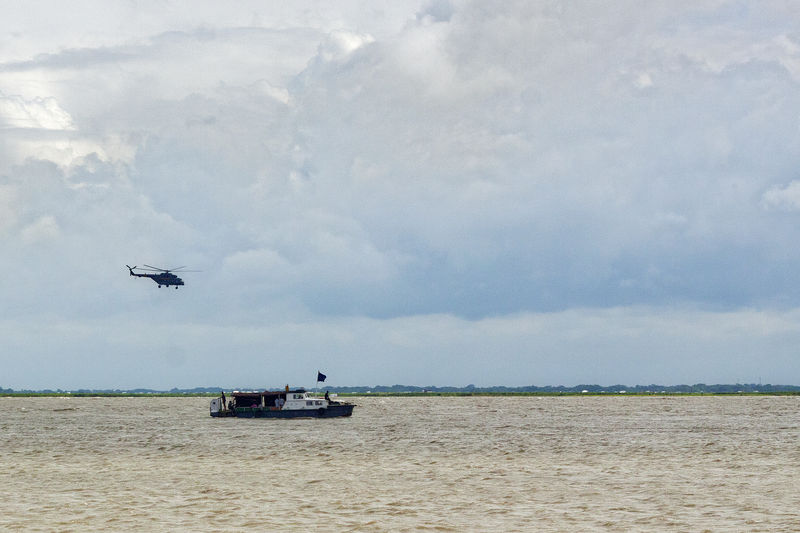
Overcrowded passenger ferry capsized in the Padma River in Munshiganj, Bangladesh

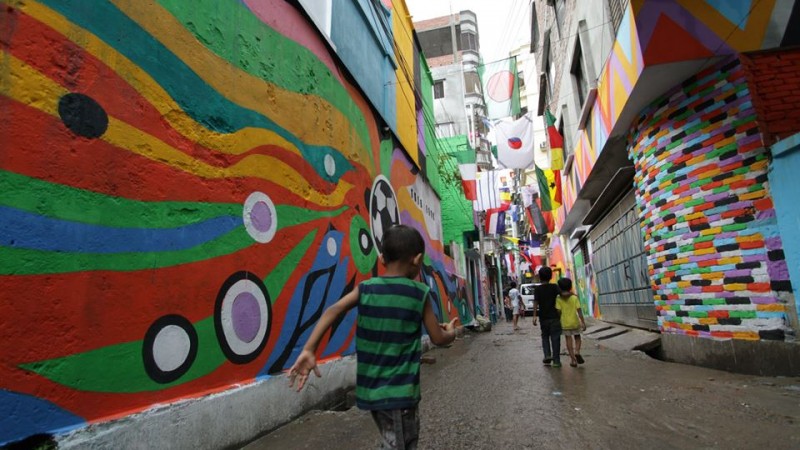
The World Cup Goal-E Project

This street in Bangladesh has a colorful world cup celebration

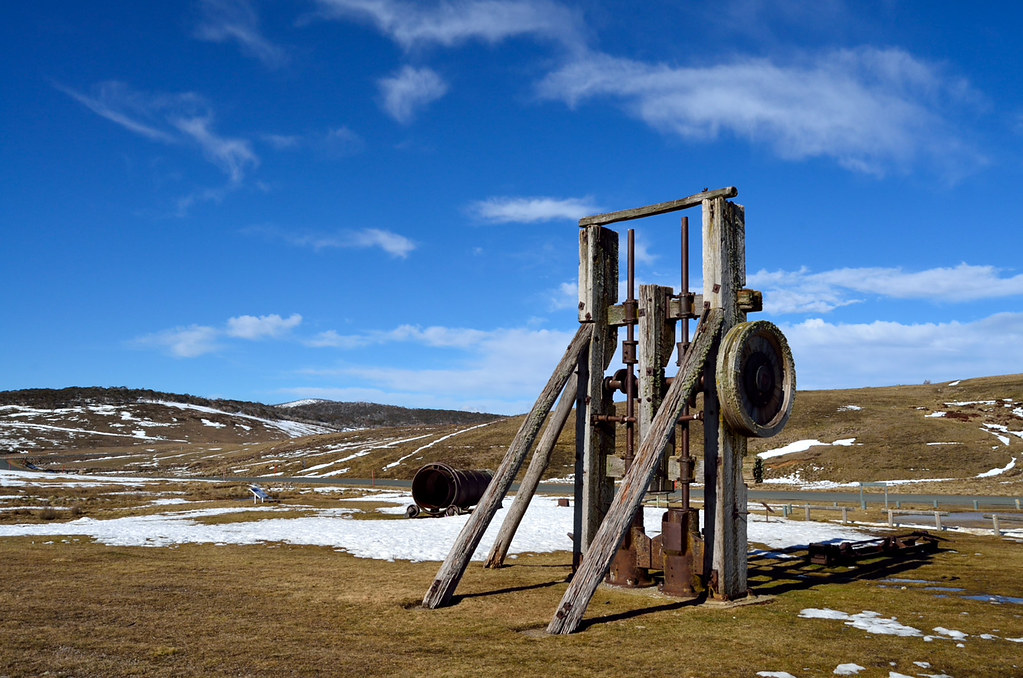
New Chum Hill Ruins

Remnants of Kiandra gold mine at New Chum Hill, #nsw #australia

October 20, 2009

My Interview Published In Asia Media Forum

Lynette Lee Corporal at Asia Media Forum has published an article on Blog Action Day and quoted me from an interview which I submitted via email earlier.

Here is the article:

Battle for Climate Change Waged in Cyberpace Too

October 19, 2009

The State Of The Blogosphere 2009

"In a year when revolutions and elections were organized by blogs, bloggers are blogging more than ever, and the State of the Blogosphere is strong."

Technorati State Of The Blogosphere for 2009 is out. Since 2004, Technorati's annual study has followed the growth and trends in the blogosphere. 2,900 bloggers were surveyed directly by market research firm Penn Schoen and Berland. Here is a summary of the report.


Day 1: Who are the Bloggers?

  • Bloggers are a highly educated and affluent group. Nearly half are graduates, majority earns $75000 p.a.
  • Two-thirds are male
  • 60% are aged 18-44
  • More than half are married
  • Half are employed full time
  • Half of bloggers who responded are working on at least their second blog
  • Media Habits of Bloggers 


Category of Bloggers:

Hobbyists: 72% - They blog for fun. They don’t make any money from their blogging. Half of them blog to express their “personal musings”.

Part-Timers: 15% - They “blog to supplement their income, but don’t consider it a full time job.” They blog to share their expertise, while some blog to attract new clients for their business. They measure the success of their blog by the unique pageviews they attract.

Self-Employeds: 9% - They "blog full time for their own company or organization." 88% self employeds use Twitter.

Pros: 4% - They “blog full-time for a company or organization".

Twitter and other social media represent one of the most important trends affecting the Blogosphere this year. With more areas of involvement, and more ways to tell the story, the blogosphere is strong - and only getting stronger.

Coming Up:

Day 2 — The What and Why of Blogging

Day 3 — The How of Blogging

Day 4 — Monetization And Revenue Generation: Brands in the Blogosphere

Day 5 — 2009 Trends: Political Impact of Blogging, Twitter Usage

Image Credit: Technorati

October 18, 2009

3D Animation Film From Bangladesh


A 3D Animation film made by Nishu and Mazhar of Batch 02 (Mechanical Engineering) from Bangladesh University of Engineering and Technology (BUET).

October 16, 2009

I swear my chair moved

Earthquake in Indonesia have been so frequent these days that people don't bother. I was sitting in chair and I felt it was moving for a bit. I was deeply concentrated in work and I thought probably my head was spinning. Then the shaking was no more. I asked my family members who did not feel anything probably it was for a brief period - 5 seconds or so. No apparent damages in Jakarta.

And a while after a twitter message came up:

W7VOA: Another quake has just rattled Indonesia -- M6.4 prelim -- probably not big enough to trigger tsunami.
I searched the internet and saw in Detik news that the earthquake happened. USGS Earthquake Hazards Program confirms:

Magnitude
6.5
Date-Time
  • Friday, October 16, 2009 at 09:52:52 UTC
  • Friday, October 16, 2009 at 04:52:52 PM at epicenter
Location
6.692°S, 105.153°E
Depth
55.6 km (34.5 miles)
Region
SUNDA STRAIT, INDONESIA
Distances
135 km (85 miles) S of T.-Telukbetung, Sumatra, Indonesia
185 km (115 miles) WSW of JAKARTA, Java, Indonesia
185 km (115 miles) W of Sukabumi, Java, Indonesia
270 km (165 miles) W of Bandung, Java, Indonesia
Location Uncertainty
horizontal +/- 12.3 km (7.6 miles); depth +/- 17.5 km (10.9 miles)
Parameters
NST= 33, Nph= 33, Dmin=350.5 km, Rmss=1.41 sec, Gp= 76°,
M-type=teleseismic moment magnitude (Mw), Version=7
Source
  • USGS NEIC (WDCS-D)
Event ID
us2009mva4


More Twitter messages:

RT @BrettMcGuire: 5 seconds in Pondok Indah. Hanging plants are still swinging #Jakarta #earthquake
I am amazed that because of Twitter I could confirm the news within 10 minutes.

Reblog this post [with Zemanta]

Better Than That One!

Via Jakarta Daily Photo:

The owner of the biggest McDonalds franchise in Indonesia has converted all his McDonald’s counters into the new restaurant: Tony Jack’s. Apparently he’s pissed by McDonald’s decision to sell its majority franchise ownership of McDonalds Indonesia to the Rekso group.

Detik Finance reports that 13 McDonalds branches were converted to Tony Jack’s on the 1st of October. The new entity vows to offer different food items from the previous venture although still dominated by burgers and fried chicken.

Since the first day of opening, the packaging of food and beverages were prepared plain, without logo and name of the store.

Their tagline is "Better than that One", hope they can live up to the expectation.

Reblog this post [with Zemanta]

October 15, 2009

Blog Action Day 2009: Climate Change


Today is the Blog Action Day and this annual event aims to unite the world's bloggers where they write about a single topic in a single day to raise awareness and trigger a global discussion on the subject.

I have posted a round-up of some of the Rising Voices projects discussing climate change in their blogs.

This is my third year of participating in the Blog Action Day. You can read my posts from 2007 & 2008.

Now the question is why Blog Action Day is important. We all take part in our share of activism in our everyday lives. But they hardly make any impact on the society. Sometimes we also miss out on important issues. Blog Action Day is the opportunity to unite our voices to a common cause so that we can shake the inertia and tilt towards a change.

Every day you will find many govt. sponsored events or international conferences discussing on critical issues. But do they have the capacity to engage every common people? The advantage of citizen media is that it is free and accessible to many who wants to raise their voice. And what bloggers write do not obliterate, they remain in webspace searchable by search engines. So Blog Action Day gives people the opportunity to speak out their opinions and it is an wonderful initiative to have more local perspectives on important issues.

One may wonder whether the Blog action day will make any impact on the policy makers. Slowly people are becoming more aware of citizen media. What bloggers can do is to discuss about the ground realities of the different policies taken by governments or authorities. They should share their personal experiences, observations etc which can provide important feedbacks to the policy makers.

The bloggers are part of the local communities. With the promulgation of initiatives like Blog Action Day, non-bloggers from their communities will be interested to read what the bloggers are talking about and take part in the discussion via comments or in real life actions. Writing about issues like environment in blogs is only a catalyst to some offline actions that need too be taken.

Now coming to the point - this year's theme - climate change. Bangladesh is in the forefront of the impacts of climate change. If sea level rises, parts of Bangladesh will submerge and millions of people will be refugees.

In my opinion we cannot avoid the consequences of climate change. What we can do is to reduce the damages through careful planning, save lives via strategic migration. Less resourceful nations like Bangladesh cannot do all this alone. The world needs to act, lend a hand and plan the right course of actions.

Bangladesh has already sought 5 billion US dollars from the developed countries in compensation for damaging effects due to climate change caused by global warming. But only money won't suffice. I would like to quote Shehzaad Shams of Bangladesh Corporate Blog in explaining strategic migration here:

We do want free money...as compensation..or fresh funds..whatever you call it. However, I am sick and tired of getting free alms which almost always go down the drain (or personal pockets and fortunes). Let the deal be fair.....we will train our manpower to serve your foreign labor markets, we will take care of all legal and social coverage issues...in return we demand preference in overseas recruitment selection and eventual settlement in foreign territories, provided the incumbent meets criteria set and agreed by host and source countries. The idea is to convert potential climate refugees from burden to skilled workforce and help them get (either local) job assignments in countries which are held culprit for the climate change fiasco. In other words, if a time arises that 5,000 people are displaced due to rising tidal waves in Satkhira district, they need to be labelled formally as 'climate refugees' first. These people are free to move to higher lands or even to capital to seek for security of life and food. They need to be trained and made export ready to countries which are primarily responsible for global warming.

We can also learn from the experience from the millions of environmental refugees from Bangladesh who lose all their belongings in the recurring natural disasters and have the courage to start all over again. This courage will be the key to survive in all the future natural calamities that are going to happen because of climate change.

Reblog this post [with Zemanta]

Featured in Asia Media Forum, Thailand

I am featured in an article published in Asia Media Forum, Thailand. This is republished here purely for archiving purpose:
Screenshot of the article
Battle for Climate Change Waged in Cyberpace Too
By Lynette Lee Corporal

BANGKOK (Asia Media Forum) — Like veritable Davids to the status quo's Goliaths, who contribute one way or another to environmental apathy, bloggers have been busy using a very powerful weapon to smote climate change in the eye.

On Oct. 15, bloggers created a loud buzz in cyberspace via the Blog Action Day (BAD) '09 (www.blogactionday.org). BAD '09 has a yearly event since 2007, which aims to get together bloggers worldwide and have them write about a common cause on the same day — and hopefully onwards.

This year’s blog action day is being held against the backdrop of just-finished negotiations in Thailand, which are expected to lead to a new climate change deal in December 2009.

"Our primary plan is to connect as many bloggers as possible with the great organisations that are working hard every day around the world to confront the climate crisis," said Robin Beck, organising director of leading social action blog network Change.org, and the group behind BAD '09.

"On Oct. 15, we will have thousands of blogs that usually write about gadgets, or travel, or cars, or sports, or food, or any of hundreds of other topics all posting about one thing: climate change," Beck told the Asia Media Forum.

Bloggers are also expected to be creative by uploading videos, music or anything that would convey the message in a catchy manner.

As of Oct. 14, there are more than 6,300 registered blogs from 131 countries on the BAD site. Language translation, including into Chinese, are being done by volunteers and organisers expect to have about a dozen of languages up on the site come D-day. 

According to Beck, as of Oct. 13, about a thousand blogs from 19 countries in the Asia-Pacific region alone have registered. Topping the list of countries with the most number of registered blogs are the Philippines with 167 blogs, Australia (165), Japan (128), India (123) and Indonesia (113).

Bloggers and environment advocates know only too well the need to have an inclusive global interaction and dialogue about the issue, and blogging is one of the easiest ways to do this.

"There are many government sponsored events or international conferences on critical issues. But do they have the capacity to engage every common people?" asked Rezwan, an avid Bangladeshi blogger (The 3rd World View - http://rezwanul.blogspot.com/) and Global Voices Online (http://globalvoicesonline.org/) regional editor for South Asia. 

Having taken part in BAD activities since 2007, Rezwan recognises the gap between policymakers and ordinary citizens, especially when the former starts talking in rhetoric while the latter thirst for action.

"What bloggers can do is to discuss about the ground realities of the policies taken, personal experiences, observations, etc, which can provide important feedbacks to the policy makers," said Rezwan, also a translator coordinator for the Global Voices Bangla Lingua (http://bn.globalvoicesonline.org/).

Greenpeace South-east Asia media campaigner Chuck Baclagon agrees, saying that blogs "provide traction for any issue" and help people engage in conversation whether online or offline.

According to Baclagon, Greenpeace South-east Asia (http://www.greenpeace.org/seasia/en/) has its own community of about 300 bloggers who support and campaign for Greenpeace activities. Their Greenpeace Philippines Facebook site has over 8,300 fans and growing.

He said that Greenpeace blogs are written in a very personal manner. "There is power in presenting the issue from a personal context because it gives a very complex issue a human face," said Baclagon, who manages the environment watchdog's blogsite, www.blog.greenpeace.org.ph.

Moreover, said Rezwan, bloggers are part of the local communities, and that means attracting even non-bloggers to join in the discussion "via comments or in real life actions".

"Writing about issues like the environment in blogs is only a catalyst to some offline actions that need to be taken," he added.

Gilbert Sape, a presenter for 'The Climate Project' (http://www.theclimateproject.org/) under environment activist and 2007 Nobel Peace Prize laureate Al Gore, has seen for himself the power of blogs.

"A lot of people don't read news anymore. However, they read blogs. Thus, blogs are indeed a new source of information for many. Even decision-makers, particularly the populist ones, read blogs to weigh their position on issues," said Sape, who facilitates the international collaboration work of the Pesticide Action Network (PAN) International's regional centres. He is also former coordinator of Food Sovereignty and Ecological Agricultural Programme of PAN Asia-Pacific.

For an online cause to be successful, Girard Philip Bonotan, who works for a Bangkok-based international NGO on Southeast Asian heritage and culture, said that bloggers need to be united by a common cause and stick by it.

"By joining with larger groups that are not bloggers, the message that these groups want to spread can be easily conveyed," said Bonotan, a BAD member who maintains a blog at www.kawadjan.blogspot.com.

He, however, sees that there is still a dearth of blog posts on the environment. "My blogger network and the blogs I read are limited around certain interests, and sadly, that does not include the environment," he admitted.

One reason, said Baclagon, could be that while everybody is talking about climate change, they "still know so little about the issue".

"Climate change is a very complex issue and we need to put it in a language that is easy to understand," he said, adding that even bloggers are guilty of writing very technical stuff about it.

But more and more bloggers are learning from their oversights. Said Bonotan, "Bloggers have made their mark in how public opinion is shared, perhaps largely because of the nature of blog entries, which more often use colloquial language, hence, rather inclusive and accessible."

Rezwan also lauded the advantage of the technology in that "what bloggers write do not (get) obliterated... they remain in the webspace searchable by search engines".

For Baclagon, a good blog should always speak about how an issue directly affects a person. "A good blog, too, does not merely present a problem, but also gives an empowering message and a call to action," he said.

Sustaining the interest of bloggers and readers about climate change, said Sape, can be achieved by "providing concrete and tangible actions that readers can do".

"It could be from the simplest thing (like recycling or turning off the air-conditioning when not needed) to bigger actions (like donating money to NGOs or taking part in protest actions)," added Sape.

Knowing how vulnerable Bangladesh is to the effects of climate change, Rezwan can only hope that world leaders and individuals start to take the future seriously.

 "The world needs to act, lend a hand and plan the right course of actions," he said.

(END/IPS/AP/AMF/LLC/JS/141009)