Dragonfly

Image by Rezwan

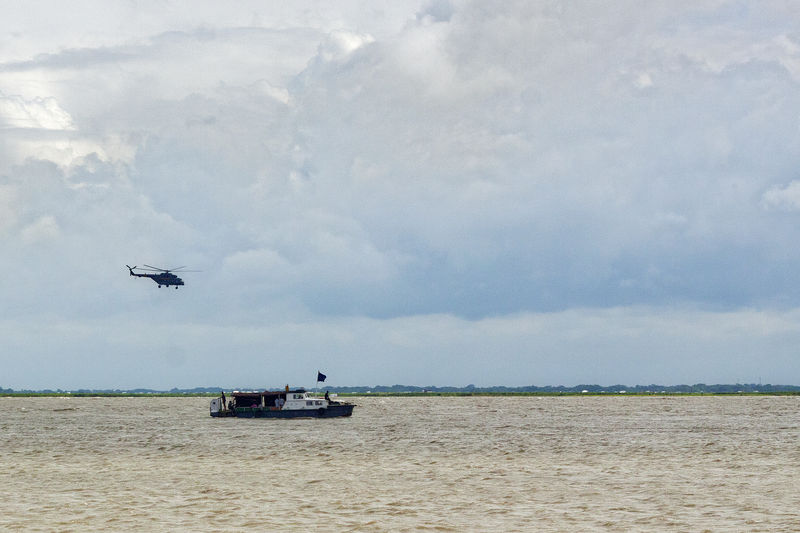
Overcrowded passenger ferry capsized in the Padma River in Munshiganj, Bangladesh

The World Cup Goal-E Project

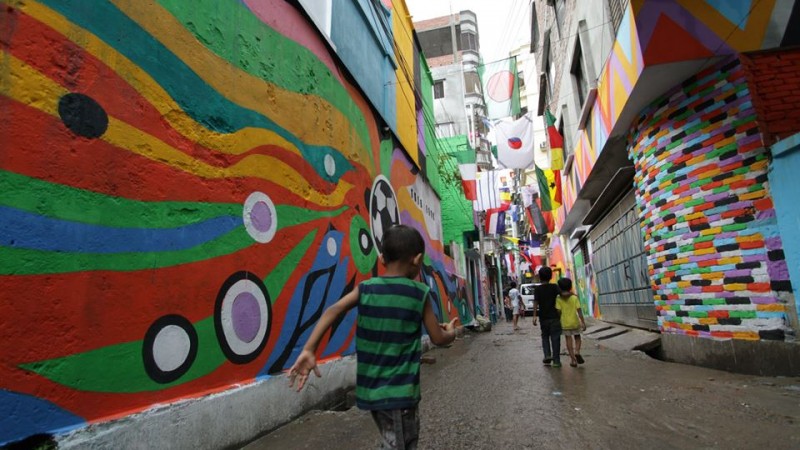
This street in Bangladesh has a colorful world cup celebration

New Chum Hill Ruins

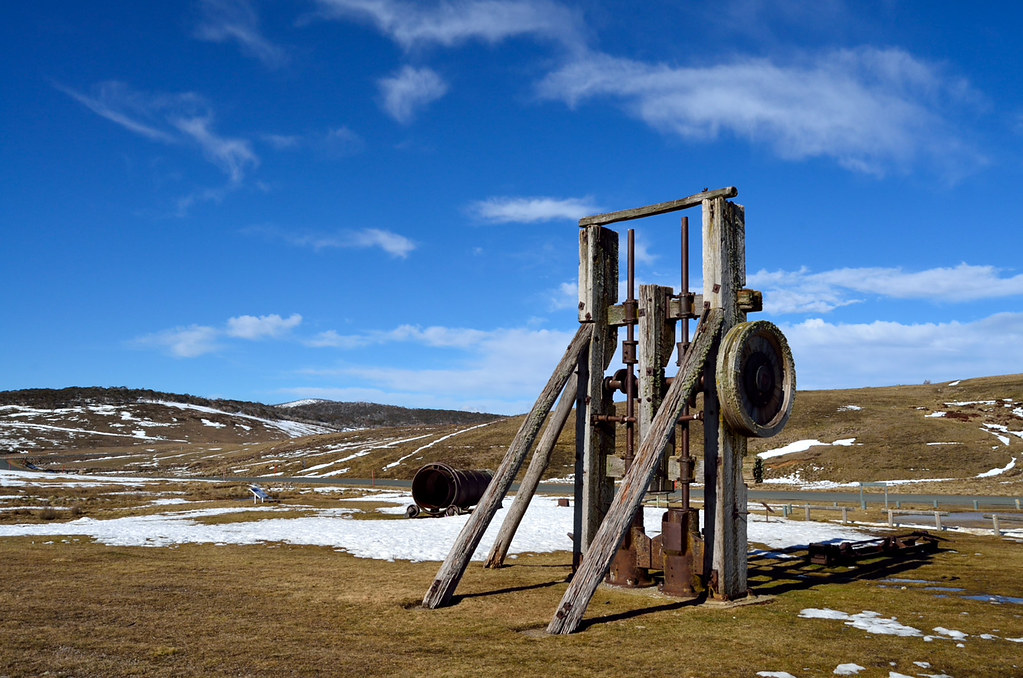
Remnants of Kiandra gold mine at New Chum Hill, #nsw #australia

February 22, 2015

A Passenger Ferry Capsizes in Bangladesh. Again.

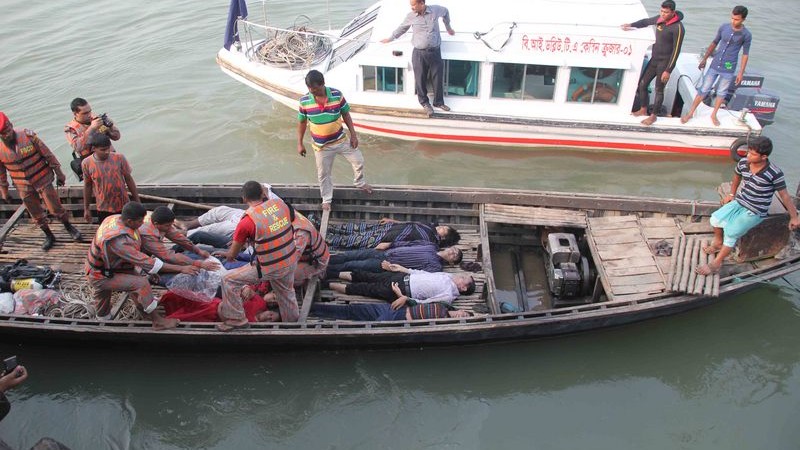
Recovered bodies are brought to the shore in a dinghy. Image by Reporter#7619314. Copyright Demotix (22/2/2015)
Recovered bodies are brought to the shore in a dinghy. Image by Reporter#7619314. Copyright Demotix
On Sunday noon a passenger ferry reportedly packed with more than 100 passengers was hit by a cargo vessel 40 kilometres northwest of Dhaka, Bangladesh's capital. It subsequently sank.

A rescue vessel located the capsized vessel and attempted to pull it up. According to reports 37 bodies have been found and many are feared missing.
Collisions with other craft is the top reason for ferry disasters in Bangladesh, which are quite common according to this study. Overcrowding and poor safety measures are the catalyst.

Passenger lists are rarely kept accurately, making it difficult to know how many people are missing when accidents occur. Many people have already been rescued from this particular craft, but it will take days to determine precise numbers. This is the country's second deadly boat accident in less than a fortnight.

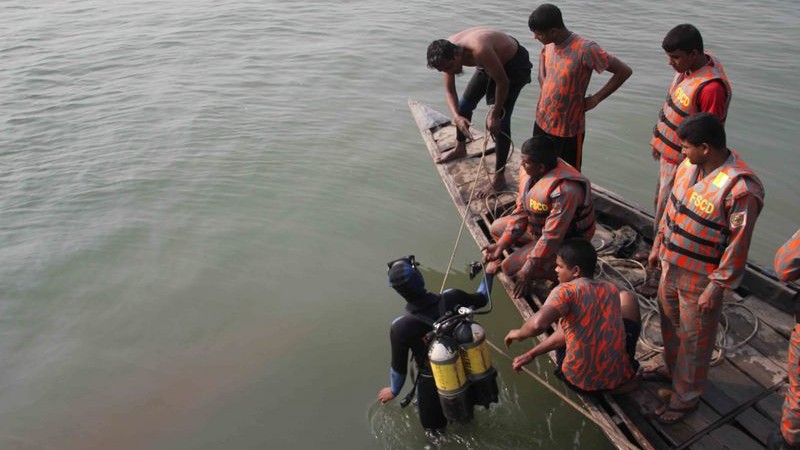
Divers at work to pull the bodies out of the capsized passenger ferry.
Divers at work to pull the bodies out of the capsized passenger ferry. Image by Reporter#7619314. Copyright Demotix (22/2/2015)
The post was also published in Global Voices Online.

February 20, 2015

Afghanistan Makes History in Cricket World Cup, Despite Debut Loss to Bangladesh

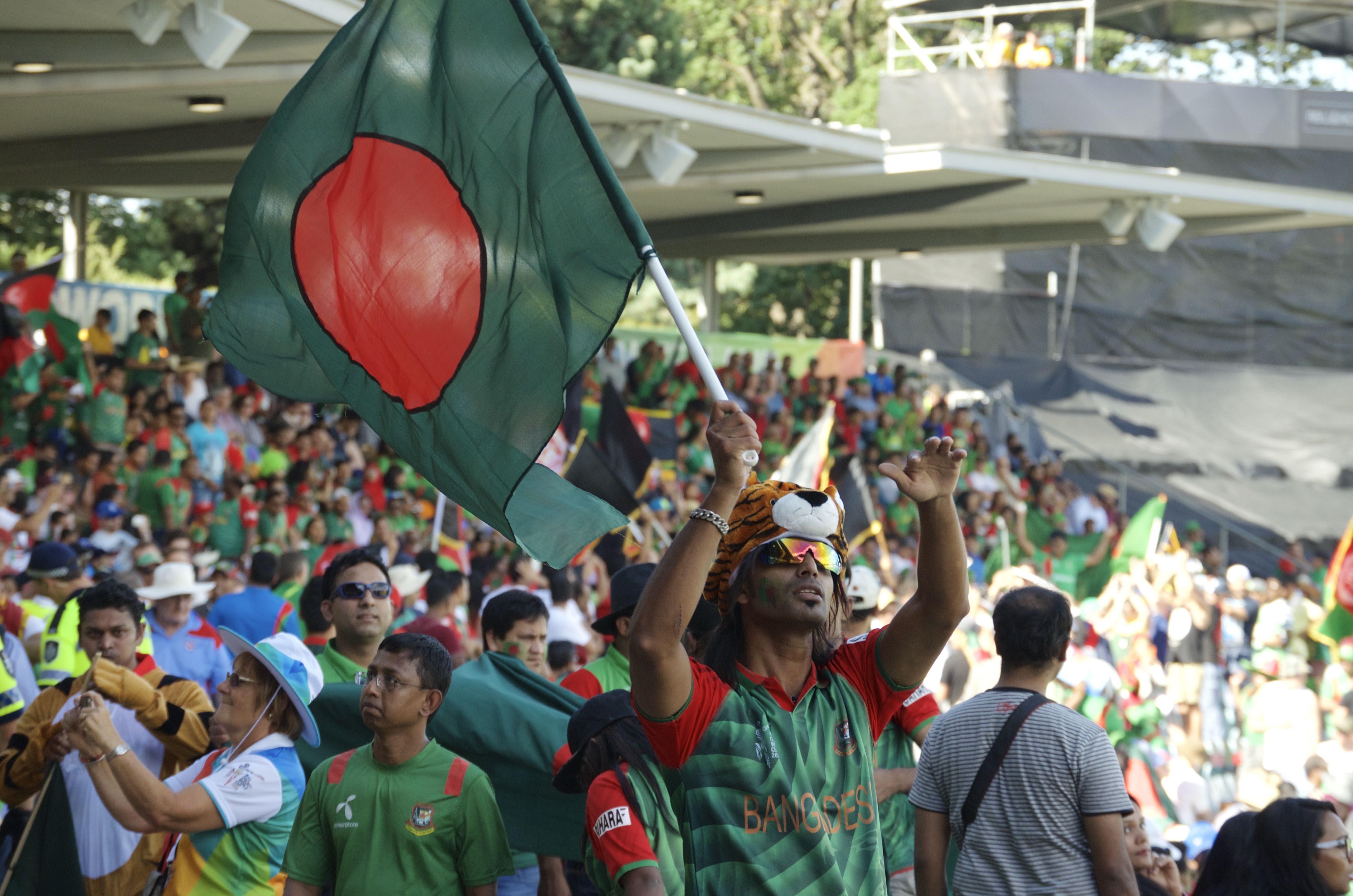
Image from the Bangladesh Afghanistan Match from Manuka, Oval. Image By Rezwan
Image from the Bangladesh-Afghanistan match from Manuka, Oval. Image By Rezwan
February 18 was a historic day for Afghanistan, as its national cricket team took on Bangladesh at Manuka Oval Stadium in Canberra, Australia, for the country's first ever game in a Cricket World Cup.

Even though Bangladesh showed off its experience and talent, beating Afghanistan by 105 runs in a quite one-sided game, it was clear the country had come a long way. Afghanistan learned the game from neighbouring Pakistan, where countless Afghans fled following the 1979 Soviet invasion of their homeland, and cricket is now the most popular game there.

Bangladesh is also comparatively new to the World Cup. It played its first World Cup game in 1999.

Ahead of the game Afghanistan was pumped up from its victory over Bangladesh at the last Asia Cup in 2014 in Dhaka, Bangladesh. However, the conditions in Australia were much different. The pitch at Manuka Oval offered more by way of pace and bounce than that Asia Cup surface.

Huge Crowd queueing up for the Bangladesh Afghanistan match on Feb 18, 2015. Image by Rezwan
Huge crowd queueing up for the Bangladesh-Afghanistan match on Feb. 18, 2015. Image by Rezwan
Despite the loss, Afghanistan thrilled its supporters as its bowlers kept up the pressure on Bangladeshi batsmen in the first 25 overs with a low run rate and took four wickets. Shakib Al Hasan and Mushfiqur Rahim combined for a 114-run 5th wicket partnership and Bangladesh posted a total of 267. Afghanistan was not up to par in reply as it was reduced to three wickets with only three runs in the first three overs. The team never quite recovered and was all out for 162 runs in 42.5 overs.

Canberra is home to a small population of Bangladeshis maybe 7,000 to 8,000 strong. However, many Bangladeshis from Sydney and Melbourne came to the Australian capital to watch the game. The official match crowd was 10,972, out of which Bangladeshis were more than 9,000, transforming the stadium into a little Bangladesh.

Here are some pictures from the crowd:

Bangladeshi supporters. Image by Rezwan (18/2/2015)
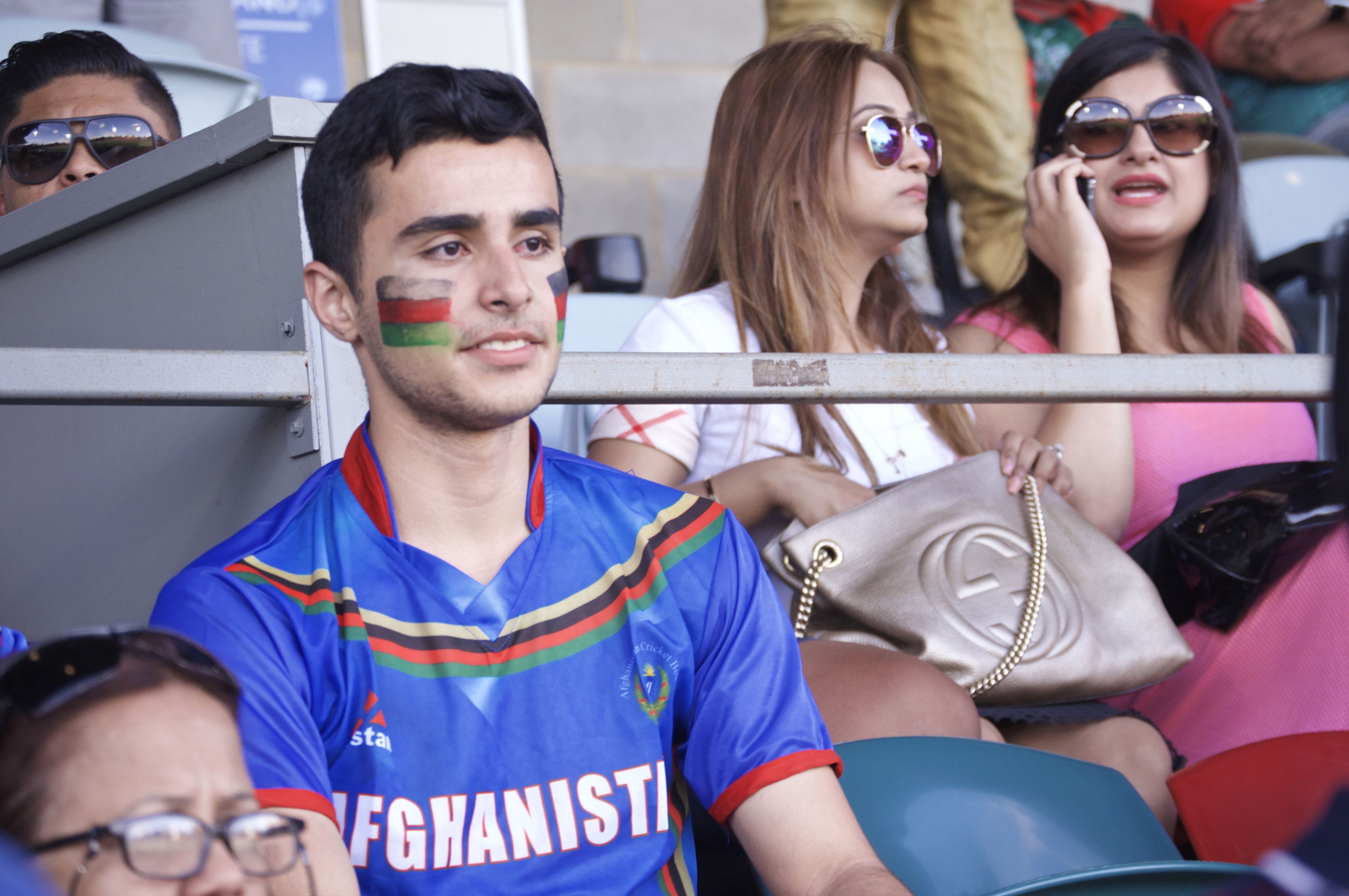
Afghan Supporters. Image by Rezwan (18/2/2015)
Bangladeshi supporters wore the green and red team jerseys which bore the colors of the Bangladeshi flag. Image by Rezwan
Bangladeshi supporters wore the green-and-red team jerseys, the same colors as the Bangladeshi flag. Image by Rezwan
Afghani supporters were also colourful. Image by Rezwan (18/2/2015)
Twitter hashtags #cwc15 and #BanvsAfg were trending on that day as many were talking about the game.
A tweet by the US Embassy in Kabul declaring victory for Afghanistan before the end of the game generated a lot of buzz. It was retweeted more than 300 times and favourited more than 100 times:
The embassy acknowledged their "premature posting" in another tweet, but maintained their excitement about Afghanistan's participation at the World Cup.

The post was also published in Global Voices Online.

February 17, 2015

Bangladeshi Publisher Faces Death Threats Over Translation of Controversial Iranian Writer's Book

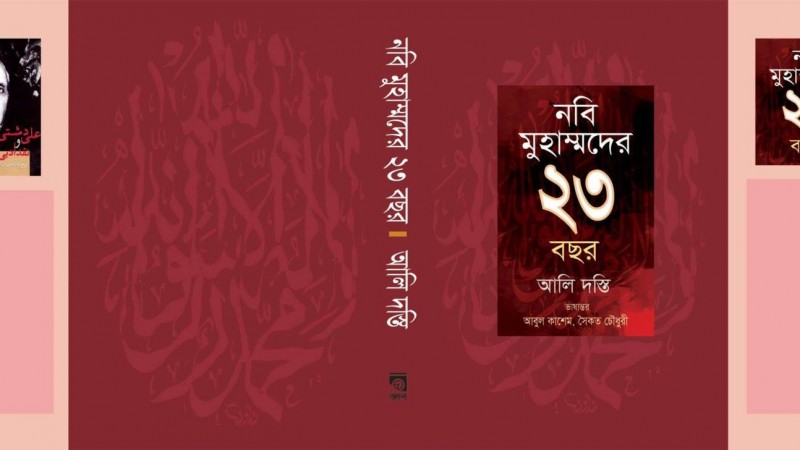
The cover of the Bengali Translation of  Iranian Muslim scholar and politician Ali Dashti's book. Image courtesy Haseeb Mahmud.
The cover of the Bengali translation of Iranian Muslim scholar and politician Ali Dashti's book. Image courtesy Haseeb Mahmud.
The publisher of a Bangla translation of a controversial book by 20th-century Iranian rationalist and politician Ali Dashti about the Prophet Muhammad's life has received death threats after displaying the work at Bangladesh's national book fair.

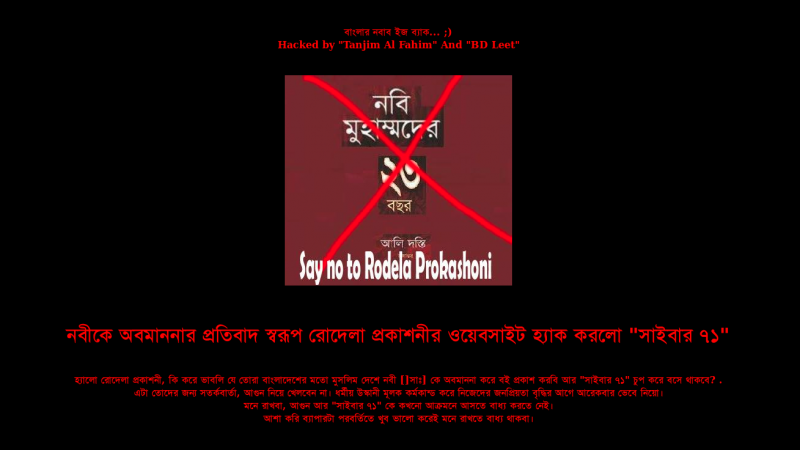
Hardline religious groups, mainly Hefazat-e-Islam, have called on authorities to prosecute publishing house Rodela Prokashoni over the translation of "23 Years: A Study of the Prophetic Career of Muhammad." Rodela Prokashoni's website appeared to be hacked on February 14, 2015, and their office in Banglabazar was attacked on Sunday, according to a report in the Bangla Tribune. No one was injured.

Following the uproar, the publishing house pulled the book from the shelves at the Ekushey Book Fair and from their website, and publisher Riaz Khan reportedly apologized, saying he wasn't aware that the book was considered offensive.

EUpofBg
Screenshot of the defaced Rodela Prokashoni website which says among other things: The website has been hacked in protest of disrespecting the prophet. [..] Say no to Rodela Prokashoni 
Despite that decision, authorities from the Bangla Academy, the country's national language authority, which organizes the book fair, shut down Rodela Prokashoni's stall on February 16, alleging that the publishing house was “selling books that hurt religious sentiments.” The fair committee defended the move, saying that “According to article 13.13 of Fair Regulations 2015, none is allowed to sell books at the fair that can hurt religious sentiments."

Haseeb Mahmud at Sachalayatan community blog summed up the outrage against the book:
এই বই প্রকাশের জের ধরে ধর্মীয় মৌলবাদি গোষ্ঠি বিভিন্ন তৎপরতা চালাচ্ছে। গতকাল গণমাধ্যমগুলো প্রেস বিজ্ঞপ্তি পাঠিয়ে হেফাজতে ইসলামের জুনাইদ বাবুনগরী ও সাংগঠনিক সম্পাদক আজিজুল হক "মানবতার মুক্তির দূত বিশ্বনবী হযরত মুহাম্মদ সাল্লাল্লাহু আলাইহি ওয়াসাল্লামের প্রতি চরম অবমাননাকর ও ঔদ্ধত্যপূর্ণ ‘নবি মুহাম্মদের ২৩ বছর’ শীর্ষক বইটি বাজেয়াপ্ত ও ‘রোদেলা’ প্রকাশনীকে নিষিদ্ধ" করার দাবি জানিয়েছে।" তারা আরোও বলেন, দেশের ক্ষুদ্র একটি ইসলামবিদ্বেষী নাস্তিক্যবাদী গোষ্ঠী কর্তৃক পৃষ্ঠপোষিত [..] এই বইটির পরতে পরতে মহান আল্লাহ তা’আলা, হযরত মুহাম্মদ সাল্লাল্লাহু আলাইহি ওয়াসাল্লাম ও তাঁর পবিত্র জীবন সম্পর্কে অসত্য, বিভ্রান্তিকর ও ধৃষ্টতাপূর্ণ মিথ্যাচার করা হয়েছে। বইটির লেখক কুখ্যাত ইসলামবিদ্বেষী নাস্তিক আলী দস্তি। [..]

এই বই প্রকাশের নেপথ্য ইসলামবিদ্বেষী নাস্তিক্যবাদী দুষ্টচক্রকে তদন্তের মাধ্যমে গ্রেফতার করে আইনের আওতায় এনে দৃষ্টান্তমূলক কঠোর শাস্তির দিতে হবে। অন্যথায় হেফাজতে ইসলাম বাংলাদেশ ইসলামবিদ্বেষী নাস্তিক্যবাদী গোষ্ঠীকে প্রতিহত করতে বাংলার তৌহিদি জনতাকে সঙ্গে নিয়ে রাজপথে কঠোর কর্মসূচী দিয়ে মাঠে নামতে বাধ্য হবে।
A number of religious fundamentalists are trying to create a controversy regarding the publication. Yesterday Hefazat-e-Islam, an Islamist fundamentalist group in Bangladesh, sent a press release to different media organisations demanding that the book "23 Years of the Prophet Muhammad," which is demeaning and disrespectful to the savior of humanity, the Prophet Muhammad (PBUH), should be confiscated and Rodela Prokashoni should be banned.

They also said that [the book is] sponsored by a small minority of atheists in this country [...] this book spreads false, untrue and confusing facts about the Prophet Muhammad (PBUH) and his life. The writer of this book is the notorious anti-Islamic atheist Ali Dashti.

"We demand [to the government] that the anti-Islamic atheists in this country, who are behind publishing this book, should be investigated and arrested and be punished severely. If not, Hefazat-e-Islam will take to the streets with common people to stop these anti-Islamic atheists and be obliged to announce hardline street protests."
Other organisations like Islamist Movement have also made similar statements.

"23 Years: A Study of the Prophetic Career of Muhammad," which was first published in the early 1970s, questions the miracles ascribed to the Prophet Muhammad. The author, the late Ali Dashti, was a former senator and ambassador to Lebanon for Iran. After the Islamic revolution in 1979 when Ruhollah Khomeini came to power, Dashti was jailed, and anyone who was discovered to have the book in his or her possession was taken to court for questioning.

We asked an Iranian blogger who attended high school in Iran during the 1990s about the book. The blogger, who wishes to remain anonymous, said:
I believe I read his book called 23 years when I was a teenager. Most of the Shiism custom he criticized in the book had disappeared by the time I read it. And I think no Shiite Muslim would defend the things he criticized in his book today. So he was not anti-Islam but against weird customs in Shiite Islam....I don't know how I got it. It is unlikely that you can buy it from bookstores.
A group of Bangladeshi publishers have demanded that Rodela Prokahson be evicted from their current office and that publisher Khan be arrested and face the death penalty. They have also vowed to take legal action against the him. Khan says he has been receiving death threats to his mobile phone.

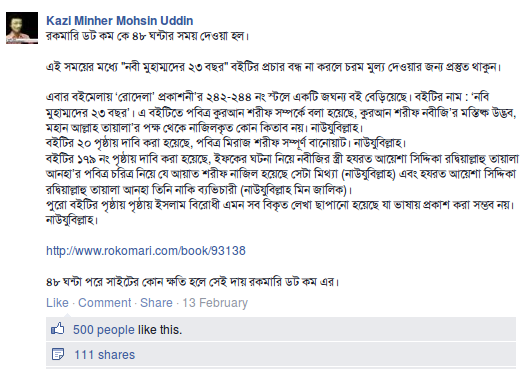
Screenshot of a threatening message posted against the publisher on Facebook. Image courtesy Haseeb Mahmud.
"Rokomari.com will have 48 hours to comply. If they do not stop publicising the book '23 Years of the Prophet Muhammad' they will pay the price. [...] If the site is hacked after 48 hours, Rokomari.com will be responsible."
Screenshot of a threatening message posted on Facebook against an online e-commerce site selling the book. The site took down the book from their listing. Screenshot courtesy Haseeb Mahmud.[/caption]Accusations of blasphemy and atheism have had serious and occasionally deadly consequences in Bangladesh in recent years. Two years ago, blogger Ahmed Rajib Haider was brutally killed outside his home in Dhaka because of his writings against war criminals and Islamic fundamentalists in Bangladesh. Haider, among many other bloggers, was labeled an atheist. Islamist groups like Hefazat have publicly identified writers and bloggers they deem to be atheists or blasphemous and called for them to face the death penalty.

Bangladesh is a non-religious parliamentary democracy, so there is no sharia or blasphemy law. If anybody claims to be an atheist, he or she has the same rights as other citizens. However, under Section 295A of Bangladesh's Penal Code (1860), any person who has a “deliberate” or “malicious” intention of “hurting religious sentiments” is liable to imprisonment.

Writer Swakrito Noman questioned the indignation surrounding the translation of "23 Years: A Study of the Prophetic Career of Muhammad" in a Facebook post:
প্রশ্ন হচ্ছে, আলি দস্তির এই বইটি কি আন্তর্জাতিকভাবে নিষিদ্ধ? যদি নিষিদ্ধ না হয় তাহলে বাংলাদেশে বইটি প্রকাশিত হলে অসুবিধা কী? বইটি বাংলা অনুবাদ হওয়ার আগে অনুভূতিপ্রবণরা কোথায় ছিলেন? এতদিন কেন অনুভূতিতে আঘাত লাগল না? নাকি আপনারা পার্সি বা ইংরেজি জানেন না বলে আপনাদের অনুভূতিতে আঘাত লাগেনি?
The question is, is this book banned internationally [or Bangladesh for that matter]? If not, then why is there a problem in publishing it? Where were you before it was translated in Bangla? Why were your religious sentiments not hurt then? Or were they not hurt because you do not know English or Farsi?
Noman continued:
জানি, এই দেশের মানুষ হয়ত এখন রোদেলা প্রকাশনীর প্রকাশক রিয়াজ খানের পক্ষে কথা বলবে না। অধিকাংশ মানুষ এখন হেফাজতের পক্ষে তালি বাজাবে। সরকারও হয়ত হেফাজতের পক্ষ অবলম্বন করবে। আমি বাংলা ভাষার ক্ষুদ্র এক লেখক, আমি হেফাজতে ইসলামির এই অযৌক্তিক কর্মকাণ্ডের প্রতিবাদ করছি। জানি এই প্রতিবাদের কারণে হয়ত আমিও আক্রান্ত হতে পারি। তবুও প্রতিবাদ করছি। কারণ, এভাবে ইসলাম প্রতিষ্ঠিত হয় না। জ্ঞানের পথকে এভাবে রুদ্ধ করা যায় না। এই বইয়ের বিরুদ্ধে যদি হেফাজত বা ইসলাম ধর্মের কেউ পাল্টা আরেকটি বই লিখত, সেটিই হতো প্রকৃত প্রতিবাদ। জ্ঞানের প্রতিবাদ জ্ঞান দিয়ে করতে হয়। যুক্তির প্রতিবাদ যুক্তি দিয়ে করতে হয়। প্রকাশনা প্রতিষ্ঠানে হামলা, প্রকাশকের ফাঁসি দাবিকে কোনোভাবেই সমর্থন করা যায় না।
I know many people in this country will not support publisher Riaz Khan. Many will join the Hefazat bandwagon. Even the government can support them. I am a petty writer in the Bangla language. I protest this illogical stand of Hefazat-e-Islam. I know I can also be attacked for taking this stance, but I insist. Because, you cannot establish (or spread) Islam like this. You cannot deter knowledge like this. If Hefazat would write another book countering this with all their logic, that would be the perfect protest for them. You need to protest logic with logic, knowledge with knowledge. Attacking a publishing house, attacking the publisher is equal to barbarism.
The post was also published in Global Voices Online.

February 09, 2015

Gardeners Are Repurposing Coconut Waste as Eco-Friendly Plant Pots

Plant vases made of coir are the new export materials. Surprisingly being quite cheap these eco-friendly materials haven't found a market in India. Image by Subhashish Panigrahi. Used with Permission.
Plant vases made of coir fibre and coir piths are eco-friendly and cheap. Image by Subhashish Panigrahi under CC-by-SA 4.0.
Coir pots in the above picture are made from coir piths or coco peats, sourced as a by-product from coconut production. Coir is a natural fibre extracted from the hard, internal shell and the outer coat of a coconut and used in products such as floor mats, doormats, brushes, mattresses, twist rope, and weave carpets.

Coir fibres make up about a third of the coconut pulp and the remaining portion, called pith or dust, is biodegradable. Coir pith used to be treated as waste material, but is now increasingly being used as soil treatment, mulch and a hydroponic growth medium, e.g. use inside the coir pot. If coir pith is artificially decomposed using biological agents, within 30 days it can convert to be 100% natural organic manure benefitting the plant.

Using coir pots that can be planted directly in the garden can save an estimated 100 million plastic pots from ending up in garbage cans.

The coconut tree (Cocus nucifera) grows in many tropical countries but is commercially exploited mainly in India, Thailand, Sri Lanka and the Philippines. Ropes and rigging made from coconut fibre have been in use from ancient times and are found in the Indian and Arab histories.

This YouTube video shows how coir is made from coconut husks:


India produces 60% of the total world supply of coir fibre. India and Sri Lanka together produce 90% of the coir produced every year across the world. India earned foreign exchange of Rs 2,200 million (approximately $37 million) by exporting coir pith during 2011-12 and aims to boost exports by five times mainly because of the demand in the Gulf countries.

One of the inventions using coir piths is the coir pot, an asset for anyone who wants to start green farming.
After planting trees inside the pot, the roots grow through the coir, so the entire pot and plant can be put into the ground – no wasted plastic pot and no wasted effort.

GV author Subhashish Panigrahi writes in Facebook:
Plant vases made of coir are the new export materials. Surprisingly being quite cheap these eco-friendly materials haven't found a market in India. Coir pith is used as manure in the vases. After two years or so, when the roots start penetrating the vase, it could straight away be taken and planted. What a neat idea!
The benefits of coir pots are that they can replace petroleum-based plastic nursery pots, flats and trays. Although they are lightweight, durable and can be recycled, they usually wind up in the trash causing environmental damage. But things are changing. Plants in biodegradable containers such as coir pots are gradually becoming more available as growers wake up to the environmental consequences of plastics and rubbers.

Subhashish Panigrahi contributed to this post.

The post was also published in Global Voices Online.

February 04, 2015

Mumbai Newspaper Editor Fired, Arrested for Republishing Charlie Hebdo Cartoon

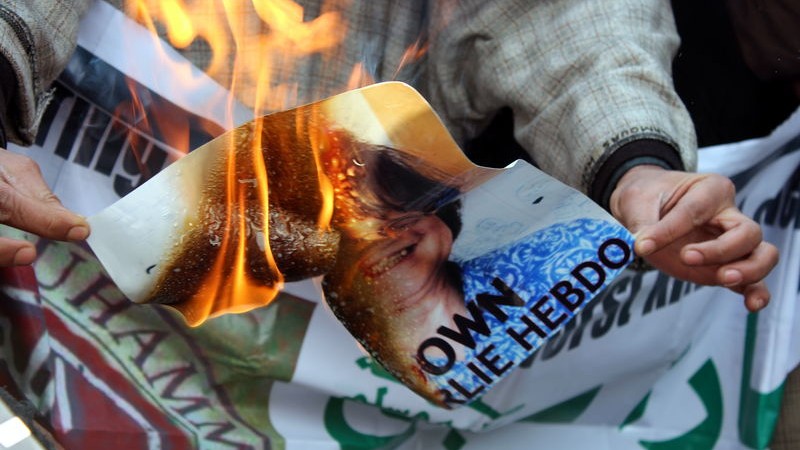
A protest rally against French satirical magazine Charlie-Hebdo was held in Kashmir's Old City. Protestors effigy and Charlie Hebdo posters were set on fire by angry protesters . Image by Adil Hussain. Copyright Demotix (23/1/2015)
A protest rally against French satirical magazine Charlie-Hebdo was held in Kashmir's Old City. Protestors effigy and Charlie Hebdo posters were set on fire by angry protesters. Image by Adil Hussain. Copyright Demotix (23/1/2015)
A newspaper in India was shut down and its editor arrested after republishing one of French satirical magazine Charlie Hebdo's cartoons featuring the Prophet Muhammad on its front page.

Shirin Dalvi, who was later released on bail, is accused of violating section 295A of the Indian Penal Code, which bans malicious and deliberate acts intended to outrage religious feelings. She faces as many as six lawsuits filed against her across the state, and has taken to hiding her face behind a burqa while in public.

Her troubles began on January 17, 2015, when she printed the February 9, 2006 cover of Charlie Hebdo titled "Mahomet débordé par les intégristes" ("Muhammad overwhelmed by fundamentalists"), with a bearded man in tears saying "C'est dur d'être aimé par des cons" ("It's hard being loved by jerks"), on the front page of the Mumbai edition of Urdu daily Avadhnama. The editorial accompanying the republished cartoon argued that since no image exists of the Prophet Muhammad, the Charlie Hebdo caricatures should not be taken as a representation of him:
There exists no image of him, so how can we infer that this picture is a caricature of him?
Ten days earlier, two gunmen had attacked the Charlie Hebdo's office in Paris, killing 12 people, including eight journalists and injuring 11 others. The dead included the magazine's editor and a policeman. The magazine outraged many Muslims across the world as it published a number of controversial Muhammad cartoons over the years.

Facing backlash, Dalvi apologised, writing a detailed editorial explaining her position on the next morning. But the outrage continued. She began receiving threats on her phone. Lawsuits have been filed against her in different police stations in Mumbai, Thane and Malegaon.

On January 19, Avadhnama’s Mumbai edition was shut down and all its 15 employees sacked. Taqdees Fatima, owner of the Avadhnama title, defended herself, saying she had no links with the Mumbai edition, which was run by a separate entity.
The editor, publisher and printers are totally different and… (are) responsible for the contents.
Avadhnama's other city editions did not publish the cartoon and were not affected. For Dalvi, more misery was waiting. Members of the Rashtriya Ulema Council (State Cleric Council) threatened to protest outside the police station if Dalvi was not arrested.

On January 28, she was arrested and got bail on the next day. But she has not gone back to her home in Mumbra since the protests began; her house remains locked and her children are staying with the relatives. Dalvi, along with the newspaper’s publisher Yunus Siddiqui, proprietor Taquadees Fatema and managing director Deepak Mhatre obtained anticipatory bail in another case filed against them on the same charge.

Dalvi told the Mumbai Mirror in an interview that she meant to reproduce Charlie Hebdo's latest cover purely as an illustration to go along with a report, but printed the 2006 cover by mistake. She admitted that she didn't know what the cartoon said since she doesn't speak French, and had only intended for the cartoon to illustrate a report about the controversial magazine's increased circulation following the attacks.

In a different interview with media watchdog website The Hoot, Dalvi, who has been working in Urdu media for the last 25 years, accused some papers of running false reports about her, such as one saying she had shot down a junior colleague's objection to the cartoon's publication by saying it would boost the newspaper's circulation. The website reported that sources in the Urdu media industry suggested business rivalries may have something to do with the case against Dalvi.

Online, some users criticised the lack of support for Dalvi following the Charlie Hebdo attacks. Satire Twitter account ChopdaSaab tweeted:
Blogger Suvie Kaul wrote:
Nikhil Mehra, a lawyer from New Delhi, tweeted:
The hashtag #IStandWithShireenDalvi has taken off:
Sadanand Bhat, a commenter on an article in Indian Express, questioned the state of freedom of expression in India:
This is Outrageous. Here in western Countries they published the picture of the cartoon. Where is the freedom of Expression in India? WHy should she apologise? Where are all the Seculare [sic] peaceniks? This silence is deafening even in the news reviews. Feel sorry for her and wonder how I can help her.
Raghvendra Upadhyay commented on an article in the India Times to say:
There is a thin line between "freedom of press" and "outraging religious feeling". Important thing is, what is the duty of a press. To put in news what people what to hear ? or what press want people to know ?

Choice is yours !!

Based on your choice, you will build yours and your societies future.
The post was also published in Global Voices Online.

January 09, 2015

A New Era Begins for Sri Lanka After President Mahinda Rajapaksa Concedes Defeat

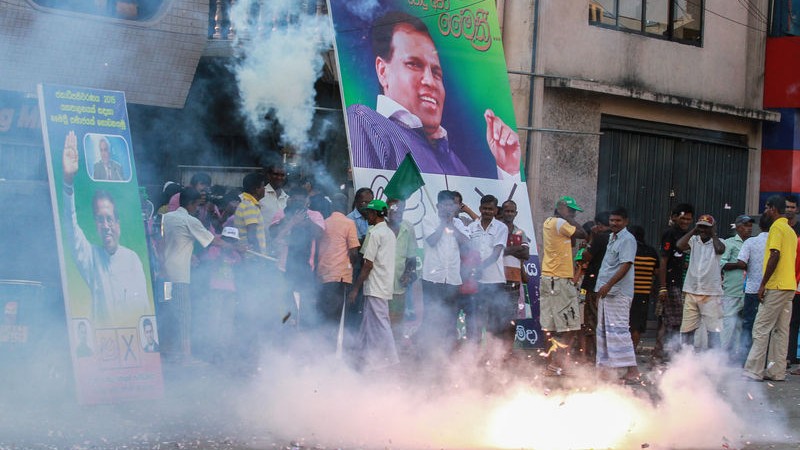
Supporters of Sri Lanka's main opposition presidential candidate Maithripala Sirisena burst firecrackers at the end of voting in the presidential election in Colombo. Image by Chamila Karunarathne. Copyright Demotix (8/1/2015)
On Friday morning, Sri Lankans woke up to news that was unthinkable only a few weeks ago -- President Mahinda Rajapaksa, who took office on 19 November 2005, conceded defeat to 63-year-old former Health Minister Maithripala Sirisena, the presidential candidate of the main opposition United National Party.

The day before, Sri Lankan voters had cast their ballot in the 7th presidential election in a closely contested presidential election, with incumbent Mahinda Rajapaksa seeking a record third term in office. The election was largely peaceful and turnout was more than 70 per cent in most districts.

Rajapaksa tweeted on 9 January, after it was clear he had lost the vote:
The early results showed that Rajapaksa remained popular among the country's Sinhala Buddhist population, who account for around 70 per cent of the island country's 21 million people. Sirisena was favoured by the ethnic Tamil-dominated former war zone in the north of the country and in Muslim-dominated areas, who went out in large numbers to vote for him.

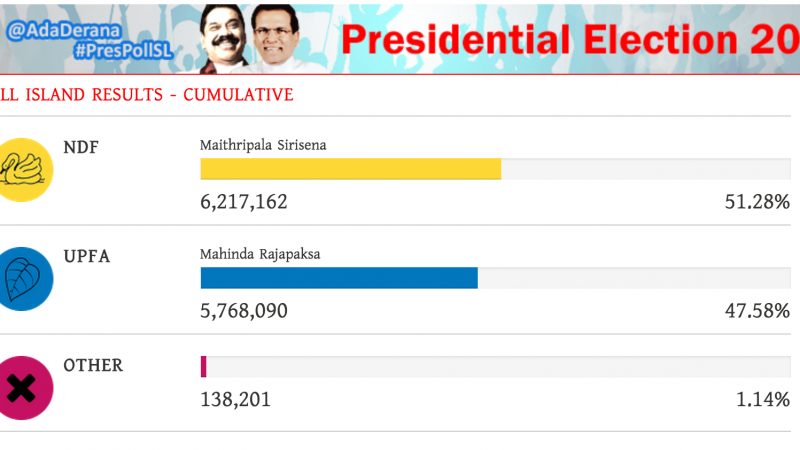
A screenshot from news portal Adaderana.lk shows the numbers (final results):

Screenshot from Adaderana.lk
Rajapaksa oversaw the end of a bloody civil war in 2009 that had raged for 26 years between government forces and a militant organisation seeking an independent Tamil state. He was reelected in 2010 by a landslide, and afterward successfully amended the constitution to concentrate political power in the presidency and remove term limits on the office. While in power, he has faced accusations of abuse of power, nepotism and human rights violations committed during the final stages of the civil war.

Blogger Indrajit Samarajiva, often a critic of the Rajapaksa government, paid tribute to his legacy:
Mahinda Rajapaksa has shown me things I never thought possible. He ended a war that I thought would never end. He rebuilt Colombo and showed us physical development I never dreamed of. For all of his faults, he has won me over as a citizen. I think he has been a good President, in my opinion Sri Lanka’s best, especially because he is the first President to lose an election and gracefully leave.

I have always been reluctant to call Mahinda a dictator because I never thought he was. As much as he messed with Parliament, with the Judiciary, he was always close with the people and he rose and fell by the vote. He was elected to power, he marshalled popular support to win the war and, in the end, he was brave enough to face election for a third time. Most importantly, and something we’ve never seen from an incumbent, he was brave enough to gracefully lose.

He has truly been a great leader and, though I voted for his opponent, I think he deserves something Sri Lanka hasn’t really afforded its leaders. A comfortable, honored and secure position as the respected and beloved ex-President of Sri Lanka.
Some commenters disagreed with Samarajiva's view on Rajapaksa time as president, such as Reshan Auston:
While we carry the respect for Mahinda for winning the war, I have no respect for him for looting the country. As a leader he failed the country. He had all the opportunity to be the Nelson Mandela of Sri Lanka but instead he decided to be Sadam Hussain. He looted the country with his brothers while his sons enjoyed the life using poor tax payers money. We couldn’t get our day to day activities done at government offices without political influences. Is this the leader we care about?

As a president he failed after finishing the war. I don’t harbour any remorse for his loss. He deserved what he got. I don’t wanna shed crocodile tear.
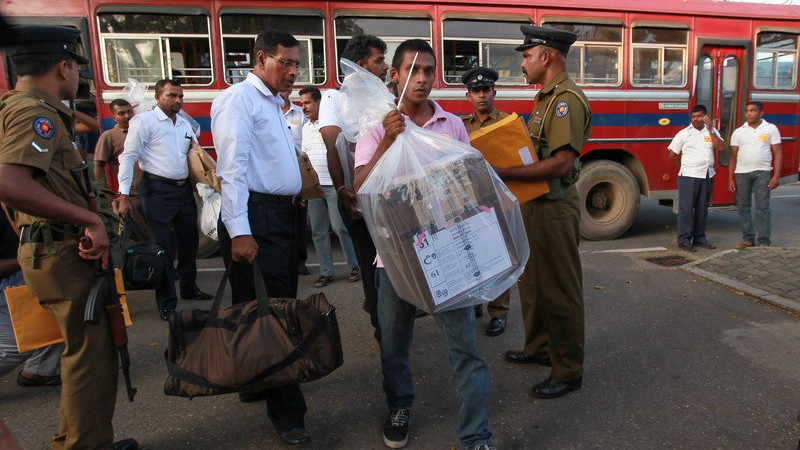
Sri Lankan polling officers carrie ballot boxes into a counting center after close of polling for the presidential election in Colombo. Image by Chamila Karunarathne. Copyright Demotix (8/1/2015)
Sri Lankan polling officers carry ballot boxes into a counting center after the close of polling for the presidential election in Colombo. Image by Chamila Karunarathne. Copyright Demotix (8/1/2015)
Dilrukshi Handunnetti wrote on citizen journalism website Groundviews on why Sri Lankans sought a change:
It is not as if Maithripala Sirisena, a simple villager who has risen within the SLFP ranks to reach top positions, holds the island enthralled. Instead, what he represents in terms of ideas and promises, matter to a large majority of the people who have silently observed an elected president turn increasingly authoritarian and triumphalist. [..]

There may be others who feel that while road and rail connectivity was being achieved, the incumbency has severed connectivity among the island’s communities that lived in harmony for decades, causing serious divisions on ethno-religious lines.

It is that negative difference that has fuelled an electorate’s call for a political change, perhaps at great risk, still with the hope that a new administration may have the political maturity to tolerate dissent and celebrate a plural Sri Lankan identity.
The social media scene was full of buzz:
Sri Lanka's free and fair elections were congratulated by many:
And here is what Sri Lankans are hoping for the future:
The post was also published in Global Voices Online.

January 08, 2015

Your Guide to Sri Lanka's 2015 Presidential Election

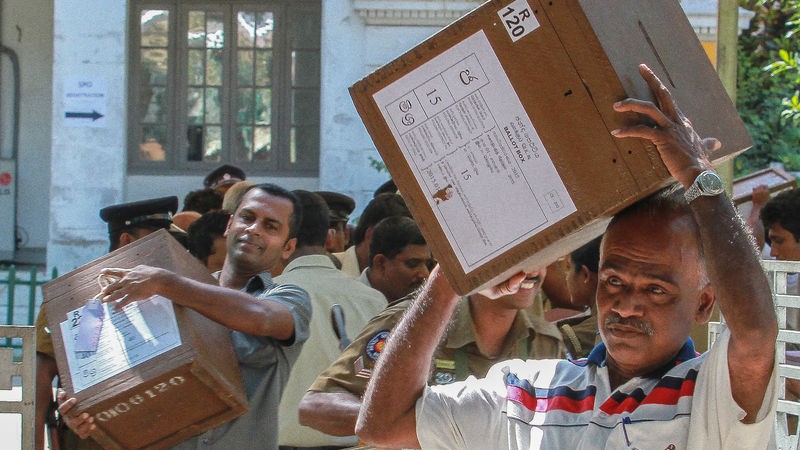
Sri Lankan election commission workers carry ballot boxes while escorted by police on the eve of presidential elections in Colombo. Image by Chamila KarunaRathne. Copyright Demotix (7/1/2015)
Sri Lankans are going to the polls on Thursday, January 8, in one of the most closely contested, significant presidential elections in the nation's history.

Every six years, Sri Lanka elects a new president and legislature. The parliament has 225 members, elected to six-year terms. It is a multi-party system, dominated by two political groups. There are 15 million eligible voters in Sri Lanka and over 12,000 polling stations have been set for elections. Voter turnout in the previous election was around 75 percent.

In the 2010 presidential election, Mahinda Rajapaksa of United Peoples Freedom Alliance (UPFA) won with 58 percent of the vote. Shortly after being elected, Rajapaksa successfully amended the constitution to concentrate political power in the presidency, and remove term limits on the office. This time, Rajapaksa has preponed the elections, holding them two years ahead of schedule. Rajapaksa, the region's longest-serving leader, will try for a third term, amidst criticisms that he abuses his authority and seeks a dynasty.
The actors

Rajapaksa has the backing of a number of small constituent parties of the UPFA, including the Ceylon Workers' Congress, and Communist Party. He has the support of the Buddhist extremist group Bodu Bala Sena. Rajapaksa's platform, titled "Mahinda's Vision—The World Winning Path", pledges to introduce an entirely new constitution within a year.
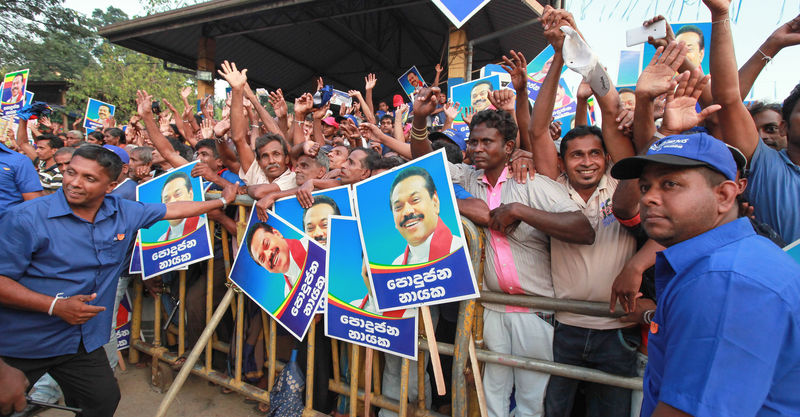
Supporters of Sri Lankan President Mahinda Rajapaksa cheer during an election campaign rally in Palmadulla, Sri Lanka. Image by Chamila Karunarathne. Copyright Demotix (3/1/2015)
Rajapakse has actively campaigned alongside celebrities like sporting Bollywood megastar Salman Khan, creating no small amount of buzz. Touring the former war zone in the country's North, Khan urged minority Tamils to back Rajapakse in the election, calling him the "known devil".

Rajapakse's chief opponent and former health minister, Maithripala Sirisena, is a surprise pick by the United National Party, the main opposition party, which is backed by twelve smaller parties. The remaining seventeen candidates are independents or belong to minor political parties.  UNP only revealed Sirisena's nomination on November 21, 2014, after the election was announced.

Sirisena released his platform, titled "A Compassionate Maithri Governance—A Stable Country", which pledged to abolish the country's presidential government within 100 days of being elected. Under a new parliamentary system, Sirisena says he would appoint UNP leader Ranil Wickremasinghe as prime minister.
Sirisena has launched a campaign attacking Rajapaksa where he is weakest: the President's apparent nepotism. During Rajapaksa's presidency, his three brothers and his son have all risen to positions of considerable influence in the national government.

Maithripala Sirisena, it's worth noting, took a great risk when he left the Rajapaksa Administratiojn. Indeed, the Asian Human Rights Commission recently expressed concern about his personal safety, noting that he's suffered several attempted attacks over the past several days.
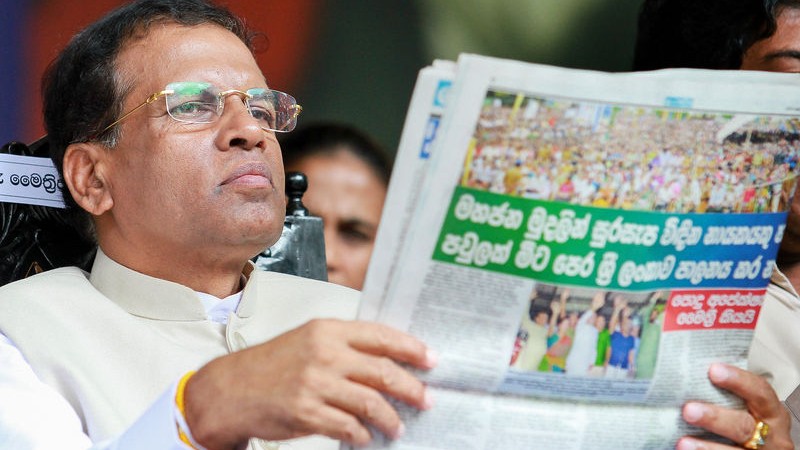
Sri Lanka's main opposition presidential candidate Maithripala Sirisena reads a newspaper during a campaign rally for the upcoming presidential elections in Colombo. Image by Chamila Karunarathne. Copyright Demotix (31/12/2014)
Use of social media

#IVotedSL is a trilingual campaign launched by Centre for Monitoring Election Violence (CMEV) to encourage citizens to exercise their voting rights.
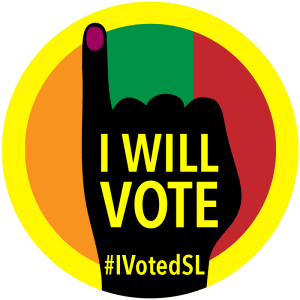
Image courtesy CMEV. Copyright Free.
The campaign calls on voters to take a public pledge that they will exercise their right to vote on January 8th. An individual can signify this pledge by changing their profile/account picture and cover/banner page on Facebook, Twitter, Google+ or any other social media platform. On election day those who take the pledge can share through social media a picture of the fifth digit (little finger) of their left hand which is marked with indelible ink using the hashtag #IVotedSL.
President Rajapaksa's quite active Twitter account has 92,600 followers. According to an analysis by Groundviews, however, large numbers of these subscribers and admirers might be less than organic.

According to blogger Indi Samarajiwa:
The dominant hashtag for this election is, by far, #PresPollSL (best source for news, in my opinion). CMEV recommends #IVotedSL for voting related stuff.
Samarajiwa also analyses the Facebook engagement of both the campaigns. He concludes that Sirisena's readers seem to engage far more with the campaign's content, despite the fact that Rajapakse has almost twice as many followers.
Irregularities and violence

Supporters of Sri Lanka's ruling party have faced accusations of violating election laws during campaign. The Centre for Monitoring Election Violence (CMEV) identifies an "unparalleled misuse [by the ruling party] of state resources and media". According to Human Rights Watch, local monitoring groups have reported numerous acts of election-related violence and intimidation during the month-long campaign.
Resources
According to the latest opinion survey by the Centre of Policy Analysis (CPA), 86.9 percent of Sri Lankans think their vote can make a difference in the outcome of the presidential election. Let's hope everyone can exercise their voting rights peacefully!

The post was also published in Global Voices Online.