Dragonfly

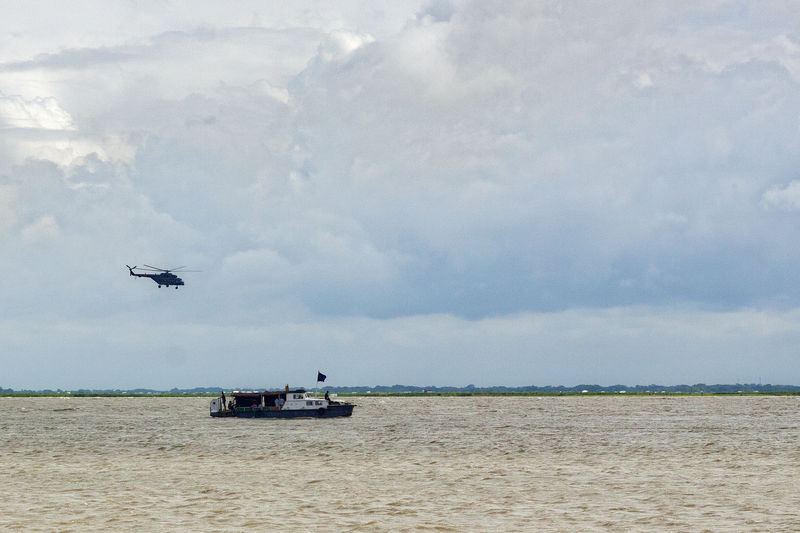
Image by Rezwan

Overcrowded passenger ferry capsized in the Padma River in Munshiganj, Bangladesh

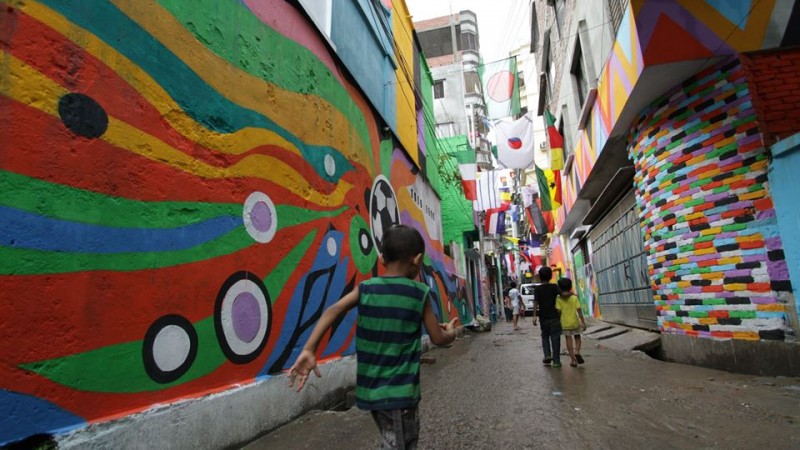
The World Cup Goal-E Project

This street in Bangladesh has a colorful world cup celebration

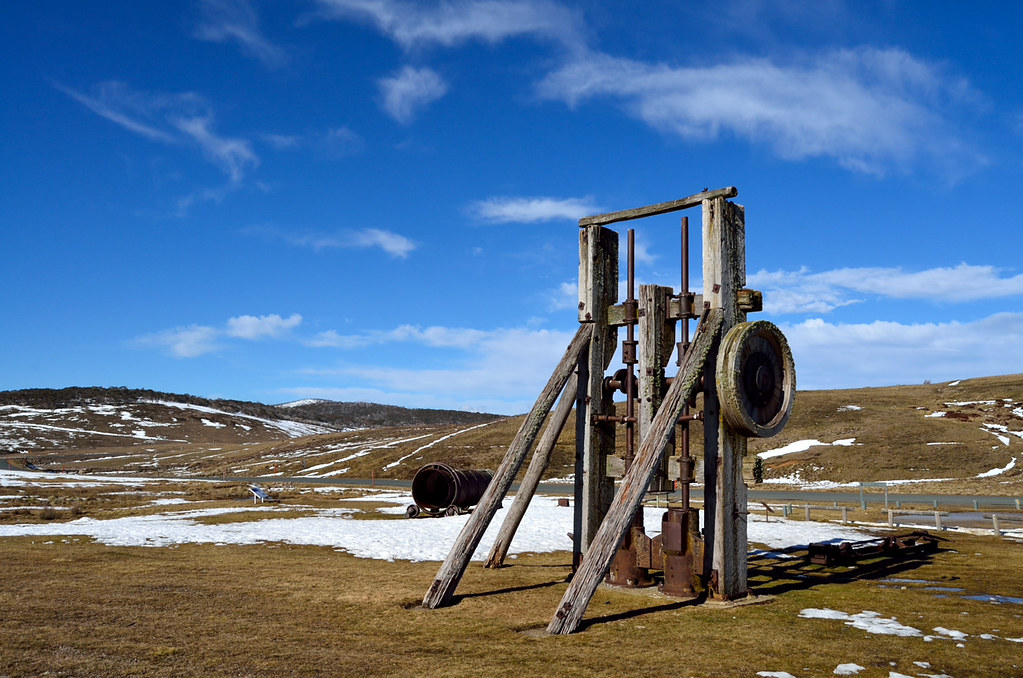
New Chum Hill Ruins

Remnants of Kiandra gold mine at New Chum Hill, #nsw #australia

December 15, 2005

TODAY'S TIDBITS

* Opinions: The best possible arguement for withdrawal of US troops from Iraq.

* Human rights: Bangladesh's feared elite police.

* Living: Hightech flush gazzette.

* Warning: Beware podcasters, podcast hijacking is here.

* Changes: From Bangalore to Bengaluru, from Delhi to Hastinapur; whats in a name?

* Stupidity: Iranian leader denies Holocaust.

* Examples: Understanding HTTP.

* Future: Hydrogen is the fuel of the future.

* Technology: Mobiles for the next billion.
BLOG COVERS THE IRAQ ELECTION LIVE

For an exclusive live coverage of the Iraqi election please go to Pajamas Media. PJM & Iraq the model are hosting waves of election updates and photos from eight correspondents based in eight different Iraqi provinces. The superiority of the main stream media has ended.
VICTORY DAY: 16th of December
(from the archive)

On this day in 1971 out of the crucible of blood and sacrifice, Bangladesh was born. This day is celebrated with glory and joy supplementary to the Independence Day, which is the 26th March. Actually Independence Day marks the declaration of our Independence and start of a bloody and glorious War of Liberation against the occupied forces of Pakistan. The govt. of Independent Bangladesh was formed in April 1971. On Victory Day, nine month later the Pakistani forces surrendered to the allied forces of Bangladesh and India. The people of Bangladesh chose to be their own masters rather then the remaining slaves, and achieved liberty. Bangladesh emerged as a sovereign independent country, like it never was before in the more than 3000 years of recorded history of the Bengali speaking people truly, completely independent at last. They were inspired by nationalism and patriotic spirit, which can be represented by one question of a Bengali poet "Who wants to live without freedom?"We must recall the heroic deeds of the founder, father of the nation Sheikh Mujibur Rahman (Bangabandhu), Ziaur Rahman, the freedom fighters, the freedom loving general people of the country (of all race and religion), Ms. Indira Gandhi, and the people of our neighbor India for their support. Our prayers are for those numerous lives lost in this war and their families who endured the pogrom like genocide (almost 3 million casualties including 3000 Indian Soldiers), devastation and rape by the Pakistani Army and their collaborators.

I would like to recall the contribution of people all over the world who lend a hand in help of the numerous refugees who were living in appalling conditions in the camps in India.

The values of the liberation war were secularism, democracy, liberal outlook and modernism and no religious bias. But after the independence government of every hues have been in power and failed to uphold the values of the liberation war. They also reinstated the anti-liberation parties like Jamaat-e-Islami and others who were indicted as collaborators of Pakistan forces. The biggest mistake of the peace-loving nation was to forgive those traitors in a general mercy petition, that is why today we see those anti-liberation forces reigning in glory. So it is mandatory that we should always look back to 1971 to remember our heroic deeds so that we can fight for keeping ourselves in the path laid by the values.

Liberation War Museum is a great initiative to archive the war of independence.
The history of Independence of Bangladesh
(from the archive)

I am not a historian. But I am trying to summarize here the history of Bangladesh's Independence for those who would like to have an idea about it.

In 1947 Indian subcontinent got its independence from British rule and were divided into Pakistan & India. The division was on the notion of two-nation theory, separate religious states of Hindu & Muslim. Some say that the British invoked the Hindu Muslim riots, some say the shrewd politicians, but these grim incidents led people nodding to this partitions and thought if the Hindu's and Muslims had a separate country, there would be no such violence. But wrong again. What happened to most of the Hindus in Pakistan and Muslims in India, who were living in harmony since long? Pakistan was divided into two portions: West Pakistan (containing Pathans, Panjabis, Beluchis) & East Pakistan (containing the Bengalis). A large-scale migration took place after that. Hindus were almost completely wiped out of West Pakistan. But lots of Hindus remained in East Pakistan (now Bangladesh) and many Muslims in India.

Pakistan is historically a theological country, from its birth. They chose Arabic fonts for their national language Urdu and imposed it to Bengalis. But the East Pakistanis fought for keeping their language Bangla unchanged and uphold as a second state language, and gave their lives in 1952 in the process (recognized as International Mother Language Day). East Pakistanis were deprived of many things as West Pakistan progressed leaving behind East Pakistan. In East Pakistan Bengalis hold on to their culture and values and Muslim and Hindu (30% of population) happily lived together (which was treated by Pakistanis as not Islamic). The East had to survive a lot of devastating natural calamities, which were neglected by the govt. sitting on West Pakistan.

In 1970, Sheikh Mujibur Rahman and his party Awami League won the majority (over 53 percent) in National Assembly election. But the lords at West Pakistan did not welcome it. The Assembly was suspended with the fear that Sheikh Mujib would be the head of the whole Pakistan because of the majority. He called for a nationwide strike and preparation of independence in East Pakistan in March 7, 1971. In 25th March 1971 West Pakistan Army started an operation killing many innocent civilians, University students, even police forces with a view to diffuse the uprising and tensions.

In 26th March 1971, on behalf of Sheikh Mujibur Rahman, the Independence declaration was read by another patriot, Ziaur Rahman (an Army major that time). A bloody war of liberation began.

Pakistan Army's motto was to ethnic cleanse Hindus and dominate Bengalis with force so that they can rule them better. The general people of Pakistan were told in propaganda that the Army is controlling the civil war, which is being instigated by India. Approx. 3 million people died in the war, women were mass raped by Pakistanis, houses looted, devastated. Many took refuse in the neighboring India. But Bengalis started to resist. Freedom fighters were trained up with the help of India. And the fight back rattled Pakistanis. They could not stop the rebellion within 9 months. At last India engaged in the war in December and Bangladesh got liberated from the tyranny of Pakistan. The Pakistan Army and some collaborators killed some of the finest intellectuals of the country just two days before their surrender in 16th december 1971.

The war itself is an epic. The history of it is being written in bits and pieces and there have been efforts also to summarize it. But we should never end the quest for the true spirit and values of the war.

Click here for the map of Bangladesh.

Bangladesh Liberation War 1971 Photo gallery

Click here and here for more pictures.

Read about the legendary concert for Bangladesh.

More Links:

* Bangladesh Liberation war
* Liberation war of Bangladesh, 1971
* The 1971 India-Pakistan war site
* Bangladesh Liberation War - Wikipedia
* Genocide watch: genocide in Bangladesh, 1971
* Bangladesh Liberation War: A Personal Diary
* The Indian Air force in the liberation war: 1971
* Bangladesh Ministry of liberation war affairs: official site
* Liberation war
* Bangladesh -71: a pc game on the libeartion war of Bangladesh
MARTYRED INTELLECTUALS DAY: DECEMBER 14TH
(From the archive)

December 14 is the day of martyred intellectuals, who were brutally killed by the Pakistani occupation army and their cohorts in 1971. Sensing their imminent defeat in the Bangladesh's liberation war, the Pakistani occupation forces and their local collaborators Rajakar, Al-Badr and Al-Sham kidnapped leading Bengali intellectuals and professionals on December 14, 1971 and killed them only two days before victory at the end of a nine-month long War of Liberation.
Renowned academics, doctors, engineers, journalists, teachers and other eminent personalities were dragged blind-folded out of their residences in the city and killed in cold blood to cripple the new-born nation intellectually. Their bodies were dumped at Rayerbazar, Mirpur and some other places on the city's outskirts.

How savage their thoughts were! The plan of the occupation army and its supporters was to orphan the nation which would certainly need the leadership and wisdom of its worthy sons to move ahead in the early days of its independence.

Some may argue that the killings have set us back a bit. Think about the current crisis of true patriotic leaders and intellectuals with good moral character. But actually its our failure to carry on their legacy as we are forgetting them and our glorious past.

I think we can do more than our usual mundane observance of the day. I demand the government to ensure that this will never happen in the future.

The strongly believe that the nation can produce such great intellects over again. Let us remember those souls and try to do our work with a mission for which they died: "A peaceful, happy, prosperous and independent Bangladesh".

December 13, 2005

PHONE TAPPING VS. HUMAN RIGHTS

Bangladesh's telecommunication act 2001, provides that phone tapping is an offence and punishable with either a six-month imprisonment or fine not exceeding Tk 50,000 or both.

However, the government has amended the law in an presidential order with immediate effect, allowing intelligence and law enforcement agencies to tap telephone conversations of any individual (The Daily Star). According to the ordinance, telephones can be tapped only with the permission of the chief executive of the home ministry. The government says that this was needed to track Islamic millitants, who had created an anarchy in the country in recent times. The experts say that eight million telephone users' rights cannot be violated for misuse of a few hundreds.

In all developed democracies phone tapping is officially strictly controlled to safeguard an individuals' privacy. In United States a federal court authorises requests for surveillance warrants by federal security agencies. The authority is not a politically biased person like the chief executive of the home ministry.

Analysts fear that there remain the possibilities that the conversations of political persons will be tapped to control their political activities and that the ordinance will be used as a tool for realising political interests. They also fear that this 'tool' can be used ahead of the general elections to harass civil society members, alongside the government's political opponents, who raise voice against its misdeeds.

Sadly the governments always think that whoever speaks against them are their enemy. They have not considered discussing the law in parliament before enacting as if people have no opinion in this. Implementations of these types of black laws will only lead the country to a monarchy, withering democracy.
BIMAN'S HAJJ FLIGHT SAGA

Biman has messed up big time with the hajj flights. The trouble started when the minister for civil aviation Mir Nasiruddin fixed airfare of the national carrier Biman at a higher rate to carry the 50,000 hajjis for the pilgrimage to Mecca. The travel agents protested and threatened to boycott Biman and after the Prime minister's intervention, Nasir resigned. To mend the scar, this had became a political issue of the new minister, who vowed to carry 59,000 hajjis with Biman. Two aircrafts were chartered for hajj flights not to disrupt Biman's regular schedules.

The prime minister opened the first hajj flight and then the nightmare began. The five hajj flights of Biman were cancelled between Sunday night and Monday evening causing a chaos in the Zia International Airport, Dhaka as Biman employees were scrambling to reschedule the flights of several hundred stranded pilgrims. Much later the passengers were informed that the flights could not fly to Jeddah as they did not have the landing permission from the Saudi Authorities (Oops, probably somebody forgot). The stranded hajjis protested and ransacked Biman offices in ZIA airport. Amidst all Sujat Ali, age 55 died of a cardiac arrest at the airport at about 1:30am Monday while asleep in the airport floor. Finally after 30 hours hajj flights resumed leaving bitter experiences to the mostly elderly pilgrims.

I wonder whether the relatives of Sujat Ali or any passenger will ever sue Biman for its mishandling of flights. They can seek compensation under rule 240. Biman however claimed that it had arranged hotel accommodations for the pilgrims whose flights had been cancelled but many of the pilgrimage including Sujat Ali refused. This is not believable as the Biman officials had little idea about what was going on. Will there ever be an enquiry? It is ironic that the government of this so called Islamic country treats Muslim pilgrims like commodities.

Udpate: Biman's problem persisted in Tuesday also even though an additional 387-seater airbus 330-300, chartered from Air Luxor of Portugal arrived in Dhaka for carrying the pilgrims. Guess what! Somebody again forgot to get the landing permission in Jeddah from the Saudi government. Many pilgrims were seen left stranded in the airport Tuesday night, as the Biman officials were trying to accommodate them in regular scheduled flights. Meanwhile the aviation minister said that these kinds of delays can happen everywhere due to unavoidable circumstances. He also said that Biman is not liable to pay compensation as the deceased passenger was not issued a boarding pass. After all what's the life of a commoner is worth?