Dragonfly

Image by Rezwan

Overcrowded passenger ferry capsized in the Padma River in Munshiganj, Bangladesh

The World Cup Goal-E Project

This street in Bangladesh has a colorful world cup celebration

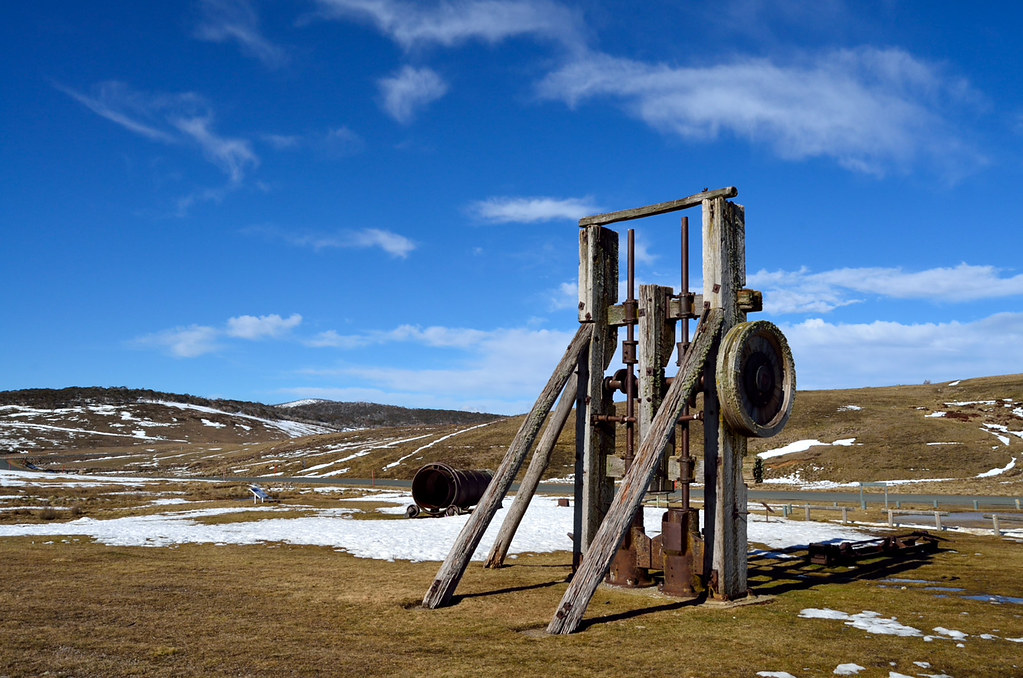
New Chum Hill Ruins

Remnants of Kiandra gold mine at New Chum Hill, #nsw #australia

Showing posts with label Art. Show all posts

August 30, 2008

Paintings by Rabindranath Tagore

The Art of Piece is an online tour hosted by The British Museum


Image credit: The British Museum
…our family has
been a confluence of
three cultures, Hindu, Mohammedan and British.'
(Rabindranath Tagore, Hibbert Lectures, Oxford, 1930)
"Rabindranath Tagore (1861-1941) is the most famous South Asian literary figure of the twentieth century. He was a poet, writer, statesman, educator and musician whose work and achievements earned him worldwide respect.

Born in Bengal, in eastern India, he was a strong supporter of Bengali unity and opposed the region's division at the end of the British Empire.

He was best known as a composer and poet and was the first Asian to win the Nobel Prize for literature. However, when already 60 years old, he began to paint and created a body of work that made him one of South Asia's great modern painters."

Click here for Rabindranath's paintings.

January 03, 2008

The Musée Guimet affair -part deux

Last week I reported about the bloggers reactions on the controversies surrounding the exhibition of the masterpieces of Ganges in Musée Guimet of France from the collections of the Bangladesh museums.

The apprehensions of the art lovers who were protesting the unclear processes of sending the artifacts including their fear of loss, theft, replication, even accident (on the way) came true as on Dec 22, one of the 13 crates in the 2nd shipment of artifacts to Musée Guimet in Paris vanished from the tarmac of ZIA International Airport, Dhaka.

Shafiur of Imperfect | world | 2008 reports:
Ah yes the bumbling and incompetent Inspector Clouseau must have been in charge of the precious bits and pieces at Zia Airport the other day when the nation’s heritage was under the care of Air France. Two priceless pieces have gone walkies. And the rest have been returned to the national museum as the powers that be finally resolved to not send the stuff to the Guimet in Paris. As I said in an earlier post, this whole thing at the Guimet lacked process even apparently the final decision to send them according to the New Nation.

And amazingly, Ayub Quadri, the education and cultural adviser to the inappropriately named “caretaker” government, is mulling resignation. I guess he is hoping Monsieur Clouseau will find the priceless Vishnu artefacts and save his skin.

Meanwhile I reckon Inspector Clouseau’s spokesman has started the damage limitation exercise at the French embassy in Dhaka. They reckon the whole thing was “highly suspicious.” Mon dieu! Yes it gets better. And they are effectively blaming those people who objected to the exhibition for the theft! This is a quote from their press release:

‘’… could also be the result of a conspiracy by a very small nexus of people to embarass France and Bangladesh.'’
Although according to the agreement the transport of the artifacts were responsibility of borrower (i.e. the French authorities), there were lapses in securities as the masterpieces were left in tarmac for three hours unattended. A local news source reports:
Homebound, the shipping agent hired by France, had declared the 145 artefacts awaiting shipment to Paris as ‘general cargo’, leading to the crates being left unattended for three hours on the tarmac and the theft of two Vishnu statues.
Meanwhile grapevines (as not supported by a second source) kept appearing in the media:
A confirmed source told Weekly Blitz that the authorities of Guimet Museum is now looking into legal aspects of holding the whole batch of first consignment of artifacts sent from Bangladesh for, what Guimet says, non performance of the contractual obligation of the authorities in Dhaka in sending the second consignment of artifacts.
Further report in a Bangla blog (chemical Ali) quoting a museum official suggests [bn]:
"the French officials requested Bangladesh national museum officials to quote the value of the artifacts so that insurance value becomes lower and promised that they will carefully handle them. The Bangladeshi museum officials were also lured with the chance to visit France alon gwith the artifacts which made them co-operate."
Arup at Sachalayatan posts an interview which tells that the French authorities have opened the first lot of the artifacts without the presence of the accompanying Bangladeshi officials, which is the due process.


And finally everybody loses as broken pieces of the two 1500 year old relics were found in a dump yard in the outskirts of Dhaka city. Apparently the petty thieves were trying to cover up their crime and could not handle the hunt on them.

Arup writes an emotional piece addressing the French ambassador in Bangladesh in Sachalayatan titled "Désolé Monsieur Romnicianu" [bn]:
সেদিন মিডিয়া আর বাংলাদেশের প্রতিবাদী কিছু মানুষের উপরে আপনি ক্ষেপে উঠেছিলেন। কূটনৈতিক শিষ্টাচার (যা আমাকে নিকটজনেরা শত চেষ্টায় শেখাতে পারেনি) ভুলে আপনি কতোকটা ফুঁসেই উঠেছিলেন। কেন? গরীব দেশ দেখে যাচ্ছেতাই করবেন আর বলবেন, আর আমরা হজম করবো?
...
কিন্তু আজকে আমি সেই বোঝাপড়ায় আসিনি। বড় লজ্জা নিয়ে আপনার মতো ঘৃনার্হ একটা মানুষের কাছে হাটু গেড়ে বসে কিছু কথা বলতে চাই। ...বাংলাদেশের সমস্ত পুরাকীর্তি আপনারা নিয়ে যান, যতো তাড়াতাড়ি পারুন, নিয়ে যান সব। আর যেগুলো প্রথম চালানেই চলে গিয়েছিল, প্লীজ ফেরত দেবেন না আর। চুরির শংকায় আমরা আপনাদের বিরুদ্ধে কতোই না আন্দোলন করেছিলাম। কি লাভ হল তাতে। মোবাইল ফোনের চালান ভেবে যেদেশের মানুষ ৩য় খ্রীস্টপূর্বাব্দের অমূল্য বজ্রসত্ত্ব মূর্তি চুরি করে আর পরক্ষনেই ভেঙ্গে টুকরো টুকরো করে বর্জ্যক্ষেত্রে ছিটিয়ে দেয়, তাদের কি অধিকার আছে নিজের অমূল্য সব সম্পদ নিজের বুকে আগলে রাখার? আমরা মায়ের কুলাঙ্গার সন্তান। দেশের সম্পদ তাই বরং চলে যাক আপনাদের মতো বেনিয়াদের হাতে। আপনারা বেনিয়া হতে পারেন, কিন্তু ইতিহাস আর ঐতিহ্যের মূল্য দিতে জানেন। নিয়ে যান, তবু শান্তি, জানি আগলে রাখবেন পরম মমতায়।

"That day you showed your outburst of anger to the media and some protesters ignoring diplomatic etiquettes. Because we are a poor country, does that give you the right to say anything at your will and we should digest that?

No I have not come to talk about that. Keeling down before a hated man like you, I want to say something... Please take away all the archaeological artifacts from Bangladesh as soon as possible. Please keep those which were already sent to you. We have protested a lot on the apprehension of theft. But what good it did to us? Some people of this country had stolen a 300 Year BC artifact on the notion that its a consignment of mobile phones and later broke them into pieces and dumped them. The people of this country do not deserve to protect their priceless assets. We are condemned sons and daughters of this country. So let these objects go to you, the colonialists. You can be colonialist, but can value and respect the history and tradition. Please take them away, still we will be happy to know that they are safe."
A French Blog Rue89 reports the incident in their post titled "Vishnu disparu au Bangladesh, le musée Guimet ébranlé" (Vishnu disappeared in Bangladesh, the Musée Guimet shaken ). A commenter -"Illusion (archaeologist)" aptly points out [fr]:

Si la situation a escaladé ces derniers mois, c’est aussi parce que les organisateurs n’ont pas réagi avec doigté aux remarques qui leur étaient faites, forts qu’ils étaient d’avoir le support du gouvernement bangladais (et probablement surpris qu’on puisse contester l’organisation d’une telle exposition), mais il serait faux, comme on a tenté de le faire croire, que ce mouvement est uniquement une critique exercée par des opposants au gouvernement en place à Dhaka. Parmi les opposants, il y a des archéologues, des historiens de l’art, des professeurs d’Université et c’est leur faire insulte que d’éliminer d’un revers de main les critiques qu’ils ont émises. C’est vrai que le gouvernement bangladais a fait des fautes, mais la France en a profité. L’opposition n’est pas une opposition au principe de l’organisation de l’exposition mais se base fondamentalement sur le choix des objets.
...
Le Bangladesh est un pays à majorité musulmane, il est vrai, mais néanmoins, c’est avant tout le « pays des Bengalis » (Bangla-desh), et ceux-ci sont extrêmement conscients de leur passé et de leur culture. Ils sont respectueux de leurs ancêtres et de leurs réalisations et n’attendent pas les Occidentaux pour les éclairer à ce sujet, mais on pourrait de fait les aider en finançant des projets éducatifs, ou de formation (ce que Guimet a tenté de faire en offrant des formations de muséologie), ou en partageant notre savoir sur la restauration, la conservation, etc. – mais encore seulement s’ils en font la demande : rien n’est pire que de se croire autorisé à « aider » quand en fait, on ne fait qu’imposer sa propre vision du monde. Et enfin, en sachant aussi se retirer au moment opportun : nous ne sommes plus au « temps béni des colonies », mais les mauvaises habitudes ont malheureusement la vie dure. De telles expositions nous font plaisir, mais n’oublions pas que nous consommons à ce moment de la culture qui n’est pas la nôtre et pour laquelle nous n’éprouvons souvent que de la condescendance. Allons voir l’autre sur place et acceptons que sa vision du monde peut être radicalement différente de la nôtre.

Machine Translation:

If the situation has escalated in recent months, it is also because the organizers did not react sensitively to the comments that were made, they were strong to have the support of the government of Bangladesh (and probably surprised that we can challenge the organization of such an exhibition), but it would be wrong, as it tried to have us believe that this movement is only a review carried out by government opponents in place in Dhaka. Among the opponents, there are archaeologists, art historians, university professors and it is insulting them than to eliminate out of hand the criticism they have made. It's true that the government of Bangladesh has made mistakes, but France took advantage. The opposition is not an opposition to the principle of the exhibition but is based fundamentally on the choice of objects.
.....
Bangladesh is a Muslim-majority country, it is true, but nevertheless, it is the Bengalis' countries (Bangladesh), and they are extremely aware of their past and their culture. They are respectful of their ancestors and their achievements and do not expect the West to shed light on this matter, but it might actually help by supporting educational projects, or training (what Guimet tried to offering training museology), or by sharing our knowledge on the restoration, conservation, and so on. -- But only if they apply: nothing is worse than being allowed to believe "help" when in fact, it does impose its own vision of the world.

And finally, knowing also retire at the right time: we are no longer the "blessed time of the settlements", but unfortunately have bad habits die hard. Exhibitions of this kind we are happy, but we must not forget that we eat at this time of the culture that is not ours, and for which we do often than condescension. Let's hear another on the spot and accept that his vision of the world can be radically different from ours.
Since the beginning of the process French diplomatic pressure was acute on Bangladesh. The adviser (minister equivalent) of the cultural ministry had taken responsibility and resigned. Times Online reports that it had created a diplomatic rift between Bangladesh and France. The president of the Musée Guimet had expressed his opinion in "Le Monde" as "écœuré" (nauseating) and of course blamed the Bangladeshi authorities keeping mum about their lack of processes.

Today's latest news is that the Bangladesh ambassador to France has died of Brain hemorrhage. Close acquaintances say he was under a tremendous pressure for this affair. France may have had lost some amount of money in this debacle but Bangladesh had to pay dearly, all in priceless objects.

December 24, 2007

The Musée Guimet affair

Cross posted in the Global Voices Online

From January 2008 the Musée Guimet of France is holding an exhibition of the masterpieces of Ganges from the collections of the Bangladesh museums for the first time outside of Bangladesh. From the museum catalogue:
“Bangladesh possesses an immensely important cultural heritage, this arising from the fact that the eastern half of Bengal has been one of the cultural richest regions of the Indian world; a vision far from the catastrophic one that the western world often tends to favour. The region is associated with the art of the Pala and Sena dynasties (8th – 13th century)....and goes back to the Maurya and Sunga periods (3rd – 1st century BC)....Bangladesh also harbours the oldest Buddhist monastery of the Indian world, Paharpur, which has now been listed on the UNESCO’s list of protected monuments.”

Sonar Bangla

Black and Grey blog has more on the backgrounds of the archeological artifacts in question. (Images courtesy: Black and Grey)

This exhibition was scheduled to start from October, 2007 but was delayed due to a lot of drama. Bonbibi at Unheard Voices reported on the first of October, 2007:
“The conditional has crept in because the High Court has issued a two-month stay order on the travel of the 189 art pieces following a writ petition by a group of Bangladeshis. They raised concern over the legality of the contract and filed a public litigation case in the High Court that ordered to stop sending the exhibits. The litigants feared that the precious items to be sent to the Paris museum might not be returned to Bangladesh (‘The New Nation’ 27th Sept 2007).”
Unheard Voices later reported of an unholy alliance that stopped the archeological artifacts from sending:
“…a (second) case was filed before the District Court, again by ‘art lovers’ including former DGs of Archaeology etc. Interestingly, the case was filed (according to newspaper report) against the French Ambassador and others. The Court issued a show cause order, but did not stop the artifacts from going.

At this point, with no more puppets to join the dance, the DGFI’s (Military Intelligence) fist finally came out from beneath the glove. It directly intervened at the airport to stop the artifacts from going on the ground that an ‘inquiry’ is to be held.”
Unheard Voices blog also posted the protests in detail which raised concerns over the security of the artifacts during shipping and the financial discrepancies (The total value of insurance is Euro 400,000 whereas only a major artifact is said to be worth more than Euro 800,000).

The Bangladeshi Blogosphere was divided right from the start on the issue. Rumi of In The Middle Of No Where answered the allegations of the skeptics with a question and answer style and commented if a solution is reached sooner than later then:
“The Exhibition will go ahead. And thousands of people will be able to learn about Bangladeshi art architecture and our heritage and to understand the depth and diversity of our culture – in a contrast to the negative images portrayed through the news every day.”

Avalokitsevara

On 1st of December 2007 the first assignment of the archeological artifacts was flown out of Bangladesh to France rather controversially – in the middle of the night in suspicious crates under police guards evading protesters and journalists. In order to camouflage the mission, the authorities utilised vehicles bearing 'Save The Children Cyclone' and 'USAID Sidr Emergency Relief' signs.

Renowned photo journalist Shahidul Alam did an excellent piece of investigative citizen journalism. In this post he reports with photos portraying the first consignment being sent to France. He also points to the fact that the Musée Guimet in Paris incidentally had been alleged to hold previous stolen artifacts from Bangladesh and there are similar allegations that stolen objects from China and the rest of Asia are held by the Guimet.

He recently visited the Musée Guimet in Paris but had been denied access to both the director of Guimet Jean-Francois Jarriage and the curator of the show Vincent Lefevre, for the answers to his questions.

Unheard Voices Blog has a brilliant post called “Tintin in Bengal or Musée Guimet controversy” detailing the whole episode with a lots of links to other blogs, pro-contra views, protests, collected media reports, explanations from the French embassy and the organizers and a lot of debate on this issue.

Shahidul Alam also tried to find the missing piece of the jigsaw:
“Guimet is a respected museum, and there has been natural interest in a show that should be very special. Why then such resistance from art lovers of Bangladesh? Surely art is to be appreciated?

Why on the other hand, the secrecy? The organisers should be taking credit for arranging such an event and not trying to sneak away under police protection. If there is nothing to cover up, why the covert operation?

The emotions are high. I’ve seen people weeping because something very special to them has been taken away. I have seen people angry because they feel violated. I have seen people frustrated, because they feel helpless against the power of the establishment.”
And at last the inevitable had happened. Unheard Voices Blog reports:
“At approximately 2 am on Dec 22, one of the 13 crates in the 2nd shipment of artifacts to Musée Guimet in Paris vanished from the tarmac of ZIA International Airport, Dhaka.

Crate 5 contained Statue of Visnu (terracota, black) & Bust of (Hindu Lord) Visnu. High resale value on international underground art market as they are unique pieces.”
Shahidul Alam, who reported about the protests to stop the second shipment is furious:
Their fear of items being stolen, or not being returned, was considered preposterous. News of the missing crate, and the priceless statues it contained, had been suppressed, but the information leaked out. Could the guarantors please explain?
Please stay tuned for the next episode of this thriller.

December 01, 2007

The Musee Guimet Controversy

Shahidul News has a touching story on the protest to halt sending Bangladeshi artifacts to Musee Guimet, France.

The reasons:

* Some media in Bangladesh started the conspiracy theory raising doubts on the transparency of the process.

* Allegations that “Musée Guimet in Paris incidentally also holds thousands of stolen/illegal objects from China and the rest of Asia,” and it may steal the artifacts replacing with carbon copies especially when the Bangladeshi ones were not individually and clearly marked rather listed with homogeneous counts.

However there are other sides of the story:

Rumi Ahmed answers the sceptics with a question answer style:
What is the ‘Sonar Bangla’ Exhibition?

This exhibition is scheduled to showcase 189 pieces of Bangladeshi ancient art, over four months from October 2007 to March 2008 at the National Museum of Asiatic Art, the Musee Guimet, Paris.
It has been planned for several years, and has involved extensive negotiations between the Governments of France and Bangladesh.
It is being held at one of the most prestigious venues for Asian Art in the whole of Europe, a major national museum which holds an important permanent collection of South Asian Art. It recently held very well reviewed exhibitions of Afghan gold and Cambodian ancient art.
It is the first major international exhibition of Bangladeshi ancient art – the first opportunity the world will have to see our national heritage, and to see it in all its diversity and richness. It will show a face of Bangladesh which is little known in the west. It is likely to generate not only new interest in Bangladesh, but to catalyse further research and perhaps also future cultural exchanges and engagement.

Why are some people objecting to the exhibition?

As each objection has been met and responded to, new ones have been generated. It seems that the real objection of many of the ‘experts’ is that they were not involved/consulted)

1. The Musee Guimet is not a state museum.
[stated by the writ petitioners’ lawyer]
The Museum is a national museum, and regulated, like all other national museums by the Director Museums, an official of the Ministry of Culture. It’s not very difficult to find this out, just go on the website of the French Government.

2. The Musee Guimet is not well known and has a dubious past.

The Museum is internationally renowned as one of the leading European museums of Asian Art.

3. The artefacts listed for exhibition include unique pieces and these are too valuable too travel, so only replicas should be taken. [stated by ‘experts’ eg Prof. Shafi]

International exhibitions do not show replicas, but only originals. Visitors to art exhibitions are interested in seeing original, unique pieces.

Please check the details of the Tutankhamun exhibition, the Pompeii Exhibition, the Arts of Persia Exhibition etc etc all held in major international venues, and more recently the Gupta sculptures exhibition held in Paris.

The artefacts if sent in the original will be copied while abroad, and the French Government will keep the originals and return the copies and no-one in Bangladesh will know the difference. [Dr. Yuree, and also Prof. Shafi] In addition to a clause in the agreement that the artifacts will be returned within four weeks, the French Government has passed an order – as is usual– clearly stating that under no circumstances could the artefacts be retained in France on conclusion of the exhibition. It should be noted that while many artefacts have been and continue to be smuggled out of Bangladesh, this is invariably by individuals and is hardly likely in the context of a government to government agreement.

6. The French would never allow the Mona Lisa or Picassos to travel. . [prof. Nizamuddin, an ‘expert’ and petitioner seeking injunction]

Of course the Mona Lisa has travelled abroad as have many Picasso artworks (including to India).

7. The removal of the artefacts will hamper research. [prof. Shafi of Jahangirnagar Univ.]

Quite the contrary. It will enable new interest in the artefacts to be generated. Physical examination of individual items is not always necessary for research.

Concerns for Clarification
One of the Government officials who is supposed to travel with the exhibit has earlier been accused of theft of artefacts. [raised by writ petitioners and their lawyer]

There is an absolute prohibition of any unique antiquities being taken abroad.
This is a misreading of the law. Antiquities may be sent on ‘temporary export’ ‘for purposes of exhibition etc…’ (See Rule 22 (1) (a) Antiquities Act).In this case the artefacts are obviously going abroad for temporary export as exhibits.
More about the artifacts from Ahmede Hussain:
Bangladesh's rich and colourful heritage caught the attention of the western eye last summer, when Bangladeshi and French archaeologists, in a joint excavation, unearthed a temple that dates back to the 800AD. This, however, did not come as news to veteran archaeologists as the country's civilisation is believed to be as old as the Aryan conquest of the South Asian sub-continent. In fact, the ancient city of Pundranagar, now situated in the village of Mahasthan (The Sacred Site) in Bogra, has been mentioned in the Vedas, and has remained one of the oldest urban settlements discovered in the eastern part of the sub-continent.
Talking about unholy alliance in Drishtipat:
“The past few weeks have seen tempers run high in some part of the artistic and heritage community over the supposed ‘theft’ of our artifacts by a foreign government, their ‘threatened destruction’ and the ‘anti-state’ activity constituted by their exhibition abroad. Quieter voices within both communities have talked about the importance of culture being part of a “universal heritage, which cannot be confined within geographical borders and boundaries but must be shared across communities and countries. But our press has done little to give space to these voices, reporting only the shrill and frankly ignorant (’the Mona Lisa has not been shown outside France’ says one eminent former DG Archaeology – now involved in litigation to stop the artefacts being taken abroad).”
And how it was denied travel previously:
The conditional has crept in because the High Court has issued a two-month stay order on the travel of the 189 art pieces following a writ petition by a group of Bangladeshis. They raised concern over the legality of the contract and filed a public litigation case in the High Court that ordered to stop sending the exhibits. The litigants feared that the precious items to be sent to the Paris museum might not be returned to Bangladesh (‘The New Nation’ 27th Sept 2007). This concern was surprisingly raised only at the last minute – when the statues were already on their way to the airport!
You be the judge.

Update: The Musée Guimet affair

October 19, 2007

S M Sultan, Brick Lane, Female Bloggers and Bangla E-Books

(First published in Global Voices Online)

Sid of Serious Golmal writes a well informative article on the life of S M Sultan, the master painter of Bangladesh commemorating his 13th death anniversary. Sultan was born in Norail (in Kushtia in the southwest of Bangladesh) in 1923. Born to a mason, he was a natural talent and did not complete his study in the Calcutta College of Arts and Crafts. Later on he created a wave in the West when he visited USA and UK under a cultural exchange program and displayed his paintings. From 1953 to 1976 Sultan lived in virtual obscurity, living the life of a Vaishnava Sanyasi.

Sultan's Adam
(The First Tree Planting: Sultan 1976: courtesy Serious Golmal)
"Sultan’s paintings may be sold at Sotheby’s in London today but for the people of rural Norail, the guru entered folk legend more than half a century ago. They tell us that animals were drawn to him, that he could converse with them, that hundreds of his works are scattered all over the world in all manner of places, given away as gifts, that he cared not for fame or material wealth, choosing to travel from village to village, country to country, returning at last to his source.

He lived in three continents but never had a fixed abode, never attached prices to his work, never married. He wore his hair long, chose to live out his days in rural Bengal with his dogs, cats, rabbits, birds and snakes rather than the big international cities that beckoned when recognition of his genius came early in his life."
Kotha Chilo (Stories to tell) blog reviews the movie based on Monica Ali's award winning novel Brick Lane. The filming of Brick Lane caught much media attention because of protests of some members of Bangladeshi communities in UK and the unit had to change location of filming to avoid threats. But Monica Ali maintains that "the 'controversy' was whipped up in the media".
"Monica Ali's 2003 novel Brick Lane was feted for its ability to blend the personal and the political as it recounted the experiences of a young Bangladeshi woman's journey of self-discovery. It was illuminating about the hidden lives of Britain's Bangladeshi community and the growing racism abroad in the wake of the 9/11 attacks. The respectable film version heavily compresses the novel into a less complex but still touching, small-scale tale of female empowerment that almost feels like a variation of Shirley Valentine."
Bangla Blogging platform Sachalayatan [bn] boasts of being more of an online writers community rather than collection of some conventional blogs. It has been promoting budding as well as established writers to post their literary works there. And adding more to the task it has already published a few literary E-books in PDF versions and more collaborative projects [bn] at hand. Now users can download their copy of the literature free, print it and read it at ease.

The first publications is a collection of poems of Sunil Saifullah, a notable young poet who prematurely ended his life in 1981. Some of his poems were only once published by the students union of his University (Jahangirnagar University) in 1982. But these few books went into oblivion in course of time and now he is barely known to people of Bangladesh. Bloggers of Sachalayatan first discussed about his works went to the University library to collect a copy of the book and recreate the Book. You can download the book from here [bn].

Some comments on the feat:
সৌরভ: জয় হোক এ উদ্যোগের। এ চেষ্টার মাধ্যমেই জন্ম জন্মান্তরে সজীব থাকুন আমাদের মাঝে কবি সুনীল সাইফুল্লাহ।
Sourav: Bravo to this initiative. With this work let poet Sunil Saifullah live among us for eternity.

সুমন রহমান: বাংলা সাহিত্যে এরকম সারপ্রাইজ আরো কিছু আছে। আমার মনে সচলায়তনের ই-বুক প্রকল্প দিয়ে সেসবের সুরাহা আমরা করতে পারবো।
Suman Rahman: There are more such surprises in the Bangla literature. I think we will able to sort them out with the Sachalayatan E-Book project.

Fele Asha Chelebela
Another recent Bangla E-Book publication “Fele Asha Chelebela” is a 109 page collection of childhood memoirs of twenty one bloggers which portrays the true picture of the lives of Bangladeshi youths, society, their upbringings etc. Its popularity prompted the bloggers to decide to publish it in future as a printed book with more collections of writings. You can download it from here [bn].

You never know some day these collaborative Bangla E-books with the help of New Media will be able to really change the scenario of literature of the country.

And last but not the least please do read the recent writings of the female bloggers of the Nari Joibon project to know about Bangladesh from their view. Nari Jibon is a not-for-profit organization in Bangladesh who is providing education to poor and under-privileged women making them self reliant through different short term education and skill development programs. It has brought these female voices to Blogging with the help of a Rising Voices micro-grant.

July 09, 2007

The French Masters from New York visits berlin

The Neue Nationalgalarie (new national gallery) in Berlin (picture Wikipedia) houses the collection of 20th century European painting and sculpture including paintings by Munch, Kirchner, Picasso, Klee and many others. The have a current exhibition going on titled "Die schönsten Franzosen kommen aus New York". It is an exhibition of around 150 works of French Master painters of the 19th century coming from the Metropolitan Museum of Arts of New York. Amongst the exhibits are works from Eugène Delacroix, Théodore Géricault, Théodore Chassériau; impressionist painters such as Édouard Manet, Claude Monet, Berthe Morisot, Camille Pissarro, Alfred Sisley and Auguste Renoir; Modernists like Paul Cézanne, Paul Gauguin and Vincent van Gogh (he is dutch but worked in France), and 20th century painters like Henri Matisse & Pablo Picasso.

Well after reading the names of the masters you can understand how important this exhibition is and the Berliner's are simply flocking towards it. Each day the exhibition is drawing thousands of visitors. If you buy the standard ticket (which is Euro 12) entrance is not guaranteed instantaneously. Visitors tickets are scanned during entry and exit so that they can allow fixed number of visitors at a given time. Entry can delay up to four-five hours depending on the crowd and they also devised a nifty free sms service that notifies you before 30 minutes of allowance of your entry. Well for those who are willing to pay a premium of Euro 30 can get the VIP ticket and instant access. However I felt that the exhibition is too crowded and there is no tranquility. (advertisement of the exhibition in Berlin streets - photo Wikipedia)

Our guide, an art student was very witty and informative with her speech. For an example she compared the academic painter Cabanel's Birth of Venus with another painter who painted nude Venus with hairs in the armpit making her more humane. She said that While Cabanel's work got prizes, experiments with Goddesses were deemed as a taboo in that era and were much controversial. But the painters dared to carry on with their freedom of expression. Even now depicting Goddesses not traditionally can invoke controversies and even personal attacks towards the painter in some parts of the World.

In Dresden with the old masters' works


(Photo Dr. Torsten Hennig via Wikipedia)

I have been in Dresden for a number of times and all were day trips from Berlin as it is only about 200 km away from Berlin. It is a historical city and you will love the old part of the city, especially the banks of the river Elbe. It has been the capital and royal residence for the Kings of Saxony, who furnished the city with cultural and artistic splendor for centuries.

Last week when I took some relatives (visiting us) to Dresden, and this time I was adamant to visit the Gemäldegalerie Alte Meister (Old Masters Picture Gallery) located in the Semper wing of the Zwinger Palace. The earlier visits to Dresden was so short that I could not make it.

I was amazed with the collection. The audio tour device was feeding all the information about the works of Italian, Dutch, German, Flemish, Austrian, French, Spanish and Greek Masters. From Wikipedia:
The gallery holds over 700 old master paintings from Renaissance to Baroque that were collected by the Electors of Saxony August II and his son August III in the first half of the 18th century. In 1746 the latter one bought 100 paintings from the Duke of Modena Francesco III d'Este, gaining the gallery Europe-wide fame.
Most of the pictures luckily escaped the WWII bombings as they were in underground store. They were carried to Moscow after the Second World War, and was returned to Dresden in 1955.

Amongst the highlights of the Gallery is Raphael's Sistine Madonna . But I liked Bellotto & Canaletto's portraits of Dresden. These paintings depicts Dresden's former beauty, much of it destroyed in the World War II bombings. It was a feast for the eyes devouring old masters' paintings like Rembrandt, Dürer, Peter Paul Rubens, Botticeli, Titian, Ribera, Cranach. Some were the size of the whole wall of a side of a room. You can take a look yourself from here. This year the Gallery launched a virtual world including all images and the Zwinger building in the Second life.

I wish I had more than one and a half hours time to visit the Gallery. I have to be there again.