

Dragonfly

Image by Rezwan

Overcrowded passenger ferry capsized in the Padma River in Munshiganj, Bangladesh

The World Cup Goal-E Project

This street in Bangladesh has a colorful world cup celebration

New Chum Hill Ruins

Remnants of Kiandra gold mine at New Chum Hill, #nsw #australia

Showing posts with label Social media. Show all posts

July 25, 2015

Why Britain Owes India for 200 Years of Brutal Colonialism

Shashi Tharoor speaking at Jaipur literary festival. Image by Jim Ankan Deka. Copyright Demotix (23/1/2015)
Indian Opposition MP, former minister and former Under-Secretary General of the United Nations Shashi Tharoor recently participated in a debate at the Oxford Union society arguing that Britain owes reparations to India for misdeeds committed during two centuries of colonial rule.

The 15 minute clip containing Tharoor's powerful and lucid argument for reparations went viral on social media soon after the Oxford Union debating society posted it online on July 14.

The British East India Company ruled or dominated on the Indian subcontinent from 1757 to 1858. The British directly ruled over the Indian subcontinent between 1858 and 1947 when the region was commonly known as British India or the Indian Empire.

https://youtu.be/f7CW7S0zxv4

Here are some excerpts from Tharoor's speech:
India's share of the world economy when Britain arrived on its shores was 23 per cent, by the time the British left it was down to below 4 per cent. Why? Simply because India had been governed for the benefit of Britain.

Britain's rise for 200 years was financed by its depredations in India. In fact Britain's industrial revolution was actually premised upon the de-industrialisation of India. [..]

By the end of 19th century, the fact is that India was already Britain's biggest cash cow, the world's biggest purchaser of British goods and exports and the source for highly paid employment for British civil servants. We literally paid for our own oppression. [..]

What is required it seems to me is accepting the principle that reparations are owed. Personally, I will be quite happy if it was one pound a year for the next 200 years after the last 200 years of Britain in India.
Tharoor's speech was widely appreciated in India and even Prime Minister Narendra Modi said in Parliament:
Tharoor’s speech reflected the feelings of patriotic Indians on the issue and showed what an impression one can leave with effective arguments by saying the right things at the right place.
Miss Malini wrote in her blog:
Irrespective of our political leanings and beliefs, we can agree to the fact that Dr. Shashi Tharoor is one of the top debators of the country. That’s why it’s not surprising when the diplomat and former minister of state for external affairs took part in a debate at the Oxford Union.
Shashi Tharoor himself said on Twitter:
Writer and film director Radha Bharadwaj writes on Twitter:
Sandip Roy claimed in Firstpost that Tharoor's speech had united a polarised Indian society, adding:
While the reparations he argues for are for the sins from centuries past, there is a bit that might have far more contemporary relevance for our politics today. At the end of the speech making a passionate case for even symbolic reparations Tharoor says “The abilty to acknowledge a wrong that has been done, to simply say sorry will go a far far longer way than some percentage of GDP.”

Now if only some of the politicians furiously butting heads in parliament and dredging up each other’s scams to shame each other would pay attention to that bit, we could all get moving with the nation’s business.

The post was also published in Global Voices Online.

June 21, 2015

Citizen Media Shows Why India Is Unlikely to Reach Its Millennium Goals Target for Maternal Mortality

In the hamlet of Indkatha , Jharkhand state in eastern India, women of the Ho tribe take lessons to reduce maternal mortality.  Image by Freny Manecksha. Copyright Demotix (11/11/2008)
In the hamlet of Indkatha, Jharkhand state in eastern India, women of the Ho tribe take lessons to reduce maternal mortality. Image by Freny Manecksha. Copyright Demotix (11/11/2008)
According to the UN Millennium Development Goals, India should bring down its maternal mortality rate (MMR) to 109 per 100,000 live births by 2015. This is a tough ask, as from an MMR of 437 per 100,000 live births in 1990-91 India has only achieved a reduction to 190 by 2013-2014.

Experts therefore believe that India is likely to miss its Millennium Development Goals target for MMR.

Safe birthing depends on how informed pregnant mothers are and whether the delivery is carried out by trained personnel and in institutional health facilities.

In many regions of India, a lack of health infrastructure to support institutional deliveries and pre- and post-natal care as well as a lack of awareness regarding existing schemes promoting institutional deliveries serve as major impediments to achieving the goal. Other factors such as early marriage of girls, poor nutrition among women and gender inequality increase maternal risk.

A report drafted by CommonHealth and Jan Swasthya Abhiyan, a coalition for maternal-neonatal healthcare and safe abortion, says that the public health system has failed women belonging to the Scheduled Castes, Scheduled Tribes and minority religious groups living in geographically remote areas, as well as migrants. The report shows that although the government runs several programmes, there is a great gap in accountability and governance and most of the programmes have been implemented poorly on the ground.

Citizen journalists from Video Volunteers -- an international media and human rights NGO -- have highlighted maternal healthcare problems at grassroots level in a series of videos.

Their stories reveal that while the government is encouraging women to deliver at institutions rather than at home, the public health system is crippled by shortages of health infrastructure, doctors, frontline health workers and medicine.

Corruption plays its part

In 2014, 56,000 women died during childbirth in India. The Indian government’s schemes Janani Suraksha Yojana and Janani Shishu Suraksha Karyakram make provisions to reduce out-of-pocket expenditure for women living below the poverty line, providing free antenatal check ups, IFA tablets, medicines, nutrition in health institutions, provisions for blood transfusion, and transport to and from health centres.


However, according to the above video, which comprises footage taken by the hidden camera of citizen journalist Mary Nisha from the Godda district of Jharkhand:
The 24-year-old woman in labour was kept waiting for the doctor for six hours. The doctor on duty did not turn up and she delivered in the presence of a nurse. She was forced to pay INR 400 for her delivery and even to use the toilet. She received neither free medicine nor nutrition.
Lack of functional institutions

This video follows three women in Khatti village, Gariaband district, Chhattisgarh. One lost her baby six days after it was born due to a lack of medical assistance. Another had a stillborn baby resulting from an unassisted home birth while a third, who is nine months pregnant, has no access to healthcare.


This video by Reena Ramteke from Khatti village in Garyaband District of the state of Chattisgarh shows that the state-run health facility in the locality is constantly shut.

Laleshwari, 21, says no health worker has ever contacted her. Purnima, 20, had a stillbirth despite the fact the health centre was close to her home. She says the sub-health centre is open twice a month and the nurse at the facility is not present most of the time it is open. What options did she have?

Not a single delivery has taken place in the past decade in the sub-health centre in Khatti village. Indrani, 22, lost her child within six days of the birth due to an infection following a home delivery. During the delivery she called the duty nurse of the sub-health centre but was told by the nurse that she was at a meeting.

Bharti Kumari reports from Telmocho village, Dhanbad district, Jharkhand, that the main medical facility is unusable for health workers and patients, lacking functioning toilets and featuring a roof that leaks during the monsoon.


The doctors of this facility also visit rarely. Thus, patients that can afford to have to visit a relatively costly private centre for childbirth.

Lack of manpower

Halima Ezaz from Dhanbad, Jharkhand, reports that one Auxiliary Nurse Midwife (ANM) from Jharkhand looks after 14 sub-health centres. Ahilya Devi, a septuagenarian, has responsibility for looking after pregnant women and women with new born babies, giving them nutrients, vaccinations, performing deliveries and so on. But she is not supplied with proper tools to work in a region where the power supply is unstable:


Ahilya says:
We used to have rechargeable emergency lights, but those are broken. [If the lights go at night], we have to use candles and torches. How can we make stitches in this light?
Each of these videos highlights the obstacles to reducing the maternal mortality rate in India. Despite the government campaigns in place, India is lagging behind neighbours Bangladesh and Nepal in the fight against maternal mortality. There is also a huge disparity in terms of progress between different states in the vast country. Some states like Tamil Nadu, Delhi, Kerala and Andhra Pradesh have achieved their millennium development goals. But there are many -- especially those with Scheduled Castes and Scheduled Tribes as well as minority religious groups -- who are left trailing.

Watch this YouTube playlist on maternal health in India to learn more.

The post was also published in Global Voices Online.

May 12, 2015

Ananta Bijoy Das Becomes Third Free-Thinking Blogger Killed This Year in Bangladesh

Ananta Bijoy Das. Image from his Facebook page
Ananta Bijoy Das. Image courtesy his Facebook page
It's a sad day for online activists in Bangladesh. On Tuesday morning, science writer and blogger Ananta Bijoy Das was murdered by a group of three or four masked people wielding machetes in Sylhet, Bangladesh's fifth largest city.

It was the third such killing this year of a writer who advocated secular thought, allegedly at the hands of religious extremists.

Das, 33, was a banker by profession but also edited a quarterly magazine called Jukti (Logic) and headed the Sylhet-based Science and Rationalist Council. He was the author of four books on science and critical thinking, and took an active part in the Ganajagaran Mancha, a forum born out of the Shahbag protests that demands a ban on Islamist parties and the death penalty for convicted war criminals.

Das was also an admin for the Bangla blog Mukto Mona (Free Thinkers), which won Deutsche Welle's prestigious BOBS award for social change in April 2015.

According to the Doha Centre of Internet Freedom:
While most of Das's output for Mukto-Mona focused on science and evolution, he wrote a number of blogs that criticised some aspects of Islam and also of Hinduism.

In comments on Facebook posted early Tuesday, Das slammed the local member of parliament from the ruling Awami League party for criticising one of the country's top secular and science fiction writers.
Bangladesh, a Muslim-majority country, is officially secular. But people who have challenged religion have repeatedly been targeted by Islamic extremists in the past decade.

The nature of the threats have also escalated from local to international. Just a week ago, Al Qaeda in the Indian Subcontinent (AQIS) claimed responsibility for the assassination of Bangladeshi-American blogger Avijit Roy (the founder of Mukto Mona blog) on February 26 in which his wife Rafida Ahmed was badly injured. In a recent interview, she slammed Bangladesh's government for inaction and has termed the attack on her husband as "well planned, choreographed – a global act of terrorism."

On March 30, another blogger who opposed irrational religious belief, Washiqur Rahman, was hacked to death in Dhaka. Two madrassa (Islamic religious school) students were apprehended and a third assailant got away. Both Roy and Rahman's cases are under trial.

Das had been on extremists' hit list for some time and was first named in a list of 84 bloggers deemed atheist or blasphemous by Islamic hardliners submitted to the government in 2013.

AQIS claimed responsibility for Das’s murder, according to tweets by extremist group Ansar Bangla Team. "Another file closed! Stay tuned for next target," the statement read.

Screenshot of the AQIS statement
Outrage over Das' death spread quickly. Prominent blogger Arif Jebtik wrote on Facebook:
লিখতে, বলতে, ভাবতে কোনো কিছুতেই আগ্রহ পাই না। ৮৪ জনের একটি তালিকা স্বরাষ্ট্র মন্ত্রণালয়ে জমা পড়েছিল দুইবছর আগে, তালিকা থেকে নবম হত্যা হয়েছে আজকে সিলেটে। তালিকা নিশ্চয়ই চূড়ান্ত নয়, গত ২ বছরে আরো নাম সেই তালিকায় নির্ঘাত যুক্ত হয়েছে। কিন্তু অন্তত এই ৮৪ জনের ব্যাপারে গত ২ বছরে কোনো খোঁজখবর হয়নি, তাঁরা নিয়মিত বিরতিতে খুন হওয়া শুরু করেছেন।
মাসিক কোটায় হত্যা শুরু হয়েছে হয়তো এটি সপ্তাহান্তের কোটায় উন্নীত হবে। ৮৪ জন যাবে, আরো হাজার চুরাশির নাম তালিকায় আসবে। খানিক আহাজারি হবে, সবখানেই একটা ফিসফিস-চুপচুপ ভাব, কিছু বিকৃত মানুষের উল্লাস-তারপর পরের হত্যার জন্য অপেক্ষা।
এই দেশে আইনবহির্ভূত সব হত্যাই জায়েজ হিসেবে মেনে নিয়েছে বৃহত্তর জনগোষ্ঠি, এখানে সবগুলো খুনই 'বিচ্ছিন্ন ঘটনা'।
I don't have the impetus to write, say or think anything. Two years ago a list of 84 bloggers was submitted to the Ministry of Home, 9th from the list was murdered today in Sylhet. This list is not exhaustive, surely more names have been added in the past two years. But nobody bothered to think about the safety of these 84 individuals. They are ending up dead one by one, in regular intervals. Now they are killing one every month, maybe they will speed up to do the same weekly. This list will be done, thousands more will be added. People will regret the death a bit, hush, silence everywhere, demonic joy from some perverts, then everybody waits for the next kill. In this country all these illegal killings have been taken for granted, every death is an isolated incident.
Blogger and activist Rayhan Rashid remembered the fallen who were attacked or killed for their free thinking in Bangladesh:
Ananta Bijoy Das's last posts were translated from Bengali to English by Arunava Sinha:
The International Humanist and Ethical Union (IHEU) wrote in a blog that Ananta Bijoy Das's application for a visa to travel to Sweden, under invitation from Swedish PEN to speak in a conference, was rejected recently by the Swedish embassy in Dhaka, on the basis that he might seek to remain in Sweden.

Exiled writer and columnist Taslima Nasrin blamed the government:
Bangladesh government is not taking any action against the Islamist-killers for being afraid to be labelled as anti-Islam. Islamists are allowed to do whatever they like in Bangladesh. It seems killing free-thinker atheists who criticize Islam is their main agenda.

Rajib Haider
A.K.M Shafiur Rahman
Avijit Roy
Washikur Rahman Babu
Ananta Bijoy Das.
Who is next?

Tomorrow maybe you. Or maybe me.
Blogger Haseeb Mahmud wrote:
পুলিশের দায়িত্ব কি সেটা এই মুহুর্তে একটা প্রশ্ন। অভিজিৎ হত্যার কোন সুরাহা হয়নি। ব্লগার রাজিব হত্যার মামলায় গ্রেফতার ও সেটার বিচার শুরু হলেও সেই হত্যাকান্ডের নাটের গুরু এখনো ধরা ছোঁয়ার বাইরে। অনন্ত বিজয়ের হত্যাকারিদের গ্রেফতার ও তাদের রাতারাতি বিচার শুরু হবে এটাও আশা করা কঠিন। আমাদের করণীয় চাপাতির মুখে লেখা না থামানো। লেখা থামালে জিতে যাবে আনসারুল্লাহ।
What the responsibility of the police is at this point is a question mark. They could not find the killers of Avijit Roy. They have arrested the killers of blogger Rajib, but the mastermind is on the loose. It is a tough to hope that the killers of Ananta Bijoy will be nabbed anytime soon or a trial will start. Our prerogative is to not to stop writing even if confronted by wielding machetes. If we stop writing they will win.
The post was also published in Global Voices Online.

May 11, 2015

Why Arabic Script on the Walls Might Not Stop Public Urination in Dhaka

The photo shows  Arabic sign on the sidewall of Panthakunja Park at the Karwan Bazar in Dhaka. Image by Sk. Hasan Ali. Copyright Demotix (7/5/2015)
The photo shows Arabic sign on the sidewall of Panthakunja Park at the Karwan Bazar in Dhaka. Image by Sk. Hasan Ali. Copyright Demotix (7/5/2015)
Public urination is a problem in Bangladesh due largely to a lack of public toilets. Municipal officials in the capital Dhaka have battled in vain to stop men urinating in public, with signs in the local Bengali language and warnings of punishment and fines yielding no notable results.

Now the government is hoping that an innovative idea can put a stop to the habit. Recently the Ministry of Religious Affairs released a video highlighting their campaign "Language Matters" wherein Bengali signs warning against urination are now being replaced by Arabic signs, a holy language for Bangladeshis.

Perhaps they have taken a cue from neighbouring India -- battling with the same problem -- where pictures of Hindu gods and godesses on the walls are intended to have the same effect.


Although some are lauding the state's effort to solve a perennial problem, others are skeptical, claiming the campaign supports blind faith and promotes misconceptions.

Sufi Faruq comments on YouTube:
ধর্ম মন্ত্রণালয়ের দারুণ একটা ক্যাম্পেইন !!! (..)

বাংলাদেশের বেশিরভাগ মুসলিম আরবি ভাষা না বুঝলেও এই ধরনের অক্ষরকে পবিত্র মনে করে। তাই ওই স্ক্রিপ্টে লেখা যে কোনকিছু অপবিত্র করতে ভয় পায়। এই ভয়টার বেশিরভাগ সময় ধর্ম ব্যবসায়ীরা অপব্যবহার করতো। এবার একটা দারুণ কাজে ব্যাবহার হল।
A great campaign by the Ministry of Religious Affairs!!!

Most of the Muslim majority Bangladeshis cannot understand Arabic but they deem it as a holy language. So they fear to desecrate anything written in that language. Most of the time it was used by religious opportunists as it is the language of the Koran and the prayers. Now it has been used for a good cause.
Despite the Ministry of Religious Affairs' claim in the video about toilets being present in most of Dhaka's 10,000 mosques, the general lack of public toilets in the city of approximately 15 million is a genuine challenge. The city's large homeless population is particularly affected by the shortage.

Adnan R. Amin at Alal O Dulal Blog thinks that the video does not get to the root of the problem and instead aims to create false impressions:
The using of a religious misconception (“Arabic is a holy language”), to prevent a social evil, is clever. But it also reinforces and lends credence to that misconception, instead of dispelling it. One would think that for a ministry for religious affairs, dispelling religious misconceptions would outweigh protecting city-walls. If there were funds available to the government, Dhaka’s City Corporations could’ve used them to create better facilities for women. While it is difficult to discern from boardrooms, the 36 public toilets with facilities for women are now being used by men. Judging from the tactic and tone of  this video, a reexamining of both government bodies’ priorities seems to be in order.
Moreover, Fariduddin Masud, an influential cleric criticised the Ministry for Religious Affairs.

While most mosques do have sanitary facilities, mosques themselves are "not public toilets", he said, adding that "nobody has the right to use the language of the Koran for such a campaign."

Blogger Irene Sultana doubted the campaign via a blog post on Women Chapter titled 'Not Arabic, but Public Toilets, Matter":
ঢাকা শহরের প্রতি দেড় লাখ নাগরিকের জন্য শৌচাগার রয়েছে মাত্র একটি। [..] অধিকাংশ পাবলিক টয়লেটই ব্যবহার অনুপযোগী। [..] পাবলিক টয়লেটহীন নগরীতে পথচারীদের অধিকাংশই তাই ফুটপাতকেই বেছে নিচ্ছেন ’হালকা’ হতে।

না বুঝে কেবল আরবি লেখা থাকলে সালাম করা হলো এ দেশের মানুষের ধর্মীয় অন্ধত্ব। ধর্ম মন্ত্রণালয়ের দায়িত্ব ছিল মানুষকে এসব অশিক্ষা থেকে বের করে শিক্ষিত, সচেতন করা, তার বদলে মানুষের সেই অজ্ঞতাকে ব্যবহার করে ’সমাধানের’ নামে মূলত একটি মশকরা করলো!
There is only one toilet in the capital Dhaka for every 150,000 people, out of which many are not usable. So in the absence of enough public toilets the pedestrians use walls to relieve themselves.

Many Bangladeshis respect the Arabic language because they don't know the language. The duty of the Ministry of Religious Affairs was to educate them and make them aware that this is a language only, not everything in its writing is sacred. But instead they used this ignorance to eke out a "solution" which is actually a farce.
Sultana also cites the recent efforts of Indian Prime Minister Narendra Modi, who built toilets in front of temples and achieved 5.2 million lavatories in the first 100 days of his tenure.

Bangladesh lags far behind on this issue.

While state religious officials are already trumpeting its successes, the campaign does not appear to have been well thought-through. If implemented to the fullest extent, Dhaka's walls will be covered by Arabic but people will still have nowhere to urinate.

Moreover, in India, before Modi went on his toilet-building spree, the gods on walls campaign unravelled: people simply began urinating on the faces of the deities. Innovative campaigns incorporating public shaming such as "The Pissing Tanker" also lacked impact.

For this reason Adnan R Amin's comment that the money spent on the campaign -- "a proxy solution that treats the Symptom and not the Cause" -- would be better spent on new public toilets in Dhaka seems to be well-founded.

The post was also published in Global Voices Online.

March 11, 2015

Real Goats. Real Stories. Bangladesh Delivers.

Screenshot from The Goats of Bangladesh Facebook page.
Screenshot from "The Goats of Bangladesh" Facebook page.
Read the full interview here at Scroll.in.

Bangladesh has now a satirical Facebook page much like Pigeons of New York, which is itself a parody site of the famous Humans of New York project. Goats of Bangladesh is only about six months old, but it boasts of almost 10,000 followers. Sahil Bhalla of Scroll.in interviewed one of the page's administrators, who preferred to remain anonymous.
[What is] the idea behind the page?

We were bored one day during Eid and decided to take pictures of goats with a DSLR camera. After seeing the outcome of the pictures, one of us decided we would open a parody page called "Goats of Bangladesh" where we would mimic the style of posts made by Humans of New York in a mocking way.
Screenshot from the Goats of Bangladesh Facebook Page
Screenshot from the "Goats of Bangladesh" Facebook Page
Read the full interview here at Scroll.in.

The post was also published in Global Voices Online.

February 20, 2015

Afghanistan Makes History in Cricket World Cup, Despite Debut Loss to Bangladesh

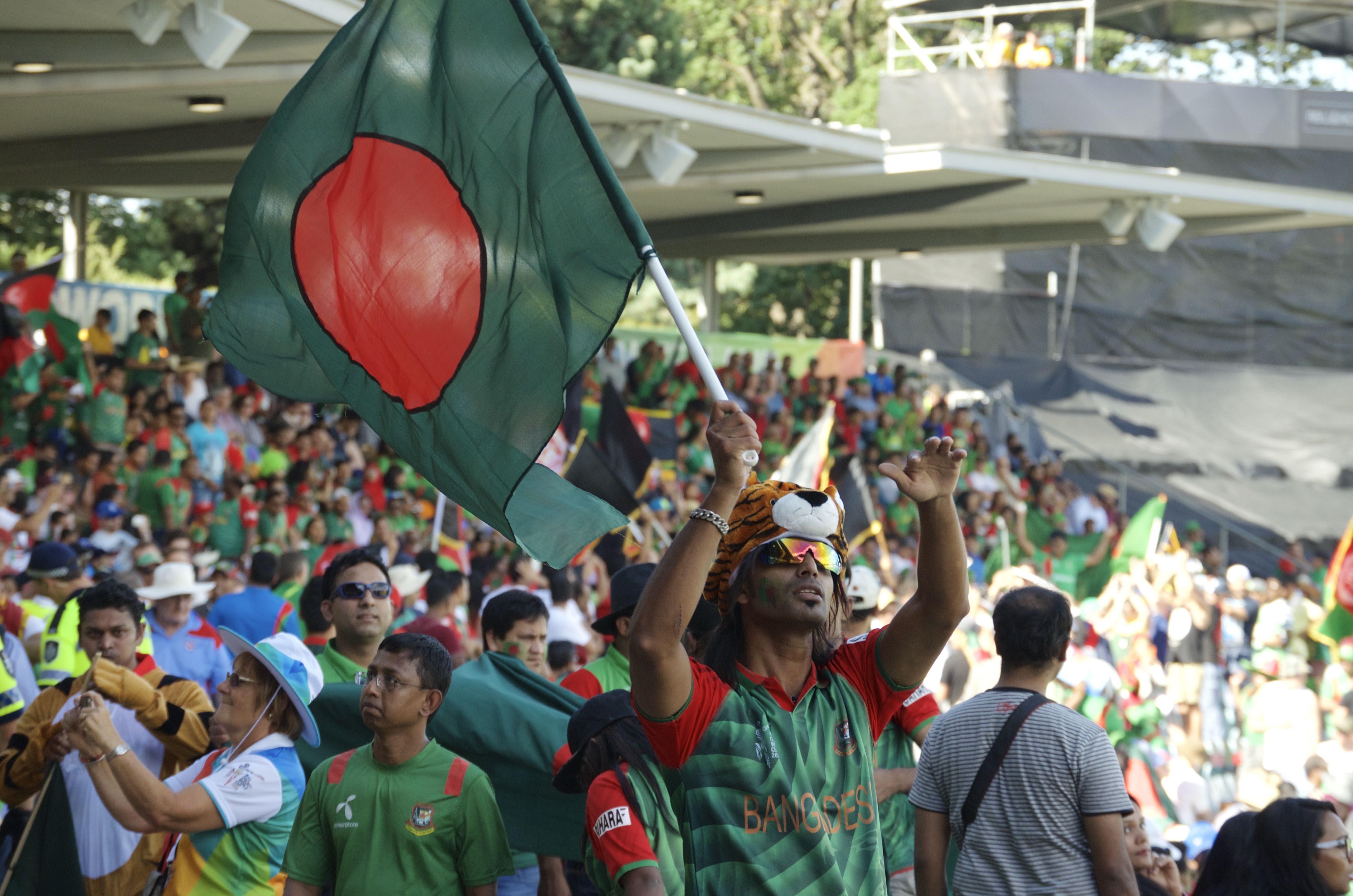
Image from the Bangladesh Afghanistan Match from Manuka, Oval. Image By Rezwan
Image from the Bangladesh-Afghanistan match from Manuka, Oval. Image By Rezwan
February 18 was a historic day for Afghanistan, as its national cricket team took on Bangladesh at Manuka Oval Stadium in Canberra, Australia, for the country's first ever game in a Cricket World Cup.

Even though Bangladesh showed off its experience and talent, beating Afghanistan by 105 runs in a quite one-sided game, it was clear the country had come a long way. Afghanistan learned the game from neighbouring Pakistan, where countless Afghans fled following the 1979 Soviet invasion of their homeland, and cricket is now the most popular game there.

Bangladesh is also comparatively new to the World Cup. It played its first World Cup game in 1999.

Ahead of the game Afghanistan was pumped up from its victory over Bangladesh at the last Asia Cup in 2014 in Dhaka, Bangladesh. However, the conditions in Australia were much different. The pitch at Manuka Oval offered more by way of pace and bounce than that Asia Cup surface.

Huge Crowd queueing up for the Bangladesh Afghanistan match on Feb 18, 2015. Image by Rezwan
Huge crowd queueing up for the Bangladesh-Afghanistan match on Feb. 18, 2015. Image by Rezwan
Despite the loss, Afghanistan thrilled its supporters as its bowlers kept up the pressure on Bangladeshi batsmen in the first 25 overs with a low run rate and took four wickets. Shakib Al Hasan and Mushfiqur Rahim combined for a 114-run 5th wicket partnership and Bangladesh posted a total of 267. Afghanistan was not up to par in reply as it was reduced to three wickets with only three runs in the first three overs. The team never quite recovered and was all out for 162 runs in 42.5 overs.

Canberra is home to a small population of Bangladeshis maybe 7,000 to 8,000 strong. However, many Bangladeshis from Sydney and Melbourne came to the Australian capital to watch the game. The official match crowd was 10,972, out of which Bangladeshis were more than 9,000, transforming the stadium into a little Bangladesh.

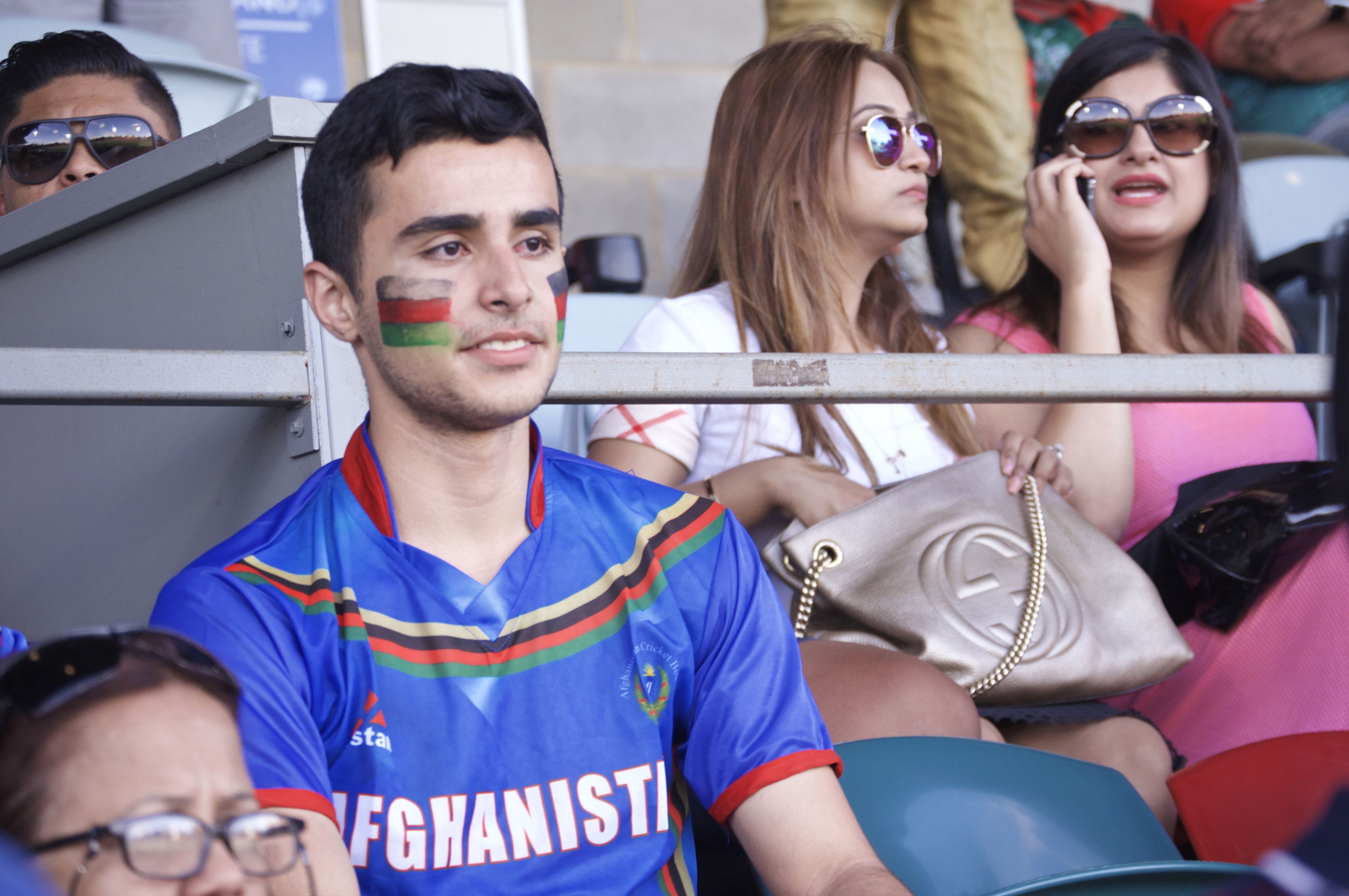
Here are some pictures from the crowd:

Bangladeshi supporters. Image by Rezwan (18/2/2015)
Afghan Supporters. Image by Rezwan (18/2/2015)
Bangladeshi supporters wore the green and red team jerseys which bore the colors of the Bangladeshi flag. Image by Rezwan
Bangladeshi supporters wore the green-and-red team jerseys, the same colors as the Bangladeshi flag. Image by Rezwan
Afghani supporters were also colourful. Image by Rezwan (18/2/2015)
Twitter hashtags #cwc15 and #BanvsAfg were trending on that day as many were talking about the game.
A tweet by the US Embassy in Kabul declaring victory for Afghanistan before the end of the game generated a lot of buzz. It was retweeted more than 300 times and favourited more than 100 times:
The embassy acknowledged their "premature posting" in another tweet, but maintained their excitement about Afghanistan's participation at the World Cup.

The post was also published in Global Voices Online.

December 26, 2014

Somber Scenes as World Mourns Pakistani Children Slain in Peshawar Attack

Students of Army Public School, members of Civil Society, Pak Army staffs and large numbers of citizens held a candle light vigil to mourn the innocent victims. Image by ppiimages. Copyright Demotix (19/12/2014)
A group of Taliban gunmen dressed in military uniforms entered an Army Public School in Peshawar, Pakistan, on December 16 and shot students and teachers walking from classroom to classroom. At least 148 people, 132 of them children, lost their lives in the attack and scores of the students were injured.

The following day, vigils were held in Karachi, Islamabad and other major cities throughout the country, which can be seen in these pictures.

There have also been numerous vigils across the world:
People at those vigils remembered the victims, protested against the barbarism, voiced their anger at the Taliban and echoed that children should be spared from such atrocities.

Here are images of some of those vigils:

A collection of candles and votives lit as part of a vigil in Trafalgar Square, London, to remember the dead school children and teachers killed by the Pakistani Taliban in Pakistan. Image by Emma Durnford. Copyright Demotix (17/12/2014)
A Candlelight vigil for the children of Peshawar is held in Longsight, Manchester outside the Pakistani Community Centre. Image by Barbara Cook. Copyright Demotix (20/12/2014)
Two hundred people gathered in front of the CNN Center in Atlanta for a candlelight vigil to honor victims killed during a Taliban attack on a school in Peshawar, Pakistan. Image by Steve Eberherdt Copyright Demotix (17/12/2014)
Columbia students and other members of the community joined a campus candlelight vigil to support the victims of the Peshawar attacks. Image by Mansura Khanam. Copyright Demotix (17/12/2014)
Indian congress workers and children pay tribute to those killed in the Taliban attack in Peshawar, Pakistan at a candle vigil in Allahabad, India. Image by Ritesh Shukla. Copyright Demotix (17/12/2014)
A candle light vigil and were held at the Pakistan High Commission in Bangladesh, this evening in remembrance of the innocent victims of the massacre at the Army public School peshawar.
Indian people lit candles as they took part in a candle-light vigil in memory of victims killed in a Taliban attack on a military-run school in Peshawar, in Amritsar. Image by Sanjeev Syal. Copyright Demotix (17/12/2014)
Childrens in Sivasagar, Assam lighting candles protesting the attack of Talibans in a school of Pakistan,  image by Neelam Kakoty Majumdar. Copyright Demotix (18/12/2014)
Childrens in Sivasagar, Assam lighting candles protesting the attack of Talibans in a school of Pakistan, image by Neelam Kakoty Majumdar. Copyright Demotix (18/12/2014)
Burdwan District Press Club organised a Candlelight Rally in At Burdwan, West Bengal, India, protesting against Taliban terror attack on Army Public School in Peshawar.  Image by Sanjoy Karmaker (18/12/2014)
Burdwan District Press Club organised a Candlelight Rally in At Burdwan, West Bengal, India, protesting against Taliban terror attack on Army Public School in Peshawar. Image by Sanjoy Karmaker (18/12/2014)
Children holding solidarity messages at the candle light vigil in Lahore, Pakistan. Image by Fatima Arif. Copyright Demotix  (18/12/2014)
Children holding solidarity messages at the candle light vigil in Lahore, Pakistan. Image by Fatima Arif. Copyright Demotix (18/12/2014)
The post was also published in Global Voices Online.

December 21, 2014

Pakistanis Say #ReclaimYourMosques From Radicalism in Rare, Bold Protests

Students of Army Public School, members of Civil Society, Pak Army staffs and large numbers of citizens held a candle light vigil to mourn the innocent victims. Image by PPIImages. Copyright Demotix (19/12/2014)
Two days after the horrific Taliban attack on a military-run school in Peshawar, killed more than hundred and thirty students, controversial Islamabad-based cleric Abdul Aziz refused to condemn the massacre, sparking rare protests against radicalism in the country.

Abdul Aziz also said that use of force against the Taliban is not a “wise option”. Aziz is the chief cleric at Lal Mosque, one of the biggest in the capital. The mosque and its attached seminary have a reputation for radicalism and was the scene of a massive 10-day military crackdown in 2007, which left more than a hundred dead, many of whom were radical seminary students. Aziz's brother was the chief back then, and was killed in the operation. Abdul Aziz tried to flee the mosque in a burka, but was caught. He was released on bail two years later. And has since reopened the mosque and become the chief cleric.

On December 18, a large number of activists, politicians and students arrived at the Lal Masjid chanting slogans against Abdul Aziz. They wrote names of the students killed in Peshawar on a board and started an impromptu vigil.
The protest was organised by Jibran Nasir, an independent politician, lawyer and human rights activist from Karachi. He said:
I came to Islamabad for a conference, but then the Peshawar tragedy struck and everything changed. The next day, Lal Masjid cleric issued a statement that I couldn’t stomach and I decided that rather than going back to Karachi, we should protest. We want to reclaim our mosques, our communities, our cities, indeed our entire country from the extremists. We can no longer allow anyone to stand on at a pulpit and preach hatred. We will no longer stand by and watch people like Abdul Aziz use the name of our Holy Prophet (peace be upon him) and our religion to perpetuate violence. I call upon the people of Islamabad to come out of their homes and reclaim their city.
The administration of Lal mosque filed a First Information report (FIR) against the participants of the protest. Police in riot gear arrived on the scene and asked protesters to disperse.

Faisal Sabzwari from the political party MQM tweeted:
Nasir and the protesters held their ground and said they will hold the vigil for the next week in front of the Lal Mosque, and there after every Tuesday night.

Suddenly, the spontaneous protests that began on Thursday quickly spread across the country as a wider movement against Taliban apologists and extremists everywhere. There were protests after Friday prayers in several cities to condemn Lal Mosque's cleric Maulana Abdul Aziz's statement. A petition in Change.org to put Abdul Aziz on trial for treason and terrorism has more than 4000 supporters.

On December 19, an FIR (First Information Report) was lodged against Abdul Aziz at a police station and this Facebook video caught the moment.
A protester on the Facebook page #ReclaimYourMosques - We Demand Action on FIR #LalMasjid wrote:
The foundation is laid. Think over, either are u going to be a silent spectator or would do ur part. If 141 children didn't shook u off ur slumber then be sure u are an apologist of the likes of ‪#‎AbdulAziz‬.
Under pressure Maulana Aziz apologised on Sunday for not condemning the killing of children. A reader replied to the article at the Tribune.com:
Sorry too little too late, shame on him that he actually had to think so hard to apologize and only after all the pressure …… He lacks total decency and morals …..innocent kids died and he had to think about it. Shame on him and shame on us for listening to him, he needs to be behind bars permanently along with all his buddies.
Qurratulain Zaman (Annie) contributed to this post.

The post was also published in Global Voices Online.

June 04, 2014

University Student Posts Suicide Note In Facebook, Friends Fail To Save Him

Suicide is a long term social issue of Bangladesh and of all the people reported dead due to suicide worldwide every year, 2.06% are Bangladeshis.

Mahbub Shaheen, a student of Dhaka University, posted a Suicide note in Facebook at 7:08PM on 2nd of June, 2014. He wrote:

I am lying on Rail Line. The Train is coming. And I am going to kick out bloody myself, the useless eater.


Once I've posted a comment "I should leave" then after I posted "I have to leave". Some of you asked me- "From where & where will you go?"

I don't know where I am going. But I am leaving. Leaving useless myself forever.

Good bye, good bye forever.

In the comments section of the above post it is revealed that his friends tried to locate Shaheen who was supposed to reach Dhaka, the capital by a train by the evening. His mobile was unreachable so they tried to inform police and his family but did not know how. A few hours later someone confirmed that his body was found near Kamalapur Railway Station.

This shows that Bangladesh desperately needs an effective suicide prevention hotline to act quickly and save people like Shaheen.

The number one cause for suicide is untreated depression. Depression is treatable and suicide is preventable. You can get help from confidential support lines for the suicidal and those in emotional crisis. Visit Befrienders.org to find a suicide prevention helpline in your country.

October 22, 2011

#OccupyDhaka: Joining The Global Movement Against The 1%

Occupy Wall Street, the peaceful protest against financial corruption and capitalism that started last month in the New York City's financial capital, has already spread in many countries of the world. People have joined under the motto: “We are the 99% who will not tolerate the greed and corruption of the remaining 1%.” And the statement is also being resonated in some streets of Dhaka, the capital of Bangladesh.

In a photo essay in Demotix Safin Ahmed reports about a protest in solidarity with Occupy Wall Street Movement in Dhaka on October 19, 2011 :
The People Solidarity Movement from Bangladesh gives solidarity to the global occupy Wall Street movement by holding a protest.

The People Solidarity Movement from Bangladesh gives solidarity to the global occupy Wall Street movement by holding a protest.
Activists chant and wave placards and banners supporting the global movement against the banks, and corruption. Image By Safin Ahmed. Copyright Demotix (19/10/2011)
Blogger Rasel Parvez writes [bn] about the need of such protest and asserts that the movement should be non-violent:
আমাদের জীবনযাপনে রাষ্ট্রের আরও সক্রিয় আন্তরিক অংশগ্রহনের দাবীতে আমাদের একমত হতে হবে। আমরা ৯৯% মানুষ রাষ্ট্রের ক্রমাগত উদাসীনতা, উপেক্ষায় বিক্ষুব্ধ এবং আমাদের ভেতরে এই অভাববোধ বিষয়ে সচেতনতা জন্মেছে এটা নিশ্চিত করতে হবে।

একই সাথে সহিংসতা এড়িয়ে চলতে হবে। অকুপাই ওয়ালস্ট্রীটের অবস্থানে অংশগ্রহনকারীদের সবচেয়ে বড় সম্পদ তাদের শৃঙ্খলাবোধ, গত ১ মাসেও তারা সহিংসতা দেখান নি।

We have to agree on the fact that the government should be more active and earnest in ensuring our livelihoods. We, the 99%, are outraged by the the long negligence and ignorance by the state and we are now building awareness.

We have to avert violence. The greatest asset of the occupy wall street movement is their discipline, they have not resorted to violence in the past month.
Soon more organizations joined the cause and planned a "Occupy Dhaka" [bn] movement on October 22, 2011 at Teacher and Student Center (TSC) square inside Dhaka University Campus which was promulgated using Facebook and Twitter.

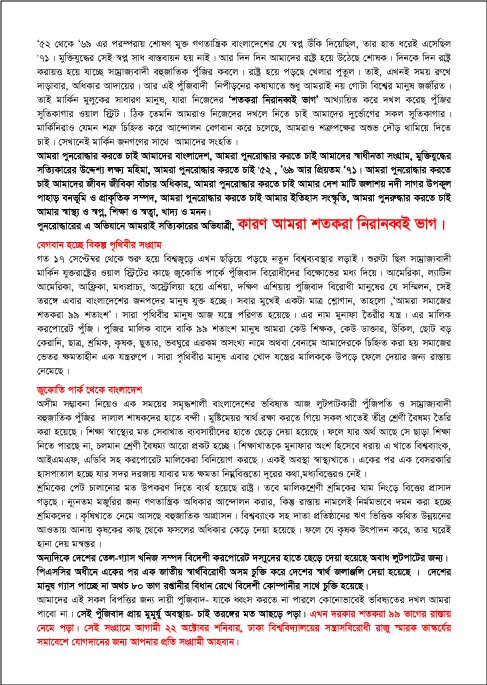
The Poster for We Are 99% (Occupy Dhaka)

Renowned teacher, economist and activist Anu Muhammad urged everybody [bn] to join the protests to take back Bangladesh:
Click image to view the leaflet
দেশে দেশে একই শ্লোগান দিয়ে মানুষ উঠে আসছে রাস্তায়। শ্লোগানের মূল কথা দুটো; একটি, নিজের পরিচয় ঘোষণা: ‘আমরা ৯৯%’। আরেকটি, আন্দোলনের লক্ষ্য ঘোষণা: ‘দখল কর….’! কি দখল? দখল ক্ষমতার কেন্দ্র, দখল নিজের দেশ, দখল নিজের জীবন। প্রকৃত অর্থে নিজের জীবন, সম্পদ ও দেশ দখল করেছে শতকরা ১ ভাগ লুটেরা, দখলদার, যুদ্ধবাজ সন্ত্রাসী। লক্ষ্য এসব দখলমুক্ত করা। কেননা দেয়ালে পিঠ ঠেকে গেছে।[..]

ক্ষমতার কেন্দ্র অটুট রেখে সরকারের বদলে কিছুই বদল হবে না। এটা যুক্তরাষ্ট্রের শিক্ষা, এটা বাংলাদেশের শিক্ষা। মানুষ এখন তাই দখল করতে চাচ্ছে ক্ষমতার কেন্দ্র। বাংলাদেশেও মানুষকে বাঁচতে হলে, নতুন ভবিষ্যৎ নির্মাণ করতে হলে, দ্বিজোটীয় বিভাজনের ঘোরে লুটেরা, দখলদার সন্ত্রাসী শতকরা ১ ভাগের যে শৃঙ্খল, তা থেকে মুক্ত হতে গেলে এই মেরুকরণকেই নতুন রাজনীতির কেন্দ্রে আনতে হবে। বাংলাদেশে এই লড়াই নতুন নয়, জনগণের শতভাগ মালিকানায় দেশ ও তার সম্পদ প্রতিষ্ঠার চলমান লড়াইয়ের অন্তর্গত শ্লোগানই হল: আমরা ৯৯%, দখলমুক্ত কর বাংলাদেশ।

A placard. Image by Kowshik Ahmed
In every nation people are coming out in the streets chanting the same words. The slogan has two parts; one, identify ourselves: 'We are 99%'. The other part; set the goal of the movement: 'Occupy..' Occupy what? Occupy the center of power, occupy your own country, occupy your own lives. In reality your lives, natural resources and country are being controlled by 1% looters, acquirers and war mongers. Our goal is to free those because we are pressed back at the wall.

Changing the government keeping the power centers intact will not change anything. This is the learning from the US, This is the learning from Bangladesh, too. So people want to occupy the center of power. If the Bangladeshis want to live, build a new future, get themselves free from the two feuding, corrupt and occupier political alliances then they have to re-polarize the politics. This struggle in Bangladesh is not new, if the citizens want that their country and the resources will be controlled by them then the slogan of the movement is applicable to them: We are the 99%, free Bangladesh from occupation.

Kowshik Ahmed posts pictures of the protests in BDNews24blog and in a Facebook Album. He also posts a video showing the rally.

Bloggers and online activists expressing solidarity at TSC. Image by Kowshik Ahmed. Used with permission
An anonymous blogger at Sachalayatan describes about today's protest in Dhaka:
হাজার হাজার মানুষ ওয়ালস্ট্রিটে অবস্থান নিয়েছে কর্পোরেট তন্ত্রের প্রতিবাদে। আজ শনিবার ঢাকায় টিএসসিতে সেই আন্দোলনের সাথে সংহতি জানিয়ে একত্রিত হয়েছিলেন কয়েকশ উচ্চকন্ঠ মানুষ। [..] আজ বামধারার রাজনীতিকরা এই প্রতিবাদের সামনের সারিতে আছেন। কিন্তু এই জায়গাটা এমনকি তাদেরও না। এই জায়গাটা আমাদের। আমরা যারা বিকল্প ধারার মিডিয়াতে- ব্লগে, ফেসবুকে সচেতন হয়ে উঠছি ক্রমশ, সেই আমাদের। বাম মানুষগুলোর সাথে, তাদের পুরো দৃষ্টিভঙ্গির সাথে সহমত না হবার পরেও, সেই সচেতনতার ছাপ তাদের মধ্যে দেখতে পেয়ে, আজ আমরা 'অকুপাই বাংলাদেশ' এর সাথে সংহতি জানাচ্ছি।

এই প্রতিবাদগুলো, এই স্লোগান আর মিছিল সফল হবে কী হবে না আমার জানা নাই। ফেসবুকের ওয়ালপোস্টে আর ব্লগিঙে গতি পেতে থাকা এই নতুন প্রজন্মের আন্দোলন আগামিকাল বা পরশু সাফল্য নিয়ে আসবে কি না জানা নাই। কিন্তু একটা বিশ্বাস আছে। একদিন, ঘুমিয়ে থাকা মানুষেরা জেগে উঠবে। একদিন সবাই রাস্তায় নেমে আসবে। একদিন ১% মানুষের হাতের পুতুল হবার বদলে, ৯৯% মানুষ নিজেদের মতে চলবে। সেই দিন জেগে উঠে তারা দেখবে, তাদের আগে আমরা ছিলাম। আমাদের উপর দায়িত্ব, তারা জেগে ওঠা পর্যন্ত এই প্রতিবাদ সামনে এগিয়ে নিয়ে যাওয়া।

Thousands of people gathered in Wall Street to protest against Corporatism. Today Saturday a few hundreds of vocal Bangladeshi citizens expressed solidarity with that protest. [..] Today the left leaning politicians are in the fore front of this protest. But this place is not even theirs. This place is ours. This place is for those who are becoming aware by sharing the news and expressing themselves using the alternative media - blogs and Facebook. We do not share the ideology of the left, but we see the awareness in them. So we are with them in solidarity with the "Occupy Bangladesh" movement.

We cannot tell whether these protests, these slogans and rallies will be successful. We do not know whether this movement of the new generation generating Godspeed by posting in Facebook or blogs will bring success in the coming days. But we believe in one thing. One day, the sleeping citizens will be awake. One day everybody will be in the streets. One day, instead of being a puppet of the 1%, the 99% will be on their own. That day they will rise and realize that we were before them. Our responsibility is to carry this movement till they wake up.

First published in Global Voices.

February 22, 2011

Global State of Social Media in 2011


Social Media Week (SMW) is a global platform that connects people, content, and conversation around emerging trends in social and mobile media. During February 7-11 the conference took place in London, Paris, New York, San Francisco, Toronto, São Paolo and will also expand to Paris, Rome and Hong Kong.

Here is a presentation of Tom Smith, founder and project leader of Trendstream, a consultancy dedicated to understanding trends in technology adoption, showing the Global State of Social Media in 2011:


The important findings of this report are:

* Social Media has reached maturity - 70% of UK population are involved in Social Media
* Micro-blogging still leads the top (35%), managed social networking follows (29%), blog story (7%)
* Conversations are moving from discussion boards/forums to Twitter.
* Blogs lead in Asia - China, South Korea, India
* Facebook dominates in Social Networking
* Young people (16-24) leads in usage
* Mobile/Mobile Apps On A Parity With Desktop
* Social Networking is driving different source of trust

February 09, 2011

How Social Media Helps Media


This is how Social media works. I posted a facebook status about Shakib Al Hasan's more than 100,000 fans on Monday and today I see that Arafat from Deutsche Welle (who is on my Facebook friends list) publishes a detailed report on Shakib's Facebook fans.

I am assuming there is a connection between the two, if not there is no reason why it cannot happen. Long live social media.

October 06, 2010

Worldmap Of The Online Communities


Worldmap Of The Online Communities by XKCD (Click here for larger version - 4.2MB) CC BY-NC