

Dragonfly

Image by Rezwan

Overcrowded passenger ferry capsized in the Padma River in Munshiganj, Bangladesh

The World Cup Goal-E Project

This street in Bangladesh has a colorful world cup celebration

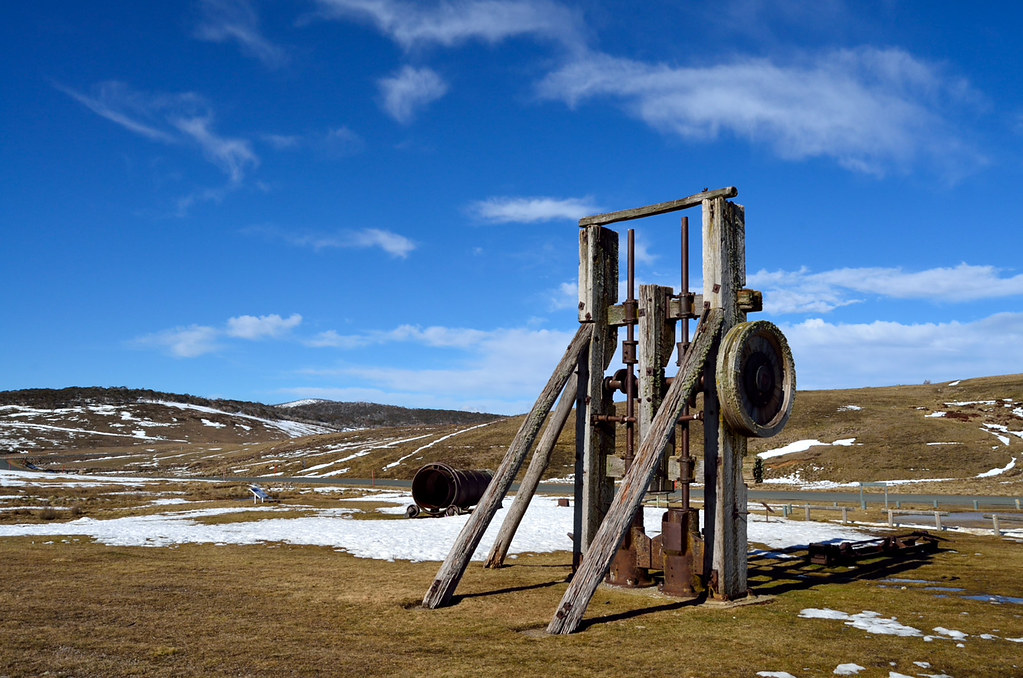
New Chum Hill Ruins

Remnants of Kiandra gold mine at New Chum Hill, #nsw #australia

Showing posts with label Photography. Show all posts

May 11, 2015

Why Arabic Script on the Walls Might Not Stop Public Urination in Dhaka

The photo shows  Arabic sign on the sidewall of Panthakunja Park at the Karwan Bazar in Dhaka. Image by Sk. Hasan Ali. Copyright Demotix (7/5/2015)
The photo shows Arabic sign on the sidewall of Panthakunja Park at the Karwan Bazar in Dhaka. Image by Sk. Hasan Ali. Copyright Demotix (7/5/2015)
Public urination is a problem in Bangladesh due largely to a lack of public toilets. Municipal officials in the capital Dhaka have battled in vain to stop men urinating in public, with signs in the local Bengali language and warnings of punishment and fines yielding no notable results.

Now the government is hoping that an innovative idea can put a stop to the habit. Recently the Ministry of Religious Affairs released a video highlighting their campaign "Language Matters" wherein Bengali signs warning against urination are now being replaced by Arabic signs, a holy language for Bangladeshis.

Perhaps they have taken a cue from neighbouring India -- battling with the same problem -- where pictures of Hindu gods and godesses on the walls are intended to have the same effect.


Although some are lauding the state's effort to solve a perennial problem, others are skeptical, claiming the campaign supports blind faith and promotes misconceptions.

Sufi Faruq comments on YouTube:
ধর্ম মন্ত্রণালয়ের দারুণ একটা ক্যাম্পেইন !!! (..)

বাংলাদেশের বেশিরভাগ মুসলিম আরবি ভাষা না বুঝলেও এই ধরনের অক্ষরকে পবিত্র মনে করে। তাই ওই স্ক্রিপ্টে লেখা যে কোনকিছু অপবিত্র করতে ভয় পায়। এই ভয়টার বেশিরভাগ সময় ধর্ম ব্যবসায়ীরা অপব্যবহার করতো। এবার একটা দারুণ কাজে ব্যাবহার হল।
A great campaign by the Ministry of Religious Affairs!!!

Most of the Muslim majority Bangladeshis cannot understand Arabic but they deem it as a holy language. So they fear to desecrate anything written in that language. Most of the time it was used by religious opportunists as it is the language of the Koran and the prayers. Now it has been used for a good cause.
Despite the Ministry of Religious Affairs' claim in the video about toilets being present in most of Dhaka's 10,000 mosques, the general lack of public toilets in the city of approximately 15 million is a genuine challenge. The city's large homeless population is particularly affected by the shortage.

Adnan R. Amin at Alal O Dulal Blog thinks that the video does not get to the root of the problem and instead aims to create false impressions:
The using of a religious misconception (“Arabic is a holy language”), to prevent a social evil, is clever. But it also reinforces and lends credence to that misconception, instead of dispelling it. One would think that for a ministry for religious affairs, dispelling religious misconceptions would outweigh protecting city-walls. If there were funds available to the government, Dhaka’s City Corporations could’ve used them to create better facilities for women. While it is difficult to discern from boardrooms, the 36 public toilets with facilities for women are now being used by men. Judging from the tactic and tone of  this video, a reexamining of both government bodies’ priorities seems to be in order.
Moreover, Fariduddin Masud, an influential cleric criticised the Ministry for Religious Affairs.

While most mosques do have sanitary facilities, mosques themselves are "not public toilets", he said, adding that "nobody has the right to use the language of the Koran for such a campaign."

Blogger Irene Sultana doubted the campaign via a blog post on Women Chapter titled 'Not Arabic, but Public Toilets, Matter":
ঢাকা শহরের প্রতি দেড় লাখ নাগরিকের জন্য শৌচাগার রয়েছে মাত্র একটি। [..] অধিকাংশ পাবলিক টয়লেটই ব্যবহার অনুপযোগী। [..] পাবলিক টয়লেটহীন নগরীতে পথচারীদের অধিকাংশই তাই ফুটপাতকেই বেছে নিচ্ছেন ’হালকা’ হতে।

না বুঝে কেবল আরবি লেখা থাকলে সালাম করা হলো এ দেশের মানুষের ধর্মীয় অন্ধত্ব। ধর্ম মন্ত্রণালয়ের দায়িত্ব ছিল মানুষকে এসব অশিক্ষা থেকে বের করে শিক্ষিত, সচেতন করা, তার বদলে মানুষের সেই অজ্ঞতাকে ব্যবহার করে ’সমাধানের’ নামে মূলত একটি মশকরা করলো!
There is only one toilet in the capital Dhaka for every 150,000 people, out of which many are not usable. So in the absence of enough public toilets the pedestrians use walls to relieve themselves.

Many Bangladeshis respect the Arabic language because they don't know the language. The duty of the Ministry of Religious Affairs was to educate them and make them aware that this is a language only, not everything in its writing is sacred. But instead they used this ignorance to eke out a "solution" which is actually a farce.
Sultana also cites the recent efforts of Indian Prime Minister Narendra Modi, who built toilets in front of temples and achieved 5.2 million lavatories in the first 100 days of his tenure.

Bangladesh lags far behind on this issue.

While state religious officials are already trumpeting its successes, the campaign does not appear to have been well thought-through. If implemented to the fullest extent, Dhaka's walls will be covered by Arabic but people will still have nowhere to urinate.

Moreover, in India, before Modi went on his toilet-building spree, the gods on walls campaign unravelled: people simply began urinating on the faces of the deities. Innovative campaigns incorporating public shaming such as "The Pissing Tanker" also lacked impact.

For this reason Adnan R Amin's comment that the money spent on the campaign -- "a proxy solution that treats the Symptom and not the Cause" -- would be better spent on new public toilets in Dhaka seems to be well-founded.

The post was also published in Global Voices Online.

April 15, 2015

Bengali New Year Takes a Colorful Stand Against Religious Extremism in Bangladesh

People celebrating Pahela Baishakh at Mangal Shobhajatra (Rally), a procession organised by Dhaka University’s Faculty of Fine Arts to welcome the Bengali new year. Image by  Sourav Lasker. Copyright Demotix (14/4/2015)
People celebrating Pahela Baishakh at Mangal Shobhajatra (Rally), a procession organised by Dhaka University’s Faculty of Fine Arts to welcome the Bengali new year. Image by Sourav Lasker. Copyright Demotix (14/4/2015)
The past few months have been particularly tough for Bangladesh as continuous political turmoil and violence left over 120 people dead. The recent killings of two free-thinking blog activists and the emergence of a new militant wing that seeks to murder atheists have worried many.

Whenever the country has found itself in trouble, Bangladeshis have embraced their roots, taking solace in art and culture to unite against any challenges they face.

On Tuesday, April 14, 2015, people did just that in Bangladesh, welcoming the Bengali New Year 1422 with the resolve to continue the fight against communalism and religious fanaticism.

Bengalis, who are overwhelmingly the largest (98%) ethnic group in Bangladesh, customarily celebrate the New Year (Pohela Baishakh) with colourful procession and festivities. This year's festivities had a special theme: "Onek Alo Jaalte Hobe Moner Ondhokare" (Burn many lights in the darkness of hearts). It was chosen to commemorate the recent assassination of blogger and writer Avijit Roy and online activist Oyasiqur Rahman. A 20-foot-tall statue symbolising the rise of communal forces was at the procession, reminding everyone to reject such strife.

People carried colourful costumes in the Mangal Shovajatra.
People carried colourful costumes in the Mangal Shobhajatra (Rally). Image by Sourav Lasker. Copyright Demotix (14/4/2015)
Pohela Boishakh is the first day of the Bengali calendar, celebrated on 14 April in Bangladesh and 15 April in the Indian state of West Bengal by Bengalis. Hundreds of fairs and events welcoming the New Year takes place in many parts of Bangladesh and in West Bengal in India. The largest festivities happens in Dhaka, the capital of Bangladesh, where tens of thousands of people wearing multicoloured masks and traditional dress march in the Mangal Shobhajatra procession marking the New Year.

Tanvir Haider Chaudhury wrote on Facebook:
আপনি যেখানে থাকুন, পারলে ঢাকা চলে আসুন। পৃথিবীর সবচেয়ে আনন্দময়, উৎসবমুখর জায়গা এই মুহূর্তে ঢাকা।
শুভ নববর্ষ।
Wherever you are, please come to Dhaka if you can. Right now Dhaka is the happiest place on earth full of festivities. Shuvo Noboborsho (Happy new year).
While Twitter user Bappy tweeted a photo:
Crowds celebrated Pahela Baishakh at Mangal Shobhajatra, a procession organised by Dhaka University’s Faculty of Fine Arts to welcome the Bengali New Year 1422. Image by Sk. Hasan Ali. Copyright Demotix (14/4/2015)
Anila Haque thanked Google for creating a doodle for the occasion:
Gargie Ahmad hoped that the New Year would bring an opportunity to start anew:
To the Bengalis, hilsa isn't just a fish. It's an integral part of the culture and heritage. Be it fried or cooked with mustard, hilsa is a must in Pahela Baishakh celebrations. Image by Sourav Lasker. Copyright Demotix (14/4/2015)
Indian Prime Minister Narendra Modi tweeted in Bengali:
My good wishes to all the Bengali friends on Pahela Boishakh. Hope the following year will be great for everyone. Shuvo Noboborsho (Happy New Year).
'Nokhsikatha' graffiti by the Students of Fine Arts Institute on the walls of Dhaka University Fine Arts Institute where the rally begins. Image by Firiz Ahmed. Copyright Demotix (14/4/2015)
'Nokhsikatha' graffiti by the Students of Fine Arts Institute on the walls of Dhaka University Fine Arts Institute where the rally begins. Image by Firoz Ahmed. Copyright Demotix (14/4/2015)
And other netizens tweeted out images of the holiday:
'Nokhsikatha' graffiti by the Students of Fine Arts Institute on the walls of Dhaka University Fine Arts Institute where the rally begins. Image by Firiz Ahmed. Copyright Demotix (14/4/2015)
'Nokhsikatha' graffiti by the Students of Fine Arts Institute on the walls of Dhaka University Fine Arts Institute where the rally begins. Image by Firoz Ahmed. Copyright Demotix (14/4/2015)
The post was also published in Global Voices Online.

November 15, 2014

Hijras, Bangladesh's ‘Third Gender’, Celebrate First Ever Pride Parade

Hijra pride 2014 festival began in Bangladesh on Sunday. The photo was taken from the Sahabgh Raju Circle in Dhaka. Image by Anwar Hossain Joy. Copyright Demotix (9/11/2014)
The 2014 Hijra Pride festival began in Bangladesh on Sunday. The photo was taken from the Sahabgh Raju Circle in Dhaka. Image by Anwar Hossain Joy. Copyright Demotix (9/11/2014)
About a thousand Hijras took part in Bangladesh's first ever "Hijra Pride" in the capital Dhaka last week to celebrate the first anniversary of their recognition as a separate gender by the government. Hijra is a feminine gender identity that some people who are born male or intersex adopt, often labeled as transgender by the West.

Bangaldesh's about 10,000 Hijras have long suffered discrimination. At this first pride parade, participants with colourful dresses sang and danced in the streets carrying Bangladesh flags and banners, one of which read: "The days of stigma, discrimination and fear are over."

Take a look at some snapshots of the event:

Transgender people parade with the national flag in Dhaka to mark 'Hijra Pride'. Image by Sony Ramany. Copyright Demotix (10/11/2014)
People parade with the national flag in Dhaka to mark 'Hijra Pride'. Image by Sony Ramany. Copyright Demotix (10/11/2014)
The colourful rally organised by the Bandhu Social Welfare Society  took lace near the press club, Dhaka. Image by SK Hasan Ali. Copyright Demotix (10/11/2014)
The colourful rally organised by the Bandhu Social Welfare Society took place near the press club, Dhaka. Image by SK Hasan Ali. Copyright Demotix (10/11/2014)
Celebrating ' Third gender (Hijra) Pride 2014' in Bangladesh. Image by Sk. Hasan Ali. Copyright Demotix (10/11/2014)
Celebrating Hijra Pride Parade. Image by Mohammad Asad. Copyright Demotix (10/11/2014)


Bangladeshi hijras - transgenders - dance in the street during a pride parade. Image by  Indrajit Ghosh. Copyright Demotix (10/11/2014)
Bangladeshi Hijras dance in the street during a pride parade. Image by Indrajit Ghosh. Copyright Demotix (10/11/2014) 
Hijra celebrate with a beauty talent show during the evening. Image by Mohammad Asad. Copyright Demotix (10/11/2014)

‘Hijra pride 2014’ ended with a talent hunt competition. Image by Mohammad Asad. Copyright Demotix (10/11/2014)
People also celebrated with them and shared support via Twitter:
The post was also published in Global Voices Online.

February 12, 2014

Life Needs a Beach

At St. Martins Island. Image by author.

February 07, 2011

Chobi Mela - Challenging The Western Hegemony In Photography


Chobi Mela (Picture fair) is a biennial international festival of photography being held in Bangladesh since 2000. Organized by Drik Picture Library Ltd. and Pathshala - South Asian Institute of Photography, this festival showcases the work of Bangladeshi artistes alongside the most exciting works of photographers from the rest of the world.

Sri Lankan photographer Chulie De Silva provides the history of Drik and the Chobi Mela:

Shahidul Alam
The Drik Picture Library was started in 1989 as a small homely business, driven by a need to change the identity of Bangladesh as an icon of poverty and also challenging the western hegemony in photography. “The audacity of it wasn’t an issue. We knew the rules of physics could be bent,” says Shahidul Alam Managing Director and founder talking about the setting up of a world class photo library in the hinterland of photography. It wasn’t that he was not aware of the challenge – but Alam, a pugnacious critic and activist wanted change desperately – a change in how Bangladesh’s story was being told and controlled by the Western media, a change and opportunities for his marginalized people. The story, he strongly believed had to be told by Bangladesh’s own people who understood the issues and felt the pain and suffering of their people.

As with many of Drik’s ventures the first Chobi Mela (Dec.1999-January 2000) was set up on a shoestring budget but has become the most demographically inclusive photo festival in the world. Drik gave space to local photojournalists and emerging artists to share the platform alongside the likes of Salgado, Reza and Parr who had all generously provide their work. The evening seminar sessions were boisterous and vibrant and have become a meeting point for national and international artists.

From Chobi Mela's Wikipedia entry:

Chobi Mela is considered to have the most diverse participation of any such exhibition in the world. While most major festivals are situated in the West or are organised by European organisations, Chobi Mela is unique in having been developed and launched in South Asia and has now gained respectability through the variety and quality of the work exhibited.

Chobi Mela VI banner

On the 21st of January 2011 Chobi Mela VI started offering the itinerary of 29 print exhibitions, mobile exhibitions on 10 rickshaw vans, 33 digital presentations including two films and one play. The opening events were broadcast live via streamed video.

Andrew Hussey captures photos of the traditional march towards the opening ceremony with a marching band, singing and dancing in the street. Here is a video by Jeremiah Foo depicting various events of the exhibition. Shahidul Alam compiles the media mentions about the event.

Photographer and blogger Sabhanaz Rashid Diya writes about the influence of Pathshala students in Chobi Mela:

This year’s Chobi Mela features more students and ex-students from Pathshala than in previous years, and this is only a reflection of the high quality of work that is being produced in the institution. The new breed of photographers is more dynamic and experimental, breaking traditional approaches and encapsulating intimacy and personal connection in their respective stories. [..]

Chobi Mela VI represents a tremendous journey – not only in terms of the festival, its exhibitions and the visiting artists, but also the students of the institution and the art of photography.

Sabhanaz also interviews internationally reputed photographer Pedro Meyer and new generation photographer Sohrab Hura.


Chris Riley shares his experience of attending Chobi Mela by pointing out to the impact of internet distributed media:

The media that defines the future of photography is a digital internet distributed media. It is the hybrid of and tension between the past and future media that will create new work and new forms of photographic storytelling.

The new technologies, as Drik so aptly demonstrates, is changing the audience from being secluded in a region to being global in influence. From Dhaka the stories must be different, they must be from a different perspective and in a different form. This is the Chobi Mela challenge: to emerge into the world and change it. The context for creativity is a large part of creative energy itself.

Another Chobi Mela participant Carlos Cazalis posts "a visual series of images of the mass urbanization occurring in Dhaka and its consequences" in Mega Cities blog.

You can get more information on the exhibition at the Chobi Mela Blog and Shahidul News.

Image Credit:

1) Shahidul Alam, photojournalist and activist, director of Chobi Mela. Image from Flickr by fuzheado. CC BY-SA.

2) Chobi Mela VI at Drik Library. Image from Flickr by Maruf Hossain. CC BY-SA.

Also published in Global Voices Online.

August 25, 2010

Top 19 Free Photo Sites For Bloggers

August 06, 2010

Hiroshima & Nagasaki In Pictures

Today, August 6th, marks the 65th anniversary of the American bombing of Hiroshima. Monday is the 65th anniversary of Nagasaki. To commemorate those dates, LIFE.com has created a gallery of never-seen pictures by LIFE photographers Alfred Eisenstaedt, Bernard Hoffman, and J.R. Eyerman -- all three of whom were there, on the ground, very shortly after both cities were destroyed.

Image credit: Bernard Hoffman/TIME & LIFE Pictures, used with permission
One scene shared by all of the 20th century's bloodiest wars might have been lifted straight from "The Road Warrior": a spectral landscape; buildings obliterated; blasted trees; a lifeless wasteland. The picture above, for instance -- a photograph never published, until now-- while mirroring every bleak, war-battered panorama from Verdun to Iwo Jima to Pork Chop Hill, was in fact made by LIFE's Bernard Hoffman in September, 1945, in Nagasaki, Japan. But far from chronicling the aftermath of sustained, slogging armed conflict, Hoffman's picture -- along with others seen here for the first time -- depicts devastation produced in a few, unspeakably violent seconds. On the 65th anniversary of American planes dropping atomic bombs on Hiroshima (August 6, 1945) and Nagasaki (August 9) -- killing 120,000 people outright, and tens of thousands more through injury and radiation sickness -- LIFE.com presents never-before-seen pictures from both cities taken in the weeks and months following the bombings. Included, as well, are excerpts from issues of LIFE published after the war that convey the powerful, discordant reactions -- relief, horror, pride, fear -- that the bombings, and the long-sought victory over Japan, unleashed.


Image credit: Bernard Hoffman/TIME & LIFE Pictures, used with permission

Japanese doctors said that those who had been killed by the blast itself died instantly. But presently, according to these doctors, those who had suffered only small burns found their appetite failing, their hair falling out, their gums bleeding. They developed temperatures of 104, vomited blood, and died. It was discovered that they had lost 86 percent of their white blood corpuscles. Last week the Japanese announced that the count of Hiroshima's dead had risen to 125,000." -- From the article "What Ended the War," in LIFE, 9/17/1945. Above: Hiroshima, 1945, two months after the August 6 bombing, photographed by Bernard Hoffman. Descriptions of the suffering endured by survivors in both Nagasaki and Hiroshima -- burns that would not heal; agonizingly bent, twisted limbs; ceaseless, excruciating headaches -- lend weight to the Soviet leader Nikita Khrushchev's oft-quoted (and perhaps apocryphal) utterance that, in the the event of an all-out nuclear war, "the living will envy the dead."

July 12, 2010

We're All Going To Die


'We're All Gonna Die - 100meters of existence' - By Simon Hoegsberg
Click here to see the full slide show

This image is 100 meters long. There are 178 people in the Picture, all shot in the course of 20 days from the same spot on a railroad bridge on Warschauer Strasse in Berlin in the Summer 2007.

"It’s meant to point out that life is beautiful, and unless we open up to each other instead of keeping our longings, hopes and experiences to ourselves we’ll fall into the grave with a lot of valuable information and love that we never got around to sharing with the people we’re in touch with. I believe that it is meaningful to let the thought that we’re going to die into our heads once in a while because it brings into perspective what we’re actually doing with the life we’ve been given." - says Simon in an interview with Digital Photography School

The camera used for the project was a Canon 1D Mark II, and the lens a Canon 400mm. The post processing was done in Photoshop.

August 11, 2009

Bangladesh x Bangladesh

The above is the title of the cover of the recent edition of 100 Eyes Magazine, an online photography magazine edited by Andy Levin.

Levin, a professional photographer living in New Orleans, Louisiana writes:
This issue of 100eyes shows a country as seen through the eyes of its own photographers.

There is nothing remarkable about that, except in this case the country is one of the poorest nations in the world, known for being a subject for photojournalism rather than as a provider of photojournalists. Photographers flew into Bangadesh from New York, Paris, or London, that is, when they weren’t headed for nearby India. Photographers will still be flying to Bangladesh, including myself hopefully, but we
won’t be alone. In 1989 Bangladesh was depicted for Western eyes in a famous essay by photographer Sebastio Salgado that presented the shipbreaking yards at Chittagong. Twenty years later Bangladeshis are now behind the camera, and the results are stunning.

As economically challenged as Bangladesh may be, there are 200 newspapers in the small country, and many of them are staffed by students from Pathshala, a school founded by Shahidul Alam, the central figure in the emergence of photography in Bangladesh, and the author of the cover image of this issue of 100Eyes.
Amazing pictures...You can turn the page with the mouse in book style.. a must see.

December 07, 2008

Beautiful Bangladesh

If you have doubts these images will change your mind.

News: Bangladesh gets a new country brand.

October 24, 2008

Festival of lights


The Berlin Festival of lights is closing in a couple of days. Look at these pictures in Flickr which looks more impressive than what you see being there in person.

Here are more night scenes from Berlin and around the world.

(Image: Gendarmenmarkt by leonwpp used under a creative commons license)

October 08, 2008

A great Photoblog on Bangladesh

Geoffrey Hiller is an widely traveled photojournalist and a multimedia producer. He is currently in Bangladesh on a Fulbright Scholar grant to teach interactive media in the department of Media and Communication of Independent University, Bangladesh (IUB).

Here is a feature on him in the Daily star by one of his students.

The reason I am writing is to highlight his blog "Photos and notes from Bangladesh", which portrays Bangladesh and Bangladeshis in their true selves.

Also don't forget to check his great work "Verve Photo", which portrays the best and upcoming photographers of the world including their works.

August 24, 2008

Photos of Mughal Edifices in ruins

This is a great collection. Shows the rich past of Dhaka city.

Also check this new photoblog from Bangladesh.

July 18, 2008

Bangladeshi beauty

As seen in Flickr. Check also the Faces of Bangladesh.

March 20, 2008

Photographer of the year 2007

From the official Blog of Bangladeshi photographers the photographer of the Year 2007 Photography Contest grand prize winner is Bir Azam. Check out his work in Flickr.