

Dragonfly

Image by Rezwan

Overcrowded passenger ferry capsized in the Padma River in Munshiganj, Bangladesh

The World Cup Goal-E Project

This street in Bangladesh has a colorful world cup celebration

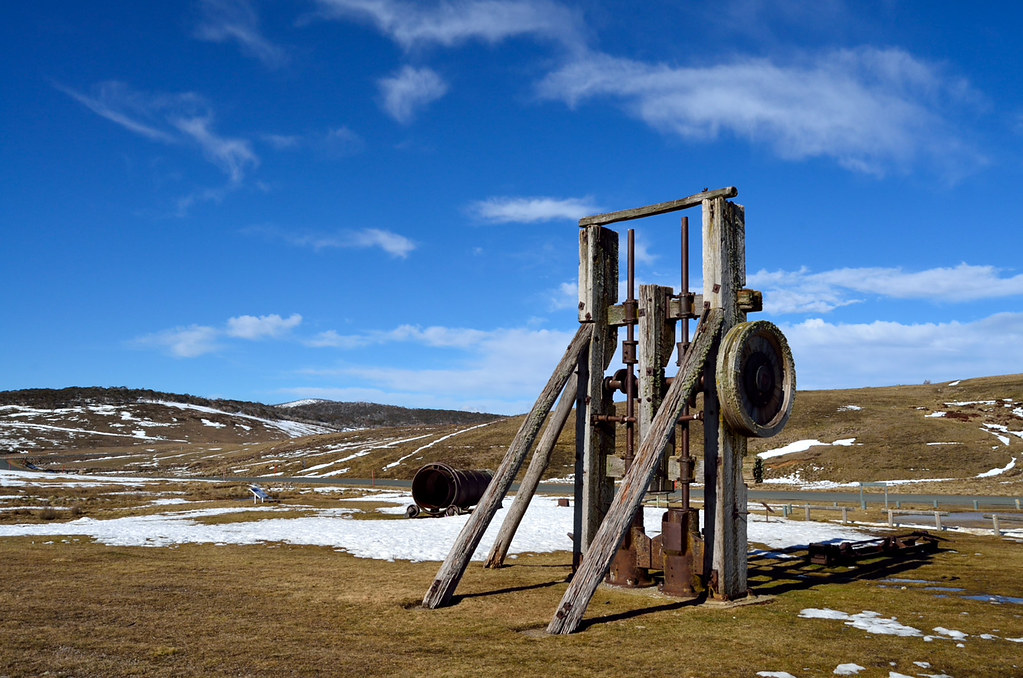
New Chum Hill Ruins

Remnants of Kiandra gold mine at New Chum Hill, #nsw #australia

Showing posts with label genocide. Show all posts

December 16, 2008

Victory Day

Greetings to everyone on the 37th anniversary of the Victory day in Bangladesh.

It is a day when Bangladesh came into being. 'Victory against what?' one may ask. It was a victory against the farcical two nation theory, The colonialism of West Pakistan and their oppression against their East Pakistani brothers in economic, administrative and cultural sectors, victory against one of the worst genocides in the history of the world, victory against the rape of thousands of women by the Pakistani soldiers and the nine month long liberation war.

The history of the Bangladesh liberation war is an epic itself, the journey from east Pakistan to Bangladesh was long and full of struggles.

In my last years post on the victory day I had promised that supported by E-Bangladesh I will build an online archive of all the available information, evidence, eye witness portraying the true story of the genocide committed by the Pakistanis in 1971. Here is it "1971 Bangladesh Genocide Archive".

This site is essential because:
Now there is a renewed call for trial of the war criminals who are trying to rewrite history.

The general Pakistanis were provided with the wrong version of the truth all the time. From a Pakistani newspaper:
Only foreign media aired the news of the Fall of Dhaka on December 16, 1971. Radio Pakistan kept airing usual transmission and giving a picture of “all is well”.
Even the reports the Pakistani people get display a fragment of the truth.
We dedicate this site to the hundreds and thousands of people who have died in the war and those brave souls who has fought for the country with firearms, support and stood in solidarity with the Bangladeshis.

September 02, 2008

Georgian enclaves are not Bangladesh!

In Pravda.ru Babu G. Ranganathan draws an analogy of South Ossetia and Abkhazia's independence from Georgia as declared by Russia with the involvement of India in the creation of Bangladesh in 1971.

I wish things were as simple as that. The resentments started in 1952 when Bengalis wanted to protect their mother tongue. Bangladesh was wanting autonomy since long. We had a great leader who was going to be Pakistan's head of government according to the election results but was denied. Sheikh Mujib almost declared the independence (on the 7th of March, 1971) almost 9 months before the India-Pakistan officially engaged in the war. Bangladeshi freedom fighters fought the war for eight and a half months before India joined the full fledged war with Pakistan.

Georgia's case is different as with every such cases including Kashmir if you compare. Its true that Shakashvili wanted to teach the South Ossetian insurgency a lesson and can be scolded for that but Russia took over the situation and threatened Georgia with its power by shelling and bombing. The innocent civilians were both parties least priorities.

Now the question should be asked what does the South Ossetians want? Do they want to be seperate or merge with Russia or remain with Georgia? I don't even know who their leader is! Who is deciding things for them, the Russians?

The Global Voices special page gives you a real insight into the effected people of the region, not what the Western or the Russian media provides you (two extreme points of view).

Is there really that much hatred present for an ethnic cleansing and genocide as claimed by Russia? Read how the non-friction inter-ethnic relationships between Russians and Georgians are. This might be an answer:
It is very clear. In the quarrel with the Western countries Russia is using a concept and a clear picture which are known to them. A mention of Srebrenica is a slap to Dutchmans and Gavrilo Princip is mentioned in the context of how Englishmen think and talk about him: the fool that pulled them into an expensive and unnecessary war. Reading English reactions, this reminder is effective.
And the irony pointed out by a commenter in a Serbian blog:
I think that Russia proved it is not different from the West when its interest is in question. […] Just in this way Russia indirectly supports the position of the West about Kosovo.
War is a bad Omen, it makes people suffer and creates hatred and acrimony. The present situation in the effected region is nothing else but a case of power struggle and showdown.

July 22, 2008

Radovan Karadžić arrested

Goethe once said that "every offense is avenged on earth". This became true as the main person behind the Serbrenica Massacre against 8000 Bosnian Muslims Radovan Karadžić was arrested today in Serbia.

Support Rally For War Crime Suspect General Ratko Mladic & Radovan Karadžić
served by picapp.com

After being indicted by the UN tribunal for war crimes and genocide over the 1995 massacre at Srebrenica he disappeared in 1996. Mr Karadzic denied the charges against him and refused to recognize the legitimacy of the UN tribunal.

An international warrant was issued against him and the United States government had offered a $5 million award for his capture. The other accused general Ratko Mladić is still at large.

The accusations against him are:

* Two counts of genocide (genocide, complicity in genocide )
* Five counts of crimes against humanity (extermination, murder, persecutions on political, racial and religious grounds, persecutions, inhumane acts)
* Three counts of violations of the laws or customs of war (murder, unlawfully inflicting terror upon civilians, taking hostages);
* One count of grave breaches of the Geneva Conventions (willful killing).

I hope he gets the punishment he deserves.

Related:

* A Dark Corner of Europe, Part I - Michael J. Totten

*A Dark Corner of Europe, Part II - Michael J. Totten

June 24, 2008

From text to graphic

Wordle is a new Web-based tool which turns any text into a word cloud. Here is a Wordle version of the Bangladesh Genocide Archive first page (click image to enlarge):

June 15, 2008

An appeal

During the Bonian war in July 1995 an estimated 8,000 Bosniak Muslim men and boys were killed in the region of Srebrenica in Bosnia and Herzegovina by units of the Army of Republika Srpska (VRS) under the command of General Ratko Mladić during the Bosnian War. The Srebrenica massacre is the largest mass murder in Europe since World War II. (Wikipedia).

Prior to the genocide, the United Nations had declared Srebrenica a UN protected "safe area", but that did not prevent the massacre, even though 400 armed Dutch peacekeepers were present at the time.

The father, mother and brother of Hasan Nuhanovic and the husband/father of the Mustafic family were among the people who were actually forced to leave the Dutch UN contingent's compound at Potocari and were effectively hande dover to be killed by the Bosnian Serbs under Ratko Mladic. Hasan and the Mustafic's are bringing a civil action in the Dutch courts on 16 June to hold the Dutch government to account for their failure to protect their relatives. Here is the press release. Please circulate it.
PRESS RELEASE

Amsterdam, 1 June 2008:

THE DUTCH STATE FAILED IN ITS DUTY TO PROTECT CIVILIAN VICTIMS OF GENOCIDE AT SREBRENICA

Civil action due to be heard at 10 a.m. on 16 June 2008 in the District Court at The Hague (Prins Clauslaan 60, The Hague, Netherlands).

On 16 June 2008 the District Court at The Hague will hear the first civil action brought against the Dutch State by relatives of the victims of genocide at Srebrenica. Hasan Nuhanovic and the family of Rizo Mustafic are seeking to establish that the Dutch state is responsible for the failure of Dutch troops acting under a United Nations mandate to protect their family members massacred at Srebrenica in July 1995.

Hasan Nuhanovic, a U.N. interpreter who lost his father, mother and younger brother, and the family of Rizo Mustafic, an electrician employed by the Dutch battalion of the United Nations Protection Force (UNPROFOR), claim that the Dutch government failed to protect the lives of their relatives after the safe area established by U.N. Security Council Resolution around the town of Srebrenica in Eastern Bosnia was allowed to fall into the hands of the Bosnian Serb Army.

The Nuhanovic and Mustafic families were among thousands of refugees who sought protection inside the compound of the U.N. base at Potocari but were then delivered by the Dutch UNPROFOR forces into the hands of Serb General Ratko Mladic. Dutch soldiers in U.N. blue helmets are alleged to have watched on as women and young girls were taken away and raped and men and boys separated before being taken away for summary execution.

In a tort action against the Dutch state in which much of the legal debate revolves around the division of responsibility between the United Nations and national states, the plaintiffs' lawyer Liesbeth Zegveld will argue that the Dutch government and the Dutch command within UNPROFOR were responsible for the gross negligence shown by Dutch troops, were primarily concerned for the safety of their national contingent and showed scant regard for the safety of the civilian population entrusted to their care.
Please see the full press release here.

Update: Srebrenica Families’ Anger at Removal of Judge:
It is unclear why Judge Bart Punt has left the case, which is to be heard at the Hague District Court on June 16. However, victims’ families are outraged that he is going after working on it for three years, and fear it could affect the final verdict.

In January 2007, families welcomed an interim decision by Judge Punt which supported the view that Dutch soldiers at Srebrenica should have evacuated Mustafic along with them because he was employed by the UN. Instead, according to the claimants, a Dutch personnel officer sent him away and he was captured by Bosnian Serbs.

In 2002, Dutch prime minister Wim Kok and his government resigned after a report found the state partly responsible for the fall of the UN-protected area.

April 26, 2008

Armenian Genocide

April 24 was the Armenia Genocide Memorial Day. 93 years ago approximately 1.5 million Armenians were brutally killed in Ottoman Turkey in this first genocide of the twentieth century.

From a post in Global Voices by Onnik Krikorian we note the ever present hatred of Aremnians against Turks:
Every year on 24 April, a date marking the roundup of Armenian intellectuals and community leaders in what is now Istanbul, Armenians commemorate the massacres and deportations worldwide. In Yerevan, this is particularly the case with hundreds of thousands marching up to the Tsitsernakaberd memorial overlooking the capital to lay flowers and pay their respects.

In fact, the Genocide is one of the most contentious and defining aspects of the present-day identity of most Armenians, especially in the Diaspora. Nevertheless, remembers Hrag Vartanian, who posts a photograph of Armenian-American artist, Kardash Onnig, holding up a sign reading “Un-Hate a Turk This Day,” there are some who believe in the importance of recognizing the Genocide, but also consider that blind hatred towards Turkey is unfortunate.
Bangladesh also suffered a major genocide in the hands of Pakistan Army in 1971. Bangladeshis don't have blind hatred against Pakistanis now but there is a notion of forgetting everything. Quoting words from Onnik Krikorian - remembering man's inhumanity towards man can prevent such tragedies from ever happening again.