

Dragonfly

Image by Rezwan

Overcrowded passenger ferry capsized in the Padma River in Munshiganj, Bangladesh

The World Cup Goal-E Project

This street in Bangladesh has a colorful world cup celebration

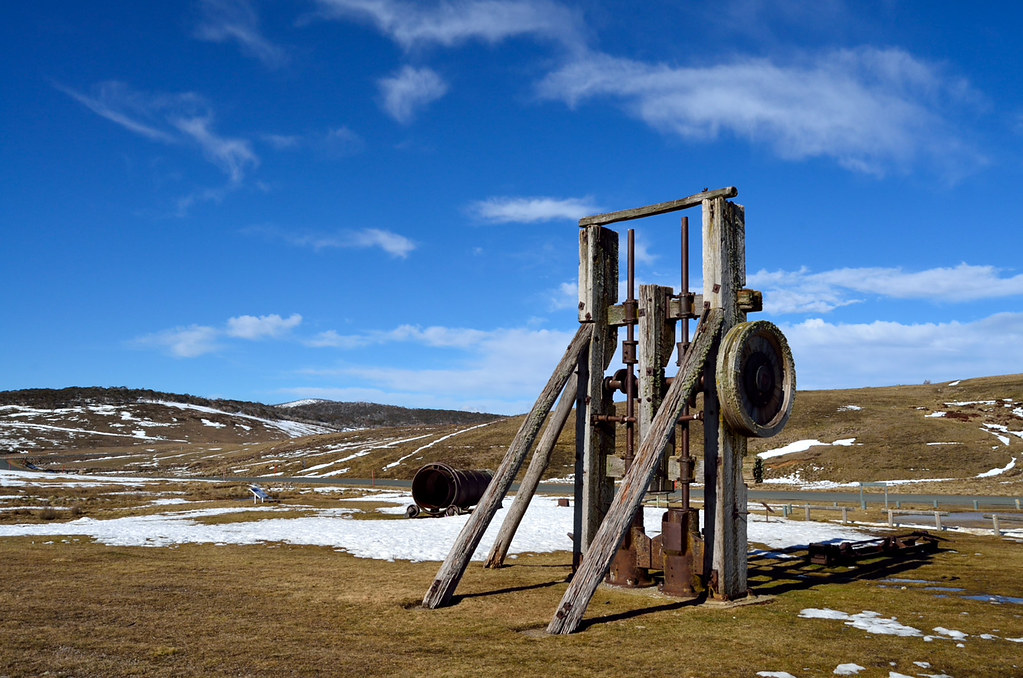
New Chum Hill Ruins

Remnants of Kiandra gold mine at New Chum Hill, #nsw #australia

Showing posts with label Global Voices. Show all posts

August 09, 2015

Maldivians March to Mark Anniversary of Local Journalist's Disappearance

Image via the Facebook page of Secular Democratic Maldives Movement


It has been 365 days since Maldivian journalist, blogger and human rights advocate Ahmed Rizwan Abdulla went missing. The 28-year-old, who works for online news site Minivan News, is an advocate of democracy and free speech and a prolific social media user.

There has been no real progress in the investigation and the people behind his abduction have not been identified. The Maldivian Police and the government have remained silent.

Rilwan's friend Yameen Rasheed describes what has happened in the space of a year:
To demand action and accountability from the state, Rilwan’s well-wishers started the #FindMoyameehaa campaign – the first of its kind in the Maldives. The campaign has organized rallies, petitions, public events, awareness programs on the streets, and also engages the public on social media. The #FindMoyameehaa campaign has drawn widespread attention and international press coverage, and also generated responses – including statements from IFJ, SAMSN, Amnesty International, Reporters Without Borders, the Human Rights Commission of the Maldives, and various national and international bodies.
On July 8, 2015 Rilwan’s family called for an independent public inquiry into the disappearance and the lapses in the investigation.

On August 6, Committee to Protect Journalists (CPJ) urged Maldives to launch an independent investigation into Rilwan's case.
To mark one year of his disappearance, the family has requested a public rally on August 8 to remind the state of its duty to protect journalists and enforce the law. The opposition Maldives Democratic party has endorsed the rally.

Maldivians are using hashtags #suvaalumarch and #findmoyameeha to spread word about the rally:
And people still have hope:

The post was also published in Global Voices Online.

June 21, 2015

Citizen Media Shows Why India Is Unlikely to Reach Its Millennium Goals Target for Maternal Mortality

In the hamlet of Indkatha , Jharkhand state in eastern India, women of the Ho tribe take lessons to reduce maternal mortality.  Image by Freny Manecksha. Copyright Demotix (11/11/2008)
In the hamlet of Indkatha, Jharkhand state in eastern India, women of the Ho tribe take lessons to reduce maternal mortality. Image by Freny Manecksha. Copyright Demotix (11/11/2008)
According to the UN Millennium Development Goals, India should bring down its maternal mortality rate (MMR) to 109 per 100,000 live births by 2015. This is a tough ask, as from an MMR of 437 per 100,000 live births in 1990-91 India has only achieved a reduction to 190 by 2013-2014.

Experts therefore believe that India is likely to miss its Millennium Development Goals target for MMR.

Safe birthing depends on how informed pregnant mothers are and whether the delivery is carried out by trained personnel and in institutional health facilities.

In many regions of India, a lack of health infrastructure to support institutional deliveries and pre- and post-natal care as well as a lack of awareness regarding existing schemes promoting institutional deliveries serve as major impediments to achieving the goal. Other factors such as early marriage of girls, poor nutrition among women and gender inequality increase maternal risk.

A report drafted by CommonHealth and Jan Swasthya Abhiyan, a coalition for maternal-neonatal healthcare and safe abortion, says that the public health system has failed women belonging to the Scheduled Castes, Scheduled Tribes and minority religious groups living in geographically remote areas, as well as migrants. The report shows that although the government runs several programmes, there is a great gap in accountability and governance and most of the programmes have been implemented poorly on the ground.

Citizen journalists from Video Volunteers -- an international media and human rights NGO -- have highlighted maternal healthcare problems at grassroots level in a series of videos.

Their stories reveal that while the government is encouraging women to deliver at institutions rather than at home, the public health system is crippled by shortages of health infrastructure, doctors, frontline health workers and medicine.

Corruption plays its part

In 2014, 56,000 women died during childbirth in India. The Indian government’s schemes Janani Suraksha Yojana and Janani Shishu Suraksha Karyakram make provisions to reduce out-of-pocket expenditure for women living below the poverty line, providing free antenatal check ups, IFA tablets, medicines, nutrition in health institutions, provisions for blood transfusion, and transport to and from health centres.


However, according to the above video, which comprises footage taken by the hidden camera of citizen journalist Mary Nisha from the Godda district of Jharkhand:
The 24-year-old woman in labour was kept waiting for the doctor for six hours. The doctor on duty did not turn up and she delivered in the presence of a nurse. She was forced to pay INR 400 for her delivery and even to use the toilet. She received neither free medicine nor nutrition.
Lack of functional institutions

This video follows three women in Khatti village, Gariaband district, Chhattisgarh. One lost her baby six days after it was born due to a lack of medical assistance. Another had a stillborn baby resulting from an unassisted home birth while a third, who is nine months pregnant, has no access to healthcare.


This video by Reena Ramteke from Khatti village in Garyaband District of the state of Chattisgarh shows that the state-run health facility in the locality is constantly shut.

Laleshwari, 21, says no health worker has ever contacted her. Purnima, 20, had a stillbirth despite the fact the health centre was close to her home. She says the sub-health centre is open twice a month and the nurse at the facility is not present most of the time it is open. What options did she have?

Not a single delivery has taken place in the past decade in the sub-health centre in Khatti village. Indrani, 22, lost her child within six days of the birth due to an infection following a home delivery. During the delivery she called the duty nurse of the sub-health centre but was told by the nurse that she was at a meeting.

Bharti Kumari reports from Telmocho village, Dhanbad district, Jharkhand, that the main medical facility is unusable for health workers and patients, lacking functioning toilets and featuring a roof that leaks during the monsoon.


The doctors of this facility also visit rarely. Thus, patients that can afford to have to visit a relatively costly private centre for childbirth.

Lack of manpower

Halima Ezaz from Dhanbad, Jharkhand, reports that one Auxiliary Nurse Midwife (ANM) from Jharkhand looks after 14 sub-health centres. Ahilya Devi, a septuagenarian, has responsibility for looking after pregnant women and women with new born babies, giving them nutrients, vaccinations, performing deliveries and so on. But she is not supplied with proper tools to work in a region where the power supply is unstable:


Ahilya says:
We used to have rechargeable emergency lights, but those are broken. [If the lights go at night], we have to use candles and torches. How can we make stitches in this light?
Each of these videos highlights the obstacles to reducing the maternal mortality rate in India. Despite the government campaigns in place, India is lagging behind neighbours Bangladesh and Nepal in the fight against maternal mortality. There is also a huge disparity in terms of progress between different states in the vast country. Some states like Tamil Nadu, Delhi, Kerala and Andhra Pradesh have achieved their millennium development goals. But there are many -- especially those with Scheduled Castes and Scheduled Tribes as well as minority religious groups -- who are left trailing.

Watch this YouTube playlist on maternal health in India to learn more.

The post was also published in Global Voices Online.

May 12, 2015

Ananta Bijoy Das Becomes Third Free-Thinking Blogger Killed This Year in Bangladesh

Ananta Bijoy Das. Image from his Facebook page
Ananta Bijoy Das. Image courtesy his Facebook page
It's a sad day for online activists in Bangladesh. On Tuesday morning, science writer and blogger Ananta Bijoy Das was murdered by a group of three or four masked people wielding machetes in Sylhet, Bangladesh's fifth largest city.

It was the third such killing this year of a writer who advocated secular thought, allegedly at the hands of religious extremists.

Das, 33, was a banker by profession but also edited a quarterly magazine called Jukti (Logic) and headed the Sylhet-based Science and Rationalist Council. He was the author of four books on science and critical thinking, and took an active part in the Ganajagaran Mancha, a forum born out of the Shahbag protests that demands a ban on Islamist parties and the death penalty for convicted war criminals.

Das was also an admin for the Bangla blog Mukto Mona (Free Thinkers), which won Deutsche Welle's prestigious BOBS award for social change in April 2015.

According to the Doha Centre of Internet Freedom:
While most of Das's output for Mukto-Mona focused on science and evolution, he wrote a number of blogs that criticised some aspects of Islam and also of Hinduism.

In comments on Facebook posted early Tuesday, Das slammed the local member of parliament from the ruling Awami League party for criticising one of the country's top secular and science fiction writers.
Bangladesh, a Muslim-majority country, is officially secular. But people who have challenged religion have repeatedly been targeted by Islamic extremists in the past decade.

The nature of the threats have also escalated from local to international. Just a week ago, Al Qaeda in the Indian Subcontinent (AQIS) claimed responsibility for the assassination of Bangladeshi-American blogger Avijit Roy (the founder of Mukto Mona blog) on February 26 in which his wife Rafida Ahmed was badly injured. In a recent interview, she slammed Bangladesh's government for inaction and has termed the attack on her husband as "well planned, choreographed – a global act of terrorism."

On March 30, another blogger who opposed irrational religious belief, Washiqur Rahman, was hacked to death in Dhaka. Two madrassa (Islamic religious school) students were apprehended and a third assailant got away. Both Roy and Rahman's cases are under trial.

Das had been on extremists' hit list for some time and was first named in a list of 84 bloggers deemed atheist or blasphemous by Islamic hardliners submitted to the government in 2013.

AQIS claimed responsibility for Das’s murder, according to tweets by extremist group Ansar Bangla Team. "Another file closed! Stay tuned for next target," the statement read.

Screenshot of the AQIS statement
Outrage over Das' death spread quickly. Prominent blogger Arif Jebtik wrote on Facebook:
লিখতে, বলতে, ভাবতে কোনো কিছুতেই আগ্রহ পাই না। ৮৪ জনের একটি তালিকা স্বরাষ্ট্র মন্ত্রণালয়ে জমা পড়েছিল দুইবছর আগে, তালিকা থেকে নবম হত্যা হয়েছে আজকে সিলেটে। তালিকা নিশ্চয়ই চূড়ান্ত নয়, গত ২ বছরে আরো নাম সেই তালিকায় নির্ঘাত যুক্ত হয়েছে। কিন্তু অন্তত এই ৮৪ জনের ব্যাপারে গত ২ বছরে কোনো খোঁজখবর হয়নি, তাঁরা নিয়মিত বিরতিতে খুন হওয়া শুরু করেছেন।
মাসিক কোটায় হত্যা শুরু হয়েছে হয়তো এটি সপ্তাহান্তের কোটায় উন্নীত হবে। ৮৪ জন যাবে, আরো হাজার চুরাশির নাম তালিকায় আসবে। খানিক আহাজারি হবে, সবখানেই একটা ফিসফিস-চুপচুপ ভাব, কিছু বিকৃত মানুষের উল্লাস-তারপর পরের হত্যার জন্য অপেক্ষা।
এই দেশে আইনবহির্ভূত সব হত্যাই জায়েজ হিসেবে মেনে নিয়েছে বৃহত্তর জনগোষ্ঠি, এখানে সবগুলো খুনই 'বিচ্ছিন্ন ঘটনা'।
I don't have the impetus to write, say or think anything. Two years ago a list of 84 bloggers was submitted to the Ministry of Home, 9th from the list was murdered today in Sylhet. This list is not exhaustive, surely more names have been added in the past two years. But nobody bothered to think about the safety of these 84 individuals. They are ending up dead one by one, in regular intervals. Now they are killing one every month, maybe they will speed up to do the same weekly. This list will be done, thousands more will be added. People will regret the death a bit, hush, silence everywhere, demonic joy from some perverts, then everybody waits for the next kill. In this country all these illegal killings have been taken for granted, every death is an isolated incident.
Blogger and activist Rayhan Rashid remembered the fallen who were attacked or killed for their free thinking in Bangladesh:
Ananta Bijoy Das's last posts were translated from Bengali to English by Arunava Sinha:
The International Humanist and Ethical Union (IHEU) wrote in a blog that Ananta Bijoy Das's application for a visa to travel to Sweden, under invitation from Swedish PEN to speak in a conference, was rejected recently by the Swedish embassy in Dhaka, on the basis that he might seek to remain in Sweden.

Exiled writer and columnist Taslima Nasrin blamed the government:
Bangladesh government is not taking any action against the Islamist-killers for being afraid to be labelled as anti-Islam. Islamists are allowed to do whatever they like in Bangladesh. It seems killing free-thinker atheists who criticize Islam is their main agenda.

Rajib Haider
A.K.M Shafiur Rahman
Avijit Roy
Washikur Rahman Babu
Ananta Bijoy Das.
Who is next?

Tomorrow maybe you. Or maybe me.
Blogger Haseeb Mahmud wrote:
পুলিশের দায়িত্ব কি সেটা এই মুহুর্তে একটা প্রশ্ন। অভিজিৎ হত্যার কোন সুরাহা হয়নি। ব্লগার রাজিব হত্যার মামলায় গ্রেফতার ও সেটার বিচার শুরু হলেও সেই হত্যাকান্ডের নাটের গুরু এখনো ধরা ছোঁয়ার বাইরে। অনন্ত বিজয়ের হত্যাকারিদের গ্রেফতার ও তাদের রাতারাতি বিচার শুরু হবে এটাও আশা করা কঠিন। আমাদের করণীয় চাপাতির মুখে লেখা না থামানো। লেখা থামালে জিতে যাবে আনসারুল্লাহ।
What the responsibility of the police is at this point is a question mark. They could not find the killers of Avijit Roy. They have arrested the killers of blogger Rajib, but the mastermind is on the loose. It is a tough to hope that the killers of Ananta Bijoy will be nabbed anytime soon or a trial will start. Our prerogative is to not to stop writing even if confronted by wielding machetes. If we stop writing they will win.
The post was also published in Global Voices Online.

May 11, 2015

Why Arabic Script on the Walls Might Not Stop Public Urination in Dhaka

The photo shows  Arabic sign on the sidewall of Panthakunja Park at the Karwan Bazar in Dhaka. Image by Sk. Hasan Ali. Copyright Demotix (7/5/2015)
The photo shows Arabic sign on the sidewall of Panthakunja Park at the Karwan Bazar in Dhaka. Image by Sk. Hasan Ali. Copyright Demotix (7/5/2015)
Public urination is a problem in Bangladesh due largely to a lack of public toilets. Municipal officials in the capital Dhaka have battled in vain to stop men urinating in public, with signs in the local Bengali language and warnings of punishment and fines yielding no notable results.

Now the government is hoping that an innovative idea can put a stop to the habit. Recently the Ministry of Religious Affairs released a video highlighting their campaign "Language Matters" wherein Bengali signs warning against urination are now being replaced by Arabic signs, a holy language for Bangladeshis.

Perhaps they have taken a cue from neighbouring India -- battling with the same problem -- where pictures of Hindu gods and godesses on the walls are intended to have the same effect.


Although some are lauding the state's effort to solve a perennial problem, others are skeptical, claiming the campaign supports blind faith and promotes misconceptions.

Sufi Faruq comments on YouTube:
ধর্ম মন্ত্রণালয়ের দারুণ একটা ক্যাম্পেইন !!! (..)

বাংলাদেশের বেশিরভাগ মুসলিম আরবি ভাষা না বুঝলেও এই ধরনের অক্ষরকে পবিত্র মনে করে। তাই ওই স্ক্রিপ্টে লেখা যে কোনকিছু অপবিত্র করতে ভয় পায়। এই ভয়টার বেশিরভাগ সময় ধর্ম ব্যবসায়ীরা অপব্যবহার করতো। এবার একটা দারুণ কাজে ব্যাবহার হল।
A great campaign by the Ministry of Religious Affairs!!!

Most of the Muslim majority Bangladeshis cannot understand Arabic but they deem it as a holy language. So they fear to desecrate anything written in that language. Most of the time it was used by religious opportunists as it is the language of the Koran and the prayers. Now it has been used for a good cause.
Despite the Ministry of Religious Affairs' claim in the video about toilets being present in most of Dhaka's 10,000 mosques, the general lack of public toilets in the city of approximately 15 million is a genuine challenge. The city's large homeless population is particularly affected by the shortage.

Adnan R. Amin at Alal O Dulal Blog thinks that the video does not get to the root of the problem and instead aims to create false impressions:
The using of a religious misconception (“Arabic is a holy language”), to prevent a social evil, is clever. But it also reinforces and lends credence to that misconception, instead of dispelling it. One would think that for a ministry for religious affairs, dispelling religious misconceptions would outweigh protecting city-walls. If there were funds available to the government, Dhaka’s City Corporations could’ve used them to create better facilities for women. While it is difficult to discern from boardrooms, the 36 public toilets with facilities for women are now being used by men. Judging from the tactic and tone of  this video, a reexamining of both government bodies’ priorities seems to be in order.
Moreover, Fariduddin Masud, an influential cleric criticised the Ministry for Religious Affairs.

While most mosques do have sanitary facilities, mosques themselves are "not public toilets", he said, adding that "nobody has the right to use the language of the Koran for such a campaign."

Blogger Irene Sultana doubted the campaign via a blog post on Women Chapter titled 'Not Arabic, but Public Toilets, Matter":
ঢাকা শহরের প্রতি দেড় লাখ নাগরিকের জন্য শৌচাগার রয়েছে মাত্র একটি। [..] অধিকাংশ পাবলিক টয়লেটই ব্যবহার অনুপযোগী। [..] পাবলিক টয়লেটহীন নগরীতে পথচারীদের অধিকাংশই তাই ফুটপাতকেই বেছে নিচ্ছেন ’হালকা’ হতে।

না বুঝে কেবল আরবি লেখা থাকলে সালাম করা হলো এ দেশের মানুষের ধর্মীয় অন্ধত্ব। ধর্ম মন্ত্রণালয়ের দায়িত্ব ছিল মানুষকে এসব অশিক্ষা থেকে বের করে শিক্ষিত, সচেতন করা, তার বদলে মানুষের সেই অজ্ঞতাকে ব্যবহার করে ’সমাধানের’ নামে মূলত একটি মশকরা করলো!
There is only one toilet in the capital Dhaka for every 150,000 people, out of which many are not usable. So in the absence of enough public toilets the pedestrians use walls to relieve themselves.

Many Bangladeshis respect the Arabic language because they don't know the language. The duty of the Ministry of Religious Affairs was to educate them and make them aware that this is a language only, not everything in its writing is sacred. But instead they used this ignorance to eke out a "solution" which is actually a farce.
Sultana also cites the recent efforts of Indian Prime Minister Narendra Modi, who built toilets in front of temples and achieved 5.2 million lavatories in the first 100 days of his tenure.

Bangladesh lags far behind on this issue.

While state religious officials are already trumpeting its successes, the campaign does not appear to have been well thought-through. If implemented to the fullest extent, Dhaka's walls will be covered by Arabic but people will still have nowhere to urinate.

Moreover, in India, before Modi went on his toilet-building spree, the gods on walls campaign unravelled: people simply began urinating on the faces of the deities. Innovative campaigns incorporating public shaming such as "The Pissing Tanker" also lacked impact.

For this reason Adnan R Amin's comment that the money spent on the campaign -- "a proxy solution that treats the Symptom and not the Cause" -- would be better spent on new public toilets in Dhaka seems to be well-founded.

The post was also published in Global Voices Online.

February 04, 2015

Mumbai Newspaper Editor Fired, Arrested for Republishing Charlie Hebdo Cartoon

A protest rally against French satirical magazine Charlie-Hebdo was held in Kashmir's Old City. Protestors effigy and Charlie Hebdo posters were set on fire by angry protesters . Image by Adil Hussain. Copyright Demotix (23/1/2015)
A protest rally against French satirical magazine Charlie-Hebdo was held in Kashmir's Old City. Protestors effigy and Charlie Hebdo posters were set on fire by angry protesters. Image by Adil Hussain. Copyright Demotix (23/1/2015)
A newspaper in India was shut down and its editor arrested after republishing one of French satirical magazine Charlie Hebdo's cartoons featuring the Prophet Muhammad on its front page.

Shirin Dalvi, who was later released on bail, is accused of violating section 295A of the Indian Penal Code, which bans malicious and deliberate acts intended to outrage religious feelings. She faces as many as six lawsuits filed against her across the state, and has taken to hiding her face behind a burqa while in public.

Her troubles began on January 17, 2015, when she printed the February 9, 2006 cover of Charlie Hebdo titled "Mahomet débordé par les intégristes" ("Muhammad overwhelmed by fundamentalists"), with a bearded man in tears saying "C'est dur d'être aimé par des cons" ("It's hard being loved by jerks"), on the front page of the Mumbai edition of Urdu daily Avadhnama. The editorial accompanying the republished cartoon argued that since no image exists of the Prophet Muhammad, the Charlie Hebdo caricatures should not be taken as a representation of him:
There exists no image of him, so how can we infer that this picture is a caricature of him?
Ten days earlier, two gunmen had attacked the Charlie Hebdo's office in Paris, killing 12 people, including eight journalists and injuring 11 others. The dead included the magazine's editor and a policeman. The magazine outraged many Muslims across the world as it published a number of controversial Muhammad cartoons over the years.

Facing backlash, Dalvi apologised, writing a detailed editorial explaining her position on the next morning. But the outrage continued. She began receiving threats on her phone. Lawsuits have been filed against her in different police stations in Mumbai, Thane and Malegaon.

On January 19, Avadhnama’s Mumbai edition was shut down and all its 15 employees sacked. Taqdees Fatima, owner of the Avadhnama title, defended herself, saying she had no links with the Mumbai edition, which was run by a separate entity.
The editor, publisher and printers are totally different and… (are) responsible for the contents.
Avadhnama's other city editions did not publish the cartoon and were not affected. For Dalvi, more misery was waiting. Members of the Rashtriya Ulema Council (State Cleric Council) threatened to protest outside the police station if Dalvi was not arrested.

On January 28, she was arrested and got bail on the next day. But she has not gone back to her home in Mumbra since the protests began; her house remains locked and her children are staying with the relatives. Dalvi, along with the newspaper’s publisher Yunus Siddiqui, proprietor Taquadees Fatema and managing director Deepak Mhatre obtained anticipatory bail in another case filed against them on the same charge.

Dalvi told the Mumbai Mirror in an interview that she meant to reproduce Charlie Hebdo's latest cover purely as an illustration to go along with a report, but printed the 2006 cover by mistake. She admitted that she didn't know what the cartoon said since she doesn't speak French, and had only intended for the cartoon to illustrate a report about the controversial magazine's increased circulation following the attacks.

In a different interview with media watchdog website The Hoot, Dalvi, who has been working in Urdu media for the last 25 years, accused some papers of running false reports about her, such as one saying she had shot down a junior colleague's objection to the cartoon's publication by saying it would boost the newspaper's circulation. The website reported that sources in the Urdu media industry suggested business rivalries may have something to do with the case against Dalvi.

Online, some users criticised the lack of support for Dalvi following the Charlie Hebdo attacks. Satire Twitter account ChopdaSaab tweeted:
Blogger Suvie Kaul wrote:
Nikhil Mehra, a lawyer from New Delhi, tweeted:
The hashtag #IStandWithShireenDalvi has taken off:
Sadanand Bhat, a commenter on an article in Indian Express, questioned the state of freedom of expression in India:
This is Outrageous. Here in western Countries they published the picture of the cartoon. Where is the freedom of Expression in India? WHy should she apologise? Where are all the Seculare [sic] peaceniks? This silence is deafening even in the news reviews. Feel sorry for her and wonder how I can help her.
Raghvendra Upadhyay commented on an article in the India Times to say:
There is a thin line between "freedom of press" and "outraging religious feeling". Important thing is, what is the duty of a press. To put in news what people what to hear ? or what press want people to know ?

Choice is yours !!

Based on your choice, you will build yours and your societies future.
The post was also published in Global Voices Online.

January 09, 2015

A New Era Begins for Sri Lanka After President Mahinda Rajapaksa Concedes Defeat

Supporters of Sri Lanka's main opposition presidential candidate Maithripala Sirisena burst firecrackers at the end of voting in the presidential election in Colombo. Image by Chamila Karunarathne. Copyright Demotix (8/1/2015)
On Friday morning, Sri Lankans woke up to news that was unthinkable only a few weeks ago -- President Mahinda Rajapaksa, who took office on 19 November 2005, conceded defeat to 63-year-old former Health Minister Maithripala Sirisena, the presidential candidate of the main opposition United National Party.

The day before, Sri Lankan voters had cast their ballot in the 7th presidential election in a closely contested presidential election, with incumbent Mahinda Rajapaksa seeking a record third term in office. The election was largely peaceful and turnout was more than 70 per cent in most districts.

Rajapaksa tweeted on 9 January, after it was clear he had lost the vote:
The early results showed that Rajapaksa remained popular among the country's Sinhala Buddhist population, who account for around 70 per cent of the island country's 21 million people. Sirisena was favoured by the ethnic Tamil-dominated former war zone in the north of the country and in Muslim-dominated areas, who went out in large numbers to vote for him.

A screenshot from news portal Adaderana.lk shows the numbers (final results):

Screenshot from Adaderana.lk
Rajapaksa oversaw the end of a bloody civil war in 2009 that had raged for 26 years between government forces and a militant organisation seeking an independent Tamil state. He was reelected in 2010 by a landslide, and afterward successfully amended the constitution to concentrate political power in the presidency and remove term limits on the office. While in power, he has faced accusations of abuse of power, nepotism and human rights violations committed during the final stages of the civil war.

Blogger Indrajit Samarajiva, often a critic of the Rajapaksa government, paid tribute to his legacy:
Mahinda Rajapaksa has shown me things I never thought possible. He ended a war that I thought would never end. He rebuilt Colombo and showed us physical development I never dreamed of. For all of his faults, he has won me over as a citizen. I think he has been a good President, in my opinion Sri Lanka’s best, especially because he is the first President to lose an election and gracefully leave.

I have always been reluctant to call Mahinda a dictator because I never thought he was. As much as he messed with Parliament, with the Judiciary, he was always close with the people and he rose and fell by the vote. He was elected to power, he marshalled popular support to win the war and, in the end, he was brave enough to face election for a third time. Most importantly, and something we’ve never seen from an incumbent, he was brave enough to gracefully lose.

He has truly been a great leader and, though I voted for his opponent, I think he deserves something Sri Lanka hasn’t really afforded its leaders. A comfortable, honored and secure position as the respected and beloved ex-President of Sri Lanka.
Some commenters disagreed with Samarajiva's view on Rajapaksa time as president, such as Reshan Auston:
While we carry the respect for Mahinda for winning the war, I have no respect for him for looting the country. As a leader he failed the country. He had all the opportunity to be the Nelson Mandela of Sri Lanka but instead he decided to be Sadam Hussain. He looted the country with his brothers while his sons enjoyed the life using poor tax payers money. We couldn’t get our day to day activities done at government offices without political influences. Is this the leader we care about?

As a president he failed after finishing the war. I don’t harbour any remorse for his loss. He deserved what he got. I don’t wanna shed crocodile tear.
Sri Lankan polling officers carrie ballot boxes into a counting center after close of polling for the presidential election in Colombo. Image by Chamila Karunarathne. Copyright Demotix (8/1/2015)
Sri Lankan polling officers carry ballot boxes into a counting center after the close of polling for the presidential election in Colombo. Image by Chamila Karunarathne. Copyright Demotix (8/1/2015)
Dilrukshi Handunnetti wrote on citizen journalism website Groundviews on why Sri Lankans sought a change:
It is not as if Maithripala Sirisena, a simple villager who has risen within the SLFP ranks to reach top positions, holds the island enthralled. Instead, what he represents in terms of ideas and promises, matter to a large majority of the people who have silently observed an elected president turn increasingly authoritarian and triumphalist. [..]

There may be others who feel that while road and rail connectivity was being achieved, the incumbency has severed connectivity among the island’s communities that lived in harmony for decades, causing serious divisions on ethno-religious lines.

It is that negative difference that has fuelled an electorate’s call for a political change, perhaps at great risk, still with the hope that a new administration may have the political maturity to tolerate dissent and celebrate a plural Sri Lankan identity.
The social media scene was full of buzz:
Sri Lanka's free and fair elections were congratulated by many:
And here is what Sri Lankans are hoping for the future:
The post was also published in Global Voices Online.

January 08, 2015

Your Guide to Sri Lanka's 2015 Presidential Election

Sri Lankan election commission workers carry ballot boxes while escorted by police on the eve of presidential elections in Colombo. Image by Chamila KarunaRathne. Copyright Demotix (7/1/2015)
Sri Lankans are going to the polls on Thursday, January 8, in one of the most closely contested, significant presidential elections in the nation's history.

Every six years, Sri Lanka elects a new president and legislature. The parliament has 225 members, elected to six-year terms. It is a multi-party system, dominated by two political groups. There are 15 million eligible voters in Sri Lanka and over 12,000 polling stations have been set for elections. Voter turnout in the previous election was around 75 percent.

In the 2010 presidential election, Mahinda Rajapaksa of United Peoples Freedom Alliance (UPFA) won with 58 percent of the vote. Shortly after being elected, Rajapaksa successfully amended the constitution to concentrate political power in the presidency, and remove term limits on the office. This time, Rajapaksa has preponed the elections, holding them two years ahead of schedule. Rajapaksa, the region's longest-serving leader, will try for a third term, amidst criticisms that he abuses his authority and seeks a dynasty.
The actors

Rajapaksa has the backing of a number of small constituent parties of the UPFA, including the Ceylon Workers' Congress, and Communist Party. He has the support of the Buddhist extremist group Bodu Bala Sena. Rajapaksa's platform, titled "Mahinda's Vision—The World Winning Path", pledges to introduce an entirely new constitution within a year.

Supporters of Sri Lankan President Mahinda Rajapaksa cheer during an election campaign rally in Palmadulla, Sri Lanka. Image by Chamila Karunarathne. Copyright Demotix (3/1/2015)
Rajapakse has actively campaigned alongside celebrities like sporting Bollywood megastar Salman Khan, creating no small amount of buzz. Touring the former war zone in the country's North, Khan urged minority Tamils to back Rajapakse in the election, calling him the "known devil".

Rajapakse's chief opponent and former health minister, Maithripala Sirisena, is a surprise pick by the United National Party, the main opposition party, which is backed by twelve smaller parties. The remaining seventeen candidates are independents or belong to minor political parties.  UNP only revealed Sirisena's nomination on November 21, 2014, after the election was announced.

Sirisena released his platform, titled "A Compassionate Maithri Governance—A Stable Country", which pledged to abolish the country's presidential government within 100 days of being elected. Under a new parliamentary system, Sirisena says he would appoint UNP leader Ranil Wickremasinghe as prime minister.
Sirisena has launched a campaign attacking Rajapaksa where he is weakest: the President's apparent nepotism. During Rajapaksa's presidency, his three brothers and his son have all risen to positions of considerable influence in the national government.

Maithripala Sirisena, it's worth noting, took a great risk when he left the Rajapaksa Administratiojn. Indeed, the Asian Human Rights Commission recently expressed concern about his personal safety, noting that he's suffered several attempted attacks over the past several days.

Sri Lanka's main opposition presidential candidate Maithripala Sirisena reads a newspaper during a campaign rally for the upcoming presidential elections in Colombo. Image by Chamila Karunarathne. Copyright Demotix (31/12/2014)
Use of social media

#IVotedSL is a trilingual campaign launched by Centre for Monitoring Election Violence (CMEV) to encourage citizens to exercise their voting rights.

Image courtesy CMEV. Copyright Free.
The campaign calls on voters to take a public pledge that they will exercise their right to vote on January 8th. An individual can signify this pledge by changing their profile/account picture and cover/banner page on Facebook, Twitter, Google+ or any other social media platform. On election day those who take the pledge can share through social media a picture of the fifth digit (little finger) of their left hand which is marked with indelible ink using the hashtag #IVotedSL.
President Rajapaksa's quite active Twitter account has 92,600 followers. According to an analysis by Groundviews, however, large numbers of these subscribers and admirers might be less than organic.

According to blogger Indi Samarajiwa:
The dominant hashtag for this election is, by far, #PresPollSL (best source for news, in my opinion). CMEV recommends #IVotedSL for voting related stuff.
Samarajiwa also analyses the Facebook engagement of both the campaigns. He concludes that Sirisena's readers seem to engage far more with the campaign's content, despite the fact that Rajapakse has almost twice as many followers.
Irregularities and violence

Supporters of Sri Lanka's ruling party have faced accusations of violating election laws during campaign. The Centre for Monitoring Election Violence (CMEV) identifies an "unparalleled misuse [by the ruling party] of state resources and media". According to Human Rights Watch, local monitoring groups have reported numerous acts of election-related violence and intimidation during the month-long campaign.
Resources
According to the latest opinion survey by the Centre of Policy Analysis (CPA), 86.9 percent of Sri Lankans think their vote can make a difference in the outcome of the presidential election. Let's hope everyone can exercise their voting rights peacefully!

The post was also published in Global Voices Online.

November 27, 2014

Updates on the 18th SAARC Summit On Social Media

The ongoing summit of the The South Asian Association for Regional Cooperation (SAARC) was covered by international media with different perspectives. However non-official initiatives such as 18th SAARC Summit blog, Facebook account, Twitter and Google+ account are aggregating updates on the summit for easy archiving.

Here are some examples:


The post was also published in Global Voices Online.

November 21, 2014

University Teacher Unpopular with Islamist Hardliners is Killed in Bangladesh

Picture of Rajshahi University Campus in a misty winter morning. Image from Flickr by  Kamrul Hasan. December 16, 2013 (CC BY-NC-SA 2.0)
Picture of Rajshahi University Campus in a misty winter morning. Image from Flickr by Kamrul Hasan. December 16, 2013 (CC BY-NC-SA 2.0)
Professor Shafiul Islam, a professor of sociology in Rajshahi University was attacked with a machete by unknown assailants outside his home in Rajshahi city on November 15. He died from his injuries in a nearby hospital some hours later. According to news reports, the professor led a push to ban students wearing full-face veils at his university in 2012, stoking the wrath of Islamist hardliners. The professor argued that full-face veils made it difficult to identify individual students and that they could even be used to cheat on university examinations.

Rajshahi is a major urban and industrial centre of North Bengal and is located on the river Padma near Bangladesh-India border. Rajshahi University is a stronghold of the religious political party Jamaat and its student wing Islami Chatra Shibir. Pro-Jamaat newspapers in 2010 reported that Shafiul Islam had banned the burqa as the then-chair of the university’s sociology department, a policy that offended religious sentiments among many in the majority-Muslim country. At that time, Shafiul had sent rejoinders to some of those newspapers claiming that he had only expelled one female student from his class because she was cheating using her burqa.

A previously unknown Islamist group claimed responsibility for Shafiul's killing, after opening a Facebook page late on Saturday:

Screenshot of the Facebook page
Their status reads:
Our Mujahideens have killed an ‘atheist’ of Rajshahi University who had banned wearing burqa in his department.
Threat
Threat
Public outrage over the assassination has since become palpable both online and off:
According to reports, the Facebook page generated more than 2,000 likes from people who appeared to support the killing. In a long status update on November 17, posts on the page hinted at who might be the next targets of the group. One status update gave an exhaustive list of potential targets including university and secondary school faculty, public representatives and local opinion leaders, heads of organisations, judges, lawyers, doctors, intellectuals, journalists, and even actors.

After the Facebook page link was published by various media outlets, netizens flagged the page using Facebook's abuse reporting system, arguing that it violates the platform's Community Standards. The first section of Facebook’s Community Standards reads:
Safety is Facebook's top priority. We remove content and may escalate to law enforcement when we perceive a genuine risk of physical harm, or a direct threat to public safety. You may not credibly threaten others, or organize acts of real-world violence.
The Community Standards also address harassment:
Facebook does not tolerate bullying or harassment. We allow users to speak freely on matters and people of public interest, but take action on all reports of abusive behavior directed at private individuals. Repeatedly targeting other users with unwanted friend requests or messages is a form of harassment.
Nevertheless, in the days following the page's publication, Facebook responded to abuse reports with generic messages such as these:

Screenshot of Facebook's reply
Screenshot of Facebook's reply.
Netizens persisted in reporting the page as an abuse of Facebook's Community Standards. On Nov. 18, 2014 Facebook removed the page.

Screenshot of Facebook reply
Screenshot of Facebook reply.
Police say that they believe the killing may have been perpetrated by militants backed by the conservative religious Jamaat-e-Islami group.

Rajshahi University has seen killings of its teachers Professor Mohammad Yunus in 2004 and Professor Taher Ahmed in 2006. Pranab Kumar Panday writes in an op-ed in the Daily Star:
It is really unfortunate to see that public university teachers are being harassed and killed very often. [..] These incidents are creating a sense of insecurity among the teachers of public universities. They are also indicative of the deterioration of law and order in the country.
Meanwhile, the threats continue. The Facebook page that claimed responsibility for killing Shafiul Islam recently announced their next target. The post reads:
Next Target . . . teacher of Bogra Govt. Women`s College. Offense: Banning burka. Offense date: September 2014. Punishment: Death. Chance: Yes. All atheists who oppose Islam be careful.
The post was also published in Global Voices Online.

November 14, 2014

The Google Bus Is Bringing Internet Skills to Half A Million Students in Bangladesh

Screenshot of Google Bus from the Intro Video on YouTube
Screenshot of Google Bus from the Intro Video on YouTube (click to watch the video)
A team from tech giant Google is driving across Bangladesh to teach half a million college and university students throughout Bangladesh how to make the most of the Internet. The specially retrofitted Google Bus powered with 3G mobile Internet will visit 500 campuses in 35 locations across the South Asian country.

More and more people in Bangladesh are going online, thanks to 3G mobile Internet. In last two years, Internet penetration jumped to 20 percent from just 5 percent in 2012. These new users, especially young people, do not have adequate training to harness the potential of Internet and new media.

The Google Bus initiative seeks to change that, not only allowing students to connect to the Internet but also learn about new tools that aid their education and development and attend instructor-led training sessions. Students involved in the project will also be able to use a number of Internet-connected Android devices.

The bus has already visited several colleges and universities in the capital Dhaka. In the coming months, it will start its journey towards academic institutions in and around Chittagong, Khulna, Sylhet, Rajshahi, Rangpur, Barisal and other major cities.

Netizens have expressed their enthusiasm for Google's initiative:
Many students have shared their experience on the Google Plus community page. Murad Hossain from Adamji Cantonment College posted:
The Google bus team came to our #ACC college Campus..It's just great :) Though it's new to me but feeling excited. Hope in Bangladesh it will spread soon and gain popularity...
Orpita Ahmed (Bristy) wrote:
Hi, I'm bristy from tejgaon college. I like Google Bus. It is very essential for our daily life. So I like it very much.
On Bangladeshi blog Jhalmoori, Ahmed Rabib Towsif explained the significance of the Google Bus:
Google as we all know by their search engine is a multinational company with a mission to organize the world’s information and make it universally accessible and useful. With the Google Bus Bangladesh initiative it would not only benefit the youth from today, but benefit the whole country tomorrow.

The post was also published in Global Voices Online.