

Dragonfly

Image by Rezwan

Overcrowded passenger ferry capsized in the Padma River in Munshiganj, Bangladesh

The World Cup Goal-E Project

This street in Bangladesh has a colorful world cup celebration

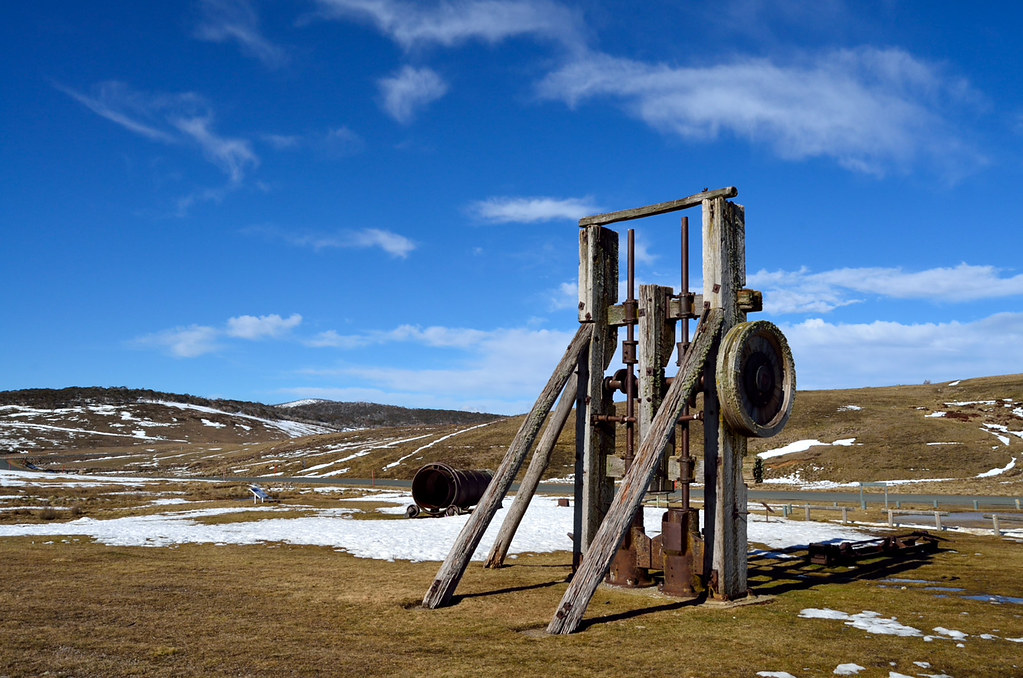
New Chum Hill Ruins

Remnants of Kiandra gold mine at New Chum Hill, #nsw #australia

Showing posts with label Telecom. Show all posts

December 19, 2008

Disconnected...

Calls to and from Bangladesh have been seriously effected today. In case you are wondering why this happened here is the reason:
Internet and telephone traffic between Europe and the Middle East and Asia was hampered Friday after three major underwater data lines were cut, according to France Telecom.

The cut occurred on lines between 07:28 and 08:06 Coordinated Universal Time (UTC) on lines in the Mediterranean sea that connect Sicily to Tunisia and Egypt, the telecommunications company said.

The cuts were to the Sea Me We 4 and Sea Me We 3 lines, which connect countries between Singapore and France as well as the Flag cable route, which stretches from the U.K. to Japan, a France Telecom spokeswoman who asked not to be named said.
J of Shadakalo blog writes in E-Bangladesh that it may not return to normal levels until the end of the year and it will impact Bangladesh hardly:
The immediate impact is being felt by expatriates trying to call Bangladesh, or people trying to call out of Bangladesh to international destinations. Instead of gigabytes of bandwidth over the submarine cable, BTCL (former BTTB) and the three other International telecom gateways are working with only megabytes of capacity through VSATs. In BTCLs case, the capacity dropped from 1800 MBps to 240 MBps. BTCL and the other IGWs carry about 5 million minutes per day under normal conditions, which dropped to about 650,000 minutes. The result? Inconvenience for callers, lost revenue for BTCL and the other IGWs, and a near-fatal blow for the nascent call center industry in Bangladesh.

10 to 50 seat call centers have been in operation in Bangladesh for the last few months, and some of them were serving international customers. Now most of those call centers, without dedicated VSAT connections, have fallen silent. And when Monday comes, the hapless call center owners will have to answer to some very irate clients–clients who will not care that this was a global connectivity problem. Many of those clients will go to other call centers in other countries and never return, leaving our call center owners stuck with their investments.
The typical culprit in these undersea cuts are anchors from ships but this time Egypt is claiming there were no ships in the vicinity this time.


J adds:
lots of other countries are facing connectivity loss too. But there is a big difference: they are not connected to only one cable, so while they may lose 50% or 33% of their connectivity if one cable goes down, they don’t experience the 87% capacity loss experienced by Bangladesh.
As per Beta News the hardest hit countries by telecom traffic disruptions are:
Estimates given for voice-service disruptions indicate Maldives (100% out of service), India (82% out of service), Qatar (73%), Djibouti (71%), and United Arab Emirates (68%).
There was a debate about redundancy and be connected to a second submarine cable so that outages like this don't affect at this scale. In January this year the submarine cable was cut also almost near the same point in Alexandria.

In last February we heard that the Bangladesh Government will allow a second cable to be commissioned by the private sector. But we have not heard about it for a while. This should be the priority for the newly elected government.

December 17, 2008

Why you are unable to call home to Bangladesh

In recent times people from all over the world are having tough time to call to Bangladesh using calling cards or other means using VOIP technology.

This article answers why. Some snippets:

"VOIP or Voice Over IP is a technology that enables telephone companies to transmit high numbers of phone calls all over the world very cheaply. [..] Creative entrepreneurs have popped up everywhere setting up VOIP internet exchanges throughout Bangladesh that carry a huge volume of international phone calls into Bangladesh using the Internet. These exchanges usually consist of computer servers, gateways, and modems.

These VOIP exchanges carried as much 80% of the total international telephone traffic but were highly illegal. [..]

The new military backed administration has been on a very big anti-corruption campaign against the graft and illegality of the past that Bangladeshi’s have put up with for far too long. Hundreds of illegal businesses, shops and slums have been bulldozed and destroyed. The same has happened to the VOIP internet exchanges that have been making a great living from their illegal internet telephone services.

They have been selling international telephone call capacity to foreign phone card companies who have also benefited greatly by their very low rates and margins.

Closing down these internet exchanges has sent the telephone network and capacity in to complete turmoil in Bangladesh. You now have millions of callers trying to make the same volume of calls on 20% of the capacity that existed previously – there is less and less capacity available all the time."

July 10, 2008

Technology business rules in the developing countries

Katy Bacon at the official Google.org blog writes about the mobile phone revolution in Africa:
It is the story of Safaricom, the most successful telecom company on the continent. Safaricom started trading publicly on the Nairobi stock exchange in June and catalyzed the largest IPO on the continent ever. More than $800 million was raised from Kenyans from all walks of life, resulting in an over-subscription of stock of more than 400%. Mobile is growing faster in Africa than in any other part of the world. While levels of internet penetration are well below 5% for the continent, nearly 40% have access to mobile phones and Nairobi sends more text messages in a single day than New York (a statistic frequently quoted in the region).

Ten years ago people were talking about land lines and how they would ever penetrate rural Africa. Infrastructure has long been a constraint on economic development and growth in Africa but nobody imagined that a new technology would completely leap-frog the traditional phone and fundamentally disrupt telephony in Africa. I can't help but think about rural energy in the same light. Today, countries like Uganda are still 90% unserved by electricity. Can you imagine not having power in 90% of any country and still trying to grow the economy? Do we expect Africans to wait for grid electricity to incrementally reach people or are there disruptive innovations that can provide off-grid renewable energy to rural Africans in scaleable ways?
We may see similar response when Bangladesh's largest mobile phone provider Grameen Phone launches its IPO. And Grameen Phone's contribution to Bangladesh's rural economy should not be neglected.

January 17, 2008

World's best selling consumer product

It is none other than Nokia 1100, which was ubiquitous in Bangladesh until recently as the later models appeared.

Via Gagan

January 08, 2008

Internet in danger in Bangladesh

The Daily Star reports:
Internet service providers, IT experts and businessmen say the government is responsible for frequent cuts in the country's optical fiber submarine cable and for the consequent constraints in moving business forward.

Sources said a number of BTTB officials pocketed large amount of money in the name of fibre-optic cable maintenance. They said the officials withdraw allocated budget before doing any maintenance work.

BTTB loses revenue of $70,000 per hour with every disruption. The BTTB invested $35.1 million for the submarine cable.
A round table of Internet service providers arranged by BDNews24, IT experts and businessmen finds that the government is responsible for frequent cuts in the country's optical fibre submarine cable and for the consequent constraints in moving business forward.
Rafiqul Islam Rowly, president of BASIS, asked why the optical fibre cable has not yet been declared a "key point installation".

"We're really living on a single oxygen line," Rowly said.

Bangladesh introduced the fibre optic service on May 21 2006. The service has been disrupted a total of 23 times because of cuts in the cable between Chittagong and Dhaka. State-run BTTB have said "sabotage" was the cause of cable cuts on at least eight occasions.

The speakers slammed the government for not yet bringing the culprits responsible for cutting the cable to book.
It seems all problem lies inside BTTB.

October 11, 2007

Banking with mobile phone

The world's second money transfer system with mobile phone (after Philippines) was introduced in Kenya in March 2007. Kenya's biggest mobile operator Safaricom lets subscribers send M-Pesa, or mobile money convertible into cash to other phone users by SMS. The customers of the Safaricom network can keep up to 50,000 shillings (£370) in a "virtual account" on their handsets and use it for payment. Kenya's population is 35 million and 8 million of them own mobile phone.

Originally targeted for the urban people's demand to send money to their families in rural areas this has revolutionized rural trade in Kenya. Now goat traders can sell goats and come home carrying virtual money or M-Pesa. One Goat seller recalls that he was robbed off his mobile but did not lose any money. All he did was to replace his sim card and carried on again. They transfer money to other mobiles by sending a text message with a pin code. The recipient collects cash from625 local agents, who are based in Safaricom outlets, petrol stations and supermarkets by showing the code, identification and answering a security question. Safaricom profits by charging customers about 5 per cent of the value of their transfers.

In Bangladesh, mobile phone networks are extensive, the operators penetration in rural areas are high and it is one of the fastest growing Telecom sector in South Asia. The rural people of Bangladeshi can use such mobile money. Any takers?