

Dragonfly

Image by Rezwan

Overcrowded passenger ferry capsized in the Padma River in Munshiganj, Bangladesh

The World Cup Goal-E Project

This street in Bangladesh has a colorful world cup celebration

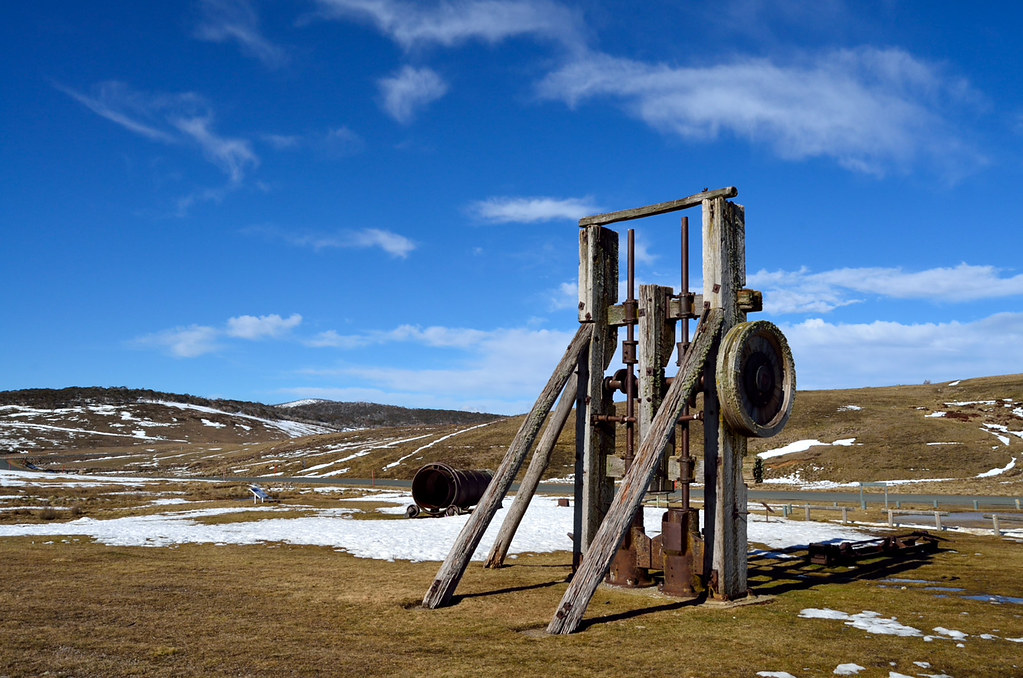
New Chum Hill Ruins

Remnants of Kiandra gold mine at New Chum Hill, #nsw #australia

Showing posts with label review. Show all posts

July 08, 2007

Masud Rana: the James Bond of Bangladesh

An untamed daredevil spy of Bangladesh Counter Intelligence. On secret missions he travels the globe. Varied is his life. Mysterious and strange are his movements. His heart, a beautiful mix of gentle and tough. Single. He attracts, but refuses to get snared. Wherever he encounters injustice, oppression, and wrong, he fights back. Every step he takes is shadowed by danger, fear, and the risk of death. Come, let us acquaint ourselves with this daring, always hip young man. In a flash, he will lift us out of the monotony of a mundane life to an awesome world of our dreams. You are invited. Thank you.
The are the opening lines of Masud Rana, the spy fiction from Bangladesh written by Qazi Anwar Husain and published by his Sheba Prokashoni. Since 1968 Masud Rana, or agent MR-9 is thrilling Bangladeshis in cheap newsprint paperbacks. In my teens I was mesmerized with Rana thrillers and used to devise ways to buy/collect and read them without being seen by elders. Rana has a womanizing character like Bond and thus the paperbacks were deemed unsuitable for teens.

It has been long since I last read a Masud Rana series (the latest was no. 371). Mahmud Rahman does this excellent review in the Daily Star. It was interesting to know that Masud Rana is still like the old days but has become a bit conservative with his erotic style. Probably the mindset of the writer has been changed due to changes in society.

You can get Masud Rana thrillers anywhere in the world from Boi Mela, one of the largest online Bangla Book Stores. Boi Mela website is the official web presence for Seba Prokashoni books. Most of the books that had been published by Seba Prokashoni in the past 4-5 years has Boi Mela's name printed in them as their web reseller.

January 05, 2004

THE COMING OF AN AMERICAN EMPIRE

M Abdul Hafiz, former Director General of Bangladesh Institute of International Strategic Studies (BIIS) has written one article titled The coming of the American Empire criticizing the role of America in today's global affairs. Some excerpts:

There had been rise and fall of empires in the past and each one of them had its rival to contend with. But America is not only the world's sole superpower, it is also the sole empire -- something that never happened before in history -- a sole empire global in scope that seeks to reinvent the nations of the world in its own image.

Some nations feel happy with the US' new identity, viewing it as benign liberal empire that can protect them from the ambitious local powers while some grudge it because it stands on the way of their goal. Still others accept it as a hard fact of life and acquiesce the US' new status.

The pursuit of moralistic project under self proclaimed righteousness has undermined not only American interest, but also the American values. The double standard and deception have become all too common.

It is also condescending to claim that America has the right to impose democracy on other nations and cultures regardless of their circumstances and preferences. Treating democracy as a divine revelation -- and Washington as its prophet and global enforcer -- simply does not square with the historical record of this form of government, nor with the geo-political realities of the modern world. The principal problem is the mistaken belief that democracy is talisman for all the world's ills, including terrorism, and the US has a responsibility to promote democratic government wherever in the world it is lacking irrespective of whatever are the social and political costs involved.


Read the rest here.

December 21, 2003

RAKTAKARABI: REVOLUTION OF PERSONAL SPIRIT AGAINST THE SYSTEM

Recently I watched the play "Raktakarabi" (The red oleander) written by Rabindranath Tagore & performed by the theater group "Nagarik". It is a symbolical play aimed at the vices of capitalism and totalitarianism and rekindling the personal spirit. However the poet terms the play realistic and says:

There was a time when, in the human world, most of our important dealings with our fellow-beings were personal dealings, and the professional element in society was never hugely disproportionate to the normal constitution of its life.

...Today another factor has made itself immensely evident in shaping and guiding human destiny. It is the spirit of organization, which is not social in character, but utilitarian...

... But the personal man is not dead, only dominated by the organized man. The world has become the world of Jack and Giant the Giant who is not a gigantic man, but a multitude of men turned into a gigantic system.


Yes, and the play show how the system suppresses the personal man. In an imagined land full of gold mines the King rules with his Army, the Sarders. The inhabitants are simply known to the ruler as numbers instead of names. Just like exploiting the workers of modern day Tea-garden workers, they are encouraged to forget their pain by taking alcohol and they are threatened not to say something against those Sarders or the King. Then came Nandini, a symbol of free and glorious human spirit wearing Raktakarabi (The red orleander flower). She affects Ranjan, Bishu and others with her elegance, beauty and naive thoughts. She has no fear. She can tackle the Sarders and most importantly goes to the den of the King (who hides himself to be deemed by others as a fearsome being) asking him lot of questions that the King himself cannot answer. He also becomes affected by Nandini's logics as she finds himself as a mere human. The Sarders try to suppress the revolution against the King by killing Ranjan and punishing others. But then the strangest thing happens; the King comes out with Nandini and others and destroys the system created by him.

Truly the play focuses the strength of the eternal human spirit against the backdrop of the dark cruelty of monstrous organizations and administrations that have lost their souls. How ironic compared to the modern day rift between the government decisions and general citizens in a democratic outset.

Here is the review of the play. Aupi Karim (her biography) portrayed Nandini elegantly and proved that she is a very spirited young actor. Among others Khaled Khan was outstanding in the role of Bishu.

December 11, 2003

MONEY MATTERS IN AN UNEQUAL WORLD

Alan Atkisson wrote a piece in the Worldchanging blog about a book "The memory Bank" by Keith Hart, which describes an interesting view of the future of money & virtual capitalism.

In Hart's view:

Humanity is caught between the institutions of agrarian civilization and a machine revolution whose implications we barely understand. In consequence, the world is becomingly rapidly more unequal as we grow closer together. Inequality of rich and poor results in the followings:

- Inequality undermines democracy.

- Inequality makes us feel bad. Human compassion struggles with indifference.

- Inequality is a threat to world peace. Resentment of historical wrongs fuels terrorism and ultimately war.

- Inequality reduces market demand. Economic growth in the modern world comes from increasing the purchasing power of the masses. Everyone benefits from redistribution of wealth.


He suggests:

The world today is as much the offspring of agrarian civilization as of modern machines, government and money. The obstacles to progressive change are thus twofold: the need to democratize the age of money, to bring capitalism under control; and the need to break down "natural" structures based on territorial monopoly, to foster mobility at the expense of being tied to the land.

The internet may confirm a trend which liberals have often asserted and socialists once denied, that economic power is being transferred from producers to consumers, from centralized bureaucracy to flexibly specialized markets in which individual consumers carry more weight than we ever did in earlier days.

The issue is whether borderless trade at the speed of light will permit governments still to extract revenue from markets and whether every internet user in the world will pay rent to Bill Gates or his equivalent, whenever they switch on their computers.


Read more here from the summary of his book.