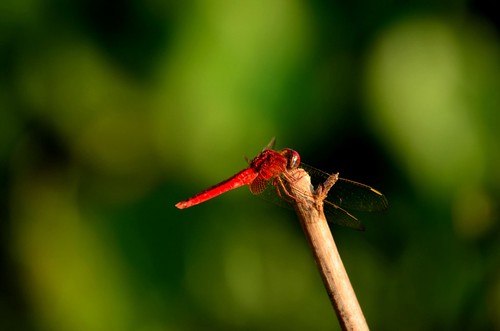
Dragonfly

Image by Rezwan

Overcrowded passenger ferry capsized in the Padma River in Munshiganj, Bangladesh

The World Cup Goal-E Project

This street in Bangladesh has a colorful world cup celebration

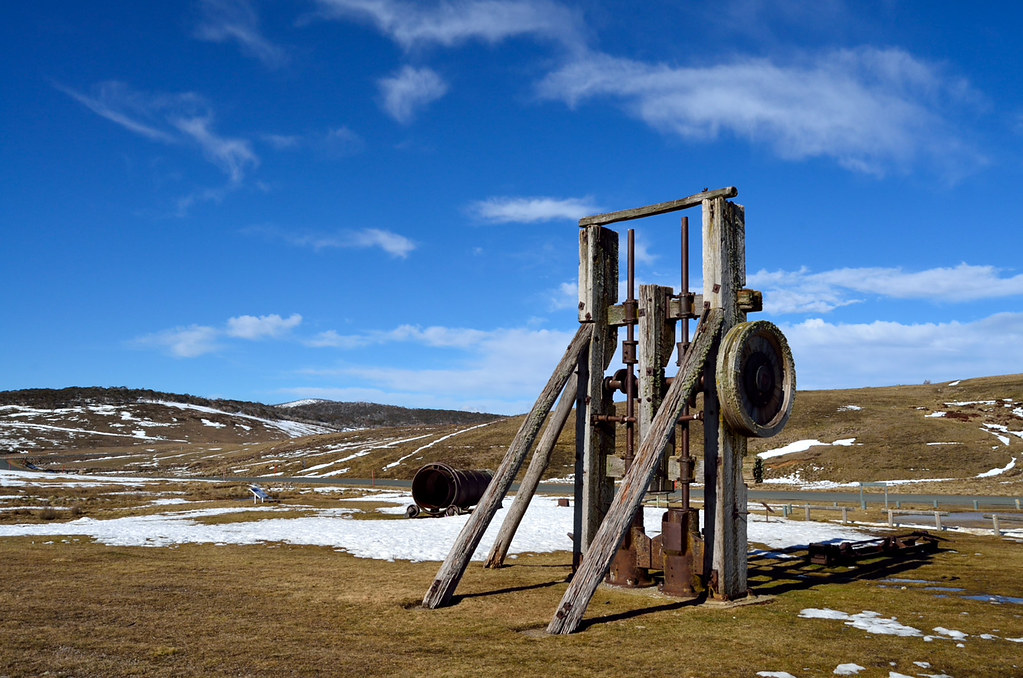
New Chum Hill Ruins

Remnants of Kiandra gold mine at New Chum Hill, #nsw #australia

Showing posts with label Sri Lanka. Show all posts

February 09, 2015

Gardeners Are Repurposing Coconut Waste as Eco-Friendly Plant Pots

Plant vases made of coir are the new export materials. Surprisingly being quite cheap these eco-friendly materials haven't found a market in India. Image by Subhashish Panigrahi. Used with Permission.
Plant vases made of coir fibre and coir piths are eco-friendly and cheap. Image by Subhashish Panigrahi under CC-by-SA 4.0.
Coir pots in the above picture are made from coir piths or coco peats, sourced as a by-product from coconut production. Coir is a natural fibre extracted from the hard, internal shell and the outer coat of a coconut and used in products such as floor mats, doormats, brushes, mattresses, twist rope, and weave carpets.

Coir fibres make up about a third of the coconut pulp and the remaining portion, called pith or dust, is biodegradable. Coir pith used to be treated as waste material, but is now increasingly being used as soil treatment, mulch and a hydroponic growth medium, e.g. use inside the coir pot. If coir pith is artificially decomposed using biological agents, within 30 days it can convert to be 100% natural organic manure benefitting the plant.

Using coir pots that can be planted directly in the garden can save an estimated 100 million plastic pots from ending up in garbage cans.

The coconut tree (Cocus nucifera) grows in many tropical countries but is commercially exploited mainly in India, Thailand, Sri Lanka and the Philippines. Ropes and rigging made from coconut fibre have been in use from ancient times and are found in the Indian and Arab histories.

This YouTube video shows how coir is made from coconut husks:


India produces 60% of the total world supply of coir fibre. India and Sri Lanka together produce 90% of the coir produced every year across the world. India earned foreign exchange of Rs 2,200 million (approximately $37 million) by exporting coir pith during 2011-12 and aims to boost exports by five times mainly because of the demand in the Gulf countries.

One of the inventions using coir piths is the coir pot, an asset for anyone who wants to start green farming.
After planting trees inside the pot, the roots grow through the coir, so the entire pot and plant can be put into the ground – no wasted plastic pot and no wasted effort.

GV author Subhashish Panigrahi writes in Facebook:
Plant vases made of coir are the new export materials. Surprisingly being quite cheap these eco-friendly materials haven't found a market in India. Coir pith is used as manure in the vases. After two years or so, when the roots start penetrating the vase, it could straight away be taken and planted. What a neat idea!
The benefits of coir pots are that they can replace petroleum-based plastic nursery pots, flats and trays. Although they are lightweight, durable and can be recycled, they usually wind up in the trash causing environmental damage. But things are changing. Plants in biodegradable containers such as coir pots are gradually becoming more available as growers wake up to the environmental consequences of plastics and rubbers.

Subhashish Panigrahi contributed to this post.

The post was also published in Global Voices Online.

January 09, 2015

A New Era Begins for Sri Lanka After President Mahinda Rajapaksa Concedes Defeat

Supporters of Sri Lanka's main opposition presidential candidate Maithripala Sirisena burst firecrackers at the end of voting in the presidential election in Colombo. Image by Chamila Karunarathne. Copyright Demotix (8/1/2015)
On Friday morning, Sri Lankans woke up to news that was unthinkable only a few weeks ago -- President Mahinda Rajapaksa, who took office on 19 November 2005, conceded defeat to 63-year-old former Health Minister Maithripala Sirisena, the presidential candidate of the main opposition United National Party.

The day before, Sri Lankan voters had cast their ballot in the 7th presidential election in a closely contested presidential election, with incumbent Mahinda Rajapaksa seeking a record third term in office. The election was largely peaceful and turnout was more than 70 per cent in most districts.

Rajapaksa tweeted on 9 January, after it was clear he had lost the vote:
The early results showed that Rajapaksa remained popular among the country's Sinhala Buddhist population, who account for around 70 per cent of the island country's 21 million people. Sirisena was favoured by the ethnic Tamil-dominated former war zone in the north of the country and in Muslim-dominated areas, who went out in large numbers to vote for him.

A screenshot from news portal Adaderana.lk shows the numbers (final results):

Screenshot from Adaderana.lk
Rajapaksa oversaw the end of a bloody civil war in 2009 that had raged for 26 years between government forces and a militant organisation seeking an independent Tamil state. He was reelected in 2010 by a landslide, and afterward successfully amended the constitution to concentrate political power in the presidency and remove term limits on the office. While in power, he has faced accusations of abuse of power, nepotism and human rights violations committed during the final stages of the civil war.

Blogger Indrajit Samarajiva, often a critic of the Rajapaksa government, paid tribute to his legacy:
Mahinda Rajapaksa has shown me things I never thought possible. He ended a war that I thought would never end. He rebuilt Colombo and showed us physical development I never dreamed of. For all of his faults, he has won me over as a citizen. I think he has been a good President, in my opinion Sri Lanka’s best, especially because he is the first President to lose an election and gracefully leave.

I have always been reluctant to call Mahinda a dictator because I never thought he was. As much as he messed with Parliament, with the Judiciary, he was always close with the people and he rose and fell by the vote. He was elected to power, he marshalled popular support to win the war and, in the end, he was brave enough to face election for a third time. Most importantly, and something we’ve never seen from an incumbent, he was brave enough to gracefully lose.

He has truly been a great leader and, though I voted for his opponent, I think he deserves something Sri Lanka hasn’t really afforded its leaders. A comfortable, honored and secure position as the respected and beloved ex-President of Sri Lanka.
Some commenters disagreed with Samarajiva's view on Rajapaksa time as president, such as Reshan Auston:
While we carry the respect for Mahinda for winning the war, I have no respect for him for looting the country. As a leader he failed the country. He had all the opportunity to be the Nelson Mandela of Sri Lanka but instead he decided to be Sadam Hussain. He looted the country with his brothers while his sons enjoyed the life using poor tax payers money. We couldn’t get our day to day activities done at government offices without political influences. Is this the leader we care about?

As a president he failed after finishing the war. I don’t harbour any remorse for his loss. He deserved what he got. I don’t wanna shed crocodile tear.
Sri Lankan polling officers carrie ballot boxes into a counting center after close of polling for the presidential election in Colombo. Image by Chamila Karunarathne. Copyright Demotix (8/1/2015)
Sri Lankan polling officers carry ballot boxes into a counting center after the close of polling for the presidential election in Colombo. Image by Chamila Karunarathne. Copyright Demotix (8/1/2015)
Dilrukshi Handunnetti wrote on citizen journalism website Groundviews on why Sri Lankans sought a change:
It is not as if Maithripala Sirisena, a simple villager who has risen within the SLFP ranks to reach top positions, holds the island enthralled. Instead, what he represents in terms of ideas and promises, matter to a large majority of the people who have silently observed an elected president turn increasingly authoritarian and triumphalist. [..]

There may be others who feel that while road and rail connectivity was being achieved, the incumbency has severed connectivity among the island’s communities that lived in harmony for decades, causing serious divisions on ethno-religious lines.

It is that negative difference that has fuelled an electorate’s call for a political change, perhaps at great risk, still with the hope that a new administration may have the political maturity to tolerate dissent and celebrate a plural Sri Lankan identity.
The social media scene was full of buzz:
Sri Lanka's free and fair elections were congratulated by many:
And here is what Sri Lankans are hoping for the future:
The post was also published in Global Voices Online.

January 08, 2015

Your Guide to Sri Lanka's 2015 Presidential Election

Sri Lankan election commission workers carry ballot boxes while escorted by police on the eve of presidential elections in Colombo. Image by Chamila KarunaRathne. Copyright Demotix (7/1/2015)
Sri Lankans are going to the polls on Thursday, January 8, in one of the most closely contested, significant presidential elections in the nation's history.

Every six years, Sri Lanka elects a new president and legislature. The parliament has 225 members, elected to six-year terms. It is a multi-party system, dominated by two political groups. There are 15 million eligible voters in Sri Lanka and over 12,000 polling stations have been set for elections. Voter turnout in the previous election was around 75 percent.

In the 2010 presidential election, Mahinda Rajapaksa of United Peoples Freedom Alliance (UPFA) won with 58 percent of the vote. Shortly after being elected, Rajapaksa successfully amended the constitution to concentrate political power in the presidency, and remove term limits on the office. This time, Rajapaksa has preponed the elections, holding them two years ahead of schedule. Rajapaksa, the region's longest-serving leader, will try for a third term, amidst criticisms that he abuses his authority and seeks a dynasty.
The actors

Rajapaksa has the backing of a number of small constituent parties of the UPFA, including the Ceylon Workers' Congress, and Communist Party. He has the support of the Buddhist extremist group Bodu Bala Sena. Rajapaksa's platform, titled "Mahinda's Vision—The World Winning Path", pledges to introduce an entirely new constitution within a year.

Supporters of Sri Lankan President Mahinda Rajapaksa cheer during an election campaign rally in Palmadulla, Sri Lanka. Image by Chamila Karunarathne. Copyright Demotix (3/1/2015)
Rajapakse has actively campaigned alongside celebrities like sporting Bollywood megastar Salman Khan, creating no small amount of buzz. Touring the former war zone in the country's North, Khan urged minority Tamils to back Rajapakse in the election, calling him the "known devil".

Rajapakse's chief opponent and former health minister, Maithripala Sirisena, is a surprise pick by the United National Party, the main opposition party, which is backed by twelve smaller parties. The remaining seventeen candidates are independents or belong to minor political parties.  UNP only revealed Sirisena's nomination on November 21, 2014, after the election was announced.

Sirisena released his platform, titled "A Compassionate Maithri Governance—A Stable Country", which pledged to abolish the country's presidential government within 100 days of being elected. Under a new parliamentary system, Sirisena says he would appoint UNP leader Ranil Wickremasinghe as prime minister.
Sirisena has launched a campaign attacking Rajapaksa where he is weakest: the President's apparent nepotism. During Rajapaksa's presidency, his three brothers and his son have all risen to positions of considerable influence in the national government.

Maithripala Sirisena, it's worth noting, took a great risk when he left the Rajapaksa Administratiojn. Indeed, the Asian Human Rights Commission recently expressed concern about his personal safety, noting that he's suffered several attempted attacks over the past several days.

Sri Lanka's main opposition presidential candidate Maithripala Sirisena reads a newspaper during a campaign rally for the upcoming presidential elections in Colombo. Image by Chamila Karunarathne. Copyright Demotix (31/12/2014)
Use of social media

#IVotedSL is a trilingual campaign launched by Centre for Monitoring Election Violence (CMEV) to encourage citizens to exercise their voting rights.

Image courtesy CMEV. Copyright Free.
The campaign calls on voters to take a public pledge that they will exercise their right to vote on January 8th. An individual can signify this pledge by changing their profile/account picture and cover/banner page on Facebook, Twitter, Google+ or any other social media platform. On election day those who take the pledge can share through social media a picture of the fifth digit (little finger) of their left hand which is marked with indelible ink using the hashtag #IVotedSL.
President Rajapaksa's quite active Twitter account has 92,600 followers. According to an analysis by Groundviews, however, large numbers of these subscribers and admirers might be less than organic.

According to blogger Indi Samarajiwa:
The dominant hashtag for this election is, by far, #PresPollSL (best source for news, in my opinion). CMEV recommends #IVotedSL for voting related stuff.
Samarajiwa also analyses the Facebook engagement of both the campaigns. He concludes that Sirisena's readers seem to engage far more with the campaign's content, despite the fact that Rajapakse has almost twice as many followers.
Irregularities and violence

Supporters of Sri Lanka's ruling party have faced accusations of violating election laws during campaign. The Centre for Monitoring Election Violence (CMEV) identifies an "unparalleled misuse [by the ruling party] of state resources and media". According to Human Rights Watch, local monitoring groups have reported numerous acts of election-related violence and intimidation during the month-long campaign.
Resources
According to the latest opinion survey by the Centre of Policy Analysis (CPA), 86.9 percent of Sri Lankans think their vote can make a difference in the outcome of the presidential election. Let's hope everyone can exercise their voting rights peacefully!

The post was also published in Global Voices Online.

November 27, 2014

Updates on the 18th SAARC Summit On Social Media

The ongoing summit of the The South Asian Association for Regional Cooperation (SAARC) was covered by international media with different perspectives. However non-official initiatives such as 18th SAARC Summit blog, Facebook account, Twitter and Google+ account are aggregating updates on the summit for easy archiving.

Here are some examples:


The post was also published in Global Voices Online.

June 27, 2007

Sri Lanka vs. Bangladesh Live cricket Links

Check out this live sopcast link.

This is one test I decided not to follow.

April 28, 2007

Today I am a Sri Lankan

After seven weeks and fifty matches the Cricket World Cup 2007 is ending today. Australia and Sri Lanka will meet their second final clash (first in 1996 which Sri Lanka had own).

Today I will be supporting Sri Lanka, one of the powerful cricketing nations in South Asia. I will be watching the game via internet.

Related links:

* Cricket World Cup 2007 TV, Radio and Internet Broadcasts: Live and highlights.

* Cricket Blogs and portals from South Asia.

* Cricket World Cup 2007, Live Links