Dragonfly

Image by Rezwan

Overcrowded passenger ferry capsized in the Padma River in Munshiganj, Bangladesh

The World Cup Goal-E Project

This street in Bangladesh has a colorful world cup celebration

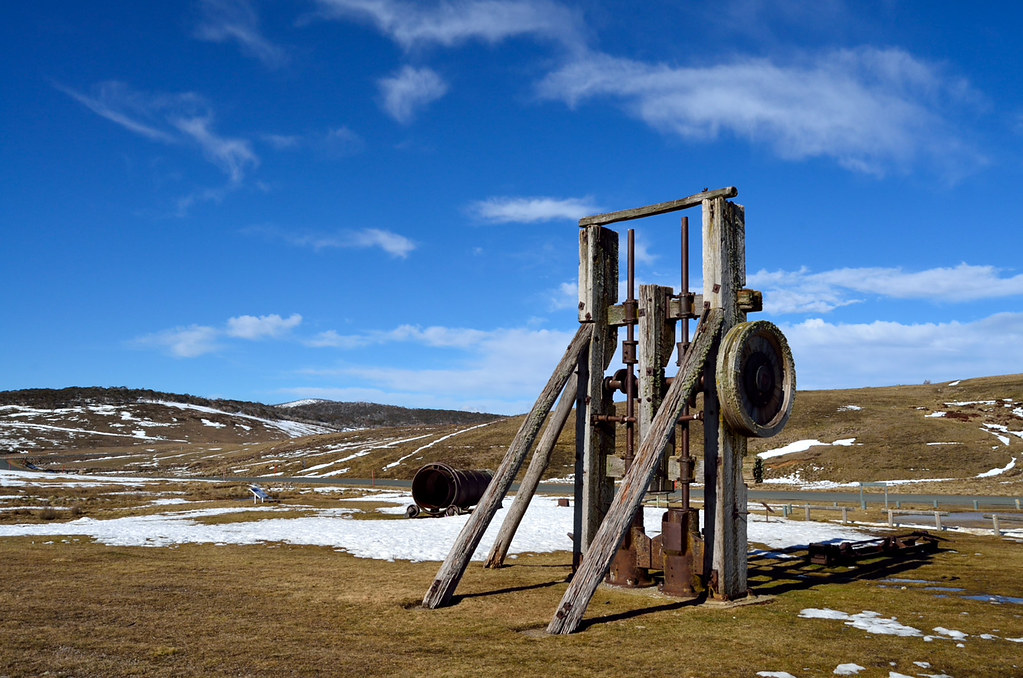
New Chum Hill Ruins

Remnants of Kiandra gold mine at New Chum Hill, #nsw #australia

Showing posts with label Pakistan. Show all posts

December 26, 2014

Somber Scenes as World Mourns Pakistani Children Slain in Peshawar Attack

Students of Army Public School, members of Civil Society, Pak Army staffs and large numbers of citizens held a candle light vigil to mourn the innocent victims. Image by ppiimages. Copyright Demotix (19/12/2014)
A group of Taliban gunmen dressed in military uniforms entered an Army Public School in Peshawar, Pakistan, on December 16 and shot students and teachers walking from classroom to classroom. At least 148 people, 132 of them children, lost their lives in the attack and scores of the students were injured.

The following day, vigils were held in Karachi, Islamabad and other major cities throughout the country, which can be seen in these pictures.

There have also been numerous vigils across the world:
People at those vigils remembered the victims, protested against the barbarism, voiced their anger at the Taliban and echoed that children should be spared from such atrocities.

Here are images of some of those vigils:

A collection of candles and votives lit as part of a vigil in Trafalgar Square, London, to remember the dead school children and teachers killed by the Pakistani Taliban in Pakistan. Image by Emma Durnford. Copyright Demotix (17/12/2014)
A Candlelight vigil for the children of Peshawar is held in Longsight, Manchester outside the Pakistani Community Centre. Image by Barbara Cook. Copyright Demotix (20/12/2014)
Two hundred people gathered in front of the CNN Center in Atlanta for a candlelight vigil to honor victims killed during a Taliban attack on a school in Peshawar, Pakistan. Image by Steve Eberherdt Copyright Demotix (17/12/2014)
Columbia students and other members of the community joined a campus candlelight vigil to support the victims of the Peshawar attacks. Image by Mansura Khanam. Copyright Demotix (17/12/2014)
Indian congress workers and children pay tribute to those killed in the Taliban attack in Peshawar, Pakistan at a candle vigil in Allahabad, India. Image by Ritesh Shukla. Copyright Demotix (17/12/2014)
A candle light vigil and were held at the Pakistan High Commission in Bangladesh, this evening in remembrance of the innocent victims of the massacre at the Army public School peshawar.
Indian people lit candles as they took part in a candle-light vigil in memory of victims killed in a Taliban attack on a military-run school in Peshawar, in Amritsar. Image by Sanjeev Syal. Copyright Demotix (17/12/2014)
Childrens in Sivasagar, Assam lighting candles protesting the attack of Talibans in a school of Pakistan,  image by Neelam Kakoty Majumdar. Copyright Demotix (18/12/2014)
Childrens in Sivasagar, Assam lighting candles protesting the attack of Talibans in a school of Pakistan, image by Neelam Kakoty Majumdar. Copyright Demotix (18/12/2014)
Burdwan District Press Club organised a Candlelight Rally in At Burdwan, West Bengal, India, protesting against Taliban terror attack on Army Public School in Peshawar.  Image by Sanjoy Karmaker (18/12/2014)
Burdwan District Press Club organised a Candlelight Rally in At Burdwan, West Bengal, India, protesting against Taliban terror attack on Army Public School in Peshawar. Image by Sanjoy Karmaker (18/12/2014)
Children holding solidarity messages at the candle light vigil in Lahore, Pakistan. Image by Fatima Arif. Copyright Demotix  (18/12/2014)
Children holding solidarity messages at the candle light vigil in Lahore, Pakistan. Image by Fatima Arif. Copyright Demotix (18/12/2014)
The post was also published in Global Voices Online.

December 21, 2014

Pakistanis Say #ReclaimYourMosques From Radicalism in Rare, Bold Protests

Students of Army Public School, members of Civil Society, Pak Army staffs and large numbers of citizens held a candle light vigil to mourn the innocent victims. Image by PPIImages. Copyright Demotix (19/12/2014)
Two days after the horrific Taliban attack on a military-run school in Peshawar, killed more than hundred and thirty students, controversial Islamabad-based cleric Abdul Aziz refused to condemn the massacre, sparking rare protests against radicalism in the country.

Abdul Aziz also said that use of force against the Taliban is not a “wise option”. Aziz is the chief cleric at Lal Mosque, one of the biggest in the capital. The mosque and its attached seminary have a reputation for radicalism and was the scene of a massive 10-day military crackdown in 2007, which left more than a hundred dead, many of whom were radical seminary students. Aziz's brother was the chief back then, and was killed in the operation. Abdul Aziz tried to flee the mosque in a burka, but was caught. He was released on bail two years later. And has since reopened the mosque and become the chief cleric.

On December 18, a large number of activists, politicians and students arrived at the Lal Masjid chanting slogans against Abdul Aziz. They wrote names of the students killed in Peshawar on a board and started an impromptu vigil.
The protest was organised by Jibran Nasir, an independent politician, lawyer and human rights activist from Karachi. He said:
I came to Islamabad for a conference, but then the Peshawar tragedy struck and everything changed. The next day, Lal Masjid cleric issued a statement that I couldn’t stomach and I decided that rather than going back to Karachi, we should protest. We want to reclaim our mosques, our communities, our cities, indeed our entire country from the extremists. We can no longer allow anyone to stand on at a pulpit and preach hatred. We will no longer stand by and watch people like Abdul Aziz use the name of our Holy Prophet (peace be upon him) and our religion to perpetuate violence. I call upon the people of Islamabad to come out of their homes and reclaim their city.
The administration of Lal mosque filed a First Information report (FIR) against the participants of the protest. Police in riot gear arrived on the scene and asked protesters to disperse.

Faisal Sabzwari from the political party MQM tweeted:
Nasir and the protesters held their ground and said they will hold the vigil for the next week in front of the Lal Mosque, and there after every Tuesday night.

Suddenly, the spontaneous protests that began on Thursday quickly spread across the country as a wider movement against Taliban apologists and extremists everywhere. There were protests after Friday prayers in several cities to condemn Lal Mosque's cleric Maulana Abdul Aziz's statement. A petition in Change.org to put Abdul Aziz on trial for treason and terrorism has more than 4000 supporters.

On December 19, an FIR (First Information Report) was lodged against Abdul Aziz at a police station and this Facebook video caught the moment.
A protester on the Facebook page #ReclaimYourMosques - We Demand Action on FIR #LalMasjid wrote:
The foundation is laid. Think over, either are u going to be a silent spectator or would do ur part. If 141 children didn't shook u off ur slumber then be sure u are an apologist of the likes of ‪#‎AbdulAziz‬.
Under pressure Maulana Aziz apologised on Sunday for not condemning the killing of children. A reader replied to the article at the Tribune.com:
Sorry too little too late, shame on him that he actually had to think so hard to apologize and only after all the pressure …… He lacks total decency and morals …..innocent kids died and he had to think about it. Shame on him and shame on us for listening to him, he needs to be behind bars permanently along with all his buddies.
Qurratulain Zaman (Annie) contributed to this post.

The post was also published in Global Voices Online.

December 16, 2014

#IndiaWithPakistan: Indians Show Solidarity With Their Grieving Neighbors After Peshawar Attack

Victims of militants attacked an army public school situated on Warsak Road, being shifted for treatment at local hospital in Peshawar. Image by ppiimages. Copyright Demotix (16/12/2014)
Victims of militants, who attacked an army public school situated on Warsak Road, are moved for treatment at a local hospital in Peshawar. Image by ppiimages. Copyright Demotix (16/12/2014)
People from all over the world have offered their support and sympathy on social media for Pakistan as the country reels from a horrific attack on a school in Peshawar that has left 141 people dead, most of whom were children.

But one particular hashtag is worth noting -- Indians are putting aside their ardent rivalry with Pakistan and expressing solidarity with their neighbors at this difficult time under #IndiawithPakistan on Twitter.
At around 11 a.m. Pakistan time on December 16, six Taliban militants entered the Army-run school in the capital of Khyber Pakhtunkhwa and took around 500 students and teachers hostage. The attackers were dressed as soldiers and opened fire at random, also detonating an unknown number of suicide bombs. A teacher was reportedly burned alive in front of pupils and children were shot in the head. One hundred and forty-one people were killed, most of whom were children, and hundreds injured in the siege. According to police, all the militants were killed.

The Taliban, in a statement to Reuters, said that they targeted the school because the army targets their families in an ongoing military offensive against Taliban strongholds near Peshawar. “We want them to feel our pain,” the statement said.

Dr. Asif Sohrab described on Facebook the horror in Peshawar:
2,3 funerals in every Street of Peshawar. In my street there are 3! Peshawar bleeds, Pakistan cries.
On such a sad day, #IndiawithPakistan generated a lot of good vibes:
In response to the attack, Pakistani Prime Minister Nawaz Sharif announced three days of mourning and has called an all party parliamentary meeting at the Governor House in Peshawar on Wednesday.

Men carry the casket of a victim of the Taliban shoot-out in a military-run school in Peshawar, Pakistan. Image by ppiimages. Copyright Demotix (16/12/2014)
Pakistani Twitter users have also taken to Twitter to express their anger and grief:
Mehr Tarar, a former op-ed editor for Pakistan's Daily Times, captured the heartbreak of many Pakistanis in a column for Indian news portal NDTV:
Today, I feel as if I have been punched in my stomach. In my heart. And in my soul. With an iron rod. As I hear of children who were killed in an Army school in Peshawar, I feel my heart stopping.

Children were shot in the face. Children were shot in the head. Children were dragged out from under the chairs, under the tables, and shot. At point blank. Methodically. Coldly. Clinically. They - who go by the name of the Tehreek-e-Taliban Pakistan - say it is to avenge the Army operation against them in the FATA. To avenge the deaths of militants who were wreaking havoc on innocent Pakistanis in myriad acts of terror. It's retribution, they say.

I have nothing to say here. You call yourself a Muslim, you call your fight a jihad, you call your way that of Allah. And yet you do what Allah forbids you to do: to perpetrate a war in His name where you kill children. Where you kill people who have never harmed you. You are not just Pakistan's enemy but you are also your own worst enemy.
Writing in independent Canadian news website Ricochet, journalist Jahanjeb Hussain offered his view on what good, if any, could come of the attack:
The best hope is that this attack would finally convince the country’s leadership that meaningful, concentrated, and long-term action needs to be taken across the board.
Anushe Noor Faheem contributed to this post. 

The post was also published in Global Voices Online.

November 27, 2014

Updates on the 18th SAARC Summit On Social Media

The ongoing summit of the The South Asian Association for Regional Cooperation (SAARC) was covered by international media with different perspectives. However non-official initiatives such as 18th SAARC Summit blog, Facebook account, Twitter and Google+ account are aggregating updates on the summit for easy archiving.

Here are some examples:


The post was also published in Global Voices Online.

August 21, 2014

Watch How Conversations Between Strangers Help Bridge the Divide Between Indians and Pakistanis

Screenshot from the AIB Video
Over the years, India and Pakistan have seen a number of efforts trying to break the perpetuated animosity between the two countries. On India's Independence Day on Aug. 15, 2014), Indian comedy collective All India Bakchod (AIB) gave it another shot, releasing a video that features ordinary Indians talking over the phone to strangers in Pakistan.

In this video strangers from India and Pakistan speak to each other over the phone. They talk about what Indians and Pakistanis perceive about each other, learn about their personal lives and hobbies, find common grounds between themselves and congratulate each other on the Independence Day of both the countries.


The bad blood between India and Pakistan dates back to 1947, when the British partitioned India into the Dominion of Pakistan (later Islamic Republic of Pakistan and People's Republic of Bangladesh) and the Union of India (later Republic of India) primarily along religious lines, to stem growing tensions between the Hindu and Muslim communities. The divide devastated both countries, and their relationship to date is often strained, marred by wars, border disputes, military stand-offs and a continuing conflict over Kashmir.

If you still are wondering why such effort is necessary to reduce the notion of animosity between citizens of both the countries, then just gloss over the YouTube comments on the above video.

Indian blogger Farzana Versey offered her nuanced reaction to the video:
Will this bring people on both sides (we are not even speaking about the two nations) closer together? This was a ‘controlled’ atmosphere, and even if comments were not censored it was understood that the conversation was to be light. What we see is one reality – the coffee shop or corner store one. The young even on campuses are politically aware and most certainly come with a bagful of stereotypes about the other. It does not negate the awareness about Bollywood, cricket, or food. Yet, all of these can be politicised on the day there is a clash of films, a match or a culinary competition.
She also provided her verdict:
Love it…just don’t take it as the whole truth.
The post was also published in Global Voices Online.

July 19, 2011

Why Bangladesh broke free from Pakistan in 1971

I would like to translate this short story someday to English (from Bengali). The story in short: Ms. Lydia Edith, a British school teacher attended a social gathering of South Asians in London and was wondering why Bangladesh got independence from Pakistan in 1971. In that meet a Bangladeshi student sang a beautiful Ghazal in Urdu which was much appreciated by everybody including a Pakistani professor present there. Ms Edith asked the Pakistani professor to sing a Bengali song. The professor politely refused saying that he does not know any Bengali song. Ms Edith persisted - at least one line? The Pakistani professor turned pale from shame - sorry not even a line. And suddenly Ms Edith knew why Bangladeshis broke free from Pakistan's imperialism in 1971.

August 07, 2010

Pakistan President Asif Ali Zardari Faced Shoe In Birmingham

Pakistan president Asif Ali Zardari has recently been criticized for showing apathy towards the recent disaster and troubles in his country and shying away for a tour in Europe.

Reports are coming that an elderly man had thrown his both shoes at him today as he attended a 1000 people strong political rally in Birmingham.

Mr. Zardari was addressing the Pakistan People’s Party’s convention in Birmingham when the shoes were thrown and landed just short of him. There are videos of the rally and the news and people are searching for a clear footage of the incident.

Pakistani Twitter users are all over this news with interesting remarks like these:
_samiran: Time Line flooded with #ZardariFacedShoe now interested to find out which company made the shoe. And did Zardari saab has 10% in it also!
rai_azlan: i condemn this Joota event as Jooty ki bhi koi Izat hoti hy #ZardariFacedShoe
irfantariq: As per geo no video is available of shoe throwing #pakistan #zardari #zardarifacedshoe
mohsinhijazee: We're ahead of USA. Two shoes in comparison to one. #zardarifacedshoe
drumairali: look at the courage of the old Man he threw not one but both his shoes at him....your a legend Sir..... #zardarifacedshoe
quest4clarity: #PPP saying protests are a sign of their success, WTF?! #ZardariFacedShoe
samishah: Next time: Exploding shoe! #zardarifacedshoe
kadnan: make sure u will be rejoicing in same tone when a shoe hurls at your darling political/religious leader #ZardariFacedShoe
kadnan: the man who threw shoe at Zardari has been arrested #ZardariFacedShoe
rai_azlan: Police has let the Baba ji go after a small talk, #ZardariFacedShoe
rai_azlan: question of the DAY: was the Shoe branded???? #UKP, #PPP, #CHITTAR, #ZardariFacedShoe
shahidsaeed: I repeat "Award winning" bloggers who never cared 2 post abt the flood celebrating shoe throwing is pathetic & disgusting #Zardarifacedshoe
And if you want to be a part of the action you can play the throw the shoe at Zardari game in 3 levels (I scored 47!).

Image courtesy Icemetal at Yfrog

July 22, 2010

Water Security And Regional Disputes In South Asia

The Himalayan River Basins (Ganges, Bramhaputra, Indus, Yangtze) in China, Nepal, India and Bangladesh are inhabited by around 1.3 billion people. Yes, we are talking about almost 20% of the world’s population and almost 50% of the total population of these countries. These rivers were the lifelines of the ancient civilizations formed in this region. And these civilizations of present day are under threat.

In a recent report by Strategic Foresight Group, a Mumbai-based think tank, titled "The Himalayan Challenge - Water Security in Emerging Asia" some alarming statistics were presented. In the next two decades, the four countries in the Himalayan sub-region will face the depletion of almost 275 billion cubic meters (BCM) of annual renewable water, more than the total amount of water available in Nepal in present day.

Water availability is estimated to decline in 2030 comparing to present level by 13.50% in case of China, by 28% in case of India, by 22% in case of Bangladesh and by 35% in case of Nepal. The factors contributing to this decline are:
  1. About 10% to 20% of the Himalayan Rivers are fed by Himalayan Glaciers and studies say 70% of these glaciers will be melted by the next century as a result of accelerating global climate change.
  2. Glacial melting will eventually reduce river flow in the low season and increase in temperature in some areas leading to deforestation.
  3. Disappearance of thousands of lakes.
  4. Depletion of water resources due to pollution and natural reasons
  5. The reduced riverflow induces more deposit of silt in river bed narrows the depth of river thus causing flooding.

(Narrowing of depth of river caused by silt deposit, is the reason for floods in Bangladesh. Image taken by the author last month from an airplane)

The implications of depletion of water resources are:

  1. The agricultural sector is the major consumer of fresh water. However this sector will be using less water due to non-availability of water leading to less productivity.
  2. The cumulative effect of water scarcity, glacial melting, disruptive precipitation patterns, flooding, desertification, pollution, and soil erosion will be a massive reduction in the production of rice, wheat, maize and fish.
The consequences of the scarcity of water has prompted many countries to train rivers and manage water flow by building dams. But dams effect the river basins downstream. So it has become an issue for regional disputes. China alone has developed plans to build over 200 dams which will effect the downstream flows of the river in several countries.

India vs. China:

The 2,900 km long Brahmaputra River flows through China, India, and Bangladesh, and its watershed includes Nepal, Bhutan, and Burma as well. In 2000, India accused China of not sharing flood data of the flows of Brahmaputra River through the Chinese territory. This resulted in widespread devastation and floods in India killing many people. In 2002 a Memorandum of Understanding was signed between the countries to coordinate water related data sharing.

In early 2003, China conducted a feasibility study for a major hydropower project along the China section of the Brahmaputra River. This project was supposed to divert 200 billion cubic meters of water annually to the Yellow River. This would result in 60% reduction of water flow downstream in India and Bangladesh. In 2006, the Chinese government denied the existence of the plan however this remained a reason for the strained relationship between the two countries. However it was found later that China was building a dam on Brahmaputra.

In April 2010, China assured that the dam on river Brahmaputra will have no impact on the downstream flow of the river into India Bangladesh.

India vs. Bangladesh:

The Indian government has plans to get India’s 37 major river interlinked by 2016 implementing its interlinking of rivers (ILR) project. 25 new dams are planned for the Ganges and Brahmaputra rivers. According to experts the impacts of the ILR on Bangladesh will be the function of many variables, including the alteration of hydrology, river dynamics, ecosystem changes, agricultural productivity, intrusion of salinity and public health. The reason for dispute between both the countries is that Bangladesh have not been officially notified of plans for the ILR project.

India vs. Pakistan:

Pakistan is worried about six rivers (Indus, Chenab, Jhelum, Sutlej, Beas, and Ravi) that flow into Pakistan through northern India, including the disputed state of Jammu & Kashmir and the state of Punjab. Their disagreements lead to the 1960 Indus Water Treaty, which has come under an increasing strain in recent days. India completed a hydroelectric power project on the Chenab River in the Doda district of Jammu & Kashmir by building a dam on 2008. Pakistan is wary of facts that the shortage of flow of water in rivers could cause rapid desertification.

Water issues are not only raising the political temperature between countries but also between states within a country like the river Kaveri is the reason for serious contention between Tamil Nadu and neighbouring Karnataka states.

The Solution:

One thing is for sure if India and China race for building dams to control flow of river within their boundaries without consulting their downstream neighbors then the situation will be volatile leading to unnecessary confrontation and war. The threats cannot be addressed by the unilateral efforts of nations, only regional cooperation can mitigate such tensions.

The Dhaka Declaration on Water Security has proposed an expert committee to prepare a road map for data-sharing and scientific exchange and to prepare guidelines for introducing transparency regarding relevant data.The declaration urges "greater political commitment and data exchange among Himalaya basin countries for collective approaches to the region's water challenges".

Dialogues between the citizens of the countries concerned are needed so that unnecessary escalations can be avoided.The region has to commit to agreements like the Dhaka declaration so that a Regional Information Sharing Network on water resources can be achieved.

(Also published in Future Challenges)

August 04, 2009

Toba Tek Singh

After fifteen years on his feet, he was lying face down on the ground. India was on one side, behind a barbed wire fence. Pakistan was on the other side, behind another fence. Toba Tek Singh lay in the middle, on a piece of land that had no name. - Saadat Hasan Manto
After sixty years of the partition of India and Pakistan the madness that can sometimes overtake people in the name of religion still feels relevant.


From Global Voices:
Gojra, the capital of Gojra Tehsil, is a city of Toba Tek Singh District in the Punjab province of Pakistan. Last Saturday riots broke out in the town over alleged desecration of the Holy Quran. Following the riots more than 50 houses, belonging to the Christian community, were set on fire leaving 7 burnt alive and 18 severely injured. According to sources, most of the houses were burnt by a group of youths who had their faces covered with veils. They threw petrol bombs and fired indiscriminately.
Blame it on the Mullahs and Talibans or Zia's theocracy, the fallacy of the two nation theory still haunts the people. Still it divides rather than ensuring a peaceful coexistence.

(Image courtesy, The Dawn)

May 12, 2009

Its About Time

The Bangladesh Foreign minister has asked Pakistan to apologize for the genocide during the the Bangladesh's war of independence in 1971 by Pakistan Army. She stressed that Islamabad should take millions of stranded Pakistanis back and settle disputed resources claims.

Some people say that Pakistan has already done so. But this is not true. In a visit to Bangladesh in 2002, then Pakistan President Pervez Musharraf expressed regrets for the '1971 events' during the War of Liberation, shifted the blame for genocide from Pakistan's armed forces:
"Your brothers and sisters in Pakistan share the pain of the events of 1971. The excesses during that unfortunate period are regrettable. Let us bury the past in a spirit of magnanimity. Let not the light of the future be dimmed. Let us move forward together."

Killing millions of people, raping hundreds of thousands of women and burning villages certainly define something else other than excess; that is genocide. Burying that past will only trigger such atrocities once again.

It is time those Pakistani generals should be brought to justice and Pakistan should unconditionally apologize to Bangladesh. Pakistan has nothing to lose as why all Pakistani carry the burden for the crime they did not know of (The atrocities were kept in dark from the ordinary Pakistanis).

April 26, 2009

Coping With The Heat And Load Shedding In South Asia

Heatwaves during this time of year is not uncommon for countries in South Asia. But the recent dry weather has kept sufficient rain away from the region keeping the mercury rising. And load shedding (rolling electricity blackouts) due to power crisis in several countries have made the lives of millions of people unbearable.

Last Friday (April 24, 2009) was the hottest day of this summer (with 38.5 Celsius) for Dhaka, the capital of Bangladesh. The Eastern parts of India is choking as mercury rises above 45 degree Celsius. Several deaths have been reported. Zoo officials in Patna took special measures to protect the animals from heat. There have been reports of forest fire in Nepal, and droughts in the typical rain prone areas.

The netizens are reacting strongly to this situation. Sukanya M writes in the post “United We Sweat” about the heat and the constant power cuts:

Phew. It's been unbearable.

Temperatures ranging around 40, 41, 41.8, and if we are lucky (like today), 39 degrees. Plus Humidity - according to Yahoo it is 84% today (felt like 100%). And of course power cuts everywhere and in a bizarre turn of affairs, Kolkata - Dumdum to Behala had 6-10 hours of power cut on Sunday..[..]

Here are some Twitter messages catching up the mood of common people:

calamur: Melting in the heat . #mumbai is seriously hot .

vitrag: afternoon heat, and boarding the Mumbai trains… damn it fells like stepping in the oven.

Amit Varma at The India Uncut jeers:

It’s so hot in Bombay… … that when I heat food in my microwave, it comes out colder.

In Bangladesh people are suffering badly because of heat wave and frequent rolling blackouts. Most people do not have air-condition at home; they use electric fans, which are useless during power cuts. Those who can afford to use power inverters do not get enough electricity to recharge the units. Worse, there is not enough electricity to run the water pumps. The water crisis has grown acute and people are protesting against the water shortage.

From Twitter:

dkhall44: Load shedding now at ridiculous levels in Dhaka. Electricity supply is cut for one hour every other hour. And its *38* degrees.

shahreaz: Working from the evening sounds more realistic in Dhaka. 6 hours of load shedding during the working hours do not make sense.

The power authorities have put up schedules of power outages online. Bernie Allen at Life & work in Dhaka city writes about the cause of the power outages in Dhaka:

Typical demand is 2000MW and one day this week we were allocated 1200W, so the shortfall had to be managed.

In Nepal, the power crisis has become a bit better. From an average of 14-16 hour load shedding a day the duration has come down. From Twitter:

zickme: Country facing an Electricity crisis and to over come this Nepal Electricity Authority (NEA) has imposed a 12 hrs load shedding each day.

Geshan's blog posts the load shedding schedule of Kathmandu showing the plights of the people.

The residents of Karachi city in Pakistan are facing unannounced power outages of 8 to 10 hour everyday. Pakistan Daily Photo posts pictures of how people are tackling the unbearable heat which is increasing day by day.

South Asia has seen much worse heatwaves than this. But the power crisis has really crippled peoples ability to cope with it. Until the rains bring some respite people will continue to suffer.

From Dhaka, battered by the heat, Blogger Kowshik is sarcastic [bn]:

সরকারের এখন বিদ্যুৎ এর বদলে বৃষ্টি উৎপাদনের চেষ্টা করা উচিত

The government should try to produce rains instead of electricity.

Even if it sounds imprudent, in this situation the people of South Asia cannot ignore this idea.


This was first published in Global Voices Online

March 11, 2009

The Situation in Pakistan

Pakistan is moving towards a political crisis. From Global Voices:
A section of the Pakistani Lawyers and political activists have finished all their preparations for a scheduled Long March and sit in protest starting tomorrow to reinstate the deposed judges. Tensions are running high in Pakistan because the opposition leader Nawaz Sharif's party (PML-N) is participating in the protests and the government has started crack down on activists and imposed ban on protests. Pakistani citizen journalists have started to cover the events as they unfold using live blogs, live picture updates, email/SMS and Twitter messages.
You can monitor the situation live via this live blogging tool:


Live Blog - March For Justice!

Twitter: - http://twitter.com/LongMarch or Follow twitter Hashtag at http://search.twitter.com/search?q=LongMarch

March 03, 2009

Pakistan at war

This doesn't look good at all:
A dozen men attacked Sri Lanka's cricket team with rifles, grenades and rocket launchers Tuesday ahead of a match in Pakistan, wounding several players and killing six police officers and civilian in a brazen attack on South Asia's most beloved sport.
Pakistan stock exchange is falling as a result.

CNN Video:

November 29, 2008

Karachi Riots

After Mumbai, now its Karachi. Newspapers report that four persons killed and 77 got injured in Karachi ethnic violence . GEO reports:
The riots started in Banaras area where unknown armed-men opened fire at passing vehicles and also pelted them with stones, killing four including a woman and injuring 54 others.

Unknown men also set on fire 7 vehicles in different parts of the city.
The media is reportedly downplaying the incident.

October 27, 2008

Blood flows in a painful birth for Bangladesh

The Sunday Times releases from archive (April 4, 1971) a report of Nicholas Tomalin who witnessed a massacre by the Pakistan army.

"We thought the West Pakistan soldiers were attacking and scattered, only to discover, on a grass patch beside the road, men freshly stabbed and bludgeoned, lying in still-flowing pools of blood. Four of them were still just alive, rolling over and waving their legs and arms. None made any noise.
...
Until about Thursday the West Pakistan garrison, which is about battalion size, was in some kind of control. But these troops started killing people for no discernible reason. The local hospital is filled with 35 wounded men, women and children, who claimed that Punjabi troops fired indiscriminately.

If Jessore is typical, East Pakistan is in for a terrible time in the next months and Karachi’s great gamble – to crush all opposition by one big attack – has failed.
..."

October 19, 2008

Hints of 1971

Dr. Irfan Zafar says that the current situation in Pakistan is not much different than 1971 which resulted in the break-up of the country:
The Mukti Bahini was formed to fight off the military crackdown by Pakistan on March 25, 1971. However, with the rising discontentment of the local population against the government, the people in East Pakistan started supporting it which finally led to the popular Bangladesh Liberation War.

In a similar fashion, the Taliban were supported by our government to fight against the Soviet invasion in Afghanistan. At present the Taliban, just like Mukti Bahini, have gained the sympathies of the people who are fed up with the policies of the ruling elite. A stage has come whereas people have started believing in the fact that no matter how bad the Taliban are, they are still better than the present lot ruling this unfortunate land. We lost half of the country living under the illusion that everything was going well in the eastern wing. Let's not repeat the same mistake and lose whatever is left.

October 15, 2008

Pakistan on the brink?

The recent National Intelligence Estimate of USA on Pakistan says that the situation in Pakistan "very bleak". The conclusions about the state of Pakistan in the report was: "no money, no energy, no government." The fear is that an unstable Pakistan will become a center for al-Qaeda plotting against the US.

The last time when we saw such reports were in end March and early April 1971 when Pakistan army were marching with tanks and spraying bullets on the innocent civilians in Dhaka and elsewhere in Bangladesh (then East Pakistan) in the name of quashing the rebels (how do they defend it as justice?). We have seen that that led to the independence of Bangladesh and Pakistan lost its part.

The Pakistan economy is on a free fall and reports question whether Pakistan can rescue itself from that severe blow after reeling from suicide bombers and an angry public.

However Professor Juan Cole at 'Informed Comment' says that:
I'm suspicious that all the talk about instability and 'no government' is really a way of saying that US intelligence agencies liked having a military dictatorship there much better than they like having an elected parliamentary regime.

Actually, the Pakistani bureaucracy does a fairly good job for a third world country, and the employees of the bureaucracy at the non-political level don't change with the change of governments. I don't know what they mean by 'no government.' The elected government headed by the Pakistan People's Party has a majority and is not in danger of falling.
Meanwhile an article in the Asia Times suggest that the US is trying to drag India into the Afghan fiasco:
..discussions were going on between the security establishments of India and the US for the past several months regarding an Indian military involvement in Afghanistan. Washington has been pressing for a major Indian role. A two-member Indian team, which visited Kabul in early September, claimed they were on a mission sponsored by the government to make an assessment of the layout for Indian military involvement. The team apparently held discussions with top American diplomats and military officials based in Kabul.
All in all I see more troubles ahead in this region thanks to US policies.

October 03, 2008

You're gorgeous, can I hug you?

President Asif A. Zardari of Pakistan met with US Vice Presidential candidate Sarah Palin recently and tried to outsmart himself in front of the attractive lady and spelled some flirtatious words (may be innocently). Well he is not the only one making such mistake. US President George Bush massaged Germany's chancellor Angela Merkel's neck and got away with it.

But the Pakistanis are not Germans. So Zardari's act caused ripple's in the Muslim Pakistani society. His statements are now being dissected, vilified by Pakistanis which can be fathomed by the blogger's reactions.

The commercial enterprises were quick to catch on with the sentiments. Here is the reaction of Nando’s, a popular chicken chain in Karachi:

Image credit: CHUP!

September 29, 2008

HUJI starts politics in Bangladesh under a new name

Harkat-ul-Jihad-al-Islami (HuJI) of The Islamic Holy War Movement was formed in 1984 by Fazalur Rehman Khalil and Qari Saifullah Akhtar, as the first Pakistan-based jihadist outfit, during the Soviet-Afghan War.

The Harkat-ul-Jihad-al Islami Bangladesh (HuJI-B) was established in 1992, reportedly with assistance from Osama bin Laden’s International Islamic Front (IIF). On April 30, 1992, several of the HuJI-B leaders addressed a press conference at the Jatiya Press Club in capital Dhaka and demanded that Bangladesh be converted into an Islamic State. It draws inspiration from bin Laden and the erstwhile Taliban regime of Afghanistan. At one point of time, the groups issued a slogan, Amra Sobai Hobo Taliban, Bangla Hobe Afghanistan (We will all become Taliban and we will turn Bangladesh into Afghanistan).

The coastal area stretching from the port city of Chittagong south through Cox's Bazaar to the Myanmarese border, notorious for piracy, smuggling and arms running, is the principal area of activity of the HuJI-B. A large number of volunteers had gone to Afghanistan to fight alongside the Mujahideen in the war against the former Soviet Union.

The HuJI-B is also believed to be having links with Pakistan. For instance, the outfit’s ‘operations commander’ and a key suspect in the plot to assassinate the then Prime Minister, Sheikh Hasina, in July 2000, Mufti Abdul Hannan, after his arrest in October 2005 admitted to have passed out of the Gouhardanga Madrassa in Pakistan. The HuJI-B’s Pakistani link was further established with the recovery of a diary from Hannan’s brother Matiur Rehman, who was also arrested in connection with the assassination plot. Entries in the diary revealed that he was in touch with Pakistan’s diplomatic mission in Bangladesh.

HuJI-B also maintain links with terrorist groups operating in India’s Northeast, including with the United Liberation Front of Asom (ULFA). The HuJI-B reportedly managed some of ULFA’s camps situated in the Chittagong Hill Tracts in Bangladesh along the border with the Indian State of Tripura. HUJI-B was also alleged to be involved in numerous terrorist incidents in India.

Three HuJI-B cadres made a failed attempt on the life of poet Shamsur Rahman at his residence in Dhaka on January 18, 1999.

It was involved in a number of incidents, including the killing of journalist Shamsur Rahman, on July 16, 2000, in Jessore. Later, police arrested 10 HuJI-B activists and sealed its office at a Dhaka suburb, Khilgaon, Interrogations revealed that HuJI-B cadres had planned to kill 28 prominent intellectuals, including National Professor Kabir Choudhury, writer Taslima Nasreen and the Director General of the Islamic Foundation, Maulana Abdul Awal. The Bangladesh government banned it in 2005.

Now in a dramatic twist of events media reports say that:
"Leaders of the banned Islamist outfit Harkatul Jihad al Islami (HuJI) in Bangladesh have floated the Islamic Democratic Party (IDP) ahead of the December elections with permission from the caretaker government."
And more stunning news was that:
"Last Friday, HuJI, donning the IDP label, held an Iftar party at the city's Diploma Engineers Institution that was attended by party leaders and guests including Salah Uddin Shoaib Choudhury, editor of Blitz weekly, Human Rights Forum general secretary Sanjeeb Choudhury and Chitta Francis, a representative of the Christian community."
What are these resident Zionists of Bangladesh doing?
HuJI official Azizul Huq said Salah Uddin Shoaib Choudhury and Richard L. Benkin, an American citizen, helped in efforts to portray IDP in a positive light across the globe.

In an e-mail to a Daily Star correspondent, Benkin said: "Mr. Huq is correct. Salah Uddin Shoaib Choudhury and I continuously try to bridge the gulf between religious communities throughout the world and always look for opportunities to promote a positive image of Bangladesh worldwide.
Moulana Salam said about Regarding Mufti Hannan that they had expelled him in 1998 and they cannot take responsibility of what he did after that.

This is a very worrying sign for Bangladesh. Not only that a terrorist outfit is again being given legitimacy, the involvement of people like Richard Benkin and Salah Uddin Shoaib Chowdhury means that they are being supported by a superpower which has a double face in leading a war on terror. This is insane!! I think Bangladesh government should think twice before giving permission to IDP.