





Kolkata based British expat blog My Bangla Diary posts an interview with Steve Capell, the creator of Bangla Tangla. This resourceful website by Capell contains useful tools and contents for learning Bangla (Bengali) language online.

Dragonfly
Image by Rezwan

The World Cup Goal-E Project
This street in Bangladesh has a colorful world cup celebration
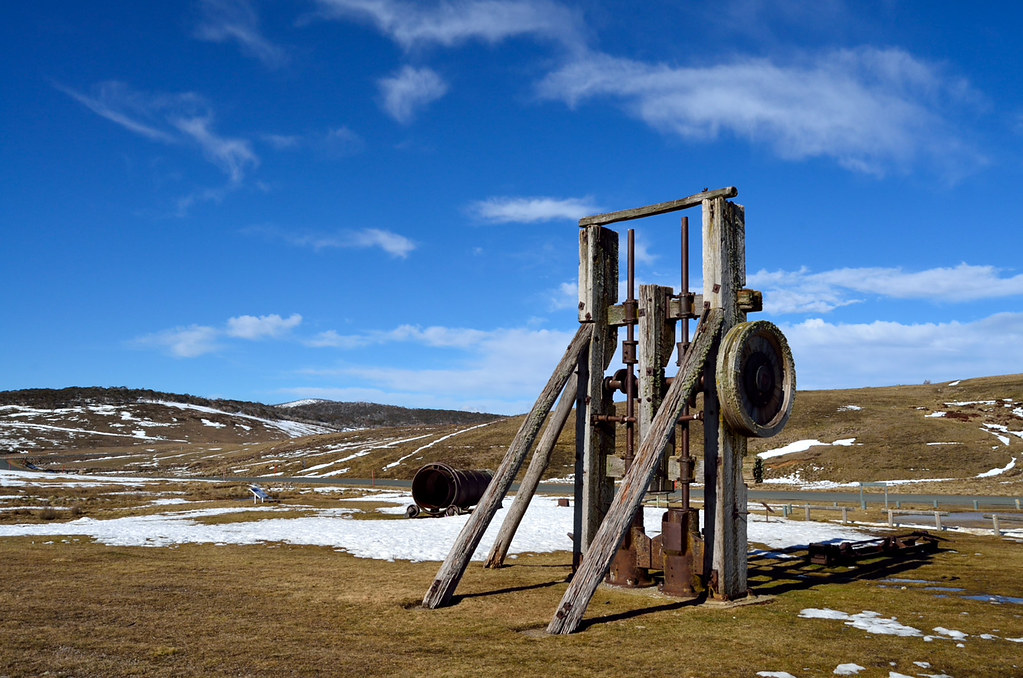
New Chum Hill Ruins
Remnants of Kiandra gold mine at New Chum Hill, #nsw #australia
Showing posts with label Globalization. Show all posts
Showing posts with label Globalization. Show all posts
May 01, 2014
The Bengali Tradition of Halkhata, New Accounts Ledger
The centuries old Bengali new years celebrations include an important tradition, opening the Halkhata, a new ledger book for the year for the businesses. Blog Amader Kotha explains what Halkhata is. The traditional red color ledger book signifies the marking of a new beginning and the festivities, rituals, hopes and uncertainties that come along with it.
November 01, 2011
South Asia: Celebrating the 7 Billionth Child
On the 31 October, 2011, the earth welcomed a newborn child named Oishi. Her birth in the Bangladesh capital Dhaka carried a special message - she is the 7 billionth child of the world.
The Editor.net reports:
The website adds:
Journo opined [bn]:
Not only in Bangladesh, similar celebrations took place in many countries of the world. In Sri Lanka UNFPA celebrated the birth of Muthumani, the girl child of Ishara Madushanka and Danushika Dilani Perera.
Similarly in India Plan International celebrated the birth of Nargis as the 7 billionth child of the world.
LiveIndia.Com reports [Hi]:
Translated from Bangla. Original post by Bijoy at Global Voices Bangla.
The Editor.net reports:
The 7 billionth child of the world is here in Dhaka. The lucky parents of the child are Mohsin Hossain and Tonni Hossain. They had hoped for a boy child as their third child. And this 3rd child is the 7 billionth child (symbolic) of the world.It is difficult to identify exactly which child is the 7 billionth one, so a symbolic celebration is happening around the world. UNFPA selected Oishi to carry the honor in Bangladesh.
The beautiful girl child was born on 12:01 AM at the early hours in Azimpur Maternity and Child Care Hospital.
The website adds:
This birth was celebrated publicly - with cake and candles. The hospital was crowded with people who gathered to catch a glimpse of the child. Sponsored by the 7 billion action program, this program was a publicity event.Posha Pakhi at group blog Somewhereinblog.net carried the news with a post titled "The 7 billionth child was born in Dhaka". The post attracted many comments:
Journo opined [bn]:
Welcome the the 7 billionth child from Bangladesh. Hope she will live as an enlightened person.Mithapur wished the child and questioned the justification of selecting her and mentioned jokingly [bn]:
One question: How did they calculate that she is the 7 billionthAtiq cannot tell the difference between 7 billion and 7 billion plus one:
If the line would read -
The world's 7 billion (instead of billionth) children born in Dhaka
It can happen one day, isn't it?
I don't understand all the fuss between 7 billion and 7 billion plus one numbers. Why so much discussion on this? Everybody is born with a number everyday.Although the world cheers at Oishi's birth, it did not cheer her parents much. Because Oishi is a girl child. Her parents wanted a boy this time [bn] (the first two are girls).
My prayers for every one of them.
 |
| Sri lankan mother Danushika Perera cuddling her newly born baby. Image by Rohan Karunarathne. Copyright Demotix (31/10/2011) |
Not only in Bangladesh, similar celebrations took place in many countries of the world. In Sri Lanka UNFPA celebrated the birth of Muthumani, the girl child of Ishara Madushanka and Danushika Dilani Perera.
Similarly in India Plan International celebrated the birth of Nargis as the 7 billionth child of the world.
LiveIndia.Com reports [Hi]:
In Lucknow, the capital of Uttarpradesh state in India, a baby girl named Nargis was the symbolic seven billionth child to be born during the early ours of Monday. She was named as Nargis.Although the growing number of world population has been seen as a wake up call for the world, Muthumani, Oishi and Nargis give us the message that the girl-children should not be neglected in the future.
Translated from Bangla. Original post by Bijoy at Global Voices Bangla.
April 17, 2008
The crisis is global and the culprit is the stupid energy policy among other factors
The international media are at it again. A light of a world wide famine beaconing, which is a favorite topic for any media professional. You will see picture galleries full of hungry people fighting for food, skinny children waiting for help makes any journalistic work easy. ABC News terms the recent food riots around the world as an apocalyptic warning predicting hundreds of thousands of starving people in Asia and Africa. The World Bank announces “the world is moving towards a food crisis that may lead to wars and riots”.
What I fail to understand is why it took so long to raise the alarm? Many are trying to find out the cause of the recent crisis.
I recently wrote on the recent price rise of rice in Bangladesh and its impacts. Shortage in production and increasing demands have been sighted as the problems. There are also a list of problems and solutions that looks so complex and harder to achieve in a short time.
And some are terming it as subprime food crisis as surging oil prices made US dollar got weak leading to the subprime loan crisis making worldwide imports (in US Dollars) costlier.
According to a recent report of the World Bank names Western investment in biofuels as the cause of the drastic rise in prices for corn, rice, and other staples.

Outside The Beltway comments:
What I fail to understand is why it took so long to raise the alarm? Many are trying to find out the cause of the recent crisis.
I recently wrote on the recent price rise of rice in Bangladesh and its impacts. Shortage in production and increasing demands have been sighted as the problems. There are also a list of problems and solutions that looks so complex and harder to achieve in a short time.
And some are terming it as subprime food crisis as surging oil prices made US dollar got weak leading to the subprime loan crisis making worldwide imports (in US Dollars) costlier.
According to a recent report of the World Bank names Western investment in biofuels as the cause of the drastic rise in prices for corn, rice, and other staples.
Concerns over oil prices, energy security and climate change have prompted governments to take a more proactive stance towards encouraging production and use of bio-fuels. This has led to increased demand for bio-fuel raw materials, such as wheat, soy, maize and palm oil, and increased competition for cropland.

Outside The Beltway comments:
It has long struck me as wrongheaded, if not immoral, to take cheap, efficient sources of nutrition to turn them into expensive, inefficient fuels. A gallon of ethanol produces roughly two-thirds the energy of a gallon of gasoline and is far more expensive. And, while farmers and, especially, processors make more money by the increased demand for biofuels, it means that food is now out of reach for millions.Ronald Bailey tells about this stupid energy policy:
Politicians in both the United States and the European Union are mandating that vast quantities of food be turned into fuel as they chase the chimera of "energy independence."...The result of these mandates is that about 100 million tons of grain will be transformed this year into fuel, drawing down global grain stocks to their lowest levels in decades. Keep in mind that 100 million tons of grain is enough to feed nearly 450 million people for a year.Dennis Avery from the Hudson Institute says "Biofuels are purely and simply the biggest Green mistake we've ever made and we're still making it." So Bio fuel mandates must go.
December 23, 2007
The story of the trash we are generating
I had another visit to Euro shop (everything priced at 1 Euro) yesterday. You get amazing things at one Euro for example a stainless steel (rust free) bowl something you will not get even in Bangladesh at this amount.
Did we ever wonder why are stuffs being offered cheaper and cheaper even less than the developing country standards?
A relevant video might provoke some questions:
The story of Stuff has answers to those questions.
Black Looks Blog points to the fact:
Did we ever wonder why are stuffs being offered cheaper and cheaper even less than the developing country standards?
A relevant video might provoke some questions:
The story of Stuff has answers to those questions.
Black Looks Blog points to the fact:
90% of the stuff consumed in the US is trashed within six months - now that is truly scary.One thing I can urge to people (including me) please please buy less. How much do a human being needs?
Subscribe to:
Comments (Atom)


