Some Bangladeshi netizens started a campaign to let Google know that we want a Google Doodle for Bangladesh's 40th victory day. Their voices were not heard. But still we can share the proposal. No?

Via Forhad

Via Forhad






Image by Rezwan

This street in Bangladesh has a colorful world cup celebration
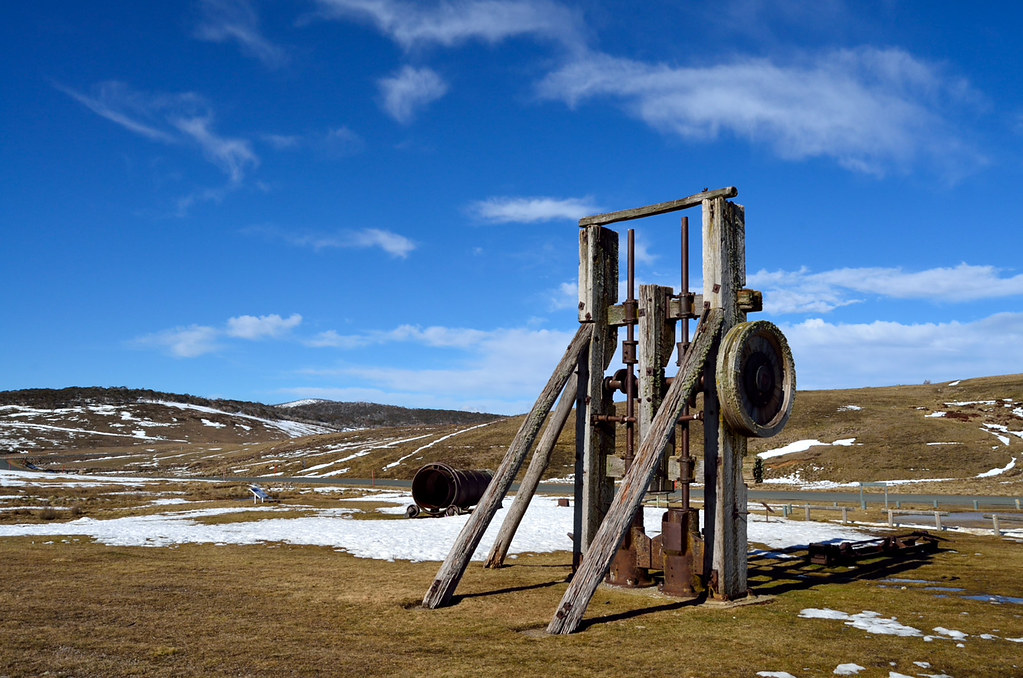
Remnants of Kiandra gold mine at New Chum Hill, #nsw #australia
১৯৭১ সালের আগস্ট মাস; এক ভয়াল সময় অতিক্রম করছে বাংলাদেশের অগণিত মানুষ। বিশ্বের বৃহৎ পশ্চিমী রাষ্ট্রগুলি বাংলাদেশে পাকিস্তানী সামরিক বাহিনীর গণহত্যা আর ধ্বংসযজ্ঞের ব্যাপারে সচেতন হচ্ছে না। বাংলাদেশের মানুষের যৌক্তিক দাবী দমন করার জন্য পাকিস্তানী সামরিক সরকার বেছে নিলো নির্মম সামরিক আক্রমণের পথ; অজস্র বাঙালী তাদের ঘরবাড়ি ছেড়ে, কেবল প্রাণ বাঁচানোর তাগিদে ভারতে শরণার্থী হিসেবে আশ্রয় নিলো। শুরু হলো বাংলাদেশের মুক্তিসংগ্রাম। অথচ ক্ষমতাধর মার্কিন যুক্তরাষ্ট্র বিশ্বের এই প্রান্তে নিজেদের রাজনৈতিক প্রভাব টিকিয়ে রাখার জন্য নতুন দেশ হিসেবে বাংলাদেশের আবির্ভাবের বিরোধিতায় ব্যস্ত। বাংলাদেশের শরণার্থীদের আশ্রয় দেয়ার জন্য, বাঙালী মুক্তিযোদ্ধাদের সমর্থন করার জন্য ভারতের প্রধানমন্ত্রী ইন্দিরা গান্ধী তখন নিক্সন প্রশাসনের চক্ষুশূল।
It was August 1971; many people of Bangladesh were going through a terrible time. The important Western countries were not becoming aware of the repression and genocide of the Pakistani army in Bangladesh (then East Pakistan). The Pakistani army chose to militarily tackle and silence the valid demands of Bangladeshi civilians. Millions of Bangladeshis left their home to run for their lives and many ended up in refugee camps in neighboring India. But the mighty United States kept resisting the advent of a new country named Bangladesh just to maintain their political interests in this region. The Indian Prime Minister Indira Gandhi was resented by the Nixon administration because she sheltered the Bangladeshi refugees and aided the freedom fighters.
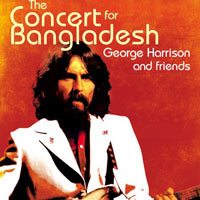
এমন পরিস্থিতিতেই ১৯৭১ সালের পহেলা আগস্ট বাংলাদেশকে সাহায্য করার জন্য বাংলাদেশের স্বাধীনতা যুদ্ধের প্রতি বিরূপ মার্কিন যুক্তরাষ্ট্রেই আয়োজন করা হয় এক অসাধারণ কনসার্ট, যা ইতিহাসে স্থান করে নিয়েছে বিভিন্ন কারণে। এর আগে কখনো একদল অসম্ভব খ্যাতিমান এবং বরেণ্য সঙ্গীতশিল্পী কোন দেশকে সাহায্য করার জন্য একসাথে কোন অনুষ্ঠানে অংশগ্রহণ করেননি; ইতিহাসে এমন কনসার্ট এই প্রথম। এই কনসার্ট অগণিত মানুষের সামনে তুলে ধরে সঙ্গীত আর শিল্পের শক্তি, যে শক্তি অতিক্রম করে যায় অনেক রাজনৈতিক শক্তিকেও। নিউ ইয়র্কের ম্যাডিসন স্কোয়্যার গার্ডেনে উপস্থিত হওয়া বহু মার্কিন তরুণ-তরুণী দেখতে পান তাদের প্রিয় সঙ্গীতশিল্পীরা তুলে ধরছেন মানবতা আর বর্বরতার পার্থক্য, আর তাঁরা সবাইকে আহ্বান জানাচ্ছেন অসহায়, অত্যাচারিত মানুষের পাশে দাঁড়াবার জন্য যখন তাদের দেশের সরকারকে বহু নিপীড়িত মা আর শিশুর ক্রন্দন স্পর্শ করছে না। রবি শঙ্কর কনসার্টে আসা অসংখ্য দর্শকদের উদ্দেশ্যে বলেন, “আমরা কোন রাজনীতি করতে আসিনি; আমরা শিল্পী। আমরা শুধু আমাদের অনুষ্ঠানের মধ্য দিয়ে একটি বার্তা পৌঁছে দিতে সমবেত হয়েছি। আমরা চাই আমাদের সঙ্গীত আপনাদের বাংলাদেশের মানুষের তীব্র বেদনা আর মনোযন্ত্রণা অনুভব করতে সাহায্য করুক”।
In this circumstance a concert was arranged on the 1st of August 1971, in the very place USA, which was not in favor of Bangladesh's Liberation War. This concert has been en-grafted in history for several reasons. Never before so many talented and popular artists had gathered to help a population, a country; such event is the first in history. This concert shows people the power of music and arts, which overshadows political powers. Many young men and women standing in the Madison Square Garden had witnessed in front of them how their beloved musicians portrayed the difference between humanity and barbarism, how they appealed to people to stand by the helpless, tortured people when their government was not being touched by the plights of the repressed mothers and the crying children. Ravi Shankar said to the crows: "We have not come for politics; we are musicians. We have gathered to spread only one message. We want you to feel the deep pain and plights of the people of Bangladesh through our music."
My friend came to me,
With sadness in his eyes,
He told me that he wanted help,
Before his country died,
Although I couldn't feel the pain,
I knew I'd have to try,
Now I'm asking all of you,
To help us save some lives
(Bangladesh: George Harrison)
সবসময়ের শ্রদ্ধা আর ভালবাসা থাকবে এই সব গুনী মানুষদের জন্য,যাদের প্রান কেদেছিল এই আমার মাটি আর মানুষের জন্য ১৯৭১ এর স্বাধীনতা সংগ্রামকালীন সময়ে। [..]
কেন জানি বিশ্বাস হয় সেই সময়ের কনসার্টে যারাই দর্শক হিসেবে অংশ নিয়েছিল তারা সবাই ই আমাদের দেশের শুভ কামনার জন্যই জড়ো হয়েছিল।
Our gratitude and respect will forever be with these talented people; who felt and cried for our people and country in 1971, during our liberation war.
I believe that those who came to the concert had good wishes for our people.
Bangladesh, Bangladesh
Bangladesh, Bangladesh
When the sun sinks in the west
Die a million people of the Bangladesh
….
And the students at the university
Asleep at night quite peacefully
The soldiers came and shot them in their beds
And terror took the dorm awakening shrieks of dread
And silent frozen forms and pillows drenched in red.. (Joan Baez)
 |
| Image Courtesy Omi Rahman Pial |
In May 2010, the ICC will hold its first Review Conference which will consider, among other things, amendments to the Statute including the adoption of a definition for the crime of aggression. Given the impact and repercussions that this meeting will have for the future of international justice, we urge your government to ratify the Rome Statute by 1 March, 2010, so as to ensure full participation as a State Party during the Conference.
We will take the matter to the International Criminal Court and seek the trial of the members of the Pakistani occupation forces who committed crimes against humanity during our liberation war. And we will request the world body to bring them to justice as many of them are guilty of war crimes.
To demonstrate the commitment to trial of war crimes, it is appropriate that Bangladesh ratifies the Statute of International Criminal Court of 1998 (Bangladesh signed it) and the ratification will show to the international community Bangladesh's firm resolve that war crimes must not and cannot escape unpunished.
Crimes against humanity, war crimes and genocide are the gravest crimes in international law and are condemned by all UN members. The effective punishment is an important element in the prevention and recurrence of such odious crimes and for protection of the inherent dignity of human person.
A Channel Four documentary from 1995 made allegations of involvement by British Bangladeshis in the genocide. Chowdhury Mueen-Uddin, director of Muslim Spiritual Care Provision in the NHS, who was until recently vice-chairman of the East London Mosque and London Muslim Centre and was involved in setting up the Muslim Council of Britain, is one of the most prominent people to be accused of having carried out war crimes.
Mueen-Uddin is alleged to have been part of a group that abducted and “disappeared” people. Witnesses at the time describe seeing him kidnapping a university professor and a journalist in Dhaka during the war. Mueen-Uddin told the documentary makers “all the accusations being made against me are … utterly false and malicious, and either politically motivated or instigated otherwise”.
Having left the newly created country of Bangladesh for London, Mueen-Uddin, along with other members of JI set up Islamic Forum Europe, an avowedly Islamist organisation connected to the East London Mosque.
• On 13 October this article was changed following a legal complaint.
Fortunately, I live in New York. This blog is also hosted in the United States. I am therefore protected by the Libel Terrorism Protection Act.
The Guardian, by contrast, struggles to report factual information while handicapped by a law which is a serious and disturbing threat, to freedom of expression, the fight against extremism, and the struggle for justice by the people of Bangladesh.
Prominent members and supporters of Jamaat-e-Islami are now well embedded within the United Kingdom. They more or less run the Muslim Council of Britain and the East London Mosque/London Muslim Centre. The Imam of the East London Mosque distinguished himself recently by signing the notorious Istanbul Declaration, which the Government regards as a threat of terrorism against the Royal Navy and ‘everyone standing with the Zionist Entity’. The London Muslim Centre, similarly, regularly hosts meeting by extremists, including the Al Qaeda cleric, Awlaki.
Thanks to the efforts of judges like Mr Justice Eady, and England’s claimant-friendly law of Defamation, activists connected to Jamaat-e-Islami and the Muslim Brotherhood routinely instruct their solicitors to fire off letters before action, claiming that their poor client’s reputations have been sullied, whenever blogs or newspapers report on their words, deeds, or the politics of the organisations to which they belong. Harry’s Place receives these sorts of letters all the time.
Those who are in favour of freedom of expression and justice in Britain must counter this despicable underhand move by Chowdhury Mueen-Uddin.
The prime minister in her message recalled the unstinting support of the senator to the war of independence from Pakistan and his role in mobilising world opinion for Bangladesh.
"The people of Bangladesh will remember his contribution forever."
She said in his death Bangldesh lost a real friend.
In her condolence message, Khaleda Zia (the leader of the opposition) said, "The late senator was a humanist and democratic personality. The people of Bangladesh will remember him forever for the role he played in mobilising world opinion in favour of Bangladesh liberation war".
She sympathised with the members of the Kennedy family.
"The United States has lost a great leader in the death of Senator Kennedy and the people of Bangladesh have lost a real friend".
(Source BDNEWS24.com)
After the invasion of East Pakistan (also called East Bengal, now called Bangladesh) by West Pakistani forces in the spring of 1971, some 9,000,000 refugees streamed across the border into India. The world and the United States (Nixon/Kissinger mired in Vietnam, famously "tilting" toward West Pakistan) took little note. All except the 39 year old senior senator from Massachusetts, Edward M. Kennedy.

In the brutal heat and monsoon muck of August, Senator Kennedy traveled to refugee camps throughout West Bengal (the neighboring Indian state) and reported back to the Senate in an extraordinarily passionate document (1) about the plight of the refugees in India and what he called the "reign of terror which grips East Bengal."
He concluded: "America's heavy support of Islamabad (West Pakistan) is nothing short of complicity in the human and political tragedy of East Bengal."
Kennedy not only bore witness, he jolted the world into taking notice and aiding the refugees if not the independence fighters in East Bengal.
Bangladesh gained its independence in December, 1971 after Pakistan was defeated in a short and brutally effective war by India. Senator Kennedy returned to India and now Bangladesh in February, 1972. The United States had so far refused to recognize the new nation (see Kissinger's extraordinary memo). Kennedy called for its recognition. He was lionized in Dhaka, the capital, with cries of "Joi Kennedy" (Hail, or literally, Victory to Kennedy) as well as in Calcutta, India, when he revisited the refugee camps.
Senator Kennedy has remained a steadfast friend of Bangladesh and India. In fact, there is a move to recognize him officially as a Bangladeshi hero, along with the late George Harrison, who had organized the 1971 Concert for Bangladesh, the archetype for such benefits in later years.

The mass opinion of Bangladesh has tilted towards the trial of War Criminals of 1971 liberation war. People from all walks of life have raised their voices with petitions, signature campaigns, pasting stickers in public places etc. to pressurize the government to make this possible.
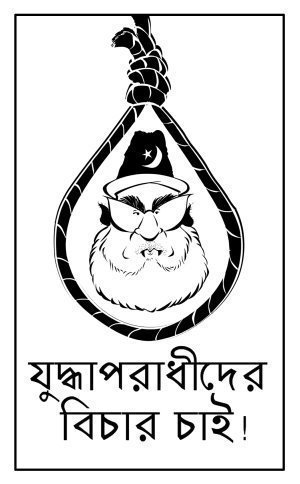 It seems sensing their defeat the Islamist political party Jamaat-e-Islami has been planning their defense:
"The top leadership of Jamaat-e-Islami (JeI), the country’s largest Islamist party which is accused of killing unarmed civilians then, is planning an “apology” for its “political stance” of opposing the freedom movement.Jamaat has never been apologetic about its opposition to the freedom movement. So they are finally coming to the reality and the truth is coming out. I think the younger Jamaat leaders can save their face by kicking their accused top leaders and let an UN led impartial trial of War Criminals happen. Justice must prevail.
But it will not acknowledge or apologise for the role of many of its leaders and its youth front cadres who engaged in the killings.
War records show JeI formed the Razakars and Al-Badr forces to counter the freedom fighters. The then secretary general of JeI Moulana Abul Kalam Mohammad Yousuf established the Razakars and Al-Badr with Islami Chhatra Shangha members."
Now there is a renewed call for trial of the war criminals who are trying to rewrite history.We dedicate this site to the hundreds and thousands of people who have died in the war and those brave souls who has fought for the country with firearms, support and stood in solidarity with the Bangladeshis.
The general Pakistanis were provided with the wrong version of the truth all the time. From a Pakistani newspaper:Only foreign media aired the news of the Fall of Dhaka on December 16, 1971. Radio Pakistan kept airing usual transmission and giving a picture of “all is well”.Even the reports the Pakistani people get display a fragment of the truth.
"We thought the West Pakistan soldiers were attacking and scattered, only to discover, on a grass patch beside the road, men freshly stabbed and bludgeoned, lying in still-flowing pools of blood. Four of them were still just alive, rolling over and waving their legs and arms. None made any noise.
...
Until about Thursday the West Pakistan garrison, which is about battalion size, was in some kind of control. But these troops started killing people for no discernible reason. The local hospital is filled with 35 wounded men, women and children, who claimed that Punjabi troops fired indiscriminately.
If Jessore is typical, East Pakistan is in for a terrible time in the next months and Karachi’s great gamble – to crush all opposition by one big attack – has failed.
..."
Bangladesh sits atop an alluvial plain, so those bent on genocide needed only to dump bodies in rivers or, as at the Jalladkhana, down the wells and conduits of local water-pumping stations, where corpses were literally flushed away into the sea. "These are crimes so horrible that even God wouldn't forgive you," says K.M. Safiullah, a retired general who led the independence war effort. "There cannot be unity without this being solved."

Ali Ahsan Mojaheed, general secretary of the Jamaat-e-Islami, a powerful political party that sided with Pakistan in 1971, thinks it's better to close the book on a tragic chapter in history rather than risk opening old wounds. After all, many who supported unity with Pakistan were also killed in reprisal attacks. "This is a dead issue," says Mojaheed. "It cannot be raised."Ali Ahsan Muzahid's activities during the war makes him one of the hated apologist of the war criminals and forces against Bangladesh. So one can reralize why he wants to keep everything buried. But there are some crimes you can never purge from History.
Bloody birth of Bangladesh was a by-product of that so-called Indo-Pak war? With this statement, the sacrifice of our freedom fighters and martyrs has been brazenly belittled. It's downright despicable!B. Raman, former deputy chief of India’s external intelligence agency, Research and Analysis Wing (RAW)adds the right perspective in his book ‘The Kaoboys of RAW’:
India's help in our war of liberation has always been aptly appreciated by us except some anti-India freaks. We're indebted to India for its help throughout our liberation war. But exaggeration of their contribution on the part of the Indian press is reprehensible. Describing the war waged by Bangladeshis and fought fiercely in which Indian Force helped us cannot be dubbed as Indo-Pak war in any way.
It's liberation war of Bangladesh, NOT 1971 Indo-Pak war.
‘India’s role was more of a facilitator than a creator. It was a war jointly won by India and the people of East Pakistan’.
‘Without the desire and the will of the people of Bangladesh, there would have been no Bangladesh. Their sacrifices for their cause were immense. How many were brutally killed by the Pakistan Army!
‘How many Bengali intellectuals were massacred by the Pakistan Army and by terrorist organisations such as Al Badr and Al Shams created by the ISI! It is their sacrifice which laid the foundation for an independent Bangladesh.
What India did under the leadership of Indira Gandhi was to make sure that their sacrifices were not in vain. (Source)
"They had risked all to hold on to this moment in history. The scarred negatives, hidden from the military, wrapped in old cloth, buried underground, also bore the wounds of war. These photographers were the only soldiers who preserved tangible memories, a contested memory that politicians fight over, in their battle for supremacy. These faded images, war weary, bloodied in battle, provide the only record of what was witnessed. Nearly four decades later, they speak."- Renowned Photo Journalist Shahidul Alam spells out these words to introduce us to the photo exhibition on the Bangladesh's liberation war. Shahidul's photo agency Drik is behind this with the partnership of Autograph ABP. and this is being held at Rivington Place, London EC2A 3BA, until May 31.
The contradiction between exalting and forgetting persists in Bangladesh, where the war remains a contested space, still charged 37 years later with an emotional and psychological intensity that brings to life William Faulkner's words "The past is never dead, it is not even past". Yet these complexities are captured in a photograph taken by Naib Uddin Ahmed of a woman - one of the birangona - obscuring her face by clutching a thick mass of her own hair.The Guardian has published a 12 page photo gallery containing images being displayed in the exhibition.

"The plot is so huge that no one person can tell the story. Many books were written, video footage was taken and words are passed from generation to generation. But due to lack of information in one place and platform many truth were distorted. The struggle for Bangladesh’s liberation and the efforts of the Pakistani army to cull the resistance resulted in one of the worst genocide in the World history. This was interpreted in many different ways. To many Bengalis it was a struggle for liberation, to many Pakistanis a armed rebel to be quashed, to the US govt. Pakistan’s internal affair. However it was in the US the peace loving people arranged the first ever aid concert for the people of Bangladesh.Actually its a repository of all the information available online listed in one place. From here you will be able to navigate to the original contents in their original locations. I will try to include all valid viewpoints with authenticated sources and let the readers/viewers be the judge.
Politicians tried to bank on these in the past and will be doing this in the future. The new generation is baffled as text books were rewritten to instill superiority of the visionaries of the political governments over rivals. People are forgetting that it was a mass effort and prompting to disrespect the catalysts and the father of nation, who was the inspiration.
That is why this site is born."

“The rule of law is essential for society to live without fear. For it to apply, it must start at the top.”World renowned photojournalist Shahidul Alam comments the above in a photo essay on the existing rule of law (or the absence of it) in Bangladesh. Click here for the photo essay.
"Lucky for us, my mother is a sensible woman. And a person who could read English instructions being used as decorative items inside the hospital. What if it was some innocent man from a rural area who can’t read? How can one accept negligence of this magnitude from doctors who appear so smart and intelligent?"Photography

Only foreign media aired the news of the Fall of Dhaka on December 16, 1971. Radio Pakistan kept airing usual transmission and giving a picture of “all is well”.Even the reports the Pakistani people get display a fragment of the truth.
“We have strong evidence and documents against the people who were involved in war crimes during the Liberation War and what is needed now to bring the culprits to justice is an initiative. Ali Ahsan Mojaheed as president of Islami Chhatra Sangha in 1971 was in a leading position of Dhaka city Al Badr Bahini, one of the groups involved in killing Bangladeshi intellectuals at the fag end of the war. Al Badr played the key role in killing innocent intellectuals, professionals and also common people in 1971.Meanwhile details are being emerging that Local collaborators of Pakistani occupation forces or war criminals charged with specific allegations of committing atrocities during the Liberation War have never been pardoned although propaganda campaigns are on claiming that they were granted general amnesty by Bangabandhu-led post-war government:
Local collaborators of the Pakistani army were involved in at least 53 types of crimes. The committee traced at least 920 mass graves where Bengalis were dumped by the Pakistani army and their collaborators. The killings were clearly genocide as Bengalis were eliminated because they were Bengalis and the Hindus were killed because they were Hindus.
An investigation by the War Crimes Fact Finding Committee found at least 191 people as Pakistani war criminals who have been accused of genocide, crimes against humanity and mass killing."
On November 30, 1973, the government announced general amnesty for those among the arrestees under collaborators order not charged with specific allegations of war atrocities.More details here.
The press note on general amnesty categorically said, “Those who were punished for or accused of rape, murder, attempt to murder or arson will not come under general amnesty.”
Out of 37,000 sent to jail on charges of collaboration, some 26,000 were freed after announcement of the general amnesty.
Around 11,000 were still in prison when the government of Justice Sayem and General Ziaur Rahman repealed the collaboration order on December 31, 1975. Following this, those behind bars for war atrocities appealed and eventually got released.
Jamaat leaders collaborated with them [Pakistan army] not only to advance their ideals of Pakistan as an Islamic state, but also to wreak vengeance on people they were at enmity with.As Sada Kalo Blog said "I will NOT forget. I will not let YOU forget."
Referring to the drives against Bangalee freedom fighters, he wrote, “These operations were only a partial success because the West Pakistani troops neither knew the faces of the suspects nor could they read the lane numbers (in Bengali).
They had to depend on the cooperation of the local people.
(On the collaboration groups) these patriotic elements were organised into two groups. The elderly and prominent among them formed Peace Committees, while the young and able-bodied were recruited as Razakars (volunteers). The committees were formed in Dacca as well as in the rural areas and they served as a useful link between the Army and the local people.
Razakars were raised to augment the strength of the West Pakistani troops and to give a sense of participation to the local population. Their manpower rose to nearly 50,000 as against a target of 100,000.
Some of them were genuinely interested in the integrity of Pakistan and they risked their own lives to cooperate with the Army, but a few of them also used their links with the Army to settle old score with pro-AL people.
To stress the point once again that the Bangladeshi collaborators had purposes other than pursuing the ideology of an Islamic state, Salik recollects, “In the evening I met the officer who carried out the attack. What he said was enough to chill my blood. He confided. ‘There were no rebels, and no weapons. Only poor country-folk, mostly women and old men got roasted in the barrage of fire. It is a pity that the operation was launched without proper intelligence. I will carry this burden on my conscience for the rest of my life’.”