

Dragonfly

Image by Rezwan

Overcrowded passenger ferry capsized in the Padma River in Munshiganj, Bangladesh

The World Cup Goal-E Project

This street in Bangladesh has a colorful world cup celebration

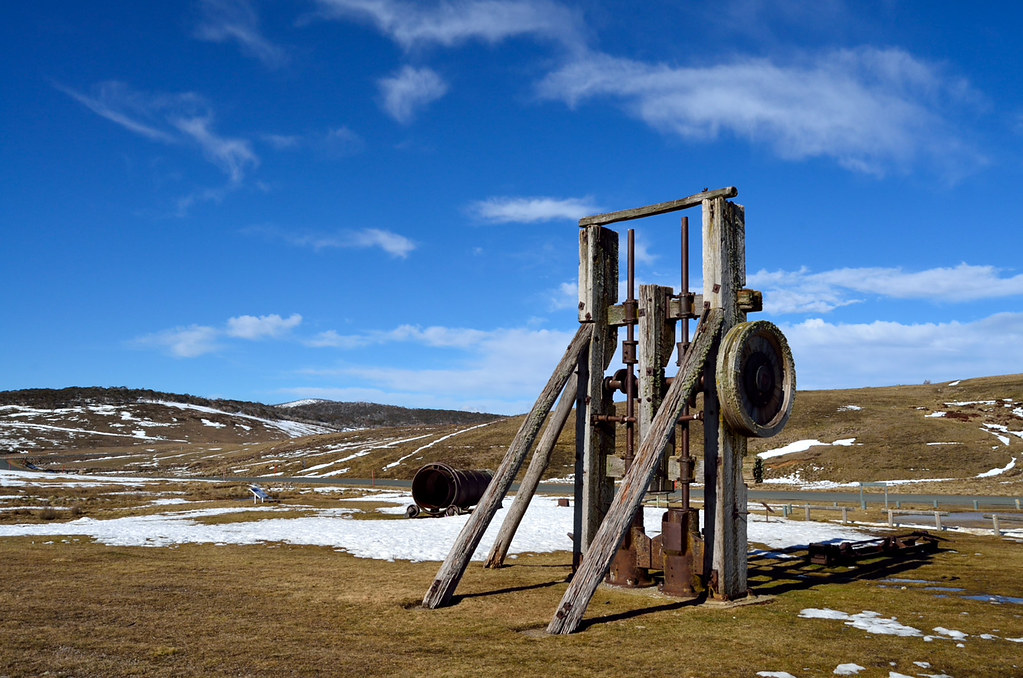
New Chum Hill Ruins

Remnants of Kiandra gold mine at New Chum Hill, #nsw #australia

Showing posts with label Development. Show all posts

June 21, 2015

Citizen Media Shows Why India Is Unlikely to Reach Its Millennium Goals Target for Maternal Mortality

In the hamlet of Indkatha , Jharkhand state in eastern India, women of the Ho tribe take lessons to reduce maternal mortality.  Image by Freny Manecksha. Copyright Demotix (11/11/2008)
In the hamlet of Indkatha, Jharkhand state in eastern India, women of the Ho tribe take lessons to reduce maternal mortality. Image by Freny Manecksha. Copyright Demotix (11/11/2008)
According to the UN Millennium Development Goals, India should bring down its maternal mortality rate (MMR) to 109 per 100,000 live births by 2015. This is a tough ask, as from an MMR of 437 per 100,000 live births in 1990-91 India has only achieved a reduction to 190 by 2013-2014.

Experts therefore believe that India is likely to miss its Millennium Development Goals target for MMR.

Safe birthing depends on how informed pregnant mothers are and whether the delivery is carried out by trained personnel and in institutional health facilities.

In many regions of India, a lack of health infrastructure to support institutional deliveries and pre- and post-natal care as well as a lack of awareness regarding existing schemes promoting institutional deliveries serve as major impediments to achieving the goal. Other factors such as early marriage of girls, poor nutrition among women and gender inequality increase maternal risk.

A report drafted by CommonHealth and Jan Swasthya Abhiyan, a coalition for maternal-neonatal healthcare and safe abortion, says that the public health system has failed women belonging to the Scheduled Castes, Scheduled Tribes and minority religious groups living in geographically remote areas, as well as migrants. The report shows that although the government runs several programmes, there is a great gap in accountability and governance and most of the programmes have been implemented poorly on the ground.

Citizen journalists from Video Volunteers -- an international media and human rights NGO -- have highlighted maternal healthcare problems at grassroots level in a series of videos.

Their stories reveal that while the government is encouraging women to deliver at institutions rather than at home, the public health system is crippled by shortages of health infrastructure, doctors, frontline health workers and medicine.

Corruption plays its part

In 2014, 56,000 women died during childbirth in India. The Indian government’s schemes Janani Suraksha Yojana and Janani Shishu Suraksha Karyakram make provisions to reduce out-of-pocket expenditure for women living below the poverty line, providing free antenatal check ups, IFA tablets, medicines, nutrition in health institutions, provisions for blood transfusion, and transport to and from health centres.


However, according to the above video, which comprises footage taken by the hidden camera of citizen journalist Mary Nisha from the Godda district of Jharkhand:
The 24-year-old woman in labour was kept waiting for the doctor for six hours. The doctor on duty did not turn up and she delivered in the presence of a nurse. She was forced to pay INR 400 for her delivery and even to use the toilet. She received neither free medicine nor nutrition.
Lack of functional institutions

This video follows three women in Khatti village, Gariaband district, Chhattisgarh. One lost her baby six days after it was born due to a lack of medical assistance. Another had a stillborn baby resulting from an unassisted home birth while a third, who is nine months pregnant, has no access to healthcare.


This video by Reena Ramteke from Khatti village in Garyaband District of the state of Chattisgarh shows that the state-run health facility in the locality is constantly shut.

Laleshwari, 21, says no health worker has ever contacted her. Purnima, 20, had a stillbirth despite the fact the health centre was close to her home. She says the sub-health centre is open twice a month and the nurse at the facility is not present most of the time it is open. What options did she have?

Not a single delivery has taken place in the past decade in the sub-health centre in Khatti village. Indrani, 22, lost her child within six days of the birth due to an infection following a home delivery. During the delivery she called the duty nurse of the sub-health centre but was told by the nurse that she was at a meeting.

Bharti Kumari reports from Telmocho village, Dhanbad district, Jharkhand, that the main medical facility is unusable for health workers and patients, lacking functioning toilets and featuring a roof that leaks during the monsoon.


The doctors of this facility also visit rarely. Thus, patients that can afford to have to visit a relatively costly private centre for childbirth.

Lack of manpower

Halima Ezaz from Dhanbad, Jharkhand, reports that one Auxiliary Nurse Midwife (ANM) from Jharkhand looks after 14 sub-health centres. Ahilya Devi, a septuagenarian, has responsibility for looking after pregnant women and women with new born babies, giving them nutrients, vaccinations, performing deliveries and so on. But she is not supplied with proper tools to work in a region where the power supply is unstable:


Ahilya says:
We used to have rechargeable emergency lights, but those are broken. [If the lights go at night], we have to use candles and torches. How can we make stitches in this light?
Each of these videos highlights the obstacles to reducing the maternal mortality rate in India. Despite the government campaigns in place, India is lagging behind neighbours Bangladesh and Nepal in the fight against maternal mortality. There is also a huge disparity in terms of progress between different states in the vast country. Some states like Tamil Nadu, Delhi, Kerala and Andhra Pradesh have achieved their millennium development goals. But there are many -- especially those with Scheduled Castes and Scheduled Tribes as well as minority religious groups -- who are left trailing.

Watch this YouTube playlist on maternal health in India to learn more.

The post was also published in Global Voices Online.

May 11, 2015

Why Arabic Script on the Walls Might Not Stop Public Urination in Dhaka

The photo shows  Arabic sign on the sidewall of Panthakunja Park at the Karwan Bazar in Dhaka. Image by Sk. Hasan Ali. Copyright Demotix (7/5/2015)
The photo shows Arabic sign on the sidewall of Panthakunja Park at the Karwan Bazar in Dhaka. Image by Sk. Hasan Ali. Copyright Demotix (7/5/2015)
Public urination is a problem in Bangladesh due largely to a lack of public toilets. Municipal officials in the capital Dhaka have battled in vain to stop men urinating in public, with signs in the local Bengali language and warnings of punishment and fines yielding no notable results.

Now the government is hoping that an innovative idea can put a stop to the habit. Recently the Ministry of Religious Affairs released a video highlighting their campaign "Language Matters" wherein Bengali signs warning against urination are now being replaced by Arabic signs, a holy language for Bangladeshis.

Perhaps they have taken a cue from neighbouring India -- battling with the same problem -- where pictures of Hindu gods and godesses on the walls are intended to have the same effect.


Although some are lauding the state's effort to solve a perennial problem, others are skeptical, claiming the campaign supports blind faith and promotes misconceptions.

Sufi Faruq comments on YouTube:
ধর্ম মন্ত্রণালয়ের দারুণ একটা ক্যাম্পেইন !!! (..)

বাংলাদেশের বেশিরভাগ মুসলিম আরবি ভাষা না বুঝলেও এই ধরনের অক্ষরকে পবিত্র মনে করে। তাই ওই স্ক্রিপ্টে লেখা যে কোনকিছু অপবিত্র করতে ভয় পায়। এই ভয়টার বেশিরভাগ সময় ধর্ম ব্যবসায়ীরা অপব্যবহার করতো। এবার একটা দারুণ কাজে ব্যাবহার হল।
A great campaign by the Ministry of Religious Affairs!!!

Most of the Muslim majority Bangladeshis cannot understand Arabic but they deem it as a holy language. So they fear to desecrate anything written in that language. Most of the time it was used by religious opportunists as it is the language of the Koran and the prayers. Now it has been used for a good cause.
Despite the Ministry of Religious Affairs' claim in the video about toilets being present in most of Dhaka's 10,000 mosques, the general lack of public toilets in the city of approximately 15 million is a genuine challenge. The city's large homeless population is particularly affected by the shortage.

Adnan R. Amin at Alal O Dulal Blog thinks that the video does not get to the root of the problem and instead aims to create false impressions:
The using of a religious misconception (“Arabic is a holy language”), to prevent a social evil, is clever. But it also reinforces and lends credence to that misconception, instead of dispelling it. One would think that for a ministry for religious affairs, dispelling religious misconceptions would outweigh protecting city-walls. If there were funds available to the government, Dhaka’s City Corporations could’ve used them to create better facilities for women. While it is difficult to discern from boardrooms, the 36 public toilets with facilities for women are now being used by men. Judging from the tactic and tone of  this video, a reexamining of both government bodies’ priorities seems to be in order.
Moreover, Fariduddin Masud, an influential cleric criticised the Ministry for Religious Affairs.

While most mosques do have sanitary facilities, mosques themselves are "not public toilets", he said, adding that "nobody has the right to use the language of the Koran for such a campaign."

Blogger Irene Sultana doubted the campaign via a blog post on Women Chapter titled 'Not Arabic, but Public Toilets, Matter":
ঢাকা শহরের প্রতি দেড় লাখ নাগরিকের জন্য শৌচাগার রয়েছে মাত্র একটি। [..] অধিকাংশ পাবলিক টয়লেটই ব্যবহার অনুপযোগী। [..] পাবলিক টয়লেটহীন নগরীতে পথচারীদের অধিকাংশই তাই ফুটপাতকেই বেছে নিচ্ছেন ’হালকা’ হতে।

না বুঝে কেবল আরবি লেখা থাকলে সালাম করা হলো এ দেশের মানুষের ধর্মীয় অন্ধত্ব। ধর্ম মন্ত্রণালয়ের দায়িত্ব ছিল মানুষকে এসব অশিক্ষা থেকে বের করে শিক্ষিত, সচেতন করা, তার বদলে মানুষের সেই অজ্ঞতাকে ব্যবহার করে ’সমাধানের’ নামে মূলত একটি মশকরা করলো!
There is only one toilet in the capital Dhaka for every 150,000 people, out of which many are not usable. So in the absence of enough public toilets the pedestrians use walls to relieve themselves.

Many Bangladeshis respect the Arabic language because they don't know the language. The duty of the Ministry of Religious Affairs was to educate them and make them aware that this is a language only, not everything in its writing is sacred. But instead they used this ignorance to eke out a "solution" which is actually a farce.
Sultana also cites the recent efforts of Indian Prime Minister Narendra Modi, who built toilets in front of temples and achieved 5.2 million lavatories in the first 100 days of his tenure.

Bangladesh lags far behind on this issue.

While state religious officials are already trumpeting its successes, the campaign does not appear to have been well thought-through. If implemented to the fullest extent, Dhaka's walls will be covered by Arabic but people will still have nowhere to urinate.

Moreover, in India, before Modi went on his toilet-building spree, the gods on walls campaign unravelled: people simply began urinating on the faces of the deities. Innovative campaigns incorporating public shaming such as "The Pissing Tanker" also lacked impact.

For this reason Adnan R Amin's comment that the money spent on the campaign -- "a proxy solution that treats the Symptom and not the Cause" -- would be better spent on new public toilets in Dhaka seems to be well-founded.

The post was also published in Global Voices Online.

February 09, 2015

Gardeners Are Repurposing Coconut Waste as Eco-Friendly Plant Pots

Plant vases made of coir are the new export materials. Surprisingly being quite cheap these eco-friendly materials haven't found a market in India. Image by Subhashish Panigrahi. Used with Permission.
Plant vases made of coir fibre and coir piths are eco-friendly and cheap. Image by Subhashish Panigrahi under CC-by-SA 4.0.
Coir pots in the above picture are made from coir piths or coco peats, sourced as a by-product from coconut production. Coir is a natural fibre extracted from the hard, internal shell and the outer coat of a coconut and used in products such as floor mats, doormats, brushes, mattresses, twist rope, and weave carpets.

Coir fibres make up about a third of the coconut pulp and the remaining portion, called pith or dust, is biodegradable. Coir pith used to be treated as waste material, but is now increasingly being used as soil treatment, mulch and a hydroponic growth medium, e.g. use inside the coir pot. If coir pith is artificially decomposed using biological agents, within 30 days it can convert to be 100% natural organic manure benefitting the plant.

Using coir pots that can be planted directly in the garden can save an estimated 100 million plastic pots from ending up in garbage cans.

The coconut tree (Cocus nucifera) grows in many tropical countries but is commercially exploited mainly in India, Thailand, Sri Lanka and the Philippines. Ropes and rigging made from coconut fibre have been in use from ancient times and are found in the Indian and Arab histories.

This YouTube video shows how coir is made from coconut husks:


India produces 60% of the total world supply of coir fibre. India and Sri Lanka together produce 90% of the coir produced every year across the world. India earned foreign exchange of Rs 2,200 million (approximately $37 million) by exporting coir pith during 2011-12 and aims to boost exports by five times mainly because of the demand in the Gulf countries.

One of the inventions using coir piths is the coir pot, an asset for anyone who wants to start green farming.
After planting trees inside the pot, the roots grow through the coir, so the entire pot and plant can be put into the ground – no wasted plastic pot and no wasted effort.

GV author Subhashish Panigrahi writes in Facebook:
Plant vases made of coir are the new export materials. Surprisingly being quite cheap these eco-friendly materials haven't found a market in India. Coir pith is used as manure in the vases. After two years or so, when the roots start penetrating the vase, it could straight away be taken and planted. What a neat idea!
The benefits of coir pots are that they can replace petroleum-based plastic nursery pots, flats and trays. Although they are lightweight, durable and can be recycled, they usually wind up in the trash causing environmental damage. But things are changing. Plants in biodegradable containers such as coir pots are gradually becoming more available as growers wake up to the environmental consequences of plastics and rubbers.

Subhashish Panigrahi contributed to this post.

The post was also published in Global Voices Online.

January 09, 2015

A New Era Begins for Sri Lanka After President Mahinda Rajapaksa Concedes Defeat

Supporters of Sri Lanka's main opposition presidential candidate Maithripala Sirisena burst firecrackers at the end of voting in the presidential election in Colombo. Image by Chamila Karunarathne. Copyright Demotix (8/1/2015)
On Friday morning, Sri Lankans woke up to news that was unthinkable only a few weeks ago -- President Mahinda Rajapaksa, who took office on 19 November 2005, conceded defeat to 63-year-old former Health Minister Maithripala Sirisena, the presidential candidate of the main opposition United National Party.

The day before, Sri Lankan voters had cast their ballot in the 7th presidential election in a closely contested presidential election, with incumbent Mahinda Rajapaksa seeking a record third term in office. The election was largely peaceful and turnout was more than 70 per cent in most districts.

Rajapaksa tweeted on 9 January, after it was clear he had lost the vote:
The early results showed that Rajapaksa remained popular among the country's Sinhala Buddhist population, who account for around 70 per cent of the island country's 21 million people. Sirisena was favoured by the ethnic Tamil-dominated former war zone in the north of the country and in Muslim-dominated areas, who went out in large numbers to vote for him.

A screenshot from news portal Adaderana.lk shows the numbers (final results):

Screenshot from Adaderana.lk
Rajapaksa oversaw the end of a bloody civil war in 2009 that had raged for 26 years between government forces and a militant organisation seeking an independent Tamil state. He was reelected in 2010 by a landslide, and afterward successfully amended the constitution to concentrate political power in the presidency and remove term limits on the office. While in power, he has faced accusations of abuse of power, nepotism and human rights violations committed during the final stages of the civil war.

Blogger Indrajit Samarajiva, often a critic of the Rajapaksa government, paid tribute to his legacy:
Mahinda Rajapaksa has shown me things I never thought possible. He ended a war that I thought would never end. He rebuilt Colombo and showed us physical development I never dreamed of. For all of his faults, he has won me over as a citizen. I think he has been a good President, in my opinion Sri Lanka’s best, especially because he is the first President to lose an election and gracefully leave.

I have always been reluctant to call Mahinda a dictator because I never thought he was. As much as he messed with Parliament, with the Judiciary, he was always close with the people and he rose and fell by the vote. He was elected to power, he marshalled popular support to win the war and, in the end, he was brave enough to face election for a third time. Most importantly, and something we’ve never seen from an incumbent, he was brave enough to gracefully lose.

He has truly been a great leader and, though I voted for his opponent, I think he deserves something Sri Lanka hasn’t really afforded its leaders. A comfortable, honored and secure position as the respected and beloved ex-President of Sri Lanka.
Some commenters disagreed with Samarajiva's view on Rajapaksa time as president, such as Reshan Auston:
While we carry the respect for Mahinda for winning the war, I have no respect for him for looting the country. As a leader he failed the country. He had all the opportunity to be the Nelson Mandela of Sri Lanka but instead he decided to be Sadam Hussain. He looted the country with his brothers while his sons enjoyed the life using poor tax payers money. We couldn’t get our day to day activities done at government offices without political influences. Is this the leader we care about?

As a president he failed after finishing the war. I don’t harbour any remorse for his loss. He deserved what he got. I don’t wanna shed crocodile tear.
Sri Lankan polling officers carrie ballot boxes into a counting center after close of polling for the presidential election in Colombo. Image by Chamila Karunarathne. Copyright Demotix (8/1/2015)
Sri Lankan polling officers carry ballot boxes into a counting center after the close of polling for the presidential election in Colombo. Image by Chamila Karunarathne. Copyright Demotix (8/1/2015)
Dilrukshi Handunnetti wrote on citizen journalism website Groundviews on why Sri Lankans sought a change:
It is not as if Maithripala Sirisena, a simple villager who has risen within the SLFP ranks to reach top positions, holds the island enthralled. Instead, what he represents in terms of ideas and promises, matter to a large majority of the people who have silently observed an elected president turn increasingly authoritarian and triumphalist. [..]

There may be others who feel that while road and rail connectivity was being achieved, the incumbency has severed connectivity among the island’s communities that lived in harmony for decades, causing serious divisions on ethno-religious lines.

It is that negative difference that has fuelled an electorate’s call for a political change, perhaps at great risk, still with the hope that a new administration may have the political maturity to tolerate dissent and celebrate a plural Sri Lankan identity.
The social media scene was full of buzz:
Sri Lanka's free and fair elections were congratulated by many:
And here is what Sri Lankans are hoping for the future:
The post was also published in Global Voices Online.

November 26, 2014

In Cricket-Crazy India, Basketball Is Quietly Empowering Girls’ Lives

The EMRS Gangyap girls. Image used with permission.
The champions - girls basketball team of Gangyap's Ekalavya Model Residential School, Sikkim, with their coach. Image used with permission.
They hail from one of India's many mountain villages, and chances are that their lives would have been spent in quiet anonymity had it not been for an enthusiastic and persevering coach and their own grit. But now these girls have transformed themselves into national level champions in a sport that they had not even heard of earlier -- basketball. Theirs is a truly inspiring story. They are the girls of Gangyap.

Gangyap is a remote mountainous village, located at an altitude of 6,500 feet in the Himalayan mountains of Western Sikkim. Over the last few years, the village has come out of the shadows, thanks to a group of its teenage girls who, under the guidance of their school principal-cum-coach, has become an unlikely powerhouse in the Indian under-19 CBSE (Central Board of Secondary Education) Basketball league.

Siddharth Yonzone, 37, was appointed the first principal of the Eklavya Eklavya Model Residential School (EMRS) for Scheduled Tribes that opened in Gangyap around 2009 and he recalls that at the time, the school wasn't connected by proper roads and there were no proper school building or playground. Yonzone introduced basketball to the small number of students (52 enrolled in the first year, and 33 passed) as an extra-curricular student activity and became their coach and mentor.

At Gangyap, few had heard of basketball before, but that did not deter Yonzone, himself a basketball fan. There were many challenges, but the fledgeling team and their coach persevered. This video by documentary filmmaker Mandira Chhetri explains how the girls had to build their own basketball court from scratch, through manual labour:


Despite the challenges, however, the girls basketball team of Gangyap started playing in the championships in 2010 and surprised everyone when they stole the headlines in 2011 by winning the under-19 CBSE Basketball national level championship, the first team from north-east India to do so. The girls team has lifted the East Zone trophy for the fifth time this year and are currently preparing to take part in the 2014 under-19 national championships, to be held in December.

The Girls of Gangyap in action. Image used with permission.
The girls of Gangyap in action. Image used with permission.
Global Voices conducted an interview with Siddarth Yonzone over email to learn more about the team and how the game has had an impact on the lives of the girls and their community.

Global Voices (GV): What made you think of creating this basketball team with the girls, who are from the remote, tribal areas of Sikkim?
Siddarth Yonzone (SY): I'm a basketball fan, a basketball lover. When I was working in a government school as an English teacher, I had taught the game to a group of boys. This was around 2001-2004. In 2007 I was offered the post of a principal in a new school called 'Eklavya Model Residential School' where we had to begin with just one class, that was class VI. Seeing the very sad condition of the new school, the ignorance of the children and so much more, I wanted to catch their interest through basketball, music and some other literary stuff (of course all of which I am interested in)  I brought two girls with me to the new school (who I had started coaching in the previous school) named Rinchen abd Nim Lhamu, aged 10 and 12, respectively. With them I tried to build a team. Of course there was no court to play on. So I put up basketball rings on a wooden post. Though the other girls had never heard or seen the game, I thought of instilling confidence in them of some kind and had to start from somewhere ... I felt it could be done through basketball and music.
GV: What made you choose basketball as a sport for these girls, when it is not really a very well-known or popular game even in some of India's top schools?
SY: For me, taking the road less travelled has always been my way. Moreover since I was such a fan of the game, I wanted to make it popular in places hidden from the rest of the world. I had also seen the standard of the game played by the girls in Sikkim and other places and I was not happy about it. I wanted to train a team from scratch. I also made them watch NBA and WNBA. Apart from the game, this also helped the girls learn about different places, etc.


GV: Did you have to face any challenges in creating this team and teaching them the game? Can you share one or two incidents to illustrate?
SY: Yes! There were so many challenges, but with the grace of God, (and of course, we were training very hard) the girls started winning immediately. The captain, Nima Doma, naturally learned the game and became a star player. The girls started defeating opponents who were double their age and physically bigger, stronger, older. One of the biggest challenges we faced was that by class VII, they had won their first state championship (all aged 11-14) but they were not allowed to represent the state, which they wanted to very badly. Some people tried to discourage me and the girls by saying so many things. It was only in 2010 when they were in class VIII and IX that they went out of the state to play and won so many championships . But then even today, there are many tournaments to which this team is not invited; organisers give the excuse that there is no competition when our team is called ... (basically there are many who have still not acknowledged this team despite the many championships they have won all over India, in Bhutan and in Nepal too. Another challenge is that some people started to grow very jealous of the girls ... It was so difficult (and still is). These people criticize behind the girls' backs, say this is not their game, they mock and try to put down the girls. Sometimes the girls tell me of how difficult it is to belong to the team. I really don't know the reason why but since these girls were from the remote tribal areas, they were first generation learners coming from economically weak backgrounds, they were not looked after well. Scholarships/incentives for winning the CBSE under-19 national championship twice were not offered or even talked about. The girls finally got a basketball court in their seventh and final year of their schooling after learning for six years on muddy, stony, unbalanced courts. There were even some people who wanted to go out of their way to deny them a basketball court! They are so many other challenges, but the girls were interested and I got the support from their families and the biggest thing was, we met several well wishers, friends and family who helped us ..
The EMRS Basketball team. Image used with permission
The EMRS girls basketball team, in their school jerseys. Image used with permission
GV: What keeps the team motivated? Has it changed their day-to-day life or even their dreams in any way? Can you give an example?
SY: I guess it's the love of the game. They have set for themselves a very high target. Nima Doma, for example, dreams of playing in the WNBA. I don’t know if that’s ever going to happen but I’m certain if lady luck does smile on her, she will not disappoint the selectors. She’ll never let that opportunity go to waste. Even the support given by friends, family and well wishers have ensured that they continue to improve in the game. I try as a coach to give them targets; we have several meetings even when there aren't any tournaments coming up. Their day-to-day life has changed tremendously. They have become athletic in nature, health conscious, more confident, they started to perform very well in their academics. They have travelled to so many places within India and also Bhutan, Nepal ... they have seen more of the country because of basketball. They have higher dreams now. They've met various kinds of people on their journeys, some kind and generous, others spiteful and envious … they've even been invited for tea by her majesty, the queen of Bhutan, who spoke to and advised the girls and gave them presents. Recently, five of the outgoing (school leaving) seniors have appeared for an entrance test for physical education in Gwalior. If it not been for basketball, their options or dreams would be very little.
GV: The girls team has performed fantastically in so many competitions now. Has their story had any impact on the local communities from where they come -- in their villages or in their families?
SY: Yes, they have been welcomed grandly on their return after winning championships by the school and local communities. They are many people in and around Sikkim who look up to the girls as role models. We hear that in many schools, certain principals, head masters and teachers narrate stories of these players, motivating other students to try and achieve what these girls have; their families and villages are proud of them. Reports of their victories in newspapers, magazines, etc., have also inspired many other people. I sometimes meet people for the first time, but they seem to know pretty well about the team and their victories. They thank me and the team … they have said that the girls have inspired them in so many ways. On the other hand, I also feel that they should have been given a little support by the people in important positions, to enable them to get into the colleges they desired, but that has not been given …It makes me want to wonder why? Is it because they are girls? Is it because they are tribals? Is it because they are first generation learners from weak economical backgrounds? I could be totally wrong here but these things do make me think. It could also be because basketball is not a very popular game … especially with too much cricket in India, and too much fuss about contact and indoor sports in Sikkim. But one very important point I want to make is no matter the number of critics and obstacles in our path, certain well wishers have made a difference to the lives of the players.
We wish the girls of Gangyap many more successes in the days to come and hope that Siddharth Yonzone's vision will bring greater empowerment to many more such girls. We look forward to seeing them win -- in basketball, and in life.
The post was written in collaboration with Aparna Ray.

The post was also published in Global Voices Online.

October 02, 2014

Mobile Apps Put Durga Puja at the Fingertips of Millions

Durga Puja, the annual Hindu festival that involves worship of the Goddess Durga, who symbolizes power and the triumph of good over evil in Hindu mythology. Image by Luit Chaliha. Copyright Demotix (27/9/2014)
During Durga Puja, an annual Hindu festival in West Bengal and other parts of India and Bangladesh, worshippers erect elaborate makeshift structures called pandals. Inside each of these structures, there is a stage on which a statue of the Goddess Durga mounts a lion while wielding ten weapons in her ten hands. The pandals depict Durga's victory over the evil buffalo demon Mahishasura. Afterwards, Durga is invited to visit her maternal home and there is an invocation by "Mahalaya" (chanting and singing devotional songs). Goddess Durga then visits home and Bengalis celebrate, worship, and enjoy the five days of Durga Puja. (Read more about this legend here.)

The highlight of the Puja festivities is viewing the many different displays of Goddess Durga, each of which has a unique theme. "Pandal hopping" has become a part of the popular culture, and people sometimes visit hundreds of pandals in large cities like Kolkata. During the week of Durga Puja, life comes to a complete standstill, as roadblocks, traffic management, and fun-fare to the sound of drums chants and devotional songs take over.

This year, there are several mobile apps available to make pandal hopping better planned and more informed than ever. Indians' growing tech savviness has brought mobile computing to new spheres of life. Apps that help navigate religious and cultural festivities are now at the fingertips of millions in India.

In this article, Global Voices look at some of the mobile apps related to the Puja festivities. The apps fall into four basic categories:

1. Virtual Puja-hopping experience:

Blogger Agnivo Niyogi writes about the Android App Durga Puja Parikrama:
The lights, pandals, chaos on the streets, hyper-active Kolkata Police, food, and above all the spirit of togetherness – these define Durga Puja in the truest of terms. Sadly, for Probashis (and Bengal-lovers who cannot visit Kolkata during Pujo) often give this opportunity a miss because of the physical distance. [..]

The interactive Durga Puja app will help you to:

-Find out location and other details of Durga Puja Pandals around
-Check ratings and comments by other users
-Check the pictures of the Durga Puja pandal uploaded by other visitors.
-Search Durga Puja pandal by popularity or traditionally well-known.
-Create a wishlist of pandals
-Share which Durga Puja pandals you have visited on social network.
-Upload your picture, make your comment or rate a Durga Puja Pandal you visited.
-Get important news and updates from Kolkata Police and West Bengal Government.
Durgotsava Puja Parikrama is a similar app offering map-navigation features and GPS-tracking to aid users in Puja hopping. It also provides information about nearby services like cash machines, public transport, restaurants, medical services, and so on. Puja Hoppers is another such app.

Durga Puja Pandal Hopper also allows users to add their own pandal information and maintain a travel budget.

Another app in this group is The Puja App, which offers 360-degree interactive virtual tours of pandals. Users can vote for their favourite pandals. Virtual tours are only available for older pujas from before 2013, the app also offers a map with some of the current puja locations.

Bengali House wifes play "Sindur Khala" on the last day of the Durga Puja festival at Kolkata in India. Image by Reporter #7585286. Copyright Demotix (14/10/2014)
2. Puja-related updates:

The Big Green Durga app is an initiative from 92.7 BIG FM Kolkata, a radio channel, which describes it as the perfect way to get around congested streets:
The app is a great utility as during puja this will be your news channel on all the Roads that are blocked, all the awarded Pujas you must see and all the celebrities who are visiting different Puja Pandals so that you can have a real glimpse of them. The data will be live and updated by 92.7 BIG FM Kolkata.
Durga Puja is another app in this group. It educates users about Durga Puja, the importance of each day of the celebration, the legends therein, how puja is performed, what is required for each day, and the datse and proper puja timings according to the Hindu calendar. The Durga Puja Organiser apps, as the name implies, help worshippers plan their puja celebrations.

The Navratri Durga Puja Sangrah app has a collection of puja-related songs, aarti, and mantra (prayers) in both audio and video formats, which can be performed when making puja offerings.

3. Puja locators:

These apps help users find all the nearby pujas.

Available on iOS and Android, Puja Locator was not designed specifically for Durga pujas. It was made for pujas held in the Maharashtra region. Mandapp provides information about the various puja pandals in Kolkata.

Kolkata Puja Guide and Map makes it easy for people to find a route to select puja pandals. Durga Puja RoadMap 2014 is a similar app with navigation features.

4. Virtual Puja offerings:

These apps allow users to offer virtual pooja (prayers) to Maa Durga Devi. Maa Durga Pooja offers a complete pooja experience to users. Durga Pooja is another app which lets you to worship the lord goddesses through aarti and garland.

There are undoubtedly many other useful apps out there for the Puja festivities. If you know of any not mentioned here, GV invites you to mention it in the comments below this post.

One of the idols of Devi Durga is ready for immersion on the Ganga river in Kolkata. Image by Suman Mitra. Copyright Demotix (14/10/2013)
The Durga Puja ends by immersing Maa Durga's idol in water and chanting "asche bochor abar hobe" (It will happen again next year). Thanks to the the growing supply of Durga Puja apps, however, worshippers don't have to wait a whole year anymore. The virtual experience of Durga Puja is forever at the fingertips of anyone who wants it.
Aparna Ray contributed to this post.

The post was also published in Global Voices Online.

September 25, 2014

How Climate-Smart Villages in Bangladesh, India and Nepal Are Preparing Farmers for the Future

56 years old Kamla Devi listens to messages of weather and best climate friendly crop practices on her mobile phone while working in the cowshed at her home in Anjanthalli. Image by Prashanth Vishwanathan. Used with permission.
56-year-old Kamla Devi listens to messages about the weather and best climate-friendly crop practices on her mobile phone while working in the cowshed at her home in Anjanthalli village. Image by Prashanth Vishwanathan. Used with permission.
One of the initiatives to come out of the United Nations' summit on climate change on September 23 was the Global Alliance for Climate-Smart Agriculture, a group of 16 countries and 37 organizations that aim to enable 500 million farmers around the world to practice climate-smart agriculture by 2030.

What is climate-smart agriculture? It's the idea of helping farmers adapt to changing climates while weaning them off techniques and technologies that produce greenhouse gases. In a number of countries in Africa and Asia, Climate Change Agriculture and Food Security (CCAFS), a research program of CGIAR (a global partnership dedicated to agriculture research), has already set up "climate-smart villages" to put the idea into practice.

Farmers in northern India have grown used to a wide range of weather, and work their fields around monsoon seasons that regularly bring them torrential rains. But as climate change begins to change the weather, scientists predict that growing conditions in the country are likely to become even more challenging and could alternate abruptly between periods of severe rainstorms and drought, according to the group.

In response to the farming challenges brought on by climate change, Climate Change Agriculture and Food Security (CCAFS), together with the International Maize and Wheat Improvement Centre and partner organizations are introducing a portfolio of climate-smart agriculture practices and technologies in their climate-smart villages.

Paramjeet Singh uses the “Green Seeker” to check the nutrient levels of his paddy fields in Uncha Samana. The device helps him decide the most appropriate dosage of nitrogen fertilizers (Urea) for his crops.
Paramjeet Singh uses the “Green Seeker” to check the nutrient levels of his paddy fields in Uncha Samana. The device helps him decide the most appropriate dosage of nitrogen fertilizers (Urea) for his crops. Image by Prashanth Vishwanathan. Used with permission.
Researchers, farmers’ cooperatives, government bodies and private sector partners are working together at these villages to identify which agriculture practices and technologies can improve productivity and incomes and build resilience to climate risks. “Climate-smart” agriculture is highly localized; interventions that work in one place will not necessarily be suitable for another.

In India the project is undertaken currently in Haryana, Bihar and Punjab. The same model also operates in Khulna, Bangladesh and Rupandehi in Nepal. This video explains the idea behind the villages:


In the climate smart villages in India, farmers have begun to alter their use of mobile phones, the Internet, and basic measurement devices to adapt to the changes initiated by climate change, according to CGIAR. An interesting aspect is that farmers are actually not talking much about climate change, but rather are engaging themselves in alternative and innovative practices. The money that they are saving by doing things like using new planting methods for rice that reduces the amount of labor and water needed are resulting in a significant cost savings, CGIAR says.

Harpreet Singh checks the water level through a Tensiometer in his paddy fields in Birnaryna as a part of the Climate Smart Village (CSV) programme.  Image by Prasanth Viswanathan. Used with permission
Harpreet Singh checks the water level through a Tensiometer in his paddy fields in Birnaryna as a part of the Climate Smart Village (CSV) programme. Image by Prasanth Viswanathan. Used with permission
Under the project, voice and text messages are sent to farmers twice a week in Hindi or in other local language. The text messages include information on weather forecasts and suggestions for farmers, information on pests and remedies, etc. Last year messages were sent to 1,400 farmers in 50 villages in Karnal and Bihar and 10 villages in Punjab, according to the group.
Farmers are being encouraged to improve their nutrient management, for example through the use of a leaf color chart:


27 year old Vinod Kumar (L) uses the Nutrient Expert computer programme to ascertain his farms nutrient needs being part of the Climate Smart Village programme in Anjanthalli. Image by Prashanth Vishwanathan. Used with permission.
27-year-old Vinod Kumar (L) uses the Nutrient Expert computer programme to ascertain his farms nutrient needs being part of the Climate-Smart Village programme in Anjanthalli. Image by Prashanth Vishwanathan. Used with permission.
The CCAFS South Asia Program has also successfully implemented a climate insurance program as part of their climate-smart village model to save farmers from losses due to failed crops as a result of natural calamities.

The success of the models in India has prompted replication of the initiative under climate smart village in various South Asian and African countries. The CGIAR's blog narrates a lot of initiatives and challenges that the climate-smart villages face.

The post was also published in Global Voices Online.

August 31, 2014

A Home-Grown Campaign in Bhutan Is Giving Refurbished Shoes to Thousands Who Need Them

olunteers concentrating on how to recycle the shoes collected during the collection drive. These will soon be sent to corners of Bhutan for distribution. 500 pairs equals 500 smiling faces. Image used with permission.
Volunteers concentrating on how to recycle the shoes accumulated during the collection drive. These will soon be sent to corners of Bhutan for distribution. Image by Help Shoe Bhutan. Used with permission.
A campaign in Bhutan led by a Bhutanese entrepreneur is collecting used shoes and cleaning them to distribute the footwear to those who cannot afford a decent pair. Help Shoe Bhutan has so far given shoes to nearly 1 percent of the country's population of 740,000.

The story begins with Sandeep Gajakas, an engineer from India, who founded the concept of shoe laundry. Gajakas saw that some people did not make an effort to clean their shoes. If they expect someone else to do it for them, then it is certainly a feasible business model. In 2003, he started India's first professional footwear laundry and refurbishing service for all types of footwear in Mumbai. So far, its ShoeVival franchise has expanded to 10 cities in three countries.

Young Bhutanese entrepreneur Dawa Drakpa brought ShoeVival to Bhutan in 2011. Bhutanese blogger Passang Tshering narrates what happened next:
His parents had sent him to get a degree in BSc Nursing from Bangalore [India], but to their disappointment he returned from Mumbai with a shoe laundry franchise, and without the degree. Unimaginable, but that's the strangeness of destiny. [..]

Overnight he turned what was earlier perceived as 'dirty job' into a sexy profession.
help shoe bhutanDawa Drakpa writes in his blog about the initial struggles and how his venture started the social business called Help Shoe Bhutan. Drakpa saw a lot of shoes in a trash yard and thought a good portion of them could be recycled and reused. In rural Bhutan, many children walk for miles without decent shoes to go to school. Farmers often work the field without wearing shoes because they cannot afford footwear.

The old shoe collection campaign began in September 2011. In Drakpa's words:
The intention was clear-
1. Collect as many old shoes.
2. Revive them.
3. and finally distribute them among the people who cannot afford a decent pair of shoe.
Help-Shoe Bhutan distributes 500 pairs of shoes at Blind school in Merak. Image used with permission.
Help Shoe Bhutan distributed 500 pairs of shoes in Merak, a settlement in the far east of Bhutan, in Trashigang District. Image by Help Shoe Bhutan. Used with permission.
Drakpa recalls how many Bhutanese organisations, businesses and individuals came forward to help the effort by providing funding or just a helping hand. The cleaning and repairing of the shoes cost as little as Nu. 80 (US $1.30) per pair, a service Drakpa's Shoe Laundry business is providing. Bhutan Dragons Motorcycle Club joined as a distribution partner to deliver the shoes to rural areas that needed them. He narrates how its members rode together in a charity ride in cold and foggy weather to distribute the footwear and other items in Samtse district in southwest Bhutan.

A little girl with a pair of recycled shoes during distribution in Ghasa. Image used with permission.
A little girl with a pair of recycled shoes during a distribution. Image by Help Shoe Bhutan. Used with permission. 
The first distribution was in March 2012. Drakpa writes:
The distribution team reached there around 3pm. And the children started standing in queue. Even at this moment, i was not very sure how those shoes will be accepted. [...] There were different kinds of shoes- adults, kids, flip flops, boots, leather shoes and the list goes on. [...] Help-Shoe Bhutan took 221 pairs of cleaned and repaired shoes.

Kids came one at a time to try out shoes... They were very excited, we could clearly see that the kids and adults as well were choosing their shoes even before their turn came to try out their shoes. Soon kids and adults rushed towards the shoes and the view looked more like a fish market. Having said that, it was indeed a honor for us, the distributing team.
The signs of joy of getting a pair of shoes to walk during distribution in Zhemgang district, one of the poorest regions in Bhutan. Image by Help Shoe Bhutan & used with permission.
The joy of getting a pair of shoes to walk in during distribution in Zhemgang district, one of the poorest regions in Bhutan. Image by Help Shoe Bhutan. Used with permission.
The Help Shoe Bhutan team also distributed shoes to Zhemgang, the poorest district in Bhutan. Drakpa recalls:
We made it a point not to miss a single person leave the room without getting a pair of shoes. The distribution began with Bardo Tshogpa calling the names according to the house hold names. There are 68 households in Bardo gewog. And approximately 300 people. The charity goods include shoes, clothes, toys, New blankets, sweets, biscuits etc.
The first campaign, which ran until May 2012, distributed about 1,300 pairs of shoes. Help Shoe Bhutan's second campaign was launched in June 2012 by Her Royal Highness Princess Chimi Yangzom Wangchuck with a plan of distributing 2,000 pairs. The initiative is ongoing, with the total number distributed as of May 21, 2014, standing at 5,996.

Distributing partner Bhutan Dragons Motorcycle Club had distributed 742 pairs of shoes in Pemagatshel. Image by Help Shoe Bhutan. Used with permission.
Whats next for the campaign? According to its Facebook page, the team is going to high schools to train the students how to clean and recycle shoes. A post on July 24 mentioned:
We are just trying to empower the students themselves to take care of their own shoes.
It is often said "give a man fish, he will feed for a day. Teach him how to fish, he will start a fish shop and feed his neighbourhood"
You can follow the project via its Facebook page.

Happy kids with recycled shoes. Image by Help Shoe Bhutan. Used with permission.
The post was also published in Global Voices Online.

May 05, 2014

Alternative Voices Speaking For A Secular Bangladesh

Bangladeshi liberal humanist, free-thinker and award winning blogger Asif Mohiuddin has been invited to speak at the World Humanist Congress 2014 in Oxford, UK. He was arrested multiple times for his alleged ‘anti-state’ and ‘anti-religious’ writings, attacked by fundamentalists, and is living with death threats. Here is an excerpt from the translation of his Facebook status in Bengali on 3 March 2014 about being invited to speak at the Congress and how Bangladesh should be perceived on the global stage:

Bangladeshi doesn’t mean South Asia’s Islamic fundamentalist – Pakistan’s little brother. There is religious fundamentalism in Bangladesh, but there are also voices raised in protest against it, much like in the United States and Europe.

We just need to get our voice to the international stage. We need to make our position clear. If we don’t, the outside world will always see us as illiterate, religious fundamentalist, far right nationalist, misogynist, anti-gay, backwards-thinking and we will keep being seen as a mini-Pakistan, mini-Afghanistan, mini-Saudi Arabia. It’s time to change these perceptions.

We want to change from a moderate Muslim country to be secular Bangladesh, where there is free speech and equal rights for all. We are marching towards that future and hopefully the outside world will see us.

October 27, 2009

2009 Global Hunger Index And Bangladesh


Global Hunger Index - BANGLADESH | RANK: 67, GHI: 24.70 (Alarming)

The Global Hunger Index (GHI) shows that worldwide progress in reducing hunger remains slow. According to the report, Bangladesh’s Global Hunger Index (GHI) score is 24.7, which gives it a rank of 67th out of 84 countries. The index ranks countries on a 100-point scale, with 0 being the best score (no hunger) and 100 being the worst.

This report compares the 2009 GHI with the 2008 Global Gender Gap Index, which is made up of four subindices: economic participation, educational attainment, political empowerment, and health and survival. The evidence shows that higher levels of hunger are associated with lower literacy rates and access to education for women. High rates of hunger are also linked to health and survival inequalities between men and women. Reducing gender disparities in key areas, particularly in education and health, is thus essential to reduce levels of hunger.

July 10, 2008

Technology business rules in the developing countries

Katy Bacon at the official Google.org blog writes about the mobile phone revolution in Africa:
It is the story of Safaricom, the most successful telecom company on the continent. Safaricom started trading publicly on the Nairobi stock exchange in June and catalyzed the largest IPO on the continent ever. More than $800 million was raised from Kenyans from all walks of life, resulting in an over-subscription of stock of more than 400%. Mobile is growing faster in Africa than in any other part of the world. While levels of internet penetration are well below 5% for the continent, nearly 40% have access to mobile phones and Nairobi sends more text messages in a single day than New York (a statistic frequently quoted in the region).

Ten years ago people were talking about land lines and how they would ever penetrate rural Africa. Infrastructure has long been a constraint on economic development and growth in Africa but nobody imagined that a new technology would completely leap-frog the traditional phone and fundamentally disrupt telephony in Africa. I can't help but think about rural energy in the same light. Today, countries like Uganda are still 90% unserved by electricity. Can you imagine not having power in 90% of any country and still trying to grow the economy? Do we expect Africans to wait for grid electricity to incrementally reach people or are there disruptive innovations that can provide off-grid renewable energy to rural Africans in scaleable ways?
We may see similar response when Bangladesh's largest mobile phone provider Grameen Phone launches its IPO. And Grameen Phone's contribution to Bangladesh's rural economy should not be neglected.

Citizen Journalism and blogging scene in Asia

A presentation was made recently at “Asia Regional Forum for Media Development: Creating a Democratic Media Culture in in Asia” organized by the Global Forum for Media Development (GFMD) with Sri Lanka in Focus.

Some of the lessons learnt:

* If you work in Journalism, you work for an online news organization whether you want to or not.

* News is a conversation

* Blogs represent the most open public communications platform for the political disclosure

* The peer-to-peer architecture of the blogosphere is resistant to capture and control by the state than the older, hub and spoke architecture of the mass media model.

* Journalists under attack can still publish under new media.

* Leverage the growth of web media for development, democracy, human rights, good governance, transparency, accountability and peace building.

Here is the full presentation:


Via ICT for Peacebuilding (ICT4Peace)

March 14, 2008

Video of the day


Trailer of the documentary "Two Million Minutes". Two million minutes is how much time a student has after completing this eighth grade to prepare for college.
"How students spends the time during their high school effects their entire economic future. And by extension a country's economic future depends on how its students collectively spends those valuable minutes."
Via Evgeny

January 22, 2008

Social Media Outreach: Non-Profits are the Key

(First Published in Rising Voices)

We often talk about extending the global conversation to every corner of the world with the use of social media tools. The means to do this are manifold and depend upon the support and implementation of local institutions. The main impediment to this cause is the lack of awareness of the freely available tools available to enter the global conversation and the absence of basic communication infrastructure in the developing world. Essentially, the digital divide is much larger in these countries than the developed countries.

However, with the proliferation of mobile communication in regions such as the Indian Sub-Continent and Sub-Saharan Africa, internet access has reached remote rural areas without the need of additional infrastructure like cables and land lines. But the potential of this phenomenon is largely yet to be harnessed.

Non-Profits are the Key

The not for profit organizations or NGOs as they are known in some parts of the world have a wider influence on the population of the developing countries. In some countries they contribute by sustaining a large workforce and their development budgets frequently make up a major part of the economy. These non-profit organizations have the capacity to use this technology on a wider scale and, thereby, to inspire a communication revolution among the people they serve. So when we talk about bringing the fruit of social media to each and every person in the world, we cannot progress much without enlisting the help of non-profits.

The digital divide

Which side of the digital divide are the non profits and NGOs? First let us look at the developed countries. In the USA, the Overbrook Foundation had released a report assessing some of the foundation’s human rights grantees use of Web 2.0 tools. Some findings are:

  • Most of the organizations use the web more as a source of information than as a tool for connecting with others.
  • Roughly half of the organizations — in most cases, the larger ones — maintain blogs.
  • Respondents experienced a great deal of frustration in determining which tools to use and where to turn for help.
  • Participants felt a generation gap with the new technology. “I’m always trying to catch up to my younger staff members.”

If the exposure of non-profits from developed countries to social media look like this then imagine the state of non-profits in developing countries. They are still in the process of incorporating to the digital age. Slowly, more and more non-profit institutions are making their web presence felt. But their web presence is mostly characterized by static web 1.0 websites which don’t allow for participation or interaction. They remain typical brochure sites with nothing more than a mission statement, some advertisements, rarely updated newsletters, a few photos, contact information, and zero interaction.

Nepal’s ASMITA is a powerful advocacy organization where a small group of female media activists are playing a pivotal role in the country’s history. ASMITA uses many forms of media. “It acts as a print magazine, a media campaign for women’s rights, a research group, a media watchdog, a TV and radio producer and a publisher of educational literature.” But what it does not have are participatory web media tools like blogs, videos, podcasts.

More than 20,000 NGOs work in Bangladesh. The official websites of Bangladesh’s two big NGOs BRAC and Grameen have still yet to incorporate web 2.0 applications on a visible scale.

In the era of Web 2.0, non-profits must take their online messages to a new level. Using social media tools like blogs, podcasts, videos and collaborative wikis they can initiate more interaction, make their work more interactive, and can positively distribute their message. We have seen that there is occasionally mistrusts among people regarding certain non-profits, which are not always transparent about their activities. When communicating with interactive social media, stakeholders and supporters can have each have better understandings of each other and ascertain whether everything is working properly.

What is social media or web 2.0?

Techsoup explains web 2.0 in the context of the non-profits:

“Web 2.0″ to me is the building of community and collaboration on a website — wikis, social-networking, user-created content, repurposed content, people interacting publicly through a website, users interacting with staff and with each other.”

The advantages of web 2.0:

  • You do not need special programming skills to use these tools.
  • Most of them are free or extremely low cost.
  • Beth Kanter is a trainer, blogger, and consultant to non-profits and individuals who want to effectively use social media. She writes in the Read Write Web:

    Non-profits that integrate Web 2.0 tools and techniques effectively into their communications and programming strategies are reaping many benefits….

    …In a recent blog discussion on the Netsquared community blog, some nonprofit techies believed that the answer is actually a change of mindset. Their point was that non-profits need to adopt a new philosophy of making their constituents the distributors of their message, and their work. To facilitate this shift, there is a need to educate more non-profits about what possibilities Web 2.0 tools offer and the practical ways to get started. It took years and small steps for many in the nonprofit sector to make the leap from fax machines to email - and it’ll be the same when taking the leap from Web 1.0 to Web 2.0.

    Seth Godin’s free one-pager for non-profits courtesy of Npower New York and Squidoo.

    Examples of the use of social media tools

    • Flickr as Nonprofit Documentation Tool: What happens when you give a grantmaker a camera and flickr account? An interesting use of Flickr as a documentation tool! Also look at the International NGOs flickr group.
    • Wiki Adoption in Organizations: Wikis are good for creating a collaborative and flexible knowledge base.
    • Best practices for non-profits using web 2.0

      “How are smart non profits using the power of the web to spread information and have virtual conversations with their supporters? Who are using the web to deliver their message, but more crucially, to engage audiences in a conversation?”

      Alexandra Samuel answers those questions in Social Signal quoting some of the best practices:

    • The UN Foundation has had a dazzling success with its Nothing But Nets site, which focuses specifically on providing malaria nets to kids in the developing world.
    • Invite your community to make contributions other than money. The web is a great place to ask for other kinds of contributions — whether that means connecting people directly with people who need their expertise or services (as in Nabuur) or asking them to share their personal experiences (as with the March of Dimes’ Share your Story project).

    Check the rest here.

    Why the Web 2.0 is important for small local non-profits?

    Ken Goldstein writes that using interactive applications, two-way online communications and user-generated content the established core constituency of a non-profit can be expanded wider, possibly transforming it to a global powerhouse. Some advantages:

    • Blogging communicates with the target audience more frequently and more cost-effectively than newsletters and appeal letters.
    • RSS feeds of blogs, videos, etc., allow supporters to receive, read, and act upon the communications at their own pace.

    How non-profits can start leveraging Social Media

    Masternewmedia prescribes ten ways to do it.

    If, as a decision-maker of a non-profit, you still are not convinced of the power of new media, then read Beth Kanter’s entire Blog dedicated to the theme: “How Nonprofits Can Use Social Media.”