
Dragonfly

Image by Rezwan

Overcrowded passenger ferry capsized in the Padma River in Munshiganj, Bangladesh

The World Cup Goal-E Project

This street in Bangladesh has a colorful world cup celebration

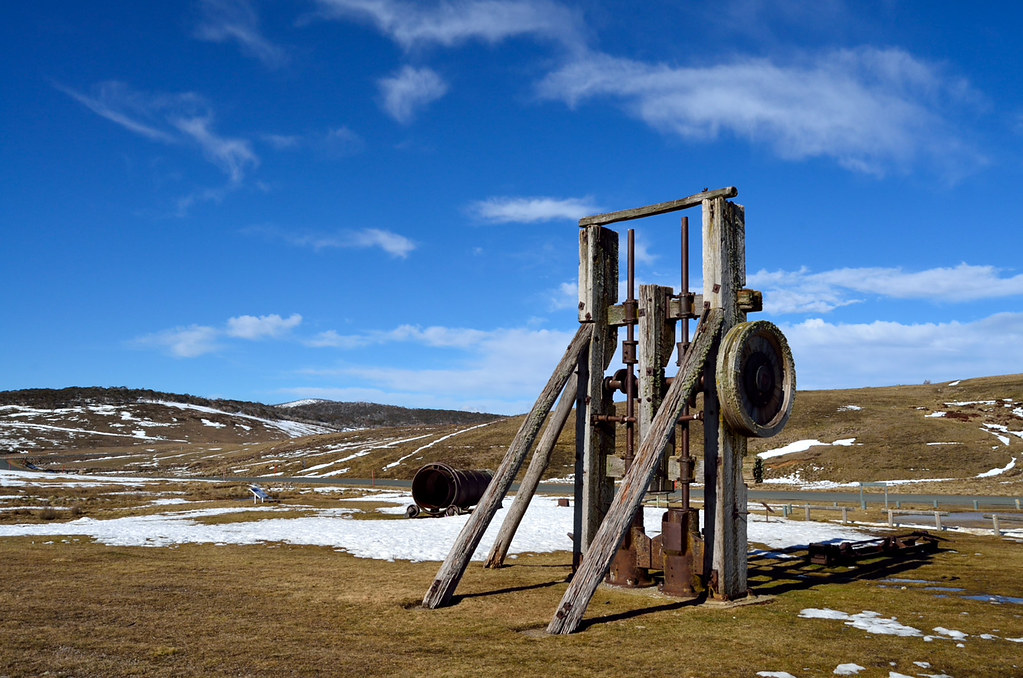
New Chum Hill Ruins

Remnants of Kiandra gold mine at New Chum Hill, #nsw #australia

Showing posts with label Election. Show all posts

January 09, 2015

A New Era Begins for Sri Lanka After President Mahinda Rajapaksa Concedes Defeat

Supporters of Sri Lanka's main opposition presidential candidate Maithripala Sirisena burst firecrackers at the end of voting in the presidential election in Colombo. Image by Chamila Karunarathne. Copyright Demotix (8/1/2015)
On Friday morning, Sri Lankans woke up to news that was unthinkable only a few weeks ago -- President Mahinda Rajapaksa, who took office on 19 November 2005, conceded defeat to 63-year-old former Health Minister Maithripala Sirisena, the presidential candidate of the main opposition United National Party.

The day before, Sri Lankan voters had cast their ballot in the 7th presidential election in a closely contested presidential election, with incumbent Mahinda Rajapaksa seeking a record third term in office. The election was largely peaceful and turnout was more than 70 per cent in most districts.

Rajapaksa tweeted on 9 January, after it was clear he had lost the vote:
The early results showed that Rajapaksa remained popular among the country's Sinhala Buddhist population, who account for around 70 per cent of the island country's 21 million people. Sirisena was favoured by the ethnic Tamil-dominated former war zone in the north of the country and in Muslim-dominated areas, who went out in large numbers to vote for him.

A screenshot from news portal Adaderana.lk shows the numbers (final results):

Screenshot from Adaderana.lk
Rajapaksa oversaw the end of a bloody civil war in 2009 that had raged for 26 years between government forces and a militant organisation seeking an independent Tamil state. He was reelected in 2010 by a landslide, and afterward successfully amended the constitution to concentrate political power in the presidency and remove term limits on the office. While in power, he has faced accusations of abuse of power, nepotism and human rights violations committed during the final stages of the civil war.

Blogger Indrajit Samarajiva, often a critic of the Rajapaksa government, paid tribute to his legacy:
Mahinda Rajapaksa has shown me things I never thought possible. He ended a war that I thought would never end. He rebuilt Colombo and showed us physical development I never dreamed of. For all of his faults, he has won me over as a citizen. I think he has been a good President, in my opinion Sri Lanka’s best, especially because he is the first President to lose an election and gracefully leave.

I have always been reluctant to call Mahinda a dictator because I never thought he was. As much as he messed with Parliament, with the Judiciary, he was always close with the people and he rose and fell by the vote. He was elected to power, he marshalled popular support to win the war and, in the end, he was brave enough to face election for a third time. Most importantly, and something we’ve never seen from an incumbent, he was brave enough to gracefully lose.

He has truly been a great leader and, though I voted for his opponent, I think he deserves something Sri Lanka hasn’t really afforded its leaders. A comfortable, honored and secure position as the respected and beloved ex-President of Sri Lanka.
Some commenters disagreed with Samarajiva's view on Rajapaksa time as president, such as Reshan Auston:
While we carry the respect for Mahinda for winning the war, I have no respect for him for looting the country. As a leader he failed the country. He had all the opportunity to be the Nelson Mandela of Sri Lanka but instead he decided to be Sadam Hussain. He looted the country with his brothers while his sons enjoyed the life using poor tax payers money. We couldn’t get our day to day activities done at government offices without political influences. Is this the leader we care about?

As a president he failed after finishing the war. I don’t harbour any remorse for his loss. He deserved what he got. I don’t wanna shed crocodile tear.
Sri Lankan polling officers carrie ballot boxes into a counting center after close of polling for the presidential election in Colombo. Image by Chamila Karunarathne. Copyright Demotix (8/1/2015)
Sri Lankan polling officers carry ballot boxes into a counting center after the close of polling for the presidential election in Colombo. Image by Chamila Karunarathne. Copyright Demotix (8/1/2015)
Dilrukshi Handunnetti wrote on citizen journalism website Groundviews on why Sri Lankans sought a change:
It is not as if Maithripala Sirisena, a simple villager who has risen within the SLFP ranks to reach top positions, holds the island enthralled. Instead, what he represents in terms of ideas and promises, matter to a large majority of the people who have silently observed an elected president turn increasingly authoritarian and triumphalist. [..]

There may be others who feel that while road and rail connectivity was being achieved, the incumbency has severed connectivity among the island’s communities that lived in harmony for decades, causing serious divisions on ethno-religious lines.

It is that negative difference that has fuelled an electorate’s call for a political change, perhaps at great risk, still with the hope that a new administration may have the political maturity to tolerate dissent and celebrate a plural Sri Lankan identity.
The social media scene was full of buzz:
Sri Lanka's free and fair elections were congratulated by many:
And here is what Sri Lankans are hoping for the future:
The post was also published in Global Voices Online.

January 08, 2015

Your Guide to Sri Lanka's 2015 Presidential Election

Sri Lankan election commission workers carry ballot boxes while escorted by police on the eve of presidential elections in Colombo. Image by Chamila KarunaRathne. Copyright Demotix (7/1/2015)
Sri Lankans are going to the polls on Thursday, January 8, in one of the most closely contested, significant presidential elections in the nation's history.

Every six years, Sri Lanka elects a new president and legislature. The parliament has 225 members, elected to six-year terms. It is a multi-party system, dominated by two political groups. There are 15 million eligible voters in Sri Lanka and over 12,000 polling stations have been set for elections. Voter turnout in the previous election was around 75 percent.

In the 2010 presidential election, Mahinda Rajapaksa of United Peoples Freedom Alliance (UPFA) won with 58 percent of the vote. Shortly after being elected, Rajapaksa successfully amended the constitution to concentrate political power in the presidency, and remove term limits on the office. This time, Rajapaksa has preponed the elections, holding them two years ahead of schedule. Rajapaksa, the region's longest-serving leader, will try for a third term, amidst criticisms that he abuses his authority and seeks a dynasty.
The actors

Rajapaksa has the backing of a number of small constituent parties of the UPFA, including the Ceylon Workers' Congress, and Communist Party. He has the support of the Buddhist extremist group Bodu Bala Sena. Rajapaksa's platform, titled "Mahinda's Vision—The World Winning Path", pledges to introduce an entirely new constitution within a year.

Supporters of Sri Lankan President Mahinda Rajapaksa cheer during an election campaign rally in Palmadulla, Sri Lanka. Image by Chamila Karunarathne. Copyright Demotix (3/1/2015)
Rajapakse has actively campaigned alongside celebrities like sporting Bollywood megastar Salman Khan, creating no small amount of buzz. Touring the former war zone in the country's North, Khan urged minority Tamils to back Rajapakse in the election, calling him the "known devil".

Rajapakse's chief opponent and former health minister, Maithripala Sirisena, is a surprise pick by the United National Party, the main opposition party, which is backed by twelve smaller parties. The remaining seventeen candidates are independents or belong to minor political parties.  UNP only revealed Sirisena's nomination on November 21, 2014, after the election was announced.

Sirisena released his platform, titled "A Compassionate Maithri Governance—A Stable Country", which pledged to abolish the country's presidential government within 100 days of being elected. Under a new parliamentary system, Sirisena says he would appoint UNP leader Ranil Wickremasinghe as prime minister.
Sirisena has launched a campaign attacking Rajapaksa where he is weakest: the President's apparent nepotism. During Rajapaksa's presidency, his three brothers and his son have all risen to positions of considerable influence in the national government.

Maithripala Sirisena, it's worth noting, took a great risk when he left the Rajapaksa Administratiojn. Indeed, the Asian Human Rights Commission recently expressed concern about his personal safety, noting that he's suffered several attempted attacks over the past several days.

Sri Lanka's main opposition presidential candidate Maithripala Sirisena reads a newspaper during a campaign rally for the upcoming presidential elections in Colombo. Image by Chamila Karunarathne. Copyright Demotix (31/12/2014)
Use of social media

#IVotedSL is a trilingual campaign launched by Centre for Monitoring Election Violence (CMEV) to encourage citizens to exercise their voting rights.

Image courtesy CMEV. Copyright Free.
The campaign calls on voters to take a public pledge that they will exercise their right to vote on January 8th. An individual can signify this pledge by changing their profile/account picture and cover/banner page on Facebook, Twitter, Google+ or any other social media platform. On election day those who take the pledge can share through social media a picture of the fifth digit (little finger) of their left hand which is marked with indelible ink using the hashtag #IVotedSL.
President Rajapaksa's quite active Twitter account has 92,600 followers. According to an analysis by Groundviews, however, large numbers of these subscribers and admirers might be less than organic.

According to blogger Indi Samarajiwa:
The dominant hashtag for this election is, by far, #PresPollSL (best source for news, in my opinion). CMEV recommends #IVotedSL for voting related stuff.
Samarajiwa also analyses the Facebook engagement of both the campaigns. He concludes that Sirisena's readers seem to engage far more with the campaign's content, despite the fact that Rajapakse has almost twice as many followers.
Irregularities and violence

Supporters of Sri Lanka's ruling party have faced accusations of violating election laws during campaign. The Centre for Monitoring Election Violence (CMEV) identifies an "unparalleled misuse [by the ruling party] of state resources and media". According to Human Rights Watch, local monitoring groups have reported numerous acts of election-related violence and intimidation during the month-long campaign.
Resources
According to the latest opinion survey by the Centre of Policy Analysis (CPA), 86.9 percent of Sri Lankans think their vote can make a difference in the outcome of the presidential election. Let's hope everyone can exercise their voting rights peacefully!

The post was also published in Global Voices Online.

April 29, 2014

Bangladeshis Are Not Happy With India's Bharatya Janata Party

Subramanian Swamy speaks in Mangalore, India on Dec. 17, 2013.
Subramanian Swamy speaks in Mangalore, India on 17/12/13
The world's biggest elections are underway in India, and so far elections have been completed in 21 out of 28 states. As voting nears its end, the competing political parties are trying to lure voters with lucrative and populist promises they say they will implement if they are elected.

Subramanian Swamy, a leading figure of the conservative Bharatya Janata Party (BJP) whose prime minister candidate is Narendra Modi, caused much outrage in neighboring Bangladesh when he mentioned in an election rally in Assam that Bangladesh should compensate India for its undocumented migrants there by giving the country one-third of its land.

He also claimed that since the independence of Bangladesh from Pakistan in 1971, one-third of Bangladesh's Muslim population migrated to India. According to him, Bangladesh should take them back or hand over one-third of the land to India.

There are no reliable figures for how many Bangladeshi immigrants are in India, but a significant number of Bangladeshis do migrate to India to reunite with family members, for job opportunities, to escape environmental crises and other reasons. The wave of people in the past decade has prompted India to step up security along its border with Bangladesh, including the installation of barbed-wire fences.

Bangladeshi newspapers first picked up Swamy's remarks from Assam's Bengali daily Samayik Prasanga on 19 April. Along with Nepal, Bhutan, Pakistan and China, the country's political analysts are closely following the election as international relations will be shaped by the policies of the parties that win.

Angry reactions soon followed. User Veja Beral on forum projanmo.com commented:

BJP is an anti-Bangladeshi party. If it comes to power, it will mean trouble for Bangladesh. The [long] pending issues like the Teesta water-sharing contract and border disputes will remain unresolved and all implemented treaties will be stopped by the Modi government.
The user also wrote:
There are a number of undocumented Bangladeshis in India that everybody knows. But the astronomical figure of 50 million (which is BJP's claim) is illogical and untrue. Maybe BJP is purposefully campaigning the figure 50 million instead of 500,000.
Shamim Sujaet opined on the blog Shobdoneer:
As if Bangladesh is a plaything. You can shape it however you like.
Meanwhile, Bangladeshi hacker group "Bangladesh Cyber 71" allegedly hacked more than 300 of the Indian government's websites in protest of Swamy's comments. The admin of the group told BanglaNews24.com that they will continue the attacks until BJP withdraws the statement.

Screenshot of a website hacked by "Bangladesh Cyber 71" in protest of comments made by Indian Subramanian Swamy of Bharatya Janata Party.
Screenshot of a website hacked by "Bangladesh Cyber 71"
In retaliation, the official website of the Bangladesh Cabinet Division was apparently hacked by an Indian hacking group.

Narendra Modi, the prime minister candidate from BJP, doubled down on the comments during a rally in West Bengal:
You can write it down. After May 16, these Bangladeshis better be prepared with their bags packed.
Undocumented Bangladeshi immigrants have been a part of the BJP's agenda, which claims that they are being used as a vote bank for the ruling Indian National Congress party. But Modi's comments indicate that this could be a political weapon they would use against their neighbor if the party comes to power.

This isn't a case of one-way migration, however. India would stand to lose its fifth largest source of remittance if relations were to sour. Around half a million Indians work in Bangladesh, and they remitted 3.716 million US dollars to India last year.

This post was written in collaboration with Abdul Aleem Khan

January 05, 2009

Debunking the myth of vote rigging

“It’s unbelievable that nearly 90 percent votes were cast in Monday’s polls, and that means a voter needed only 55 seconds to cast ballot.” - BNP office secretary Rizvi Ahmed

Shada Kalo debunks the myth:
The calculations are correct, but the data is wrong, because one polling center does not equate to only one polling booth. According to the Election Commission, there were 177107 polling booths, and that changes the calculation to:

Average votes cast per polling booth = 70 million / 177101 = 395 votes. Time to cast each vote = (480 x 60) / 395 = 72 seconds.

72 seconds is much better than 14 seconds or 55 seconds per vote, right?

Let’s take a look at the 2001 election. According to the Election Commission there were 56185707 votes cast in 149288 polling booths (29,978 polling stations). Using the same calculations:

Average votes cast per polling booth = 56185707 / 149288 = 376 votes. Time to cast each vote = (480 x 60) / 376 = 76 seconds

4 seconds per vote less time required in 2008 compared to 2001 may seem like it is significant. But consider this: in 2001, a voter would have to go to the polling officer, and give his name and father’s name. Then his record would be pulled up from a printed list, his address and age would be asked and his answers would be verified, then he would be handed a ballot paper and seal.

This time, a voter went to vote with a laminated ID card with an unique serial number. This number would be compared against the printed list. This is much faster than looking up by name, even manually, and there is no scope for confusion between Abdul Alim, son of Abdul Halim and Adbul Alim, son of Azizul Alim, etc.

Then the voter’s photo and other biographical data would be compared on the voter list and photo ID, and he would be handed a ballot.

The saving in time for using the photo ID would easily exceed 4 seconds per voter when compared with the time required in 2001 to verify the identity of each voter.

Our conclusion: a 2008 voter had more time available to cast the vote than a voter in 2001. So people looking for a conspiracy using fuzzy math should look at the 2001 vote first.

December 29, 2008

Latest Results Of Bangladesh Election 2008


Its a landslide victory for Awami League and the grand alliance.

Here are the party wise details.

Here is a nicely done detailed interactive map with updated results.

Image courtesy The New Age.

Liveblogging Bangladesh Elections results

The vote ended a couple of hours ago. The results have started coming in. Still early to call anything.


* BDT 7:09PM Nayadiganta is updating Districtwise results

* BDT 7:11PM The Daily Star has nice layout for the results. Still the figures are nil.

* BDT 7:12PM Unheard Voice is also live blogging.

* BDT 7:15PM Rizvi Ahmed of BNP gives press conference says the media is showing bias in reporting news of “intimidation” by BNP members. The money that has been found with various agents is for “the entertainment exp on the election day”.

Is not there a limitation of election expense rule? 41 lakhs as “entertainment” for how many people?

And Sarees for what treat? Am not convinced..

* BDT 7:36PM Some snippets from Districts:

Dhaka-8: Total Vote Centers-102, Results-01
Habibul Sohel (Dhaner Shish) : 614
Rashed Khan Menon (Nouka) : 881

Panchagar -2: Total Vote Centers-103, Results-21
Mozahar Hossain (Dhaner Shish) : 10259
Nurul Islam Shujan (Nouka) : 1381


Bandarban: Total Vote Centers-162, Results-05
Saching Pru (Dhaner Shish) : 419
Bir Bahadur (Nouka) : 1197

* BDT 8:10PM from Asif: Salahuddin Quader Chowdhury, an accused war criminal, has lost by 13000 votes in one of his seats.

Unconfirmed reports say AL/Grand alliance is leading in 200+ seats (out of 300) and Matiur Rahman Nizami, the Jamaat-e-Islami Amir is losing. Moulana Sobhan from Jamaat is also losing.

* BDT 8:28 From BDNews24.com:

Early results: AL ahead
Three hours into vote counting in Bangladesh's ninth parliamentary polls on Monday evening, early results from dozens of polling stations around the country showed Awami League and their allies to be ahead of their rivals.


* BDT 8:41 ATN TV: Sheikh Hasina - officially declared (99 of 101 centers) as winner in Gopalganj -3

* BDT 10:42 I was apalled by the poor aggregation of the media to present a simple graphic, which party are leading by numbers. So I worked on a google doc from the media info and came up with this:


Will be upldated regularly.

More at E-Bangladesh:

30 December 2008

* BDT 04:05AM Here is the latest results. Click on the image for details:


Latest Results Of Bangladesh Election 2008

Please refresh the post for the latest.

Rural Voices


By Unnayan TV

The video was randomly recorded in two villages “Mujatati” and “Kabarikanda” of Mymensingh districts from 12-15 December 2008. The rural interviewers expressed their real feeling with instant opinion; could be called “Public Demand on Election 2008 of Bangladesh”. These rural voices portray the majority voices and vision of election, democracy, reality and future political leadership in Bangladesh.

The video was captured by Siraj and J.Alam of Machizo with association of Shujan, Sanjit and Munam Master; however with the production concept and planning of AsifSalah@Drishtipat and Shahjahan Siraj@Machizo.

Bangladesh: Microblogging an election

In a few hours time 81 million Bangladeshi voters (51% women) will go to vote for the ninth parliamentary election. The election is crucial for the nation as it will bring the country back into the track of democracy after two years of emergency rule of an interim government backed by armed forces.

We have discussed earlier about the use of internet in the campaign and activism for an informed vote. Now we have got another interesting development.

Somewherein, a software company and the pioneer of the first bangla blog community in the world has introduced a twitter like web based micro blogging community where message can be sent via web and mobile phones (sms) for dissemination of news of the election by the netizens. The messages can also be sent directly to an interactive map where location based information can be found.
swi

Arild Klokkerhaug, the Head of Opportunities of Somewherein has this to say to the candidates of the election:
dear candidates for the 2008 bangladesh parliamentary election:

in case you are not aware, here is a small note to tell you that an election and holding power through a seat in the parliament, is no longer business as usual. tomorrow, any update from any blogger has the potential to reach the whole world.

this time, for the first time in your political history, bloggers are watching you. not only a few techie intellectuals. we are at least 30 000 bangla bloggers watching you. we blog through multiple blog communities and our writings are being read in nearly every country of the world.

we will support your efforts to build a strong and proud nation and share the good news with the world. however, we will also hold you accountable and report any misstep. blogs will never forget, bloggers will never be silenced, internet knows no borders. therefore, lets get it right this time, dear candidates. lets get it right.

Awaaj

The tools bloggers will be using:
bloggers share quick news to the election microblog
- just login and type from web or sms to 5455: ! your message

bloggers can sms directly to an interactive map
- send sms to 5455: ! your message @location regarding their district

bloggers can analyse and share political stories on the election blog

bloggers can share the latest microblogs through nearly any blog

SWI-New Age

Live coverages, streaming videos and webcasts of the election results can be found in these sites:


Another Bangla Blogging platform sachalayatan is providing a widget which will be updating the latest information on the election (in Bangla) and which can be placed in the side bar of any blog.

First published in Global Voices Online

Banngladesh Goes into Poll

(Image credit: The Daily Star)

in a few hours Bangladeshis will decide their future by voting in the ninth parliamentary election. Stay tuned for all the coverage in E-Bangladesh, The New Age, Somewhere in, Amar Blog, BDNEWS24.com etc.

December 26, 2008

14 War Criminals contending in Bangladesh Election


Please do not vote for them.

Via Dark Ocean Needs A Lighthouse.

December 24, 2008

Election Express


The Asia Foundation is covering Bangladesh Election:

Bangladesh just lifted its long-standing emergency rule, giving candidates freedom to campaign for the Dec. 29 parliamentary elections. Home to 150 million people, Bangladesh has been a parliamentary democracy since 1991, when a pro-democracy movement ended the country's latest military regime. The Asia Foundation is partnering with the Election Working Group (EWG) on election observation, voter education, and electoral reform advocacy. EWG will deploy 178,000 domestic observers across Bangladesh to help ensure free and fair elections.

We're also working closely with renowned Bangladeshi journalist Ashraf Kaiser. Watch the resulting film Election Season '08: Bangladesh.

December 23, 2008

Bangladesh Election 2008 And Cyber Activism

Bangladesh goes into poll on December 29, 2008 for a much awaited parliamentary election. The scenario is lot different than the recent US presidential election where citizen media and Internet campaigning and fund raising were extensively used. With a penetration of 1% of the total population of 145 million, Internet is still not a media that reaches mass people. The new generation of bloggers and facebook users are trying to harness the power of the new media. Bangla Blogging platforms like Somewhere In, Sachalayatan, Amar Blog, Muktangan are buzzing with election related posts - from constructive debates to mundane bickering of acrimony between political ideologies. But how can they affect the politics as the decision makers such as the bureaucrats and the politicians mostly keep themselves away from the digital media and Internet and are not connected to the conversation. The traditional media still dictate in Bangladesh and many are losing the trust of common people for biased reporting. The websites of the political parties are not interactive. Only a few out of thousands of candidates were seen using Internet in their campaign.

Bangladesh politics is traditional, rhetoric and propaganda based and there is little scope for interaction with the leaders asking for accountability. The grass root activists and the general people have little to say in the decision making processes. However Jagoree, a non-partisan platform for Bangladeshi youth, is using facebook and blog to to engage in the political and policy making processes by developing themselves as informed and responsible citizens.

What are we?

What are we? Image courtesy: Jagoree.

Jagoree is currently running a campaign called 'Amader Vote, Amader Kotha' (Our Vote, Our Voices). Learn more about the campaign from their facebook page.

Planning and mobilizing processes of Jagoree. Image courtesy Jagoree

The notable success of Jagoree in recent days was the making of a documentary and publishing it in YouTube for wider audience [bn]:


The aim of this 5 minutes 44 second documentary is to inspire Bangladeshis to cast an informed vote in the coming election. It shows the frustration with the current politics and at the same time frames the hope of the young Bangladeshis that a change will come.

This time around much information on the candidates and the election are available on the Internet. What the Bangladeshis need is to look for the facts and be informed for making the right decision regarding whom to vote.

SHUJAN, a non-profit organization in Bangladesh dedicated to good governance, has an award winning site [bn] which provides much background information on the candidates. The site has different sections like general information on election, constituency wise copmarative information of the candidates and much more. SHUJAN has also something unique to offer. They have an archive of over 4000 entries of news of Corruption of politicians (browseable by name) of whom many are contesting in the 2008 election.

Bangladesh Election commission has also detailed information including voter list and the candidate profiles in pdf format (to be downloaded and distributed) and guidelines for observers.

E-Bangladesh is providing links to all the important news regarding Bangladesh election and posting analysis and breaking news from citizen journalists in their constant coverage of Election 2008 (in English). The site also posts links to resources for the election including candidate lists and election manifestos of the parties. Its sister initiative, the Bangla Blogging platform Amar Blog has started its election coverage in Bangla language which is providing news and citizen journalists' views on the election.

The popular English language group blog Unheard Voice is also providing analysis and commentaries on the recent election.

Bangladesh Votes The largest Bangla blogging platform somwhereinblog.net has started a group blog on Bangladesh election in collaboration with the English language news paper The New Age. The news daily has recently started an election portal which will feature selected blog posts from the group blog and news/analysis from its daily newspaper publications. This is the first instance in the country where a major print media is collaborating with a blog platform outside its management. The portal will provide live results of the election. It has an user-friendly interactive map plotting the previous results.

Quite against the tide of the digital divide among the candidates, blogger and journalist Maskwaith Ahsan, who is running as a MP candidate in the Rajshahi -6 constituency, has started using facebook to run his campaign.

It remains to be seen how Bangladeshis use citizen media like blog, videos (e.g. YouTube), photographs (e.g. Flickr), twitter etc. during the election.

(First published in Global Voices Online)

December 20, 2008

Clean Voter List, Clean Polls

The Bangladesh general election on December 29, 2008 will be remarkable in many ways. First of all the national ID card project with biometric data hindered the inclusion of false voters which was a regular affair in previous elections. See the comparative voter lists since the birth of Bangladesh:


What is remarkable is that for the first time we have more women voters (51%) than the previous lists. Another thing to note is that from 1996 to 2001 there was an increase of voters by 32.24%. Now there may be two reasons for that in 1996 less eligible voters were counted (exclusion of minority voters) and in 2001 some false voter were included.

This time around the growth is only 8% in 7 years. This has surely stripped away all those anomalies in the voters list, hopefully. There are also 33% young voters who will vote for the first time.

Another interesting aspect is the money part of this election. This time the election commission has restricted spending by candidates (Taka per voter 5 and 1.5 million Taka per constituency), banning vote buying or influence peddling and outlawing cash giveaways.

A recent AFP article looks at the impacts:
An election in Bangladesh is usually a chance for an ordinary voter to make a quick buck, enjoy a free meal and perhaps even grab a souvenir t-shirt at a campaign rally.

This year things are different.

"No-one is offering us money or anything else this time," said Abdul Jalil, a rickshaw puller in the capital, Dhaka. "Previously, we would get cash or other gifts during elections."
Now it will be interesting to see what a clean voter list and reducing the vote purchase phenomena can bring to the results of the election.

December 18, 2008

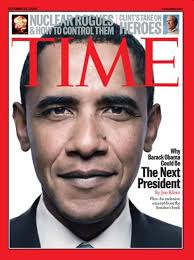
TIME person of the year Barack Obama

Time magazine named US president-elect Barack Obama its 2008 "Person of the Year.

I think this is one selection everybody around the world will agree. There was a survey once which showed if the world could vote, Obama would win over McCain in a landslide. So no surprises here.

David Von Drehle writes:
It's unlikely that you were surprised to see Obama's face on the cover. He has come to dominate the public sphere so completely that it beggars belief to recall that half the people in America had never heard of him two years ago — that even his campaign manager, at the outset, wasn't sure Obama had what it would take to win the election. He hit the American scene like a thunderclap, upended our politics, shattered decades of conventional wisdom and overcame centuries of the social pecking order. Understandably, you may be thinking Obama is on the cover for these big and flashy reasons: for ushering the country across a momentous symbolic line, for infusing our democracy with a new intensity of participation, for showing the world and ourselves that our most cherished myth — the one about boundless opportunity — has plenty of juice left in it.

December 12, 2008

Awami League Election Manifesto

Awami League unveiled today their election manifesto which looks promising. You can download the manifesto from here.

The salient features of the election promises include:

* Measures will be taken to reduce the unbearable burden of price hike and keep it in tune with the purchasing power of the people.
* Necessary steps would be taken for investment promotion, energy security, retaining and enhancing domestic demand, safeguarding value of money, assisting exports and continuing export of manpower.
* Strong measures will be taken against those having unearned and black money, against loan defaulters, tender manipulators, and users of muscle power in every stage of state and society.
* By 2011 electricity production will be increased to 5000 megawatt and by 2013 it will be further increased to 7000 megawatt.
* By 2013 poverty level and proportion of ultra-poor will be brought down to 25% and 15% respectively. At present there are 65 million poor people in the country. This number will be reduced to 45 million by 2013 and will further come down to 22 million in 2021.
* The number of unemployed people in the country, estimated at 28 million, will be reduced to 24 million by 2013 and will be further reduced to 15 million by 2021.
* Terrorism and religious extremism will be controlled with iron hand. Trial of war criminals will be arranged.
* The judgment of the Bangabandhu murder case will be made effective and the retrial of jail killings will be held. Trial of real criminals responsible for the grenade attack of the 21st August, 2004 through proper investigation will be arranged.
* Wealth statement and source of income of the Prime Minister, members of cabinet, Parliament members and of their family members will be made public every year.
* Parliament members will be allowed to express differing opinions.
* Use of religion and communalism in politics will be banned. Security and rights of religious and ethnic minorities will be ensured. Courtesy and tolerance will be inculcated in the political culture of the country. Militancy and extortion will be banned.
* Opportunities will be created for the expatriate Bangladeshis to take part in national reconstruction and their right to franchise will be ensured.
* Administration will be free from politicization and will be pro-people. Efficiency, seniority and merit will be the basis of appointment and promotion in public service. Administrative reform, right to information and e-governance will be introduced.
* Investigation and trial of assassination of all journalists will be made expeditiously and the real criminals will be given exemplary punishment. Persecution and intimidation of journalists will be stopped. All false cases against them will be withdrawn.
* Terrorism, discriminatory treatment and human rights violations against religious and ethnic minorities and indigenous people must come to an end permanently. Security of their life, wealth and honor will be guaranteed.
* In order to provide security to every citizen of the country, police and other law and order enforcing agencies will be kept above political influence. These forces will be modernized to meet the demands of the time. Necessary steps will be taken to increase their remuneration and other welfare facilities including accommodation.
* Ensure "food for all" by taking all possible measures and to make Bangladesh self-sufficient in food by 2013.
* Development of IT industry, strengthening of RMG and textile sectors and expansion of food processing, pharmaceuticals, leather, chemical products, toys, jewelry and furniture industries will be given priority. Special initiative will be taken for alternative use of jute and to make jute industry viable.
* Special steps will be taken to facilitate education, employment, movement and communication of the disabled and to enhance their social dignity.
* Child labor will be gradually abolished in all sectors.
* The arsenic problem will be tackled and measures will be taken to supply pure drinking water for all by 2011 and to provide sanitation facility in every house by 2013.
* Net enrollment at primary level will be increased to 100% by 2011 and by 2017 the country will be rid of the curse of illiteracy. Improvement in the quality of education, depoliticisation of educational institutions, and ensuring a higher salary scale for teachers will be ensured.
* IT education will be made compulsory at secondary level by 2013 and at primary level by 2021. The vision is to make Bangladesh digital in 2021.
* A South Asian Task Force will be formed for meeting the challenge of terrorism and militancy.

The proposed milestones are:

2010: 100 percent net student enrolment at primary level.
2011: Supply of pure drinking water for the entire population.
2012: Self-sufficiency in food.
2013: Each house brought under hygienic sanitation.
2013: Attain 8 percent annual growth rate; this will be increased to 10 percent in 2017 and sustained.

This looks like a solid vision. However even if Awami league wins the election these will be hard to implement without a proper democratic environment. Let us see what other parties have as its election manifesto under its belt. BNP is yet to unveil its election manifesto.

Photo: Mustafiz Mamun courtesy BDNEws24.com

November 24, 2008

Bangladesh Election: The field gets heated up

After the deferral of polls to December 29, 2008 the Election commission of Bangladesh has met one of the demands of BNP and they are hoping that this will pave way for the all inclusive election. The BNP hailed the decision but is still hoping that their three demands including repealing the Section 91E of the Representation of the People Ordinance 2008 will be met. So there is still an element of doubt till the final submission of nomination, that is November 30, 2008.

Amidst all that we have seen the usual hate politics has started. The country is visibly divided in two major issues, the pro-Awami league front and the Anti Awami League front. The pro-Awami League front will bring issues like Razakar, war criminal and religious extremism. The Anti-Awami League forces will do anything in the world to oppose Awami League. Their favorite issue is to say that Awami League will again install the one party Bakshal system. And of course Awami League will sell the country to India for the umpteenth time.

Now conspiracy theories are flying all over and across. Hasina fears that the upcoming election might be engineered in BNP's way whereas the pro-BNP voices are fearing that this interim government setup will ensure Awami League's victory.

The latest rumor is that there might be an assassination attempt by the religious extremists on either Hasina or Khaleda by the religious extremists just like Benazir Bhutto's assassination.

I think all of these people should come to their senses and the parties should pitch their best candidates, good agenda and run a proper election campaign.

And the general people need to use their logic not their emotions while voting for a candidate. We need to break the shackle of confrontational politics.

November 20, 2008

Election at last!

We have got some conflicting reports coming from Bangladesh. The government declared that the election will be on schedule i.e. December 18th after its frantic two-day negotiations with BNP-led 4-party alliance failed.

The government proposals the BNP could not agree with:
"Deferment of the parliamentary election by ten days to December 28, total lifting of the emergency at an appropriate time before the election taking into consideration the law and order situation, holding upazila elections on January 8, 2009, and implementing clause 91(e) of the amended Representation of the People Order (RPO) with utmost caution and accountability."
However Khaleda Zia announced today in a televised briefing after back-to-back meetings of her party and allies:
We will certainly participate in the [parliamentary] elections if it is held on December 28, but the government must implement our three other demands.
The three demands are – a complete withdrawal of the state of emergency on the last date of withdrawal of nomination papers for parliamentary elections, revocation of the Article 91(E) of the Representation of People Order that gives the Election Commission ‘despotic’ power to cancel candidature at any level of elections, and deferment of the upazila polls by one month from the date of ballot in the parliamentary elections.

So it shows that they want to contest in the election but are still in a bargaining mode. Probably they are still maintaining their farcical Hajj pilgrim vote argument as the reason to defer the election date by ten days.

The good side of today's developments is that we will have election with the participation of all parties and the bad side is the country cannot afford to be held ransom by these political games of certain political parties when everyone else is agreeing to the election at December 18.

November 14, 2008

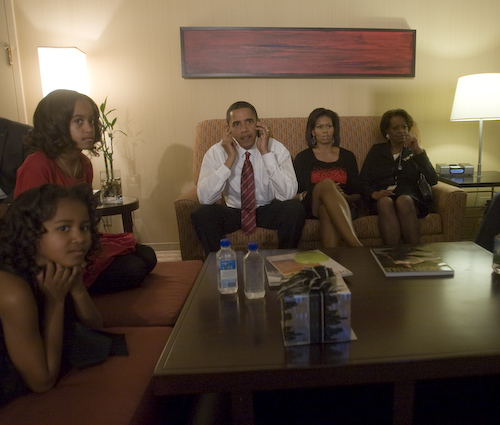
Barack Obama's Flickr Photostream

Image by Flickr user Barack Obama used under a Creative Commons License (BY-NC-SA)

US President elect Barack Obama anxiously waiting for the results on November 4, 2008.

(Via Joi Ito)

November 10, 2008

Video of the day


Watch for the background music of Palbasha Siddique at the end.

November 06, 2008

Obama, hopes and reactions

US president elect Barack Obama received a clear mandate from USA and with the support of the world became the first Democrat to win a majority of the popular vote since 1976. Here are some of the interesting reactions found around the web:

A reader writes in Andrew Sullivan's The Daily Dish:
Everything in my life is exactly the same as it was 30 minutes ago; and yet I feel as though everything is different.

I know Obama isn't going to fix the economy overnight, I know he won't be able to provide healthcare to all Americans by February '09. I know Obama isn't a Messiah who four years from now will have turned this country into a fabled utopia. But I also know Obama will make moral decisions. I know Obama will try to unite where others try to divide. I know Obama will help to make America the beacon of hope it once was to others. I know that at 27 years of age, I witnessed one of the most important and hopefully glorious chapters in American history.

I know hope.
A Bangladeshi-American writes:
Tears surged in my eyes as I left the polling place. This change is not the product of a brilliant fundraiser's fancy marketing campaign, but a very real transformation among people as they have moved through space & time and shared experiences with each other. If a black man with the middle named Hussein can become President of the United States of America, anything is possible.
Tigerhawk, a republican blog comments:
Forty years after Martin Luthor King gave voice to his dream, American voters have, by the many millions, judged a black man by the content of his character. I worry they are wrong on the substance and will argue like hell against his philosophy and policies, but I can also be happy that it happened and hope that Barack Obama governs as well as he campaigns.
Michael Moor writes in AlterNet:
Who among us is not at a loss for words? Tears pour out. Tears of joy. Tears of relief. A stunning, whopping landslide of hope in a time of deep despair.

In a nation that was founded on genocide and then built on the backs of slaves, it was an unexpected moment, shocking in its simplicity: Barack Obama, a good man, a black man, said he would bring change to Washington, and the majority of the country liked that idea. The racists were present throughout the campaign and in the voting booth. But they are no longer the majority, and we will see their flame of hate fizzle out in our lifetime.
The racists may not be a majority but their bites can still be felt.

Robert Spencer writes in Human Events that "Americans should be made decidedly uneasy by this Muslim enthusiasm for the new President." I guess in his eyes there are Muslims only. The KKK aren't too happy about the election of Barack Obama as President of the United States. We hope that they will not be a majority again.

German news media 'Der Spiegel' termed it 'the resurrection of the American dream'.

Related Links: