






Dragonfly
Image by Rezwan


The World Cup Goal-E Project
This street in Bangladesh has a colorful world cup celebration
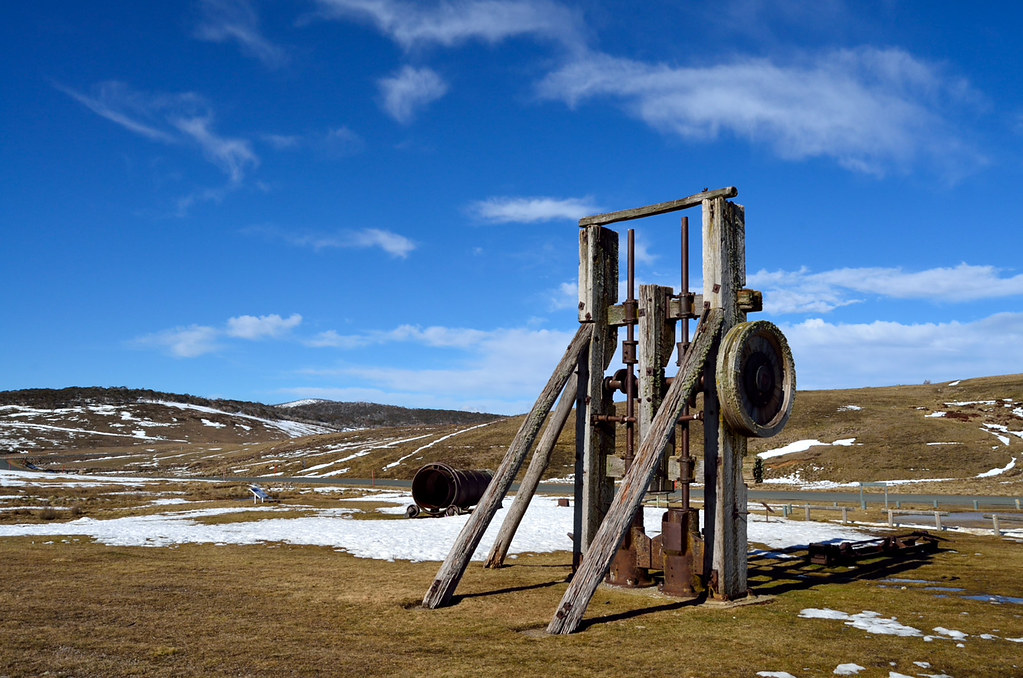
New Chum Hill Ruins
Remnants of Kiandra gold mine at New Chum Hill, #nsw #australia
February 13, 2008
February 12, 2008
Intolerance leads to idolatry
The Jyllands-Posten Muhammad cartoons controversy lingers on. From Yahoo News:
Another interesting development is in Wikipedia regarding the article on Prophet Muhammad. Some quarters are fighting to take down the The earliest surviving depiction (1315) of Muhammad from Rashid al-Din's Jami al-Tawarikh ('Compendium of Chronicles' or Universal History), an Iranian work of art.
Read an interview with the Jyllands-Posten editor who vows not to fear for his life.
"Danish authorities on Tuesday arrested three people suspected of plotting a cartoonist's assassination for his depiction of the Prophet Muhammad (PBUH) wearing a bomb-shaped turban that enraged Muslims two years ago.Islamic law generally opposes any depiction of the prophet for fear it could lead to idolatry. But throughout the ages there were so many depictions of the prophet as historical pieces of art and those did not raise controversies. But today's fanatics would like to bring this up for their own zealots. And their actions prove that they are making mountain out of a mole and embracing the sin of 'idolatry' in respect to Prophet Muhammad. They are worshiping Muhammad (PBUH) like some sort of an idol. Their "kill those who insult Islam" attitude is not only nonreligious but also harming the true image of Islam.
Three of Denmark's largest newspapers said they would reprint the cartoon on Wednesday to show they would not be intimidated by fanatics. It was one of 12 Muhammad cartoons published in 2005 and then again in 2006 that led to protests in Muslim countries."
Another interesting development is in Wikipedia regarding the article on Prophet Muhammad. Some quarters are fighting to take down the The earliest surviving depiction (1315) of Muhammad from Rashid al-Din's Jami al-Tawarikh ('Compendium of Chronicles' or Universal History), an Iranian work of art.
Read an interview with the Jyllands-Posten editor who vows not to fear for his life.
Its not about democracy, its about power
Polly Toynbee's latest piece in The Guardian "Try telling Bangladeshis that elections are bad for the poor" looks at the chasms of democracy:
However the above also shows that development is not depended on democracy. And power hungry regimes want to cash on these anomalies in democracies to stay in power. Bangladesh was on the upper curve of development during troubled democracies as well as during military regimes. In Bangladesh, there are many limitations in a functional democracy, votes can be purchased, wrong people can be chosen because of inaccuracies but democracy is one of the ways to empower people. Polly puts it:
"Democracy struggles to take root in countries so poor that the rice needed to keep a family alive is willingly traded for a vote: patronage and clans promising corrupt favours will trump political ideals every time. Political scientists observe that democratic governments rarely survive in countries with per capita incomes of less than $1,500 a year: Kenyans and Pakistanis live on under $1,000. The same research finds democracy rarely fails once per capita incomes rise to $6,000 a year."But there are exceptions:
"Look at India, whose per capita income is still under $1,000, yet its democracy thrives with a free press and independent judiciary."Polly cites:
China's People's Daily was quick to gloat over the Kenyan fallout: "Western-style democracy simply isn't suited to African conditions, but rather carries the roots of disaster."And these are the rhetorics of the Chinese regime to stay in power. The Chinese people can throw challenge on Americans that the Chinese regime is more liberal than the US in some aspects e.g. Sex before marriage is not taboo (completely different situation than a decade ago), gay marriage is not banned (which is in some states in US), abortion is not illegal. He said that the regime is happy to stay in power and relaxing on these issues. People's rising purchasing power keeps them from turning against the regime.
However the above also shows that development is not depended on democracy. And power hungry regimes want to cash on these anomalies in democracies to stay in power. Bangladesh was on the upper curve of development during troubled democracies as well as during military regimes. In Bangladesh, there are many limitations in a functional democracy, votes can be purchased, wrong people can be chosen because of inaccuracies but democracy is one of the ways to empower people. Polly puts it:
But then ask why were so many very poor, mostly illiterate, people queuing under those canopies in Kaliakor. They were driven by the universal desire to chose their own rulers, however difficult and dangerous the road to democracy.
YouTube video of the day
The Free Rice project is not a myth and its fun.
Via the Road to The Horizon:
"Eight billions grains of rice have been collected by all players. That starts to translate into REAL stuff. FreeRice donated over US$200,000 to the UN World Food Programme, resulting in actual rice going to refugees in Myanmar and Bangladesh."
February 11, 2008
Facebooked for life (or not)
The perils of the fastest growing social networking site are emerging.
Anna quotes a Facebook customer in Sepia Mutiny:
Another peril is that numerous research agencies are studying Facebook profiles and following peoples conversations/likings for making them targets of Advertisers. And Facebook's founder Mark Zuckerberg recently unveiled a new system of advertisement that is triggered by people's conversations in Facebook. As soon as you type "I love/hate Paris", ads concentrating on Paris will be displayed. When Mark was asked whether they have considered whether they have taken Facebook users opinions, he boldly said its an advertisement supported site (not free) anyway.
So what is cheap can bring terrible consequences if you are not alert. If you are a Facebook user you should keep your profile restricted to your friends only to keep safe from identity theft. And with this tip you can ignore all annoying Facebook apps requests in one click.
Update: Facebook is reading our blogs and its great to know that they are hearing us. It may be a good case study on PR for all web 2.0 initiatives. I have received an email from a PR company of Facebook and part of it goes like this:
Anna quotes a Facebook customer in Sepia Mutiny:
“It’s like the Hotel California,” said Nipon Das, 34, a director at a biotechnology consulting firm in Manhattan, who tried unsuccessfully to delete his account this fall. “You can check out any time you like, but you can never leave."While the Web site offers users the option to deactivate their accounts, Facebook servers keep copies of the information in those accounts indefinitely.
Another peril is that numerous research agencies are studying Facebook profiles and following peoples conversations/likings for making them targets of Advertisers. And Facebook's founder Mark Zuckerberg recently unveiled a new system of advertisement that is triggered by people's conversations in Facebook. As soon as you type "I love/hate Paris", ads concentrating on Paris will be displayed. When Mark was asked whether they have considered whether they have taken Facebook users opinions, he boldly said its an advertisement supported site (not free) anyway.
So what is cheap can bring terrible consequences if you are not alert. If you are a Facebook user you should keep your profile restricted to your friends only to keep safe from identity theft. And with this tip you can ignore all annoying Facebook apps requests in one click.
Update: Facebook is reading our blogs and its great to know that they are hearing us. It may be a good case study on PR for all web 2.0 initiatives. I have received an email from a PR company of Facebook and part of it goes like this:
Below please find a comment which you can attribute to ***** at Facebook, addressing your inquiry (??) regarding Facebook account deletion:So it is possible. For details on this issue please check the "How to permanently delete your facebook account" group in Facebook.
“There are two different ways to remove your information from Facebook. The first is to deactivate an account. Once a user deactivates the account, his or her profile becomes inaccessible on the main Facebook service, and the data is kept by Facebook only to allow easy reactivation. The second option is to delete the profile altogether. When a user deletes his or her profile, personal information -- such as name and all email addresses associated with the account -- is deleted from Facebook servers. If a user decides to join Facebook again, he or she would need to create a new profile. We are working to better explain the simple deactivation process, and to ease the deletion process for those who want their personal information removed from our servers. Additional information can be found on the Facebook help page at http://www.facebook.com/help.php?page=5“
Bureaucracy vs. Customer oriented service
The problem with a government owned corporation is that it is bureaucratic and not customer oriented. A big example is Biman Bangladesh Airlines and they are paying heavily for it. I hope they can realize the problem after all.
King Khan calls Rafique
Bollywood superstar Shah Rukh Khan bought the Kolkata cricket team for 75 million Indian rupees last month. He offered Bangladesh's spin star Md. Rafique to play for them in the Indian Premier League. Rafique did not decline and said he will think about it after the upcoming series with South Africa, when he will declare his retirement. (Source: Independent Bangladesh, Cricinfo)
Subscribe to:
Posts (Atom)


