
Dragonfly

Image by Rezwan

Overcrowded passenger ferry capsized in the Padma River in Munshiganj, Bangladesh

The World Cup Goal-E Project

This street in Bangladesh has a colorful world cup celebration

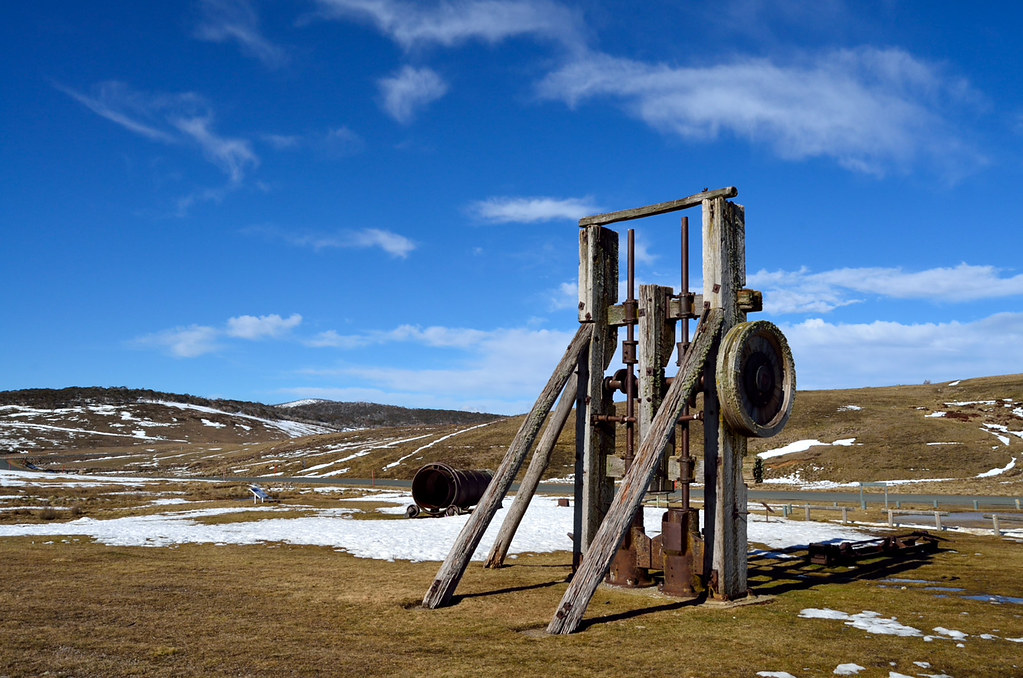
New Chum Hill Ruins

Remnants of Kiandra gold mine at New Chum Hill, #nsw #australia

September 10, 2013

Indian Border Guard Acquitted in Brutal Shooting of Bangladeshi Girl

A special court in India's state of West Bengal has found an Indian border guard not guilty in the shooting death of a 15-year-old Bangladeshi girl on the India-Bangladesh border, touching off a wave of anger in Bangladesh. The court acquitted Border Security Force constable Amiya Ghosh of murder charges on September 6, 2013.

Ghosh was accused of shooting Bangladeshi Felani Khatun on January 7, 2011 as she tried to cross the barbed-wire fencing at the Anantapur border point in Kurigram’s Phulbarhi Upazila on her way back to Bangladesh with her father. Fatally wounded, Khatun was left hanging in the barbed wire, screaming, for four hours until she died. Nobody helped her.

Photographs of her dead body tangled in the wire were widely published at the time. Ghosh's acquittal on September 6 only aggravated the already strained relations between India and Bangladesh.
Students form a human chain in front of the Indian high commission at Gulshan in Dhaka, protesting against the verdict in the Felani killing case in India.  Image by Indrajit Ghosh. Copyright Demotix (9/9/2013)
Students form a human chain in front of the Indian high commission at Gulshan in Dhaka, protesting against the verdict in the Felani killing case in India. Image by Indrajit Ghosh. Copyright Demotix (9/9/2013)
The court's decision triggered much uproar in Bangladesh, especially on social media. Asfaque Nipun called the special court a farce on Facebook:
So the verdict came; "No One Killed Felani!" What a joke!
Farjana Jannat (@farjana_neela) wrote on Twitter that this verdict was the death of justice:
Twitter user Subal Sarkar ( @burningNlearnin) believed that the verdict will escalate extrajudicial killings on the border by the Border Security Force:
RT@bewahid: The Felani killing verdict gives us the message that these kind of brutal assassinations will continue.
Bangladesh has a 3,715 km long land border with India along its three sides. Each year, many face bullets from the Indian border guards, some unlucky for traveling close to the border. According to a BBC report [bn], 38 Bangladeshis were shot dead by the security force in 2012. Shantanu Banik explained on Facebook why these people face death:
Bangladesh is a small country next to the mighty India. Therefore, illegal immigration and border-crossing isn't uncommon. Everyday, ordinary people choose to take unthinkable risk in hopes of a better life on the other side of the fence. It is [a] crime, but a petty crime. Not one that deserves the 'Shoot on sight' policy enforced by the Indian Border Security Force (BSF). [...]
Students form a human chain in front of the Indian high commission protesting against the verdict in the Felani killing case in India.
Students form a human chain in front of the Indian high commission protesting against the verdict in the Felani killing case in India. Image by Indrajit Ghosh. Copyright Demotix (9/9/2013)
  Bangladesh is a large market for Indian products and media. Many angry netizens have called for boycott of Indian products. Blogger and writer Akter Ahmed told Bangladeshis on Facebook:
এই রায়ের বিরুদ্ধে আপনার ক্ষুদ্ধ প্রতিক্রিয়া এবং অনুভূতিকে সম্মান জানিয়ে বলছি- সম্ভব হলে টিভিটা একটু বন্ধ করেন, 'কৌন বনেগা ক্রোড়পতি'র অমিতাভ বচ্চনের দরাজ গলার সামনে আপনার কথাগুলো বেশ অস্পষ্ট এবং বেমানান লাগছে!
With respect to your outraged reactions and feelings I am requesting - please turn off the TV for a while. Amitabh Bachchan's [Indian actor and anchor of India's version of "Who Wants to be a Millionaire"] loud voice on TV is overshadowing your voice.
But Facebook user Muquit Muhammad does not subscribe to that:
ফেলানী হত্যার রায়ের সাথে ভারতীয় টিভি অনুষ্ঠান পছন্দ করার সম্পর্ক কি? ঐদেশের টিভি অনুষ্ঠান পছন্দ করি বলে আমার দেশের মানুষকে তাদের মেরে ফেলা যেমন জাস্টিফাইড না, তেমনি এই কুবিচারের প্রতিবাদে ঐদেশের টিভি অনুষ্ঠান বর্জনও কোনো যৌক্তিক প্রতিবাদ না|
How is the Felani killing related to liking an Indian TV program? Just as it is not justified to kill us because we like their TV, it is not logical to boycott their TV programs because of a sham verdict.
A Facebook event has been created to organize a sit-in protest in front of the Indian High Commission in Bangladesh. The High Commission requested everybody to wait till the final outcome. According to a spokesman “this is subject to review by a competent authority". But the special court does not allow the victims family to appeal.

Originally written by Pantha Rahman Reza Translated by me. Published on Global Voices

September 05, 2013

South Asia Shining in Some Ways, Suffering in Others

The countries in South Asia may be thriving economically, but the region must work together to tackle the problems of poverty, gender inequality and climate change, according to experts at the recent South Asia Economic Summit (SAES). The SAES is an initiative of the premier civil society think-tanks in South Asia.

This year's event was held in Sri Lanka from 2nd to 4th September 2013 hosted by the island's leading economic policy think tank, the Institute of Policy Studies of Sri Lanka (IPS). Since 2008, the SAES is hosted in a different South Asian country annually.

This year’s SAES discussed regional issues like harnessing human capital, managing water, food security and climate change, and sought for more regional cooperation. One hundred and twenty renowned socio-economic experts gathered in Colombo for the summit, whose theme was "Towards a Stronger, Dynamic and Inclusive South Asia", to debate and discuss over the course of the three days.

An important feature of this event was the active debates on the conference theme by participants and followers in social media. The conference blog was very active as well as the Facebook, Flickr and Twitter channels. The event was live webcast.

Tahmina Shafique, a blogger and an Youth Delegate from Bangladesh, wrote about the scope of the summit and challenges of the participating countries:
The summit has brought together a wide range of stakeholders from the eight SAARC countries. The stakeholders consist of representatives from key think tanks, academic institutions, policy institutes, and international agencies. Perhaps the key highlight of this summit is the inclusion of a group of young leaders who will be engaged in analysis and dissemination of the key discussions. This is certainly a move away from the traditional closed-door civil society talks and opens up the platform for engagement of young leaders in these cooperation initiatives. The summit is most relevant at a time when there is an urgent need for increased synergies among the South Asian countries. A region that is thriving and growing at the back drop of its rich culture, traditions, economic activities and overall increased growth, faces numerous challenges. Arenas such as poverty, gender parity, food security, climate change, and various other factors remain to be areas that need to be focused upon in a more strategic and sustained manner.
Photographs from South Asian countries compiled by Easa Samih. CC BY (Click on the image for info on photographers)
Photographs from South Asian countries compiled by Easa Samih. CC BY (Click on the image for detailed info on photographers)
Abdul Halik Azeez, blogger and an youth delegate from Sri Lanka, started with the changing weather in Colombo and what it means for the region:
The unpredictability of monsoons, while mildly inconveniencing the city’s cubicle warriors with cumbersome umbrellas, plays havoc in the region’s agricultural sector, the rise in sea level threatens low lying islands, the melting of ice caps in the Himalayas threatens norms of water flow and while Colombo may have been benefited with a welcome bout of cooler weather other parts of the region have faced extended spells of debilitating heat. Besides, of the sea level rises that stroll along Galle Face could soon turn into a wade. All these changes affect millions of lives and threaten the already struggling development processes of the region.
Blogger Aarya Nijat, an youth delegate from Afghanistan, mentioned that politics is the game changer:
The Afghan-French author of The Patience Stone Atiq Rahimi wrote: “…in Iran just as well as in Afghanistan (and perhaps South Asia) words defy tyranny… the existential problem isn’t “to be or not to be …” but to say or not to say… Thus, any act becomes political. Even silence. Even lies… The problem lies in each of us, because our hearts are sealed… So should we still doubt the political dimension of literature? I’d say NO, because literature is a fight against all political systems. It is the power of words against the words of power.”
In a post on the last day of the summit, Nijat asked "Are We Discussing the Real Questions?":
Is the public and private sectors pursue similar interests or goals, if you will? What is it that the two share in terms of their sense of purpose, upon which a potential partnership can be built? Why don’t we talk about this?
Nandish Kenia, youth delegate from India, discussed whether the private sector can bring the change:
One of the arguments that persists is that why is it wrong to trade if the farmer is getting a huge lump sum of money for his small piece of land by an industrialist? Is he responsible for moving away from green revolution?
Trisha Rana, youth delegate from Nepal, commented that the South Asian Association for Regional Cooperation (SAARC), an organization of South Asian nations established in 1985 for the promotion of economic and social progress, cultural development, friendship and cooperation within the South Asia region, has failed to make an impact among the South Asian countries:
How can we move ahead with a coming together of South Asian hearts, even as we have failed to merge our practical, finance heads?
There were also discussions in Twitter: Pakistani economist Nadeem Haque (@nadeemhaque) wrote:
Top Google executive Ann Lavin spoke at the event. Abdul Halik Azeez (@HalikAzeez) from Sri Lanka wrote:
First Published in Global Voices

August 08, 2013

Bangladesh Housing Project Flattens Flora and Fauna in Gazipur

The latest controversy in land expansion in Bangladesh is a government housing project called Purbachal new town near Dhaka. Locals say that the projects expansion destroyed the greenery and the ecology of 1,600 acres of crop land, forests, orchards and water bodies in central Gazipur district, ignoring recommendations from the environment department.

Bangladesh capital Dhaka is considered as one of the world's fastest growing megacities. Between 1990 and 2005, the city doubled in size — from six to 12 million. By 2025, the UN predicts Dhaka will be home to more than 20 million people.

The significant features of this growth is rapid urbanization, mass migration from rural areas, problems like pollution, congestion, decreasing ground water level and a lack of adequate services due to the rising population. The megacity cannot afford the burden of 14.4 million people on its 360 square kilometres of land.
Nearly 1600 acres to be flattened in government housing project. Image by Sanaul Haque. Copyright Demotix (5/8/2013)
Nearly 1,600 acres to be flattened in government housing project. Image by Sanaul Haque. Copyright Demotix (5/8/2013)
The government has already unveiled its plan to expand the area of Dhaka. According to the plan the surrounding municipalities of Narayanganj, Tongi, Gazipur, Savar, Kadamrasul, Siddhirganj and Tarabo will be incorporated into Dhaka City Corporation. The Dhaka city corporation has been divided into two - North and South zones - for better administration.

According to World Bank statistics, the urbanized area in Dhaka city stands for 48 percent, but a large part of that is occupied by rural settlements and scattered built-up (18%) surrounded by specific class of groves of trees. A large portion of the non-urbanized area is dominated by agriculture land. The victim of rapid urbanization is those forest areas and agricultural lands.

The website of Rajdhani Unnayan Kartripakkha (RAJUK), the Capital Development Authority of the Government of Bangladesh, provides details about the Purbachal new town project:
It is the biggest Planned township in the country. The Project area comprise of about 6150 acres land located in between the Shitalakhya and the Balu River at Rupgonj thana of Narayangonj district and at Kaligonj Thana of Gazipur district, in the north-eastern side of Dhaka. [..] The Development works have been going on in 4500 acres (Narayangonj part) since 2002-2003 fiscal year and in rest 1500 acres (Gazipur part) development works have been started from January, 2013.
Gazipur is noted for its unique coppiced Sal forest and is home to the Bhawal National Park. It has been kept under IUCN Management as a protected landscape. A land survey by the RAJUK reported that 42.46 percent of the area is covered by forest, 39.47 percent by cultivable land and 9.75 percent by homesteads.

Newspaper reports [bn] say that a huge forest area containing Sal trees and a wide range of flora and fauna are being flattened as a part of the development work for the Purbachal new town project. The environmental department suggested that RAJUK should develop settlement plots avoiding forest area which were actually not followed.

Not only the land projects, the Sal forests are bulldozed for a lot of reasons - to build a bombing practice ground for Bangladesh army, to plant invasive alien species ‘acacia’ trees under social forestry scheme uprooting existing trees, etc.
A man who lives on the land shouts at the governments decision to flatten the land destroying trees for a housing project. Image by Sanaul Haque. Copyright Demotix (5/8/2013)
A local citizen shouts at the governments decision to flatten the land destroying trees for a housing project. Image by Sanaul Haque. Copyright Demotix (5/8/2013)
Faisal Rahman writes in UNB Connect, an online news site, after returning from Gazipur:
The people of the villages affected by the land development that include Barcow, Bashabashi, Kalikuthi, Purba Talna and Parabarta showed the team the signs of a huge number of recently cut down and rooted out trees – mostly the jackfruit, mango groves, bamboo and Sal patches – in the area. [..] About 150 acres of the rice fields, situated in the Padarir Beel, has already been filled with dirt. The beel area comprises about 800 acres of land and is a source of natural fish during the rain.
Blogger Biplob Biswash lives in a village in the development sites. He writes in Bangla blogging platform Amar Blog how the locals, who are forcibly being evicted, are losing out in the land acquiring process:
যেখানে এখন জমি দাম হচ্ছে বিঘা প্রতি ১ কোটি থেকে দেড় কোটি টাকা সেখানে রাজউক ৯৫ সালের ভুয়া দলিল অনুসারে জমির দাম দিচ্ছে মাত্র ১ লাখ টাকা বিঘা। শুধু কি তাই, কোন গ্রামবাসী যদি বিল আনতে যায়, সরকারি ও রাজউকের কর্মচারীরা ঘুষের জন্য প্রায় তার পুরো বিলের টাকাই রেখে দেয়। যদি সে বলে যে তাহলে আমি কি পেলাম?, আমার জমি-জমা, বাড়ি-ঘর সবই সরকার কে দিয়ে দিলাম, আমি তাহলে কি পেলাম?, আর আমি এখন কি নিয়ে থাকবো, আমার ভবিষ্যৎ চলবে কি করে?
Where the current market rate of land is 1 to 1.5 crore Bangladeshi Taka (130,000-195,000 US dollars), RAJUK is compensating at an old rate of 1 lakh Taka (1,300 US dollars) per Bigha (0.33 acre). Not only that when a landlord goes to collect the bill, the corrupt officials of RAJUK keep a large portion as bribe. So what have we got? We have handed over our agricultural land, our home, all to the government. What have we got in return? So how will we survive in the future?
The blogger also writes that those who refuse to leave their livelihood, are being harassed by police and local goons as they are being accused in false criminal charges. A writ petition was filed by Bangladesh Environmental Lawyers Association saying that the Purbachal housing project has no environment clearance certificate from the Department of Environment for earth filling and constructing structure in Borakau and Parabath areas of Gazipur. On 1 August, 2013 the High Court directed the authorities concerned to stop activities of Purbachal housing project in Gazipur until further order.
Wetlands and fauna are filled with sand for land development for government housing project. Image by Sanaul Haque. Copyright Demotix (5/8/2013)
A number of advocacy organizations including Paribesh Bachao Andolon, Bangladesh Paribesh Andolon, and Institute of Architects of Bangladesh visited the development sites in Gazipur [bn] and demanded the following:
১. রাজউক এর পরিবেশ বিধ্বংশী কার্যক্রম অবিলম্বে সম্পূর্ণ বন্ধ করা। ২. পূর্বাচল প্রকল্পের নামে পরিবেশ বিধবংশী কর্মকান্ডের ক্ষতি নিরূপণ করতে একটি তদন্ত কমিটি গঠন করা। ৩. পূর্বাচল প্রকল্পের নামে এরূপ বিধবংশী এবং অমানবিক কর্মকান্ডের জড়িত রাজউকের কর্মকর্তাকে দৃষ্টান্তমূলক শান্তি প্রদান করা। ৪. নিরীহ এলাকাবাসীর বিরুদ্ধে মিথ্যা হয়রানিমূলক মামলা নি:শর্তভাবে প্রত্যাহার করা।
1. Immediately stopping the developments by RAJUK which are destroying the environment 2. Create a committee to assess the damages so far. 3. Punish those scrupulous RAJUK staffers who are engaged in corrupt and inhuman practices. 4. Drop all false charges/lawsuits against the locals.
Blogger Biplob Biswash writes in another post:
বাহিরের মানুষ সবাই খুব মজা পাচ্ছে এখানে পৃথিবীর আধুনিকতম শহর হবে, সেই শহরে বসবাস করবে অতি সুখের সাথে। কিন্তু তারা কি একবারও সেই মানুষ গুলির অনোভূতি টুকু অনুভব করেছেন, যাদের চৌদ্দ পুরুষের সঞ্চিত শেষ সম্বলটুকু জোর করে কেড়ে নিয়ে এই শহর বানানো হচ্ছে, যে মানুষ গুলির শিকড় উপড়ে তুলে আস্তাকুড়ে ছুড়ে মারা হচ্ছে, যে মানুষ গুলিকে সর্বস্য হারিয়ে খোলা আকাশের নিচে গিয়ে দাড়াতে হবে। জানি না, কেউ তাঁদের এই কষ্টের সামান্যতম অংশও অনুভব করতে পেরেছেন কি না।
Outsiders may be rejoicing with the news that here a modern township will be built, where people will live happily. But have they ever felt the emotions of the locals, who are being evicted from their ancestral land to clear the housing plots. Do they know that these people are being uprooted and being sent to oblivion, soon they will be forced to live under open sky. I don't know whether any of them have ever felt a bit of those pains.
The world average of forest area is 26% whereas Bangladesh has got only 18 percent [bn]. If the remaining forest areas are not protected, the country will face severe environmental consequences in the future.

First Published in Global Voices

June 10, 2013

Bangladesh Unblocks YouTube After Eight-Month Ban

Bangladesh's telecommunication authorities have unblocked YouTube in Bangladesh after 260 days of restricting access within the country to the video sharing website. The Bangladesh Telecommunication Regulatory Commission (BTRC) blocked YouTube on September 17, 2012 to prevent people from watching a trailer of a US film titled “Innocence of Muslims,” which mocks Islam and Prophet Hazrat Muhammad.

The telecom watchdog claimed that it contacted Google prior to the ban asking them to remove the video, but Google reportedly refused to oblige. The ban was lifted on June 5, 2013, making the site accessible to Bangladeshi netizens once again.

Image by Wikimedia Commons user HernandoJoseAJ.  CC By -SA
Image by Wikimedia Commons user HernandoJoseAJ. CC By-SA.
The block actually incurred a loss for the Bangladeshi economy, according to Fahim Mashroor, the ex-Secretary of the Bangladesh Association of Software and Information Services. He said in an interview [bn] with German radio Deutsche Welle that the outsourcing industry suffered due to the ban.

Last year, Bangladeshis earned 57 million US dollars working for the online outsourcing industry with an annual growth of 54 percent. The eight month-long ban on YouTube will curtail that phenomenal growth this year. Not only economic loss, many students, teachers, and researchers faced difficulties in their studies not being able to access online education videos hosted on YouTube.

Web users celebrated the renewed YouTube access. Khaledur Rahman Shakil (@krshakil) expressed his delight:
@কেআরশাকিল: ‘মুক্তি’ পেল ইউটিউব ফুলের মালা দিয়ে বরণ করে নিলাম ! জয় স্বাধীনতা।
@krshakil: YouTube is free! Ushering it with garlands. Go freedom!
Neel Aparajita (@oporajita789) celebrated the joys of social networking freedom:
@অপরাজিতা৭৮৯: ইউটিউব জেলখানা থেকে ছাড়া পাওয়ার আনন্দে ফেসবুক-টুইটার-এ যেদিকে তাকাই, যেখানে চোখ যায়... অইস!! খালি ইউটিউব আর ইউটিউব! #ফিলিংগ্রেট
@oporajita789: The joys of YouTube's freedom from the jail of filters is evident everywhere on social media. Everybody is talking about it #feelinggreat.
Although YouTube was blocked, many in Bangladesh were able to circumvent the ban. Ashickur Rahman Noor (@ashicunnoor) remembered that fact on Twitter:
@ashicunnoor: ডিজিটাল বাংলাদেশের স্বাধীনতা... :) সোজা পথে অনেকদিন পর ইউটিউবে হান্দাইলাম... #চৌক্ষেপানি! :)
@ashicunnoor: The freedom of Digital Bangladesh. Could access YouTube without any circumvention tool :) #tearsinmyeyes :)
Blogger Bahadur Bappi questioned the reason behind such a long ban on community blogging platform Somewhereinblog.net:
আমার প্রশ্ন হৈল এই ৮ মাস ইউটিউবকে আটকিয়ে রেখে সরকার কি এমন লাভ করলো??
My question is what benefit did the government achieve blocking YouTube for eight long months?
Originally written by Pantha Rahman Reza. Translated by Me. Published in Global Voices.

May 31, 2013

#SafeCityPledge: Indians Take a Stand Online for Women's Safety

A Twitter campaign has Indians flooding social media with personal promises to combat sexual harassment and sexism.

On the heels of the brutal gang rape of a young woman in a moving bus in Delhi, volunteer-led community art project Blank Noise invited users during a 24-hour tweetathon on 19 January, 2013 to publish a pledge committing to new ideas that make cities safer spaces for women.

The #SafeCityPledge campaign was one of the top trending topics in India on that day, and the tweets, some featuring photos of users holding placards with their pledge, have poured in ever since.

"I pledge to stand up for my rights, however intimidating the circumstances," a placard held by a woman in Calcutta reads.

"I pledge to behave like a man and stop behaving like a beast," another reads, this time held by a man surrounded by his male friends.

P Bharat in Shakhti, a women's rights blog, compiled and summarized some of the ideas and pledges shared, which attacked the culture of patriarchy and the tendency to blame the victim, among other things:
  • "I pledge to not be a mute bystander. To intervene. To change the scene." 
  • "Staring is not acceptable. Smile and look away. Make others comfortable please." 
  • "I will support my friends whenever they feel persecuted by men, I will not let men intimidate women anywhere i am"

  • "never vote for parties that have rapists in their midst & justify them." 
  • "I pledge to stop making sexist jokes and open conversations about equality of genders at home."
Submission from Miranda House, Delhi. Image courtesy Bank Noise Blog. CC BY-NC-SA 2.5
Submission from Miranda House, Delhi. Image courtesy Blank Noise Blog. CC BY-NC-SA 2.5
Sexual violence against women and girls in India has been under intense scrutiny since the December 2012 gang rape, after which the victim died of her injuries, and similar incidents this year. Faced with public outcry, the government passed a new bill containing harsher punishments, including the death penalty, for rapists.

Fueled by the rash of high-profile incidents, the movement against sexual harassment and sexism has gained steam online and offline. Another initiative called Safecity tracks street harassment in India using crowdsourced reports. The reports illustrate that street harassment of women is still a burning problem in India.

There have also been a number of street protests and rallies featuring pledges for a safe city for women in GoaBangaloreDelhiPune, and Kolkata organized using social media. Anu Elizabeth Roche, a volunteer for the non-profit Akanksha Foundation, which works with underprivileged children, wrote on Facebook about one such demonstration in Mumbai:
A number of men and women - young and old - came with their own placards and slogans pledging to promote heightened action against sexual harassment, sexist attitudes and generally spoke for reclaiming their spaces in public spheres especially.
#safecitypledge Delhi. Image courtesy Blank Noise blog. CC BY-NC-SA 2.5
And #SafeCityPledge recently held a workshop at Cambridge School Delhi, with 600 students between 14-17 years participating. Blogger Sahar Zainab recalls her personal experience reading the #SafeCityPledge tweets with a mixture of hope and hard realism:
I especially love the picture of the woman from Lucknow, dupatta wound tightly around her head, pledging 'humein baahar aane jaane par kisi ki rokk-tokk manzur nahi' (we will not accept anyone else's control on our coming and going outside)! But truth is that there remains a (humongous) faction of women, young girls, and even younger girls in villages, in small towns, in bigger towns, and in even bigger cities, who have yet to muster up such courage.
Check out the #SafeCityPledge campaign on their blogTwitter, and Facebook.

The post was first published in Global Voices Online.

May 23, 2013

Bangladesh's Planned Coal Power Plant Threatens Sundarbans Mangrove Forest

A plan to erect a coal-fired power plant in Bangladesh next to the Sundarbans, the largest mangrove forest in the world which straddles Bangladesh and India, is drawing fire from activists in the country who say it would destroy the world heritage site.

The proposed 1320-megawatt plant, to be built in the area of Rampal in the southern Bagerhat district, was initially put into motion in a bilateral agreement between Bangladesh and India during the Bangladeshi prime minister's tour of India in 2011 before an environmental impact assessment was conducted by Bangladesh's Environment Ministry.

On 20 April, 2013, the Power Development Board of Bangladesh signed [bn] three agreements with India's National Thermal Power Corporation, which made the implementation official. The project, estimated to cost 1.6 billion US dollars, is expected to be completed by 2018.

When the government finally released an environmental impact assessment (download in PDF from here) on the power plant, environmentalists rejected it in a consultative meeting, organized by the Power Division on April 12, arguing that the report did not take into consideration most of the important environmental aspects of the Sundarbans, its ecology, flora, and fauna as well as a large number of local people.

Moreover, the report stated that (page 208) once the proposed site was a part of Sundarbans, but had been evacuated by the settlers later.

Bangladesh's energy infrastructure is known to be quite small, insufficient and poorly managed. Only 40% of the population has access to electricity with a per capita availability of 136 kWh per Annum. So there is a huge pressure on the Government to meet the growing demands of electricity.

The National Committee to Protect Oil, Gas, Mineral Resources, Power and Ports urged citizens of both India and Bangladesh to carry out concentrated efforts to stop the power plant on its website.
Environment experts, social workers and conscious citizen holding banner-festoon take part at a human Chain in the capital in demand to save Sundarban, the world largest remaining mangrove forests. Image by Firoz Ahmed. Copyright Demotix (21/3/2013)
Environment experts, social workers, and citizens holding banners form a human chain in the capital Dhaka to demand that the Sundarbans, the world largest remaining mangrove forest, be saved. Image by Firoz Ahmed. Copyright Demotix (21/3/2013)
Abdullah Al Imran [bn] pointed out in a Facebook note that India is violating its own laws meant to protect wildlife with its involvement in this power plant:
১৩২০ মেগাওয়াট ক্ষমতার একটা বিদ্যুতকেন্দ্র গড়ে উঠবে বাগেরহাটের রামপালে যা কিনা সুন্দরবন থেকে মাত্র ১৪ কিলোমিটার দূরে। ভারতের ওয়াইল্ড লাইফ প্রটেকশন এ্যাক্ট ১৯৭২ অনুযায়ী বাঘ-হাতি সংরক্ষণ অঞ্চল,জাতীয় উদ্যান এবং জীব বৈচিত্র্যের জন্য গুরূত্বপূর্ণ বনাঞ্চলের১৫ কিলোমিটার ব্যাসার্ধের মধ্যে কোন বিদ্যুৎকেন্দ্র তৈরী করা যায় না।
An 1320 MW plant would be established in Rampal of Bagerhat which is only 14 kilometres away from the Sundarbans. According to the Indian Wildlife Protection Act 1972, no such power plant should be established within 15 kilometers of a forest which is home to sanctuaries for tigers and elephants and wildlife.
Journalist Kallol Mustafa [bn] summarized on Facebook the environmental impact that the report foresees that the plant will have:
বিদ্যুৎ কেন্দ্র নির্মাণের মালামাল ও যন্ত্রপাতি সুন্দরবনের ভেতর দিয়ে নদী পথে পরিবহন করা হবে। এর ফলে বাড়তি নৌযান চলাচল, তেল নি:সরণ, শব্দদূষণ, আলো, বর্জ্য নি:সরণ ইত্যাদি পরিবেশ আইন অনুসারে নিয়ন্ত্রণ না করা গেলে সুন্দরবনের ইকো সিস্টেম বিশেষ করে রয়েল বেঙ্গল টাইগার, হরিণ, ডলফিন, ম্যানগ্রোভ বন ইত্যাদির উপর ক্ষতিকর প্রভাব ফেলবে বলে ইআইএ রিপোর্টে আশংকা করা হয়েছে।
The building material and equipment for the plant would be transported on the river. So it is stated in the EIA report that the increase in transport of engine ships, oil spillage, noise, light and air pollution, etc. will have an adverse effect on Royal Bengal tigers, deer, dolphins, the mangrove forest and other ecosystems.
Engineer Md. Shahadat Hossain [bn] wrote on the Water Resource Engineers Forum blog:
প্রস্তাবিত রামপাল কয়লা বিদ্যুৎ কেন্দ্রের ইআইএ রিপোর্টের এই সংক্ষিপ্ত পর্যালোচনা থেকে স্পষ্ট যে, [..] সুন্দরবনের পাশে ১৩২০ মেগাওয়াটের এই কয়লা বিদ্যুৎ কেন্দ্রকে জায়েজ করার সর্বোচ্চ চেষ্টা করা স্বত্ত্বেও, এরপরও খোদ ইআইএ রিপোর্টে বিদ্যুৎ কেন্দ্র নির্মাণ, পরিচালানা ও কয়লা পরিবহনের ফলে সুন্দরবনের উপর সম্ভাব্য ক্ষতিকর প্রভাব সম্পর্কে এমন সব তথ্য বেরিয়ে এসেছে যা প্রস্তাবিত কয়লা বিদ্যুৎ প্রকল্পকে পরিবেশগত বিবেচনায় অগ্রহণযোগ্য বিবেচনা করার জন্য যথেষ্ট।
Analysis of the EIA report for the proposed power plant reveals that the building, operation, and coal transport for the 1320 MW coal-based power plant in the Sundarbans would create an adverse effect on the Sundarbans mangrove forest in the coming years, suggesting that it should be scrapped on environmental grounds.
Fishermen get preparation for the fishing before sunset near Karamjal Wildlife Breeding Centre Centre under Chandpai range in East Sunderbans division. Image by Firoz Ahmed. Copyright Demotix (26/11/2012)
Fishermen prepare to fish before sunset near Karamjal Wildlife Breeding Centre in the East Sundarbans. Image by Firoz Ahmed. Copyright Demotix (26/11/2012)
On community blog Ishtishon, Mahbub Shumon questioned the wisdom of harming the Sundarbans when they protect Bangladesh from natural disasters:
প্রথমত - ঝড় ঝাপটা প্রাকৃতিক দুর্যোগ থেকে থেকে বুক পেতে বাংলাদেশ রক্ষাকারী এই বনের মধ্যে বা কাছা কাছি ক্ষতিকর দূরত্বে এমন কোন প্রকল্প করা উচিৎ কিনা যা জীব - বইচিত্রের আধার এবং প্রাকৃতিক ভারসাম্য রক্ষাকারী, সর্বোপরি দুর্যোগ থেকে রক্ষাকারী এই প্রাকৃতিক দেয়াল ধ্বংস করে দিবে? সচেতন মানুষ মাত্রেই একমত হবেন নাবোধক উত্তরে। এমন বিদ্যুৎ আমাদের দরকার নাই যে বিদ্যুতের জন্য আমাদের দেশটাই ধ্বংস হয়ে যাবে। দ্বিতীয় জরুরী প্রশ্ন হল- অন্য কোথাও বিদ্যুৎ প্রকল্প করা হলেও আমরা কি কয়লা ভিত্তিক বিদ্যুৎ প্রকল্পের ক্ষতি সামাল দিতে পারব?
First of all, these mangrove forests save Bangladesh from natural disasters. So why would you put a project in the vicinity of this forest that will destroy its wildlife, its flora and fauna? Any concerned person would say no. We don't need such power which will destroy my country's ecosystem. Secondly, even if the plant is shifted, will we be able to restrict the damaging effects of burning coal for the plant?
Blogger Banglar Hassan [bn] reminded his readers that a similar project had been turned down in Odisha, India as it failed to obtain environmental clearance. Faisal Caser [bn] asked:
যে বিবেচনায় এনটিপিসি নিজের দেশে বিদ্যুৎ কেন্দ্র নির্মাণ করতে পারেনি সেই একই বিবেচনায় বাংলাদেশে কী তাদের প্রকল্প বাতিল হতে পারে না?
The reason why NTPC could not build a power plant in its own country is not strong enough to stall their similar project in Bangladesh?
Facebook event to save Sunderbans. Image courtesy Omi Hasan.
Facebook event to save Sundarbans. Image courtesy Omi Hasan.
Facebook events have been created to raise awareness of the planned plant. The dates of offline protests will be announced soon.

First Published in Global Voices

May 20, 2013

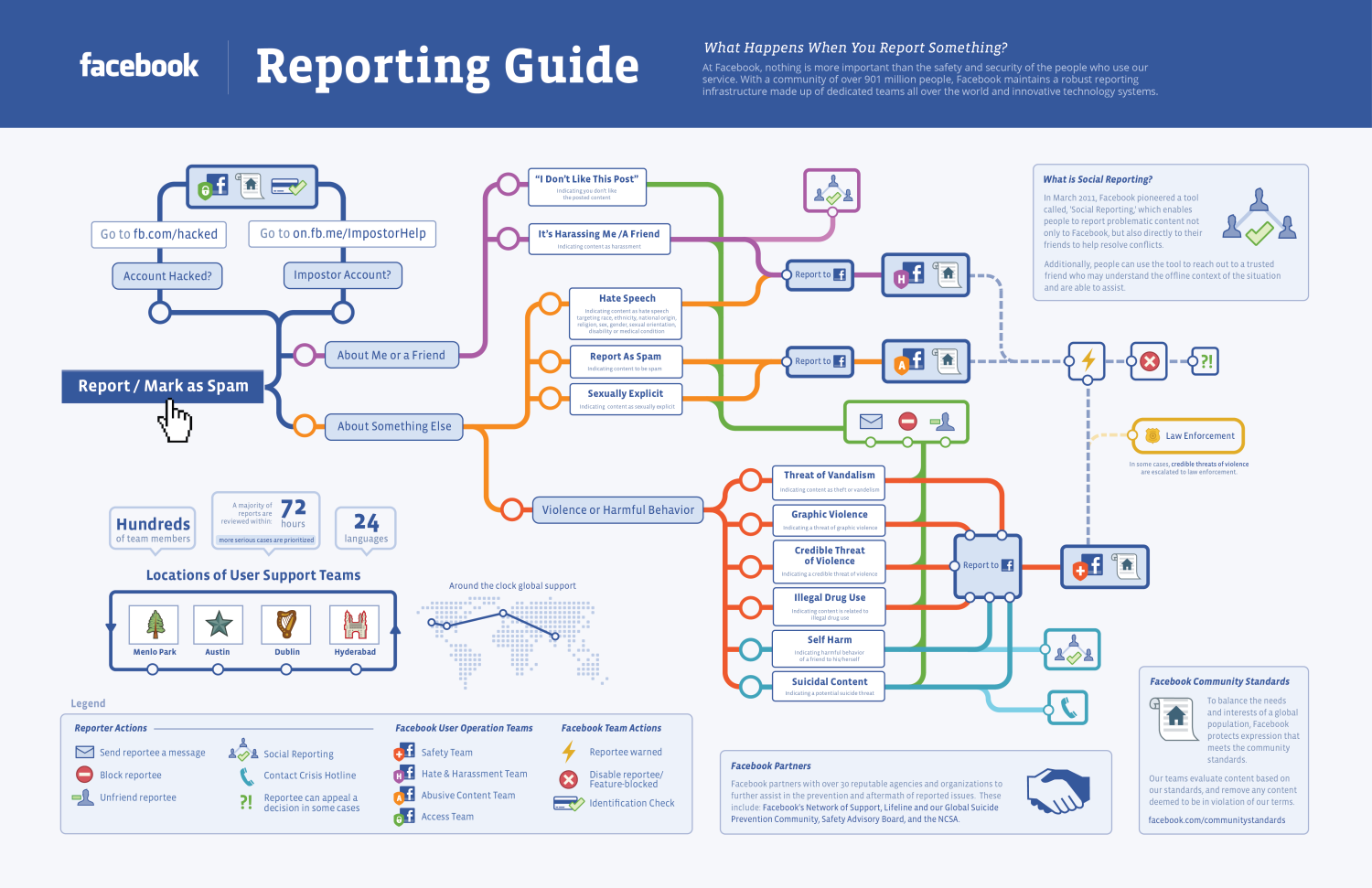
Facebook's ‘Social Reporting’ feature is being abused by organized gangs in Bangladesh

Recently we are getting reports from some Bangladeshi Facebook users about a new problem. Some of their pages or statuses have been disappearing mysteriously.

Actually these individuals are being targeted by a group of people using Facebook's "Social Reporting" feature. It was originally designed to let people report offensive material to Facebook at the same time alerting someone in the community.

One or more organized groups are resorting to ‘false organized reporting' to take down certain posts, pictures, pages or events of mainly pro #Shahbag activists of Bangladesh. During this operation, a user's Facebook status or page or photo is identified and shared between the group members. All the members then start reporting and when there are enough reports submitted, the reported content/pages are  automatically removed by Facebook. @ARIFArifuk shares how they make it happen and are threatening freedom of speech.

 The visual guide to Facebook reporting courtesy Edudemic
Asad Zaman at Amar Blog exposes one such group called Anti-Virus which has five admins. Its about page says:
"The main goal of the Anti-Virus group is to eradicate Awami-Virus from online. The responsibility of the members of this group is to post links about posts criticizing Islam and activists of Islami movement. Then all the members report that status together and take it down."
They are also attacking peoples' profile pic and Facebook IDs. In his post Asad exposes their long list of targets.

In these efforts we are seeing the dark side of social media. A good way to tackle it is to restrict your profile and statuses to Friends only and remove those you don't know personally from your friends list. And you know what these groups can receive the same treatment if the community becomes active.

But really the onus is on to Facebook to explore and put an end to such abuses. Innovations anyone?