Dragonfly

Image by Rezwan

Overcrowded passenger ferry capsized in the Padma River in Munshiganj, Bangladesh

The World Cup Goal-E Project

This street in Bangladesh has a colorful world cup celebration

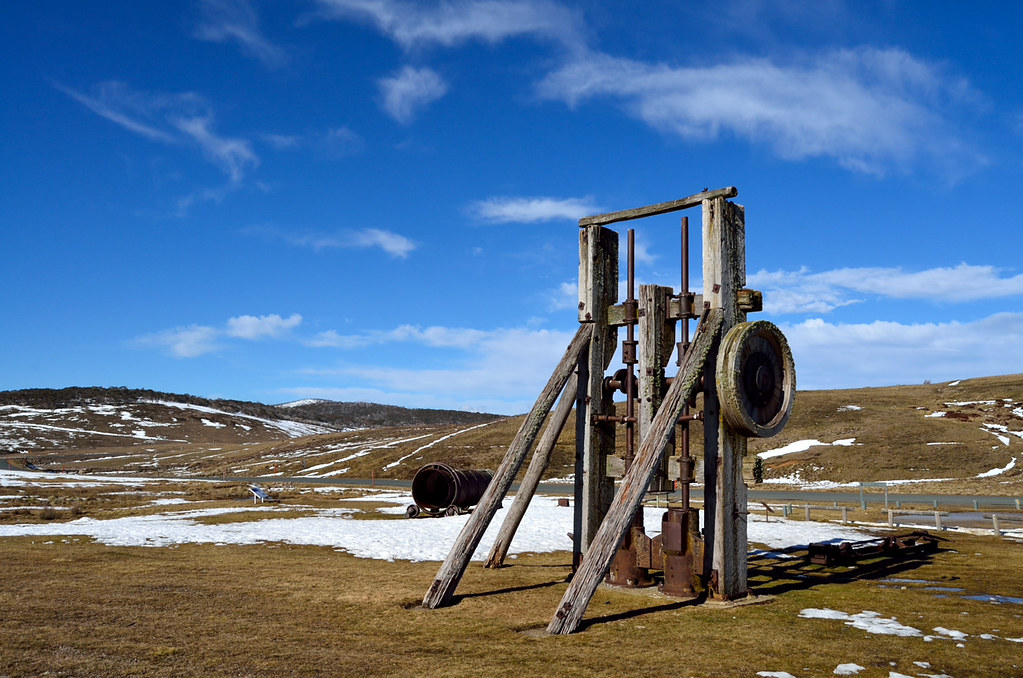
New Chum Hill Ruins

Remnants of Kiandra gold mine at New Chum Hill, #nsw #australia

September 07, 2005

TODAY'S PICKS ON BANGLADESH

* Unicef praises Bangladesh's social sector successes.

* Bangladesh faces the challenge of globalization.

* Thoughts on terrorism in Bangladesh.

* Bangladeshi cop gets beaten by an actress!

* How Britain got good restaurant food.

* Bangladesh invents low-cost technology to treat industrial waste.
THE SHAME OF THE CIVIL SOCIETY IS THE POWER
"Sooner or later comes a crisis in our affairs, and how we meet it determines our future happiness and success. Since the beginning of time, every form of life has been called upon to meet such crisis." - Robert Collier
There have been lots of discussions, finger pointing, politics and actions, which were triggered by the news and images of the waterlogged New Orleans and the victims of Katrina the world saw. The MSM & the blogosphere have been equally active to dissect every bit of the problem. Many plunged into thoughts of depression and societal self-loathing.

The New York Times Oped columnist Bob Herbert says "Its a failure of leadership". Maureen Dowd blames the government and asks "Who are we if we can't take care of our own?". Nicholas D. Christof thinks that the larger shame is the growing poverty in US. "The U.S. government - particularly under the Bush administration - has systematically cut people out of the social fabric by redistributing wealth from the most vulnerable Americans to the most affluent."

American Blogger Douglas Rushkoff adds:

"What those who are afraid of civil society breaking down don't realize is that civil society has already broken down! This is not a civil society we live in, but a profiteering, every-man-for-himself, oligarchy. The democratic process is broken if not rigged; the largest-ever redistribution of wealth from the poor to the rich occurred over the last six years under the guise of economic stimulus; fear and disinformation were used to put the poorest of Americans onto a battlefield under false pretenses."

Jeff Jarvis of Buzzmachine rebuts Rushkoff's claims:

Yes, Katrina brought out and worsened injustices and inequities. It exposed government incompetence. But it also inspired courage, care, concern, generosity and humanity. And I would say that the outrage the country showed over those injustices and failures were the very proof of our civil order.

People like Jarvis are positive minded and are prompt to come up with ideas like Recovery 2.0 which aims to be ready for the next disaster so people can better use the internet via any device to better:
1. share information,
2. report and act on calls for help,
3. coordinate relief,
4. connect the missing,
5. provide connections for such necessities as housing and jobs,
6. match charitable assets to needs,
7. get people connected to this and the world sooner.

And there is nothing wrong in feeling ashamed of something not done right because that is a human virtue. Only animals do not feel ashamed. The important thing is what measure we take to prevent such shame in future. Many of the time we tend to ignore what we can do for our country and clutch to the anticipation what our country can do to us. So the onus is on each individual as a part of the civil society. It remains to be seen what the Americans do to reduce the growing injustice and inequities in their society.

"Shame and guilt are noble emotions essential in the maintenance of civilized society, and vital for the development of some of the most refined and elegant qualities of human potential."

Tag:

September 06, 2005

DJUICE- CHAINED SUBCULTURE
"Culture is the name for what people are interested in, their thoughts, their models, the books they read and the speeches they hear, their table-talk, gossip, controversies, historical sense and scientific training, the values they appreciate, the quality of life they admire. All communities have a culture. It is the climate of their civilization."
Djuice is a marketing mobile subscription brand of Telenor Mobile targeting the young generation. It is so far marketed extensively in 5 countries - Norway, Sweden, Ukraine, Hungary & Bangladesh. Since its introduction in Bangladesh in last April by Grameenphone (Telenor is a shareholder), it has been a source of fun and entertainment and created a craze amongst the young Bangladeshis. With its initial low cost SIM at Tk. 300 ($5) they have gained quite a number of subscriber base within a short time. Showing the subscribers Xtra card they can get discount offers in many fast food joints, entertainment venues and concerts. There are also plenty of options for the young generation. Djuice also created much buzz with its innovative promotional activities like this & this.

The latest news is that the Bangladesh government has banned the telecast of advertisements of djuice, and Flexiload, a flexible service to recharge GrameenPhone pre-paid accounts. The question is why?

The initial TV ads were based on the youth slangs like "AJAIRA PACHAL", "KOTHIN BHAAB" etc. They are not indecent as such but not liked by the older generations. Djuice continued to use these kinds of words to build its brand into the minds of the youths. The flexiload ads are based on the characters of a popular Bengali movie "bachelor" which portrayed the true to life images of Bangladeshi youths. Now let us examine the reasons cited by the government:

"the words and gestures used in the ads will encourage the young generation to resort to immoral activities"

The question is are the authorities afraid of subcultures? Is uttering words like "KOTHIN BHAAB" make the youths go ashtray? What sort of culture they want our youths to embrace? They are not even promoting the classical arts like Rabindra Sangeet or classical dances to the youths. So what realy are they afraid of?

On the other hand this decision looks so hypocritical to me as Bangladesh continues to be an unrestricted airing zone for the Indian and other Asian satellite channels. Vulgarity rules in many Indian music & movie channels which is a concern within a more secular society of India today. Because of the popularity of Hindi channels many adolescences are picking up Hindi and the Dhaka fashion market is influenced by the Mumbai fashions as seen on TV. And talking about gestures, aren't these channels leading the youths towards immortality according to the criteria of the authorities? Perhaps to the government authority this is not a concern.
No culture can live if it attempts to be exclusive. -Mahatma Gandhi
BANGLADESHI BLOG SHOWCASE

From Mac's blog (Bangladeshi rockstar cum blogger) I have found the link to Anik's blog. Anik Khan is a poet and the ex associate editor of the Bengali satirical cartoon magazine Unmad. He is a guy full of life and ecstasy and lives in Australia now. I am particularly impressed by his quotes from Bengali songs and poems in almost every post. In his words:
shala’r gaan r kobita e amake khailo!
We Bengalis have a rich culture of prose, poetry and music. I often don't quote them in original in my blog keeping in mind about the international readers. I have tried to translate a few a couple of times. But Anik has broken this barrier by writing his posts entirely in Bengali but in English scripts (he use MSN spaces). And he writes well.

Special mention is Anik's reaction to the 17/8 bombings and one of his poems. An excerpt (translated by me):

Bombs exploding everywhere
Killing Muslims in the name of God
They are claiming
That’s written in Allah’s words
.....
The insignificant humans are shaking
Mighty Allah’s base
With bombs the Mujahideen are trying
That to save

What can I tell
I die from laughing
Even God is not well
In our great country.

Anik's is a good read for the Bengali speakers.

September 05, 2005

BANGLADESH EXTENDS HER HELPING HAND

Bangladesh is donating US$ 1 million to the US Redcross as humanitarian aid for the victims of the hurricane Katrina.

Meanwhile the Bangladesh Ambassador to the United States announced at the FOBANA Conference (the largest Bangladeshi-American organization) held in Miami on Sept. 2 to come forward and extend help to the victims.

Bangladeshi blogger Imtiaz says that he would prefer to send out Bangladeshi experts on disaster management instead of monetary aid as no doubt what-so-ever that the Bangladeshi strategic knowledge on this is the best in the world. That still remains as an option if the US authorities are interested.
SOUTH ASIAN BLOG ROUNDUP

My South Asian Blog Roundup is up in 'Global Voices Online'. Please do check it out.

September 03, 2005

KATRINA & BANGLADESH
Rising water has killed hundreds, five million people are displaced, medical and food supplies are exhausted, gun battles are breaking out between vigilantes and criminal gangs on the water-logged streets, refugees are crammed into a stadium where conditions are horrendous...
No, its not a third world country disaster we are talking about. The above is the chaotic situation aftermath of the Hurricane Katrina which has caused extensive and severe damage in much of the southeastern United States. The total deaths as I write is 729+ and people missing are 20,000+. Bangladesh is known to many as a land cursed with natural calamities. That is why its not surprising when you see people comparing Bangladesh to the above situation.

But is it fair to compare Bangladesh to the chaos & destruction United States is facing? Natural calamities are always a tragedy and an act of God. The humans can only be well prepared and coordinated to minimize the destruction. Bangladesh faces this kinds of tragedy every year and still it is a developing not a stagnant country. The media do not propagate the courage and efforts many Bangladeshis show each year to start their life all over. If the calamities would not only be the central idiom of the media, the world could have learnt many tips for tackling these kind of calamities.

Daniel Brett writes a striking post "What America can learn from Bangladesh":

"Last year Bangladesh faced a natural disaster which was an altogether larger disaster than Hurricane Katrina and the casualty figures were probably lower than the casualties sustained in the New Orleans disaster. But the disaster was contained due to the survival instincts of the Bangladeshi people, their ingenuity in the face of adversity and their culture of hard work. Rather than shoot and loot, Bangladesh immediately used its modest resources to limit the impact of the floods before international aid arrived.

The fact that the economy was able to recover from the floods so soon is a testament to the ability of Bangladeshis to pick themselves up and go about rebuilding.

The Americans have never really faced such adversity...Bangladeshis place great importance to social and family ties and these have brought them through a multitude of natural and man-made disasters. Bangladesh's experiences show us that, in the face of disaster, money does not make society more cohesive or better organised."

Bangladeshi blogger Mezba has things to say to the Americans which may cause heartburns to many but can these be denied?:

"We, the rest of the world, still hold the Americans to a higher pedestal than the rest of us. Like it or not, Americans are still considered a standard of excellence.

* They put a man on the moon in 3 days, but the aid took 5 days to arrive.
* Congress stayed up all night to pass the 87 billion dollars needed for Iraq’s army, but did not pass an aid bill for New Orleans since the last 5 days.
* When National Guard officials were needed to stop looting and anarchy in their home state, they were off doing the same in a foreign country thousands of miles away.

And who is suffering? Society is judged by how they treat their poorest, their weakest, and their most vulnerable citizens. The people left behind in New Orleans are certainly those. I hope, for their sake, the American government gets its act together.

Americans deserve - and expect - no less from their leaders."


And speaking of the leaders, many are pissed with them and asked to "get off their asses".
"Calamity is the perfect glass wherein we truly see and know ourselves." - William Davenant